When Families Hire Sober Coaches: 4 Scenarios Where Alumni Support Isn't Enough
October 25, 2026

In short: A systematic review of 28 studies involving 12,601 participants found stronger evidence that peer support improves treatment engagement and retention than substance-use outcomes. Sober coaching can add accountability, practical guidance, and structured planning after treatment. It works best alongside alumni relationships and professional medical care, not as a replacement for either. Alumni networks offer belonging and shared experience, but often have limited availability, training, and coordination capacity. Four common post-rehab gaps are the sudden loss of structure, strained family communication, unusable trigger plans, and long-term goals that remain undefined.
Quick Summary
The systematic review of peer recovery support examines how peer support and recovery coaching can complement care after treatment. For families considering a sober coach, that distinction matters. Coaching can help someone rebuild structure and follow through without taking the place of alumni relationships, medical care, or other treatment supports.
Four Situations Where Families May Consider More Structure
-
Structure is ending while demands increase. Leaving treatment can leave a person responsible for rebuilding routines, setting priorities, and separating recovery goals from everyone else’s expectations. Coaching can provide accountability, practical guidance, and manageable next steps. Support should be reassessed as daily needs change.
-
Family communication feels strained or unclear. An alumni network may provide friendship without helping a family define boundaries, responsibilities, or a way to address conflict. A coach can support specific conversations and help establish communication agreements. Boundaries should be reviewed as the situation changes rather than locked into a fixed timeline.
-
Trigger management lacks a usable plan. Meetings and peers can help, but a structured plan turns general support into specific early warning signs, response steps, and contacts. Standalone coaching should not replace medical care when symptoms or medication concerns require a clinician. Revisit the plan as triggers, environments, and coping needs change.
-
Long-term goals remain undefined. Recovery can feel like a series of crises to manage rather than a life being built. A coach can help map goals and practical steps involving work, relationships, housing, health, and daily life. Review progress at agreed milestones and adjust the plan as priorities shift.
Choosing a Coaching Format by Need
A solo coach may fit straightforward goals and regular accountability. A coordinated team may be useful when several supports need better communication, alignment, or different levels of involvement. The review does not show that either format works better in a particular situation. The choice should reflect the client’s needs, coordination demands, and comfort. Support can be adjusted over time and reduced as independence grows.
Why This Matters
The review gives families a useful boundary for interpreting peer support. Its findings are stronger for keeping people engaged in treatment than for showing changes in substance use itself. Peer recovery support has value, but it does not answer every practical question that comes up when someone returns home.
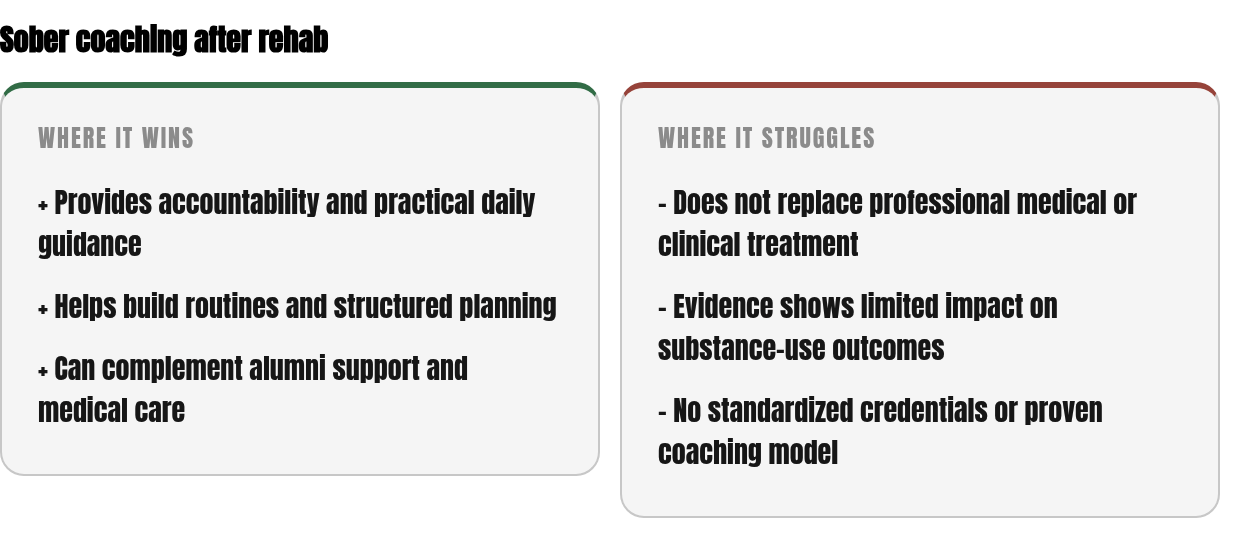
Alumni and peer networks can provide belonging, shared experience, and informal contact. That may be exactly what some people need. For others, returning home requires a separate plan for routines, communication, and follow-through.
Alumni Support Has Limits Families Should Name
Peer connections work within practical limits. People's availability changes. Peers may not have training in structured planning. No one may be responsible for coordinating appointments, routines, or family communication.
-
Ask whether the alumni network offers reliable contact during the transition home. Companionship matters, but inconsistent availability can leave practical needs without a clear owner.
-
Identify where peer boundaries end. Alumni relationships should not replace individualized planning, family guidance, or medical care, and nobody should handle medication changes outside their role.
-
Look for a missing planning process. If no one is translating recovery goals into weekly actions, accountability may need more structure than peers can provide.
-
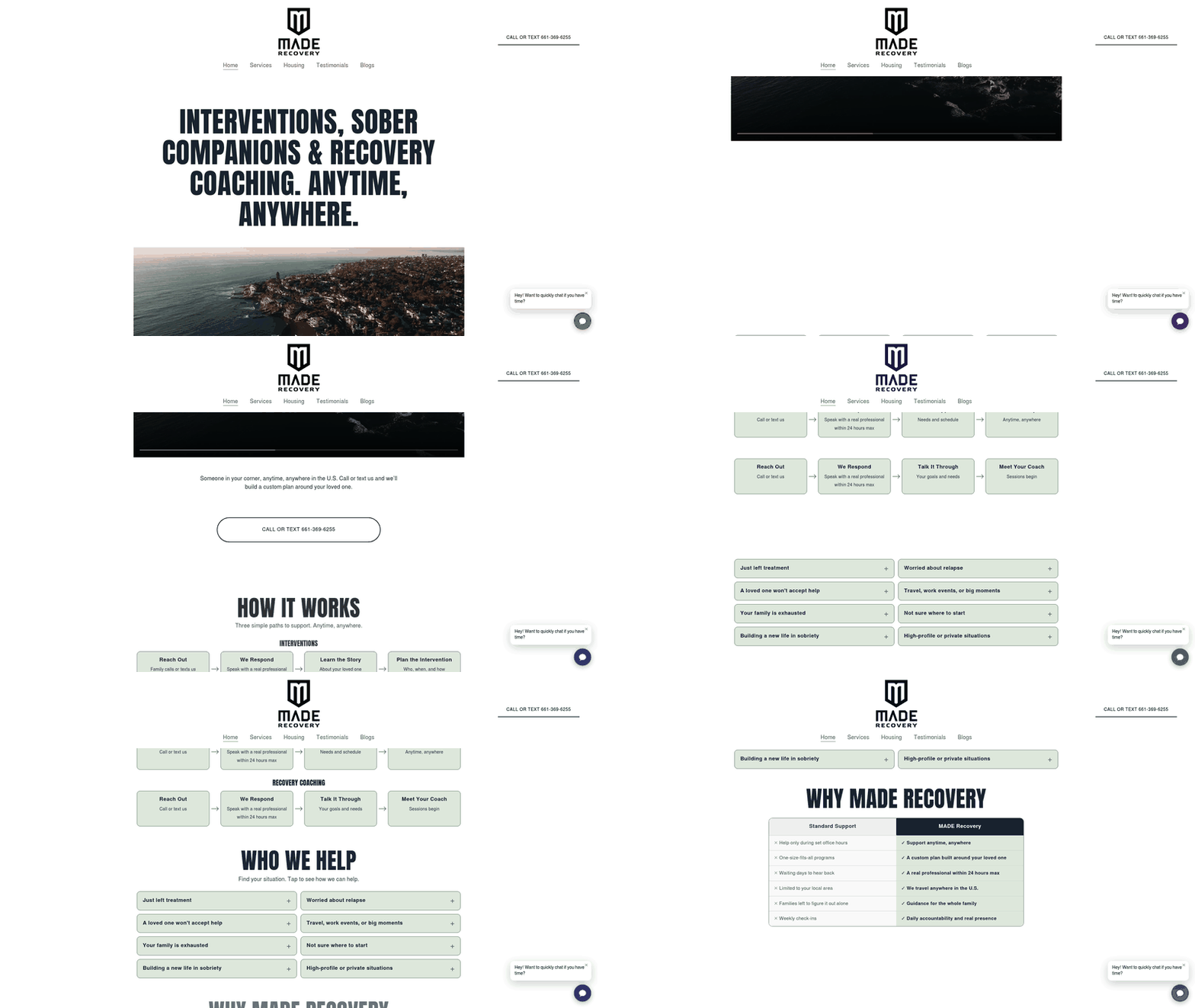
Consider a coach when the transition requires coordination. MADE Recovery provides nonmedical accountability, practical guidance, and support tailored to each client’s needs while working alongside existing treatment and medical care.
Coaching may not be necessary when the alumni network is meeting the person’s actual needs and the family does not want added structure. A clear gap in planning, availability, or boundaries is a better reason to hire a coach than treatment completion alone.
Scenario 1: Returning Home After Detox Without Structured Accountability
The day someone comes home from detox, the schedule that held them disappears. Meal times, check-ins, counseling appointments, and supervised structure may all stop at once. Sober coaching after rehab can address that gap by adding accountability, practical guidance, and human connection as someone reintegrates into everyday life.
Alumni relationships can remain important during this period, especially for connection and encouragement. MADE Recovery’s coaching focuses on the practical work of establishing daily routines, clarifying responsibilities, and building a dependable pattern of follow-through.
What Support Can Look Like in the First Weeks Home
A coach’s approach should be practical and personal. Support can be tailored to the person’s needs and adjusted as the situation changes:
- A dedicated coach or coordinated team, depending on the level of care needed
- Virtual or in-person coaching sessions, giving clients flexibility based on location and schedule
- Healthy eating guidance, supporting physical and emotional healing while building better daily habits
- Routine-building support, helping clients establish a steadier schedule that reduces stress and supports balance
- Ongoing companionship during critical moments, so clients do not have to manage the transition alone
- Planned support tapering, allowing support to be reduced as clients gain confidence and independence
If a family is weighing what level of support to put in place, these options can be adapted to different coaching formats. The schedule may change as the client becomes more capable. The question is whether each element still serves a current need.
Scenario 2: Family Conflict Undermines Recovery Progress
Returning home can expose disagreements that were easier to avoid in treatment. Family members may differ on curfews, privacy, check-ins, finances, or how quickly responsibilities should return. A coach can help turn broad frustrations into defined conversations and workable agreements.
When Does Family Conflict Call for More Structure?
Coaching may be worth considering when arguments repeatedly pull the recovering person away from recovery priorities and the current pattern is not changing. Sober coaching can add nonmedical accountability, practical guidance, and healthier routines. It does not replace counseling, medical care, treatment, or healthy peer relationships. Ordinary disagreements may not require a coach.
-
Use reflective listening before proposing a solution. Each person takes a turn describing what they observed, what they feel, and what they need. The point is to understand the request before deciding what to do next.
-
Use a simple observation-needs-request framework. “I noticed you were out past midnight, and I need a plan for checking in before you come home” avoids assigning motives or starting a lecture. It also gives the conversation a concrete next step.
-
Consider a written family agreement. Define contact schedules, privacy, responsibilities, and what happens when an agreement is broken. Keep it short enough to read aloud and revise as circumstances change.
-
Make consequences predictable rather than threatening. A missed check-in could lead to a revised support plan. Concerns about substance use may require the family to reconnect with treatment professionals or other appropriate support.
Why Coaching Complements Peer Support
Peer relationships can offer understanding that family members may struggle to provide. They generally do not, however, determine how a particular household should handle disagreement. MADE Recovery’s sober coaching gives the client and family a place to clarify responsibilities, rehearse difficult conversations, and review whether an agreement is working.
Clients can work with a dedicated coach or coordinated team, with virtual and in-person options, as their needs evolve. The arrangement should remain compatible with peer relationships, counseling, and treatment instead of asking one support to perform every function.
Scenario 3: Everyday Triggers Overwhelm Alumni Support
Everyday triggers rarely look like a neatly organized meeting topic. They may involve a commute, a social invitation, a difficult conversation, an empty evening, or an unexpected reminder of past substance use. A support plan needs to reflect the client’s actual settings and decisions.
Coaching can help organize an existing support system. Alumni meetings, peer connections, family support, and professional care each offer different benefits. A coach can help the client decide what to do before, during, and after a difficult situation without disregarding the supports already in place.
How Can Proactive Planning Complement Peer Support?
Peer meetings can provide connection and shared experience. Coaching can organize a plan around one person’s situations, responses, and boundaries. The process starts with observation rather than assumptions.
-
Create a situation log. Record the situation, possible cues, intensity, response, and outcome. Review it during scheduled check-ins to identify patterns without assigning a label to every difficult moment.
-
Build a trigger-response plan. Choose one practical response for each recurring situation, then define who can provide support and when to contact medical or treatment professionals. Coaching is nonmedical support, not clinical care.
-
Practice the response. Role-play a short conversation, refusal, or change of plan. Then turn the chosen action into an implementation intention: “If this happens, I will do this next.”
Proactive planning adds a layer to peer relationships and professional care. It does not replace them. MADE Recovery’s customized coaching can help clients build daily routines, practice practical responses, and adjust their support as their needs change.
How Should Coaching and Meetings Work Together?
Each support should have a clear role. Meetings offer shared experience and connection. Coaching handles individualized rehearsal, accountability, and adjustments to the plan.
-
Clarify roles before sharing information. Decide which settings provide connection, which provide planning, and who is responsible for follow-up.
-
Share agreed goals only with consent. A coach can summarize priorities with permission while keeping private details private.
-
Use meetings for peer connection. Let meetings remain a place for belonging and shared learning, then bring specific implementation barriers into coaching sessions.
This division can preserve the value of both supports. It may not be necessary when peer support already includes consistent planning, rehearsal, and follow-up. Adding another layer in that situation could add cost without providing needed structure.
Action Checklist: Hiring a Sober Coach That Complements Alumni Networks
A sober coach after rehab should complement, not compete with, an alumni network. A clear gap in structure is a strong reason to add coaching. Peer relationships can provide connection, while a coach can add scheduled accountability, boundaries, and practical follow-through. Our recommendation is to hire a coach only when the recovering person agrees and the role is explicit.
The review does not establish a standard coaching package, credential, price, goal model, or progress measure. Families should treat any provider’s claims in these areas as service-specific details to verify, not as research-backed standards.
What Should We Verify Before Hiring?
Qualification checks protect the client’s privacy, safety, and continuity of care. Ask about training, aftercare experience, references, scope, and crisis procedures before discussing specific schedules.
-
Ask what training the coach received, which recovery situations they understand, and whether they can provide relevant references. Recovery experience alone does not establish preparation for a professional coaching role.
-
Confirm that the coach stays within nonmedical support and refers clinical concerns to the appropriate provider. MADE Recovery coaching is not treatment, medication management, counseling, or detoxification.
-
Ask how the coach handles risk, emergencies, confidentiality, and information sharing with family. Written answers should identify who receives updates and when.
-
Verify any background check and applicable credential under the coach’s actual role. Do not assume every title carries the same training or legal requirements.
How Should the Coach Work With Existing Supports?
A good fit depends on communication style, boundaries, availability, and a clear division of responsibilities. Families should compare solo and team support, virtual and in-person options, session frequency, response times, and communication methods rather than looking for one “standard” package.
-
Schedule a trial conversation and ask the coach to explain their approach, boundaries, communication style, and plan for coordinating with alumni meetings and other providers. Skip coaching if the style feels controlling, vague, or mismatched.
-
Set a written plan with priorities, optional SMART or WOOP-style goals, session rhythm, availability, and how progress will be reviewed. These are practical tools, not research-established coaching standards.
-
Track agreed actions, attendance, habit-building, and milestone reviews without treating them as proof of sobriety. If the review team cannot identify what coaching adds beyond peer support, reconsider the arrangement.
References
[1] Peer Recovery Support Services and Recovery Coaching for Substance ... - https://pmc.ncbi.nlm.nih.gov/articles/PMC12811009/
Still Wondering?
Are sober coaches licensed or certified?
No single standard governs sober coaching, and the research reviewed here does not establish a credential, training requirement, or standard package. Ask directly what training the coach completed, whether a background check was run, what references they can supply, and how their role is defined where you live. A recovery story alone is not proof of preparation for a professional role.
Does hiring a coach mean the person should drop their alumni group or therapy?
Coaching adds a layer; it does not swap one support for another. Alumni meetings can continue providing belonging and shared experience, while a coach handles planning and follow-through and clinicians address medical concerns. Divide responsibilities by function and share goals with the coach only with the person’s consent.
How long should coaching last, and when should a family scale it back?
Duration follows need, not a fixed calendar. Build tapering into the plan from the outset, stepping sessions down as routines hold without prompting, and review at agreed milestones whether coaching still adds what peers cannot. If nobody can name what changed since coaching began, reconsider the arrangement.