What Accountability Really Means in Your First Year After Rehab
September 21, 2026

Key Takeaways
- Accountability means owning your commitments, even when no one is watching. That's different from just having support around you.
- The first twelve months after rehab are when new routines are most fragile. Old triggers sit closest, which makes honesty systems matter.
- Ownership of sobriety never transfers to a sponsor, counselor, or loved one. A partner can create structure that makes commitments harder to abandon, but the ownership stays yours.
- An accountability partner is not a mentor. The role works best narrowed to one question: did you keep your commitment?
- The line a partner holds is honesty, not agreement. Cutting contact temporarily can be necessary when someone refuses accountability.
- Standard accountability models assume a stable local partner. That breaks down for people traveling during their first year, when relapse risk peaks.
- A three-minute midday check, written or voice-recorded, can flag warning signs before they stack, right when decision-making energy runs low.
Why Accountability Really Matters in the First Year After Rehab
Accountability in the first year turns a treatment plan into daily practice. Sobriety isn't a one-and-done deal. As Discovery's recovery guide puts it plainly, people who have been sober for years still face cravings. The first twelve months are when routines are fragile and old triggers are closest, so the systems you build to stay honest carry more weight here than at any later point.
We watch this stretch make or break the transition out of residential care. The AIM guide on accountability calls it the number one priority for anyone in treatment, and we'd agree. What gets lost is a distinction worth naming: accountability is not the same as having support around you. It's the act of owning your commitments even when no one is watching.
Accountability Is Owned, Not Outsourced
Accountability: the obligation to accept responsibility for your own choices and follow through on your commitments. It belongs to you, not to your coach or your family.
Two sources look like they disagree here, and the tension is worth sitting with. Soberlink argues that treatment and sobriety can't be outsourced to a sponsor, counselor, or loved one, no matter how strong the support system. Discovery counters that an accountability partner is what sustains sobriety after treatment.
Both are right, at different layers. Ownership never transfers. But a good partner doesn't carry your accountability for you. They build the external structure that makes your own commitments harder to walk away from on a hard day. That's the version of support we build around.
The Partner Role Works Best When It Stays Narrow
A coach-led model strengthens self-ownership instead of diluting it because the role stays tightly defined. Discovery notes that an accountability partner is not a mentor. Rather than handing out advice, they focus on one thing: helping you keep the commitments you set.
That narrowness is the point. A defined role reinforces your accountability instead of replacing your judgment. In our experience, a check-in that simply asks, "Did you do the thing you said you would?" lands harder than another round of advice. We keep our coaching sessions built around that question.
One caution from the field. AIM points out that unconditional support has to be paired with firm boundaries, and that cutting contact temporarily can be necessary when someone actively refuses accountability. A partner doesn't need to agree with every decision you make. They do need you to stay honest with them. The line is honesty, not agreement.
For Sober Travelers, the Partner Has to Move With You
This is where the standard advice falls short. Most accountability models assume a stable local partner, a home group, a fixed weekly routine. If your first year involves travel for work or family, that footing disappears exactly when relapse risk is highest.
Daily sober companionship exists to fill that gap. The Surgeon General's report on alcohol and drugs, cited by Soberlink, named embracing technology as a core principle for recovery. A coach who travels with you, or checks in daily by phone, can deliver the same commitment-keeping function a local partner would, in a form that moves with you. Think of it as what a sober coach does: portable structure that props up your own accountability until you no longer need the prop.
Building a Structured Daily Routine: The Backbone of Accountability
Accountability in the first year isn't just a mindset. It shows up, or it doesn't, in the structure of your day. That's especially true for people traveling or relocating after treatment, where the usual environmental cues that anchor a routine at home simply aren't there. Without a structured daily schedule, the gap between knowing what you need to do and actually doing it widens fast.
What we see consistently is that routine does the heavy lifting willpower can't. When you're tired, stressed, or in an unfamiliar city, you don't rise to the occasion. You fall to the level of your habits. That's why routine building is a core part of how we coach, and why we lean into it hardest with clients traveling after treatment, who need that structure to travel with them, including through our sober travel companions.

The Day Has Three Non-Negotiable Anchors
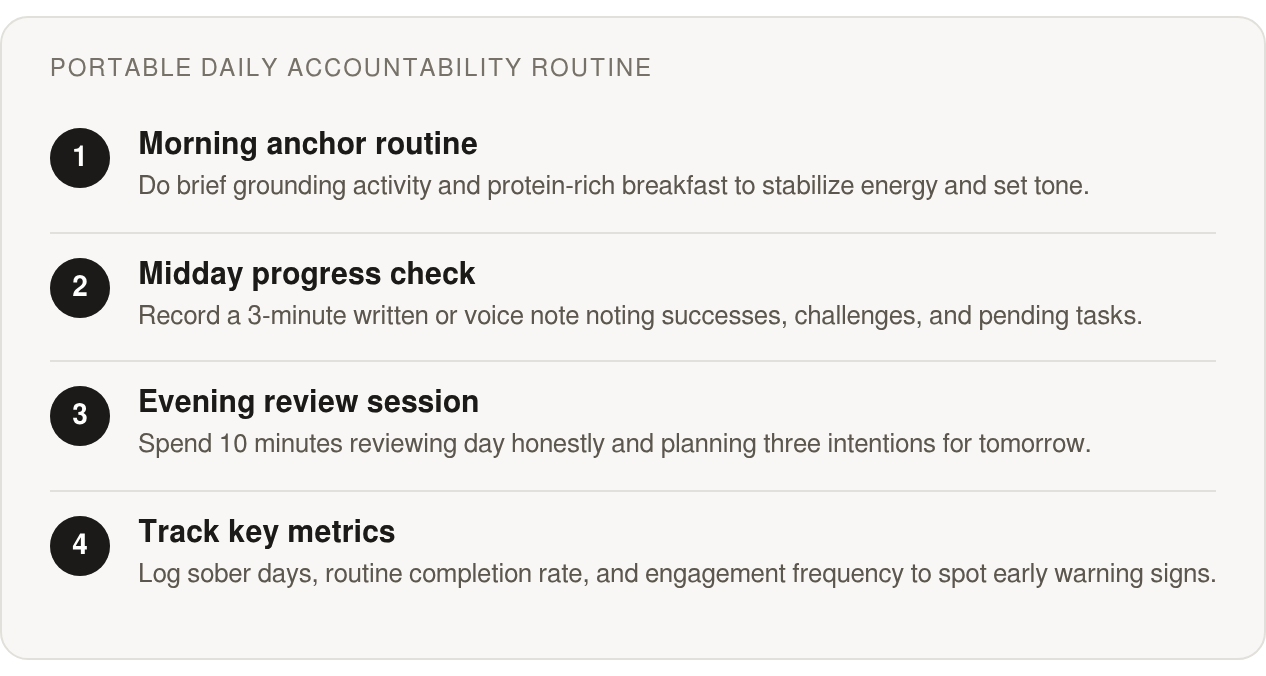
The morning sets the tone. We help clients start with a short, repeatable routine, something simple and grounding that takes a few minutes to move through. Pair that with a protein-forward breakfast, and you're stabilizing blood sugar before the first stressor hits. Skipping it on a low-stress morning at home isn't a disaster. For someone managing a new place alone, it matters more.
Midday is where slippage usually starts. By early afternoon, clients have burned through their decision-making energy, and hunger starts to blur into something that can feel like craving. A brief progress check here helps. Three minutes, written or voice-recorded. It flags warning signs before they stack. The idea is simple: notice what's gone well so far, what's felt hard, and the one thing that still needs to happen before the day ends.
The evening anchor is a ten-minute review. For clients working with a sober companion on the road, this is often the daily check-in call. For those in peer communities like SMART Recovery, it's a structured reflection shared with a sponsor or group contact. Either way, the session does two things: it closes the day with an honest self-assessment, and it sets three intentions for the next morning. That forward-planning step is what heads off the blank-slate anxiety of waking up in a hotel room with no default routine to fall back on.
Routine Doesn't Travel by Default. You Have to Pack It
This is the piece general recovery advice almost always misses. A routine built around your home gym, your neighborhood coffee shop, and your therapist's office doesn't survive a flight. For sober travelers in the first year, the transition out of residential care is hard enough with a stable home base. Without one, you need a routine that's deliberately portable.
That means the anchors have to work in a hotel room, an airport, or a client's office. A short morning routine does. A protein breakfast does, with a little planning. A three-minute written check-in does. What doesn't travel is anything that depends on a specific place or person being available at a specific time. Build the portable version first, then layer in the location-specific pieces when you're home.
Tracking Progress and Early Warning Signs with Data‑Driven Tools
Numbers can cut through the fog early recovery creates. When you're traveling in your first year out of treatment, you lose the people who would normally notice you're slipping. Consistent check-ins give us something concrete to talk through together, and that honest, ongoing contact is where real accountability starts.
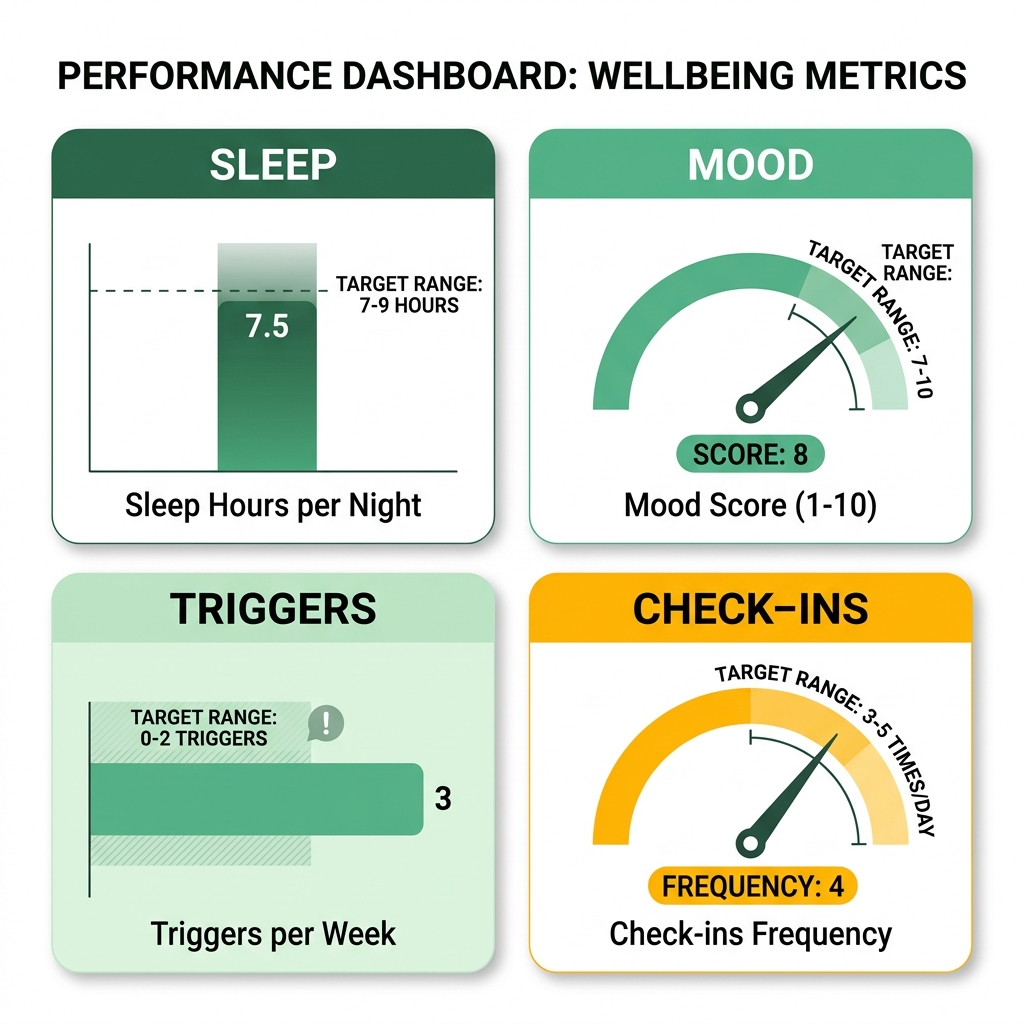
Coaching works best when a few things stay in view: how you're sleeping, where your mood sits, and any triggers that came up during the week. None of it is complicated. The point is a real conversation neither of us can wave off. When your companion coach checks in, we're not asking "how are you feeling?" and taking a vague answer. We're talking it through, honestly.
Small Trends Warn You Before a Crisis Does
The value of paying attention isn't the single bad day. It's the pattern. Three nights of short sleep, a mood sliding down over a week, the same trigger showing up in a new city. Any one of those is easy to shrug off. Stacked together, they tell a story worth interrupting early.
This is where a coach who stays in consistent contact earns their place. We watch for the drift, not the disaster. If things start pointing the wrong way, we can add a session, change the day's plan, or get on a call before a rough patch turns into a relapse. That's the whole idea behind what a sobriety coach does: catch things while they're still small.
Support That Travels With You
You don't need special equipment. Honest check-ins and steady coordination cover the basics, whether we're working virtually or in person. Say a client on the road hits two low-sleep nights and a dipping mood right before a big work trip. That's a flag we'd act on, not wait out.
We keep it simple on purpose. If staying in touch feels like a chore, it won't last. The goal is a rhythm that travels with you and gives your team an honest read, wherever you happen to be.
Managing High‑Risk Situations: Social Events, Work, and Travel
High-risk situations are where good intentions meet real pressure. A party with an open bar. A work conference in a new city. A wedding across the country. These are the moments the first year tests hardest, and they're exactly where a coach earns their keep. Our job is to make sure accountability travels with you into the room instead of staying behind at home.
We build this around three moving parts: what happens before, during, and after the event. Each one keeps you connected to someone who knows your plan and won't let a vague answer slide.
How Does a Pre-Event Safety Plan Keep You Accountable?
Before you walk into anything risky, we sit down together and write a short plan. It names your likely triggers, the coping tools you'll actually use, and who you'll call if things tip. Nothing fancy. Concrete answers ready before you need them.
For social settings, we rehearse how you'll turn down a drink without a speech. A simple, repeatable line beats an explanation. "I'm good with water tonight" ends the conversation and keeps your peers comfortable, which matters when you still have to see these people Monday.
What Does Sober Travel Support Actually Look Like?
This is where our angle lives. For clients heading out of town in their first year, our sober travel companions can go with you, offering consistent, real-world support during the moments that matter most, so you're not facing an unfamiliar city alone.
Say you've got a wedding in a city you don't know. We map the timeline together, flag the reception as the hard part, and agree on how we'll stay connected. You're not white-knuckling alone in a hotel room. Someone is tracking the day with you.
Work travel gets the same treatment. Consistent companionship and coaching can help break the stress cycle before it builds, and day-to-day life management keeps patterns visible as you go.
The point of all this is contact you can't quietly skip. If you want more on rebuilding this footing, our piece on work, friendships, and purpose after treatment goes deeper. High-risk days don't have to be solo days.
The Role of Family and Community Support in Sustaining Accountability
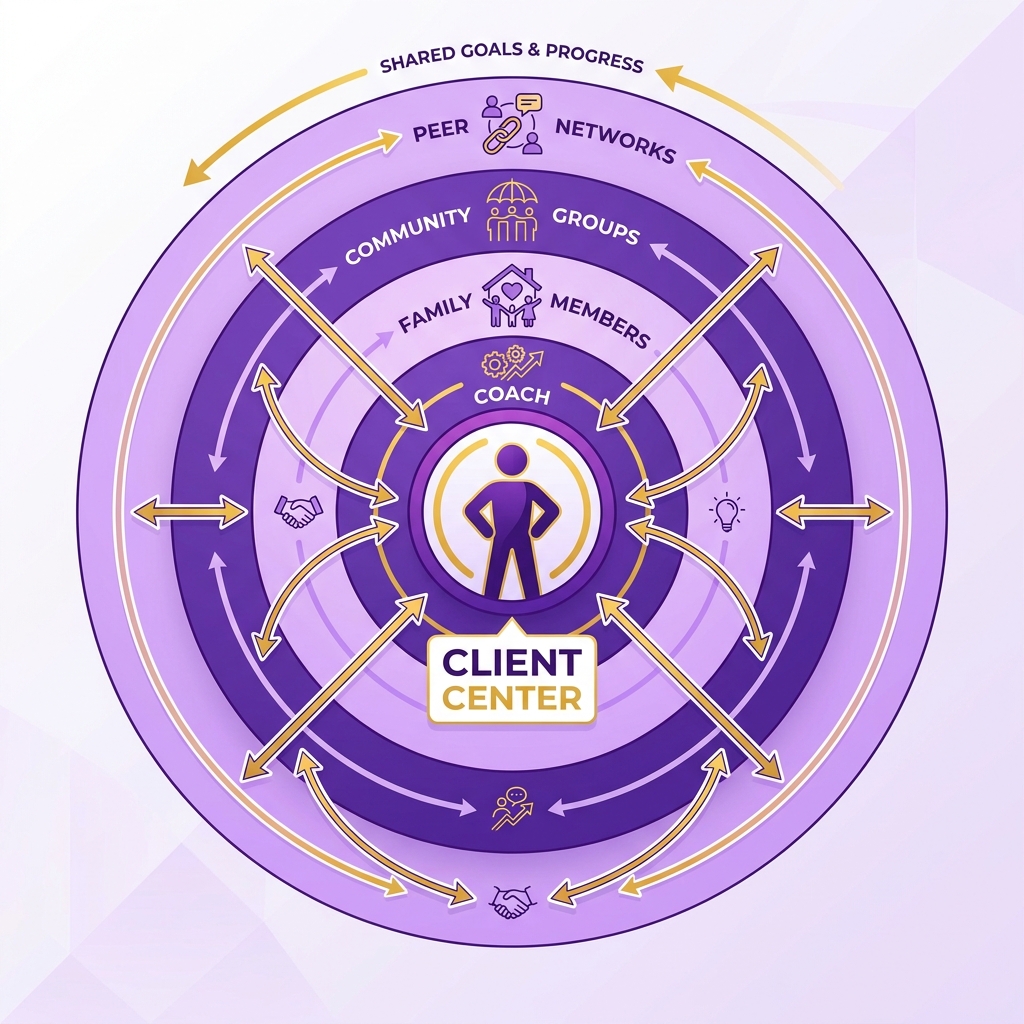
When you're traveling in your first year out of treatment, the people who love you most are often the farthest away. That physical distance is what makes intentional connection matter. Family and community provide the relational glue that anchors recovery, helping everyone pull in the same direction alongside professional coaching instead of running on disconnected tracks.
The balancing act is emotional warmth against healthy independence. Loved ones offer lasting encouragement, but leaning on them for day-to-day behavioral monitoring can strain relationships and blur healthy limits. Dedicated recovery structures preserve your autonomy while keeping loved ones meaningfully engaged in your progress.
How Do Family Check-Ins Reinforce Accountability Without Enabling?
Regular, predictable contact with family gives the week a steady rhythm and a space for honest conversations about how life is unfolding. Family therapy tends to help across almost any household because it encourages individual responsibility and healthier communication at the same time.
To keep these check-ins constructive, families need clear ground rules around emotional and material support. Loved ones help most when they listen without trying to manage schedules or solve daily stressors that belong to the individual. Clear boundaries around money and household responsibilities keep support pointed toward genuine self-reliance rather than dependence.
When conversations get contentious or avoidance surfaces, family members can hold their boundaries without getting pulled into unproductive conflict. Consistent personal boundaries keep communication productive and transparent, which protects both the individual's recovery and the family's shared trust.
What Does Community Add That One Partner Can't?
A single check-in partner covers a lot, but community covers what a partner can't be everywhere for. Peer support is a well-documented piece of what keeps people abstinent, and for travelers it solves a specific problem: you land somewhere new with no one who knows you.
This is where a local sober-activity network matters. Volunteering, recovery meetings, and community projects give you somewhere to belong in an unfamiliar city, and showing up is itself a steady reminder to stay on track. We help clients map these out before they arrive, so the calendar isn't empty on day one.
Why a Narrowly Defined Partner Role Works Best
A sustainable recovery network depends on distinct roles that complement each other rather than duplicate. Loved ones offer relational history and care. 12-step or alternative recovery groups provide shared peer identification. Within that circle, a dedicated coach holds a non-judgmental space centered on actionable follow-through, as Discovery's guide describes it.
Dividing roles this way keeps any single relationship from carrying the whole emotional load. Family stays focused on connection, peer circles offer shared lived experience, and formal check-ins hold the daily behavioral structure. A balanced network surrounds you with clear support while keeping ownership squarely in your hands.
The Bottom Line on Proving Accountability Works
How do you know accountability is actually working and not just keeping you busy? You need numbers you can point to. For sober travelers in the first year, that matters even more, because you don't have a home base of people watching your progress. The metrics become your mirror.
A handful of markers turn accountability from a feeling into something measurable. None of them are fancy. They're things you can track on your own, and we'd push you to.
What Metrics Actually Show Progress?
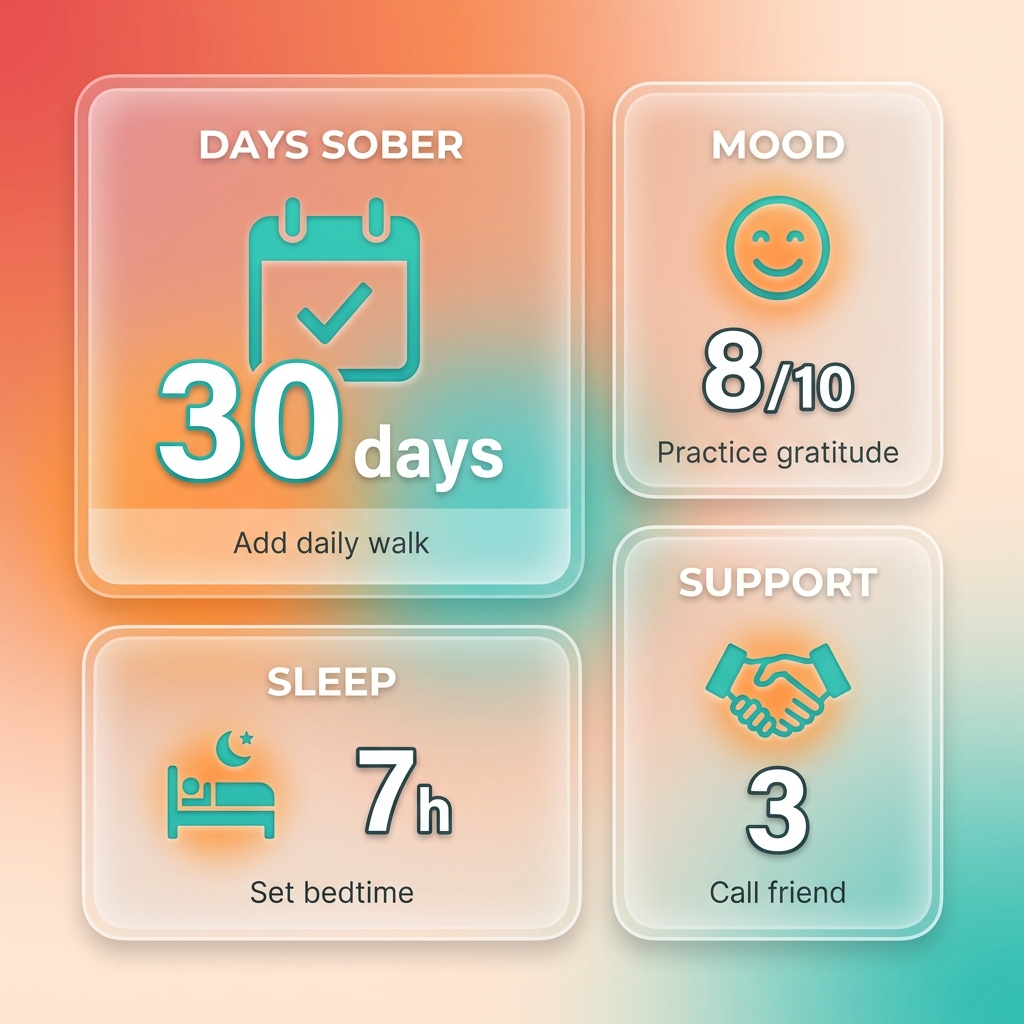
Start with the simplest one: consecutive days sober. Counting them isn't about pride. It's a baseline you can watch climb, and a sharp signal when it resets. When you're moving between cities, that running count is one of the few constants you carry with you.
Next is routine completion. Pick your core anchors. Morning check-in, a meal you didn't skip, a meeting you actually attended. Tally the percentage of days you hit them. A number in the high eighties tells a very different story than one hovering near sixty, and the gap usually shows up before a slip does.
Then there's engagement. How often are you reaching out, logging your day, showing up to community? Pulling back from contact is often the earliest crack, which is why it's worth watching. Rising engagement tends to track with staying on plan. Falling engagement is a signal worth acting on fast.
Why Tapering Support Is the Real Win
Here's a metric most people miss. The goal isn't to need a coach forever. It's the opposite.
Part of how we measure success is how much support you stop needing. As your routine stabilizes and your own follow-through holds, we pull back on purpose. A sobriety coach's job is one that ends when you don't need it anymore.
So use the same framework yourself. Count your days, score your routine, watch your engagement. When those numbers hold steady without anyone prompting you, that's not just accountability working. That's you doing the work.
References
[1] Learning Accountability in Rehab - AIM: Advaita Integrated Medicine - https://aimwellbeing.com/accountability-in-rehab/
[2] Accountability in Recovery | 7 Ways to Engage Personal ... - Soberlink - https://www.soberlink.com/addiction-recovery-blog/seven-ways-to-engage-accountability
[3] Accountability in Recovery: A Guide to Maintaining Sobriety - https://www.discoverynj.org/accountability-in-recovery/
Frequently Asked Questions
1. How is a sober coach different from a sponsor or mentor?
While sponsors guide you through 12-step literature and mentors share broad life wisdom, a professional coach focuses on execution logistics. The work centers on building daily structure, tracking progress data, and navigating high-risk environments in real time. This operational focus provides systematic oversight without blurring into clinical therapy or spiritual guidance.
2. What if my accountability partner disagrees with a decision I'm making?
A constructive partner will prompt you to evaluate whether a specific choice aligns with your stated recovery goals and safety plan. The dialogue serves as a mirror rather than an authoritative veto. Healthy friction is normal; what matters is engaging transparently in the discussion rather than concealing actions or withholding information.
3. Can a family member be my accountability partner?
Relying solely on family members can complicate relationships due to past emotional history and intertwined domestic roles. When relatives attempt to act as daily monitors, it can inadvertently trigger resentment or old relationship patterns. Utilizing professional support or peer networks for daily tracking allows family connections to focus on emotional encouragement and healthy connection.
4. When should I stop working with a sober coach?
Stepping down from professional companionship is appropriate when your self-directed habits remain consistent through major stressors and travel. When you reliably execute daily anchors, manage cravings independently, and participate in peer communities without external reminders, coaching can be safely tapered into periodic maintenance.
5. What happens if I skip my daily check-ins while traveling?
Going silent while on the road triggers an agreed-upon response plan between you and your support team. Coaches reach out via alternate communication channels to assess safety, identify emerging travel stressors, and help you recalibrate your schedule before isolation leads to unmanaged cravings.
6. I already do a morning and evening routine. Why add a midday check-in?
Midday check-ins address the circadian and cognitive dip that happens several hours into a demanding workday. Taking a momentary pause around lunchtime resets focus, verifies nutritional intake, and allows you to adjust the afternoon schedule before physical fatigue is misinterpreted as psychological stress.