Sobriety Coaches Fill the Gap Between Discharge and Your First Month Home
October 1, 2026

Before we get into it:
- Relapse rates hit 65 to 70 percent within the first 90 days after treatment, with the highest risk appearing right when residential structure ends.
- Sober coaching is nonmedical accountability and routine support, usually structured around 2–3 contacts per week rather than constant presence.
- Travel disrupts new routines exactly when sobriety skills are most fragile—flights home, family visits, work trips all test recovery during the riskiest window.
- Research on coaching outcomes is still preliminary. What coaching clearly does well: logistics, routine-building, and support during high-risk moments.
Quick Summary
The first month home decides whether recovery sticks. A sober coach after rehab exists to hold that stretch together. Travel matters because the first month rarely stays put. A family event, the flight home from treatment, a work trip that drops you alone in a hotel room—these moving pieces test sobriety. A sober travel companion helps fill that gap.
What Does a First-Month Sober Coaching Plan Look Like?
Sober coaching is nonmedical support that reinforces sobriety through accountability and routine, not clinical treatment. The table below maps a typical first 30 days.

| Day range | Primary coaching focus | Client actions | Coach involvement | Challenges addressed |
|---|---|---|---|---|
| Day 0–3 | Settle in, map triggers | First sober night at home, name high-risk hours | High-touch; daily contact | Isolation, old cues, the empty schedule |
| Day 4–10 | Build daily structure | Fixed wake/meal/sleep, lock in weekly check-ins | 2–3 contacts/week, on-call backup | Cravings, unstructured afternoons |
| Day 11–20 | Re-enter real life | First work shift, first social event, travel if needed | Coordinated team, travel companion as required | Work stress, parties, trips away from home |
| Day 21–30 | Reinforce independence | Run routines solo, flag what's shaky | Support begins to taper | Overconfidence, the "I've got this" dip |
A coach checks in regularly rather than living with you. The plan has to run on its own between contacts. The first sober night, the first work shift, and the first social event are milestones that often define month one. Travel collides with all three.
Why the First Month Carries Real Weight
Between 65 and 70 percent of people relapse within the first 90 days after treatment. Outcomes track the intensity of support during early recovery, not the quality of discharge paperwork.
One caveat. A systematic review from the Recovery Research Institute at Massachusetts General Hospital found the evidence for coaching improving substance use outcomes is still preliminary. Where coaching earns its value is the non-clinical work: rebuilding routines, managing logistics, and getting you through a trip without a drink in reach.
The Fast Version
- Month one is defined by first real-world tests: sleeping at home, going back to work, walking into a social setting, traveling without the structure of treatment.
- Flights home, family trips, and work travel pull you off your routine right when it's newest.
- Expect regular coach contacts plus backup for urgent recovery moments. Support should taper on purpose, not stop cold.
- Coaching is nonmedical and usually not covered by insurance. It supports treatment but doesn't replace it.
- Spend on the highest-risk hours and the trips, not on round-the-clock presence you won't use.
Building a Personalized Support Plan
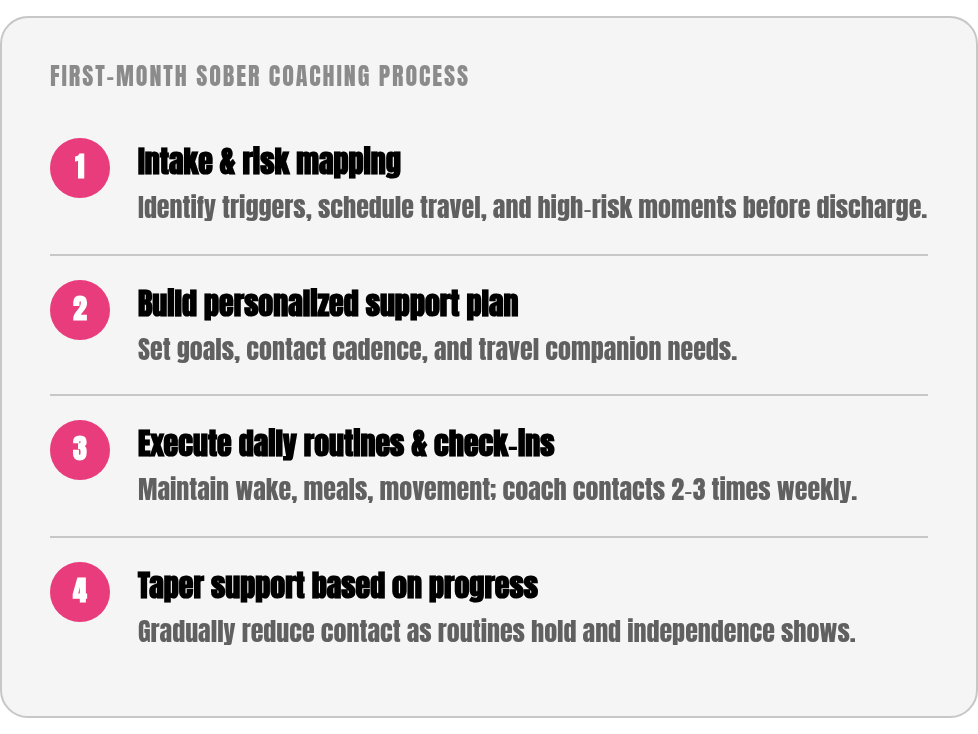
The plan starts before discharge paperwork is signed. Clients who hold their footing in month one are usually the ones whose support was mapped out while they still had the structure of treatment around them. A sober coach after rehab is only as useful as the plan behind the relationship, and that plan has to account for the thing most discharge packets ignore: the trips, flights, and overnight stays that land in those first thirty days.
Start the Intake Where the Risk Actually Lives
A good intake assessment maps triggers, family history, sleep, and daily routine. We push further and map the calendar. When does the flight home happen? Is there a wedding, a work conference, a custody exchange in another city? Those are the moments a plan has to survive.
The coach's first-month job isn't to prevent relapse by force of personality. It's to keep you connected while protective factors begin to build: routine, sober contacts, sleep, food, movement, and a realistic plan for the awkward hours. A trip is exactly where that connection snaps if no one planned for it.
Write Goals That Travel
Vague goals die in a hotel room. We write them concrete and time-boxed: "Attend three sober community events in the first two weeks." "Call the coach before and after the Friday flight." "Identify two meetings near the conference hotel before leaving."
Planning specific actions for specific moments makes a difference. A travel companion is the external scaffolding for those plans, standing in the gap while skills learned in treatment harden into habits.
Match the Intensity, Then Involve the Right People
Not everyone needs a companion riding shotgun for a month. As Caron's sober coaching overview puts it, a coach checks in through the week rather than living with you. For many clients, scheduled contact plus on-call support fits. Reserve full travel companionship for genuinely dangerous windows: the solo flight home, the family event with open bars, the first business trip.
Family belongs in the plan, but on your terms. We coordinate with trusted family members for logistics and encouragement, building support around the client's needs and preferences. Accountability is a safety net of reminders, not surveillance.
Then we write it down: your goals, when and how often we'll be in contact, who's part of your support network, and which travel dates need coverage. Programs are tailored to each individual, with support from a single dedicated coach or a coordinated team depending on the level of care needed. If you want more on the parts discharge paperwork skips, we cover them in this piece on a sober coach's real jobs.
One limit: coaching is nonmedical support. We don't diagnose, detox, or manage medication. This plan sits alongside clinical care, not in place of it.
Daily Practices & Routines for Stability
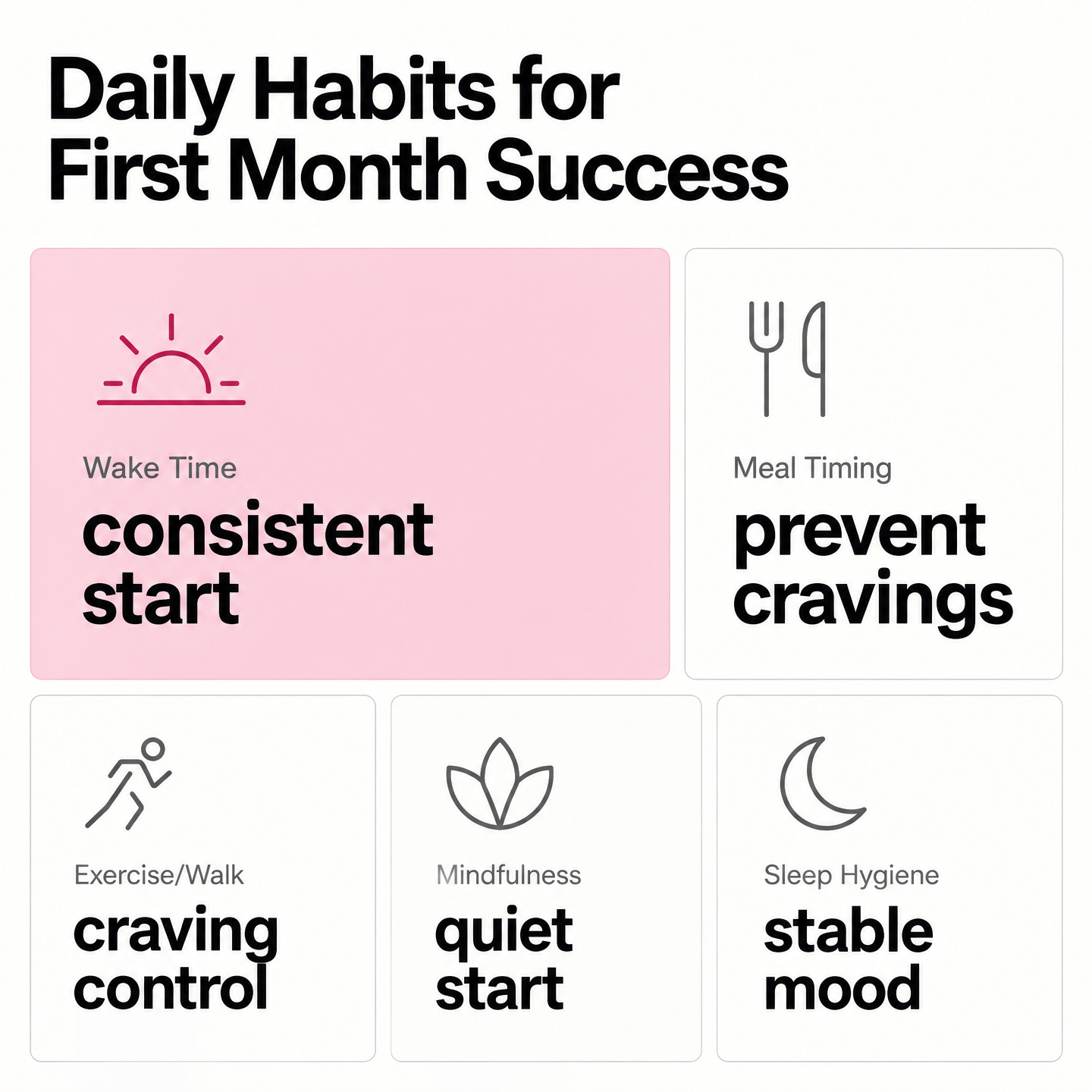
The habits that hold the first month together are small and boring. Wake at the same time. Eat before you're starving. Walk when the craving spikes. None of this sounds like much until you try to do it alone in a hotel room three days after discharge, which is where routines fall apart. A sober coach after rehab exists to protect these habits when the structure of treatment is gone and the calendar starts throwing curveballs.
The clinical skills you learned in treatment need real-world reps, and the first time many people test them is on the move. That's why we build daily practices to travel with you, not just live in your kitchen. Transition-home guidance stresses that the early stretch after rehab carries elevated risk because structure drops away quickly.
What Daily Routines Actually Anchor the First Month?
Start with the anchors treatment already gave you. A residential day runs on a fixed wake-up, a morning check-in, a brief mindfulness exercise, scheduled meals, and recreational movement like walking or yoga. We help you keep a simplified version of that rhythm at home, because daily structure reduces the idle hours where cravings resurface.
Three habits do the heaviest lifting:
- Morning grounding: a fixed wake time plus a few quiet minutes before the day starts.
- Regular meals and sleep: eating on a schedule and protecting a consistent bedtime, both of which stabilize mood when early recovery is already an emotional rollercoaster.
- Scheduled low-stress movement: a daily walk or short meditation that you can do anywhere.
We keep the list short deliberately. A plan with thirty rules collapses the first time your flight gets delayed. Three habits survive travel.
How Does a Coach Keep Routines Alive on the Road?
This is where the travel companion angle matters most. At home, the cue might be your kitchen, your meeting, your usual walking route. On the road, those cues vanish. A coach helps rebuild them in miniature: where you'll eat, when you'll call, what you'll do after the event ends, and how you'll handle the quiet stretch after you close the hotel-room door.
We use if-then planning for this. If the minibar is in the room, then we call before unpacking. If the wedding has an open bar, then you have a ride booked for 9 PM. That accountability isn't about control. As the transition-home guidance notes, it creates a safety net of reminders rather than micromanagement.
Does Journaling and Habit-Tracking Really Help?
A brief end-of-day reflection keeps motivation visible when progress feels slow. Two minutes noting what worked and what rattled you gives your coach something concrete to adjust against at the next check-in.
Track habits because they sharpen your plan, not because an app guarantees anything. The tool is only as good as the person helping you interpret the pattern: which situations keep repeating, which routines are holding, and which parts of the week still need more support.
Relapse Prevention Strategies for the First 30 Days
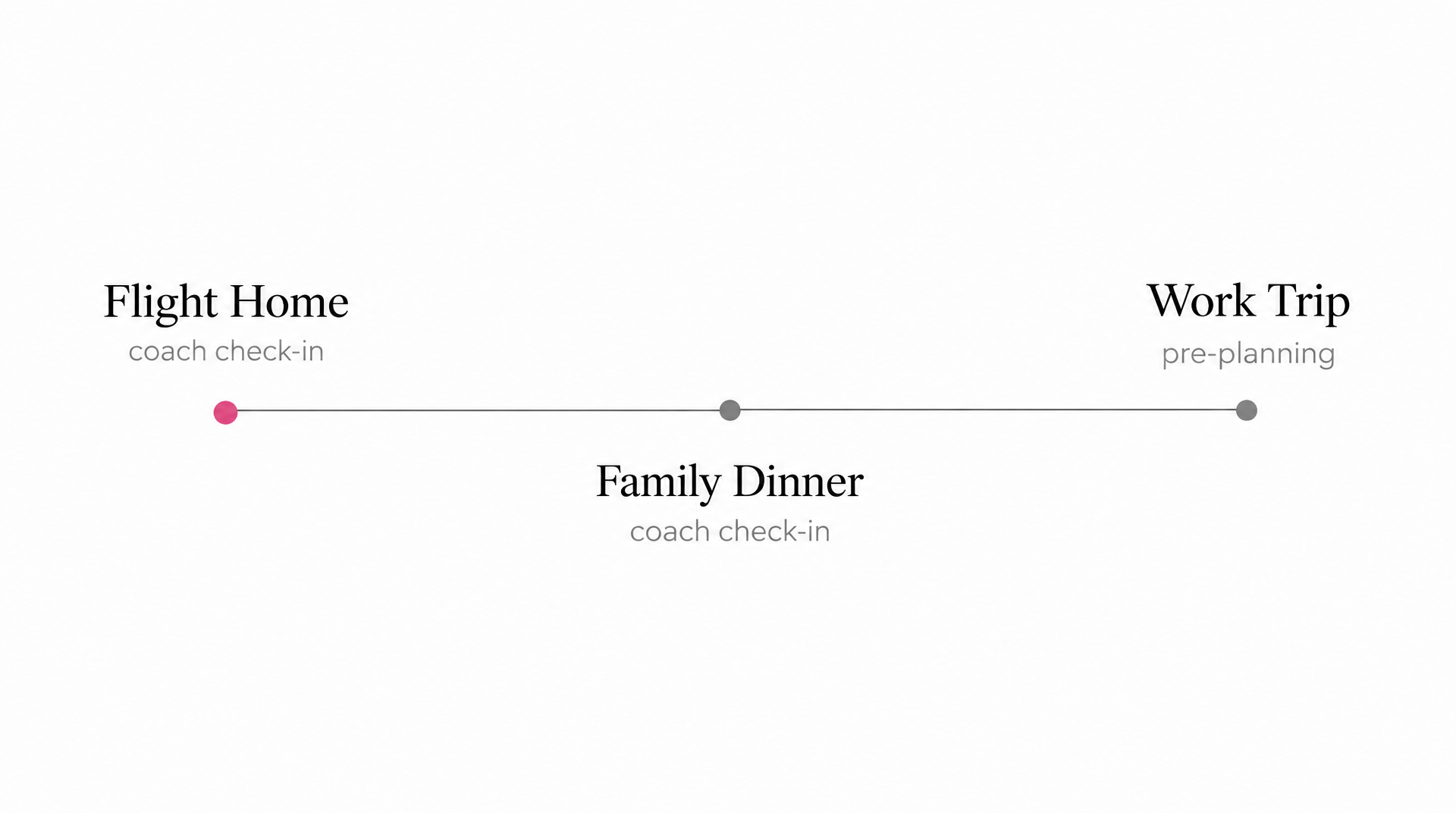
The riskiest moment in month one is rarely the one you planned for. It's the invitation that lands on a Thursday, the work trip you forgot you booked, the family dinner three states away. A sober coach after rehab earns value here, because these moments don't wait for your next scheduled check-in. They show up when treatment structure is already gone.
The first-month aim is connection before crisis. If the client stays connected to people, routines, transportation, meals, meetings, and honest check-ins, the recovery plan has something to stand on. When those links disappear, willpower gets asked to do too much.
Pre-Plan the Trip Before the Trip Happens
The single most useful tool we build with clients is an if-then plan tied to a specific trip. Deciding your response to a high-risk situation in advance makes you far more likely to follow through than goal-setting alone.
So we don't say "stay strong at the wedding." We write the script. If the toast starts, you're holding a club soda and standing near the exit. If a relative pushes a drink, here's the exact sentence you say. If the craving spikes at 9 p.m., you text the coach before you do anything else.
That specificity matters because unstructured settings make decisions harder. The hotel bar, the delayed flight, the late-night room service menu, the after-party—all easier to handle when the decision has already been made.
The Coach Is the Safety Net, Not the Doctor
A sober coach is on call for the craving, the panic text, the late-night hotel-room moment. What they are not is medical care. Sober coaching is nonclinical real-world support, even when availability extends into urgent relapse-risk moments.
The boundary is where good coaching earns trust. If a client shows withdrawal symptoms, suicidal thinking, or a medical emergency, the coach's job is a fast handoff to clinicians, not a solo rescue. We coordinate with your existing treatment team so the referral happens quickly and safely.
Weekly Contact Beats Good Intentions
Regularity is the active ingredient. Scheduled accountability contacts turn "I should probably call someone" into a real appointment, a real conversation, and a real chance to adjust the plan before the weekend or trip goes sideways.
Build the check-in cadence around your calendar, not a generic template. Use daily texts during a travel week, a video call the morning of a hard event, or in-person support before the flight home. When you're moving, the companion moves with you. That's the gap a stay-at-home routine can't cover.
Tapering Support & Planning for Long‑Term Independence
The goal of good coaching is to make itself unnecessary. A sober coach after rehab who still runs your calendar at month six has failed at the actual job, which is building the independence to run it yourself. We taper on purpose, and the signal we watch for is whether the routines we built together hold when you're running them alone. The first solo stretch is often the stress test that shows whether a skill became a habit. We step back when the evidence from your own progress says you're ready, not when a generic schedule says so.
The Taper Follows Your Progress, Not the Calendar
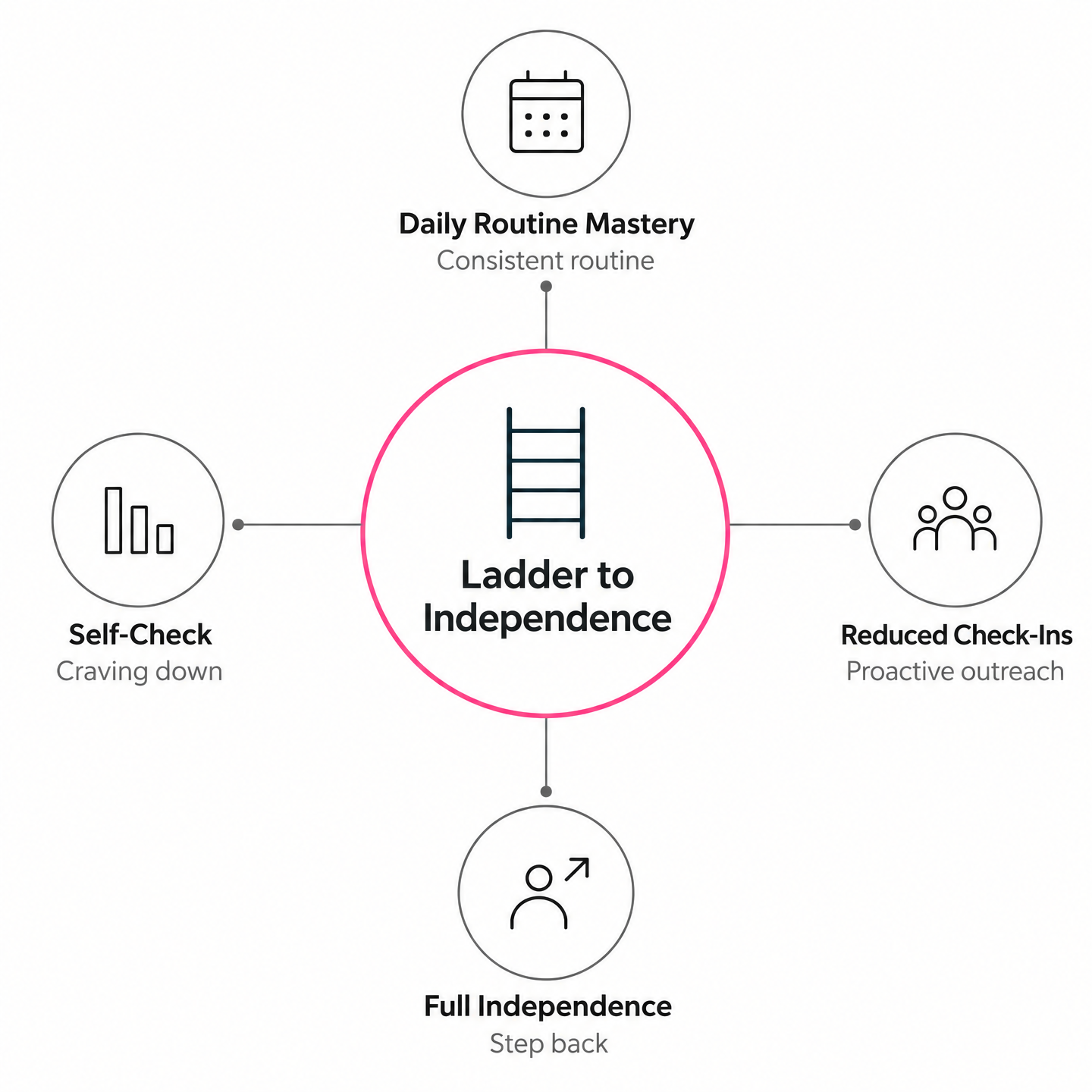
Most tapering guides move you from weekly to bi-weekly to monthly contact on a fixed timeline. We flip that. The schedule bends around how you're doing. We hold regular contact through the most unstable early stretch. Once you've handled challenging situations alone, kept your routine steady, and reached out before a craving instead of after, we widen the gap. A clean run through real-world pressure is worth more than four quiet weeks at home.
Recovery coaching drives engagement and helps people stay connected to their recovery plan, but it works best as part of a larger support system. Coaching's job in month one is keeping you connected and accountable through the risky early period, so the longer-term supports have time to become real. That's the sequence we taper around.
The Metrics That Earn You Less Contact
We don't guess at readiness. We track specific signals and show them to you.
- Routine consistency wherever you are. Same wake time, meals, and movement whether you're home or away.
- Self-reported craving frequency trending down, with you naming the trigger before it spikes.
- Proactive outreach. You contact us ahead of a challenging situation, not after it went sideways.
- A support bench that isn't just us. A peer group, a sponsor, people you'd call at 11 p.m.
That last point is the handoff. We're nonmedical support, and we're built to step back as you build independence. Peer-support groups and sober-living communities carry the long game and offer ongoing connection that sustains recovery once intensive coaching tapers.
Planning the Transition
As support scales back, we work with you to clarify what comes next. We review what's been working, name the triggers that still challenge you, and talk through your plan for staying steady as our contact becomes less frequent. We help you identify which meetings or groups you'll keep, who's on your call list, and how you'll handle upcoming situations on your own. The measure of success is simple: you maintain your sobriety, handle life's challenges, and do it with the independence you've built.
A Sample First‑Month Blueprint
Here's how we pull the previous pieces into one plan you can actually run. Week-by-week map for a sober coach after rehab, built around the moments most discharge packets ignore: the first flight home, the out-of-town wedding, the hotel night that lands in week two. Everything below is nonmedical support. We coach, we accompany, we hold accountability. We don't diagnose, detox, or manage medications. That stays with your clinical team.
Weeks 1–2: What Does a Sober Coach Actually Do First?
The first job is linkage, not relapse-prevention heroics. The period immediately after discharge is when structure collapses fastest: when the daily therapy schedule ends, when the sober peer group scatters, when you're suddenly back in the kitchen where you used to drink alone late at night.
Week-one checklist:
- Confirm the travel calendar from intake. Who's covering the ride from the treatment center? Is there a trip before day 30?
- Set the regular check-in schedule and decide which contacts need to be phone, video, or in person.
- Assign in-person companionship for the highest-risk trip, not every outing.
- Plan coordination with other services you need: transportation to continuing care, grocery shopping, meal prep, day-to-day life management.
Weeks 2–3: How Do You Travel Without Losing the Routine?
This is where plans break. The first month's job is keeping you connected long enough for routines to hold on their own. Consistent contact is the mechanism. Structure follows.
Travel checklist:
- Pre-plan the trip. Flight times, airport layovers, the sober contact at the destination.
- Decide in advance whether this trip warrants a companion traveling with you or a scheduled virtual check-in on arrival.
- Pack the routine. Same wake time, same meal timing, a walk when the craving spikes.
Your sober coach stays available for urgent recovery support. The first few weeks are critical for long-term sobriety, so the plan needs a clear line for what to do when a situation can't wait for the next scheduled call.
Week 4: When Should the Coach Step Back?
By week four we're watching whether the routines hold when you run them solo. We taper on your progress, not a fixed calendar. If a short trip goes well without a companion, that's the signal.
Two caveats before you commit. Most insurance won't cover this, so it's an out-of-pocket expense. And the field isn't regulated like therapy, so vet experience hard. If your month ahead has no travel and solid home structure, you may not need in-home companionship at all. We'll tell you that.
References
[1] Sober Coaching: How It Works, Key Benefits,… - Caron Treatment Centers - https://www.caron.org/addiction-101/treatment-advice/sober-coaching
[2] Recovery Coaching After Rehab: What Happens Next? - https://conciergecarecollective.com/recovery-coaching-after-rehab-next-steps/
[3] What Families Should Expect When Transitioning Home After Rehab - https://windwardway.com/rehab-blog/transitioning-home-after-rehab/
[4] Post-hospitalization Care Transition Strategies for Patients with ... - PMC - https://pmc.ncbi.nlm.nih.gov/articles/PMC11043281/
[5] Peer Recovery Support Services and Recovery Coaching for Substance ... - https://pmc.ncbi.nlm.nih.gov/articles/PMC12811009/
[6] A Pilot Randomized Controlled Trial Evaluating Peer Recovery Coaches ... - https://pmc.ncbi.nlm.nih.gov/articles/PMC12353338/
[7] Inpatient link to peer recovery coaching: Results from a pilot ... - https://www.sciencedirect.com/science/article/abs/pii/S0376871620303999
[8] Lived Experience in New Models of Care for Substance Use Disorder - https://pmc.ncbi.nlm.nih.gov/articles/PMC6585590/
Frequently Asked Questions
What's the difference between a sober coach and a sober companion?
A sober coach is usually the right fit when you need structure, accountability, planning, and someone to help you follow through between treatment and ordinary life. A sober companion is more intensive and is best reserved for periods when being alone would create too much risk. The practical question is not "Which title sounds better?" It's "Which hours on my calendar are unsafe without another person present?"
Does insurance cover sober coaching after rehab?
Often, no. Because coaching is generally categorized as nonmedical support rather than clinical treatment, families should plan for it as a separate expense from therapy, psychiatry, or continuing care. Ask for clear pricing up front, and match the level of support to the actual risk in your calendar instead of buying the most intensive option by default.
How long should I keep working with a coach after leaving treatment?
Length of support should depend on what you're demonstrating in real life. If you're keeping your routine, using your sober contacts, handling stressful events, and asking for help early, support can begin to widen. If travel, family conflict, isolation, or cravings are still destabilizing the week, the plan should stay tighter a little longer.
What happens if I have a medical emergency while working with a coach?
The coach should move quickly to involve the appropriate medical or clinical professionals. That means knowing who your treatment contacts are, how to reach them, and when a situation requires emergency care. Good coaching has clear boundaries: support the recovery plan, communicate quickly, and hand off medical issues to the people trained to treat them.
Why is travel such a big risk during the first month home?
Travel removes the cues that make early recovery easier to follow. You lose the familiar meeting, the normal meal rhythm, the usual sleep setup, and the people who know what you're trying to protect. A coach helps translate the home plan into a travel plan before the airport, hotel, event, or family visit starts making decisions for you.
Can a sober coach help me rebuild my daily routine at home?
Yes. The work is usually less dramatic than people expect: setting up mornings, meals, sleep, movement, recovery meetings, transportation, and check-ins so the day has fewer empty spaces. The best routine is not the most ambitious one. It's the one you'll still follow when you're tired, annoyed, delayed, or away from home.
What should I look for when choosing a sober coach?
Ask direct questions. What experience do they have with early recovery transitions? How do they coordinate with clinicians? What do they do if a client is unsafe? Can they support the specific high-risk moments already on your calendar? Also listen for humility. A good coach should be clear about what they do well and what belongs to licensed medical or clinical providers.
How do I know if coaching is actually helping or just costing money?
Look for behavioral evidence. Are you following the plan more often than before? Are you getting through risky situations with fewer last-minute decisions? Are your support people hearing from you earlier, not only after a problem? Coaching is worth evaluating by what changes in the week: structure, follow-through, honesty, and your ability to move through real life without drifting away from recovery.