Sobriety Coach Explained: The Job That Ends When You Don't Need It
September 4, 2026
Key Takeaways
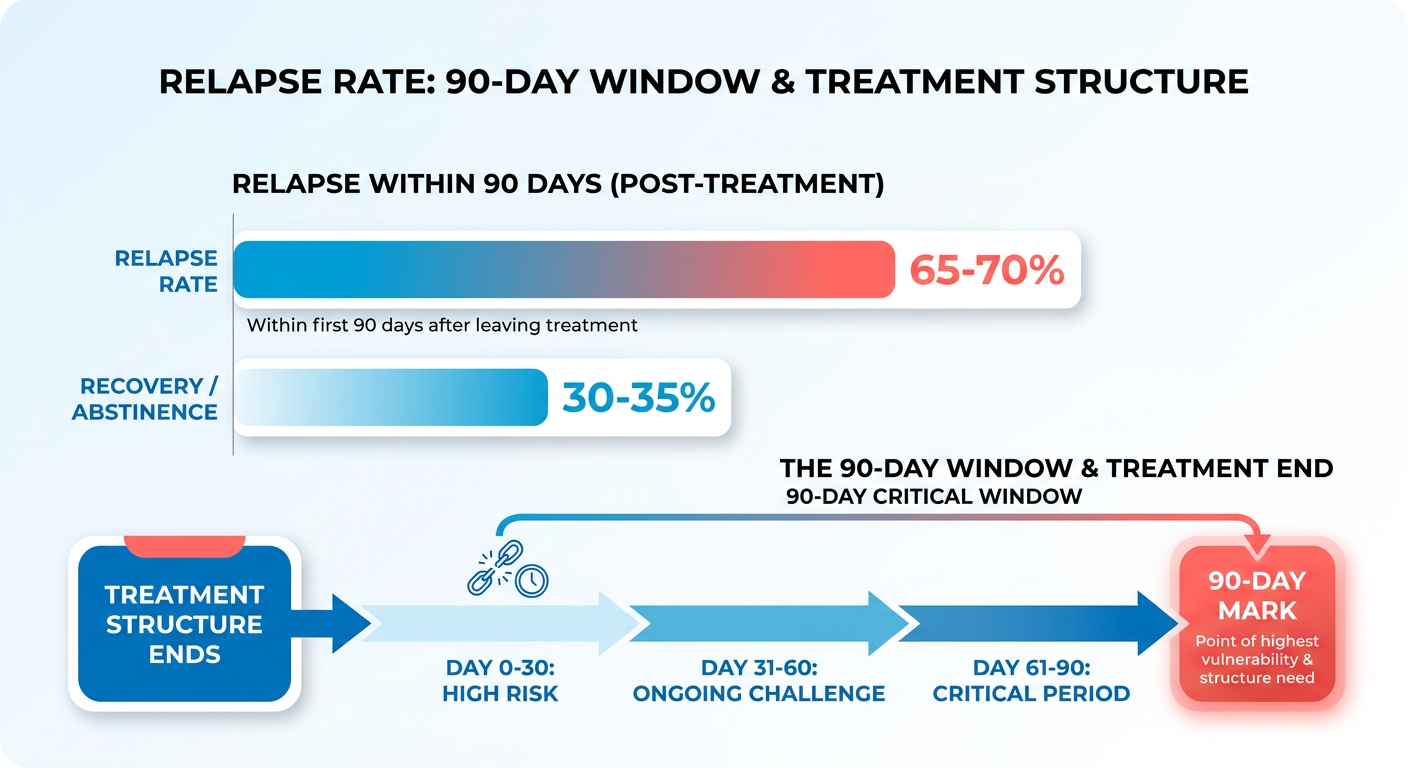
- Roughly 65% to 70% of people relapse within the first 90 days after leaving treatment. That's the exact window sober coaching is built for.
- Sober coaching is nonclinical, real-time support that keeps your recovery routines running once the structure of residential care disappears.
- A coach works as a mentor and accountability partner, building daily routine and a support system for the stretch after treatment ends.
- Coaching lives in daily accountability. Therapy lives in scheduled, reflective sessions focused on diagnosis and clinical care. Different jobs.
- A coach shows up during the ordinary high-risk moments, from your first solo grocery run to your first wedding with an open bar.
- The two riskiest moments are leaving a structured environment and returning to a demanding, alcohol-adjacent daily life.
- Coaching complements clinical work. It can't replace therapy when unresolved trauma or a co-occurring disorder is the real problem.
The gap coaching was built to fill
Sober coaching after rehab exists because of one brutal handoff: the move from a fully structured program back into a life with no structure at all. Caron Treatment Centers describes this service as targeting the exact stretch where people understand their recovery plan but struggle to hold it together without outside support.
The work is immediate and practical. It keeps your daily habits on track. Unlike clinical care, coaching focuses entirely on the day-to-day execution of your recovery plan. That difference is the whole point.
What sober coaching actually is
Sober coaching: a working relationship where a trained professional helps you stay sober by building routine, accountability, and a support system after treatment ends. It's mentorship and structure, not diagnosis or clinical care.
Coaches are practical guides for early recovery. They show up during the real-world moments that trip people up, social events, work pressure, everyday errands, without falling back on old habits. Futures Recovery Healthcare points out that the return to daily responsibilities is where people are most vulnerable.
One distinction matters up front: coaching supports clinical treatment, it doesn't replace it. If you need deep psychological work, clinical care comes first. Coaching earns its keep when the main challenge is daily follow-through.
Why the exit from rehab is the danger zone
The transition out of residential treatment is the stage most recovery plans skip over. You leave a place where every hour is scheduled and land in a life where nothing is. Clients already know the tools. The struggle is running them solo.
That's where we work. We specialize in transitional coaching, bridging the gap between treatment and independence with accountability, guidance, and real human connection, helping you rebuild a support system before the old one pulls you back.
How coaching is structured, and who it's for
Recovery coaching has grown into a real profession, with formal training programs running since 2008. Many coaches draw on their own lived recovery as a credential. That experience can be powerful. But the early-recovery window still demands consistent, high-touch structure.
| Element | What it covers |
|---|---|
| Focus | Daily accountability, not clinical treatment |
| Timing | First 90 days and major life transitions |
| Best for | People who know the plan but miss execution |
| Skip if | You need diagnosis or trauma therapy first |
| Model | Team-based support vs. single overloaded coach |
There's a real tension here. Peer coaches are a scalable public resource, yet high-touch, one-on-one accountability is what early recovery actually demands. Our programs are built around each person, offering support from a single dedicated coach or a coordinated team, depending on the level of care needed. As clients find their rhythm, that support tapers on purpose, pushing toward independence and long-term stability.
Read this section if you're leaving treatment soon, supporting a family member through it, or weighing whether coaching fits alongside your therapy. Five-minute read, beginner-friendly.
Setting it up before you need it
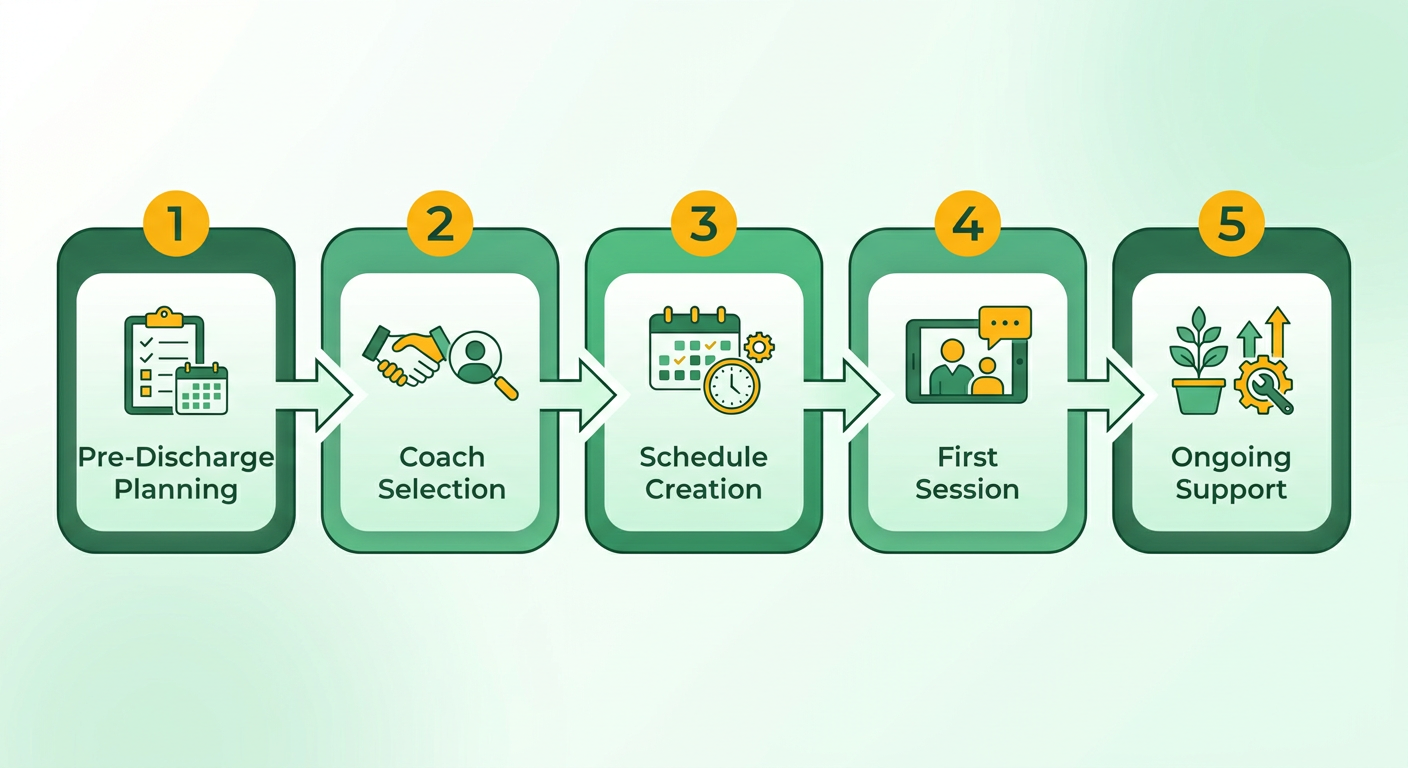
Sober coaching after rehab works best when you set it up before you leave residential care, not after the first hard week hits. The transition itself is the risk, and it lands the moment treatment structure disappears and you're suddenly running your own days again.
The setup is simple because the focus is on consistent action. The goal of these first steps is a system that keeps you on track when you're on your own.
What the first consultation covers
The first consultation is an honest inventory of where your follow-through breaks down. A good coach maps your high-risk moments, the recovery tools you already have, and the gaps between the two. This isn't a therapy intake. You're not unpacking why you use. You're planning how you'll stay on track this Tuesday.
Futures Recovery Healthcare notes that coaching works well for people who understand their recovery plan but can't run it consistently. So the consultation should surface concrete failure points: when you tend to skip meetings, what triggers procrastination, which parts of independent life feel unmanageable.
Vet the coach here too. Ask about their training, their ethics, and how they handle a crisis at 2 a.m. A coach who can't answer those isn't ready for the job.
How to build the first 90 days
Structure the first 90 days around the transition, then taper. Caron Treatment Centers stresses that coaches serve to reinforce long-term stability. In practice, that support is heaviest right after discharge and lighter every month after.
A practical starting checklist:
- Set a session cadence. Daily or near-daily contact in week one, easing as routines hold.
- Pick your delivery. Virtual works for check-ins. In-person support helps most with daily routines, organizing your environment, and managing the specific situations that challenge your sobriety.
- Name your non-negotiables. Outpatient appointments, meetings, sleep, food. The coach's job is making sure these happen.
- Plan the taper. Decide up front how support shrinks as you stabilize. This is the whole design of aftercare coaching.
The taper isn't optional. A coach who never plans to reduce hours risks building dependence instead of recovery. A gradual pullback is how you move toward full independence.
When to skip going it alone
Skip the solo setup if your follow-through has already failed once post-treatment. If you left a program before and relapsed inside three months, the missing piece wasn't willpower or knowledge. It was structure during the handoff back to real life.
A team-based approach means support is always available without leaning on a single person. It spreads the load without thinning the accountability, which is the scale-versus-intensity tradeoff most solo arrangements can't solve.
What the work actually looks like
The core of coaching is immediate support during the exact window where structure vanishes. It runs on the daily execution of your recovery plan, a practical bridge between residential care and independent life.
Coaching earns its place in the transition because the challenge is consistency, not knowledge. You already have the tools. The coach helps you use them daily, which is why Futures Recovery Healthcare targets execution over education.
What a sober coach does day to day
A sober coach helps you turn a recovery plan into daily action. The work happens in your real environment, not a therapy office. That real-world presence is the core value.
The difference shows up in timing. A coach is reachable when a craving hits at 9 p.m., not three days later at a booked session. Support delivered at the moment of risk, rather than filed away for the next appointment.
Two situations show the work best. A coach helps you maintain momentum during the initial transition, and provides structure when you return to work or social settings where substances may be present. Both are flagged as key use cases by Futures Recovery Healthcare. At MADE, that support lives in routine building, helping clients set up healthy daily routines that reduce stress, restore balance, and build resilience.
Why a team beats one overloaded coach
A team model keeps coverage continuous and prevents burnout. It protects both the client and the coaches themselves.
The sources disagree on how coaching should scale. Some models use peer support as a broadly accessible community resource. Early recovery, though, often needs a more intensive, individualized approach to hold daily accountability together.
Both approaches serve real needs. A single overloaded coach can't be constantly available to everyone. Spreading that load across a team gives you the intensity of one-on-one care without one person burning out. A team can also cover specialized help, coordinating with medical professionals, handling daily organization, without overwhelming any single provider.
When coaching is the wrong tool
Coaching is strictly nonclinical. Futures Recovery Healthcare is explicit that a coach provides nonclinical support. If your recovery means addressing deep-seated psychological challenges, that's a licensed therapist's work.
Skip coaching-only support if what you're missing is knowledge you haven't gained yet. Coaching works best when you know the plan and struggle to run it. That's the transition, and it's exactly where our approach fits.
Getting the most out of coaching
The strongest setup uses a collaborative support network to prevent gaps in coverage. It goes straight at the biggest challenge in early recovery: the transition when treatment structure disappears and you're managing your own days for the first time.
Community-based peer programs offer valuable broad-scale support. Private coaching typically focuses on highly individualized, daily accountability during the post-treatment transition, as Caron's model describes. A collaborative approach bridges both, high-touch support without overloading one professional.
Matching intensity to the transition
Front-load the intensity, then taper as daily habits stabilize. The initial transition carries the highest risk, so that's where support should be densest. As your routines hold on their own, the coaching dials down. The service is designed to end when you no longer need it.
This is why matching matters more than credentials alone. Building momentum and a support system in early recovery looks different for someone returning to a high-stress corporate job than for someone rebuilding a quiet daily rhythm at home. The pattern that works: map the specific high-pressure moments, then build accountability around those, not around a generic curriculum.
What separates good coaching from filler
The best coaching focuses on daily habits. It's built for people who need help holding their commitments, not understanding the plan. Sober coaching is most useful when your struggle is consistent execution.
That gives you a sharp filter for what belongs in your plan:
- Real-time check-ins at your actual danger points, not weekly scheduled reflection.
- A named plan for emergencies so nobody improvises during a crisis.
- Vetted coaches with clear training, ethics, and scope of practice.
- Clear boundaries with clinical care, so the coach stays strictly nonclinical.
Skip open-ended, indefinite coaching if your routines are already stable. Stretching a transitional service into permanent dependence misses the point. The strongest programs are built to graduate you out, not keep you enrolled.
When to escalate beyond coaching
Escalate the moment the issue becomes clinical. Coaching is nonclinical by design. If you're facing acute withdrawal, a mental health crisis, or a medical emergency, that's a therapist or physician's territory, not a coach's.
A good coach knows this line and names it upfront. Ask any potential coach how they handle emergencies before you sign on. Make sure there's a clear protocol for urgent situations, including established pathways to clinical care if a crisis hits. That honesty is the mark of a coach worth keeping.
How coaching stacks up against the alternatives
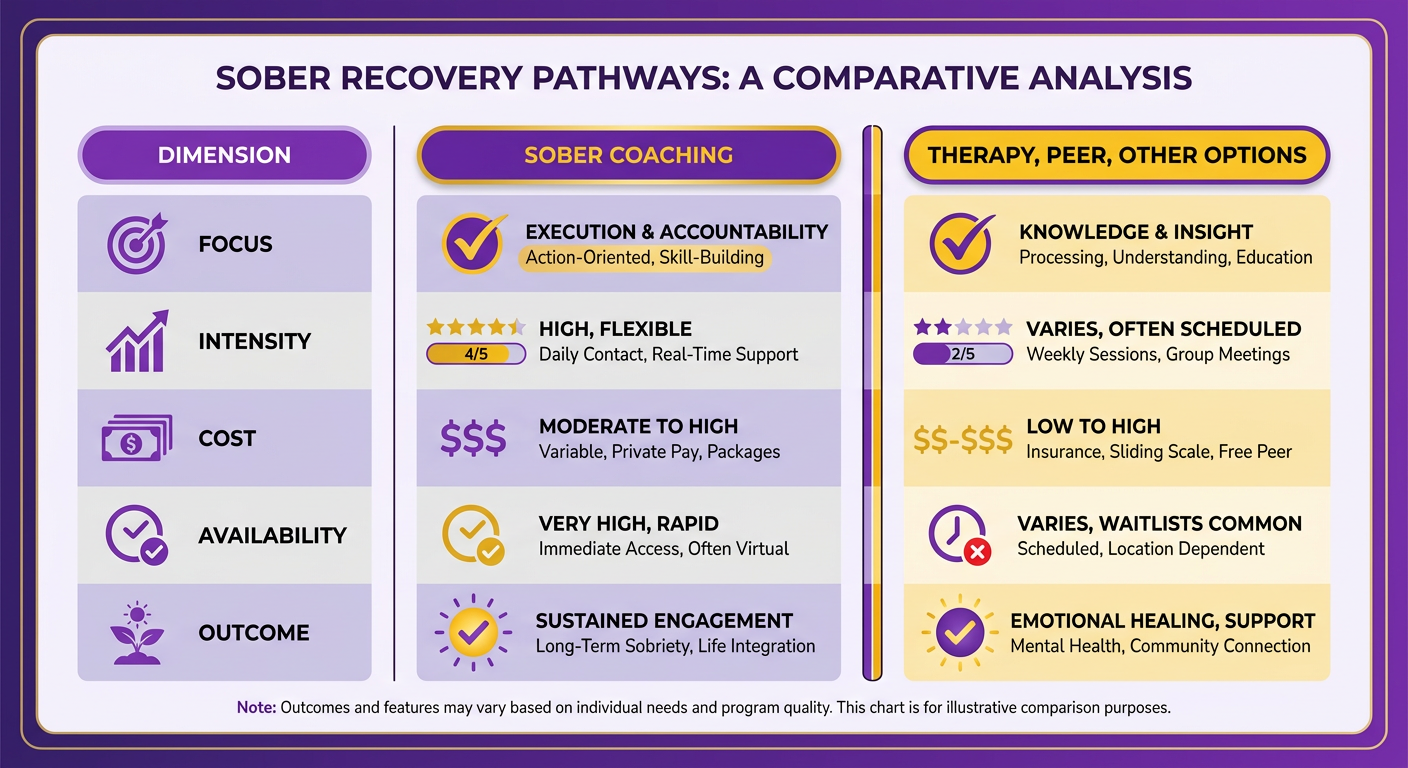
Sober coaching is one of several options for the post-treatment window, and it solves a specific problem the others don't: daily follow-through. Therapy, peer recovery programs, and coaching all belong in a recovery plan, but they do different jobs. Knowing which fills which gap keeps you from paying for the wrong kind of help at the wrong time.
Coaching is built for people who need help translating their recovery plan into daily action, per Futures Recovery Healthcare. That's exactly the profile of someone leaving residential care. You learned the tools inside. The question now is whether you'll run them alone on a Tuesday night.
Coaching vs. therapy
Coaching handles the daily grind. Therapy handles the deeper work. Sober coaching is nonclinical and focused on immediate action. Therapy is clinical and works through mental health and root causes. They complement each other rather than compete.
If you're managing clinical conditions, therapy is the priority, as Futures makes clear. Coaching works alongside it to help you apply clinical insights to daily life. Skip coaching as your only support if clinical issues are driving your use.
The clean split: therapy asks why. Coaching asks did you do it today. Both questions matter during the transition MADE targets, but only one of them shows up in your kitchen at 6 a.m.
When peer recovery coaching is the better fit
Peer recovery coaching fits scalable, community-linked support. It's less suited to intensive one-on-one accountability during the highest-risk window. Peer coaches use their own lived recovery as their credential, a model documented in research on recovery coaching that interviewed 22 participants, 15 of them certified.
That lived experience is a real asset. One coach in that study described how surviving an overdose helped them advocate for clients inside healthcare settings. Formal training programs for these roles have existed since 2008, so the field is more structured than most people assume.
There's a catch worth naming, though. The same lived experience that credentials a peer coach also carries personal risk. That study frames stigma as a professional asset. Other research on peer coaches warns that supporting others can jeopardize the coach's own recovery. Both are true at once.
Which is another argument for a collaborative model. Spreading support across several professionals builds a more resilient system for everyone, protecting both the client and the coaches from burnout.
Which option should you choose
| Support type | Best for | Weak spot |
|---|---|---|
| Sober coaching | Follow-through during the transition | Not a substitute for clinical care |
| Therapy | Root causes, co-occurring conditions | Doesn't cover daily execution |
| Peer coaching | Affordable, community-linked support | Thinner during intensive early stretch |
Pick coaching when you know the plan but can't sustain it alone. Pick therapy when something clinical is driving the use. After residential treatment, the honest answer is usually that you need more than one at once, layered to cover the first 90 days.
When coaching isn't sticking
Most problems with sober coaching trace back to one of three things: a coach who's too passive, a schedule that collapses on hard days, or a client who ghosts when they need help most. All three are fixable if you catch them early.
The good news is that these failures follow patterns. Once you know the signs, you adjust the plan instead of scrapping it.
Why isn't my sober coaching working after rehab?
When coaching stops sticking, the usual culprit is accountability gone soft. The point of this work is daily follow-through, not weekly check-ins. When contact drops to a scheduled call with nothing in between, you've drifted back toward a therapy rhythm coaching was never meant to copy.
The fix is to tighten the loop. Bump up real-time contact during your high-risk windows, whether that's evenings, weekends, or the first month home. A good coach checks in when your patterns go quiet, instead of waiting for you to reach out.
If one coach can't sustain that pace, that's the limit of leaning on a single person. It's why a collaborative model works so well, it keeps someone available. Support scales back gradually as you build confidence in your own routine.
What happens when you slip
A slip is a debugging signal, not a verdict. It tells you exactly where your plan broke down. The worst response is to disappear out of shame, because that removes the one thing that could catch you.
Name the trigger honestly. Most relapses in early recovery happen at a predictable pressure point, not out of nowhere. Map it, then patch that gap in the routine.
When should you skip coaching entirely? If you're in active medical withdrawal or crisis, coaching isn't the right tool. That's clinical territory. Coaching earns its place once you're stable and the real work is running your recovery on an ordinary Tuesday night.
Tools that hold up on a hard night
The tools that keep working are the ones you can run yourself on a hard night. Coaches don't replace your effort. They give you a system to lean on once the treatment structure is gone and you're managing your own days for the first time.
The best resources fill the follow-through gap directly. That means anything that turns a recovery plan into a daily habit you actually complete, not another binder you never open again.
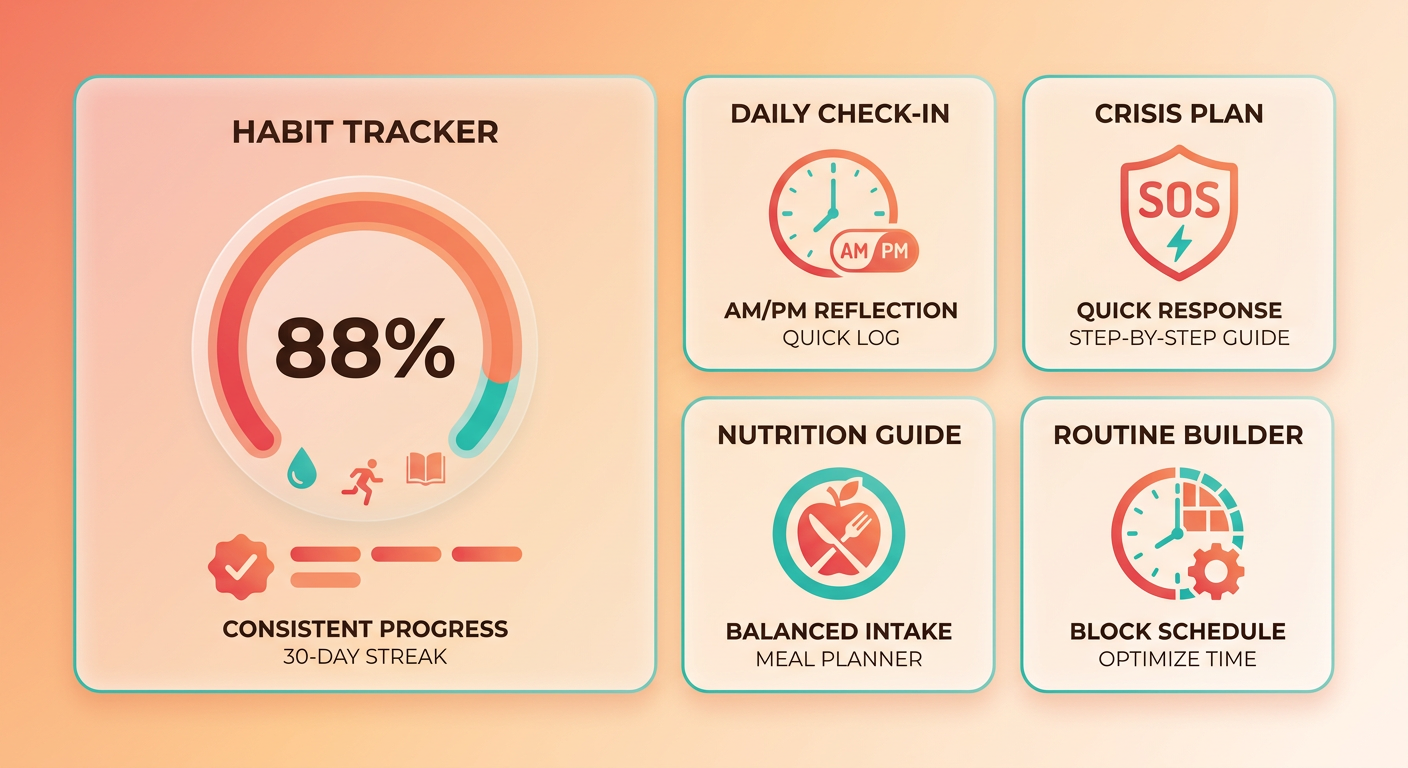
What good coaching tools do
The most useful support tracks daily execution and flags high-risk moments before they turn into relapse. A good coach spots the patterns that lead you off track, then adjusts your plan in real time. The point is catching drift early, not reviewing it a week later.
Here's how our coaching supports you through the transition:
- Daily structure. We help organize your schedule to cut stress and hold long-term stability once the structure of residential care is gone.
- Active companionship. We offer real-world accompaniment through tough transitions, so you're not managing sharp moments alone.
- Wellness support. We help you focus on physical health and nutrition to back your overall recovery.
- Adaptable planning. Our services shift as you gain confidence and independence.
Where books and community fit
Recovery reading and peer groups back up coaching, but they don't do its job. Books and libraries teach. Coaching handles the doing. You already learned the tools inside treatment, so more information isn't the missing piece.
Where community helps is the hours between coaching contact. A support group fills the gaps a single coach can't cover, which is why we offer flexible levels of support tailored to your situation.
Real human connection is the throughline of everything we do. We don't just coach sobriety, we help you create a life you want to stay sober for. Bring what you find in books and meetings to your coach, and we'll build it into your plan.
What I'd actually recommend
The whole point of sober coaching is to work itself out of a job. A good coach isn't building a permanent crutch. They're building the daily follow-through that eventually runs on its own, so the support fades as your independence grows.
That's the thread through everything above. The transition after residential care is the danger zone, not because you lack knowledge, but because the structure that held you up is suddenly gone. Coaching fills that exact gap with real-time accountability. A collaborative model means help is there when it matters most, so no single hard night depends on one person answering the phone.
What to do next
Set up your coaching before you leave residential care, not after the first crisis. The transition is the risk, so the support has to be in place before the structure disappears. Waiting until week two means building a safety net during the fall.
From there, keep the loop tight. Daily check-ins beat weekly calls. A system that flags high-risk moments beats one that reviews them a week too late. If accountability goes soft, tighten it before drift turns into relapse. These are the moves that separate coaching that sticks from coaching that fades into a therapy rhythm it was never meant to copy.
If you want to go deeper, the best next step is a conversation. We provide customized programs that adapt to your journey, helping you build a sustainable foundation. Call us at 661-369-6255 to talk through your situation and what support would look like for you or your loved one.
If your main challenges need clinical diagnosis or trauma therapy, those belong with a licensed professional. Coaching earns its place when you already have the plan and just need to keep running it when nobody's watching.
The goal isn't to need us forever. It's to reach the day you don't.
References
[1] Sober Coaching: How It Works, Key Benefits,… - Caron Treatment Centers - https://www.caron.org/addiction-101/treatment-advice/sober-coaching
[2] What Is a Sober Coach? | Benefits, Costs, and How to Choose One - https://futuresrecoveryhealthcare.com/alcoholism/what-is-a-sober-coach/
[3] Peer Recovery Coaches Perceptions of Their Work and ... - PubMed - NIH - https://pubmed.ncbi.nlm.nih.gov/36595145/
[4] The Professionalization of Stigma: The Novel Case of Recovery Coaching - https://www.researchgate.net/publication/377027028_The_Professionalization_of_Stigma_The_Novel_Case_of_Recovery_Coaching
Frequently Asked Questions
1. How much does a sober coach cost?
The article doesn't specify pricing, since costs vary by program structure and level of care. A single dedicated coach differs from a coordinated team, and intensity front-loads during the first 90 days before tapering. Ask any coach about their fees, session cadence, and how support scales down during your initial consultation.
2. Can a sober coach prescribe medication or manage withdrawal?
No coach can prescribe medication or manage withdrawal, because coaching is nonclinical by design. Acute withdrawal, mental health crises, and medical emergencies belong to a physician or therapist. A good coach names this boundary upfront and provides a clear handoff to clinical support rather than trying to manage everything solo.
3. How long should I work with a sober coach?
Coaching intensity is heaviest during the first 90 days, then tapers as your routines stabilize. The job is designed to end when you no longer need it. Skip open-ended, indefinite coaching once your routines are stable and you're past the high-risk window, since permanent dependence misses the point entirely.
4. Is a sober coach the same as a sponsor?
A sober coach is a trained professional focused on daily accountability, routine building, and structured support during transitions. While both offer guidance, coaching is a paid profession with formal training programs running since 2008, and often provides high-touch, near-daily contact during the vulnerable early-recovery window that a sponsor may not.
5. What questions should I ask before hiring a sober coach?
Ask about their training, ethics, and scope of practice. Critically, ask how they handle a crisis at 2 a.m. and whether they have a named emergency plan with clear clinical handoffs. A coach who can't answer these questions isn't ready for the job. Also confirm how their support tapers over time.
6. Can I use a sober coach and a therapist at the same time?
Combining both is often the honest answer after residential treatment. Therapy asks why through scheduled reflection on trauma and root causes, while coaching asks did you do it today through real-time accountability. They complement each other, layered to cover the first 90 days when relapse risk peaks.
7. What should I do if I relapse while working with a coach?
Treat a slip as a debugging signal, not a verdict. It shows exactly where your plan broke down. The worst response is disappearing out of shame, which removes the one thing that could catch you. Name the trigger honestly, map the predictable pressure point, then patch that gap in your routine.