What a Sobriety Coach Actually Does in Your First 30 Days After Rehab
October 28, 2026

Before we get into it, the short version:
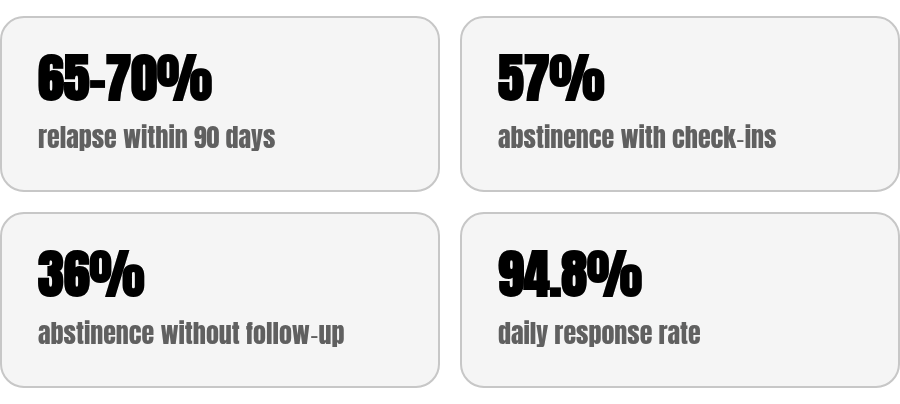
- The first 90 days after leaving treatment carry the heaviest relapse risk, especially in the first month.
- Structured follow-up and regular check-ins are associated with better early-recovery outcomes in some program data, but exact results vary.
- Post-acute withdrawal symptoms can appear after rehab and often persist in waves for weeks or months.
- Week three can be vulnerable. The immediate crisis has passed, but routines may not be set yet.
- Cognitive fog can feel intense during week two, even as physical withdrawal symptoms ease.
- Some coaching relationships run three to six months before tapering as routines solidify and confidence builds.
Related Video
Watch: The Best Advice For Early Sobriety: 22 TIPS! (Episode 152) by Getting Sober...Again
How Often Should You Check In?
Contact frequency depends on what the client needs and which coaching model they're using. Some programs include daily brief check-ins during the critical weeks two and three. Others use scheduled sessions backed by on-call availability, peer accountability, or team-based sober living support. The format matters less than the consistency and layering—scheduled coaching alone is not continuous coverage, and high-risk windows usually need more than one type of contact.
The first month often breaks into predictable stages, and what a coach does shifts across them. Week one may center on safety and physical stabilization while acute withdrawal is most intense. By week two, some people report cognitive fog is most noticeable even as physical symptoms ease. That's a window when structured accountability can help prevent early relapse. Week three brings a vulnerability that shows up differently depending on the person. Some clients feel a "pink cloud" of overconfidence that leads them to skip meetings. Others experience flatness—the crisis has passed enough that daily reasons for staying engaged feel less urgent. Both patterns are real, and a coach watches for either. Week four often brings early stability, when sleep may normalize and mood swings level out for some clients.
Mood, sleep quality, and craving intensity are the earliest signals worth documenting. A tone shift caught early can mean intervention before a later spiral. Text-based monitoring is one option that can work well; the medium matters less than the pattern it reveals. Participation varies by program and person, so the key is choosing a rhythm the client can actually maintain.
Post-acute withdrawal symptoms—disrupted sleep, irritability, anxiety—can persist for weeks or months after physical detox ends. They come in waves rather than fading linearly. Knowing this helps clients see a hard week as expected biology, not personal failure.
Support tapers on purpose as routines solidify and confidence builds. Some coaching relationships run three to six months, though others are shorter or extend beyond a year. The structure does its work, then steps back. By month's end, the focus shifts from crisis management to skill-building—replacing old patterns with ones the client can sustain alone. Reaching 30 days is not graduation; cravings and post-acute symptoms may still come and go after that mark. The transition is the point, not a sign something went wrong.
Why the First Month After Rehab Matters
The odds are highest right at the start. Many people who relapse after leaving treatment do so within the first 90 days, and a substantial share of that risk is concentrated in the first month. We see this window as make-or-break, not because people lack commitment but because the biology and circumstances stack against them in ways most discharge plans don't address.
The difficult part is the transition from a highly structured setting to ordinary life. Physical symptoms may be easing while anxiety, irritability, and cravings make work, family contact, and everyday decisions harder. A sober coach fills that gap by combining scheduled contacts with on-call availability, peer accountability, and coordination with any team-based sober living or clinical providers. These layers work together in peak craving windows; no single check-in plan provides continuous coverage by itself.

The middle of the month exposes weaknesses in a discharge plan. A client may be attending appointments yet neglecting meals, sleep, transportation, community integration, or contact with supportive people. Coaching brings those practical details into view and gives the client a way to correct course before a missed routine becomes a larger setback. Transportation, community integration, and continuing-care coordination are substantive relapse-prevention supports, not merely convenient services.
Relapse stems from isolation and disconnection when the new routine hasn't solidified yet. We structure check-ins, organize the daily pieces, and help keep the client connected to coaching contact and peer or sober living support during the stretch where willpower alone rarely holds.
Building a Daily Structure that Holds Up
We work with clients to build routines that hold up when motivation drops off. Making decisions can be harder in early recovery, even as the immediate crisis passes. A sober coach helps clients move through that period by organizing structure around the parts of the day that matter most: waking times, meals, and scheduled touchpoints.
The schedule stays flexible. Some clients need more frequent support during the first month, while others work well with lighter contact. The coaching is tailored to individual needs. What matters is that the routine is repeatable and specific, not aspirational. If the plan includes a morning walk, we confirm the time and the route. If it includes a support group, we track whether the client went, not whether they feel motivated to go.
As clients gain stability—sleep improves, mood becomes more predictable—we start shifting the planning work from coach-driven to client-driven. The goal is increasing independence, not permanent dependence on external accountability. Our support intentionally tapers to encourage self-sufficiency. Reaching 30 days is a marker, but it does not mean the transition is complete; many clients still need continuing-care coordination, community integration, and structured support after that point.
We revisit goals regularly and adjust based on what held up and what collapsed. If a client planned to cook dinner every night but only managed it twice, we don't treat that as failure—we redesign around what actually happened. The routine has to fit the person's real capacity during early recovery, not their pre-use capacity or their ideal-case capacity.
Safety concerns—medical complications, suicidal ideation, acute psychiatric symptoms—get directed to qualified professionals immediately. A coach's role is accountability and practical support, not crisis management. When a situation exceeds that scope, we make the referral and stay in contact as part of the broader team, not as the primary responder.
Companionship When Isolation Hits Hardest
The research on early recovery tracks symptom patterns, relapse rates, and engagement with treatment protocols, but it doesn't document companionship interventions or family-meeting models in a way that lets us make outcome claims. What we can say: isolation makes the first month harder, and consistent presence provides a touchpoint when other relationships may be strained or in repair.
Our role here is practical. We provide companionship at home, at social events, or wherever everyday life calls for support during critical moments. We help clients stay connected to their support systems and work alongside them as they rebuild routines and relationships. The goal is consistent human contact during a period when many people feel alone in their recovery.
We are not doctors or a medical facility. We don't diagnose conditions, provide clinical treatment, or manage mental health crises. If a client's needs shift into medical or psychiatric territory, that requires care from licensed professionals. We support clients as they work with their treatment teams, but we don't replace medical or clinical services.
Planning for Social Situations & Travel
We help clients plan for the moments when their routine breaks—weddings, work trips, family gatherings, holidays. These situations show up fast in the first month, and they carry real risk. Post-acute withdrawal symptoms like irritability and poor sleep can become more disruptive when travel interrupts routines, and social pressure to drink often catches people unprepared.
Thinking through a situation before it happens reduces the chance of being caught off guard. Clients who know what they'll face—who will be there, what questions might come up, how they'll handle an offer to drink—show up with more confidence than those who walk in hoping for the best.
A sober coach can help clients work through these scenarios in advance. The preparation looks different for everyone, but the goal is the same: a clear sense of what the client will do when the moment arrives. That might mean identifying who to call if things feel overwhelming, deciding ahead of time what to say, or confirming that leaving early is an option if needed.
For clients who need more than advance planning, we provide sober companionship at events, family gatherings, or other situations where having someone present makes the difference.
Travel can unsettle even a well-established recovery plan. Sleep schedules shift, meal timing changes, and familiar sources of support may not be available. Before departure, the coach and client identify which habits are nonnegotiable, which can be adapted, and how the client will reconnect with support after arriving.
For clients who need support during travel, we provide sober travel companions who can accompany them throughout the trip. The companion travels with the client, offering practical support and accountability along the way—whether that's getting to treatment, returning home to family, or managing a situation that could challenge sobriety.
The specifics of what each client needs vary. Some clients benefit from having someone physically present. Others work with their coach to identify which parts of their routine they can protect and what substitutes exist when they can't. The advance work matters. Waiting until someone is standing at an airport bar to figure out their plan doesn't work.
Tracking Progress & Adjusting the Plan
We adjust check-ins based on what we're seeing, not a fixed calendar. Some clients reach a point where they need less frequent contact as stability develops. Others experience an early period of optimism that later gives way to harder emotions, requiring more support at a stage when they thought they'd need less.
A sober coach tracks patterns—sleep quality, craving intensity, whether you're showing up to meetings—and uses those as adjustment signals. We don't wait for a formal review to shift the plan. If cognitive fog lifts faster than expected or lingers longer, the support changes accordingly.
Programs are tailored to each person's needs and evolve as those needs change. As clients find their rhythm, support intentionally tapers to encourage independence and long-term stability. The length of active support depends on how reliably the client can use the skills developed in coaching.
The goal isn't lifelong dependence. We're building the self-monitoring skills that eventually replace us. When you can identify your own triggers, adjust your routine without prompting, and reach out before a crisis instead of during one, you're moving toward independence. That shift happens at different speeds for different people, and we don't force it on a timeline.
Milestones matter—hitting 30 days, then 60, then 90—but celebrating them without substances is the practice that counts. We help clients plan rewards that reinforce the life they're building, not the one they left.
References
[1] Sober Coaching: How It Works, Key Benefits,… - Caron Treatment Centers - https://www.caron.org/addiction-101/treatment-advice/sober-coaching
[2] The First 30 Days with a Recovery Coach: What to Expect - https://allthewaywell.org/first-30-days-with-a-recovery-coach/
[3] First 30 Days of Recovery: What to Expect in the Journey - Sober Nation - https://sobernation.com/first-30-days-of-recovery-what-to-expect-in-the-journey/
[4] The First 30 Days of Recovery: What No One Tells You (But Should) - https://discoverypointretreat.com/blog/the-first-30-days-of-recovery-what-no-one-tells-you-but-should/
[5] First 30 Days of Sobriety: What to Expect Week by Week - https://www.sandstonecare.com/blog/first-30-days-of-sobriety/
[6] 30 Days Sober: What to Expect Now and in the Weeks Ahead - https://www.northpointrecovery.com/blog/what-to-expect-after-your-first-30-days-of-sobriety/
[7] Why the First 30 Days in Sober Living Are the Most Critical for Recovery - https://www.vanderburghhouse.com/why-the-first-30-days-in-sober-living-are-the-most-critical-for-recovery/
[8] The Best Advice For Early Sobriety: 22 TIPS! (Episode 152) by Getting Sober ...Again - https://www.youtube.com/watch?v=p4jdiyjKAv8
Still Wondering?
How does post-acute withdrawal syndrome differ from what you experience during detox?
Detox is the period when the body is clearing the substance and acute physical withdrawal is most prominent. Post-acute withdrawal is less predictable: symptoms can fluctuate, and sleep or mood problems may return after someone appears physically steadier. A coach helps clients record those changes and bring concerning symptoms to the appropriate treatment professional.
What makes week three so risky if you're actually feeling confident and stable?
A person may appear more capable once the initial disruption has settled, but that can also reduce the urgency to use the supports arranged at discharge. Coaches use this stage to test whether routines work outside a supervised environment, rather than relying only on how confident someone feels.
Can a sober coach replace your therapist, sponsor, or medical provider?
No. Sober coaches provide nonmedical recovery support focused on accountability and practical structure. They don't diagnose conditions, provide clinical treatment, manage medications, or handle mental health crises. When a situation requires medical or psychiatric care, coaches direct clients to qualified professionals while remaining part of the broader support team.
How does a coach decide when to reduce the frequency of check-ins?
Coaches look for dependable behavior rather than a single good day. They consider whether clients follow agreed routines, notice warning signs, and initiate contact when they need help. Support intensity decreases when those actions become consistent without prompting; the timeline varies by person.
What happens to your recovery structure when work travel disrupts your routine?
Before travel, the coach and client identify the routines that must be protected and decide how to replace supports that will be unavailable. Depending on the situation, remote contact may be enough, while some clients benefit from a sober travel companion who can provide in-person accountability.