Visit Five Local Sober Living Homes Before Signing: What Walk-Throughs Reveal
November 3, 2026
The Short Version
- NARR defines four staffing tiers for sober living homes, from peer-run Level I to clinical Level IV. Higher tiers provide case managers and certified staff, which matters for someone stepping down from residential treatment.
- Tour five homes before signing. The patterns show up when you compare notes across places, not when you fall for the first clean kitchen.
- Overcrowded sleeping rooms violate local occupancy codes and tell you the operator is renting space, not protecting recovery. Square footage per person is a safety metric, not a preference.
- Certification gives you accountability beyond an operator's promises. But you verify it with the state or NARR yourself. Do not take the sign on the door at face value.
How to Use This Tour Scorecard
We see families approach this decision two ways. Some call the first home that returns their call and hope for the best. Others tour several candidates, take notes, and compare what they actually saw. The second group catches problems before move-in, when changing course is still straightforward.
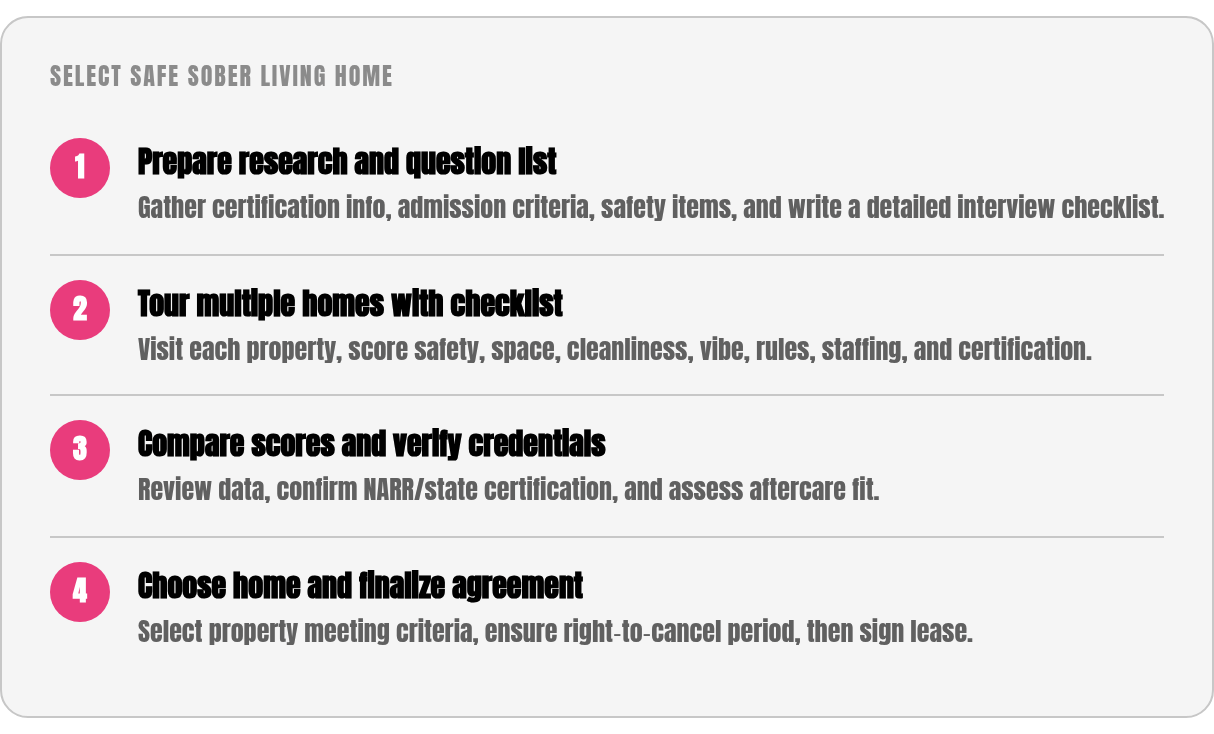
Use the table below to track walk-through observations across the homes you’re considering. Score each on a 1–5 scale, add notes on what you actually see, and flag gaps that may need support coordination from outside providers.
| Home Name | Location & Contact | Safety Basics (locks, detectors, exits) | Sleeping Room Space | Cleanliness & Sanitation | Resident Vibe | House Rules Clarity | Staffing Level | NARR / State Cert | Public Review Context | Aftercare Fit Notes |
|---|---|---|---|---|---|---|---|---|---|---|
| ___________ | Address: Phone: Contact: | Score: __/5 Notes: | Score: __/5 Notes: | Score: __/5 Notes: | Score: __/5 Notes: | Score: __/5 Notes: | Level: ___ Notes: | Status: ___ Verified: Y/N | Rating: ___ Review count: ___ | External needs: |
| ___________ | Address: Phone: Contact: | Score: __/5 Notes: | Score: __/5 Notes: | Score: __/5 Notes: | Score: __/5 Notes: | Score: __/5 Notes: | Level: ___ Notes: | Status: ___ Verified: Y/N | Rating: ___ Review count: ___ | External needs: |
| ___________ | Address: Phone: Contact: | Score: __/5 Notes: | Score: __/5 Notes: | Score: __/5 Notes: | Score: __/5 Notes: | Score: __/5 Notes: | Level: ___ Notes: | Status: ___ Verified: Y/N | Rating: ___ Review count: ___ | External needs: |
| ___________ | Address: Phone: Contact: | Score: __/5 Notes: | Score: __/5 Notes: | Score: __/5 Notes: | Score: __/5 Notes: | Score: __/5 Notes: | Level: ___ Notes: | Status: ___ Verified: Y/N | Rating: ___ Review count: ___ | External needs: |
| ___________ | Address: Phone: Contact: | Score: __/5 Notes: | Score: __/5 Notes: | Score: __/5 Notes: | Score: __/5 Notes: | Score: __/5 Notes: | Level: ___ Notes: | Status: ___ Verified: Y/N | Rating: ___ Review count: ___ | External needs: |
What This Checklist Actually Measures
Safety basics cover working door locks, smoke and CO detectors, and clear exit routes. If the operator can’t keep these functional, legal operation and resident stability both become questions.
Sleeping room space matters because local occupancy codes set real limits. A crowded bedroom tells you the operator is maximizing rent, not protecting recovery.
Cleanliness and sanitation reflect day-to-day management standards. Check the refrigerator, bathroom function, and whether shared spaces look maintained. Resident vibe is subjective but revealing: do people acknowledge each other, or does the house feel like a group of strangers avoiding the common areas? House rules clarity separates homes with written policies from homes that run on verbal promises. Ask how curfews, drug testing, visitor policies, and relapse responses are documented and enforced.
Staffing level determines how much structure exists. NARR splits sober living into four tiers, and the differences matter more than the home’s amenities. Match that level to where the person actually is in recovery. Someone stepping down from residential treatment usually needs more than peer accountability alone.
NARR or state certification are not the same thing. State licensing can carry inspection and enforcement authority; NARR certification is voluntary peer-review, beyond voluntary self-regulation. Verify the specific status before you sign anything.
Public review context includes ratings and review counts from Google, Yelp, or recovery-specific directories. Consistent review patterns signal stable operations; sparse or recent reviews can mean a new home or low occupancy. Reviews aren’t definitive, but patterns matter. Aftercare fit notes capture what the home doesn’t provide that your plan requires: employment assistance, specialized peer groups, transportation coordination. Some homes offer recovery support services that reduce the need for outside scheduling. Peer-run homes may expect you to bring those resources yourself.
Why You Can’t Vet a Sober Home Over the Phone
Families make housing decisions remotely all the time. They like the photos, the phone call goes well, and the operator sounds organized. Then move-in day arrives and reality is different: the house manager works remotely, the shared bathroom has mold behind the shower curtain, and the resident who answers the door looks high. Backing out at that point means forfeiting deposits and scrambling for another option while your family member waits.
An in-person tour surfaces these problems before you sign. When you visit, you can test the smoke detectors, see whether residents actually follow the posted curfew, and check whether the house manager is on-site or just a name on a website. The physical space, the people living there, and the way rules get enforced tell you more than any brochure.
What Physical Safety Checks Reveal
Inspection failures can force closure mid-recovery, disrupting aftercare continuity. Physical safety gaps also signal management gaps: a home with broken locks and missing detectors isn’t following through on the basics, and that same pattern tends to show up in accountability systems, conflict resolution, and support coordination.
How Resident Interactions Signal House Culture
Ask to meet residents during your tour. Watch how they interact with each other and with staff. Are people making eye contact and engaging? Or do they avoid conversation and disappear into their rooms?
Peer community strength depends on length-of-stay patterns, not just the vibe on the day you visit. Longer resident stays create mentorship layers: experienced residents model the routine, newer residents inherit it. High-turnover homes never develop those layers. Ask how long current residents have been there and what a typical stay looks like.
Before You Visit: Prep Work That Catches Most Problems
Before you visit any sober living home, prepare a written question list. Include admissions requirements like sobriety time, treatment history, and employment expectations. Add emergency contact procedures, house rules specifics, medication storage protocols, resident file management, and how outside aftercare providers can coordinate with the home’s daily structure. Also ask about drug-testing frequency and consequences, curfew enforcement, visitor policies, and what happens when someone relapses. These questions surface gaps before you sign.
What Certifications and Safety Items Should You Verify?
Research your state’s licensing and certification standards before you visit. Ask what any state certificate actually covers and whether it includes inspection or enforcement authority. Ask the operator which NARR level the home claims. That level describes staffing structure, and your tour will show whether the claim matches the staffing you see.
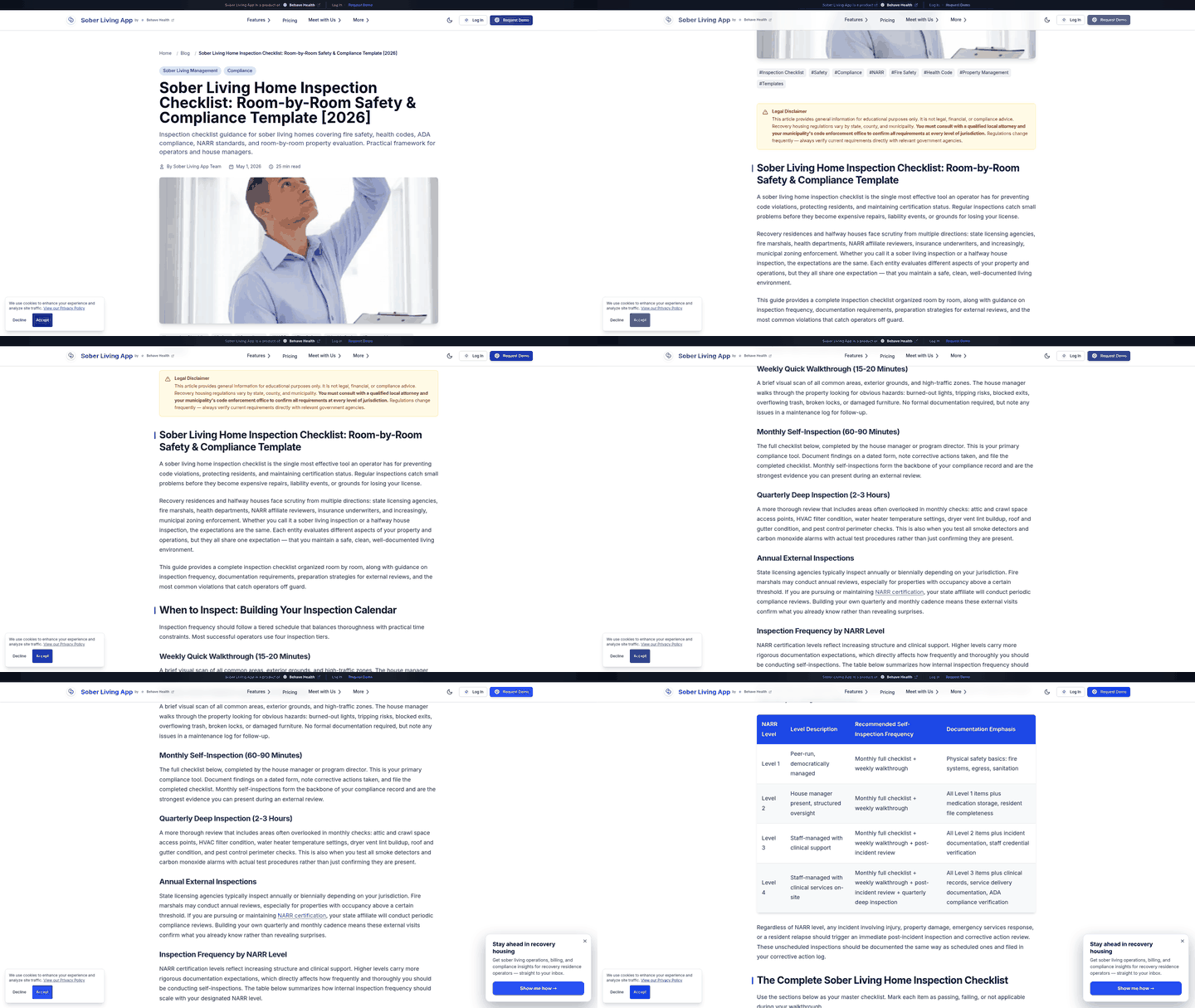
Walk the property with an eye for the items an inspector would flag: working smoke detectors and carbon monoxide alarms, clear exit routes, egress windows that meet local code, and clean common areas. These basics show whether the operator respects the building and the people in it.
How Should You Assess Neighborhood Fit and Scheduling?
Before you visit, map out transportation options, nearby grocery stores, medical care access, meeting locations, and work or school commute routes. A home in a recovery-supportive neighborhood with accessible transit can matter more than one with nice interiors but no practical way to get to IOP appointments.
Schedule your visit during normal daily routines if the home allows it. You will see whether residents actually follow posted curfews, whether the house manager is present or working remotely, and whether the peer community feels genuinely supportive. Bring a notebook or the scoring sheet from the earlier section so you capture observations consistently across homes. After the tour, review the lease or resident agreement, all fees, house rules, length-of-stay expectations, and exit policies before you commit. Confirm whether there is a right-to-cancel period under local law.
Inside the House: What the Physical Space Tells You
What to Check in Sleeping Rooms and Shared Bathrooms
Start with the bedrooms. Count beds and measure floor space if it looks tight. Overcrowding leads to violations that shut homes down mid-recovery, which disrupts an aftercare plan.
Check windows in sleeping areas. Bedrooms without proper egress aren’t just code problems. They’re fire-safety risks.
Walk through shared bathrooms and look for poor maintenance: mold behind shower curtains, broken fixtures, leaking faucets, or sanitation problems. Ask how many residents share each bathroom. A home that can’t keep bathrooms clean and functional during a scheduled tour likely won’t maintain them after you move in.
Kitchen Safety and Sanitation Basics
Open the refrigerator and check the temperature. Look for damaged appliances, broken cabinet doors, pest problems, or overflowing trash. A well-run sober living home treats the shared kitchen as part of the recovery environment, not an afterthought.
Life-Safety and Maintenance Red Flags
Check that smoke detectors and carbon monoxide alarms are present in sleeping areas and common spaces. Ask the house manager when they were last tested. Verify that exit routes are clear and not blocked by furniture, storage, or damaged doors. Locked exits or broken stairways are immediate disqualifiers.
Look for deferred maintenance that signals broader management problems: peeling paint, water stains on ceilings, broken locks, or HVAC systems that clearly aren’t working. The outward appearance of a sober living house often reflects the care you will receive. If the operator can’t maintain the building, question whether they’ll maintain the structure your recovery depends on.
Community and Culture: What the House Actually Feels Like
When you walk into a sober living home, the atmosphere can tell you a lot. Notice whether residents communicate respectfully and seem to understand the house structure. How residents and staff interact during a tour signals whether accountability systems actually function day-to-day.
Ask to Review the Home’s Daily Structure
- Request a copy of the daily and weekly schedule, including meeting times, chores, curfews, and required recovery activities
- Verify whether employment or school expectations are clearly defined and how the home tracks progress; required work or school can build independence, while unstructured days can create dependency
- Confirm that the routine is structured enough to support recovery without being so rigid it creates unnecessary conflict
The rules themselves matter less than whether they exist, are applied consistently, and are clearly communicated from day one. Families often assume all homes enforce curfews or require meetings, then find during move-in that those expectations were verbal and selectively applied.
Understand the Home’s Staffing Level
- Ask whether the home is peer-run with no paid staff, has a part-time house manager, includes certified staff with case managers on-site, or provides credentialed clinical staff around the clock
- Clarify what “house manager” actually means at this home, because that title can range from a full-time certified recovery coach to a resident who collects rent checks
- Match the staffing model to your aftercare needs and confirm how the home coordinates with any outpatient treatment plan
The distinction directly affects how your outpatient treatment plan coordinates with the home’s daily accountability. Now you’re checking which NARR tier the home actually operates at, not which one it claims.
Watch for Instability Signals During Your Visit
- Note whether residents seem confused about house rules or whether multiple people give conflicting answers about policies
- Check if the house manager is physically present or works remotely. Homes advertising 24/7 support sometimes mean “on-call” rather than “on-site”
- Observe shared spaces for signs of overcrowding, visible tension between residents, or maintenance neglect that suggests weak management
Homes where staff are difficult to reach before admission often remain difficult to reach after. If questions about conflict resolution, drug-testing procedures, or emergency protocols get vague answers during the tour, that vagueness won’t improve once contracts are signed. If the relapse response plan stays vague during the walk-through, ask for the written policy before you sign.
Questions That Reveal How a House Actually Runs
Ask walk-through questions in three groups: physical safety, operational structure, and coordination with your broader aftercare plan. Each group surfaces different problems. Skipping any of them leaves blind spots you’ll only find after move-in.
What Physical Safety Items Should You Verify?
Before discussing rules or schedules, confirm the home meets basic code requirements. These aren’t aesthetic preferences. They’re the items that get homes shut down mid-recovery.
- Count beds per bedroom and measure floor space if it looks tight (inspection failures can force closure and interrupt a placement)
- Check that bedrooms have functioning windows large enough to serve as emergency exits
- Verify smoke detectors and carbon monoxide alarms are present in sleeping areas and test one if the home allows it
- Look for working locks on bedroom doors and exterior doors (homes without secure entry create safety risks residents can’t control)
- Ask when the last fire marshal or health department inspection occurred and whether you can see the report
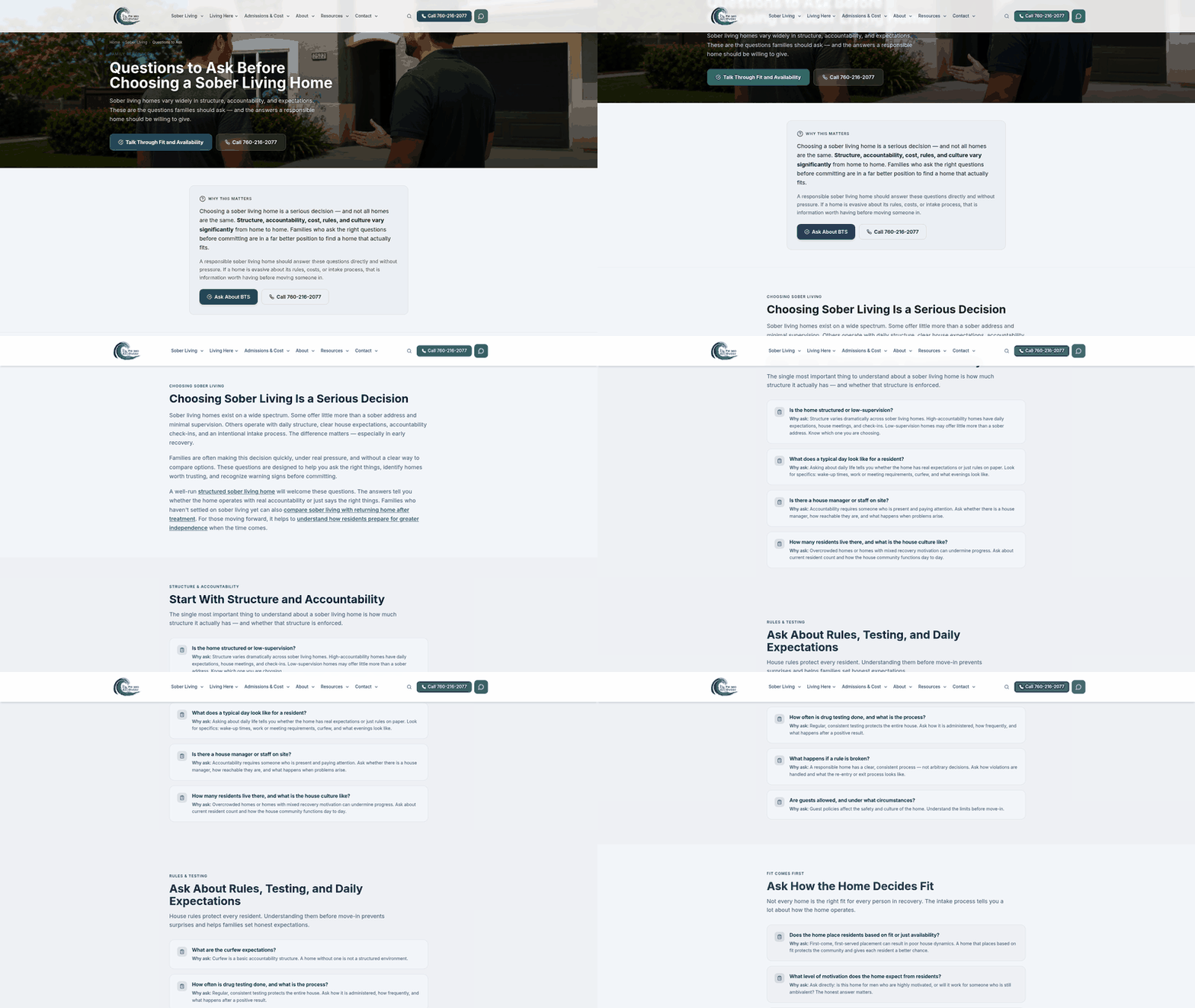
A home that can’t answer these questions or refuses to show documentation may lack proper oversight. If the operator gets defensive about basic safety checks, note the pattern.
What Daily Structure Questions Reveal Accountability Gaps?
Sober living homes run on consistent routines. Vague answers about the day often mean the structure exists on paper but not in practice.
- Ask what time curfew is, how it’s tracked, and what happens when someone misses it (enforcement inconsistency undermines the entire accountability model)
- Request a copy of the weekly schedule showing required meetings, house meetings, chore rotations, and any mandatory activities
- Confirm drug-testing frequency and whether tests are scheduled, random, or both (homes that only test “when there’s suspicion” rarely catch problems early)
- Ask how the home handles medication storage, especially for residents on medication-assisted treatment
- Verify whether employment or school enrollment is required and how progress is tracked
Successful operators maintain structured routines that help residents learn self-management skills. If a home can’t describe its daily structure in clear, specific terms, the accountability system may be too informal to support early recovery.
What Questions Confirm the Home Coordinates with Outside Aftercare?
Most sober living homes aren’t treatment facilities. The critical question is whether they actively coordinate with the professionals managing your recovery or operate as an isolated housing arrangement.
- Ask whether the home has existing relationships with local outpatient programs, therapists, or sober coaches (homes without these connections leave coordination entirely to the resident)
- Confirm whether house staff communicate directly with your treatment team or require you to relay all information
- Request examples of how the home handled coordination in the past when a resident needed additional clinical support
- Ask what happens if your recovery coach or therapist identifies a concern during your stay (resistance to outside input is a red flag)
- Verify whether the home provides transition planning assistance as you approach independent living, including employment support or education resources
Fragmented aftercare creates gaps where relapse risk increases. A home that treats external providers as interference rather than partners may prioritize filling beds over supporting recovery outcomes.
After the Tours: What We’d Actually Do Next
After visiting several homes, organize your notes into a simple matrix so the patterns become visible. Score each home on the criteria that actually predict success: safety basics (locks, smoke detectors, egress windows), staffing presence (on-site manager vs remote oversight), certification or state licensing, daily structure (required meetings, curfews, accountability check-ins), peer community vibe, and how the routine coordinates with outside providers.
- Score each home on a 1–5 scale for safety, staffing level, certification, house rules clarity, resident culture, and affordability
- Flag homes where certification claims could not be independently verified or where state licensing records show past violations
- Note which homes align with work schedule, school commitments, treatment appointments, and expected length of stay
- Identify aftercare gaps the home does not cover, such as employment assistance, transportation to meetings, or family communication protocols
Match Structure to Recovery Needs
A home’s structure matters more than its amenities. Someone fresh from detox who needs daily accountability will struggle in a peer-run home with minimal oversight. Someone stable in recovery who values independence may feel smothered in a tightly supervised environment. Your walk-throughs should reveal which level each home actually operates at, regardless of what marketing materials claim.
We also match the home’s routine to practical logistics. A home with a 10 PM curfew does not work if your second shift ends at 11. A home requiring three weekly meetings conflicts with outpatient program schedules. Length of stay and resident stability vary, and homes where residents stay longer often develop stronger peer support networks. Ask each home about average length of stay and whether most residents move out on their own timeline or hit a program cap.
- Confirm the home’s curfew, meeting requirements, and chore expectations fit work or school schedule
- Ask whether the home coordinates with outside therapists, outpatient programs, or recovery coaches and how that coordination works in practice
- Verify whether employment or school enrollment is mandatory and what support the home provides for job searches or applications
Before signing, review the resident agreement line by line. Vague fee structures and unclear rule enforcement are warning signs, not negotiating points. The agreement should specify rent amount, deposit timeline, what happens if you relapse, visitor policies, and how rule violations are handled. Also set communication expectations with staff for the first month: who you contact for maintenance issues, how often check-ins happen, and how concerns get escalated if house rules are not being followed consistently.
References
[1] What to Look for When Buying a Property for Recovery Housing - https://www.vanderburghhouse.com/what-to-look-for-when-buying-a-property-for-recovery-housing-a-due-diligence-checklist/
[2] Sober Living Home Inspection Checklist: Room by Room (2026) - https://soberlivingapp.com/blog/sober-living-home-inspection-checklist
[3] What to Look for in a Sober Living Home in Ohio: A Guide for Families - https://www.izzyshouse.com/what-to-look-for-in-a-sober-living-home-in-ohio-a-guide-for-families/
[4] Red Flags to Avoid When Picking a Sober Living Home - https://healingus.org/blog/sober-living-home-red-flags/
[5] What It Is Like Living in a Sober House: A Complete Guide - Ethos Recovery - https://www.ethosrecovery.com/sober-living-guide/
[6] Top Questions to Ask Before Moving into a Sober Home | Sacramento & SF - https://monarchrecoverycenters.com/top-questions-to-ask-before-moving-into-a-sober-home/
[7] Sober Living Homes: What to Look For | Stages of Recovery - https://stagesrecoverycenters.com/sober-living-homes/
[8] How to Choose the Right Sober Living Home - PorchLight Recovery - https://porchlightrecovery.com/how-to-choose-the-right-sober-living-home/
[9] What to Look For in a Sober Living Home - Southern Sky Recovery - https://southernskyrecovery.com/what-to-look-for-in-a-sober-living-home/
[10] What Are Qualities of the Best Sober Living Homes? - https://eudaimoniahomes.com/6-important-things-look-sober-living-home/
Frequently Asked Questions
Should I bring family members or a recovery coach to the walk-throughs, or is it better to visit alone?
Bring someone who understands your recovery history and can ask objective questions you might miss when emotions run high. A recovery coach, sponsor, or family member spots red flags like vague relapse protocols or missing certification that you may overlook when feeling desperate for housing. They also take notes while you focus on observing resident interactions and physical space, making comparisons across homes more accurate later.
What does it mean when a home claims NARR certification but I can't verify it on the NARR website?
It means the home may have let certification lapse, never completed it, or is referencing an affiliate model that doesn't grant actual NARR status. Call NARR directly or check your state's certification registry rather than trusting operator claims. NARR certification is voluntary peer-review; state licensing can include inspection and enforcement authority, so verification protects you from homes that market structure they don't maintain.
If most homes I tour have similar safety basics and rules, how do I choose between them?
Focus on staffing presence and how the home coordinates with outside providers. A home with a full-time on-site manager who coordinates with your outpatient program offers more accountability than one where the manager works remotely and expects you to self-report progress. Check average length of stay and turnover patterns. Longer stays can create mentorship layers; high-turnover environments may never stabilize enough for those layers to form.