Sober Coaching, From 24/7 Companions to Check-Ins: When to Taper Support
August 13, 2026
Sober Coaching: From 24/7 Companions to Check-Ins That Actually Work
Key Takeaways
- Relapse rates hit 65-70% in the first 90 days after treatment. This is where most people lose ground.
- Sober coaches intervene in real time, before a craving turns into a relapse. They don't wait for you to call for help.
- Unlike therapists, recovery coaches show up in your actual environment—the job site, the family dinner, or the airport bar.
- Clients returning to high-stress jobs or neighborhoods with active drug scenes need intensive coaching most.
- Support can come from one dedicated coach or a coordinated team, depending on what you need.
- Hands-on coaching produces smoother transitions from residential treatment back into regular life.
Why This Matters
Most relapses happen in the gap between leaving treatment and living independently. The first 90 days after treatment are the highest-risk window, with relapse rates reaching 65-70%. Sober coaching closes that gap by providing accountability and crisis intervention when you need it.
Who Needs This
Sober coaching serves people transitioning from detox or residential treatment back into everyday life. If you're leaving rehab for a demanding job, fractured relationships, or a neighborhood where people are still using, you may benefit from someone who can intervene before a craving becomes a relapse. Families often struggle to manage recovery without professional guidance.
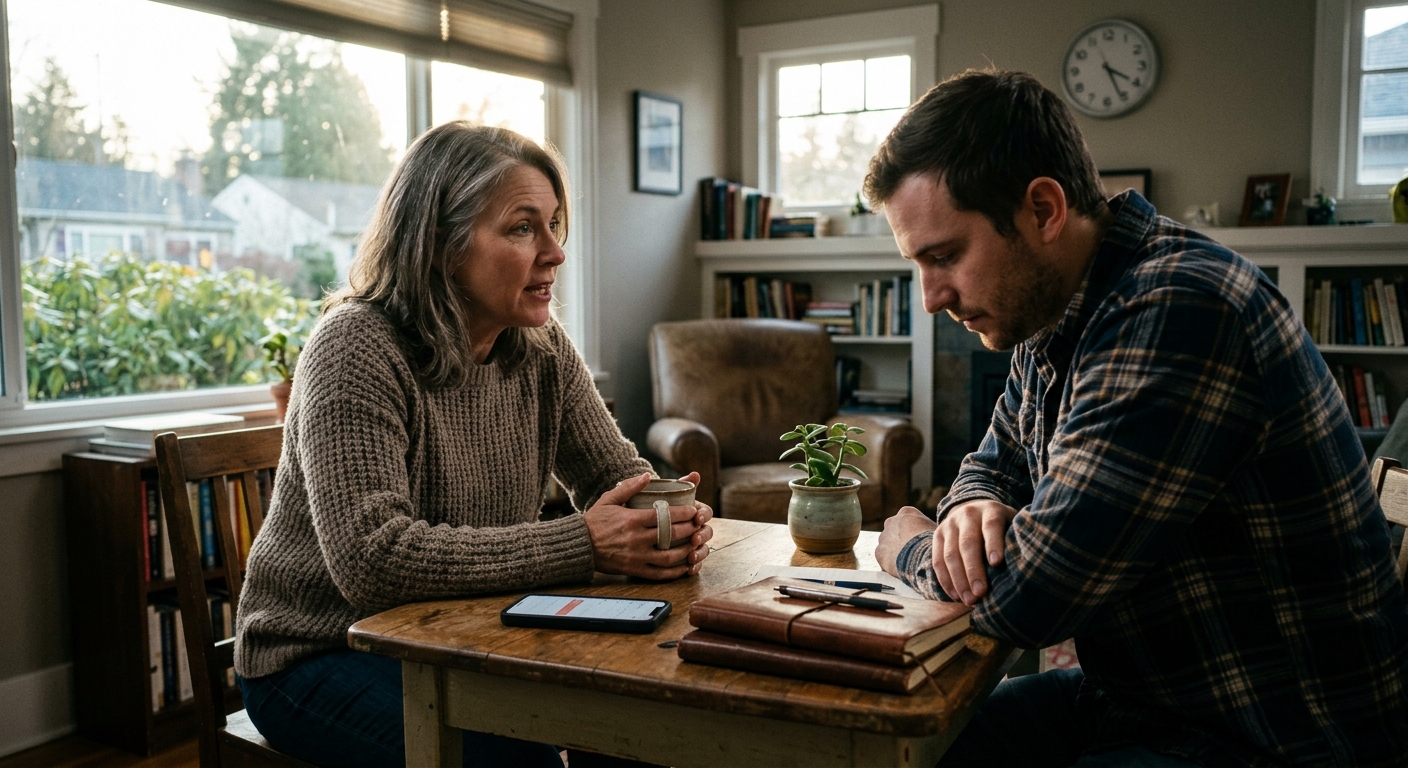
Recovery coaches work differently than therapists. They show up in your daily life. They help you manage a work event where alcohol is flowing, coach you through a fight with your partner without reaching for an old coping mechanism, and hold you accountable to routines that keep you stable. One provider reported that clients with hands-on support experienced smoother transitions from rehab to everyday life, cutting relapse risk during the critical early weeks.
We provide customized, team-based support designed around each client's needs. Programs can involve a single dedicated coach or a coordinated team, depending on the level of care needed. Support shifts as clients progress, moving from reactive presence to proactive strategy as self-regulation improves.
How Tapering Works
The decision to reduce support isn't arbitrary. As clients find their rhythm and build stability, our support tapers intentionally, encouraging independence and long-term confidence. We help clients establish healthy routines that reduce stress and promote balance, then step back gradually as they gain the tools to maintain those routines. A client showing consistent progress and strong support networks is ready for fewer check-ins. A client with ongoing stressors and shaky routines may need extended 12-month structured coaching with continued accountability.
Our programs are flexible and designed around real life. We offer virtual and in-person coaching, an à la carte menu of support, and fully customized packages that evolve as needs change. Support can include coordination with nursing services, grocery shopping, meal prep, and day-to-day life management. As clients demonstrate independence, the frequency and intensity of coaching adjust accordingly, preserving connection without creating dependency.
Family involvement is part of the process. Early on, family members often receive accountability updates and work with coaches on their own boundaries and recovery goals. As the client demonstrates stability, family involvement shifts to preserve connection while encouraging self-sufficiency. You can read more about how to split these roles without burning out.
What This Costs
Intensity drives cost. High-touch support during the critical early weeks costs more than periodic check-ins as clients gain independence. Clients typically start with more intensive support and taper to lower-frequency contact as stability increases. This keeps the overall investment manageable while providing critical early intervention. Some programs offer HSA/FSA eligibility, making structured coaching more accessible. For detailed cost breakdowns and what each support tier typically includes, see what a sober coach costs and which tasks they handle.
One provider reported a 95% recovery rate at 30 days post-treatment when clients engaged with personalized coaching services. That result wasn't about keeping clients in high-intensity support forever. It was about matching support intensity to the relapse risk curve and tapering strategically as clients built their own capacity.
Intensive Support vs. Ongoing Coaching
Sober coaching takes different forms depending on where someone is in recovery. Intensive support provides immediate, hands-on assistance during the highest-risk window, typically the first weeks after discharge. Ongoing coaching focuses on long-term goals and skill development, often working with clients for months through structured sessions.
The distinction matters because immediate intervention can prevent relapse during vulnerable moments. A once-a-week conversation may miss those moments. Transitional support bridges the gap between controlled treatment environments and unstructured daily life, where trigger exposure and decision fatigue hit hardest.
What Intensive Support Does
Intensive support means staying present during high-risk situations, such as airport lounges during business travel, high-stress project deadlines, and holiday gatherings. This isn't therapy or abstract accountability monitoring. It intercepts the decision point before it becomes a relapse.
Clients returning to high-pressure professional roles or navigating complex household dynamics benefit most from this level of presence. A coach reads environmental cues the client may not yet recognize, including stress escalation, isolation behavior, and shifts in sleep or appetite. They don't wait for the client to ask for help. They notice the setup conditions and intervene before the crisis peaks.
This isn't indefinite. MADE's programs are structured to scale back systematically as clients demonstrate consistent self-regulation. The goal is to make intensive coaching obsolete, not permanent.
Long-Term Coaching Builds Architecture
Long-term coaching operates on a different timeline. Programs extend for months with structured sessions because building new routines and stress-management patterns takes sustained practice. Coaches help clients set actionable recovery goals, such as returning to work, repairing family relationships, and managing court obligations. They then break those goals into manageable steps.
MADE provides both crisis management assistance and ongoing sober coaching tailored to individual needs. Rather than relying on a rigid template, the support structure adapts dynamically. As clients demonstrate stability, the coaching relationship shifts toward periodic check-ins and strategic goal-setting.
When family members coordinate with the coaching team, relapse warning signs get caught earlier. Establishing healthy routines benefits both the client and the household supporting them. Family involvement also strengthens accountability across the board.
When to Skip Intensive Coaching
Skip intensive support if you completed a 90-day residential program with strong aftercare integration and are returning to a stable, sober-supportive household. The evidence for round-the-clock monitoring in low-risk environments is thin. Save that intensity for clients facing active drug scenes in their neighborhood or returning to jobs with heavy drinking cultures.
Ongoing coaching works for longer timelines, but brief intervention models, lasting one to two months and focused on specific goals, can be effective. This approach provides targeted help without requiring a year-long structure. If you're managing a single high-stakes situation, such as a custody hearing or job interview, a short coaching sprint may be enough.
The coordination between crisis intervention and long-term strategy determines whether support can taper safely. Intensive support reports environmental risks while long-term coaching adjusts goals based on real-time feedback. Together, these roles build a foundation for independent recovery rather than perpetual supervision.
Building Routines That Hold Up
Clients struggle most with structure in the weeks after treatment ends. When residential care's 24/7 structure disappears, the blank calendar becomes dangerous. Old habits rush back to fill the void. Sober coaching shifts from crisis intervention to habit building. Our role moves from keeping you stable today to building daily patterns that keep relapse risk low six months from now.
What Routines Prevent
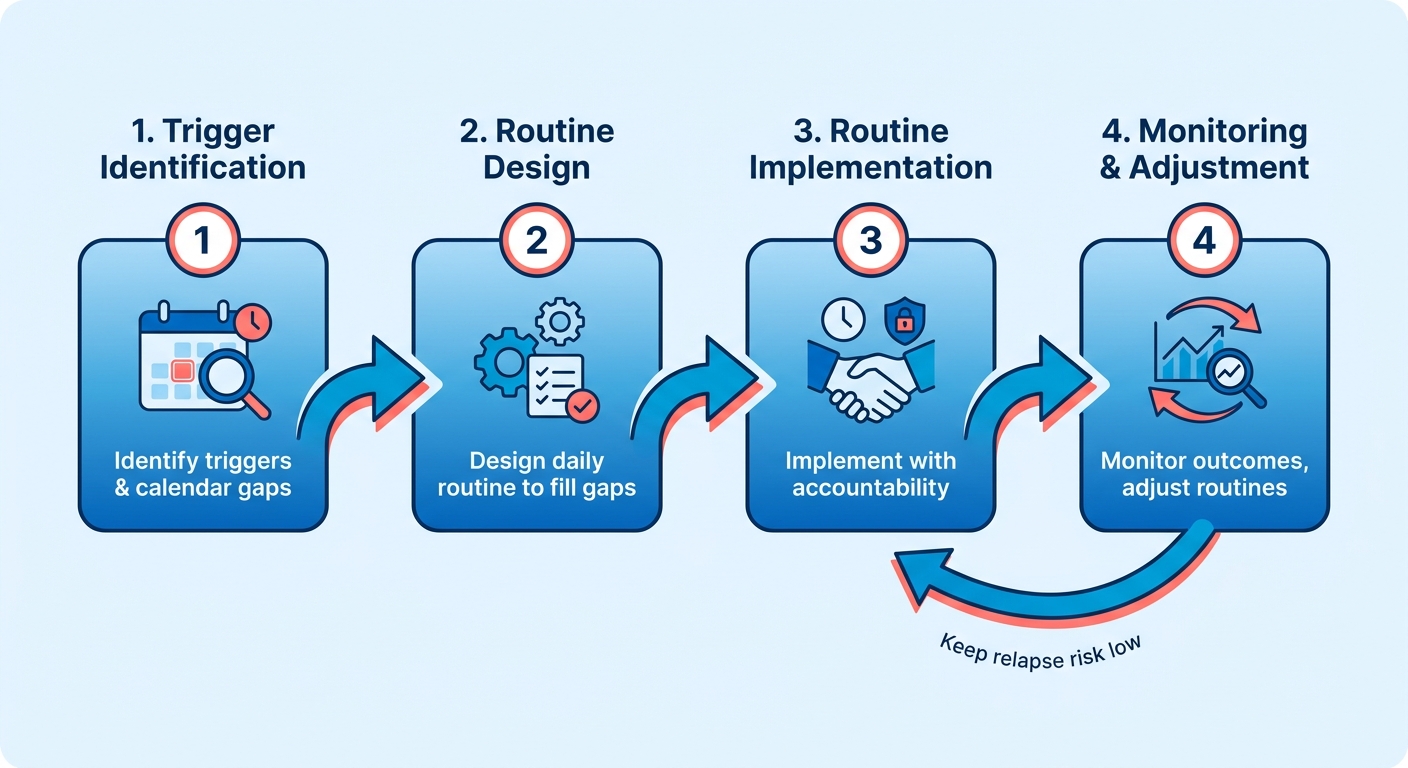
Routines compress decision-making windows where relapse thoughts can take root. A client with no morning structure wakes up, considers breakfast, considers the gym, and considers calling someone. In that decision fog, the old pattern can look rational. Neuroscience research on executive function depletion shows that daily decisions consume finite cognitive resources. By late afternoon, a person who has made 200 small choices has measurably weaker impulse control than someone who automated half those decisions through routine.
We build routines that eliminate those gaps. Wake time stays consistent. Breakfast happens at the same hour. The first support call or check-in occurs before noon, rather than whenever you feel like reaching out. Clients report that this feels rigid at first. They left treatment to regain freedom, not to follow another schedule. But the rigidity is temporary scaffolding. Once the routine becomes automatic, you stop deciding whether to do it. You simply do it, and your mental energy goes elsewhere.
How Coaching Shapes Habit Loops
Building a habit requires three components: a trigger, a behavior, and a reward. Most clients know which behaviors they need, such as exercise, 12-step meetings, and calling their sponsor. They often struggle because the trigger never fires or the reward feels too distant. We help design triggers through our customized coaching approach. These may include a morning routine checklist, visual cues in the home, or structured check-in times. The goal is to make the desired behavior automatic rather than dependent on constant willpower.
The reward piece is harder. Intrinsic rewards, such as feeling healthier or feeling proud of your progress, can take weeks to register. In the meantime, we provide external accountability as a reward substitute. Clients share completed routines with their coach, receive confirmation, and repeat the behavior. This reinforces the loop until the intrinsic reward catches up. Studies on habit formation show that this external-to-internal reward shift takes 30-60 days for most behaviors. This timing helps explain why intensive coaching tapers around the 90-day mark.
Tapering as Habits Solidify
Our tapering decisions hinge on whether the client follows the routine without prompting. When a client starts self-reporting progress before being asked, we know the habit is taking root. At that point, we systematically reduce support from daily check-ins to twice-weekly, then weekly. This allows the client's own structure to become the primary anchor.
One pattern we watch for is clients who perform habits perfectly while we're watching but skip them when supervision drops. That's not readiness for tapering. That's compliance theater. True habit solidification means the behavior persists when support is less visible. Our gradual taper surfaces this distinction. We adjust intensity based on whether routines hold up as we step back.
For clients balancing multiple life domains, including family roles, work stress, and social reintegration, we layer habits sequentially. Early weeks focus on sleep and morning structure. Subsequent weeks add exercise or meeting attendance. Later phases introduce social routines that don't involve substances. Stacking too many new habits at once floods the decision-making system and increases relapse risk.
The coordination between immediate support and long-term coaching matters here. In the high-risk window following treatment, we provide external structure through regular check-ins, calls, and in-person sessions as needed. As risk drops and routines solidify, the trigger shifts inward: the alarm, the calendar reminder, or the automatic thought, "It's Tuesday; I go to the meeting." This handoff from external to internal triggers is the mechanical core of tapering intensity without abandoning the client.
When to Reduce Support
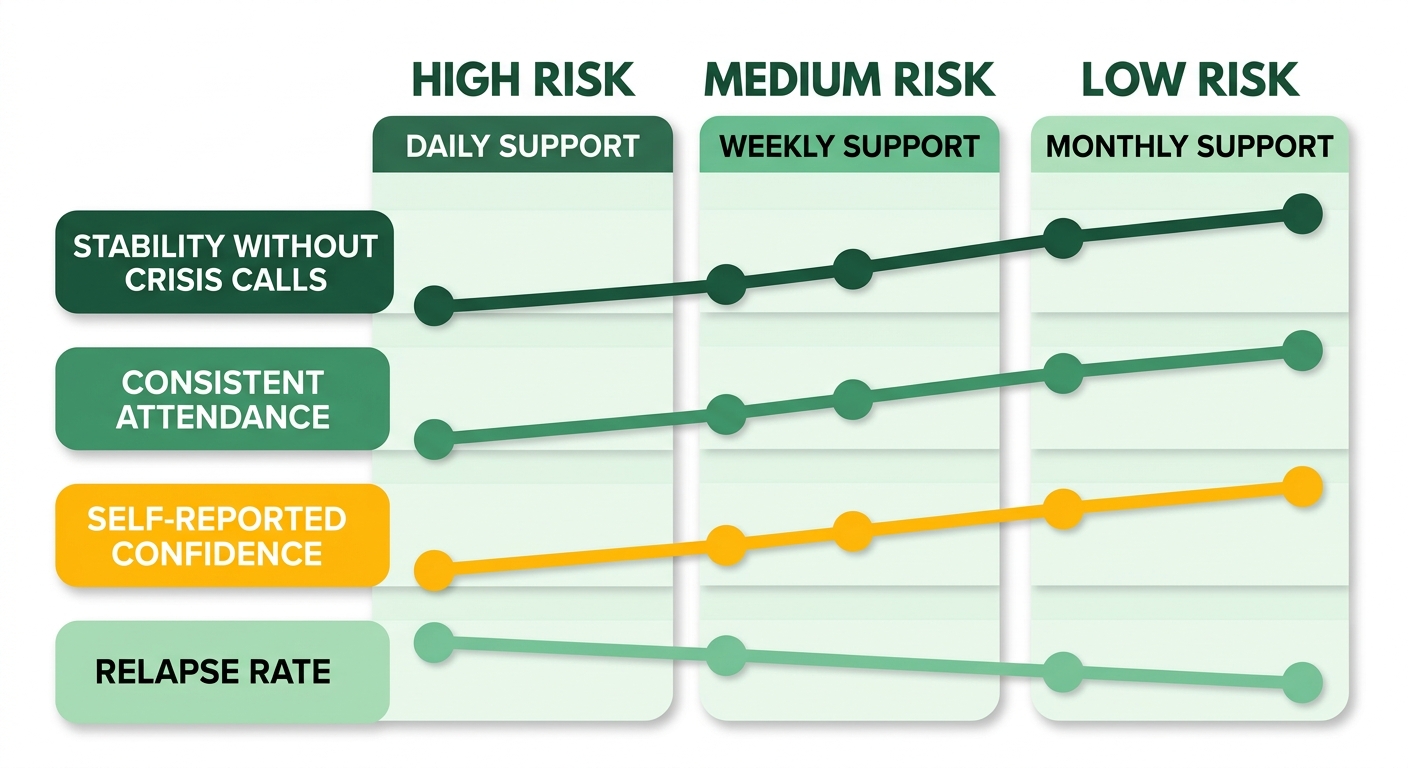
A client relies on daily check-ins for months, reaches stability, and everyone celebrates by cutting support to once a week. Two weeks later, they're in crisis. The mistake isn't tapering. It's tapering without a framework. Effective sober coaching intensity must track relapse risk, not calendar milestones alone.
When Daily Support Becomes Weekly Support
The first reliable signal is stability without crisis calls. We look for a period when the client hasn't needed emergency intervention, not merely a period of sobriety. A client who's sober but calling at 11 PM three times a week isn't ready for reduced contact. Caron's coaching framework emphasizes that early recovery is the most fragile window. We maintain maximum support until crisis calls genuinely stop, not merely slow down.
The second indicator is independent trigger management. The client should demonstrate they can identify a craving, deploy a coping strategy, and resolve the moment without needing real-time guidance. Strategies may include calling their sponsor, leaving the environment, or using a distraction technique. Because our coaching is built on accountability and real human connection, we watch for judgment that shows the client is starting to manage these moments independently.
Third, we look for rebuilding social infrastructure. If the client has reconnected with sober friends, rejoined a hobby group, or returned to regular 12-step attendance, they've replaced some of what daily support provided. A client still isolated after three months isn't ready for weekly check-ins, even if they haven't used.
The Hold-Steady Period
The evidence suggests a critical mistake: treating the first month like the second and third. Research on extended recovery support shows that support should extend at least one year post-treatment, but the intensity curve isn't linear. Continuing-care studies find that clients who stay engaged for a full year show markedly better outcomes than those who drop off early. This suggests that the front-loaded weeks carry most of the protective weight.
Our approach is to taper support gradually rather than all at once. When a client is stable, contact reduces step by step, with each stage reassessed as they progress. The first taper step is the highest-risk transition because it tests whether the client's stability was real or depended on your presence. Dropping support too quickly can undo progress that looked solid. That's why our tapering evolves with the client's needs.
What Progress Looks Like
Progress isn't just sobriety. It's demonstrated decision-making under pressure. A client who navigates a difficult conversation with a landlord, manages a sudden schedule change, or attends a dry networking event without calling a coach first is showing the self-regulation that supports reduced contact. These moments indicate growing self-sufficiency.
Another marker is self-initiated accountability requests. Clients ready for less frequent contact start asking for it: "I think I'm good with twice-weekly check-ins for now." That self-assessment is itself an indicator. Clients who aren't ready will resist any mention of reduced contact, which tells you to hold steady.
The final piece is a return to baseline function. Are they back at work consistently? Are they sleeping normal hours? Are they keeping commitments? Understanding sober coaching's role means recognizing that the goal isn't permanent dependence. It's bridging the gap until the client rebuilds the life structure that keeps relapse risk low without external scaffolding.
A Tapering Plan That Works
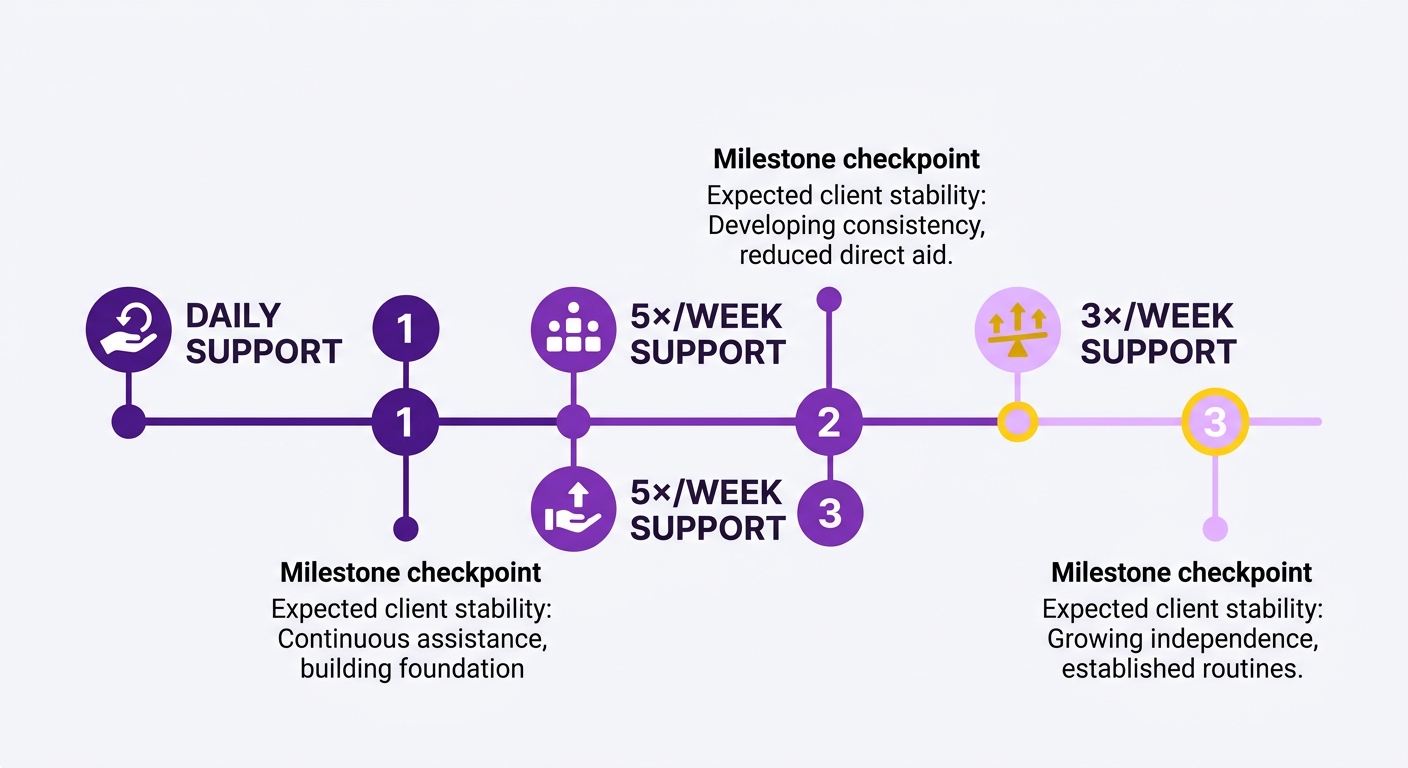
A tapering plan works when each reduction in support maps to a measurable drop in relapse risk, not a calendar date. The plan should be written down, shared with everyone involved, and revisited as the client progresses. The most effective protocols treat this plan as a living document rather than a rigid schedule.
Tapering isn't about removing support. It's about changing its shape. Early on, support looks like reactive presence. Someone remains available during vulnerable moments when immediate intervention can prevent relapse. Later, support becomes proactive strategy. A coach helps the client set goals and build coping skills. The goal is to move from a companion who catches falls to a coach who builds skills that prevent them.
Building a Personalized Plan
Start by writing down three things: the client's current support level, the risk signals that would trigger a pause, and the milestones that justify a step down. A plan without named triggers is just a wish.
Each milestone needs a concrete objective attached. Not "feel better," but "handle two weeks of work stress without a crisis call" or "attend three peer meetings solo." These goals give the client and team a shared scoreboard. Clients who work toward clear goals report better coping strategies and self-confidence. That is the capacity you want growing before contact drops.
Because our programs are fully tailored, we adjust the plan dynamically. At each step, the team evaluates whether self-regulation has improved enough to sustain the next reduction. If yes, we step down. If not, we maintain the current level or temporarily increase support.
Who Holds Accountability as Support Drops
The team does, and the family does too. As professional contact shrinks, someone has to absorb the accountability a coach used to carry. Family members then move from passive observers to part of the distributed support network.
Involving family members in these decisions ensures they understand the rationale behind reduced contact and know which warning signs to monitor. This collaborative approach distributes the supportive role. Deliberate planning is essential to prevent caregiver fatigue.
How Long the Taper Takes
Longer than most people expect. The literature on continuing care suggests maintaining some level of connection for a full twelve months post-treatment. This doesn't require daily contact for a year, but it does mean keeping a consistent thread of communication active as intensive phases conclude.
A workable arc includes intensive daily contact, several contacts weekly, weekly check-ins, and monthly touchpoints across the first year. Skip the aggressive taper if the client is still experiencing frequent late-night urges. Speed here backfires. The goal is a client who stays sober because the structure held long enough to become their own.
References
[2] Sober Coaching: How It Works, Key Benefits - https://www.caron.org/addiction-101/treatment-advice/sober-coaching
[3] Sober and Recovery Coaching and Monitoring: Find a Coach - https://www.hazeldenbettyford.org/relapse-prevention/connection-recovery-coaching
[4] ADDICT AFTERCARE: Recovery Training and Self-Help - https://www.researchgate.net/profile/William-Mcauliffe-2/publication/260249650_Addict_Aftercare_Recovery_Training_and_Self_Help/links/0f3175305699bba219000000/Addict-Aftercare-Recovery-Training-and-Self-Help.pdf
[5] Is there a case for extended interventions for alcohol and drug use disorders? - https://www.researchgate.net/publication/7489922_Is_There_a_Case_for_Extended_Interventions_for_Alcohol_and_Drug_Use_Disorders
Frequently Asked Questions
1. How is a sober coach different from a therapist?
Therapists focus on clinical diagnosis, past trauma, and office-based sessions. Sober coaches operate in the client's real-world environment. They provide action-oriented guidance for daily stressors, structured routines, and practical coping strategies.
2. Should I skip intensive coaching if I finished a 90-day residential program?
If you are transitioning into a highly supportive home with a robust aftercare plan, intensive daily coaching may not be necessary. High-intensity support is best for individuals returning to high-stress environments, demanding professional settings, or areas with frequent exposure to triggers.
3. How do I know if my progress is real readiness or just compliance theater?
Readiness is demonstrated when recovery routines persist without direct supervision. If you maintain daily structure, manage cravings independently, and make healthy decisions during stressful moments, you are likely ready to taper support.
4. Can I use an HSA or FSA to pay for sober coaching?
Many clients use HSA or FSA funds to help cover structured coaching programs. Because pricing depends on support frequency and intensity, starting with higher-touch services and tapering to fewer check-ins can manage the overall investment while securing early-stage support.
5. Is virtual coaching as effective as in-person support?
Virtual and in-person coaching serve complementary roles. In-person support helps clients navigate high-risk environments in real time. Virtual sessions work well for routine check-ins, goal setting, and ongoing accountability. Combining both formats creates a flexible plan for changing needs.
6. What happens if the first taper step triggers a relapse?
If reduced support leads to increased cravings or a slip, the transition may have occurred before internal coping mechanisms were established. The coaching team may temporarily increase support or pause the taper until stability returns. The plan remains flexible rather than following a rigid timeline.
7. How can families stay involved without burning out?
Families can stay involved by participating in planning and learning the signs of progress and potential red flags. Distributing communication tasks and boundaries among family members supports the client without placing the entire caregiving responsibility on one person.