Sober Coach or Therapist: Who Shows Up When You're Standing in a Bar
October 27, 2026

Related Video
Watch: What is A Recovery Coach by Doc Snipes
The Short Version
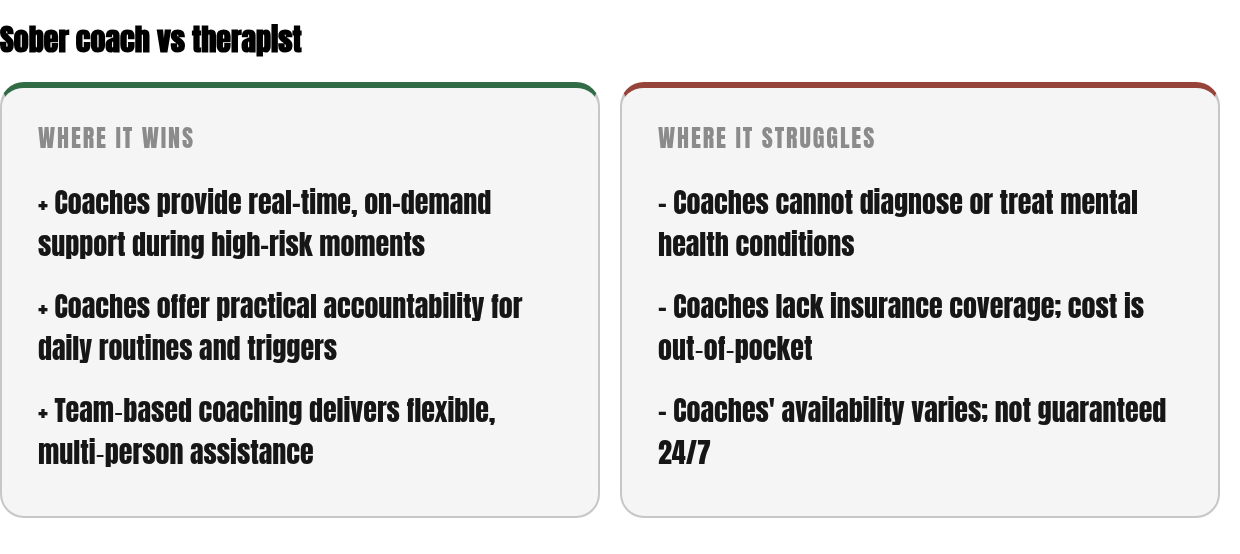
- The transition from residential treatment or IOP to outpatient care creates a gap where recovery momentum often stalls.
- Therapists hold clinical licenses and treat underlying conditions with evidence-based methods, while coaches provide non-clinical accountability between therapy sessions.
- Sober coaches often hold peer specialist certifications like CPRS or NCPRSS, and many are in long-term recovery themselves.
- Coaches operate during vulnerable moments like Friday nights and airport layovers when clinical appointments aren't accessible.
- SAMHSA defines recovery coaching as building collaborative relationships and connecting people to resources, excluding diagnosis and treatment.
Why Support After Rehab Matters
The period after intensive treatment is where recovery either takes hold or quietly unravels. You finish residential care or IOP with structure, accountability, and daily check-ins. Then you step down to weekly therapy appointments while returning to the same apartment, the same commute, and the same Friday nights where drinking used to happen. That gap between scheduled sessions and real-world pressure is where most people lose momentum.
Early recovery is a high-risk window. The structure and daily accountability from treatment are gone. You're back in environments where triggers live. Your therapist sees you once a week for an hour. The other 167 hours are on you.
A sober coach after rehab is the bridge between clinical sessions and the hours where relapse risk concentrates. Your therapist provides clinical treatment—CBT for thought patterns, trauma processing, work on co-occurring conditions. Coaching handles the implementation side: accountability for daily routines, help when triggers appear outside of appointments, and practical support applying what you learned in treatment. One helps you understand what happened and why. The other helps you act on it when you're standing outside a bar on a Tuesday night.
Therapist: Clinical Work and Its Limits
Therapists are licensed clinicians. They diagnose substance use disorders, coordinate with prescribers when medication is part of the plan, and treat co-occurring conditions like anxiety, depression, or PTSD using evidence-based modalities. The work addresses root causes: the trauma behind the drinking, the thought patterns that precede use, the grief you numbed instead of processing.
What Clinical Treatment Can and Cannot Cover
Therapy sessions happen on a schedule—usually weekly, sometimes twice a week. That's appropriate for clinical work. Processing trauma takes time. Building new thought patterns takes repetition. But scheduled appointments don't cover the moments when you're making decisions in real time: the work dinner where everyone's ordering drinks, the family gathering where your uncle hands you a beer, the hotel room where the minibar key is sitting on the desk.
Therapists prepare you for those moments. They help you build coping skills, identify triggers, and plan responses. A sober coach helps you execute the plan when it's happening. The distinction isn't about one being more important. It's about different tools for different parts of recovery.
General Sober Coach: Practical Support Outside Office Hours
Sober coaches work in the hours therapy doesn't cover. We see coaches fill the space clinical appointments can't reach: Friday nights, airport layovers, the moment you walk past your old bar. A sober coach after rehab provides accountability when you're making decisions without a clinical safety net.
How Coaching Works in Practice
Recovery coaching credentials vary. Some coaches hold peer specialist certifications issued by state boards or national organizations like CPRS or NCPRSS. Others bring professional training in non-clinical recovery support. Many are in long-term recovery themselves. The focus is practical guidance, not clinical treatment.
SAMHSA's core competencies for recovery coaching describe the role as building collaborative relationships, supporting recovery planning, and connecting people to resources. Assessment, diagnosis, and treatment fall outside that scope. When someone shows symptoms that suggest a clinical need—persistent insomnia, worsening depression, thoughts of self-harm—the coach's job is to connect them with appropriate professional care, not treat the condition.
The structure of coaching varies by provider. Some work virtually with scheduled check-ins. Others provide in-person support at events or in settings where sobriety feels hardest. Coaching may include help with daily routines, meal planning, accompaniment to social events, and accountability for following through on recovery commitments. The work happens between therapy sessions, handling the practical implementation of clinical plans.
MADE Recovery: Team-Based Coaching for the Transition Gap
We built our program around a problem most aftercare models ignore: the space between your last residential session and your first real test back home. A sober coach after rehab isn't a substitute for clinical work. We operate alongside it, handling the moments therapy doesn't cover—the Tuesday night when your sponsor doesn't answer, the family wedding where everyone's drinking, the work trip when you're alone in a hotel room.
How Team-Based Support Works
Our structure is straightforward. You have a primary coach who learns your patterns and triggers. That coach is backed by a team that can step in when you need something outside their scope: nutrition guidance, travel companionship, crisis planning, help managing daily tasks.
Recovery coaches work in the hours between clinical sessions. We provide accountability and companionship in the gaps therapy can't fill from an office. The team-based approach means you're not dependent on one person's availability. When a client's needs change—they need help with a challenging event, coordination with other professionals, or more intensive daily support—we can adjust who's involved while keeping the plan visible to everyone supporting it.
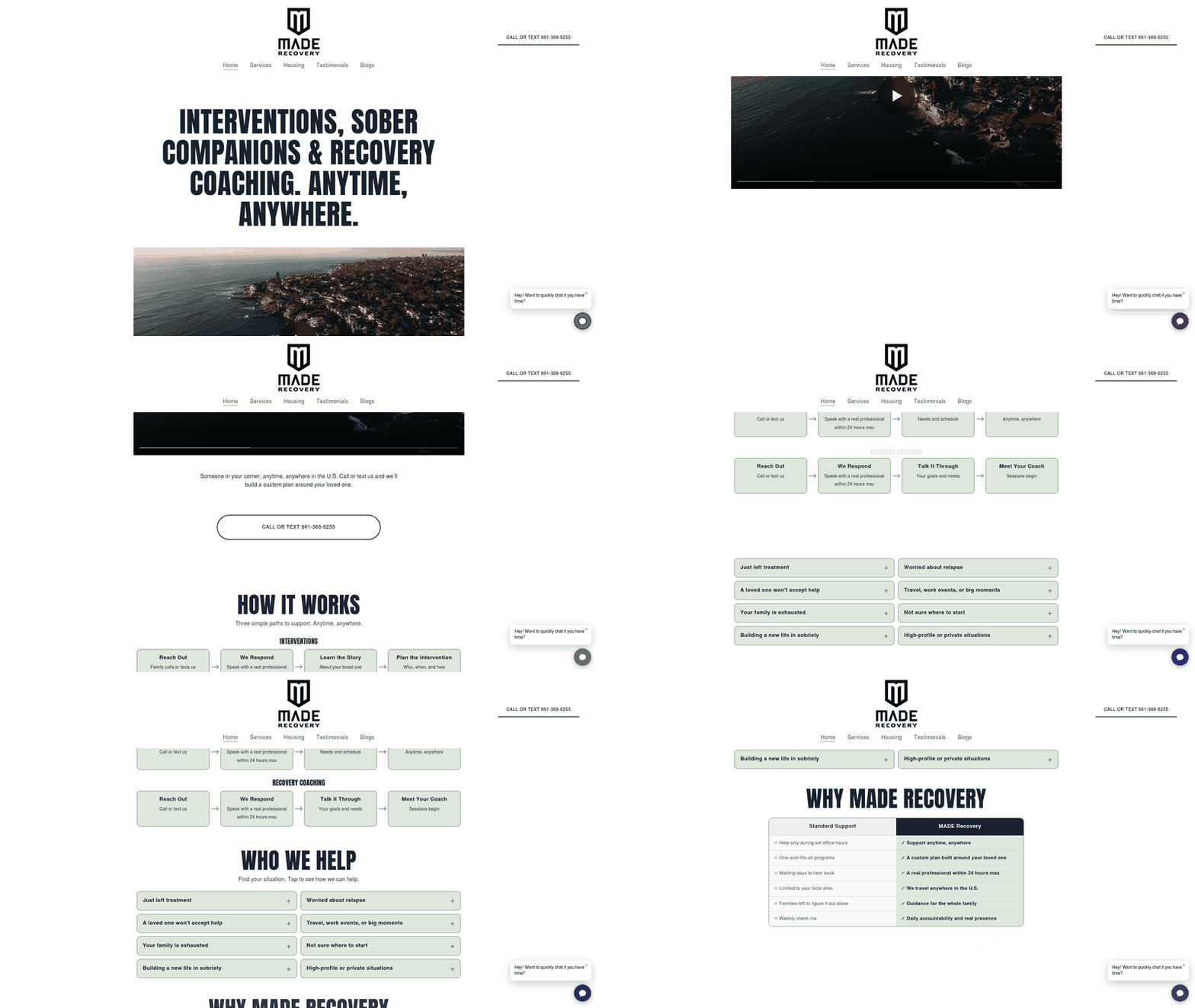
Our support can taper as your footing solidifies, rather than ending because a preset program finished. The focus stays on your trigger patterns, the routines you're building, and the situations where you need support. We're not clinicians. With your consent, we share between-session information—trigger timing and routine adherence—so your therapist has more to interpret, while we coordinate with your therapist and other professionals. We don't diagnose conditions, manage medications, or provide clinical treatment, and gathering that information is not clinical monitoring by the coach. Our work is practical support in the moments when recovery gets tested.
Head-to-Head Comparison
When you're weighing whether to hire a sober coach after rehab or continue with therapy alone, the question is availability. You're standing in your old bar on a Friday night with your phone in your hand. Who answers?
| Support Type | Availability | In-Person Presence | Routine & Nutrition Support | Cost Model | Medical Scope | Team Coordination |
|---|---|---|---|---|---|---|
| Therapist | Scheduled appointments (weekly or biweekly) | Not available for on-site companionship | Not part of clinical scope | Insurance-eligible, copay or self-pay | Licensed to diagnose and treat mental health conditions | Works independently; may coordinate with prescribers |
| General Sober Coach | Scheduled sessions plus on-call availability (varies by coach) | Some coaches offer sober companionship, depends on individual practice | May include meal planning or daily structure check-ins | Hourly or package rates, private pay | Non-clinical; cannot diagnose or prescribe | Solo practitioner model; relies on single coach's availability |
| MADE Recovery | Primary coach contact with team-based support options; virtual and in-person | Companionship at home, social events, family gatherings, and during travel | Focus on daily routines and healthy eating habits that support physical and emotional healing | Contact for pricing | Non-clinical; coordination with other support services | Support from a single coach or coordinated team, depending on level of care needed |
When Team-Based Support Makes the Difference
The difference between a solo practitioner and a team shows up when circumstances shift unexpectedly. A client needs help arranging travel, managing a demanding family event, or coordinating several kinds of assistance at once. In those situations, we determine whether one dedicated coach is sufficient or whether other team members should participate.
That arrangement preserves continuity without forcing every client into the same level of service. The support can involve crisis support, daily-life management, or coordination with other professionals, depending on what is needed.
Real-World Scenarios: Bar, Wedding, Work Trip, Home Routine
The moments that test recovery don't happen in your therapist's office. They happen at 9pm on a Friday when you walk past the bar you spent every evening in for three years. They happen at your cousin's wedding when the open bar is ten feet from your table. They happen on a work trip when you're alone in a hotel room and the minibar key is in your hand. A sober coach after rehab operates in those exact spaces.
When Clinical Skills Meet Real Triggers
Your therapist taught you cognitive behavioral strategies for managing cravings. That's evidence-based clinical work. When you're standing in the bar because your coworkers picked it for after-work drinks, the work isn't remembering the coping skill. It's pulling your phone out and texting the support person you've planned for that moment.
Your therapist helps you plan for the wedding three weeks out: identify your exit strategy, rehearse what you'll say when someone offers you a drink, and map where the non-alcoholic options are. A general recovery coach checks in the day before and the morning of, reminds you of the plan, and confirms you have their number ready. We provide sober companionship at events like weddings—someone there to offer practical support. When the best man makes a toast and seven people hand you champagne glasses, the coach is standing next to you so you don't have to handle that moment alone.
Work trips show the planning difference most clearly. Your therapist discusses trigger scenarios and coping skills during your weekly session. A sober coach can help with the practical logistics that make the plan work: reviewing the trip setup, mapping evening activities, and arranging sober companionship for travel when that support is part of the plan. At home, that same practical focus may mean turning a vague intention to "stay busy" into a grocery list, meal plan, and evening schedule that leaves fewer unstructured decisions.
References
[1] What Is a Sober Coach? | Benefits, Costs, and How to Choose One - https://futuresrecoveryhealthcare.com/alcoholism/what-is-a-sober-coach/
[2] Sober Coaching: How It Works, Key Benefits,… - Caron Treatment Centers - https://www.caron.org/addiction-101/treatment-advice/sober-coaching
[3] Recovery Coaching vs. Therapy - Recovered Humans - https://www.recoveredhumans.com/recovery-blogs/recovery-coaching-vs-therapy
[4] Recovery Coaching vs. Therapy vs. 12-Step | All The Way Well - https://allthewaywell.org/recovery-coaching-vs-therapy-vs-12-step/
[5] Recovery Coach vs Therapist: Which Path to Sobriety Is Right? - https://compass-recovery.com/recovery-coach-vs-therapist-which-path-to-sobriety-is-right/
[6] Recovery Coach vs. Addiction Counselor: Credentials, Scope, and ... - https://www.youareaccountable.com/guides/recovery-coach-vs-addiction-counselor
[7] Coach vs Therapist: How to Choose the Right Support - Mastering Conflict - https://masteringconflict.com/blog/coach-vs-therapist-how-to-choose-the-right-support/
[8] What is A Recovery Coach by Doc Snipes - https://www.youtube.com/watch?v=qyKiFi3Bdfc
Still Wondering?
Do I need to choose between a sober coach and therapist, or can I work with both?
The choice depends on what is missing from your current plan. If you need diagnosis, trauma treatment, medication coordination, or another clinical intervention, a therapist is the relevant professional. If the difficulty is carrying out a plan during travel, social events, or unstructured evenings, coaching may address that practical gap. Some people use both because those needs are different.
What happens if my sober coach notices I need clinical or medical help?
The coach should pause and direct you toward the appropriate professional or service. That might mean contacting your therapist, prescriber, treatment program, or emergency resource, depending on the concern. A coach should not reinterpret symptoms, change medication, or present accountability work as a substitute for assessment.
Will insurance cover sober coaching services after rehab?
Before enrolling, ask the provider for a written description of services and its payment policy. A plan may distinguish between a clinical appointment and private-pay companionship or daily-life assistance. Comparing those categories with your benefits information can prevent an unexpected bill.
How does coaching support change as my recovery stabilizes?
Review the arrangement periodically with the people involved in your care. You might need less event coverage but still want help with travel planning, or replace frequent contact with occasional check-ins. The useful measure is whether the service is helping you practice independence rather than becoming another permanent dependency.
What's the practical difference between virtual and in-person coaching?
Virtual contact works when the main need is planning, conversation, or a check-in from a distance. In-person service becomes more relevant when the setting itself creates difficulty—for example, attending a family gathering, navigating travel, or handling a demanding errand. The best format follows the environment in which support is actually needed.