Settle the Clinical, Financial, and House Details Before Your First Night in Sober Living
November 3, 2026

TL;DR
- Sober living sits outside the ACA's required continuum of care, so residents usually cover monthly costs running $500 to $5,000.
- A study of sober living residents found 12-step involvement and supportive social networks predicted better outcomes.
- In one study, required AA/NA attendance correlated with higher abstinence rates, while a pre-intake sobriety requirement linked to fewer arrests.
- A SAMHSA survey of 31 states found 65% of sober living homes identified resident fees as their dominant operating revenue source.
Why the Pre-Move Conversation Matters More Than People Expect
Moving into a sober living home without clarifying intake rules, costs, and house expectations creates friction at the worst possible moment. We treat the pre-move planning session as its own piece of work: a structured conversation to line up what the resident expects with what the house actually requires.

Polcin and colleagues documented meaningful improvements for people entering sober living houses, including changes in substance use, employment, legal involvement, and psychiatric symptoms. The practical takeaway from that research is straightforward. Residents do better when the social structure around them supports recovery from the start. If a house expects meeting attendance, peer accountability, or participation in shared routines, you want to know that before the first evening, not after a rule has already been missed.
Requirements to Verify Before Move-In
Residence-level research shows that house policies aren't just administrative details. They shape the environment residents step into. Walk through the major requirements before the first night:
- Any abstinence requirement before intake, and how it's verified
- Medications: what the house allows and how they're stored
- Treatment paperwork or insurance documentation if the resident is receiving concurrent SUD care
- Curfew, chores, visitor rules, device policies, and what personal items are permitted
- Whether meals are provided and whether a manager lives on site
The Financial Conversation Has to Happen First
Most residents should plan as though housing fees will be their responsibility unless the specific home or local program confirms otherwise. The Recovery Village's sober living funding overview, insurance guidance from American Addiction Centers, and SAMHSA's recovery housing funding report all point to the same planning issue. Sober living is usually treated differently from clinical addiction treatment. Before move-in, confirm rent, due date, what's included, any fees billed separately, and whether assistance programs apply.
What Sober Living Actually Costs
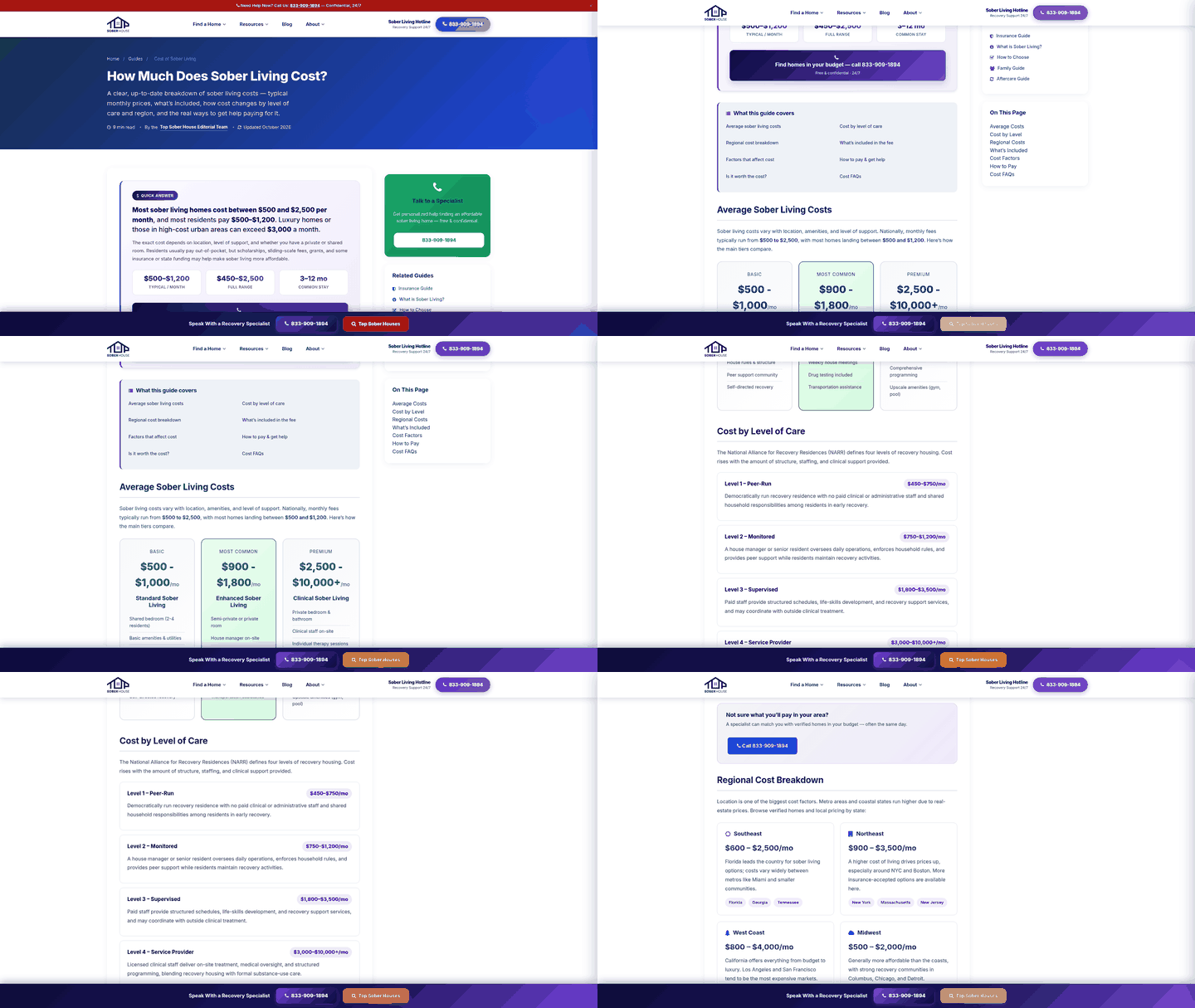
Rent at sober living homes spans a range wide enough to wreck an unprepared budget. Location and amenity level drive most of the variation. Homes in high-cost metro areas may charge more for shared rooms than comparable programs in lower cost-of-living regions. Deposits and first-week charges often come due before your head hits the pillow, so get those numbers in writing from the specific house rather than from a directory listing.
Resident fees are what keep many houses open. SAMHSA's funding report emphasizes how heavily homes can depend on payments from the people living there. Ask each home directly about scholarships, sliding-scale slots, nonprofit assistance, and state or local help. Assume nothing about vouchers.
What Your Budget Worksheet Needs
Build the worksheet before the move, not after. Cover rent, move-in fees, food, transportation, phone, medications, any testing or program fees, personal supplies, and an emergency reserve. That reserve is the line people skip, and it's the one that matters when a paycheck lands late.
Then pin down the mechanics of paying. Ask about accepted payment methods, due dates, autopay, late-fee policy, and any processing fees. A small recurring processing charge can still become a real annual expense when money is already tight.
Insurance Rarely Covers Sober Living
The Affordable Care Act requires plans to cover substance use disorder treatment as an essential health benefit. Sober living homes sit outside that continuum because they don't deliver formal addiction services. Verify separately whether any clinical services tied to your stay are billable.
House Logistics: Rules, Rooms, and What to Pack
Many early rule violations aren't defiance. They're surprise. Residents arrive not knowing candles are banned, that overnight guests require written advance approval, or that prescription bottles need to be logged with house staff. Working through the house rule sheet with a recovery coach before your first night converts those surprises into clear expectations.
The categories that catch people off guard are the same four we see repeatedly: curfew and sign-out procedures, visitor and guest policies, chore rotations, and device use. Device policies vary the most. Some houses restrict phone use during morning routines or keep devices out of bedrooms entirely. Get the written policy, not a verbal summary from a directory listing.
A multilevel analysis of sober house features reinforces what experienced house managers already know. The physical environment shapes outcomes, not just access to a bed. Structure and peer accountability are the active ingredients. In our experience, residents who set up their room deliberately settle in faster. Keep recovery materials in reach, surfaces clear, and nothing triggering in plain sight.
Packing for a Sober Living Home
The core list: twin bedding, towels, a week of clothing, alcohol-free toiletries, prescription documentation, and cash for the first few days. Recovery materials travel in the first bag. Leave behind anything with alcohol or drug branding, candles, and any large items until you've confirmed the house policy.
A resident who checked the toiletries policy ahead of time swapped out an alcohol-containing mouthwash before arrival. Minor adjustment, but it kept check-in focused on orientation rather than confiscating an avoidable item. A systematic review of recovery housing associates stable housing with improved recovery outcomes, and that advantage shows up fastest when residents arrive organized rather than sorting out intake friction.
First-Night Routine and Emotional Readiness
The first night in sober living sets the tone for everything. We tell residents: the goal isn't comfort, it's structure. A predictable first-24-hours schedule stops the mind from spiraling into old patterns when novelty and stress hit at once.
Build this rhythm before you arrive:
Arrival: Unpack only essentials. Meet the house manager. Walk the space so you know where everything is. Add a brief grounding pause: name five things you can see, four you can hear, three you can feel. It sounds basic, but slowing down like this can help steady the nervous system when cortisol spikes.
Orientation: Review house rules, sign paperwork, get your chore assignment. If you're working with a sober coach or companion, having that first check-in on the calendar before you arrive means you're not facing the quiet hours alone. Whether that's a virtual session or in-person support depends on your arrangement and the house's visitor policy.
Bedtime routine: Same time each night, starting night one. Put the phone away before sleep. Write three lines: what went well, what felt hard, what you'll do tomorrow. This isn't journaling as self-care theater. It's a pattern interrupt that gives your brain a concrete landing strip instead of free-floating anxiety.
Skip elaborate mindfulness apps for the first week. A structured routine with one short coach check-in beats any guided meditation series at this stage.
How MADE Recovery Fits Into the Transition
Moving into a sober living home is logistically and emotionally dense. Working with a recovery coach in the lead-up to move-in day can make that preparation count. A coach can help you build the question list you bring to the house, confirm what deposits and recurring fees will look like on paper, flag rule categories that tend to catch new residents off guard, and prompt you to verify the status of any ongoing treatment or insurance questions with the providers handling them.
Recovery-supportive relationships are one of the clearest themes in the sober living evidence base. Building those connections before move-in day changes the trajectory. When a coach aligns your expectations with your treatment team, your family, and house staff early, that support structure is ready from your first night rather than assembled under pressure. For families managing this alongside a loved one, clarifying roles before the transition can take a lot of the guesswork out of who does what.
Where appropriate and with your authorization, we help facilitate communication between those parties. That is practical coordination. It is not clinical treatment.
What Coaching and Sober Living Don't Replace
Coaching is not medical treatment. We support accountability, structure, and daily recovery habits. Detox, medication management, and clinical therapy require licensed providers.
Sober living is not classified as formal medical treatment. It falls outside the ACA's essential health benefit coverage, so fees usually come out of pocket. That's why sorting the financial picture before move-in matters more than most people expect.
If you're unsure whether treatment or coaching is the right next step, reach out. We'll help you sort through the options.
References
[1] How Sober Living Homes Are Funded: Key Financial Insights - https://www.therecoveryvillage.com/recovery/sober-living/how-sober-living-homes-are-funded/
[2] Sober Living Insurance Coverage and Payment Options - https://americanaddictioncenters.org/insurance-coverage/sober-living
[3] [PDF] Recovery Housing: Funding Sources and Financial Sustainability - https://library.samhsa.gov/sites/default/files/recovery-housing-funding-sources-pep26-08-001.pdf
[4] What Did We Learn from Our Study on Sober Living Houses and Where ... - https://pmc.ncbi.nlm.nih.gov/articles/PMC3057870/
[5] Recovery residences: Which housing characteristics predict positive ... - https://www.recoveryanswers.org/research-post/recovery-resident-positive-outcomes/
[6] Financial landscape of recovery housing in the United States - https://www.researchgate.net/publication/358866370_Financial_landscape_of_recovery_housing_in_the_United_States
[7] Recovery housing for substance use disorder: a systematic review - https://pubmed.ncbi.nlm.nih.gov/40115346/
[8] Sober living house characteristics: A multilevel analyses of ... - PubMed - https://pubmed.ncbi.nlm.nih.gov/30665601/
Frequently Asked Questions
If my health insurance covers substance use disorder treatment, doesn't it also cover sober living?
Not typically. Coverage for licensed addiction treatment does not automatically extend to a recovery residence. The key distinction is whether the service is clinical care or housing with recovery accountability. Before signing anything, ask the home what is billed as rent, what is billed as a program fee, and whether any separate treatment provider is involved.
What should I do about prescription medications before moving into a sober living home?
Bring documentation for every prescription and confirm the house's medication storage policy before arrival. Some houses require staff to hold and dispense medications; others allow self-management with documented approval. Arriving with medications but no paperwork is one of the most common friction points at check-in. A recovery coach can help you gather the right documentation and confirm the house's specific policy before your first night, so that's not the first conversation you're having with staff.
If I'm still in outpatient treatment, does moving into sober living replace that or run alongside it?
Sober living and outpatient treatment run alongside each other — they serve different functions. Outpatient programs deliver licensed clinical care: therapy, medication management, structured programming. Sober living provides a stable, accountable living environment outside those clinical appointments. Before move-in, confirm whether the house requires any treatment paperwork or insurance documentation related to your concurrent SUD care, since some homes factor that into their intake process.
What happens if a sober living home has a sobriety requirement before intake and I'm not there yet?
You'd need to find a house with a different intake policy or wait until you meet the requirement. Some homes hold firm on pre-admission sobriety rules because they are trying to protect the stability of the household, not just screen individual applicants. Requirements vary widely, so asking about intake criteria directly — well before a target move-in date — is the kind of planning that prevents a stressful last-minute scramble.
How can a family member support a sober living move-in without creating more pressure?
The most useful thing a family member can do is clarify their own role before move-in rather than trying to manage the whole process. That means agreeing on who handles finances, who communicates with the house, and who stays in a purely supportive role. Working through those boundaries early — ideally alongside the resident's treatment team or a recovery coach — prevents the kind of overlapping involvement that adds stress at exactly the wrong moment.