How to Rebuild Your Daily Routine the First Two Weeks After Rehab
September 24, 2026

Key Takeaways
- The first two weeks after treatment are the highest-risk stretch of early recovery, because rehab's hour-by-hour structure vanishes the moment you get home.
- Tolerance drops during treatment, so going back to a previous amount of alcohol or opioids can stop a person's breathing.
- Steady sleep and meal times settle the nervous system, and predictable anchors crowd out the two biggest relapse setups: boredom and isolation.
- A slip only becomes a relapse when it goes uncorrected. Reaching out before you use, not after, keeps a lapse a course correction.
- A three-line daily log (mood, cravings and their triggers, completed routine blocks) surfaces patterns fast, like craving spikes after a skipped lunch.
- Travel strips away kitchens, meetings, and quiet mornings, and it removes the people who'd normally catch a slip early.
Why routine is your real protection in the first two weeks
In rehab, nearly every hour was decided for you. At home, that scaffolding disappears while your brain is still under-rested, your moods swing, and old triggers wait exactly where you left them, as Addiction Help lays out. A repeatable daily routine is how you rebuild the structure treatment gave you.
This is where sober coaching after rehab earns its place. A coach helps you install anchors before cravings test you, not after the first hard day. That matters most for anyone who has to travel for work or family during these early weeks, because a trip pulls away the very structure that holds you up.
Why does routine lower relapse risk?
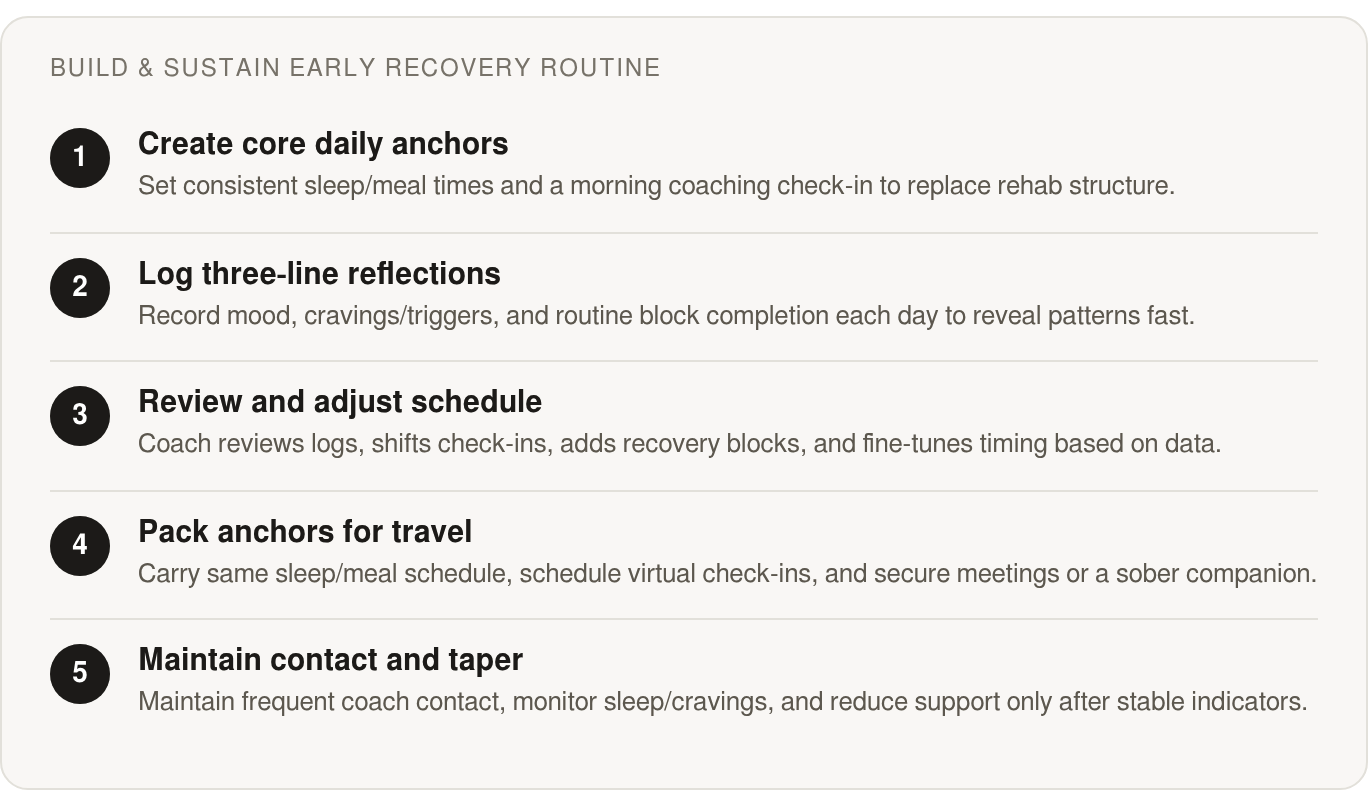
A regulated body craves less and copes better. Consistent sleep and meals steady your nervous system. Predictable anchors like a recovery meeting, some movement, and any outpatient sessions fill the hours that boredom and isolation would otherwise own.
External structure carries the weight here. A written aftercare plan. Outpatient or IOP, therapy, medication, a home group. That's what moves the work of treatment forward into real life. The more of it you keep around you, and the longer you keep it in place, the steadier the early months tend to be.
That structure works because it holds you up during the fragile window. Someone pushed onto a plane or into a family crisis loses it at the exact moment it matters most. A sober travel companion becomes the portable version of that support.
How does structure survive travel in week one?
You keep the routine by making it move with you. Pack your anchors: the same sleep and meal times, a virtual check-in scheduled before you land, and a meeting found at your destination before you leave home.
On the road there are no house peers, no familiar meeting, no roommate who notices you're off. That's the gap a sober companion fills. Their core job on a trip is compressing your response time back to hours, turning the weakest point of the trip into a managed one.
We build routines that travel with you instead of breaking the moment you leave town. If you want to see how one small daily practice rebuilds momentum, this piece on rebuilding purpose is a solid starting point. The goal is plain: make staying sober the path of least resistance, whether you're at home or three time zones away.
Week 2: fine-tuning and expanding the schedule
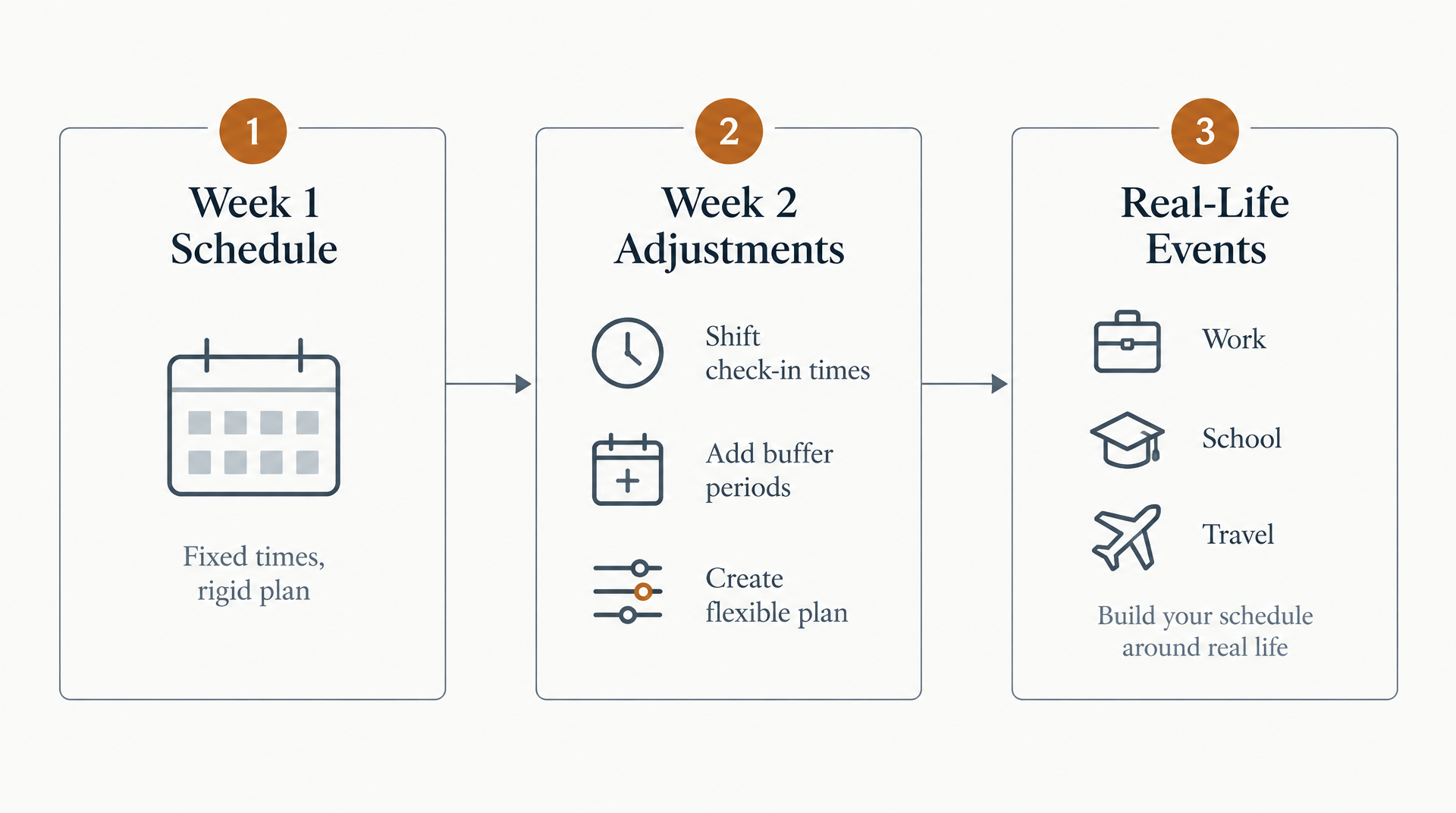
By week two, the rigid blocks you built in week one need room to breathe. Your first week was about proving you could hold a schedule at all. Now the work shifts to fitting that schedule around real life: a return to part-time work, a school pickup, a trip you can't move. This is where sober coaching after rehab goes from setting anchors to adjusting them.
Use what week one taught you. If mornings felt shaky, your coach helps you move the check-in call earlier. If a mid-afternoon slump kept pulling you toward old habits, that's where a recovery-maintenance block goes. We treat the first week as data, not a verdict.
What should a daily reflection log track?
Keep it short enough that you'll actually fill it out. Three lines a day: your mood, any cravings and what triggered them, and whether you hit your core routine blocks. That's it.
The point isn't a diary. It's a pattern you and your coach can read together. Cravings that spike every time you skip lunch, or a low mood that trails a bad night's sleep, show up fast once you're writing them down. Then you adjust timing and intensity instead of guessing.
Flexibility here isn't slacking. A routine that can bend around a Tuesday meeting or a family dinner holds up better than one that snaps the first time life interferes. Rigid schedules raise stress. A plan with some give in it lowers it.
How do we prep you for a weekend trip in week two?
Travel is the hard test, and plenty of people face it before they feel ready. A short work trip or a family visit strips out your kitchen, your meetings, your quiet mornings. So we build a prep plan before you pack.
That usually covers a few concrete things:
- Confirmed meeting times or virtual options at your destination
- A trigger list for the specific trip, with your responses written down
For clients who need more, we can arrange a sober travel companion to go along, so the structure travels with you instead of staying home. You can read more about rebuilding work and purpose after treatment as those pieces come back online.
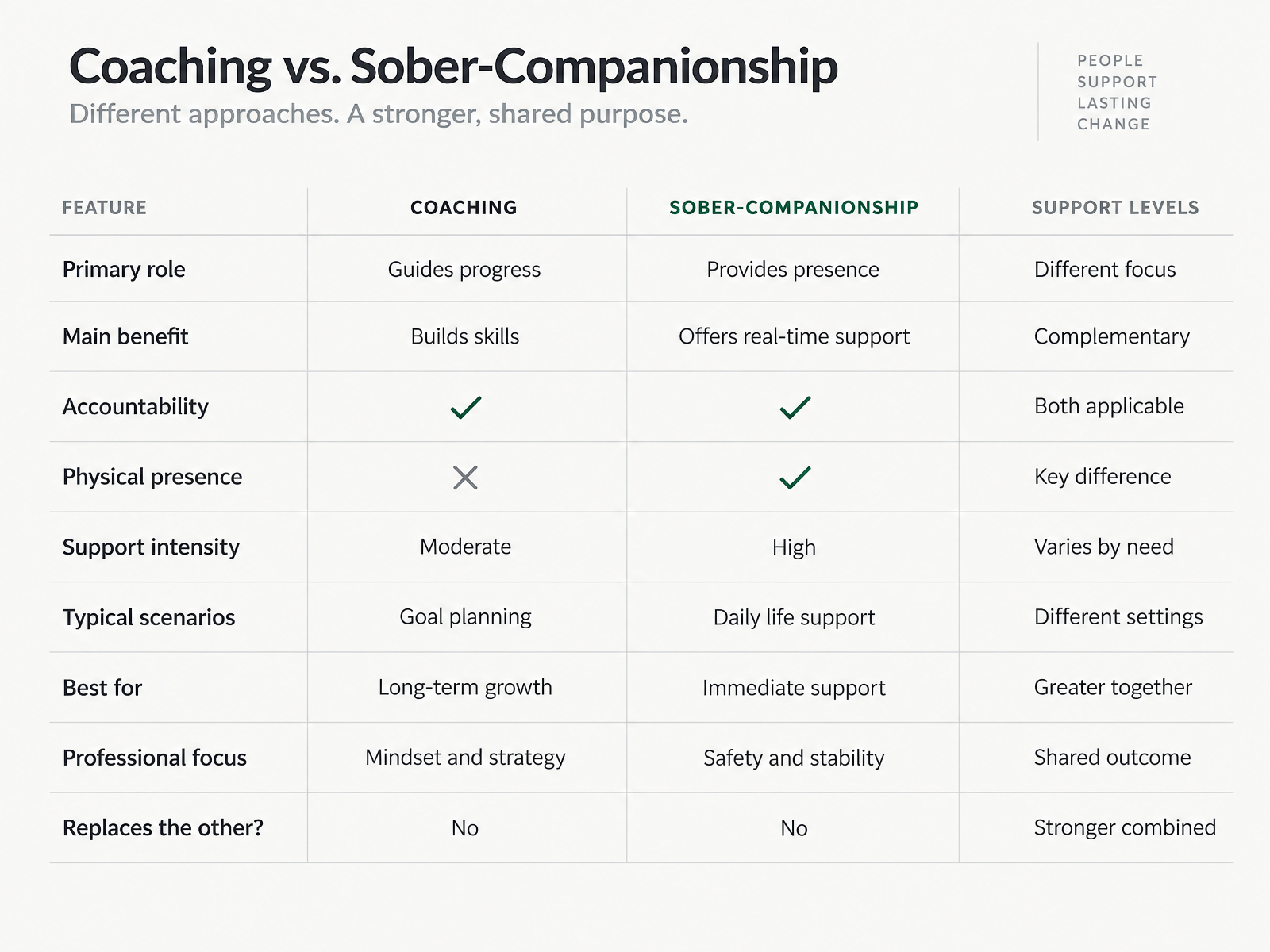
What coaching and companionship actually do
Coaching turns the vague instruction "build a routine" into something you actually do at 7 a.m. on a rough morning. Sober coaching after rehab puts a person on your side whose whole job is helping you set anchors, stay accountable, and adjust the plan when real life pushes back. Companionship goes one step further, placing someone with you during the hours you're most exposed.
For anyone traveling in the first two weeks, this distinction is the whole game. The structure that held you up in treatment, the schedule, the staff, the person in the next chair, falls away the moment you walk out the door. The building itself was never the magic. The external structure it supplied was. When work or family forces you onto a plane in week one, coaching and companionship are how you carry that structure with you.
Single coach vs. coordinated team
A dedicated coach is one consistent person who knows your history, your triggers, and your schedule. A coordinated team spreads that support across several people, which helps when your days have moving parts a single coach can't cover alone.
We match the model to your care level. Continuity matters when your brain is still under-rested and your moods swing, and a dedicated coach who knows your history builds that trust over time. A team model earns its place when you're juggling a return to work, family logistics, and travel all at once.
Virtual coaching handles check-ins, reflection reviews, and craving triage from anywhere. In-person companionship covers what a video call can't: the hotel evening, the airport bar, the family dinner where someone offers you a drink. Most people in early recovery need some blend of both.
A sober travel companion is portable structure
The rule that a slip only becomes a relapse when it isn't caught quickly assumes someone is nearby to catch it. On the road, that assumption breaks.
A sober travel companion exists to shrink that response time back down to hours. What turns a slip into a full relapse is often the silence around it, the instinct to wait until after instead of reaching out before. A companion is already sitting next to you, so the phone call becomes a conversation instead of a confession you're too ashamed to start.
Evenings are the pressure point. Companionship keeps you from facing the most exposed hours alone.
Reading your readiness to taper after week two
Don't taper on a calendar. Taper on evidence. Before you cut back support, look at the same signals a good coach checks in an initial assessment: sleep quality, craving frequency and intensity, and whether you have real people to call.
If your sleep has steadied, cravings are landing softer, and you reached out to your support network without being prompted, you're ready to loosen the intensity. If any one of those is still shaky, hold the current level another week. Rebuilding purpose through daily routine takes longer than two weeks, and there's no prize for tapering early. As you gain independence, we reduce support on purpose to encourage self-sufficiency. The taper follows your readiness, not the clock.
Tracking progress and adjusting the plan
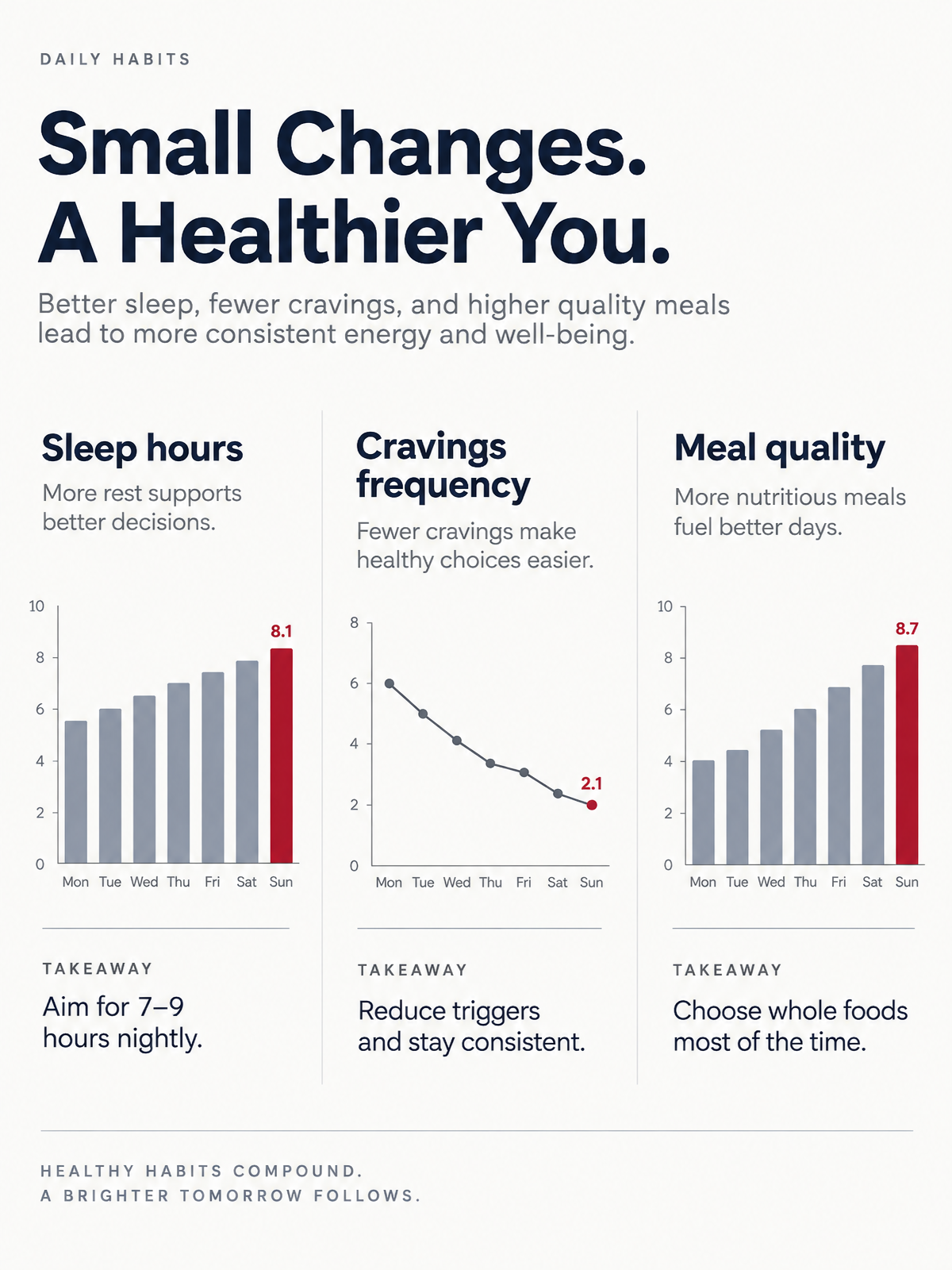
A routine you don't measure is just a hope. Tracking turns vague feelings ("this week felt hard") into something you and your coach can act on. Sober coaching after rehab works best when both of you look at the same steady signals instead of relying on memory after a rough day.
Keep the metrics few and honest. Sleep, cravings, and whether you're eating real meals are the markers worth watching day to day, and our routine check-ins and nutrition guidance are built around exactly these basics. A free habit-tracking app can hold a few simple notes in under a minute a day, and the low friction is the whole point. If logging takes effort, you'll stop.
How often should you meet your coach in the first two weeks?
More often than you think, and more often than later on. The first two weeks are the highest-risk stretch, so we front-load contact. Our team-based coaching calibrates support to your readiness, then tapers as you gain independence and your footing improves.
For anyone traveling during this window, that support matters even more. A trip breaks the sleep and meal patterns you just built, so cravings often tick up mid-travel. Staying in close contact lets a coach help you adjust before it becomes a crisis, not after. This is where a sober travel companion earns their keep, holding the routine steady when the hotel and the airport strip it away.
What does a check-in actually change?
When you and your coach connect, you're looking for patterns, not perfection. A stretch of short sleep before a rough patch tells you where to focus next.
Then you change one thing. Move the morning check-in earlier. Add a meal reminder for travel days. Shift a recovery block to the afternoon slump. We adjust the plan week by week as you build stability and confidence, so it bends with your life instead of breaking against it.
Common pitfalls and how to sidestep them
The most common way the first two weeks unravel isn't a dramatic crisis. It's a quiet drift. You overload the calendar to prove you're fine, hit a wall by day four, then skip the anchors that were actually holding you up. Sober coaching after rehab exists partly to catch this pattern before it catches you.
Three pitfalls show up again and again: over-scheduling, treating a craving as something to white-knuckle alone, and letting isolation creep in. For anyone traveling for work or family in these weeks, all three sharpen at once. A hotel room at 9 p.m. with no meeting to get to is exactly the kind of empty, unstructured time that gets dangerous.
The slip that comes from trying to look normal
The riskiest move after treatment is acting as if nothing changed. Your tolerance dropped during rehab, so a dose of opioids or alcohol that once felt routine can stop your breathing now, as Addiction Help warns. This is the single deadliest stretch to use as if your old limits still apply.
That's why the rule we hold to is simple: reach out before you use, not after. Call a sober contact, your counselor, or SAMHSA's free line at 1-800-662-HELP (4357). If you're in crisis or having thoughts of harming yourself, call or text 988. A slip handled fast is a course correction, not a relapse.
For a craving that hits away from home, urge surfing buys you time. You notice the wave, breathe through it, and let it crest and fall without acting. Most peak in minutes.
Quick reference for the road:
- Do tell two or three people exactly what you need from them before you leave.
- Do keep one scheduled sober check-in on every travel day, even a five-minute call.
- Do write a crisis plan you can customize: who to call, in what order, and the number for a safe ride.
- Don't pack your itinerary so tight there's no room to rest.
- Don't wait until after a slip to reach out.
- Don't spend a free evening alone in a room where boredom does the deciding.
References
[1] Life After Rehab - Protecting Your First Weeks Home - Addiction Help - https://www.addictionhelp.com/recovery/life-after-rehab/
Common Questions
What should I do the moment a craving hits while I'm away from home?
Reach out before you use, not after. While you wait, try urge surfing: notice the wave, breathe, and let it crest. Most cravings peak in minutes.
Is sober coaching the same as therapy or medical treatment?
Coaching is nonmedical recovery support, not clinical care. A coach helps you set anchors, stay accountable, and adjust your plan, but doesn't diagnose, manage medications, or provide detox or licensed therapy. MADE Recovery's coaching complements the therapy, IOP, or medication your outside providers deliver.
What's the actual difference between a sober coach and a sober travel companion?
A coach handles check-ins, reflection reviews, and craving triage, often virtually from anywhere. A companion is physically present during your most exposed hours, the hotel evening or the family dinner where someone offers a drink. Most people in early recovery need a blend of both.
I feel fine after ten days. Can I cut back support early?
Taper on evidence, not the calendar. Check three signals a coach reviews: sleep quality, craving frequency and intensity, and whether you reached out to your network unprompted. If any one is still shaky, hold the current level another week. There's no prize for tapering early.
Why is returning to my old amount so dangerous after treatment?
Your tolerance drops during rehab, so a dose of alcohol or opioids that once felt routine can stop your breathing now. This is the deadliest stretch to act as if your old limits still apply. Away from home, no one's nearby to catch that mistake fast.
Do I really need to log every day if I already feel my moods?
Writing beats memory because patterns hide in plain sight. Three lines a day, mood, cravings and their triggers, and whether you hit your routine blocks, surfaces connections you'd otherwise miss, like cravings spiking every time you skip lunch. Keep it short enough that you'll actually do it.
What single mistake unravels the first two weeks most often?
Over-scheduling to prove you're fine. People pack the calendar, hit a wall by day four, then skip the anchors that were holding them up. A plan with room to bend around a Tuesday meeting or family dinner holds up better than a rigid one that snaps.