How to Plan Your First Weekend Home: Map Triggers, Script Exits, Set Check-Ins
September 27, 2026

Key Takeaways
- The first weekend home carries real risk because treatment structure disappears when familiar cues and unsupervised hours return.
- A good plan watches two fronts at once: outside pressures and internal warning signs like mood, sleep, boredom, irritability, and pulling away from people.
- Pair every high-risk situation with one specific exit — what you'll say, where you'll go, who you'll call.
- Set check-ins before the weekend starts, not when a craving is building.
Where the First Weekend Home Goes Sideways
The first weekend home is where recovery stops being theoretical. In treatment, someone else held the schedule. Now that structure falls away, and the freedom is exactly what makes the weekend risky. This is the stretch where sober coaching after rehab helps, because a client faces real triggers instead of talking about them in a group room.
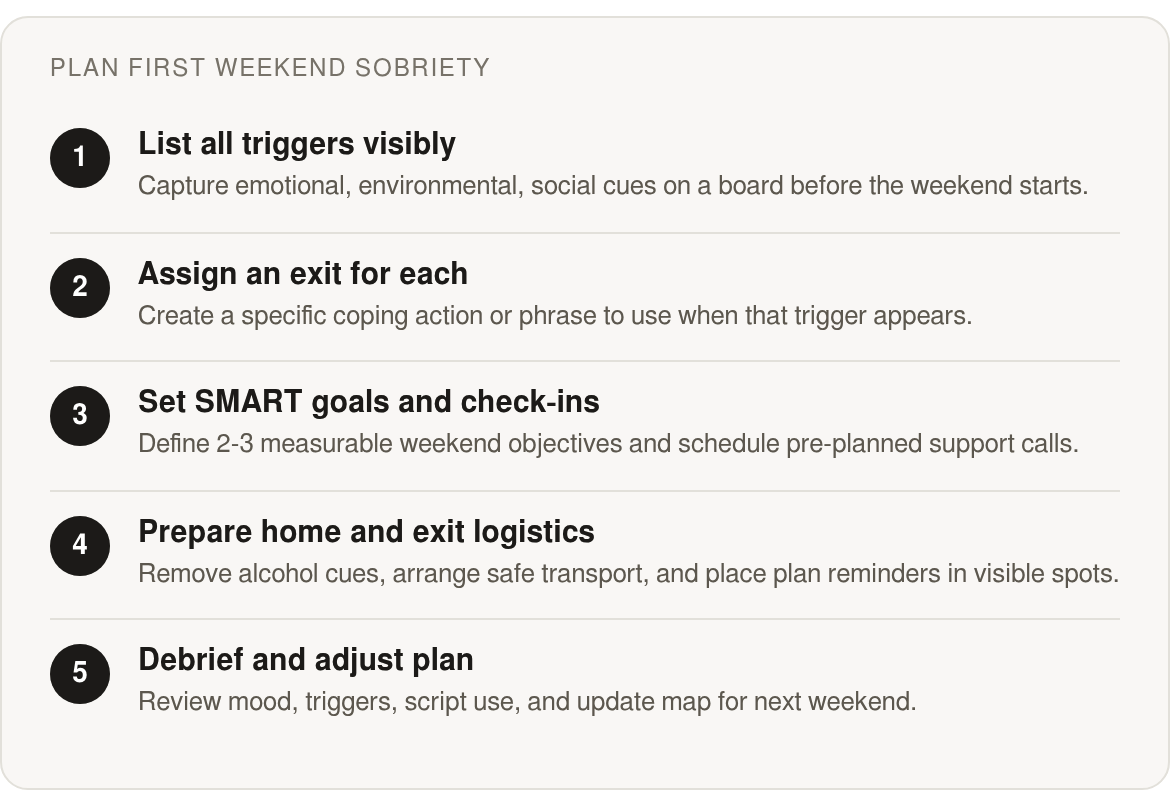
The caution is warranted. Relapse risk runs high early after treatment, when the monitored structure disappears and old cues return. A structured weekend-home plan won't guarantee anyone stays sober, but it's one of the most practical safeguards we build with clients during aftercare coaching. Map the triggers, script the exits, set the check-ins, and the unstructured hours stop feeling like a void.
Why unstructured time is the real danger
The routine that felt suffocating in rehab was doing quiet work. A fixed schedule of meals, meetings, and sleep left little room to sit with a craving. New Directions puts it plainly: rehab was treatment, and real recovery begins when you walk out those doors. Losing that scaffolding, not gaining freedom, is what trips people up.
There's a balance to strike. One evidence-based view argues that recovery means building a new life while changing only the parts that fueled the addiction, not everything at once. Transition-home advice pushes for rigid, pre-planned structure. Both hold if you separate the two jobs: rebuild neutral daily scaffolding aggressively, but keep the identity overhaul selective. Your first weekend should be high-structure and low-drama, not a total reinvention.
The triggers your map has to include
Most people list the obvious external triggers: the friend who still drinks, the party, the old bar. Those matter. But the map has to go inward too.
Cravings don't only come from people and places. Mood swings, irritability, disturbed sleep, and low enthusiasm are internal states that can act as triggers on their own. A weekend plan that only tracks people and places misses half the picture. We coach clients to treat their own physical and emotional condition as planning data, so a rough morning prompts more support instead of more isolation.
How coaching rehearses the weekend before it happens
Think of the first weekend as a live homework assignment. The exact skills clinicians drill in Relapse Prevention are the ones the weekend demands. In structured RP sessions, clinicians and clients role-play real situations, practice saying no to a drink, and rehearse calling a support contact before facing the moment for real.
We do the same thing before a client goes home. We script the exit from a family dinner, name who gets the call at 9 p.m., and rehearse the refusal out loud. Keep it lean. A few high-yield skills practiced well beat an exhaustive checklist nobody remembers. For a fuller walkthrough, our team also maps out the first 30 days home.
Map Your Triggers Before They Show Up in the Driveway
A trigger you can name is a trigger you can plan around. That's the whole point of mapping before the weekend starts. Good sober coaching after rehab doesn't wait for the craving to arrive. Working through likely triggers ahead of time can help, because the unstructured hours are where the risk lives.
The map should hold more than obvious people and places. Relapse prevention research splits triggers into internal automatic thoughts and external cues, and both belong on the page. List only the old hangout and you may miss the resentment, fatigue, loneliness, or restless self-talk that makes the old hangout suddenly feel negotiable.
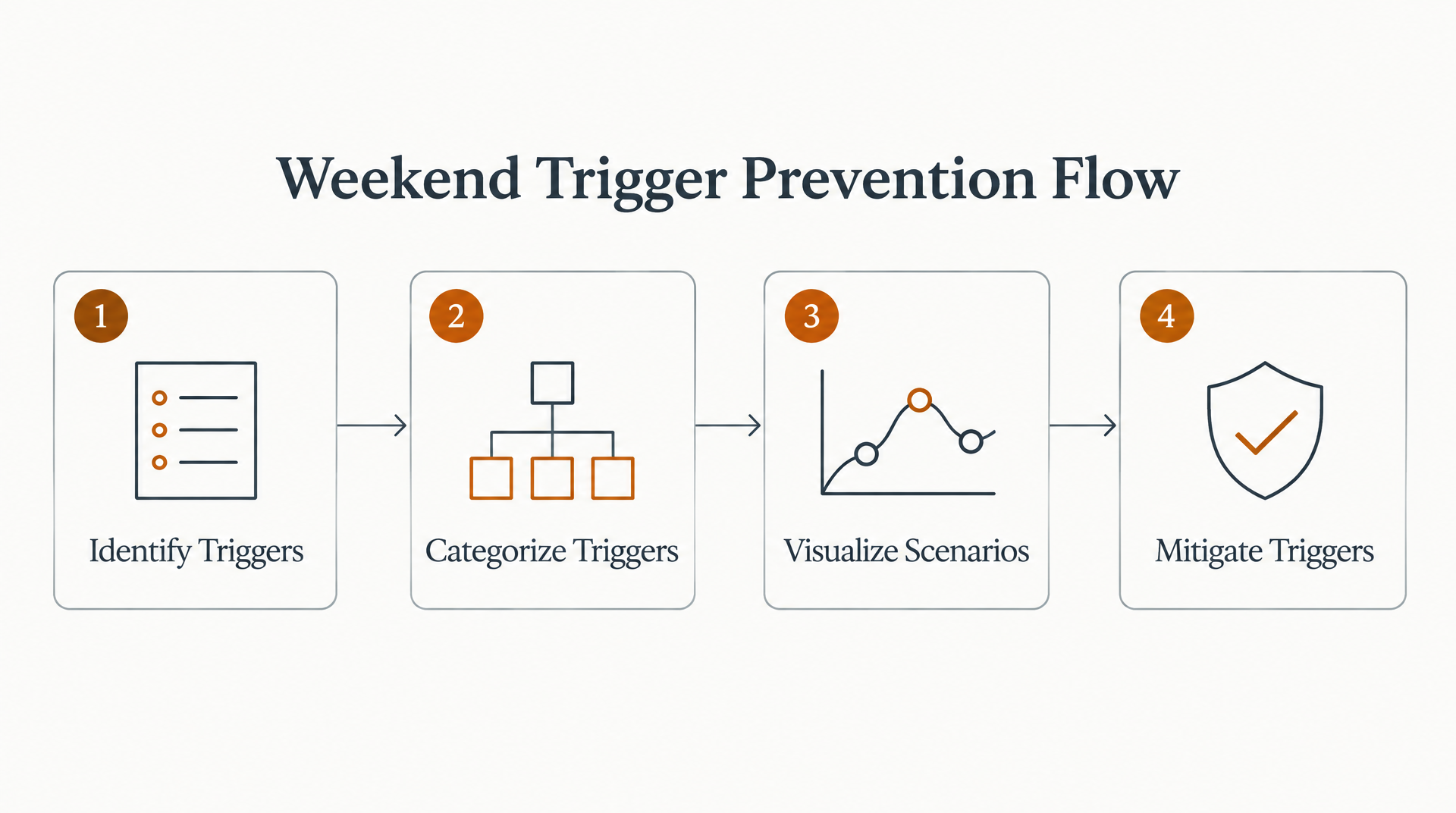
Put every trigger on one visible surface
Start with three columns: emotional, environmental, social. Emotional covers the internal stuff — stress, boredom, loneliness, the low-energy states that make recovery feel heavier. Environmental covers places and objects: the garage, a certain bar you pass, the liquor cabinet nobody cleared out. Social covers people: the relative who pours wine at dinner, the friend who only knew you when you used.
A mind map or a simple trigger board works because you can see the whole weekend at once. A physical board somewhere you pass often, or a phone note you open each morning, can both do the job. Format matters less than visibility. Tucked in a drawer, it won't help when the house goes quiet.
Pair each trigger with one concrete exit
A named trigger with no response is just anxiety. Every entry on the board needs a matched tactic. This is the core of relapse prevention: identify the high-risk situation, then build the specific coping skill for it.
- Stress or a bad-sleep morning → a short grounding or mind-body relaxation exercise before the day builds momentum.
- A craving that spikes at a party → "urge surfing," riding the wave without acting on it, plus a rehearsed line to refuse a drink.
- A tense family moment → text or call a support contact before the feeling turns into a plan.
The useful move is one response to one risk. Say the refusal line out loud. Practice the exit from the dinner table. Skip the exhaustive checklist. A few skills practiced well tend to hold up better than a long list you never rehearse.
Set selective, SMART goals for the weekend
You don't need to overhaul your entire life by Sunday. The Five Rules research argues you change only the parts that fed the addiction, not everything at once. So write two or three specific weekend goals, not twenty.
Make them measurable and time-bound. "Call my sponsor before Saturday dinner." "Leave any event where I feel unsafe within 15 minutes." Pair an outcome goal, like staying sober through Sunday, with a process goal, like one grounding session each morning. A boundary statement helps too: "I won't stay at gatherings where people are drinking heavily." Clear goals build the confidence to handle the hard moments. The same map extends past it, as we help you build daily routines that reduce stress and hold on their own.
Script Your Exits for the Moments That Don't Wait
A trigger you've mapped but haven't planned for is still a live wire. The exit script is the plan — the exact words you'll say, the door you'll walk out of, and the thing you'll do once you're clear. Good sober coaching after rehab treats this as rehearsal, not theory, because a craving at a Saturday cookout doesn't wait for you to think it through.
Exit planning turns relapse-prevention work into plain weekend logistics. The skills-based approach clinicians use isn't abstract; it's built around practicing the move before the pressure hits. For the first weekend, that means preparing the sentence, the ride, and the next safe action as one connected sequence.
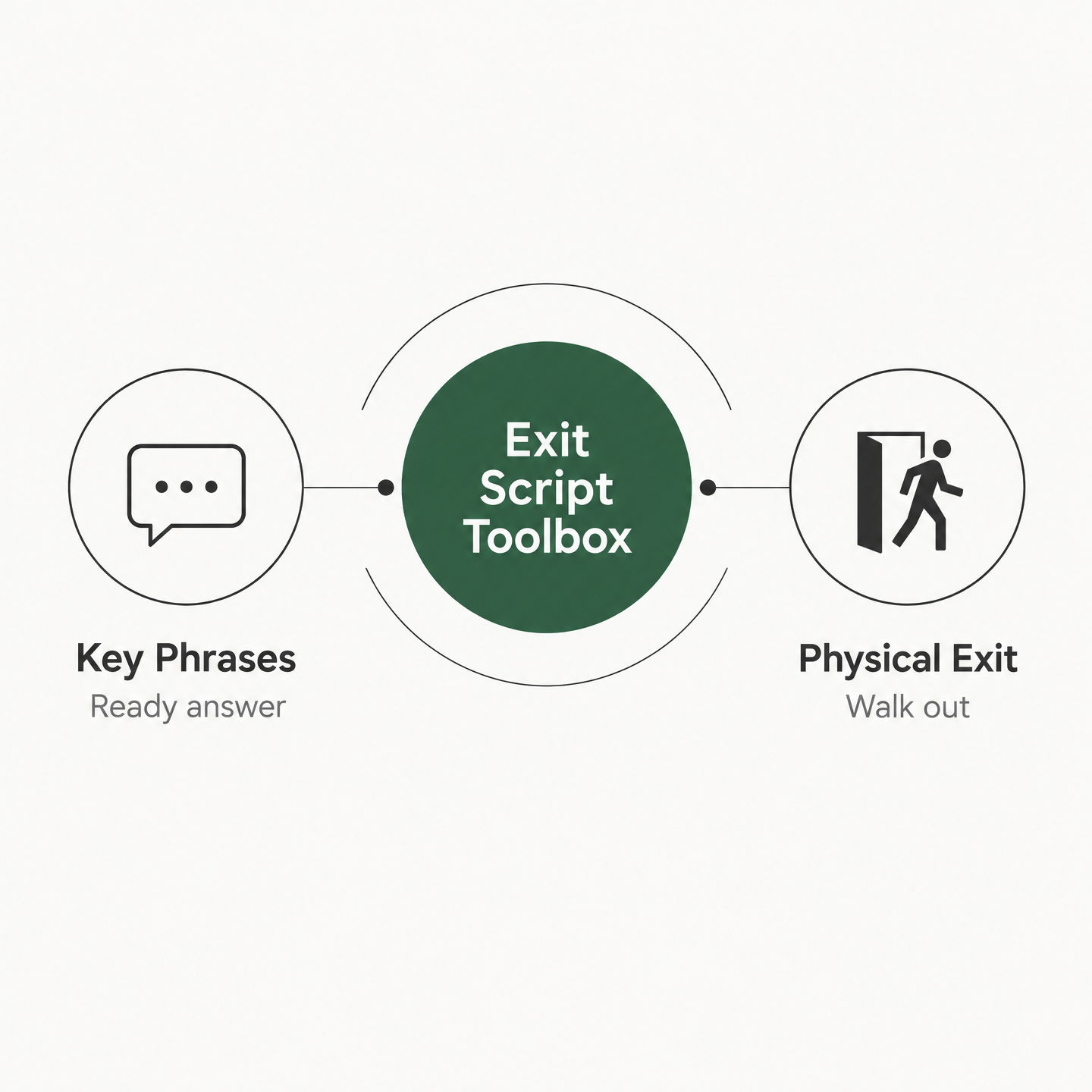
What a verbal exit script actually sounds like
A verbal script is your ready answer for the offer you know is coming. Assertive refusal, in relapse-prevention terms, means saying no confidently and comfortably without a debate. You don't owe anyone an explanation.
Keep it short. "I'm not drinking tonight, but I'll take a soda." "I've got an early morning, I'm heading out." Rehearse it out loud with a coach or peer until it stops feeling awkward. Role-play is standard practice in cognitive-behavioral relapse work for exactly this reason. The words need to be automatic when your heart rate is up.
Building the physical exit and the fallback
The verbal line buys you seconds. The physical exit gets you out. Before the weekend, settle your transportation so leaving is never a negotiation. Drive yourself, or arrange a ride you can call without a fifteen-minute wait. Line up a safe-home contact who knows you might text "come get me" and won't ask why.
Then plan what fills the space after you leave. Relapse prevention names concrete fallback moves: exercise to burn off anxious energy, calling someone from your support network, or "urge surfing," which the Recovery Research Institute describes as riding out the craving without acting on it. A walk, a phone call, a hobby you can pick up quickly. Pick two or three you'll actually do.
Why rehearse instead of just planning
A plan you've only read is not a skill. Early warning-sign training and rehearsed coping skills are meant to reduce relapse risk by making the healthier response easier to reach under pressure. The point isn't memorizing a complicated manual. It's making a small number of protective moves feel familiar.
Act out the party invite. Say the refusal line. Text your safe-home contact as a dry run. This lines up with the five rules of recovery framing, where asking for help early is treated as a core skill, not a last resort. If you want the family side dialed in too, our guide to building a family re-entry plan covers how the people at home can back your exits instead of complicating them.
Set Up Check-Ins Before You Need Them
A check-in only helps if it's scheduled before you need it. That's the shift we push for during the first weekend home. Waiting until Saturday night to text someone puts the reach-out in the hands of the exact person a craving is working on. So we set the times in advance, and the client agrees to them while they're still calm.
Good sober coaching after rehab treats check-ins as fixed appointments, not favors you call in when things get shaky. A few anchor points can cover the weekend well: a pre-weekend touch to walk the trigger map and exit scripts one more time, at least one contact during the unstructured Saturday hours, and a debrief before the week starts. The Saturday contact tends to matter most, because that's when empty time can stretch and distort.
How often to check in during the first weekend
More often than feels necessary. Early recovery isn't the time to prove independence. Relapse builds in stages, and the earliest stage is emotional. It shows up as isolation, bottled-up feelings, and skipped sleep, long before any craving to use.
That's the case for frequent contact. A daily check-in, sometimes two on a hard Saturday, catches the emotional slide while it's still small. You're not reporting a relapse. You're flagging a rough mood before it becomes a plan.
What each check-in should actually cover
Keep it simple enough to do in five minutes. A short, consistent list makes sure nothing important gets skipped:
- Mood and sleep. A quick honest rating, since poor self-care is an early warning sign, not a footnote.
- Trigger update. What's already come up, and what's coming later today.
- The plan for the next stretch. Which exit script is loaded for tonight.
Honesty is the rule that makes all of this work. A check-in where you shade the truth is worse than no check-in, because it manufactures false calm on both ends.
Whether the support comes from one coach or a small team of trusted contacts, the structure is the same. A team gives you backup when your first call doesn't pick up. A single coach gives you continuity. Either way, the appointments are on the calendar before the weekend starts.
Prepare the House So It Works With You
Walk the house before the weekend starts. The physical space is the one variable you fully control, and getting it right removes a whole category of triggers before they can surface. This is where sober coaching after rehab gets tactical: we treat the home as a map to audit, not a place to hope for the best.
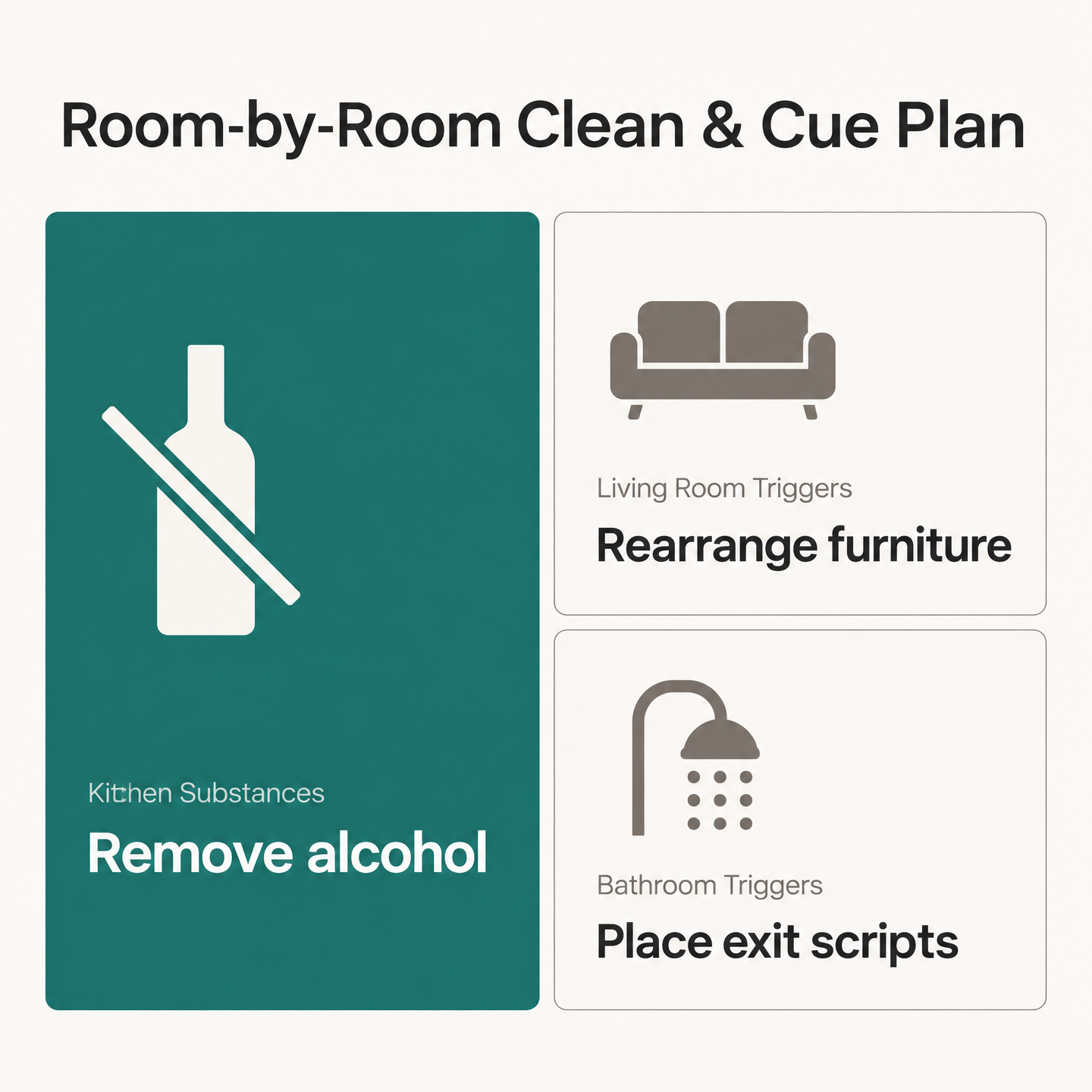
Do a room-by-room sweep on Thursday or Friday. Look at what's on the counters, in the fridge, in the cabinet over the sink. You're hunting for two things: the substances themselves and the cues that pull toward them.
What to clear out first
The audit target is anything you can drink, anything you drink it from, and anything that sets the scene. Pour out and toss the alcohol. Box up the barware, the shaker, the branded glasses. Take down the décor that romanticizes drinking, like the framed bar sign or the wine-country print.
Cues matter more than people expect. An empty bottle used as a vase still fires the old association. So does the corner of the couch where the ritual used to happen. Rearrange it. Move the chair, change the throw, break the visual pattern so the room reads as new.
If you share the home and can't clear everything, negotiate a locked cabinet or an out-of-sight zone before the weekend. That conversation belongs in your family re-entry plan, not on Saturday afternoon.
What makes a space actually support the weekend
Build a sober zone you'll want to sit in. Stock it with the things that carry you through an unstructured hour: a water bottle you refill often, snacks that don't take work, a journal, a book, whatever fills your hands.
Then make your plan visible. Tape the trigger map and your exit scripts somewhere you'll pass them, like the fridge or the bathroom mirror. Write your Saturday check-in time on a card and prop it where you'll see it at noon. When a craving hits, you shouldn't have to remember the plan. The room should remind you.
Debrief While the Weekend Is Still Fresh
A debrief only works if you run it while the weekend is still fresh. Memory fades fast, and the details you need most, the moment a craving spiked, the exit script that fell flat, are gone by Tuesday. The sit-down lands best before the weekend even ends, while the experience is still sharp. This is where sober coaching after rehab turns raw experience into a better plan.
A quick turnaround matters because relapse is usually gradual, not a single isolated decision. The first signs can look ordinary: poorer self-care, more secrecy, less sleep, more withdrawal from support. A same-day debrief in your aftercare coaching catches those signals while you can still name the sequence that led to them.
What to track in a weekend debrief
Keep the metrics simple enough that you'll actually record them. A useful log covers four things:
- Mood and self-care: how you slept, ate, and felt each day, since these are the first warning signs of emotional relapse.
- Trigger encounters: which mapped triggers showed up, and any you didn't see coming.
- Exit script usage: which scripts you activated, and whether they held.
- Honesty gaps: any moment you bent a rule or talked yourself into a risk.
That last one matters. Being completely honest is one of the core rules of recovery, and a debrief is where you practice it. Bargaining and quiet rationalizing are mental relapse signs, so name them out loud with your coach instead of filing them away.
Adjusting the plan without over-celebrating risk
Wins deserve recognition. If you left a party clean or called your Saturday contact on time, say so plainly. But how you frame it takes care. White-knuckling through a bar isn't the win to praise; the exit you used is.
Then adjust. A trigger that ambushed you gets added to the map. A script that fizzled gets rewritten. Set the next check-in before you close the debrief, so the following weekend starts with structure already in place instead of a blank calendar.
References
[1] Transitioning From Rehab to Home | NDFW in California - https://www.newdirectionsforwomen.org/transitioning-from-rehab-to-home/
[2] Relapse Prevention and the Five Rules of Recovery - PMC - NIH - https://pmc.ncbi.nlm.nih.gov/articles/PMC4553654/
[3] Relapse Prevention (RP) (MBRP) - Recovery Research Institute - https://www.recoveryanswers.org/resource/relapse-prevention-rp/
FAQ
1. What if I share the home and can't remove all the alcohol before the weekend?
Handle the household agreement before you come home for the weekend. If alcohol has to remain in the house, the key is that it should not be visible, accessible, or left for you to negotiate in the moment. Put the agreement in writing if needed, and make sure everyone understands the boundary.
2. How long does this heightened relapse risk actually last after treatment?
The first stretch after treatment is the most delicate because daily structure changes so quickly. Some symptoms and vulnerabilities can last much longer, so the weekend plan should become a repeatable habit rather than a one-time exercise.
3. What's the difference between an outcome goal and a process goal for the weekend?
An outcome goal names the result you want. A process goal names the action you will take to support that result. For a first weekend home, the process goal matters because it gives you something specific to do when stress, boredom, or a craving shows up.
4. Can I plan my first weekend home without a sober coach, or do I need one?
You can use the framework on your own, especially if you already have reliable support. A coach or small team adds accountability, rehearsal, and backup when the weekend gets unpredictable. MADE Recovery provides that nonmedical support, distinct from clinical treatment.