Your First 30 Days Home From Rehab: A Survival Plan
August 29, 2026
Key Takeaways
- Of everyone who relapsed within their first year, 55% did so in the first 30 days home.
- About 20% of those relapses happened within the first few days after leaving treatment.
- Losing structured accountability at discharge is the single biggest predictor of whether the first 30 days hold.
- Roughly 8% of patients used within hours of leaving. Finishing a program alone protects nobody.
- Relapse rates for people recovering from alcohol run between 50% and 90% across the first four years.
- Risk stays elevated for years, but it is highest in the first 30 days home.
- Most first-year relapses are effectively decided before month two starts.
The month everyone underestimates
The first month home is when relapse risk peaks, not when it eases. A post-treatment relapse study shows how heavily the danger is front-loaded after discharge. Life after rehab does not ease you in. The pressure lands on day one, and the transition is volatile from the start.
That's the problem this plan solves. You leave a setting where every hour was accounted for and land in a house where the scaffolding is gone. Without something to bridge that gap, the sudden absence of oversight is where old habits creep back in.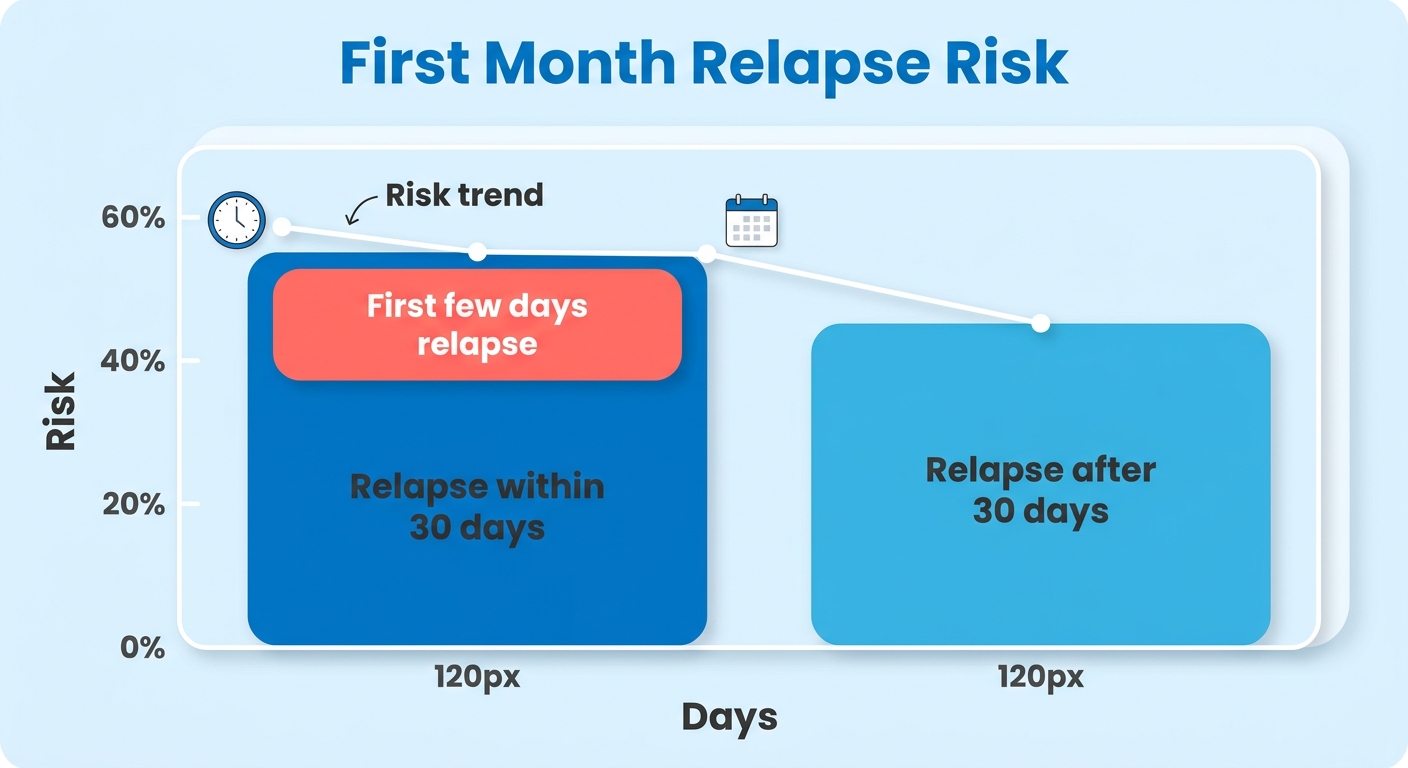
Why is the first month more dangerous than the years that follow?
Both timescales are real, and they matter for different reasons. Long-term data on relapse rates for people in alcohol recovery shows sobriety stays a multi-year project. But the weeks right after discharge are their own kind of hurdle, and the Vista data is clear that they need a more intensive level of support.
So yes, keep the long view. Just do not let it distract you from the window in front of you. Putting your safeguards in place during those first high-stakes weeks is the most effective thing you can do for the months and years after.
One finding should reset how you plan: the vulnerability starts the second you walk out the door. Completing a program does not grant immunity from cravings. Your support has to be live on the drive home, not something you go shopping for later.
What has to be in place before you walk out the door?
Your aftercare coaching team should be assembled and active before discharge, not hunted down after you get home. The gap it fills opens on day one. If you're interviewing coaches from your kitchen table, you've already lost the most dangerous week.
We build the plan around the two things treatment gave you and home takes away: structure and accountability. In one account of the first 90 days of recovery, a man credited exactly those two things:
"Taking it one day at a time allowed me to confront my fears and develop a healthy routine." - John (not his real name)
A day-at-a-time routine replaces the structure you lost. Peer and coach connection replaces the accountability you lost. Pick a team that covers both, not just one.
- Lock in your coaching check-in schedule before you leave treatment, so the first daily call happens the morning after discharge, not days later.
- Confirm a warm handoff from your treatment team to your aftercare support. The Vista analysis calls this essential for anyone without stable housing or employment.
- Name the specific triggers waiting at home (family dynamics, old routines, physical places) and hand that list to whoever is holding you accountable.
If home already has strong sober structure and a sponsor calling daily, you may not need a full coaching team. For anyone leaving detox or residential care into an unstructured house, the first 30 days are not the time to improvise. For families managing this stage, our team helps plan detox and treatment pathways and supports the move home, coordinating the structure and accountability that hold those first 30 days together.
Build a Structured Daily Routine
A daily routine is the strongest substitute for the structure you lost at discharge. In treatment, every hour was scheduled. Home hands you a blank calendar and expects you to fill it, and that empty space is where cravings and decision fatigue do their damage. The fix is scaffolding you design in advance, not one you improvise at 7 a.m. on a bad day.
Build the routine with your support network so it is actually realistic. A pre-planned framework takes the edge off the anxiety of unstructured time. Clear daily milestones cut the mental load of deciding what to do next, which frees you up to focus on staying sober.
What should your morning anchor look like?
Your morning anchor is a fixed 30-minute block that runs the same way every day, so you do not have to decide anything before your brain is online. Consistency here steadies mood and flattens the emotional swings that feed cravings.
- Hydrate first, before coffee or your phone. Overnight dehydration worsens fatigue and irritability, two early relapse triggers.
- Eat a real breakfast with protein. Steady blood sugar keeps your decisions sharp through the morning.
- Five minutes of mindfulness or a day-at-a-time intention. Grounding yourself early builds the resilience to meet the day without feeling swamped.
How do you stay accountable during the day?
Build a mid-day checkpoint: a 10-minute pause to review what you've felt and flagged since morning. This is where a coach earns their keep, because accountability collapses fastest in the unsupervised middle of the day.
- Log your triggers in four buckets: people, places, emotions, and substances. Sorting them makes patterns visible instead of a vague dread.
- Check in with your coach, virtually or in person. A same-day check-in catches drift before it becomes a decision.
- Run the Pause-Plan-Act model when a craving hits: pause, name the trigger, plan a response, act, then log it. A 60-second round of box breathing or the 5-4-3-2-1 grounding scan buys you the space to think.
How do you wind down at night?
Your evening block protects sleep, and poor sleep is one of the loudest relapse triggers there is. Treat wind-down as non-negotiable.
- No screens for an hour before bed, and dim the lights. This lets melatonin rise on schedule.
- Write three lines of gratitude. It ends the day on evidence that recovery is working.
One honest carve-out: routines break. Shift changes, a family emergency, a delayed flight. When that happens, do not scrap the whole day. Keep the anchor and the coach check-in, and let the rest flex. The point is not perfection. It is keeping the two loops that matter most intact while everything else moves.
Create a Support Network & Family Collaboration
The support network you build before discharge is the one that holds once you're home. People who try to assemble their circle after they get there spend those first critical days on logistics instead of recovery.
Think of it as a team with roles, not a list of people who care about you. Someone in your corner daily, a professional check-in on a fixed schedule, and a peer group for the moments in between. That combination closes the accountability gap better than any single relationship can.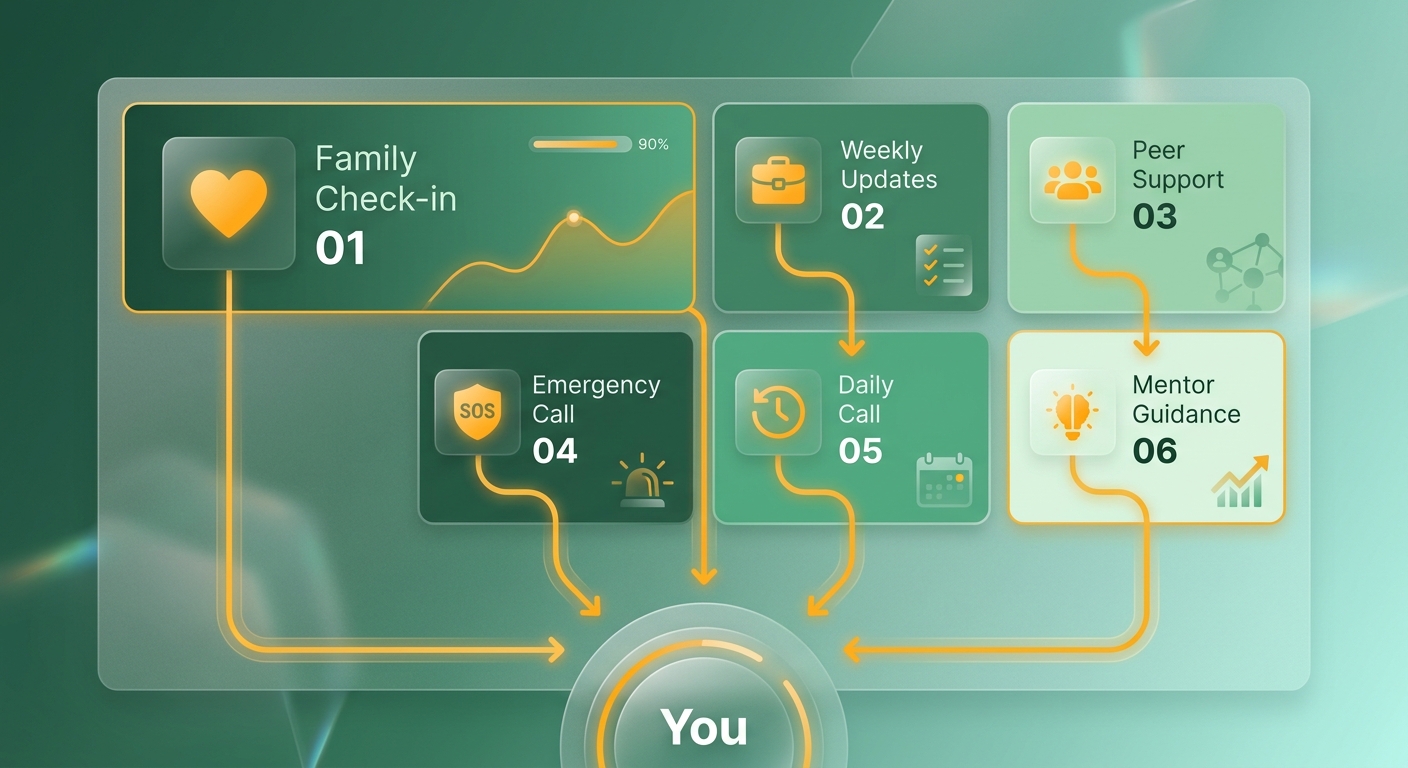
Who should be in your corner
A Recovery Buddy is not a contact in your phone. It is a person with a defined job. Choose someone sober, reachable, and willing to reach out first. This is not your sponsor or your therapist. It is your same-day, low-barrier first call.
- Designate your Recovery Buddy before discharge and agree on one rule: they contact you if they have not heard from you by a set time each evening. Passivity kills the accountability loop.
- Schedule weekly coach check-ins at a fixed time, not "whenever needed." Invite one trusted family member to join occasionally. A facilitator in the room shifts the conversation from venting to problem-solving.
- Connect with a peer group. AA/NA works if it fits. An online forum or sober social app works if you prefer a non-12-step format. Consistency matters more than which one you pick.
What families need to do differently
Families want to help. The trouble is that well-meaning support often looks like surveillance, and surveillance triggers the exact defensiveness it is trying to prevent. Clear structure is what changes that.
We have seen this over and over. Families who build a structured weekly touchpoint, what some of our clients call Recovery Fridays, take the guesswork out of connection. A fixed check-in turns accountability into a shared habit instead of a solo burden, which is why we help families outline a simple check-in plan and write expectations into a shared note.
- Do ask "what would actually help right now?" instead of assuming. If you're in recovery, a concrete ask ("can you join my Friday check-in?") is easier on both sides than "I need support."
- Don't use "you just need to..." language. It signals a closed diagnosis and shuts the conversation down fast.
- Protect your own capacity as a caregiver. You cannot stay consistently available and emotionally regulated at the same time. That's part of why our support is team-based and tapers on purpose as clients gain independence, so no single family member carries the full weight.
Prepare for Slips & Crisis Planning
A slip is not the end of your recovery. It is a data point. The difference between a slip and a relapse matters because it changes what you do next, and how fast you move decides whether one bad night becomes a full return to old patterns.
Slip: a single, isolated use followed by an immediate return to your plan. Relapse: a sustained return to substance use, usually with your support routine dropped entirely. The first is recoverable in hours. The second takes weeks to climb back from. Treat every slip like the emergency it is, and you keep it from becoming the second thing.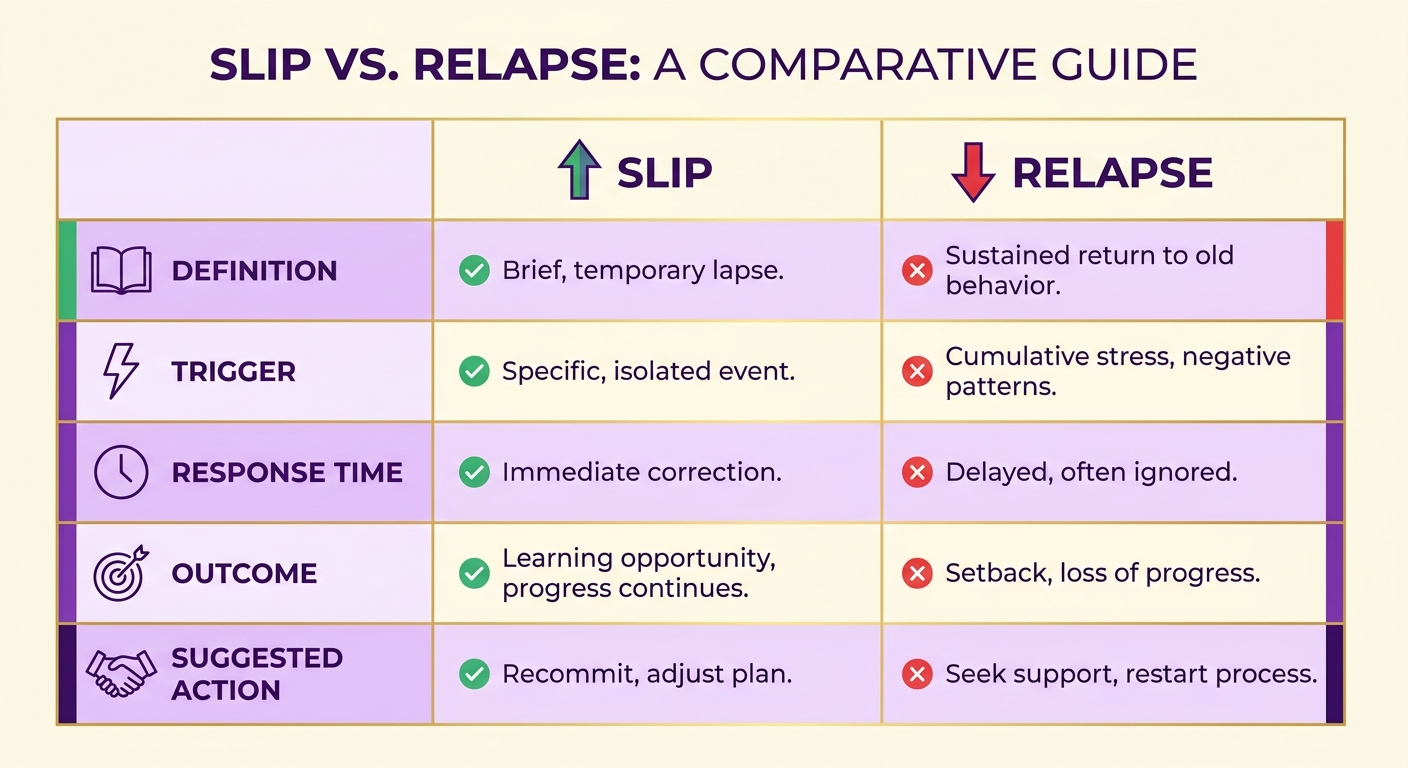
What should you do in the first 3 hours after a slip?
The first three hours decide the trajectory. Move through these steps in order, without waiting to feel ready. The goal is to shrink the window where shame and isolation take over.
- Run a fast self-check. Say what happened out loud, without editing it. Honesty here beats a clean story you'll have to unwind later.
- Contact your coach or support team immediately. Do it before you talk yourself out of it. The call itself breaks the isolation that turns a slip into a spiral. With virtual and in-person coaching, help is there in the moments that matter most.
- Get to a safe environment. Leave the setting where the slip happened. Remove access to substances and put physical distance between you and the trigger.
- Reconnect with your coaching team. Talking it through while the details are fresh beats doing it a week later, when the story has blurred.
How do you turn a slip into relapse prevention?
You run a post-slip review and fold what you learn into your next 30-day cycle. Reviewing a slip while it is fresh helps you spot the trigger and adjust before one hard moment turns into a sustained return to old patterns.
The worksheet is simple. What was the trigger? What early warning signs did you miss? What one change goes into your routine this week? This is the whole point of building a coaching team before discharge. The accountability is already in place when you need it most.
- Save your emergency contacts now. Keep national hotlines, your local crisis center, and any medication-assisted treatment contacts in your phone before day one, not during a crisis.
- Schedule the plan update. Bring the worksheet findings to your next coaching check-in and adjust the routine so the same trigger has less power next month. Our programs shift as you learn what works.
Review, Reflect, & Taper Coaching Support
Day 30 is a checkpoint, not a finish line. The end-of-month review answers one question: are you ready to hold more of your own recovery, or do you need the current level of support a little longer? Tapering works when it is tied to evidence, not the calendar.
The mistake we see most is people pulling support the moment they feel good. Feeling good on day 30 is data. It is not proof. Run the review first.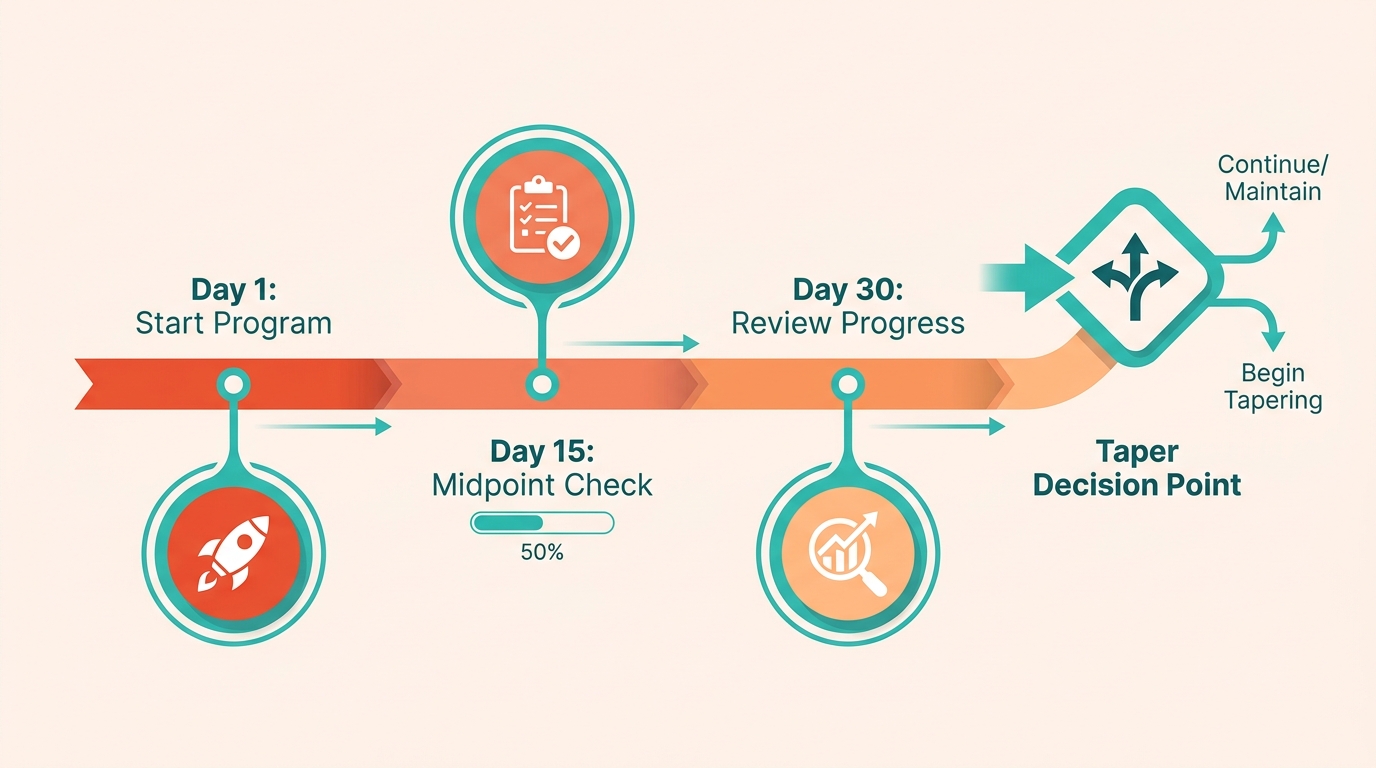
How do you run a 30-day recovery review?
A structured review measures three things: days sober, routine adherence, and trigger log entries. Score each one honestly, then compare against your first-week baseline. The numbers tell you whether your confidence matches your consistency.
- Count your days sober and name the near-misses. A clean streak is worth celebrating, but the slips you avoided teach you more about your triggers than the smooth days do.
- Rate your routine adherence as a percentage. Hit your wake time, meals, and check-ins on 25 of 30 days, and that is the scaffolding holding. Below 60% means you taper nothing yet.
- Review your trigger log for patterns. Cluster the entries. Same time of day? Same people? That pattern shapes your next 60-day goals.
- Set two new 60-day goals. Add one healthy habit and expand one existing routine. Keep it small enough to actually stick.
When should you taper coaching support?
Taper when your confidence scores and your adherence numbers agree, not when one runs ahead of the other. At MADE Recovery, support tapers on purpose as clients find their rhythm, so independence builds instead of getting yanked away all at once. That gradual, evidence-tied step-down is meant to build the stability abrupt exits tend to undermine.
- Move from daily to every-other-day check-ins only after two strong weeks. Confidence built on a small sample collapses under the first hard day.
- Set up self-monitoring before support drops. A habit-tracking app and a nightly journal prompt fill the space a coach used to hold.
- Write your re-entry triggers down now. Three missed routines in a row, a slip, or growing isolation are red flags. Re-engaging intensive coaching early is not failure. It is the plan working.
References
[1] Transitioning From Rehab to Home | NDFW in California - https://www.newdirectionsforwomen.org/transitioning-from-rehab-to-home/
[2] The first 90 days of recovery: Building a routine that lasts - https://www.rosecrance.org/blog/summer-of-recovery-celebrating-three-months-sober/
[3] The Bad News About How Quickly Patients Relapse After ... - https://vista-research-group.com/bad-news-relapse-post-treatment
Frequently Asked Questions
1. Can I go straight home after rehab without a coaching team if I have a supportive family?
While family support is incredibly valuable, loved ones often struggle to balance encouragement with the natural anxiety of monitoring recovery. This dynamic can unintentionally create tension or pressure. A professional coaching team provides objective, structured boundaries, allowing your family to focus on rebuilding personal relationships rather than acting as supervisors.
2. What's the difference between a Recovery Buddy and a sponsor?
A sponsor typically guides you through a specific recovery program (like the 12 Steps) and focuses on long-term spiritual and emotional growth. In contrast, a Recovery Buddy is focused on immediate, daily operational check-ins. They help maintain your daily schedule and provide a quick, peer-level touchpoint to prevent isolation during high-risk hours.
3. My daily routine got disrupted by a work emergency. Do I have to start over?
Absolutely not. Rigidity can actually increase stress, which is a trigger in itself. When unexpected events disrupt your day, focus on stabilizing your immediate environment. Re-establish your baseline as soon as the disruption passes, and treat the deviation as a normal part of life rather than a failure of your recovery plan.
4. Is a single slip the same as a relapse?
No, they are distinct events defined by your response. The critical difference lies in momentum. A slip is a temporary detour that you can halt immediately by taking swift action and re-engaging your support network. A relapse occurs when you allow that detour to dictate your direction, abandoning your daily structure and isolating yourself from help.
5. I feel great at day 30. Can I stop coaching now?
Stopping support abruptly when you feel strong is a common pitfall. Early recovery is often characterized by a "honeymoon phase" where motivation is high, but this emotional state can fluctuate. Instead of relying on how you feel in a single moment, look at your objective consistency over the entire month. A gradual transition ensures you have a safety net when the initial enthusiasm naturally levels off.
6. Does completing a treatment program protect me from early relapse?
Completing rehab is a major milestone, but it represents a change in environment rather than a cure. In treatment, your sobriety is supported by external boundaries and constant supervision. Once you return home, those external constraints disappear. Protection comes from actively transferring that structure into your daily life, which is why having an immediate aftercare plan is so critical.
7. What should I have saved on my phone before day one at home?
Your phone should be optimized to reduce friction when you need help. Beyond emergency resources, organize your contacts so your primary support team is easily accessible. It is equally important to delete or block numbers associated with past substance use. Having a clean, supportive digital space prevents impulsive decisions during moments of high stress.