How to Build a Family Re-Entry Plan That Prevents Relapse Triggers
August 21, 2026

Key Takeaways
- The first 90 days after discharge carry the highest relapse risk.
- Building this plan takes two to four hours over one to two weeks.
- At least two family members must commit to specific tasks. Solo-caregiver burnout is real.
- You need the discharge summary, including medications, outpatient appointments, and identified triggers.
- Families assign roles based on who should do them, not who has capacity. That is where plans break.
- Without advance planning, the first 48 hours bring missed rides, forgotten medications, and panic calls.
- Single parents must recruit a friend, sponsor, or community contact to share the load.
Quick Summary
You need a concrete framework before someone returns home from treatment. Without one, the transition overwhelms everyone and creates friction. That friction increases relapse risk during the most vulnerable window.
This guide explains how to build a family re-entry plan. It assigns roles, schedules check-ins, and maps trigger scenarios before they happen. You will create a written document that names responsibilities, defines when support steps down, and explains how to handle setbacks without panic.
What You Need Before You Start
You need a core support network. If you are managing this alone, recruit trusted friends, sponsors, or community contacts. They can share the workload. No single person can carry the entire emotional and logistical burden without becoming overwhelmed.
You also need clinical documentation from the residential facility. Gather recommendations, schedules, and anything the treatment team flagged. If these are not finalized, request a preliminary draft from the case manager.
Gather each family member's current obligations. Include work schedules, childcare duties, and existing caregiving roles. Recovery planning fails when it ignores competing demands. A parent working 50-hour weeks cannot handle daily medication reminders and therapy transportation without support. The plan must match tasks with realistic availability.
You will also need a shared calendar tool: Google Calendar, a physical wall planner, or a shared notebook. The format matters less than keeping the plan visible. Plans held in one person's head collapse when that person needs a break.
Why the First 72 Hours at Home Matter Most
Recovery does not usually fail in treatment. It often unravels during the first 72 hours at home. Without a coordinated plan, someone returns from detox to the same kitchen table, bedroom, and routines that preceded the crisis. Everyone expects change, but no one knows their role. Who drives to the 9 a.m. outpatient session when the car is needed for work? Who tracks medication refills? Who answers the phone when a craving hits at midnight?
This pattern repeats often: the person arrives home, and the household improvises. One parent overcompensates with constant check-ins. Another withdraws, afraid of saying the wrong thing. Siblings avoid the topic entirely. Within days, the makeshift approach collapses.
What Happens Without a Written Plan
Relapse does not begin with a substance. It often begins weeks earlier with emotional relapse: skipped meals, disrupted sleep, mounting tension, and quiet isolation. When family members lack assigned roles, they duplicate efforts or leave gaps. Two people remind someone about the same appointment, while no one notices three missed therapy sessions. The resulting chaos becomes a trigger. By the time someone notices, mental relapse may have begun: internal bargaining and romanticizing past use.
A written re-entry plan names responsibilities, maps high-risk scenarios, and sets check-in intervals. It turns vague intentions into assignments: who manages the weekly calendar, who monitors warning signs, and who steps in after a missed commitment. The document also defines when support steps down. This helps prevent the suffocation that can drive someone back into old patterns to regain autonomy.
Why Coach-Led Coordination Changes the Outcome
Most families try to build this plan alone and treat it as scheduling. They may miss subtler work, including identifying home-specific triggers and scripting calm responses to setbacks. They may also struggle to build accountability without creating surveillance.
Coordinated support from a sober coach keeps everyone aligned with the same plan. It reduces communication gaps and conflicting advice. It also helps prevent missed follow-through when providers assume the family is managing it.
The plan includes scenarios for common triggers: a tense family dinner, an unexpected layover in a neighborhood tied to past use, or a cancelled therapy appointment. You will assign a primary contact for each scenario and rehearse the response beforehand. When the moment arrives, no one must invent a solution under pressure.
Prerequisites
Before assembling a working re-entry plan, gather three things: one family coordinator, a list of willing participants, and a two-hour meeting block. Meet in person or by video call. Complete this preparation before discharge, ideally during the final week of residential treatment. Schedules are still predictable then, and homecoming has not created new pressures.
Who Needs to Be in the Room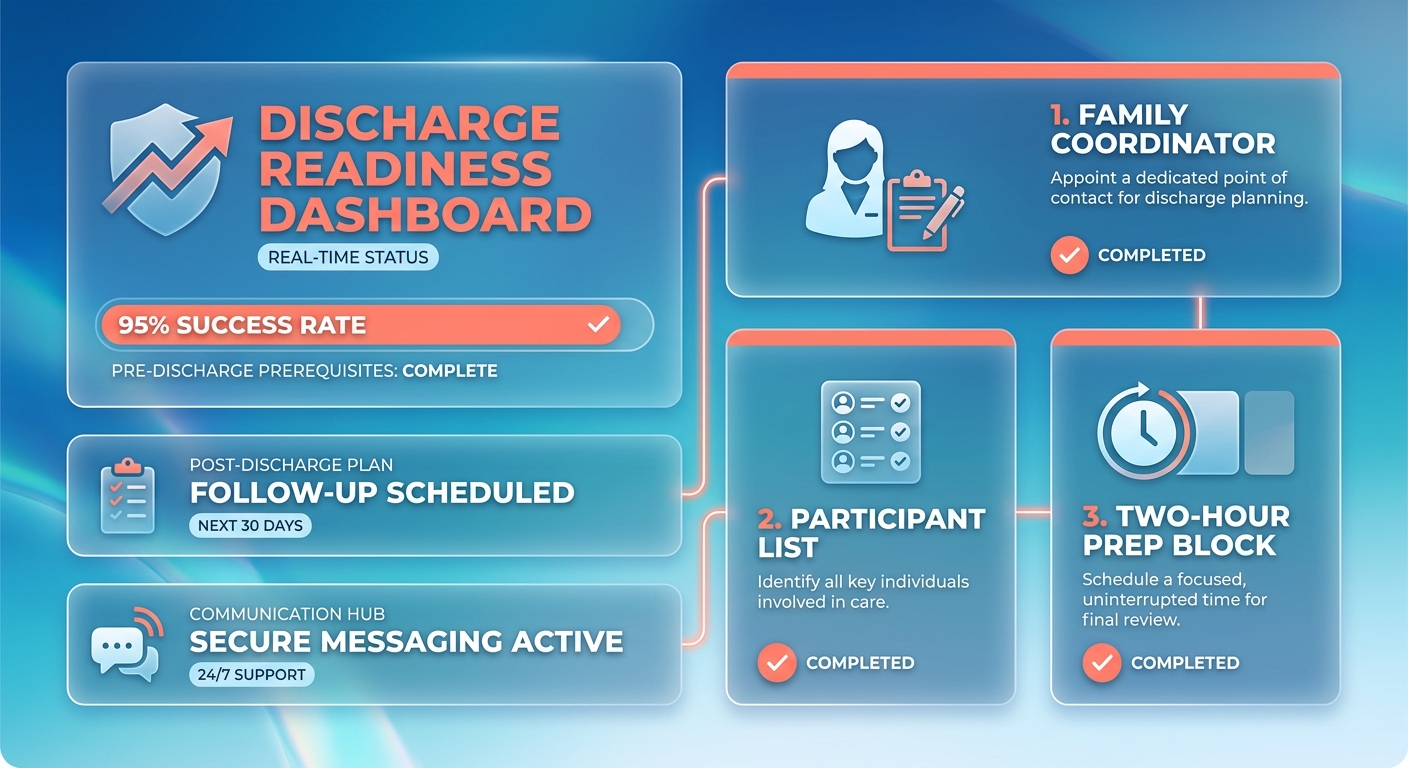
Give the coordinator role to the person who already manages household logistics. This should not be the person who feels obligated to volunteer. Choose someone who tracks appointments, pays bills, and remembers where the insurance cards are. Follow-through matters more than emotional intensity. This person will hold the final document, update it as circumstances change, and answer the 9 p.m. text when someone forgets a commitment.
Everyone who lives in the home or provides regular support should confirm availability. This includes parents, siblings, a sober companion, and the outpatient therapist. Exclude people who say they "might be able to help." The plan depends on clear commitments. If someone cannot commit to a specific role, they should not join the planning session.
What You'll Document During the Session
You need a shared document: a Google Doc, Notion page, or printed folder. Choose a format everyone can access without searching email threads. Families often choose a format, then lose track of it after homecoming. Pin the link in a family group chat, print two copies, or tape it to the fridge. Easy access determines whether the plan gets used.
The document will cover four categories: daily check-in assignments, trigger scenarios with written responses, a medication and appointment tracker, and a step-down timeline. The timeline should state when each layer of support reduces intensity. You will not complete every detail during the first session. Some triggers appear only after the person returns home. However, you will create a structure that allows updates without renegotiating the entire plan.
Core Concepts
A family re-entry plan turns intentions into assigned tasks. Without this step, recovery support can dissolve into confusion. Everyone wants to help, but no one knows who handles daily logistics or emergency contacts. The plan names roles, schedules check-ins, and documents trigger responses before the person returns home.
MADE customizes each coaching program to individual needs. Support evolves as clients transition from detox or residential treatment into daily life. Programs include coordination with nursing support, grocery shopping, meal preparation, and day-to-day life management. Coaching may come from one dedicated coach or a coordinated team, depending on the needed care level. Support tapers as clients find their rhythm, encouraging independence and long-term stability.
What Counts as a Relapse Trigger
Relapse triggers include environmental cues and emotional states. Environmental cues are settings, people, or routines linked to past substance use. Examples include a specific room, a neighborhood route, or friends who still use. Emotional states are harder to track but just as important. The acronym HALT covers common ones: hungry, angry, lonely, and tired. It provides a daily self-check reminder.
The plan documents both trigger types for the person returning home. List known environmental triggers first. Then add emotional patterns observed during treatment. This is not guesswork. Treatment staff usually provide discharge notes with specific high-risk situations. Family members who joined therapy sessions may also recognize emotional escalation signs. Pair each trigger with a response: who intervenes, what they say, and when to seek professional support.
Step-by-Step Implementation
Putting the plan into action means turning meeting notes into an accessible format. Families often rely on verbal agreements, then forget who promised what by day three. A central written reference gives everyone one source when roles blur or someone new helps.
Assign One Task Per Person, With Backup Coverage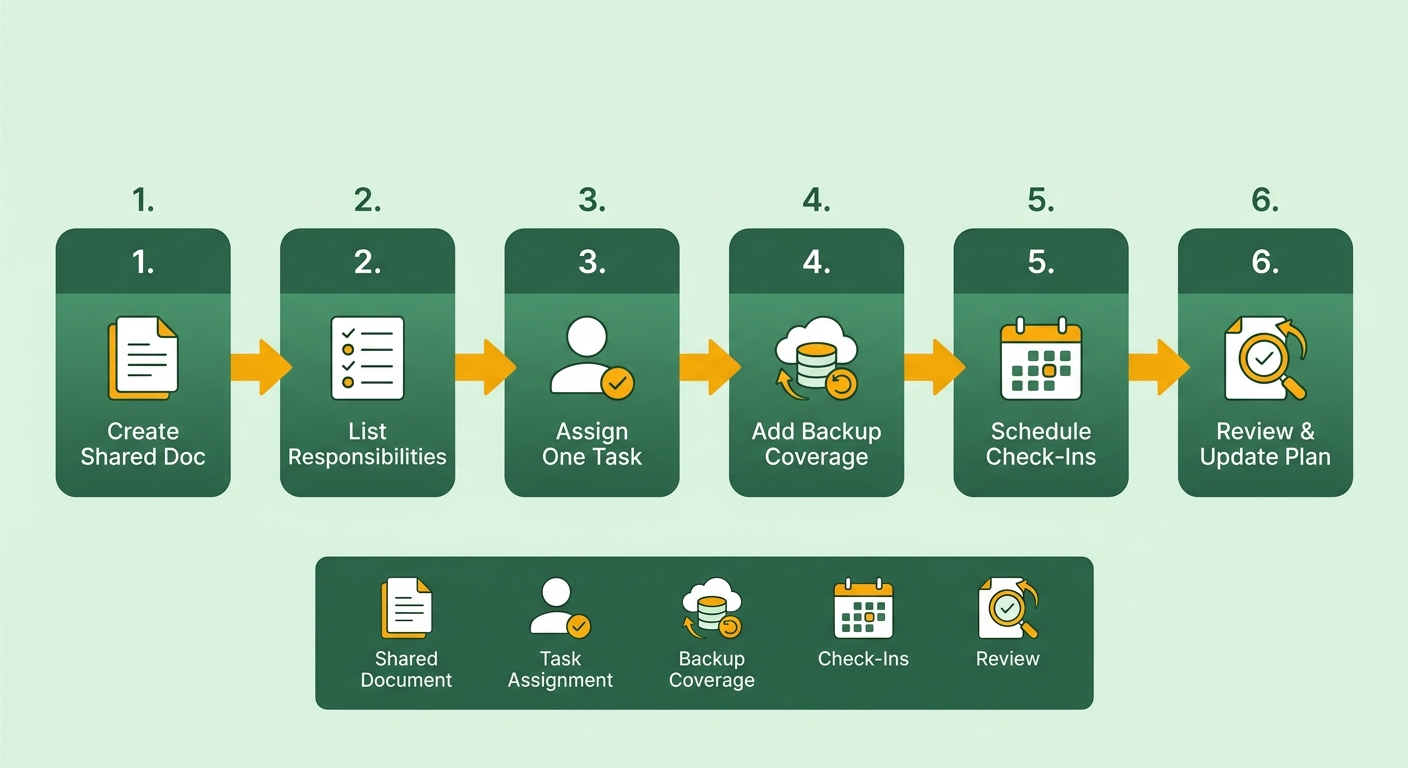
List every recurring responsibility for the first 30 days. Include medication pickup and reminders, rides to outpatient sessions, meal preparation, and check-in calls for someone living alone. Assign each task to one person and name a backup contact. This is role assignment, not surveillance. You are building a support grid.
Without backup coverage, one scheduling conflict can disrupt the week. Your sister may commit to Monday morning sessions, then receive a work-shift change. If no one else knows the assignment, the person in recovery misses group. The outpatient clinic flags the absence, and stress rises. Name the backup when assigning each task.
Map Trigger Scenarios to Specific Responses
The second part of the document covers "if-then" protocols. Include isolation, missed appointments, contact with old social circles, and direct statements about cravings. Each scenario needs an owner and a clear sequence of steps. Write them like a fire-drill checklist.
For isolation, define the behavior as skipping two consecutive family meals or not answering texts for 24 hours. The coordinator texts first, then calls. If there is no reply within four hours, the backup visits in person. For a stated craving, the response is an immediate call to the sober coach or outpatient counselor, not a family lecture. Decide these steps before pressure makes choices harder. Document scenarios that match your household's patterns, such as late-night calls from old contacts, sleep changes, withdrawal from enjoyable activities, or requests to skip therapy.
Schedule Weekly Check-Ins to Adjust the Plan
Set a standing meeting for the first 12 weeks. Use the same day and time each week. Ten minutes is enough to confirm the next week's schedule, flag problems, and reassign tasks when workloads change. Plans fail when families treat them as static. Recovery evolves, so the plan must evolve too.
Best Practices
Families can meet every technical milestone and still see a plan collapse in month two. The cause is often pattern drift. Roles blur, backup contacts forget their assignments, and no one opens the document. The practices below help prevent that erosion.
Schedule a 30-Day Review Before You Start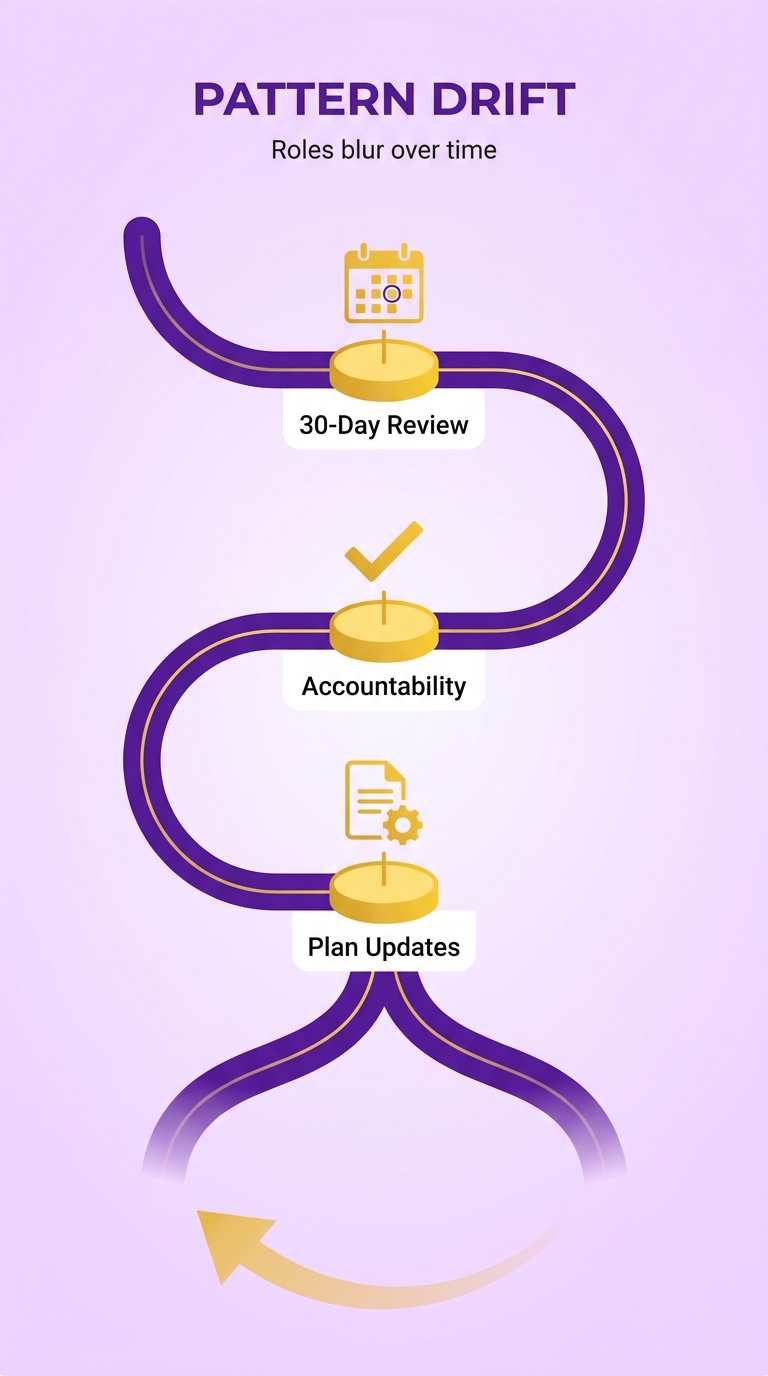
Build the review date into the original plan. Choose a specific day, usually four weeks after discharge. Add it to everyone's calendar with a shared agenda link. The first month can feel too urgent for future planning, but without a scheduled review, the plan becomes outdated. The person in recovery changes, outpatient schedules shift, and the Tuesday-night check-in may conflict with a new work shift.
The review lets you rewrite roles, remove ineffective tasks, and redistribute responsibilities. Invite everyone assigned a task, along with anyone who has helped informally. Those helpers may become ongoing supports when you define their roles clearly.
Track Self-Care Separately From Recovery Tasks
A daily well-being check can reveal emotional changes before they escalate. Families can use a shared log, group text thread, or digital form. Each evening, the person in recovery answers basic questions about their physical and emotional state. This is not surveillance. It can help identify mood swings and sleep disruption associated with post-acute withdrawal.
Research confirms these symptoms can last up to two years. Families may mistake them for ordinary stress until mental relapse is underway. If daily logs show a negative pattern for several consecutive days, the coordinator flags it for the next check-in call. This helps when outpatient attendance looks strong but cravings remain unspoken.
Troubleshooting
The plan fails when families stop using it after week two. It also fails when the person coordinating rides assumes someone else took over medication reminders. Common causes include a document stored in one person's email or a backup contact who never agreed to help.
When Check-Ins Feel Like Interrogations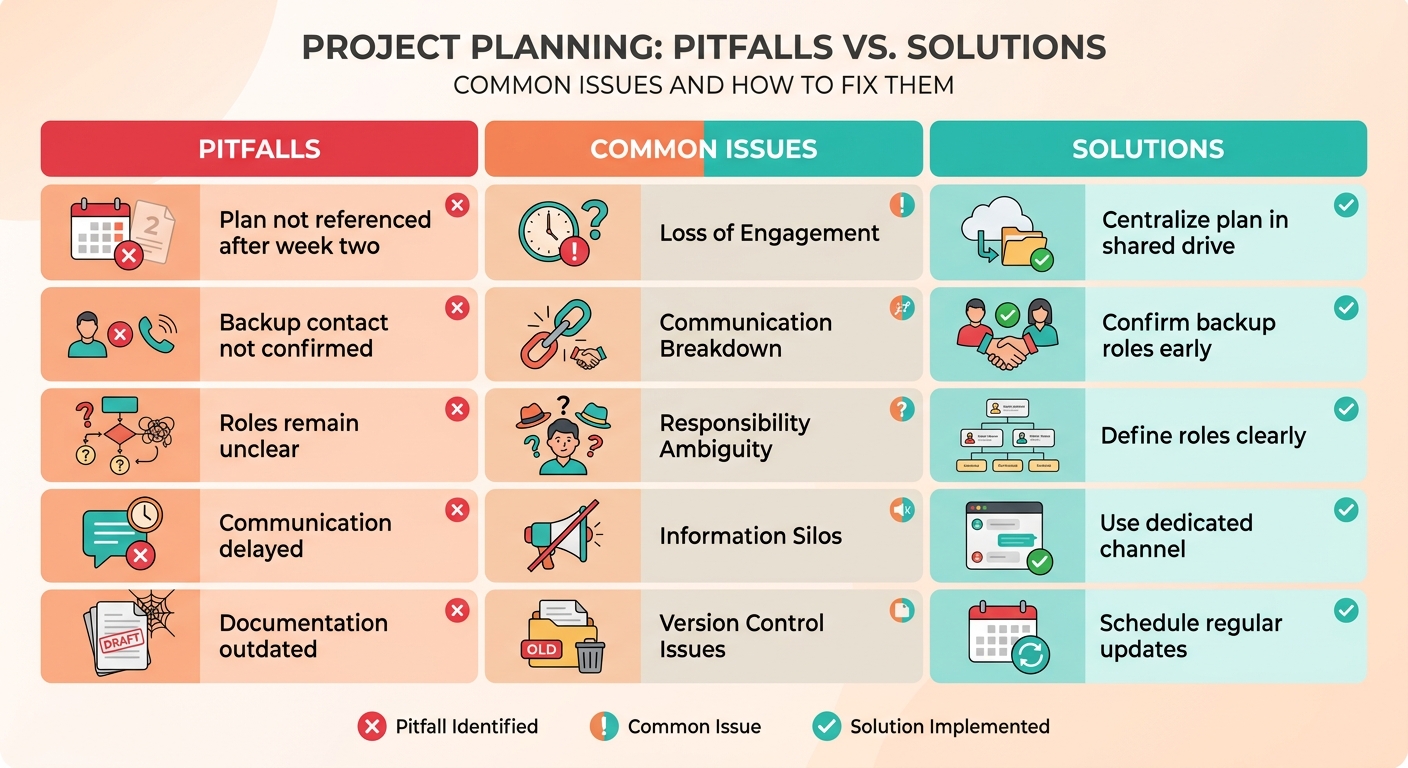
If the person in recovery avoids scheduled calls or gives one-word answers, the issue may be tone rather than frequency. Check-ins can become progress audits: Did you attend the appointment? Did you take the medication? Did you call your sponsor? That approach feels like surveillance and can trigger withdrawal.
Change the structure before the next call. Ask the coordinator to begin with a neutral update about their own week. Then let the person in recovery lead. If they mention a struggle or craving, the family member should listen and document rather than solve. Families can improve stalled check-ins by changing the format. They might replace rigid agendas with open conversations or shorten calls while preserving accountability.
When Backup Contacts Don't Know They're Backup Contacts
You may find this gap when the primary driver is sick and no one attends the outpatient session. The backup may have forgotten, assumed the arrangement was informal, or never seen the document. This is a notification problem.
Send each backup contact a one-line message after finalizing the plan: "You're listed as backup for [specific task] if [primary person] is unavailable. Here's the shared doc link." Set a calendar reminder to contact backups again on day 14. This two-touch confirmation reduces coverage gaps during a crisis window.
What to Do This Week
A family re-entry plan replaces improvisation with assigned roles, scheduled check-ins, and written trigger responses. Name responsibilities, document them, and review the plan before the first month ends. Families who create the document before discharge provide structure during the transition home.
The plan is not a one-time fix. It is a living document that steps down as recovery stabilizes. Daily medication reminders and rides may be needed in week one, then shift toward lighter touchpoints by month three. Adjust the plan as the person gains stability rather than maintaining the same oversight indefinitely.
Start with the coordinator and a two-hour meeting. Choose the person who tracks appointments and bills. List everyone willing to help, then draft the first 30 days of tasks in a shared document. Do this during the final week of treatment if possible, while schedules remain calm.
Then schedule a formal review on everyone's calendar. Use it to evaluate the roles, address scheduling conflicts, and confirm that backup contacts can step in when needed.
Professional sober coaching can add structure and accountability to a family plan. External support can help families manage early recovery without carrying the entire logistical burden alone. Professional coaches work with families to establish routines, coordinate with clinical providers, and offer guidance during high-risk moments. As the individual gains confidence, support can decrease and independence can grow.
Families who write the plan, assign roles, and review it on schedule can handle setbacks with less panic. Build yours before discharge, not after the first crisis call.
References
[1] Relapse Prevention and the Five Rules of Recovery - PMC - NIH - https://pmc.ncbi.nlm.nih.gov/articles/PMC4553654/
[2] Relapse Prevention Plans – Collaborative Comprehensive Case ... - https://projects.csgjusticecenter.org/collaborative-comprehensive-case-plans/relapse-prevention-plans/
[3] Creating a Relapse Prevention Plan in Early Recovery | Rehab - https://cascadeheightsrecovery.com/creating-a-relapse-prevention-plan-in-early-recovery/
[4] Why Your Long-Term Relapse Prevention Plan Is Key to Recovery - https://themindfullemon.com/long-term-relapse-prevention-plan/
[5] How do Relapse Prevention Plans Support Reentry? [WEBINAR] - https://www.youtube.com/watch?v=BNXE0k1ZRNg
[6] Relapse Prevention Plan: Strategies and Techniques for Addiction - https://americanaddictioncenters.org/rehab-guide/aftercare/relapse-prevention
[7] Relapse Prevention Strategies for Lasting Recovery Success - https://powerofrecovery.org/blog/relapse-prevention-strategies/
[8] Relapse Prevention Plan vs Crisis Intervention - Genesis House - https://genesishouse.net/blog/relapse-prevention-plan-vs-crisis-intervention/
[9] The relationship between family support factors and ... - https://www.researchgate.net/publication/389491188_The_relationship_between_family_support_factors_and_substance_abuse_relapse_an_updated_literature_review
[10] Case Study 7: Relapse Prevention: A Clinician's Guide - https://www.researchgate.net/publication/330787847_Case_Study_7_Relapse_Prevention_A_Clinician's_Guide
[11] Role of Social Support in Relapse Prevention for Drug ... - https://www.researchgate.net/publication/343193788_Role_of_Social_Support_in_Relapse_Prevention_for_Drug_Addicts
Frequently Asked Questions
1. What if only one family member is available to help with the re-entry plan?
If you are managing this transition alone, look beyond your household. Invite trusted friends, peer sponsors, or community members to handle specific tasks. The planning process remains the same. Document their commitments in the shared calendar and give clear instructions for assigned days.
2. How do you prevent check-ins from feeling like surveillance instead of support?
Shift the focus away from compliance tracking. Instead of reviewing completed tasks, let the individual describe their week. The family's goal is to provide support, not fix every challenge. Brief meetings focused on mutual updates can maintain collaboration.
3. When should the family start stepping down their level of involvement?
Reduce support gradually at scheduled evaluation points. As the individual shows consistent self-management and stability, transition responsibilities back to them. Discuss these changes during regular reviews so they remain deliberate.
4. What happens if the person in recovery misses two outpatient appointments in a row?
Treat two consecutive missed appointments as a signal to activate the response protocol. The family coordinator should contact the treatment provider to verify the situation. Avoid lectures. Follow the written steps, which may include contacting a professional coach or counselor.
5. How does professional coaching fit into a family-built re-entry plan?
A professional coach can help connect clinical treatment with home life. They may help refine the daily schedule, support communication, and provide guidance during difficult transitions. This support can reduce logistical pressure on family members while they rebuild healthy relationships.
6. What should families do if backup contacts forget they agreed to help?
Create a confirmation process when drafting the plan. Give each backup a direct copy of their responsibilities and dates. Send another reminder a few weeks into the transition. This keeps commitments clear and prepares everyone to step in when needed.