How Family Patterns Turn Crisis Rescuing Into *Structured* Relapse Prevention
August 24, 2026
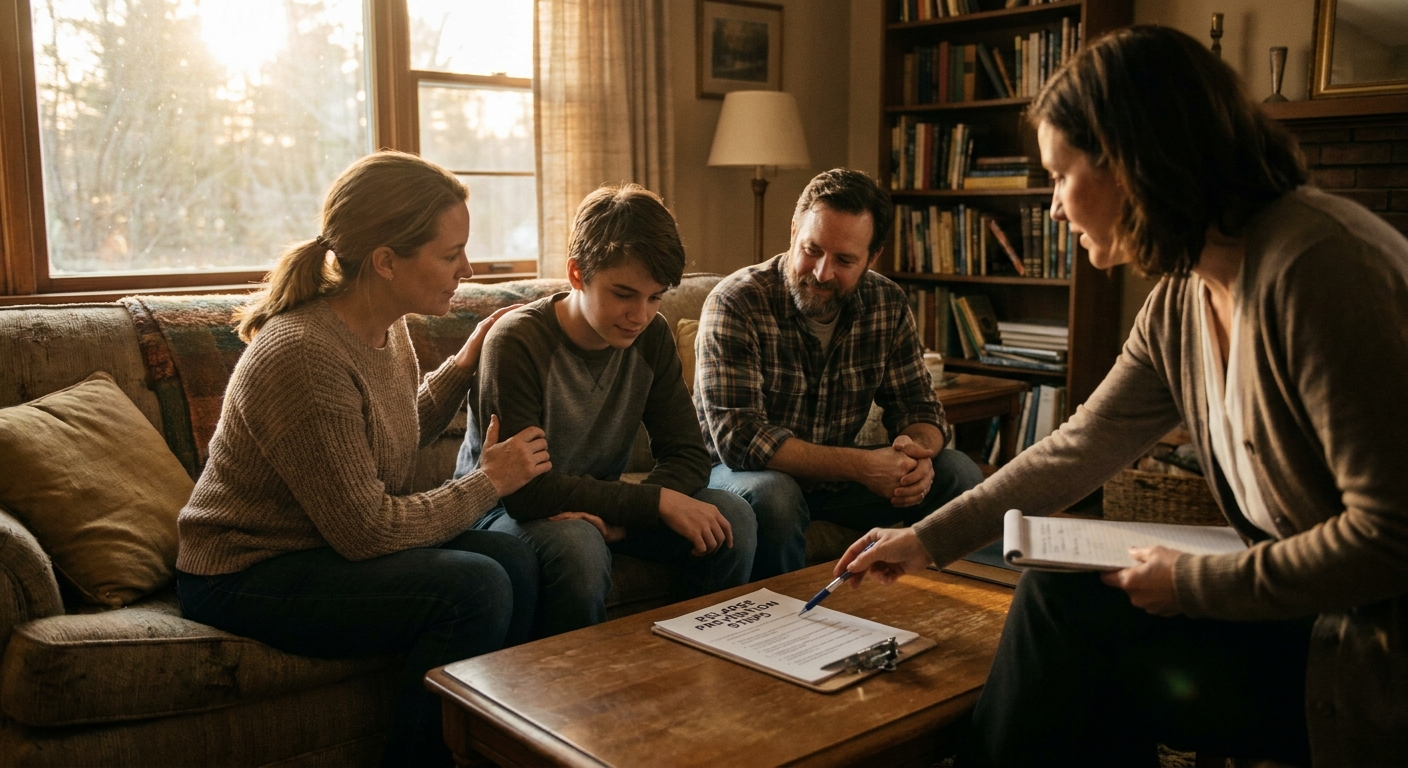
Key Takeaways
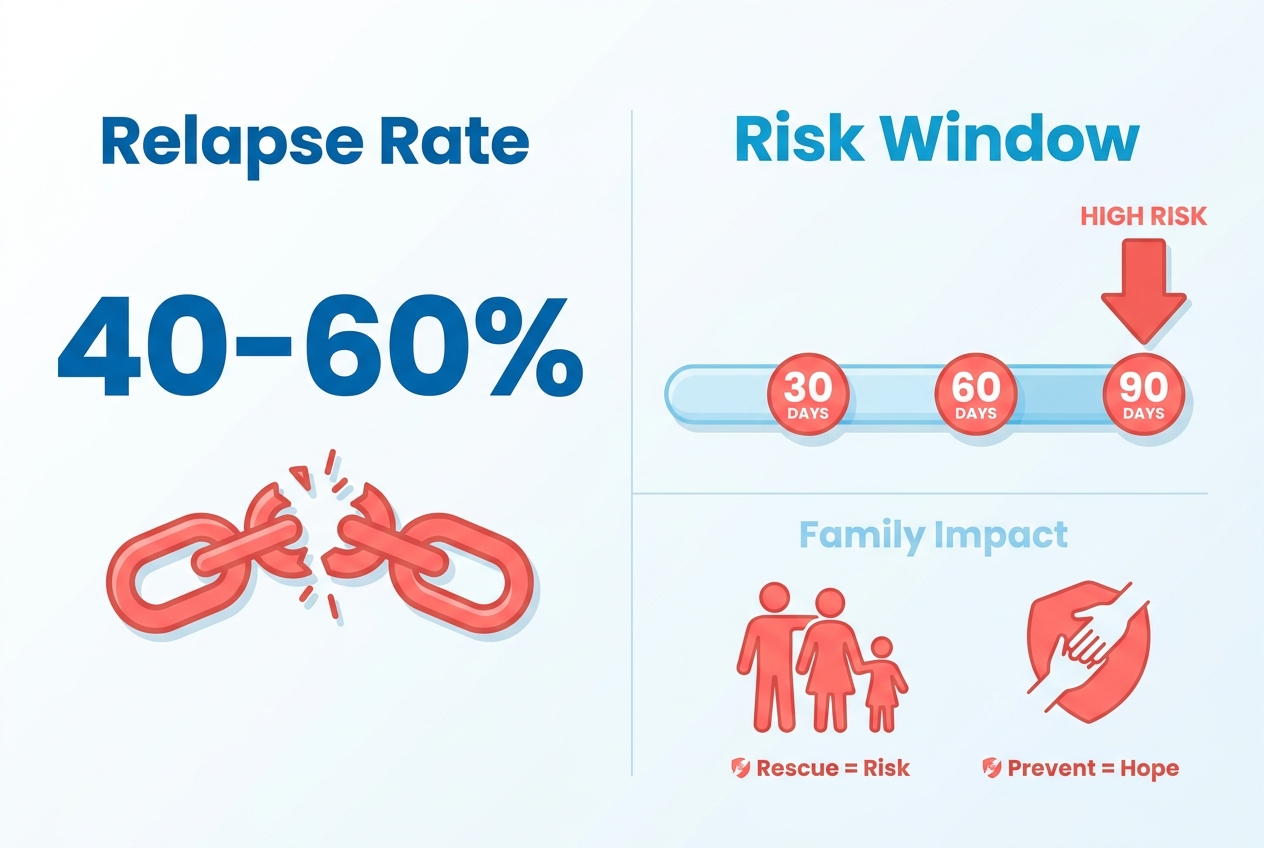
- Between 40% and 60% of people treated for substance use disorder relapse. Most risk occurs during the first 90 days after discharge.
- A high-conflict home roughly doubles the odds of relapse.
- Enabling and crisis rescuing can raise relapse rates by about 50%. They remove the friction recovery needs.
- Moving from reactive rescuing to a structured plan is the biggest lever families control after a loved one comes home.
- Behaviors that feel most like love, such as smoothing every consequence, can cause the most harm.
- Research is split: one camp favors natural consequences, while another favors reinforced boundaries and routines. Both approaches have a place.
- A structured plan pairs clear boundaries with predictable routines. It replaces in-the-moment scrambling.
Why Rescuing Backfires When a Loved One Comes Home
The first months after discharge are the most dangerous period for someone leaving treatment, according to the NIH figures cited by Syracuse University. During this period, good intentions can raise risk instead of lowering it.
Families often miss one point: attempts to shield loved ones from discomfort can disrupt recovery's necessary learning. Replacing crisis-driven reactions with a system is useful during this period.
Why does crisis rescuing backfire?
Rescuing feels protective, but it can raise relapse odds. Constant tension at home wears down recovery. The protective instinct can also remove the friction recovery needs, according to Ikon Recovery's review of family dynamics.
Clinicians disagree about the best path. Some argue for letting natural consequences play out. Others support structured boundaries and daily routines.
These approaches are not rivals. They apply sequentially. Withdrawing intervention is a pre-treatment step. Structured reinforcement is post-discharge work. The key distinction is between shielding someone from consequences and building healthy habits together. Paying rent so someone can keep using is enabling. Building a shared morning routine is support. That is where structured prevention begins.
What does structured prevention actually change?
It replaces guesswork with a plan, and the numbers support it. Family therapy raises long-term sobriety to 65%, compared with 41% for individual therapy alone, according to Ikon's analysis. A dyadic relapse-prevention model in an Indian addiction-facility trial reduced drinking days by 50% compared with treatment as usual.
The mechanism is preparation, not avoidance. Relapse "is a process," as Dr. Joseph Smith explains. It begins long before someone picks up a drink. Structured plans use "if this, then what" scripts. This gives a stressful Tuesday a pre-agreed response instead of a scramble. For a starting point, building post-rehab routines as a family is often useful.
Who needs this most, and why do they skip it?
Families at the highest risk are often least likely to ask for help. High-conflict, low-conversation "protective" households report the poorest coping scores. Yet research on family support groups found that these same families often avoid support.
That is the gap a sober coach fills. Some eight-week programs give families only one hour of attention. A coach teaches CRAFT-informed skills that families might not otherwise learn. This can help turn a household into a coordinated team.
Skip this approach if your loved one is still refusing treatment outright. That is an engagement problem, not a relapse-prevention problem. It requires a different playbook first.
Mapping the Patterns That Drive Rescuing
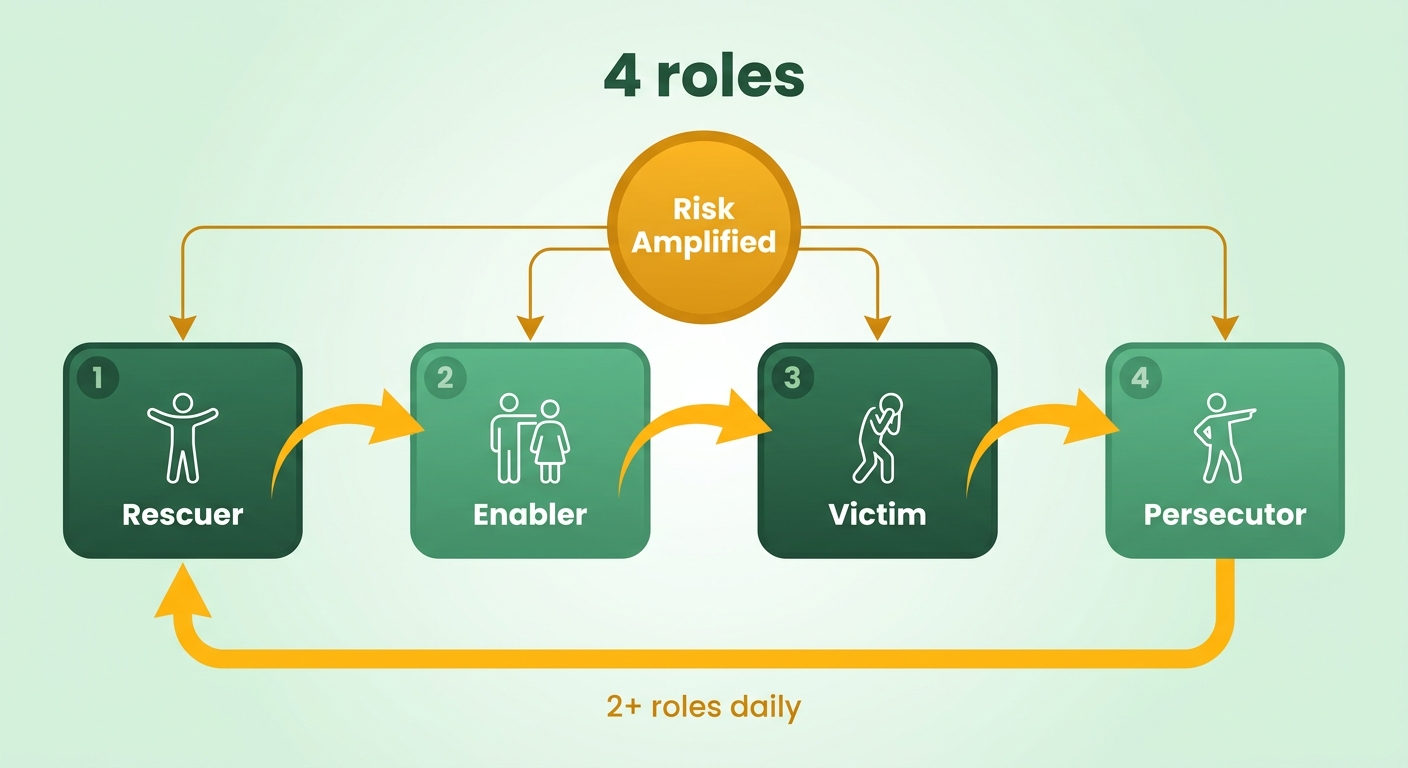
Before preventing relapse, a family must see its patterns clearly. That means naming recurring behaviors that quietly raise risk. After detox or residential treatment, the same four roles often reappear. Most families perform at least two without realizing it.
The overlap creates risk. Families rarely perform one role consistently. They may cycle through several roles in one day. Each handoff makes the next rescue feel more automatic. The patterns build on one another.
The four rescue patterns
Four archetypes drive much crisis rescuing. Each feels like love. Each can move risk in the wrong direction.
- The Protector: Shields the person from every consequence. This includes covering missed work, apologizing to employers, and softening bad news so they "don't spiral."
- The Enabler: Removes friction that might encourage change. Examples include giving money that funds use, restocking the fridge, and paying unpaid bills.
- The Controller: Takes over decisions to force sobriety. This includes managing finances, monitoring phones, and dictating schedules. That level of control creates friction, which SAMHSA data ties to heightened post-discharge risk.
- The Co-Dependent Caregiver: Builds an entire identity around rescuing. This includes canceling personal plans, losing sleep, and treating every setback as a personal emergency.
The Protector-Enabler loop is the most common one we see. Consider a spouse we'll call Sarah. She manages her partner's social calendar, makes excuses to his family, and handles every household chore. She believes she is holding everything together. In practice, she absorbs the effects of his use. He never faces the consequences of his choices.
How to run a family-pattern audit
Start with a simple written audit before confronting anyone. List each family member, then mark the behaviors they perform during a normal week. Treat it as a diagnostic worksheet, not a blame exercise.
Watch for the ten most common enabling behaviors: giving money for substances, bailing someone out of legal trouble, lying to employers, paying debts, cleaning up after use, making excuses to relatives, canceling consequences, driving someone to risky settings, minimizing the problem, and covering missed doses or appointments.
Then map the home's triggers. Physical triggers include alcohol bottles and old paraphernalia. Social triggers include gatherings with using friends. Emotional triggers include job loss, anniversaries, and high-stress fights. This matters because 52% of relapses are set off by familiar environmental cues. Naming a cue is the first step toward defusing it.
Why the highest-risk families skip support
Households that discourage open conversation often struggle most. Research on family communication patterns finds that closed communication styles keep families from seeking outside help. This can deepen isolation.
Culture and stigma can make this worse. Shame keeps families quiet, and silence keeps the Protector busy. Begin the audit conversation with curiosity, not accusation. Ask permission before naming a pattern. These are the same nonjudgmental openers that help families split recovery roles without burning out. They can help a defensive family begin working together.
Building a Relapse-Prevention Plan the Whole Family Can Run
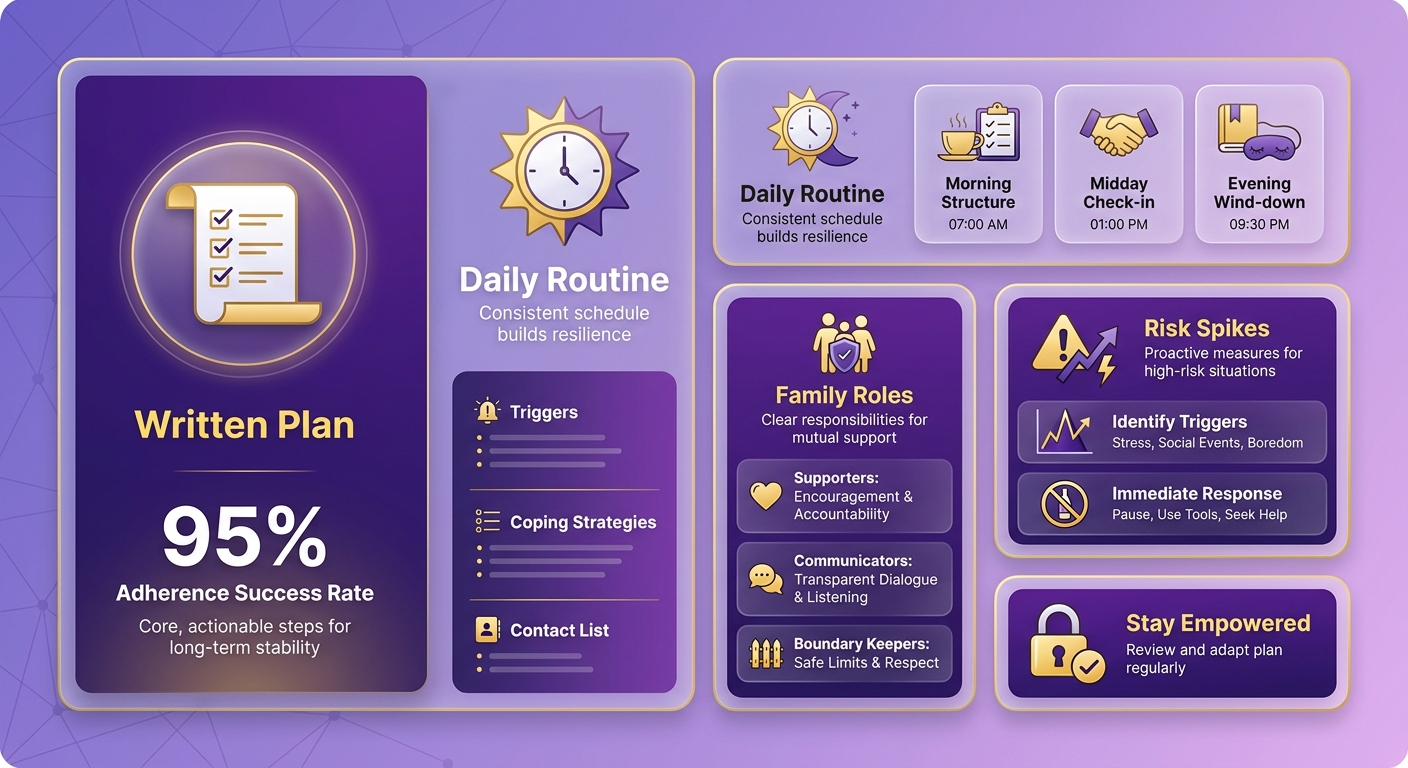
A structured relapse-prevention plan is a written document. It assigns family roles, sets a daily routine, and explains what each person does when risk rises. It replaces panic with a script everyone rehearsed beforehand. In our experience, this change helps families leave the rescue cycle and become a recovery team.
Why does a written plan beat good intentions? Specificity. When roles and responses are written down, families spend less time debating during a crisis. We build these plans into our coaching so each member has a clear job instead of a vague expectation to "help."
What goes into the plan
Six pieces make a plan work. Skipping one can leave a gap for old rescue habits.
- Risk assessment: List personal triggers by category. Emotional triggers include stress and loneliness. Environmental triggers include certain people or places. Behavioral triggers include a collapsed routine, as one relapse-prevention guide explains.
- Daily routine: Set anchor points for waking, meals, movement, and sleep. Nutrition and steady sleep are important buffers.
- Crisis protocol: Create an "if this, then what" script. If your loved one feels overwhelmed after work, they pause and call a named support person. This follows the approach described by the Blanchard Institute.
- Taper or step-down schedule: Explain how support intensity eases as stability grows.
- SMART goals for family actions: Replace "be supportive" with "text one encouraging message daily for 30 days."
- Review cycle: Schedule a weekly check to adjust what is not working.
We focus closely on the crisis protocol. Behavioral and emotional shifts often appear before a physical slip. That makes early warning signs important.
Who does what in a crisis
Build a written crisis-response playbook before anything goes wrong. Name each person's job clearly. One parent makes the call. One sibling handles logistics. One person stays off the phone. This spreads the work instead of placing it on one person.
The challenge is that snap reactions leave little time to assess a slip. The family must determine whether it requires a conversation or inpatient care. Erica Lubetkin, a CRAFT-informed clinician, warns on the Hopestream podcast that immediate emotional reactions can disrupt stabilization. The playbook creates a deliberate pause.
"These setbacks are not failures, they do not erase all the progress made, they do not erase the fact that we love them." - Erica Lubetkin
How to keep the plan alive
Put the plan where the family already works, such as a shared Google Calendar or family app. Set SMART goals and review dates as recurring reminders. This reduces reliance on memory.
Families can go wrong by applying one approach to every situation. There is real tension between allowing natural consequences and reinforcing boundaries. A coach helps keep that distinction clear, so the calendar reflects the family's situation.
Team-Based Coaching for Family-Centered Recovery

A dedicated sober coach helps a family become a recovery team. That is the purpose of team-based coaching. Instead of improvising after discharge, families receive structured accountability, guidance, and human connection to support recovery.
This addresses a service gap. Standard clinical programs often focus mainly on the individual. Families may receive little guidance during the transition home. A coach provides ongoing support during this phase.
What the CRAFT evidence actually shows
CRAFT (Community Reinforcement and Family Training) teaches positive communication and boundary-setting instead of confrontation. According to Verywell Mind, CRAFT engages treatment-refusing loved ones 65-75% of the time, compared with 37% for Al-Anon-style approaches.
The skills can continue after treatment. Families report less anger, anxiety, and depression whether or not their loved one enters treatment, Colorado's behavioral health office notes.
One caveat is that many CRAFT studies have been criticized for weak methodology. Effect sizes are consistently favorable, but sample sizes and controls are often small. We treat CRAFT as a practical framework, not gospel.
How a coach settles the "step back vs. support" tension
Families receive conflicting advice about how much to intervene. Some recommend withdrawing so natural consequences occur. Others support active, structured reinforcement for long-term stability.
A coach helps sort these stages. Once you know whether the need is engagement or stabilization, you can choose the right strategy. That distinction separates constructive support from support that stalls progress.
How families onboard a coach
Most clients start with an initial consultation to assess their needs. They then enter a coaching program that changes as they progress. We help families plan detox and treatment pathways without placement. We also support clients as they return to daily life with accountability, guidance, and human connection.
Set expectations early with three steps:
- Name your communication barriers. If your household avoids discussing stress, identify that pattern first. A structured program can help bridge the gap.
- Divide the tasks. Decide who handles communication, daily schedules, and emotional support. Dividing duties keeps the household balanced.
- Commit to the full transition. Recovery requires ongoing adjustment, not a quick fix. As the individual shows more accountability, outside monitoring eases to build self-reliance. Families with high conversation orientation report better coping and resilience scores, according to a 181-family study.
The economics are simple. Structured support can help prevent long-term hospitalization through accountability and consistent care. It provides continuity and expertise that a one-hour family session at a treatment center cannot provide.
Daily Routines, Nutrition, and Self-Care as Relapse Buffers
Structured daily habits give families a stabilizing foundation. They can also reduce the frequency and intensity of cravings. Predictable routines help create a home that buffers stress.
Where nutrition and self-care fit in
Steady meals and self-care routines help stabilize blood sugar and neurochemistry. This supports mood regulation. Regular meal times and basic physical wellness can reduce physiological triggers during early recovery. Common coping strategies include mindfulness, exercise, and journaling. These strategies do not need to be complicated.
Build a small self-care toolbox the whole family can use:
- Breathing exercises when tension spikes, tied to morning and evening anchors.
- Short mindfulness blocks lasting two to five minutes, with no app required.
- Movement breaks or an after-dinner walk that combines exercise and connection.
Do these activities together. Share a meal, take a family walk, or hold an evening debrief. Recovery is not a solo effort. Families help shape the environment where it happens. We are there for important moments.
Who owns each habit
Assign each routine so no single person carries it. One family member owns the refueling plan. Another leads the evening review. Rotating these jobs can prevent the fatigue that often ends household routines, as our guide on managing family recovery dynamics explains.
Keep tracking simple. A printable habit tracker on the fridge or a shared phone reminder is enough. The goal is not perfection. Recovery is not linear, and some days are easier than others. A missed day is data, not failure.
Case Studies and a Family Relapse-Prevention Toolkit
What does the shift from crisis rescuing to structured prevention look like? Below are three composite scenarios drawn from recurring patterns, followed by steps you can start this week. These are illustrative, not real client files. Each uses the same mechanics: script the response, build in a pause, and coordinate the family.
The pattern is consistent. Reactive rescue becomes a written plan that everyone rehearses. This is the kind of education standard treatment rarely offers before discharge.
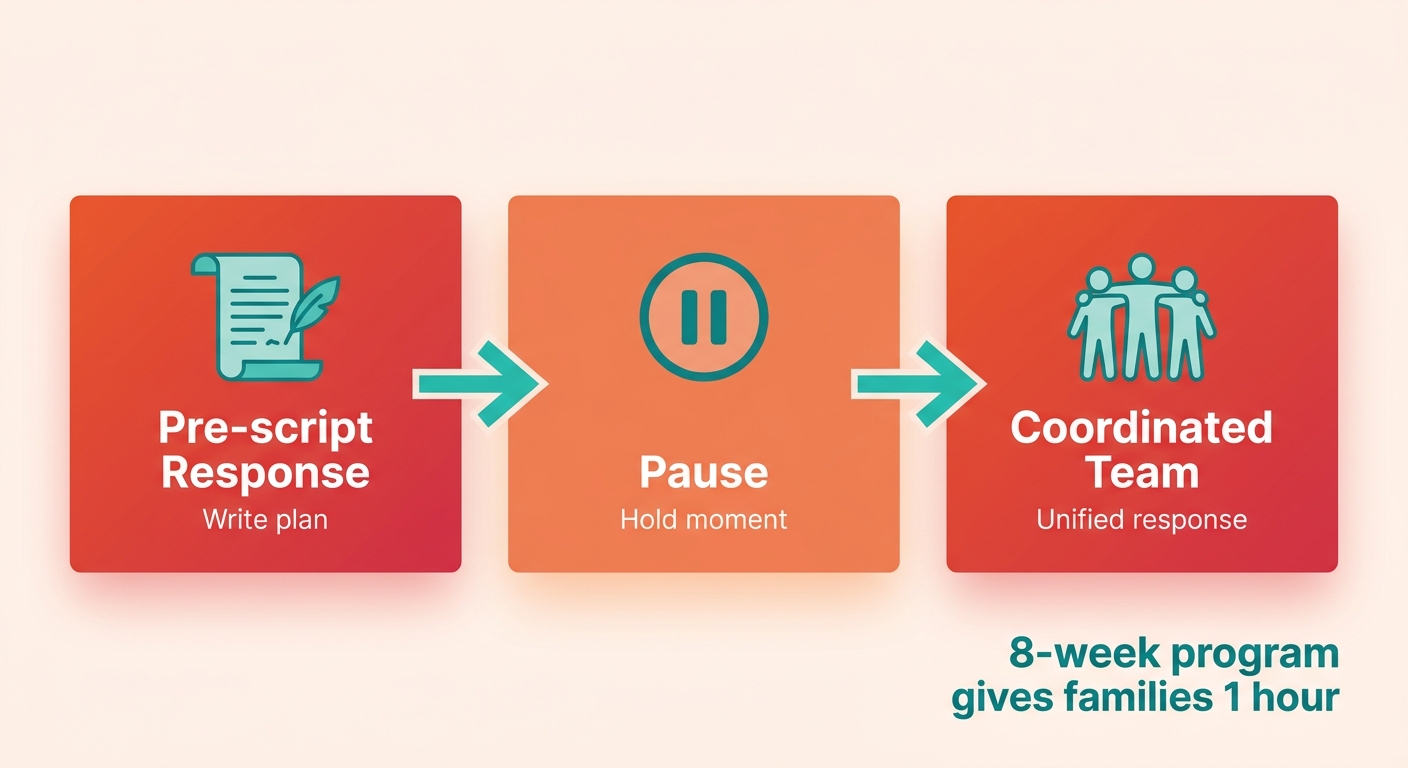
Three scenarios: from rescue calls to a rehearsed response
Mark and the control-enabler duo. This household uses two rescue patterns. One parent controls, while the other enables. The solution is not more monitoring. It is dividing roles so both parents stop competing over the same crisis. When a coaching team assigns specific tasks, frantic weekly rescues can fade. The family is no longer working in isolation. Our guide on structuring family support explains how to set those boundaries.
Sofia's nutrition turnaround. Food instability drives late-night cravings. When a family replaces irregular eating with structured, nutrient-dense meals, physiological swings that mimic anxiety can settle. Addressing nutrition reduces some of the pressure.
The Patel family's crisis playbook. A holiday gathering can create relapse pressure. A written protocol answers the "if this, then what" question before the party starts. It identifies who watches, who steps in, and who calls. This keeps the family steady instead of improvising.
What a structured prevention plan includes
A workable plan brings together several pieces:
- Family Pattern Audit. Identify the rescue roles in your household.
- 30-Day Prevention Calendar. Map daily anchors and check-ins ahead of time.
- Crisis Playbook. Create an "if this, then what" script for high-risk moments.
- Nutrition Guide. Schedule meals to steady mood swings.
- Habit Tracker. Use a simple log to make progress visible on difficult days.
Our view is that the Crisis Playbook matters most because it creates a deliberate pause. It follows the same principle as our coaching: families can shape the recovery environment through a rehearsed plan instead of anxiety.
How to customize it for your family
Adapt the roles to your household. A single parent can rely on the coaching team and outside supports for the second role. A multigenerational household can spread the audit and calendar across three generations. A blended family can name one point person for the Crisis Playbook to avoid mixed signals.
If someone is unwilling to participate in care, a prevention plan is premature. Families should focus on engagement strategies rather than post-discharge protocols. In transitional coaching, consistent habits can allow structured oversight to decrease over time and encourage independent living.
Next steps: run the Pattern Audit tonight, draft one Crisis Playbook entry for your next high-risk event, and schedule one shared meal this week.
References
[1] How Family Dynamics Impact Relapse Risk - https://www.ikonrecoverycenters.org/how-family-dynamics-impact-relapse-risk/
[2] What Family and Loved Ones Should Know About Relapse - https://onlinegrad.syracuse.edu/blog/what-family-and-loved-ones-should-know-about-relapse/
[3] Relapse Prevention Planning That Works - https://www.theblanchardinstitute.com/if-this-then-what-a-clinical-approach-to-relapse-prevention-when-life-happens/
[4] Building An Effective Relapse Prevention Plan - http://fcsinterventions.com/articles/family-recovery/building-an-effective-relapse-prevention-plan/
[5] Community Reinforcement and Family Training (CRAFT) - https://bha.colorado.gov/behavioral-health/CRAFT
[6] Using CRAFT When Your Child Relapses - https://hopestreamcommunity.org/podcast/using-a-craft-informed-response-when-your-child-has-a-relapse-with-drugs-or-alcohol-with-erica-lubetkin-lmhc-ncc-2/
[7] Developing Community Reinforcement and Family Training ... - https://pmc.ncbi.nlm.nih.gov/articles/PMC4394369/
[8] The CRAFT Approach - https://drugfree.org/article/craft-community-reinforcement-family-training/
[9] The CRAFT Approach to Substance Abuse Intervention - Verywell Mind - https://www.verywellmind.com/the-craft-approach-to-substance-abuse-intervention-5191125
[10] Family Recovery Support Group Effectiveness in Drug and ... - https://www.researchgate.net/publication/392160859_Family_Recovery_Support_Group_Effectiveness_in_Drug_and_Alcohol_Abuse_Prevention_and_Management_An_Examination_of_Family_Communication_Patterns_Coping_and_Resilience
[11] (PDF) Family Member Involvement in Relapse Prevention ... - https://www.researchgate.net/publication/44678562_Family_Member_Involvement_in_Relapse_Prevention_Improves_Alcohol_Dependence_Outcomes_A_Prospective_Study_at_an_Addiction_Treatment_Facility_in_India
[12] Community Reinforcement and Family Training: A Pilot ... - PMC - https://pmc.ncbi.nlm.nih.gov/articles/PMC3331969/
[13] Community Reinforcement Approach and Family Training ... - https://link.springer.com/chapter/10.1007/978-3-031-82583-5_19
[14] Community Reinforcement and Family Training Goes Digital - https://pmc.ncbi.nlm.nih.gov/articles/PMC12818555/
[15] CRAFT, CRA and A-CRA - the methods and the empirical ... - https://www.robertjmeyersphd.com/cra-approach/community-reinforcement-and-family-training-approach
Frequently Asked Questions
1. How can I tell the difference between enabling and genuinely supporting my loved one?
Supportive actions build collaborative, healthy habits that promote accountability. Examples include shared daily schedules and family therapy. Actions that shield someone from substance-use consequences can prolong addiction. They remove natural motivation to change.
2. When should I step back and let consequences land versus actively reinforcing boundaries?
These approaches represent different recovery phases. Early on, natural outcomes may motivate a loved one to seek help. After discharge, structured boundaries and daily routines help maintain stability. A coach helps families navigate this transition.
3. What if my loved one is still actively refusing all treatment?
If a loved one is not ready to accept help, focus on engagement strategies. Do not begin with relapse prevention. Evidence-based family training models offer communication techniques that can encourage professional care.
4. Should I be worried about relying too heavily on the CRAFT framework?
Clinical studies on family training frameworks show favorable outcomes for reducing family stress and improving communication. Still, treat these methods as practical tools, not rigid rules. Their main benefit is helping families manage well-being and establish boundaries.
5. My family runs more than one rescue pattern at once. Is that normal?
It is common for families to cycle through multiple roles. They may shield someone from consequences while controlling that person's schedule. When these behaviors overlap, they create household stress and can unintentionally enable substance use.
6. How is team-based coaching different from a sober-living house?
Team-based coaching focuses on the household. It establishes consistent routines and communication strategies at home. Residential programs primarily treat the individual, while coaching works with family members to build a recovery environment.
7. What should we do the moment we suspect a slip, without overreacting?
Establish a prearranged pause before taking action. This cooling-off period lets the family assess the situation objectively. It also helps determine the appropriate level of care instead of reacting with anxiety or panic.