Build Your Aftercare Support Team Before You Leave Rehab
August 14, 2026

Key Takeaways
- 40 to 60 percent of people relapse within the first 90 days after leaving treatment. That's the highest-risk window.
- Proactive outreach, like telephone check-ins and home visits, consistently beats passive referral, according to a 2009 continuing care review.
- People who stay connected to structured support for at least a year do better than those who disconnect early.
- One model that built continuing-care connections before discharge linked 94 percent of adolescents to ongoing support, versus 54 percent under standard care.
- Handing someone a phone number and telling them to reach out when they need help fails most of the time in early recovery.
- Engagement improves when the support person calls the client first, not the other way around.
- Assembling a team before discharge turns a paper plan into a live one, with defined roles and timing.
Why the First 90 Days Decide Everything
The first 90 days after treatment carry the highest relapse risk, and research shows 40 to 60 percent of people will relapse during that window. Having support locked in before you walk out the door is the difference between a plan on paper and one that works. We see it often: a client leaves with a referral list and good intentions, then hits a first trigger alone at home with no one to call.
The evidence points one way. People who stay connected to structured support for at least a year do better than those who don't. But the standard advice misses something. Handing someone a phone number and saying "reach out when you need help" fails most of the time. A 2009 review of continuing care research found that interventions built on proactive outreach, telephone check-ins, home visits, and scheduled contacts consistently outperformed passive referral. When someone calls you instead of waiting for you to call them, you stay engaged.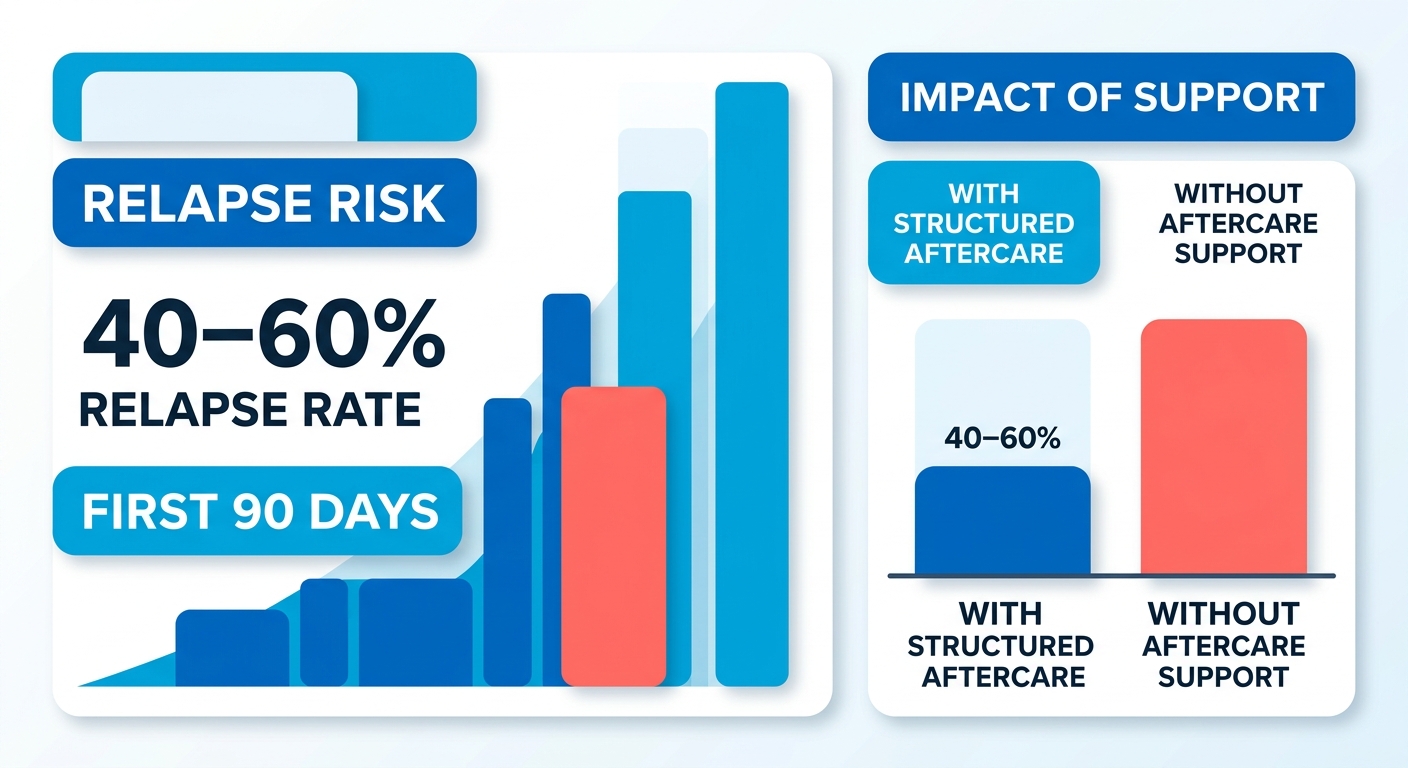
So we guide clients to build the team before discharge, not after. That's how a passive plan becomes an active one, by settling in advance who reaches out, when, and how. The model that linked 94 percent of adolescents to continuing care versus 54 percent in standard care did exactly this. It built the connection before the transition, not during the chaos of early recovery.
Who actually belongs on your team
Your roster should cover three layers: peer support for daily accountability, professional support for clinical guidance, and family or close friends for a stable home environment. The standard recommendation is 90 meetings in 90 days for peer support, which is near-daily contact through the acute risk period. Professional support might be an outpatient counselor, a case manager, or a sober coach checking in weekly. Family involvement, when it's safe and healthy, holds down the home piece.
Skip the kitchen-sink approach of adding everyone you know. Four to six people who commit to specific roles beat a vague list of twenty contacts. One person is your daily check-in. Another handles crisis calls. A third comes to your first few meetings. Clear roles prevent the "I thought someone else was handling it" gaps that turn into missed appointments and isolation.
Why building early fixes the follow-through problem
Most aftercare plans get written during treatment but don't activate until after discharge. That gap is where people fall through. The transition itself is a clinical chokepoint. Stress peaks, motivation dips, logistics pile up. If your first task on day one at home is "figure out who to call," you're already behind.
The research backs this up. Programs that used contracting, prompting, and reinforcement hit 55 percent three-month aftercare completion versus 36 percent in usual care. The difference wasn't better treatment content. It was pre-established accountability: agreements signed, contacts scheduled, incentives tied to follow-through. Build those mechanisms before you leave, and you're putting the proactive-linkage approach to work.
Call it front-loading. You're tired and nervous about going home, but you're also surrounded by clinical support and structure. Use that window to make introductions, set up the first week's schedule, and confirm who covers which role. Then when you're home and the emotional weight lands, you won't start from scratch. You'll have a recovery routine that someone else is already helping you hold.
Naming Your Goals and the People Who Support Them
Before you leave, map two things discharge planners often skip: the specific milestones of your sobriety across the phases of early recovery, and the exact people who support you at each step. A generic emergency number isn't a transition plan. A real one means your network understands your goals and their roles before you face your first real-world test.
What a recovery goal looks like in practice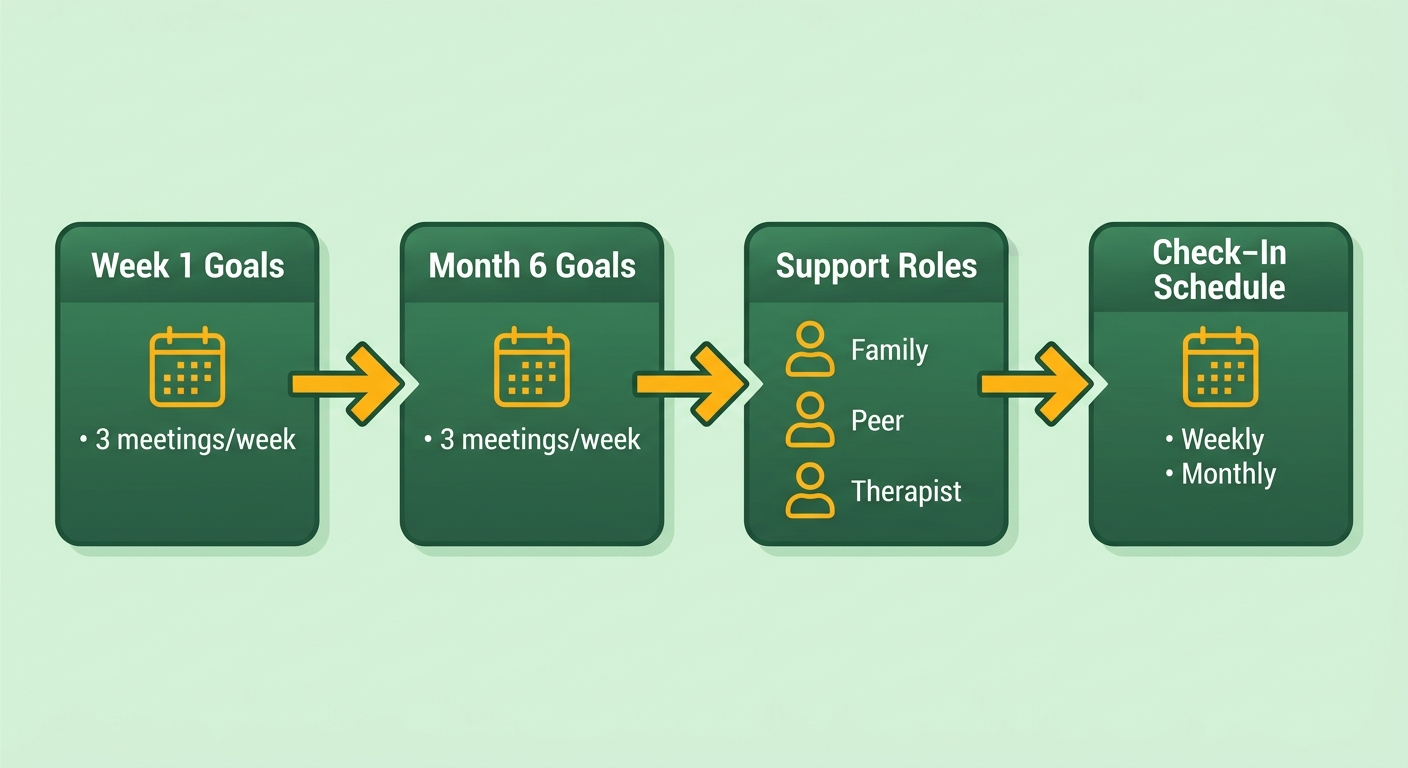
Your goals have to be concrete enough that someone else can tell whether you hit them. "Stay sober" isn't a goal. It's the baseline. A real goal sounds like: attend three peer meetings a week for the first 90 days, rebuild trust with my sister by showing up sober to family dinners, or hold my job through the six-month mark without calling in sick from a craving spiral. Write down one short-term goal (first 30 days), one medium-term goal (90 days), and one 12-month goal tied to relationships, work, or daily structure, not just abstinence. A measurable routine early on builds momentum before you feel fully ready.
Goals fail when they're built in a vacuum. If your goal is repairing the relationship with your kids, but your ex-partner has no idea you're in recovery or what support you need, the plan breaks the first time a custody issue comes up. Walk through each goal and ask: who needs to know about this, and what do they need to do to help me hit it? That question turns a wish into a support assignment.
Matching the right help to the right person
You need different kinds of help at different times, and most people try to get all of it from one person, usually a partner or parent, until that person burns out or you relapse because they weren't built for the role. Break support into three layers: peer accountability (people who've been through it), professional guidance (therapists, coaches, case managers), and family stability (the people who live with you or see you daily). Research on aftercare engagement points to keeping these distinct layers of connection over the long haul, which means distributing responsibility instead of leaning on one person.
Here's what works. Your sponsor or peer group handles daily check-ins and meeting accountability. Your therapist or outpatient counselor works the trauma and skill-building. Your family handles the environment: keeping alcohol out of the house, not scheduling events at bars, noticing when you're isolating. When everyone knows their lane, no single person carries the full weight. Expecting your spouse to be your therapist, sponsor, and crisis line at once is how support collapses in the first 60 days.
During discharge planning, list your goals down the left side, then map who's responsible for each. A goal with no name next to it is a gap to fill before you leave. One name next to every goal means that person is set up to fail, and so are you. This is the step that turns a referral list into a pre-assembled team that knows what you need starting day one.
Locking In a Core Team Before Discharge
Your core team should have three professional roles set before discharge: a coach, a therapist, and a case manager. Pulling them together while you're still in treatment is what turns a paper plan into active support. Line them up early and your transition gets managed by people who already know your clinical history, instead of leaving you to run the search yourself during a vulnerable stretch.
What each role actually does
The coach: your day-to-day accountability partner who keeps goals moving between clinical appointments. Frequent, low-friction contact, calls, texts, quick check-ins. This layer covers your highest-risk early weeks, when near-daily contact matters most.
The therapist: the clinical anchor working the underlying drivers, trauma, co-occurring conditions, and thought patterns. Therapists shape the aftercare plan around both clinical and practical needs, not just symptom management.
The case manager: the coordinator handling logistics, appointments, sober living, insurance, and connecting you to outpatient options like PHPs and IOPs. This is the person who keeps the moving parts from slipping through the cracks.
How to find and recruit them
Start before discharge. Ask your treatment center's staff for direct introductions instead of a printed list. Many centers run alumni programs that already connect you to coaches and peers, so use that pipeline while you're still inside the building.
For a therapist, request a warm handoff, where your current counselor briefs the new one directly. That single step converts a passive referral into an active link, which the research says is what keeps people engaged.
For a case manager, ask whether the center offers one in-house or can connect you to a community agency. If cost is a barrier, community health centers often fill this role. Family members can also be trained to carry pieces of the coordination when a formal case manager isn't in the budget.
Putting it together
Someone leaving residential treatment sets up a coach for daily texts, keeps their treatment therapist for weekly video sessions, and names a sibling as logistics point-person until a case manager is confirmed. Every connection is live before discharge day.
Our take: tier the team by time horizon. The coach and peer contacts carry the intense early stretch. The therapist, family, and alumni connections sustain the months that follow, reinforcing habits as they take hold. Families are especially good at that steady, ongoing layer, which is why we help clients build post-rehab routines with family before they walk out.
Skip the go-it-alone plan. Team-based, proactive linkage is what the evidence backs.
Writing a Relapse Prevention Plan That Holds
We provide customized, team-based sober coaching for the moment you move from detox or residential treatment back into everyday life, when structure fades and the real-world challenges return. A solid transition means your support network is fully briefed on your triggers and coping strategies before you get home.
Your relapse prevention plan needs three working parts: a trigger inventory your team helped you build, a coping playbook tied to each trigger, and a crisis protocol that kicks in when the first two fail. A consistent, repetitive structure keeps triggers visible and coping practiced. But structure alone isn't enough if you haven't named your personal vulnerabilities and picked specific people to call when things get hard.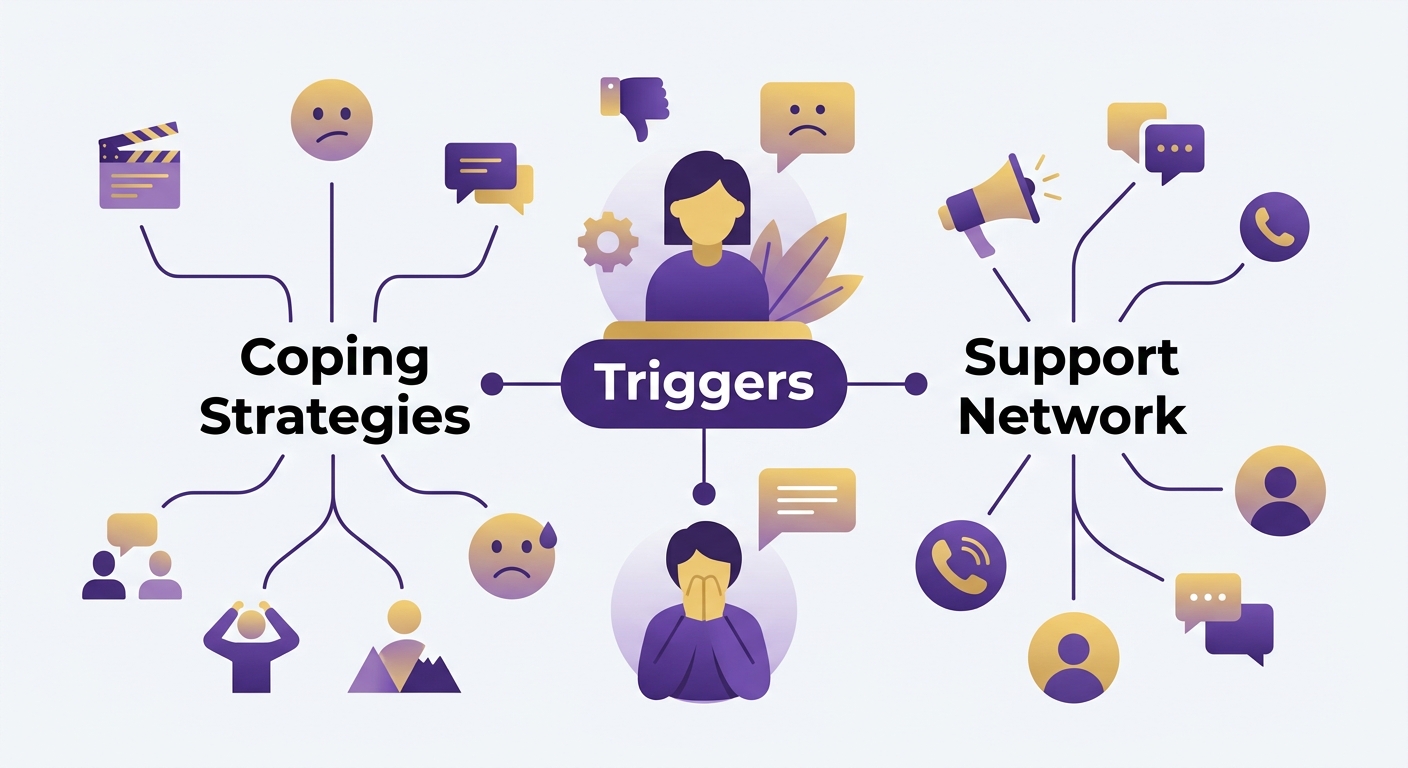
What goes in the trigger inventory
Start with the three types that show up most in the first 90 days: people, places, and emotional states. For people, name the specific relationships that pull you toward use, not "toxic friendships" but "my cousin who texts me every Friday to go out." For places, name the physical spots where you used or bought: street corners, specific bars, a friend's apartment. For emotional states, name the feelings that come right before craving: boredom, shame after a family argument, the Sunday-night dread before the work week starts.
Your therapist or coach should walk through this with you before discharge, but the family member or peer mentor on your team needs a copy too. The standard approach hands you a checklist and tells you to reflect on it later. That fails, because reflection without accountability turns into avoidance. Team-based coaching closes that gap, a single dedicated coach or a coordinated team giving you real-world support in the moments that count.
Coping strategies that actually work
A coping strategy has to be more specific than "call someone" or "go to a meeting." Pair each trigger with a two-step action you can run in under five minutes. If the trigger is boredom at home after work, the strategy might be: text your peer mentor, then take a 10-minute walk while you wait for the reply. If the trigger is running into someone from your old life, the strategy might be: leave immediately, call your sponsor from the car, and don't go home until you've talked it through.
Each strategy needs a backup. When your first call goes to voicemail, a second name is already written down. Setting these connections early gives you a functional safety net, but it only works if you've practiced the outreach sequence before a crisis hits. That's why we help clients build routines that lower stress, restore balance, and add resilience through the transition.
When the coping strategies fail
Your crisis plan is a three-tier contact list for escalating situations. Tier one is your peer mentor or sponsor, someone in recovery who's been where you are. Tier two is your therapist or coach, a professional who can judge whether you need immediate clinical intervention. Tier three is a hospital or crisis hotline, the safety net when the craving turns into active planning to use.
Write this list on paper and give copies to your core team before you leave treatment. Each contact gets a phone number, the best time to reach them, and what you'll say when you call. The script matters. "I'm thinking about using" is clearer than "I'm struggling," and it gets faster help. To cover the early vulnerability, front-load the plan with daily check-ins from at least one team member during those first months home.
Lining Up Sober Living and Community Resources
Sober living homes, outpatient programs, and peer meetings only help if someone connects you to them before you walk out the door. That takes active coordination by a named team member, not a directory of services handed over at discharge.
The idea we build every transition around: help families plan the pathway before discharge, without doing the placement for them, so the right people and resources are already identified when you leave. The continuing care research points the same way. Structured, pre-arranged transitions work far better than standard referral, and successful outcomes lean heavily on connections made before discharge.
What sober living options to line up
Sober living is a bridge, not a destination. Options run from structured residences with curfews and mandatory meeting attendance to lighter-touch homes that mostly offer a substance-free address and peer accountability. Match the structure to your risk level, not to what's cheapest or closest.
For the early vulnerable stretch, front-load the intensity of your living environment. A tightly structured house paired with near-daily peer contact covers the acute window. As you stabilize, step down to a looser setting. Our take: plan that placement while you're still in treatment, not from your couch on day two, when motivation is thin and triggers are close.
How to find community resources
Start inside the treatment center. Many programs run alumni networks that plug you into ongoing community and meetings, according to American Addiction Centers. Ask your case manager to make the introductions before you leave, so the first contact comes to you.
Past alumni programs, the real menu includes 12-Step and peer support meetings, outpatient tiers like IOPs and PHPs, and increasingly, primary care practices that can monitor medication and cut stigma. The continuing care review flags primary care as a viable setting most discharge plans ignore. Family members make natural coordinators here, and splitting those roles early keeps any one person from burning out.
Does coordinated support actually work?
Yes, and the numbers favor proactive setup over passive referral. Structured follow-up protocols improve long-term abstinence rates compared to standard group counseling. Pre-scheduling contacts and reinforcing participation helps hold engagement steady when motivation naturally dips.
A working professional leaving an intensive outpatient program coordinates with their employer for a phased return to work, schedules weekly therapy during lunch breaks, and arranges for a sober peer to meet them right after work. Set up weeks before the program ends, that plan closes the unstructured gaps where cravings spike. A coach who helps map that pathway ahead of time becomes the outreach mechanism the research says you need.
References
[1] What Should I Have In My Aftercare Plan? - https://www.addictioncenter.com/rehab-questions/aftercare-plan/
[2] Aftercare Programs, Activities & Support Groups - https://americanaddictioncenters.org/rehab-guide/aftercare
[3] Substance Abuse Aftercare - https://www.ashleytreatment.org/rehab-blog/what-a-healthy-aftercare-plan-looks-like/
[4] Continuing Care Research: What We've Learned and Where ... - https://pmc.ncbi.nlm.nih.gov/articles/PMC2670779/
Frequently Asked Questions
1. What should I do if the first person I call during a crisis doesn't answer?
Ensure you have a designated secondary contact ready before an emergency arises. If your primary peer support contact is unavailable, immediately proceed to your professional clinical contacts or use local crisis hotlines. Having these numbers pre-programmed in your phone prevents hesitation when you need immediate support.
2. Is having more people on my support team always better?
Not necessarily. A smaller, highly coordinated group with clearly defined responsibilities is far more effective than a large, unstructured network. When each person knows their specific role, whether it is daily accountability, logistical help, or crisis response, it prevents communication gaps and ensures consistent coverage.
3. What if my family situation isn't safe or healthy enough to include?
If family dynamics are unstable, you should exclude them from your recovery network and focus entirely on professional and peer-led resources. You can build a robust support system relying solely on clinical therapists, sober coaches, and recovery community members to provide the accountability and stability you need.
4. How do I build a support team if cost is a barrier?
Look for free or low-cost community resources, such as local mutual aid groups, sliding-scale clinics, and state-funded social services. Many recovery communities offer volunteer mentorship programs, and public health departments can often assist with case management services at no cost.
5. What's the difference between structured and light-touch sober living?
Structured environments enforce rules like drug testing, curfews, and mandatory recovery meetings, making them ideal for the immediate transition out of residential care. Light-touch homes offer independent living with the basic agreement of maintaining sobriety, which serves as a good step-down option once you have established a stable daily routine.
6. Why isn't a referral list enough to keep me engaged?
A simple list of phone numbers requires you to take the initiative during a period when motivation may be low and cravings are high. Active engagement is much higher when the support system is designed to initiate contact with you, removing the burden of reaching out when you are struggling.