Build a Daily Recovery Routine That Holds Up After Rehab
August 8, 2026

Key Takeaways
- The shift from rehab to daily life is where many people slip.
- A new habit takes more than two months to become automatic.
- Cravings are strongest in the first few months of sobriety.
- If you return to the same environment, routine becomes essential.
- If sober living already provides structure, rigid scheduling matters less.
What Happens the Day the Structure Disappears
Leaving rehab can pull the floor out from under your day. No scheduled therapy, no communal meals, no supervised activities. That sudden loss of structure is often where people wobble. Sober coaching is built for that moment, stepping in when life starts making demands again.
A new habit takes more than two months to become automatic. That timing creates a trap. Cravings peak in those same early months, exactly when your routine needs the most effort and accountability. You need the routine most when it is hardest to hold. That is not weakness. It is early sobriety, and it is why building a structured daily approach matters more than most aftercare pamphlets suggest.
Who Actually Needs a Daily Recovery Routine
If you are coming out of structured sober living with accountability already built in, rigid scheduling matters less. The external structure is already doing that work. But if you are returning to the same home where addiction developed, a deliberate routine becomes non-negotiable.
Because our programs are tailored to each person, we build the routine around your level of care, whether that is one dedicated coach or a coordinated team. The goal is not to fill hours with random activity. It is to build a daily pattern strong enough to compete with old habits. Building a life that makes staying sober feel worth it is the real work, and generic advice often misses it.
The routine also rebuilds trust. Consistent daily action shows reliability to skeptical family members faster than promises do. So your routine needs to be dependable enough for others to count on, while still flexible enough to avoid becoming another stressor.
What Makes a Recovery Routine Hold Up Long-Term
Most static aftercare plans fail because they treat routine like a fixed schedule. They should treat it as something that evolves. Ours are built to shift as needs change, and as clients find their footing, we taper support toward independence. Someone leaving a 30-day program might need therapy three times a week at first, then once weekly as they stabilize. Research on mutual-help groups shows consistent participation supports sobriety, but frequency and format have to match the person.
The routines that last share three traits. Non-negotiable anchors, like morning meditation or an evening check-in. Adaptive middle blocks, like work, therapy, and exercise that flex with the week. And deliberate downtime, scheduled rest that prevents burnout. One treatment approach folds yoga, art therapy, and mindfulness into traditional methods for a reason. A sober life needs outlets that make it feel chosen, not endured.
We lean on passion discovery, mentorship, and community. Not as extras, but because purpose keeps a routine standing when motivation fades.
The Real Challenges That Break Generic Routines
Boredom hits harder than people expect. Those empty hours where you used to drink or use feel enormous at first, and generic guides tend to dismiss them. They should not. They are a major relapse trigger. That is why we push clients toward new passions and experiences, cooking together, new hobbies, staying active, so sober living feels full instead of hollow. Monday should not feel exactly like Friday if you want either day to hold.
Stress is the next breakdown point. A healthy routine helps you regain control of your time and manage stress, but only if the routine itself does not become the stressor. A schedule that looks impressive on paper and collapses within days is not discipline. It is a design flaw. A lasting routine needs breathing room built in on purpose.
One more issue: routines designed in treatment rarely fit home. In rehab, you had a chef, a gym on-site, and no job. At home, you are cooking, commuting, working full-time, and managing family conflict. Alumni who keep their sobriety do it by adapting the routine to real constraints instead of treating it as sacred. The work is building around your actual Monday through Sunday, not the idealized version in a brochure.
Assessing Your Current Daily Habits
Before you build anything, you need an honest read on how you spend your days now. Start with a plain inventory of what fills your hours, what drains you, and where the empty stretches sit. Those gaps matter more than they look. Boredom and unstructured time are quiet relapse risks, something specialists at Northpoint flag repeatedly.
This is not a worksheet you fill out once and file away. Your routine at week two looks nothing like your routine at month six, so treat it as a rolling check-in that moves with your sobriety milestones. That adjustment is the difference between a plan that sticks and a generic schedule that folds in the first hard week.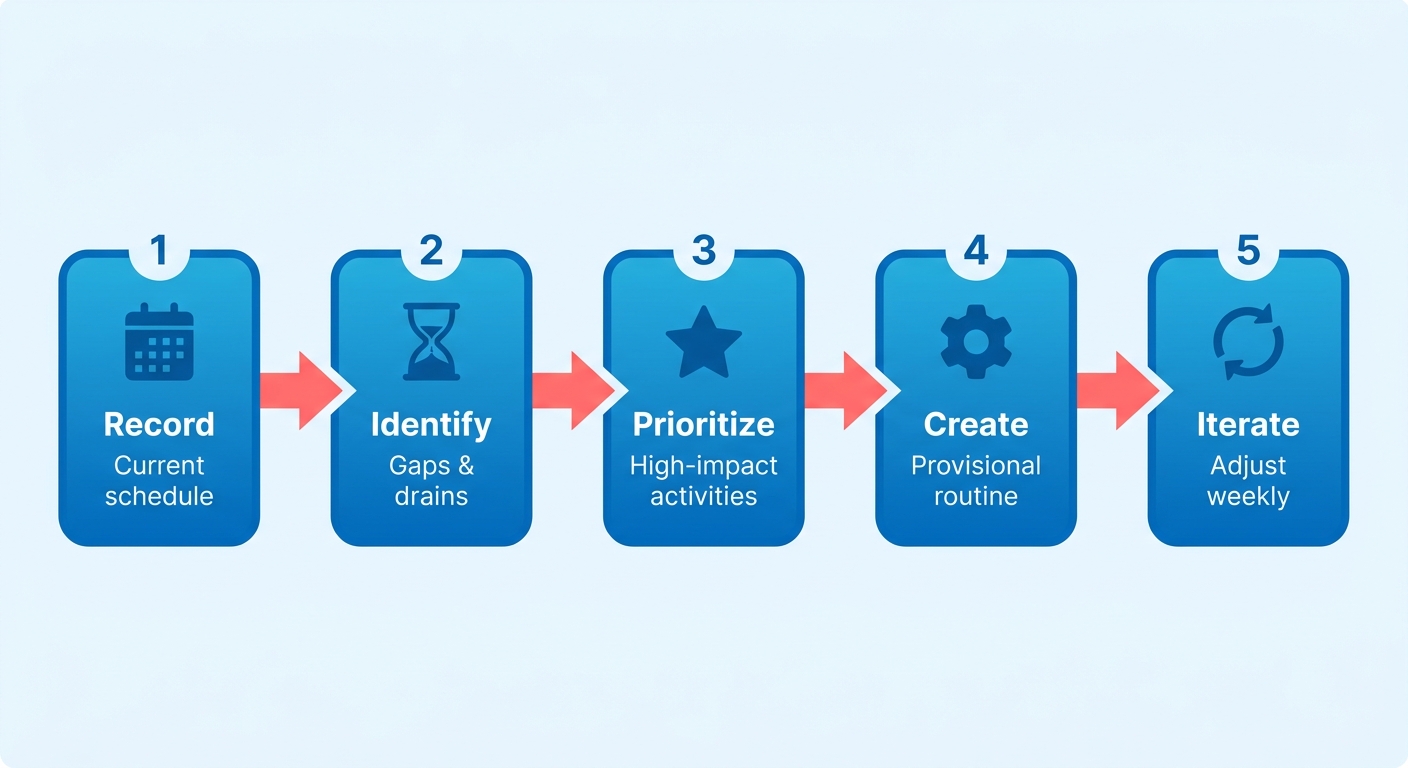
What to Look For When You Review Your Days
Map a typical day hour by hour, then flag two things: your triggers and your dead zones. Triggers are the people, places, and moments that pull you toward using. Dead zones are the unstructured hours where cravings creep in.
Old neighborhoods and old friends top the trigger list, as Addiction Center notes. One woman in recovery, Jennifer, put it plainly:
"I stay away from old places and things. It took time to build the trust back with my family." - Jennifer, quoted by Addiction Center
Her point lands on something we see constantly. Rebuilding trust comes from consistent action, not promises. So your assessment should also note where your current habits let down the people around you, because those are the habits worth fixing first.
Setting Goals That Survive a Rough Day
Turn what you found into SMART goals: specific, measurable, achievable, relevant, time-bound. "Sleep better" will not survive a bad night. "In bed by 11 p.m., phone in another room, five nights this week" will.
Keep it reasonable. Ashley Addiction Treatment warns that an overpacked routine adds stress that can undermine recovery, while Ikon Recovery Center argues that a routine has to stay flexible to work. Both are right. You need enough structure to stay reliable, and enough slack to bend without breaking.
Popular advice says a habit locks in around 21 days. In practice, it takes longer. Early weeks are mostly about showing up, not nailing it.
A Simple Daily Habit Log
Use a plain four-column log for your first week:
- Time block: the hour or activity (morning, commute, evening)
- What I did: the honest version, not the ideal one
- Trigger or risk: craving, stress, boredom, a specific person or place
- One small change: the single adjustment you will test tomorrow
Track it daily. A habit app works, or a notebook by your bed. The review matters, not the tool. Regular reflection is where a static guide falls short and a personalized routine proves its value.
Designing a Morning You'll Actually Repeat
How you start the day sets the tone for the rest of it. A structured morning in the first weeks after rehab builds momentum before decision fatigue sets in. Structured morning habits improve follow-through on therapy commitments, meeting attendance, and relapse-prevention plans.
Morning routines work when they fit your sobriety milestones, not a generic template. Someone two weeks out of detox needs a different wake-up than someone six months sober. Good coaching adjusts the morning as cravings shift, energy stabilizes, and obligations change.
Why a Fixed Wake-Up Time Does More Than You'd Think
You need a consistent wake-up time, even on weekends, to anchor the day. Erratic sleep disrupts cortisol and can amplify cravings early on. Addiction wrecks sleep and eating patterns, and it takes deliberate structure to reverse that.
Set the alarm for the same hour seven days a week. That one fixed point gives you a predictable start when everything else feels shaky. Skip the snooze. Those extra ten minutes fragment your sleep and leave you groggier.
Coaching adjusts the wake-up time to your real life. A construction worker leaving at 5 a.m. cannot run the same morning as a remote worker with flexible hours. Consistency inside your actual schedule beats an idealized one that collapses under pressure.
Building a Mindfulness Practice That Sticks
Morning meditation is not filler. It helps with the gap between urge and action, where relapse decisions get made. Five to ten minutes of breathwork or a body scan before the day starts can reduce impulsive moves around cravings.
Start simple: sit upright, set a timer for five minutes, count four-second inhales and six-second exhales. You are not chasing transcendence. You are training your nervous system to sit with discomfort without reacting, and that skill transfers straight to craving management later in the day.
Pairing meditation with light stretching or yoga tends to hold better than static sitting. Many clients stay with morning mindfulness when it includes gentle movement, five minutes of stretching, walking in place, or a few basic poses. The physical piece keeps you engaged when your mind drifts.
Skip the fancy meditation apps if they add friction. A phone timer and a quiet corner do the job. Repetition, not perfection. Miss a day, restart the next morning, no self-flagellation.
Fueling Up Without Feeding Old Patterns
A real breakfast steadies blood sugar and takes the edge off the irritability that can turn into cravings. Skipping meals just recreates the chaotic eating of active addiction. Aim to eat within an hour of waking, even if your appetite is still coming back.
Go for protein and complex carbs: eggs with whole-grain toast, Greek yogurt with berries and nuts, oatmeal with nut butter. These slow the glucose spike and keep you full until mid-morning. Skip sugary cereal and pastries, which set off the same blood-sugar roller coaster that swings your mood.
Prep the night before to reduce morning decisions. Measure the oats, portion the yogurt, hard-boil eggs in batches. When you wake up foggy, you want zero-friction food, not recipe choices.
Hydration counts too. Two glasses of water before coffee. Dehydration mimics early withdrawal: headaches, fatigue, irritability. It can fool you into thinking a craving is stronger than it is.
A Sample Morning That Bends to Your Reality
A workable early-sobriety morning, built around a 7 a.m. wake-up:
- 7:00 a.m. - Wake, two glasses of water, any prescribed medications
- 7:10 a.m. - Five-minute breathwork or body scan
- 7:15 a.m. - Light stretching or a ten-minute walk outside
- 7:30 a.m. - Protein-rich breakfast
- 7:50 a.m. - Review the day, confirm therapy or meeting times
- 8:00 a.m. - Shower, dress, go
One hour, no special equipment. The sequence matters more than the clock: meditation before movement, movement before food, food before planning.
Adjust it as you progress. Someone six months sober might compress this to 30 minutes and add a morning call with an accountability partner. The early version runs longer on purpose, to build protective structure during the highest-risk stretch.
Common Mistakes That Sink Morning Rituals
The biggest early-recovery error is over-scheduling the morning. Fresh out of rehab, people design two-hour routines, meditation, journaling, exercise, meal prep, and gratitude lists that collapse within three days. Recovery experts warn that routines should stay reasonable to avoid the added stress that undermines recovery.
Start with three non-negotiables: consistent wake-up, five minutes of mindfulness, a real breakfast. Once those hold for two weeks, add a fourth. Build slowly, or you will ditch the whole thing when one piece slips.
The other mistake is rigid adherence when life shifts. Get sick, travel for work, hit a family emergency, and your morning needs to flex without breaking. Name your minimum viable routine, the stripped-down version that keeps continuity when the full sequence is not possible. Maybe that is wake-up time plus five-minute breathwork, and nothing else.
Skip the guilt spiral when you miss a morning. One skipped morning does not erase two weeks of consistency. Reset and continue.
Movement and Meals That Hold When Motivation Doesn't
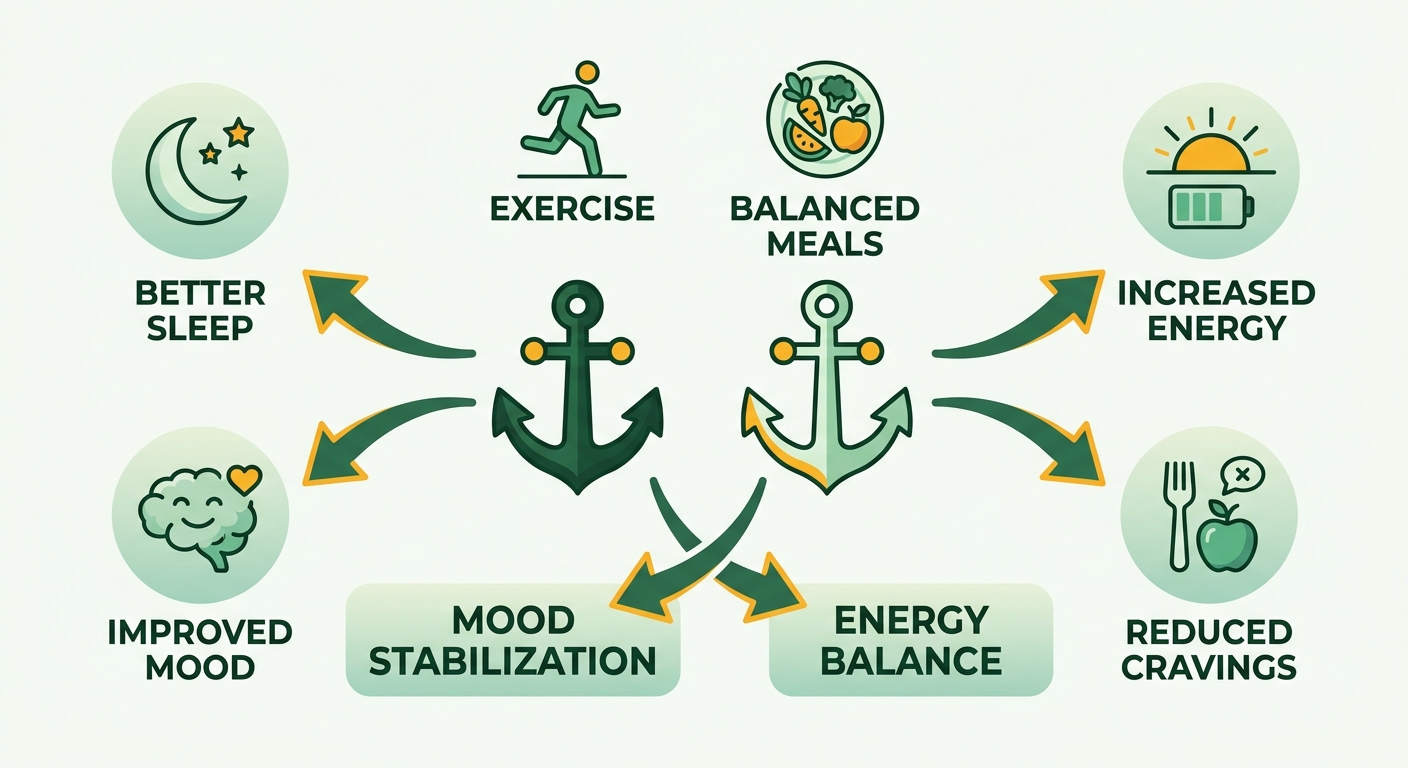
Building a healthy routine in early recovery means more than penciling in self-care blocks. You need movement and nutrition anchors that stay put when motivation wavers. Exercise and balanced meals are not optional extras. They steady your mood, regulate sleep, and fill the hours addiction used to claim. When clients leave treatment, the physical discipline they built inside is usually the first thing to unravel. That is the gap we step into.
Why Exercise at Month One Should Look Nothing Like Month Six
Light movement in the first two weeks after detox serves a different purpose than the workouts you will take on at six months. Early on, your body is still recalibrating. Sleep is erratic, energy crashes mid-afternoon, and hard exertion can backfire into exhaustion that triggers cravings. Short walks or stretching usually help more than an ambitious gym plan. The goal is not burning calories. It is a predictable daily rhythm that tells your nervous system this is recovery time.
As physical stability returns, usually around the 60-day mark, the routine can absorb more intense activity. This is often where community connection enters the picture, since recovery is not meant to be done alone. We help clients build weekends around plans that do not center on bars, cooking together, staying active, trying something new. Match the intensity to where you are, not where a fitness blog says you should be.
Watch for exercise as punishment. If you are running five miles to "earn" dinner or logging workouts compulsively, the routine has stopped serving recovery and started mimicking addiction. Our team watches for that shift and pulls back before movement becomes another dependency. It should reduce stress, not create new performance pressure.
Meal Plans That Flex With Cravings and Energy
Nutrition in early sobriety fights two battles: replenishing what substances depleted, and steadying blood sugar so you are not white-knuckling through an afternoon craving that is really just hunger. The routines that work tend to run three meals plus two snacks, with protein at every window. Skipping breakfast or coasting on coffee until lunch sets up a crash that feels identical to a craving. Your brain cannot tell low blood sugar from withdrawal, and that confusion is where trouble starts.
We rebuild eating habits with simple templates, not elaborate recipes. A protein, a vegetable, a starch. Rotate the specifics, keep the structure identical day to day. A small set of reliable meals may sound monotonous, but predictability kills decision fatigue, and you always know what your body needs to run. Variety comes later, when your sobriety is not riding on every choice.
Timing matters as much as content. Eating at consistent times retrains the hunger signals addiction scrambled. Build the day around meals so you are less likely to hit a high-risk moment on an empty stomach. Steady eating supports the emotional balance and daily energy early recovery leans on.
Mistakes That Collapse Physical Routines
The most common one is importing your pre-addiction fitness identity into early sobriety. You ran marathons before opioids, so you assume five-mile runs will anchor recovery. Except your body has not rebuilt the base, and pushing through injury risk to reclaim that identity ends in setbacks. Treat yourself as a beginner regardless of past performance. Strength and endurance come back, but forcing the timeline sabotages the consistency recovery actually needs.
Another pattern is restrictive diets as a substitute for control. Cutting whole food groups, fasting protocols, rigid macros, they create the illusion of discipline and often mask disordered eating that predated the addiction or grew up beside it. If meal planning starts running the same obsessive loops substances used to occupy, flag it with your coach. Nutrition should simplify the routine, not hijack your mental bandwidth.
Clients also underestimate how much their movement and meal habits need to flex around social situations. A routine that runs clean when you are alone at home falls apart the first time you are invited to a family dinner or a barbecue. That is where consistent support during the moments that matter earns its place, having someone alongside you when the social part gets complicated. The best routine is not the most optimized one. It is the one that bends without breaking when real life shows up.
Scheduling Therapy and Support Meetings
Therapy and support groups are the backbone of anything you build after treatment. People who join mutual-help groups like AA or SMART Recovery hold their sobriety better, per the research on aftercare activities. Treat these sessions as fixed appointments, not something you attend when the mood strikes.
Here is what generic schedules miss: the mix you need shifts as you hit new milestones. Our coaching moves with those shifts, tapering support as clients find their rhythm and stability sets in. As Dr. Mariam Zakhary puts it, "A consistent yet flexible routine reinforces stability in recovery." Consistency and flexibility are not opposites. They are the point.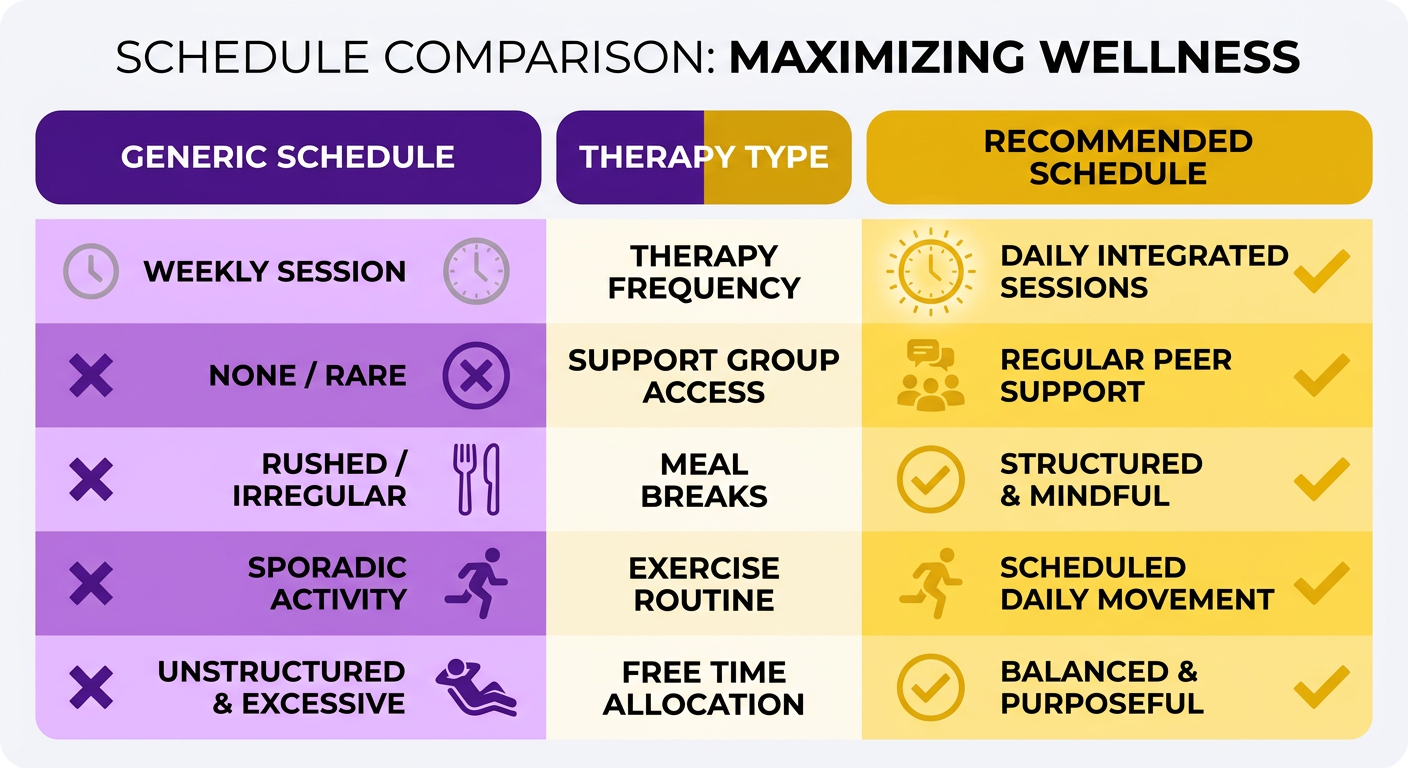
How to Find the Right Therapist or Group
The right fit is the one you will actually keep showing up to. Start with format and proximity. A group across town that you skip after week two helps less than a meeting three blocks away that you hit every Tuesday. Test a few before you commit.
Look for a group that matches where you are, not where you started. Early on, you need a room focused on staying sober day to day. Later, some people gravitate toward faith-based groups, others toward secular ones like SMART Recovery. Whatever the fit, showing up consistently is what counts, and our coaches supply the accountability that keeps you coming back.
What a Weekly Schedule Looks Like
A workable early-recovery week anchors one to two therapy sessions and three or more support meetings around your existing obligations. An illustrative frame:
- Individual therapy: one weekly session, same day and time, treated like a work meeting you cannot miss.
- Support groups: three to five meetings across the week, spaced to cover high-risk stretches like weekends and evenings.
- Check-ins: a short daily accountability touchpoint with your coach, especially in the first months.
Recovery coaches and sober companions exist for the high-risk gaps between formal sessions. That is where relapse tends to sneak in.
Avoiding the Common Mistakes, and Where Virtual Fits
The biggest mistake is treating meetings as passive attendance. Sit in the back, leave early, and you get the box-check without the benefit. Speak up, get a number, follow up.
The second is over-scheduling. Cram seven meetings a week on top of work and family, and your routine becomes the stressor, which backfires. Leave breathing room.
One thing that genuinely helps later is service. Supporting others in recovery links to staying sober yourself and fewer depressive symptoms. Our take: wait until your own structure is solid before you take on a sponsee. Service works when your foundation can carry it, not before.
Virtual sessions close the gaps in-person cannot. When old places and old friends are the trigger, a video meeting from your kitchen removes the drive past the bar entirely. We offer both, leaning on virtual for travel weeks, bad-weather days, and any stretch where getting there is the barrier between you and support.
Staying Consistent When Life Hits
We stick with clients who stumble at week three or month four, because consistency breaks differently at different milestones. Your routine rarely fails from bad planning. It fails when life hits and you drop the thread before the habits lock in. You need the routine most in those first months, the exact window when it takes the most conscious effort to keep.
That is where accountability moves from nice to necessary. Routines hold when someone provides real-world support through the fragile early weeks, then steps back as clients find their rhythm. It is not about policing. It is about catching the slip before it hardens into a pattern.
Tracking What Actually Predicts a Slip
Generic recovery apps track whether you checked a box. A checkbox rarely captures what matters at your stage. Sleep consistency matters more at week two than month six. Missing a therapy session at day ten signals different risk than missing one at month three. Support has to adapt because your vulnerability changes as sobriety progresses.
Progress logs work when they capture deviation patterns, not just completed tasks. Did you skip morning meditation once, or three days running? Did the gym session drift from Tuesday to "I'll go tomorrow" for a week straight? Those are the drifts a coach can help you name and work through. Clients who followed a structured daily routine reported higher satisfaction and lower relapse rates, largely because someone was there through the early stretch.
The tools matter less than the response speed. An app gives you data. A coach reads the pattern, tailors the routine, and adjusts before Friday's trigger situation lands. That real-time, personal read is what generic tracking misses.
How Coaching Shifts at Different Stages
We support clients with a dedicated coach or a coordinated team whose approach changes, because week-two needs look nothing like month-six needs. Early support is frequent and hands-on: steady contact, guidance before high-risk situations, someone who knows your schedule well enough to notice when you are dodging the gym or skipping meals. That same intensity would smother you at six months, but it prevents collapse while you are still laying down the neural pathways.
The research on mutual-help groups shows people who work AA or SMART Recovery hold sobriety better because of the built-in accountability. Our team-based approach runs on the same principle, adjusting frequency and focus as you move through milestones. Month one might mean daily contact. Month four might mean a lighter touch plus on-demand backup when a trigger surfaces.
Lean on people who have walked the full arc, not just the early wins. A coach who has guided clients through month two knows the difference between a rough Tuesday and the start of a backslide. That pattern recognition is what makes support stick. Your coach names the deviation before you have finished justifying it to yourself.
The Mistakes That Undermine Consistency
Rigid routines break faster than flexible ones. Clients who treat their schedule like a court order rather than a living document hit a wall the first time something unexpected lands. Keep it reasonable and build in buffer time. If your morning needs flawless execution to work, it will not survive your first sick day.
The other frequent failure is treating all support the same across stages. Constant contact and no unstructured hours make sense at detox discharge and turn suffocating six months later. That is why we taper on purpose. The level of care has to match where you actually are. Miss that shift and you either lose momentum or keep someone dependent longer than they need.
And skip the whole thing if you mistake support for surveillance. The point is not compliance. It is catching yourself when your decision-making gets fuzzy, before the cravings get loud. Support works when it feels like partnership, not parole.
When Setbacks Hit, and What to Do About Them
Even a good routine hits friction. A setback is not proof the plan failed. It is part of the work, and how you respond decides whether a rough week becomes a relapse or stays a rough week.
Three challenges knock people off track most often: triggers that ambush an ordinary day, restlessness that creeps into unstructured hours, and the slow burnout of a schedule packed too tight. Each needs a different fix, and none respond well to a static plan pulled from a generic guide.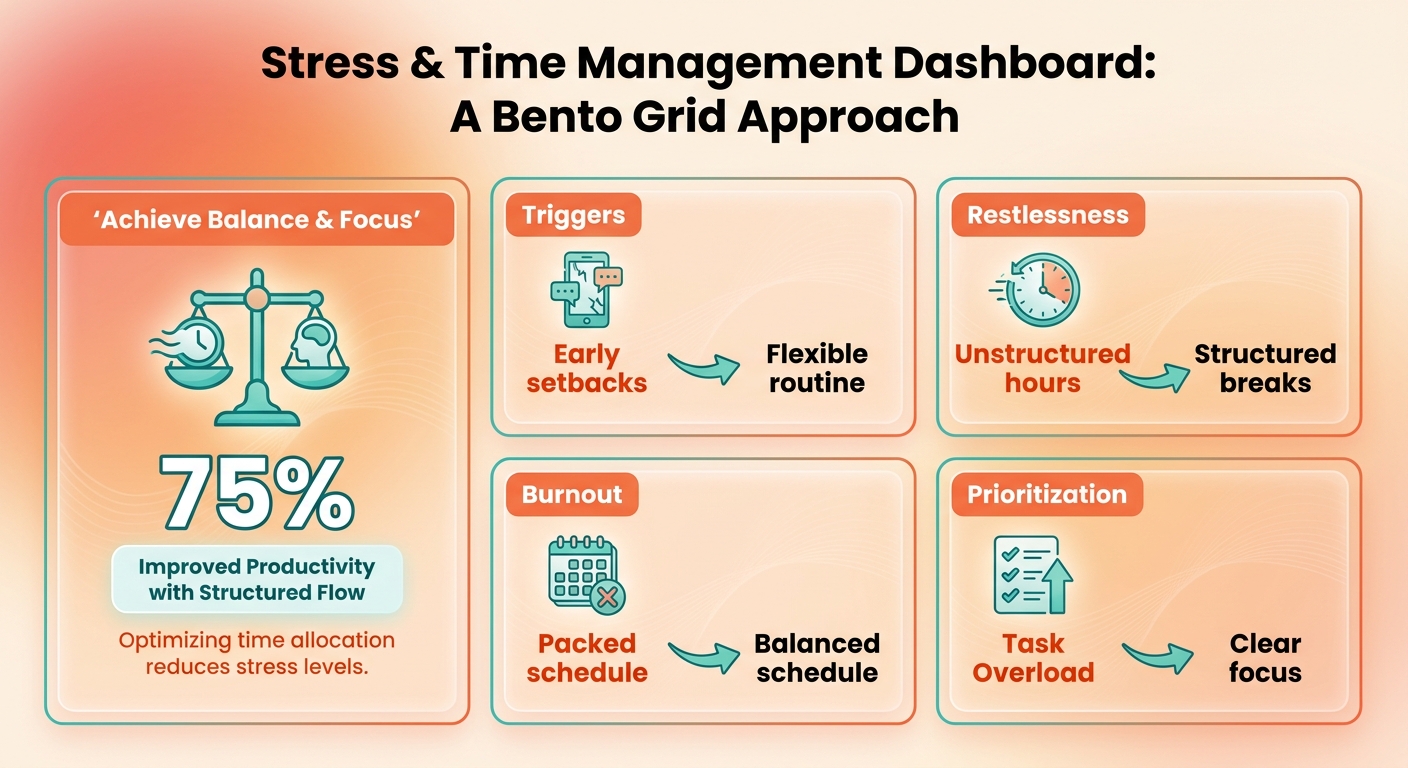
Managing Triggers and Heading Off Restlessness
Triggers and boredom are the two failure points that catch people early. Triggers are the people, places, or feelings that pull you toward using. Restlessness is the empty stretch addiction used to fill. Both are manageable with a plan built before you need it.
For triggers, the coping strategies that work are concrete, not vague. Northpoint specialists point to a stress-management plan that swaps substances for exercise, mindfulness, or a call to someone in your corner. Decide your response in advance, so a craving meets a rehearsed action instead of a blank mind.
Restlessness is trickier because it hides in your calendar’s gaps. Idle hours are a relapse risk, which is why filling leisure time with genuine interest matters. As one Northpoint specialist put it, "the core way to stay sober is to actively build a life that makes staying sober feel worth it." Boredom shrinks when your days hold something you actually want to show up for.
What a Crisis Plan Should Include
A crisis plan is a written, step-by-step response for the moment a craving spikes or a trigger hits hard. It takes decision-making out of your worst moments. Cover emotional, mental, and physical triggers, not just the obvious ones.
Effective plans name your top personal triggers, two or three immediate actions (leave the situation, call a specific person, start a grounding exercise), and the people to reach in order. Write it while you are steady. When you are in the moment, you follow the page, not your panic.
Common Mistakes to Avoid
The biggest one is over-scheduling. There is real tension in the research here. Ashley Treatment warns routines must stay reasonable or the added stress undermines recovery, while Ikon Recovery argues a consistent yet flexible routine reinforces stability.
Both are right. A routine needs reliable anchors and deliberate slack. Cram every hour and you build a stressor that snaps under the first hard day. Leave it shapeless and boredom moves in.
The other frequent error is going it alone. New habits take real time to lock in, and that gap is exactly where a coach or support team earns its place. Our team provides consistent, real-world support through the moments that matter, catching the stumble at week three before it turns into a spiral. For a closer look at structuring those first months, our guide on building a sober routine in the first 90 days breaks it down step by step.
References
[1] Building a Healthy Routine During Early Sobriety - https://palmettocenter.com/rehab-blog/healthy-routine-in-early-sobriety/
[2] Daily Routines in Recovery - https://www.ashleytreatment.org/rehab-blog/the-importance-of-a-daily-routine/
[3] What Does Life Look Like After Rehab? Tips to Help You ... - https://www.northpointrecovery.com/blog/what-does-life-look-like-after-rehab-tips-to-help-you-adjust/
[4] What to Do After Your 30-Day Inpatient Rehab Stay - https://www.gatewayfoundation.org/what-to-do-after-30-day-inpatient-rehab-stay/
[5] How Do I Stay Sober After Rehab? - Addiction Center - https://www.addictioncenter.com/rehab-questions/stay-sober-after-rehab/
[6] How to Build a Daily Routine in Recovery - https://www.ikonrecoverycenters.org/how-to-build-a-daily-routine-in-recovery/
[7] Hobbies & Activities for Recovering Addicts: How to Fill Leisure Time - https://americanaddictioncenters.org/rehab-guide/aftercare/leisure-time-activities
[8] Life After Rehab: Aftercare, Sober Living, and Relapse Prevention - https://www.addicted.org/after-treatment/
Frequently Asked Questions
1. What should I do if I miss my morning routine or slip up for a few days?
Skip the guilt spiral and return to your habits as soon as possible. Recovery is not about perfection, so one skipped morning does not erase weeks of consistency. Fall back on a minimum viable routine, like a fixed wake-up time plus five-minute breathwork, then rebuild from there.
2. How is a recovery routine different from just keeping busy?
A recovery routine builds a daily pattern that competes with the pull of your old life, not just filling empty hours with random activities. It creates a life worth staying sober for through non-negotiable anchors, adaptive middle blocks, and deliberate downtime, rather than distraction alone.
3. Do I still need a structured routine if I'm leaving a sober living environment?
Rigid scheduling is less critical if you are coming from structured sober living with built-in accountability, since that external structure already does the work. But returning home to the same environment where your addiction developed makes a deliberate daily routine non-negotiable for sustained recovery.
4. Can exercise itself become a problem during recovery?
Exercise becomes harmful when it mimics addictive patterns, like running to "earn" meals or logging workouts compulsively. When movement creates performance pressure instead of reducing stress, it stops serving recovery. Treat yourself as a fitness beginner regardless of past performance, and pull back before activity becomes another dependency.
5. How long does it take for a new recovery routine to feel automatic?
Research shows it takes more than two months for a new habit to become automatic. This creates a hard paradox: cravings peak in those same early months, exactly when your routine demands the most conscious effort and external accountability. Early weeks are about showing up, not perfection.
6. Why is boredom considered a serious relapse risk rather than a minor issue?
Boredom hits harder than expected because the empty hours where you used to drink or use feel enormous, making it a major relapse trigger. Filling those hours with new passions like cooking, hobbies, and staying active makes sober living feel full and meaningful rather than something you endure.
7. What is a "minimum viable routine" and when do I use it?
A minimum viable routine is the stripped-down version of your habits that maintains continuity when life disrupts the full sequence, such as sickness, travel, or a family emergency. It might be just your wake-up time plus five-minute breathwork, keeping the structure intact without breaking under pressure.