Build Your Daily Sober Routine in the First 90 Days
July 30, 2026

Key Takeaways
- Sleep of 7‑8 hours per night rates difficulty 2 and cuts mental strain, a common relapse trigger.
- Consuming three meals and two liters of water daily scores difficulty 3, stabilizes blood sugar, and curbs impulsive substance cravings.
- Structured activity occupying four to six hours daily carries difficulty 4, the highest among core elements, and fills newly free time.
- Accountability check-ins of 15-30 minutes each day rate difficulty 2 and deliver real-time support that reinforces human connection.
- A flexible "rest" slot of 30-45 minutes rates difficulty 1 and enhances stress resilience, allowing adaptation without breaking routine.
- Coaching programs typically begin with low-difficulty, high-impact habits: consistent sleep, meals, and brief check-ins, before adding demanding tasks like job searching.
Quick Summary
A clear, data-driven snapshot of a successful first-90-day routine helps clients and families see where support is needed. The table below outlines core elements, including sleep, meals, activity, accountability, and a flexible rest slot, so gaps become visible early in recovery.
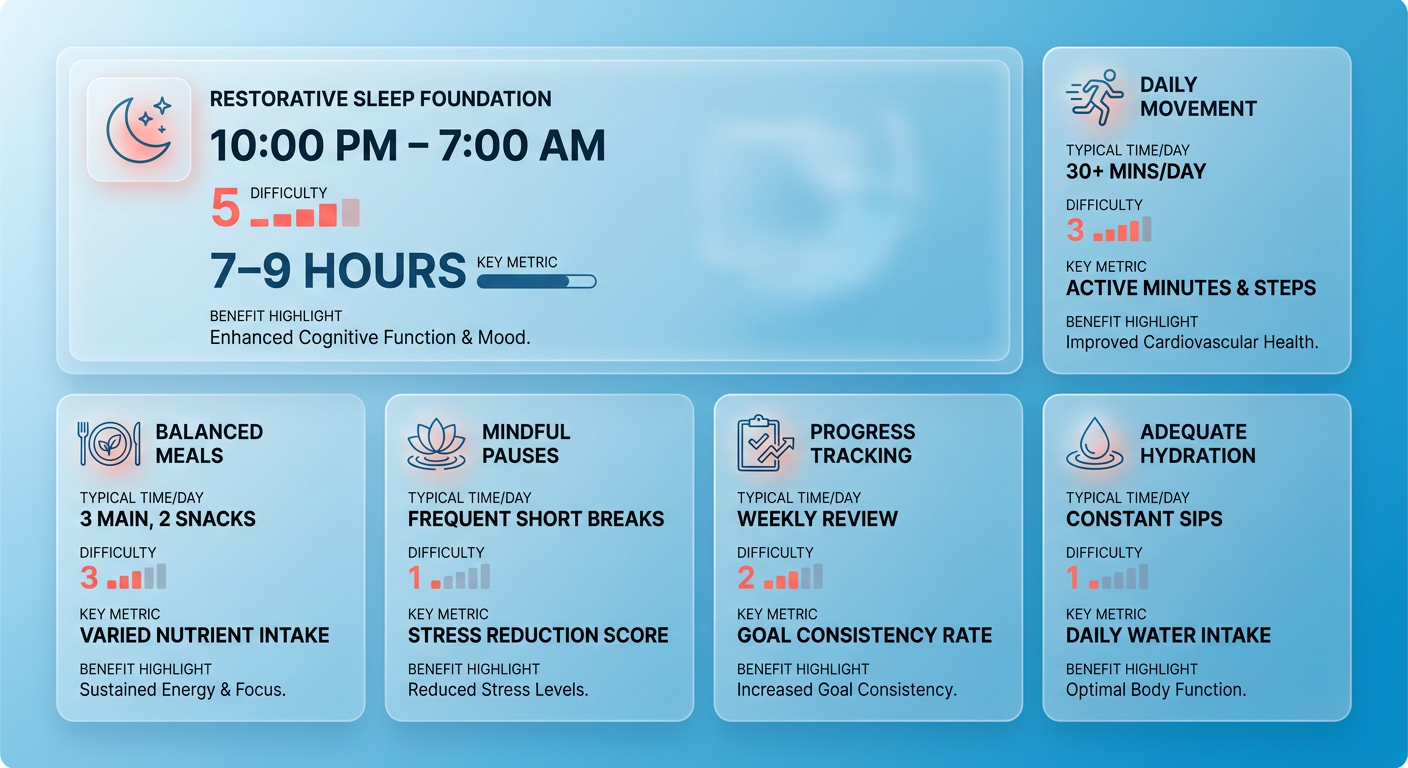
| Routine Element | Typical Time / Day | Difficulty (1‑5) | Key Metric | Benefit Highlight |
|---|---|---|---|---|
| Sleep (7‑8 h) | 7‑8 h | 2 | Improves mood & decision‑making | Reduces mental strain, a common relapse driver |
| Meals & Hydration | 3 meals + 2 L water | 3 | Stabilizes blood sugar & cravings | Keeps energy steady, curbs impulsive use |
| Structured Activity (work, school, hobby) | 4‑6 h | 4 | Occupies newly free time | Helps prevent idle periods that can trigger relapse |
| Accountability Check‑ins (coach, peer, family) | 15‑30 min | 2 | Provides real-time support | Reinforces human connection and guidance |
| Flexible "Rest" Slot (meditation, light reading) | 30‑45 min | 1 | Enhances resilience to stress | Allows adaptation without breaking routine |
What does the table tell us about early recovery?
The table shows how basic physiological habits start recovery. More complex structured activities require greater readiness. MADE's coaching methodology prioritizes stable daily rhythms before demanding tasks like career development or new social commitments. This progressive approach helps clients build a stable foundation first.
How can this information guide personalized coaching?
Coaches evaluate each client's baseline energy and stress levels to customize the daily plan. If a client struggles with persistent exhaustion, the initial focus stays on stabilizing rest patterns. Once those basic elements feel manageable, additional restorative practices can support emotional balance. As the client's capacity increases, the coach collaborates with them to add longer periods of focused activity, ensuring the progression matches their recovery pace.
When might a routine element be paused?
During periods of intense stress or unexpected life challenges, maintaining a complex schedule can lead to burnout. In these situations, the coach helps the client scale back to essential physical maintenance and basic check-ins. Temporarily reducing daily demands prevents overwhelm, allowing the client to focus on stabilization before slowly rebuilding the full routine.
Why the First 90 Days Matters
When individuals in early recovery establish a solid daily rhythm, the first 90 days become a launchpad rather than a gamble. MADE's customized, team-based coaching helps clients map out those weeks so new habits can take root.
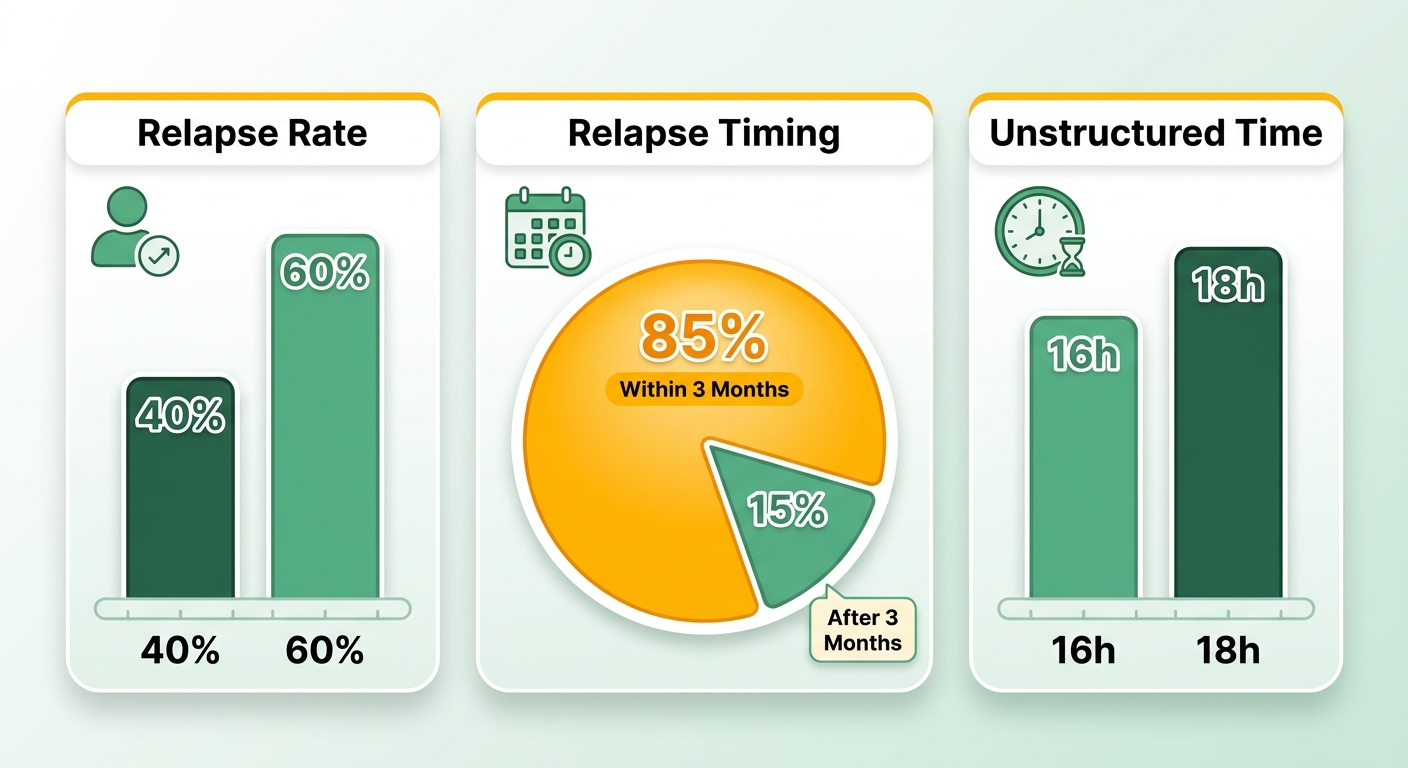
Across the nation, 40%‑60% of people in recovery experience at least one relapse each year, and 85% of those relapses happen within the first year. Research also shows that after stopping substance use, many people suddenly have 16‑18 hours of unstructured free time, a vacuum that can increase risk. Habit-formation science indicates it takes roughly 66 days for a new behavior to become automatic, placing the middle of the 90-day window at a critical point for building lasting routines.
How Does Structured Routine Reduce Relapse Risk?
A structured schedule helps stabilize the brain's reward system by replacing unpredictable environments with reliable daily patterns. Establishing consistent times for rest, nutrition, and physical activity supports overall well-being.
- Rest: Consistent sleep patterns support cognitive function and emotional regulation.
- Nutrition: Regular meals provide steady energy levels, helping prevent sudden mood swings.
- Physical Activity: Daily movement helps manage stress and supports physical recovery.
Coaches help clients build these habits into daily life, turning recovery ideas into practical routines.
What Challenges Do New Sobriety Seekers Face in the First Three Months?
The sudden abundance of open hours after completing treatment can feel overwhelming. Without a clear plan, this unstructured time can lead to anxiety and cravings. Research indicates that while individuals often spend significant time resting, they frequently report feeling unsettled without a clear schedule. This shows the need for intentional, balanced daily planning instead of simply avoiding activity.
How Can a Personalized Coaching Team Fill the Gaps?
A dedicated coaching team offers active support that adapts to the client's daily experiences. By reviewing progress regularly, coaches help clients modify their schedules based on current stress levels or sleep quality. This collaborative adjustment process keeps the recovery plan relevant and supportive throughout the transition.
Preparation and Detox
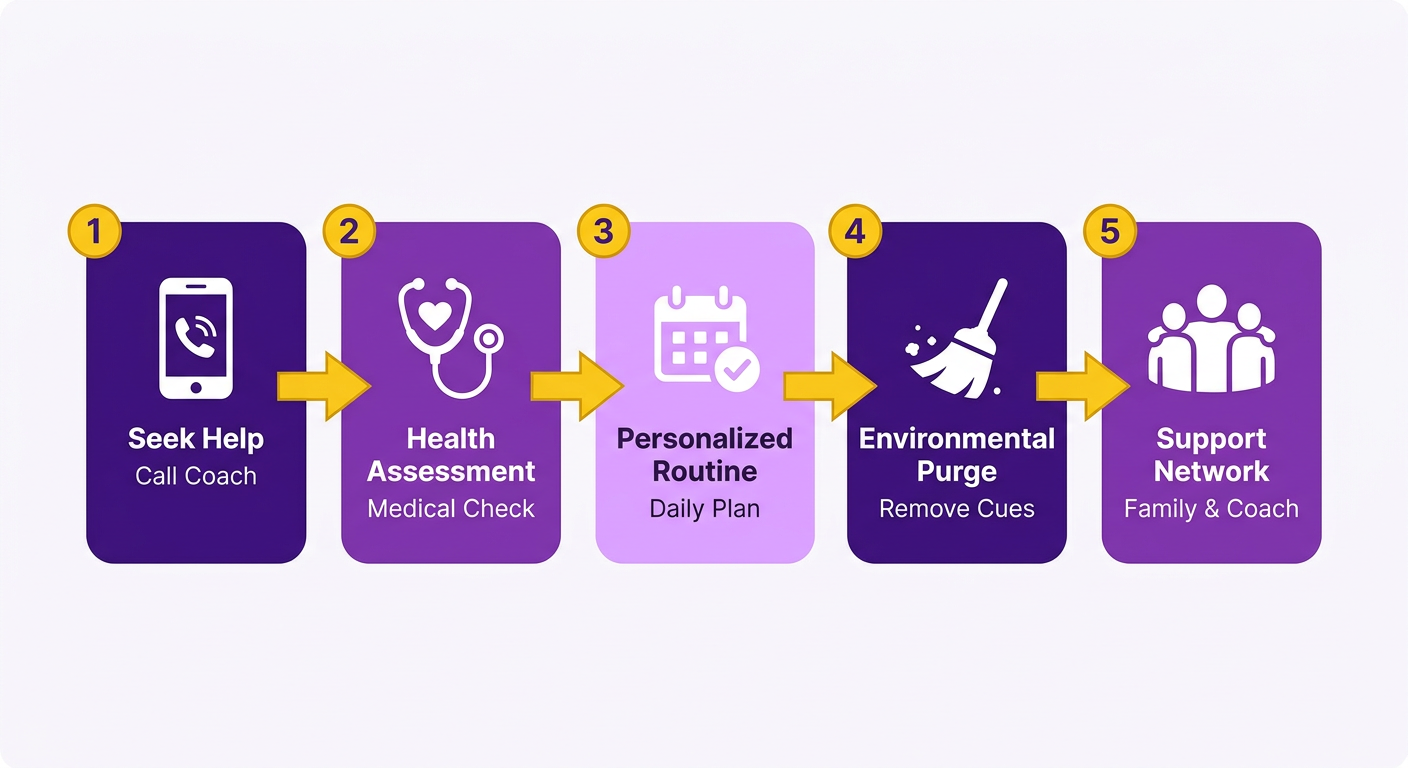
When individuals seek help, the first step is moving from detox or residential treatment into everyday life with a clear, supportive plan. Coaches help you assess any health considerations you've already discussed with your medical team and then create a personalized routine that builds stability and confidence.
At the same time, we guide you through an environmental purge by removing substances, paraphernalia, and reminder cues from your living space. We also bring together a support network: a dedicated coach and any family members you choose to involve. This collaborative network provides consistent encouragement and guidance as you transition to independent living.
How can individuals get support during the transition?
Our transition support focuses on maintaining open communication during the critical first weeks. Coaches maintain regular contact to monitor progress, offer encouragement, and help clients navigate early challenges. This ongoing connection helps clients apply recovery strategies in real-world settings, reinforcing their commitment to change.
What does our support team set up before routine building?
Before the daily schedule is finalized, the coach works with the client to identify key daily milestones that fit their existing commitments. Family members are provided with guidance on how to create a supportive home environment and recognize signs of stress. This preparation ensures that everyone involved is aligned and ready to support the client's progress.
How do nutrition and wellness smooth the transition?
Physical well-being is central to rebuilding health after treatment. Coaches offer guidance on meal planning to support physical recovery and maintain steady energy throughout the day. We also encourage gentle, low-impact physical activities to support cardiovascular health and improve mood. By establishing consistent habits around hydration and rest, clients can rebuild their physical strength and gain confidence in their daily recovery efforts.
Building New Routines and Habits
We start by identifying the exact moment a craving surfaces, then insert a recovery-aligned activity that satisfies the same need. A stress-induced urge to use can be swapped for a 5-minute breathing exercise followed by a quick journal note.
- Cue identification – Clients write the trigger, such as "after work stress," in a planner or a habit-tracking app such as Habitica.
- Replacement routine – We pair the cue with a concrete action: a short walk, a mindfulness prompt, or a phone call to a recovery partner.
- Reward reinforcement – After completing the action, we log a small win, such as a check-mark, a point, or a brief gratitude note, to support the new habit.
Our coaches review these logs daily, offering real-time feedback that keeps the loop tight and adaptable.
What daily accountability system keeps us on track?
A structured check-in process helps clients maintain focus throughout the day. Regular communication in the morning and evening supports consistent progress.
- Morning pulse – Within the first hour of waking, we ask three questions: What is my top recovery priority? What support do I need today? How will I honor my body? The answers are shared in a secure chat with the client's coach.
- Mid-day touchpoint – A brief message prompts the client to take a break, check their hydration, or stretch, helping maintain focus during busy hours.
- Evening reflection – Clients record what went well, what felt challenging, and one small adjustment for tomorrow. The coach replies within a few hours, reinforcing progress and offering corrective suggestions.
This communication loop helps clients stay connected to their goals and receive timely feedback from their coach.
Why do physical wellness and reflective practices matter in the first 90 days?
Integrating physical care and self-reflection helps manage stress and supports clearer decision-making.
- Sleep hygiene – Establishing a regular sleep schedule supports cognitive recovery and emotional stability.
- Nourishing meals – Eating balanced meals helps maintain steady blood sugar levels and reduce physical discomfort.
- Movement – Regular physical activity supports cardiovascular health and helps relieve physical tension.
- Mindful/spiritual pause – Taking time for quiet reflection or gratitude helps ground the client and provides a healthy way to manage daily stress.
Coaches work with clients to integrate these practices into their schedules, adjusting them as the client's needs change.
Daily Routine Building Checklist
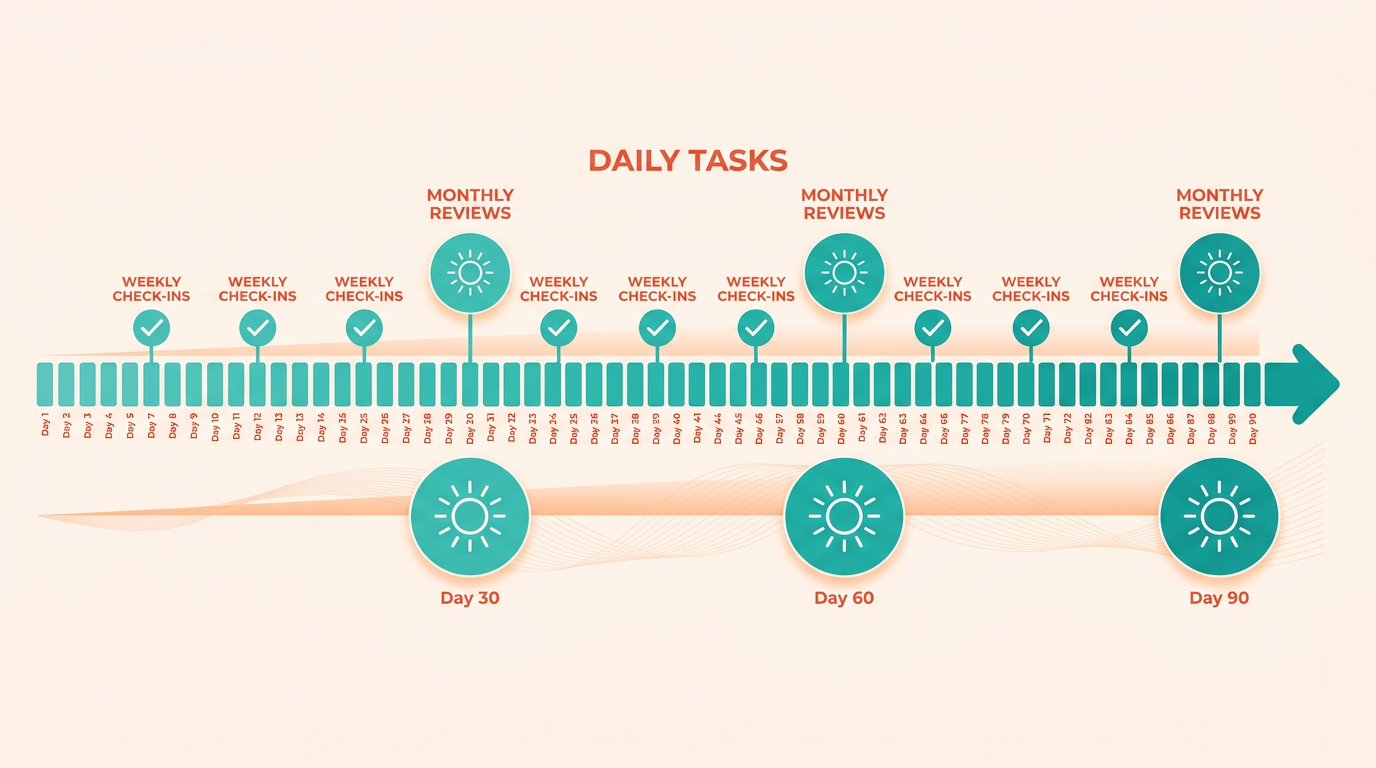
When individuals transitioning from treatment commit to a concrete daily plan, the first 90 days become a series of achievable wins rather than a vague hope. MADE's coaches work with clients to turn abstract goals into visible actions that can be checked off each day. By developing a written routine, clients create a clear promise to themselves, which helps build confidence and structure.
A written schedule helps organize the day, ensuring that recovery tasks are prioritized alongside work or family responsibilities. We help clients design a balanced plan that includes both structured activities and periods of rest. Below is an example of a daily routine that we often discuss with clients, adaptable to personal preferences and daily realities.
How do we structure a morning routine that sets a positive tone?
A consistent morning routine helps establish a sense of order and reduces early-day anxiety. Coaches assist clients in designing a sequence of tasks that prepare them mentally and physically for the day.
- Brief grounding check-in – open a journal or planner, note sleep quality, and rate mood.
- Light movement – 5–10 minutes of stretching, yoga, or a brisk walk to help wake up the body.
- Nourishing breakfast – a balanced meal to provide steady energy for the morning.
- Recovery cue – read a short affirmation, listen to a brief meditation, or send a "good morning" text to a support partner.
What does an afternoon/evening routine look like to manage stress and triggers?
Managing transitions during the day is key to maintaining stability. A structured evening routine helps the body transition from active hours to rest.
- Scheduled micro-breaks – take a few minutes every few hours to stretch or practice deep breathing to manage daily stress.
- Healthy snack and hydration – a light snack and water to maintain energy levels.
- Skill-building or hobby slot – dedicate 30 minutes to a creative activity, such as painting, coding, or gardening, to focus the mind on positive goals.
- Evening wrap-up – review the day's tasks, note achievements, and prepare for rest with a calming activity like reading or journaling.
How do we keep the routine flexible and accountable each week?
Regular reviews help ensure the schedule remains practical and supportive.
- Weekly review session (30 min) – evaluate the past week's schedule with your coach, identifying what worked well and what needs adjustment.
- Social connection block – schedule regular contact with supportive friends, family, or peers to maintain emotional connection.
- Monthly milestone check – set a personal goal, such as completing a project or learning a new skill, to track progress over time.
- Flex-day buffer – allow for occasional adjustments to the schedule to prevent stress and maintain long-term consistency.
Crisis Management and Support
When individuals experience a sudden surge of cravings or emotional overwhelm, having a clear plan is essential for maintaining stability. MADE's coaches collaborate with each client to develop a personalized crisis plan that identifies common triggers, such as late-night boredom, work stress, or interpersonal conflict, and outlines concrete, recovery-focused steps to address them.
We also recognize that a crisis often ripples through a client's social world. To keep connections strong, our coaching includes regular check-ins, whether by brief call, video session, or text message, providing companionship and reinforcing the coping strategies built into the client's routine.
How do we spot early warning signs?
Coaches help clients identify physical and emotional indicators of stress before they lead to cravings. By discussing daily experiences and tracking mood changes during coaching sessions, clients learn to recognize patterns and implement coping strategies early.
What role does our coaching team play when a crisis hits?
If a client experiences a high-stress situation, the coach provides immediate support, guiding them through the steps outlined in their crisis plan. This prompt response helps the client use established coping techniques to navigate the challenge safely.
How can families and friends support without overstepping?
Loved ones can offer support by staying informed about the client's progress through regular, brief updates. When offering assistance, families should focus on practical, specific offers of help that respect the client's independence while showing care.
Which self-care techniques keep a crisis at bay?
We emphasize the importance of regular rest, physical activity, and mindfulness in maintaining emotional balance. Coaching sessions often include simple relaxation exercises, gentle stretching, and planned downtime to help manage stress and support long-term well-being.
Actionable Takeaways and Next Steps
We help people most effectively when the first 90 days are anchored by a living routine that evolves with each day. In our experience, a plan that blends structure with flexibility prevents the idle-time vacuum that fuels cravings and gives the coaching team a clear map for real-time accountability.
Our approach is simple: treat the routine like a daily "safety net." By pairing every trigger, including hunger, anger, loneliness, or fatigue, with a concrete, recovery-focused action, we turn moments of vulnerability into opportunities for growth. This mindset, combined with a relapse-prevention plan that includes your care team, helps lower the chance of slipping back into old patterns, as we have observed in our work with clients.
How Do We Turn a Routine Blueprint Into Daily Action?
We break down the daily schedule into manageable, daily tasks. First, we identify key areas of focus, such as rest, nutrition, and connection, and schedule them throughout the day. Next, we establish simple responses for challenging moments, helping manage stress effectively. Finally, we track daily progress to identify patterns and make necessary adjustments.
- Identify the cue. Note when a challenging feeling or trigger arises.
- Select a replacement. Choose a brief, healthy activity to redirect your focus.
- Log the win. Record the completed action to build a sense of progress.
- Reflect with your coach. Discuss your daily log during check-ins to refine your schedule.
Which Tools Keep Us Accountable in Real Time?
We use a variety of tools to help clients stay organized and connected. A shared digital calendar helps coordinate schedules and reminders. Regular text updates provide quick check-ins, while habit-tracking applications offer a visual way to monitor progress.
- Shared digital calendar – schedule daily tasks, appointments, and recovery activities.
- Habit-tracking app – monitor daily habits and review progress over time.
- Morning accountability text – send a quick update to your coach to start the day.
- Weekly review – a dedicated session to evaluate the schedule and make adjustments.
What Are the First Steps to Secure Ongoing Support?
To establish a strong foundation, we recommend taking three initial steps. First, schedule an introductory session with your coach to discuss your goals and communication preferences. Second, outline a basic plan for managing challenging situations, including contact information for your support network. Third, identify reliable resources, such as recovery guides or articles, for quick reference.
- Onboard with your coach – set up your schedule and establish check-in times.
- Draft a support plan – keep a list of coping strategies and contacts easily accessible.
- Pick a go-to resource – select a book or guide that supports your recovery goals.
Resources for continued growth
- The HALT Method – quick self-assessment tool for unmet needs.
- "Atomic Habits" by James Clear – practical guide to habit stacking.
- Recovery-focused podcasts – short episodes you can listen to during commutes.
- Online habit-tracker communities – peer support without leaving your phone.
By following these steps, you give your personalized coaching team the data they need to adapt your plan day by day, turning the first 90 days from a daunting trial into a steady climb toward lasting sobriety.
References
[1] The Dos and Don'ts of Creating a Daily Routine in Recovery - https://sober.com/creating-a-daily-routine-in-recovery/
[2] Routines That Promote Sobriety - https://www.racnj.com/routines-that-promote-sobriety/
[3] How to Build a Daily Routine in Recovery - https://www.ikonrecoverycenters.org/how-to-build-a-daily-routine-in-recovery/
[4] Habits and Routines of Adults in Early Recovery From Substance Use ... - https://pmc.ncbi.nlm.nih.gov/articles/PMC9926005/
[5] What is Sober Routine? Understanding Its Importance - https://healthyliferecovery.com/what-is-sober-routine/
[6] Develop a Daily Routine That Supports Sobriety - https://www.rocklandtreatment.com/how-to-develop-a-daily-routine-that-supports-sobriety/
[7] The Power of Ritual: 8 Tips to Create a Sober Morning Routine - https://www.thewalkercenter.org/blog-posts/8-tips-to-create-a-sober-morning-routine
[8] Top 5 Ways to Structure Routine in Early Recovery - https://serenityrecovery.org/blog/top-5-ways-structure-routine-early-recovery/
Frequently Asked Questions
1. How can someone with chronic insomnia adapt the sleep component of the 90‑day routine?
Focus on establishing a consistent sleep schedule and creating a quiet environment. If sleep remains difficult, discuss cognitive strategies with your coach, such as limiting time spent awake in bed and managing evening anxiety. Your coach can help adjust your schedule gradually to support better rest.
2. What adjustments are recommended for clients who follow a vegan diet?
Ensure your meals include a variety of plant-based proteins, such as legumes and soy products, along with healthy fats to support energy levels. A coach can help you plan balanced meals that meet your nutritional needs and support overall well-being throughout the day.
3. If a person can only spare two hours for structured activity, how should they prioritize tasks?
With only two hours available, allocate one block to a high-impact activity that aligns with recovery goals, such as job searching or skill training, and use the second for a low-intensity hobby that still occupies time, like sketching. Your coach can help break each block into 30-minute segments to maintain momentum.
4. How does MADE’s coaching differ from generic habit-tracking apps for relapse prevention?
Coaching provides personalized guidance and human connection that applications cannot replicate. While apps track completed tasks, a coach offers emotional support, helps adjust the difficulty of your routine, and assists in navigating unexpected challenges in real time.
5. What steps should a family member take when they notice early warning signs without overwhelming the client?
Express your concern calmly using supportive language, and offer practical help, such as preparing a meal or going for a walk together. Avoid giving unsolicited advice, and encourage the client to reach out to their coach if they need additional support.
6. Can the daily accountability check-ins be conducted via text only, and is that as effective as video calls?
Text-only check-ins work when they’re prompt, specific, and include a quick win confirmation. Video calls add facial cues that can detect anxiety, but consistency matters more than medium. MADE recommends a hybrid approach: daily text for routine logging and a brief video call twice weekly for deeper connection.