Build a Daily Routine That Keeps You Sober
July 30, 2026

Key Takeaways
- The recovery model uses five coach-integrated pillars with set time slots.
- Sleep hygiene covers a 7-9 am wake window and 10-11 pm wind-down.
- Nutrition schedules meals at 8 am, 12 pm, and 6 pm, plus snacks.
- Movement adds a 20-30 minute midday walk or stretch.
- Reflection uses a 15-minute journal entry after each meal.
- Connection schedules a 30-minute evening call or group meeting.
Quick Summary
A coach-integrated daily routine in recovery breaks life into repeatable blocks. Each block has a realistic time estimate, difficulty rating, and clear metric. A simple table shows where a sober coach can check in.
Our approach aligns the routine's core pillars, sleep, nutrition, movement, reflection, and connection, with the moments a coach can offer reminders or crisis support. Below is the overview we use with clients transitioning from treatment to everyday life.
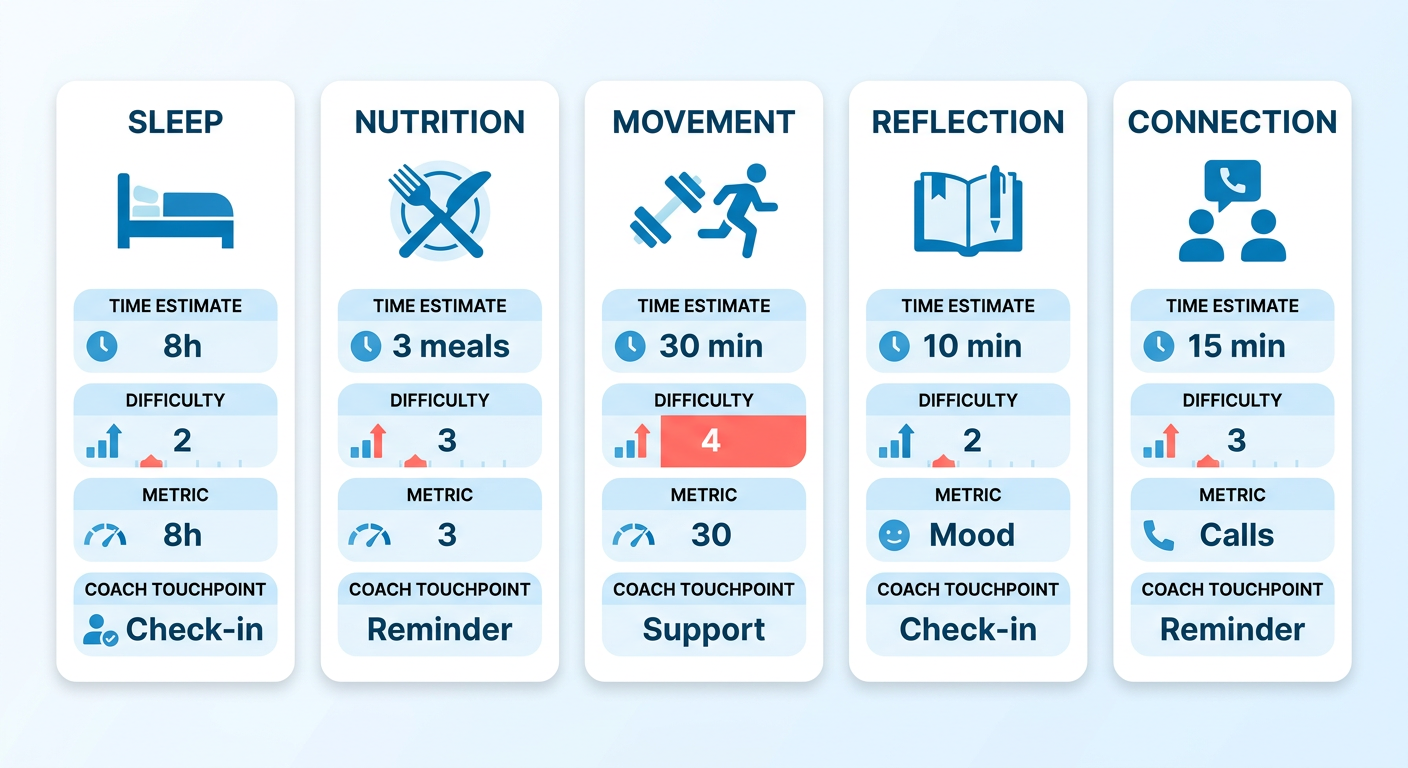
| Pillar | Typical Time Slot | Difficulty (1‑5) | Key Metric | Coach‑Touchpoint |
|---|---|---|---|---|
| Sleep hygiene | 7 am – 9 am (wake) & 10 pm – 11 pm (wind‑down) | 2 | Hours of uninterrupted sleep | Quick text check‑in on bedtime plan |
| Nutrition | 8 am, 12 pm, 6 pm meals + snack windows | 3 | Balanced plate score (protein + veg ≥ ½) | Meal‑prep video call or photo review |
| Movement | 20‑30 min walk or stretch (mid‑day) | 3 | Steps or active minutes logged | Prompted activity reminder |
| Reflection / Journaling | 15 min after each meal | 4 | Number of entries / mood rating | Coach reviews journal highlights |
| Connection | 30 min call or group meeting (evening) | 4 | Attendance count | Coach schedules or joins call |
Why these numbers matter — Clients report that tracking one metric per pillar keeps the routine manageable. A coach's brief touchpoint, often a text or quick video, adds real-time accountability. In the first 30 days, many notice better sleep and energy after this structure, echoing findings that "establishing a daily routine helps them stay focused and committed to sobriety" (Slater Recovery).
What Should You Adjust If a Block Feels Too Hard?
If a pillar scores a 4 or 5 on difficulty, we recommend a temporary "skip-or-scale-back" carve-out. When evening reflection feels taxing during a stressful week, replace the full journal entry with a 5-minute gratitude list. This keeps the habit alive without adding pressure, an approach supported by the observation that "forming new habits takes longer than the commonly cited 28 days" (Olalla).
How Do We Keep the Routine Flexible Yet Consistent?
We blend a consistent core, wake-up, meals, sleep, with flexible windows for movement and connection. That mirrors Dr. Mariam Zakhary's advice that "a consistent yet flexible routine reinforces stability" (Ikon Recovery). A coach can move a reminder from noon to early evening if work schedules change.
When Is This Table Not the Right Fit?
Skip this framework if you already have a rigid, employer-driven schedule with no room for extra check-ins. Extra touchpoints can increase stress, which research links to relapse risk. In such cases, focus on sleep and nutrition, and let the coach support crisis moments only.
By visualizing the routine in a table and pairing each block with coach support, you build a daily routine in recovery that feels structured and adaptable. Accountability becomes part of the day.
Why Daily Routine Matters in Recovery
A daily routine in recovery gives you a predictable framework that keeps cravings from slipping into gaps between activities. When you map sleep, meals, movement, and reflection onto a calendar, the brain receives clear signals that sobriety is the default mode. This predictability cuts the gradual drift toward relapse that many people experience when frustration or boredom build up.
Research indicates that a structured routine can lower relapse risk by providing concrete moments to manage stress and boredom. These are the two emotions most often linked to slipping back. As Sober.com notes, "Relapse is a gradual process linked to emotions like frustration, stress, and boredom" and anchoring each day with recovery-focused tasks creates a buffer that keeps those triggers at bay (structured routine reduces relapse).
Beyond preventing relapse, routine improves sleep quality, energy levels, and mood. In the first weeks after detox, many report better rest and more stamina once they stop erratic eating and late-night drinking patterns. Emotional volatility is common as the brain recalibrates after substance use, but brief exercise, like a brisk walk, can lift mood quickly. Nightly journaling helps process lingering feelings.
We weave a sober coach into those routine blocks so accountability happens in real time. A coach can send a quick check-in before morning meditation, suggest a brief breathing break during a stressful work call, or adjust the evening plan if you're unusually tired. This adaptive scheduling turns the routine from a static checklist into a support system that responds to the day's fluctuations.
How does a coach fit into a daily routine?
A coach becomes a flexible anchor that aligns with each pillar of your schedule. First, they confirm you've completed the night-before planning step. Then they prompt you to start the day with a recovery-focused habit. Throughout the day, they provide brief nudges by text, call, or app notification whenever a trigger appears.
- Morning anchor: Coach verifies you've logged sleep hours and set a positive intention.
- Mid-day check: Quick pulse on stress level; coach suggests a micro-break or grounding exercise.
- Evening wrap-up: Review of what went well, note any cravings, and adjust tomorrow's plan.
These touchpoints help clients stay on track and notice emerging triggers early. That supports consistent progress.
When might a rigid routine backfire?
If a schedule is too inflexible, it can trigger feelings of failure when life throws a curveball. We skip a strict routine when you're dealing with unpredictable work shifts or acute medical appointments. Instead, we shift to a flexible framework that prioritizes core habits while allowing time blocks to move.
- Keep the core pillars (sleep, nutrition, movement, reflection) non-negotiable.
- Allow time buffers for unexpected events.
- Let the coach help you re-schedule on the fly, preserving momentum without guilt.
What simple tools help us track the routine?
We recommend low-tech and digital options that let both you and your coach see progress at a glance.
- Paper planner with color-coded habit boxes for each pillar.
- Shared calendar (Google or Outlook) where the coach can add reminder events.
- Habit-tracking app that logs sleep, exercise, and mood; the coach reviews the data weekly.
These tools create a transparent feedback loop: you see your consistency, the coach spots patterns, and together you tweak the schedule before a slip becomes a relapse.
In practice, a well-designed daily routine paired with real-time coaching transforms recovery from a solitary effort into a collaborative, adaptable journey.
Morning Habits for a Strong Start
Starting your daily routine in recovery with a purposeful morning creates the mental "default mode" for sobriety. Coaches often work with you to set a morning structure that supports sobriety and provides guidance as the day's demands arise.
We help you establish a consistent wake-up time, hydrate, and add a brief mindfulness practice. That gives you a predictable rhythm while still allowing flexibility when physical fatigue sets in. Energy levels fluctuate wildly during early sobriety.
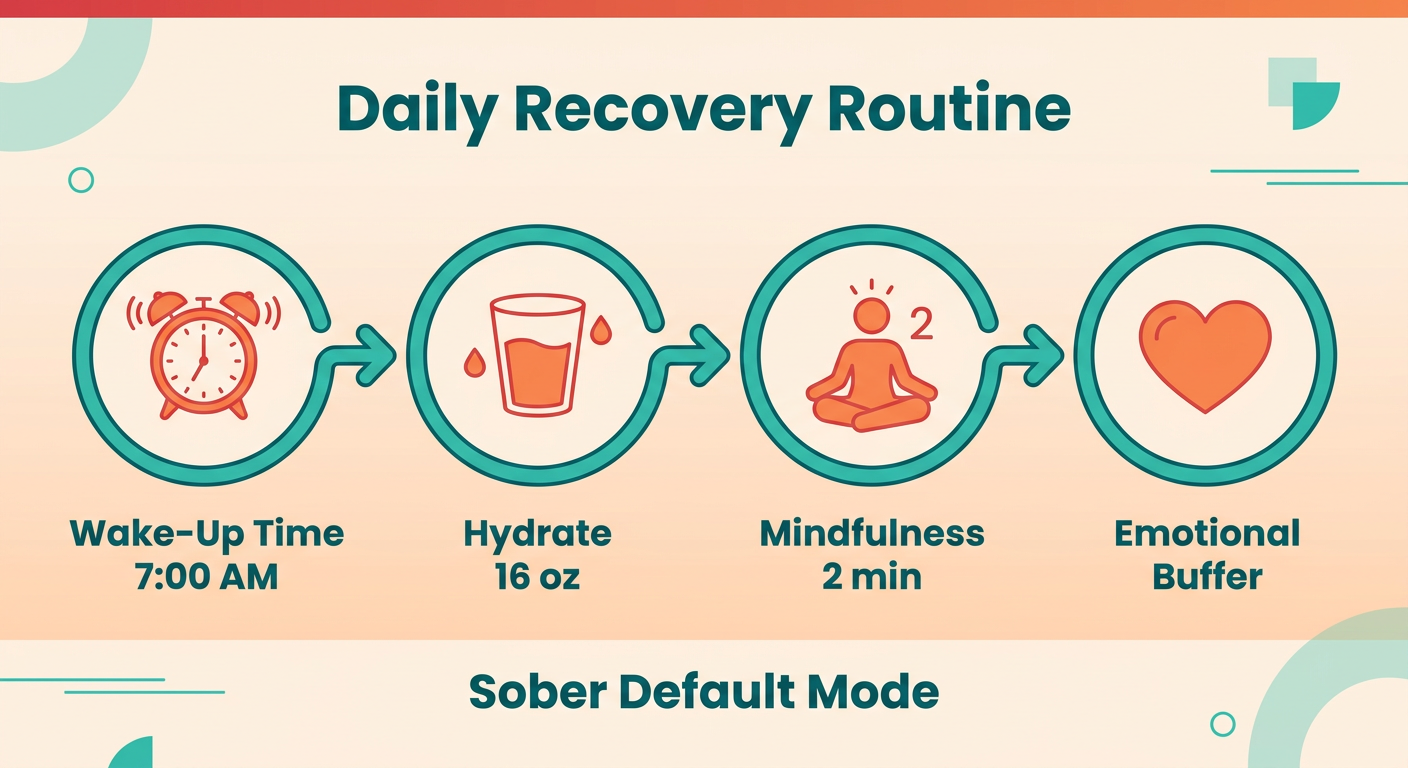
Anchoring a Consistent Wake‑Up Time
A steady rise time tells your brain that "today is a sober day." We recommend setting the alarm for the same slot each morning, even on weekends, and using encouragement from your coach to reinforce the habit.
- Pick a realistic hour that aligns with work or school commitments.
- Place your phone across the room so you must get up to silence it, reducing the temptation to snooze.
- Track your wake‑up time in a way that works for you and discuss it with your coach.
If a check-in is missed, your coach can discuss it with you to identify any challenges and adjust the plan.
What Role Does a Quick Mindfulness Moment Play?
A brief mindfulness practice lowers stress and gives you a clear mental snapshot before the day's tasks begin.
- Sit upright, close your eyes, and breathe for three cycles to center your attention.
- Ask yourself: "Am I feeling hungry, angry, lonely, or tired?"
- Note your feelings and share them with your coach for tailored coping tips.
If you're still managing severe anxiety, skip the full meditation and start with a grounding exercise, a 30-second foot-press, for example. The coach can help you expand the practice as comfort grows.
Using Nutrition and Coach Feedback to Fuel the Day
Hydration and a balanced breakfast stabilize blood sugar, which in turn dampens cravings. Coaches can work with you to develop a nutrition plan that supports energy and recovery.
- Drink a glass of water soon after waking to rehydrate.
- Include protein-rich foods such as eggs, Greek yogurt, or nuts to sustain energy.
- Track how you feel after eating and share observations with your coach to fine-tune meal timing.
If you experience persistent fatigue, light stretching before breakfast can help stimulate circulation and wake up the nervous system.
Gradually Introducing New Morning Habits
Establishing lasting routines requires patience. Sustainable lifestyle changes take time to become automatic. Add one micro-change each week and monitor progress with your coach before stacking the next.
- Week 1: Consistent wake-up + water.
- Week 2: Add mindfulness check-in.
- Week 3: Introduce a protein-rich breakfast.
Regular check-ins with your coach keep you accountable, celebrate small wins, and adjust the plan when life throws curveballs. If a particular habit feels stressful, discuss it with your coach and pause or modify the element until you feel ready rather than forcing a rigid schedule.
By incorporating supportive touchpoints early in the day, you create a resilient foundation for lasting sobriety.
Structured Time Management for Sobriety
A structured daily routine in recovery means you assign each hour a purpose-driven activity and add a sober-coach touchpoint that can support you when a craving spikes. By turning idle minutes into scheduled blocks, you remove the "empty space" that can fuel relapse and give your coach a clear window for real-time accountability. We emphasize balancing core pillars with flexible buffers that a coach can adjust as needed.
We pair the core pillars, sleep, nutrition, movement, reflection, and connection, with short, coach-led check-ins to create a rhythm that feels predictable and adaptable. A coach-integrated schedule lets you test the day's flow, receive nudges when you're slipping, and quickly re-allocate time if an unexpected commitment arises. This hybrid model keeps the routine resilient without drifting into perfectionism.
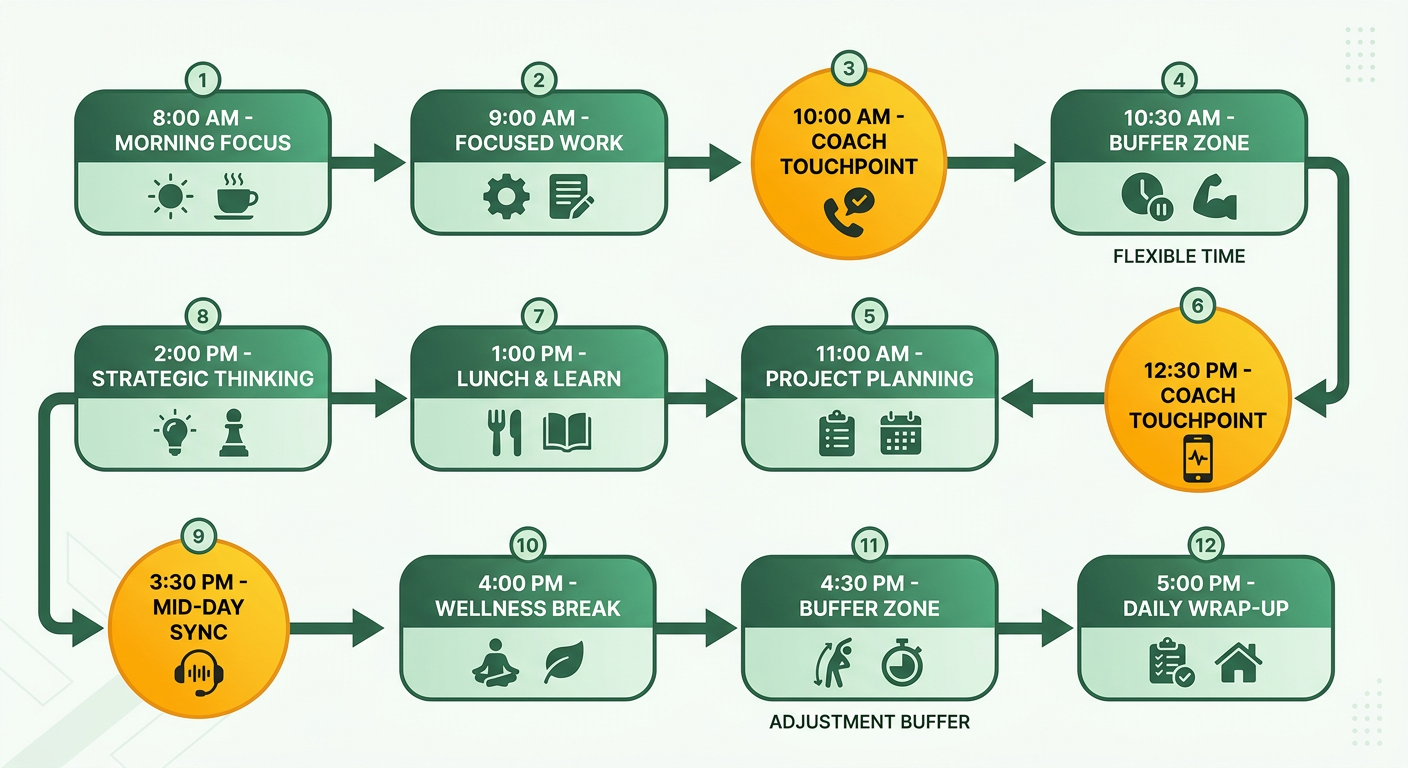
How Do We Build a Coach‑Integrated Schedule?
We start by mapping the non-negotiable recovery pillars onto a 24-hour canvas, then layer coach check-ins and flexible slots around them. This gives you a visual map that a coach can reference for quick prompts, and it lets you see where idle time might appear.
- Identify fixed pillars — allocate consistent times for sleep, meals, a brief movement burst, and a reflection moment (journaling, for example).
- Add coach touchpoints — schedule a 5-minute text or call after each pillar; the coach can confirm completion or offer a coping cue.
- Create a flexible buffer — reserve a 15-minute "catch-up" window each afternoon; the coach can suggest a micro-task (like a breathing exercise) if the buffer is needed.
- Choose a tool — select a tracking method that fits your lifestyle, ensuring you can easily share updates and review the day's layout with your coach in real time.
If you don't have reliable internet, skip the app and use a printable grid. The coach can still call in for check-ins. Reviewing the schedule each evening with your coach helps reinforce the habit loop and adjust any misaligned blocks before the next day.
What Happens When Unplanned Free Time Appears?
When a sudden gap opens, we treat it as an opportunity for a micro-habit rather than a risk zone. The coach can suggest a short activity that fits the habit-formation timeline. Repeated micro-tasks are essential for lasting change.
- Quick journal entry — capture thoughts, cravings, or gratitude; this reinforces reflection and gives the coach a snapshot for the next check-in.
- Mini-movement — a brisk walk or a set of stretches boosts mood and reduces stress.
- Urge surfing — practice acknowledging a craving without acting on it, letting the feeling peak and subside like a wave while your coach provides text support.
If you regularly find yourself with more than two idle slots a day, consider tightening the buffer or adding an extra coach prompt. Otherwise, the routine may become too loose and increase risk. By keeping the schedule fluid yet accountable, you turn every unexpected moment into a reinforcement of sobriety rather than a slip-up.
Evening Routines for a Peaceful Night
A calm evening routine, supported by your sober coach, can help you unwind and promote better sleep. Consistent sleep schedules are the backbone of a peaceful night, and our coaches can work with you to set a bedtime that aligns with your natural rhythm. We also recommend creating a device-free zone at least 30 minutes before lights out to protect sleep depth.
How can a coach help keep your evening on track?
During a brief evening conversation, your coach can:
- Discuss your planned bedtime and any adjustments you might need.
- Explore any triggers you noticed during the day.
- Suggest simple relaxation ideas such as gentle stretching or a short breathing exercise.
- Acknowledge progress and celebrate small wins.
This collaborative check-in allows the coach to tailor suggestions to your current needs and support a smooth transition to rest.
Which relaxation techniques support both sleep and sobriety?
A blend of low-impact movement, reflective writing, and mindfulness can create a soothing transition to sleep while reinforcing recovery habits. Consider a brief yoga or stretching session to loosen the body, followed by journaling to process the day's emotions. Our coaches often prompt a simple question: "What three things went well today?" You can write a short note and share a highlight if you wish.
"Every moment is a fresh beginning." – Christine Lynch
Keeping the phone away, dimming lights, and using a white-noise app set on a timer further protect sleep quality.
What simple steps build a bedtime routine that sticks?
- Set a wind-down alarm 60 minutes before your target sleep time to remind you to start your evening routine.
- Spend a few minutes reviewing the day with your coach or on your own, noting any stressors and discussing possible coping ideas.
- Engage in a 10-minute stretch or gentle yoga flow, then move straight to a brief journaling burst.
- Turn off screens, place the phone across the room, and use a soft-light lamp until you're ready to sleep.
Consider rewarding yourself after a full week of consistency with a favorite non-alcoholic beverage or a short walk. That helps keep the routine positive. Involving a trusted friend or family member in your evening check-in can also add extra encouragement.
By anchoring these evening habits to supportive coaching and mindful practices, you create a stable yet adaptable night-time structure that safeguards sleep and sustains recovery momentum.
Nutrition and Meal Planning for Recovery
Nutrition fuels both mind and body, making it a core pillar of any daily routine in recovery. When a MADE coach sits beside you during meal planning, the routine becomes a living schedule rather than a static list. Real-time tweaks are possible whenever cravings surface or energy dips. Pairing food choices with coach check-ins turns eating into a proactive recovery habit.
How does a sober coach keep your meals on track?
A coach-led check-in gives you a brief, focused moment to confirm what you'll eat, why it supports sobriety, and whether any trigger foods need swapping. This micro-review happens at the same time each day, so it blends seamlessly into your schedule and builds a habit loop that reinforces accountability.
- Morning preview — The coach asks, "What's on your plate today?" and notes any gaps.
- Mid-day pulse — A quick text or call verifies that lunch matched the plan and flags unexpected cravings.
- Evening recap — Together you review what worked, adjust portions, and celebrate wins.
Our coaches help you recognize hunger-related triggers and keep the plan adaptable rather than rigid, using personalized guidance that fits your lifestyle.
What are recovery-friendly meals and snacks?
Meals that stabilize blood sugar and supply brain-boosting nutrients reduce anxiety and support sustained sobriety. MADE coaches recommend a balance of protein, complex carbs, healthy fats, and fiber at each main eating window.
- Breakfast — Greek yogurt with berries, a sprinkle of nuts, and whole-grain toast.
- Lunch — Grilled chicken or beans, quinoa or brown rice, and a mixed-green salad with olive-oil dressing.
- Dinner — Baked salmon, sweet-potato wedges, and steamed broccoli.
- Snack — Apple slices with almond butter or carrot sticks with hummus.
These options fit into a structured yet flexible routine, helping reduce decision fatigue and keep energy steady throughout the day.
How can you integrate meal planning into your daily routine?
Start with a three-step workflow that the coach can monitor and adjust as needed. The steps are short enough to fit into any schedule yet detailed enough to prevent "what's for dinner?" panic.
- Map the week — On Sunday, you sit with your coach to outline breakfast, lunch, dinner, and two snacks for each day. The coach helps you spot potential trigger meals and suggests swaps.
- Prep in batches — Choose a 60-minute window mid-week for chopping vegetables, cooking grains, and portioning proteins. The coach sends a reminder and checks that the prep aligns with the plan.
- Daily check-in — Each morning, the coach confirms the day's menu, and each evening you log what you actually ate. If a deviation occurs, the coach works with you to troubleshoot the cause, stress, schedule shift, or unexpected social event.
By using this consistent yet flexible approach, you keep nutrition adaptable without losing structure. The coach's real-time feedback turns every meal into a data point you can act on, turning food from a potential trigger into a recovery asset.
Tracking Progress and Adjusting the Routine
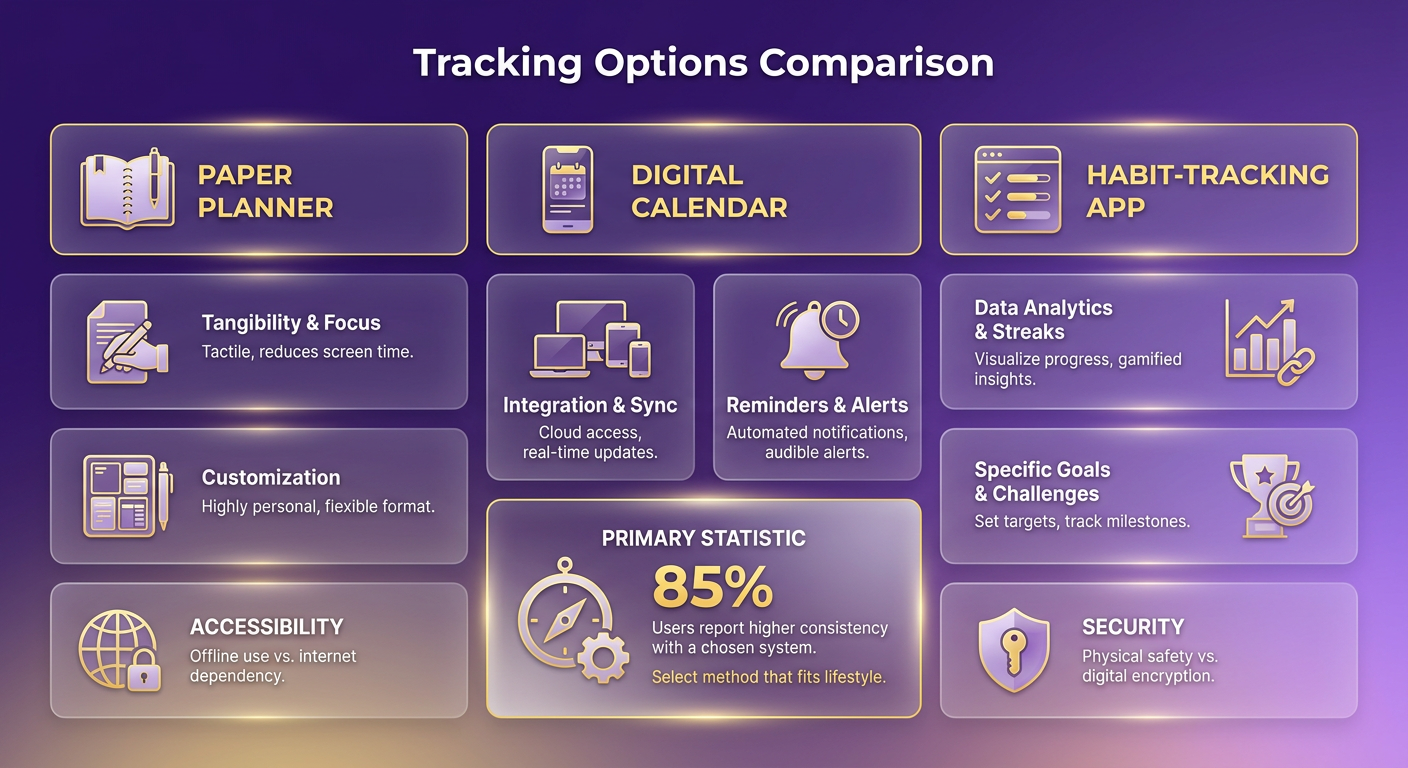
To make tracking seamless, we focus on capturing daily consistency through your preferred medium. Whether you use tactile methods, digital calendars, or specialized applications, the goal is to gather actionable data for your weekly reviews. This tracking should focus on three core areas:
- Visual consistency — marking off completed blocks to build momentum and see patterns over time.
- Real-time logging — noting immediate shifts in mood or energy levels right when they occur.
- Qualitative context — keeping brief notes on daily challenges so your coach can understand the "why" behind the numbers.
When should we adjust the routine?
Look for three types of signals: consistent missed metrics, rising stress or boredom, and external schedule changes. If any appear for more than a few days, it's time to re-balance the blocks rather than push through rigidly.
- Missed metrics — repeatedly falling short on a sleep goal or skipping an evening reflection may indicate the block is too ambitious or mistimed.
- Emotional cues — feeling "stuck" after a month suggests the habit isn't solid yet and may need a different approach.
- Life-event shifts — a new work shift or family commitment creates a natural buffer; you can move non-essential activities to preserve core sobriety pillars.
We prioritize flexibility to prevent minor setbacks from discouraging your overall efforts.
What role does a sober coach play in keeping adjustments on track?
The coach provides regular check-ins, collaborative review of your routine, and supportive suggestions that fit your current schedule and energy level.
- Regular check-ins — brief conversations confirm you're starting the day as planned and staying hydrated.
- Mid-day touchpoint — a quick reminder can help you stay active or take a short break when a movement block is missed.
- Evening reflection — reviewing journal entries together lets you celebrate wins and decide on any small tweak for the next day.
- Motivation support — the coach helps you link a non-substance reward to a newly solidified habit, reinforcing progress without pressure.
By weaving these supportive moments into the daily routine, the coach becomes an adaptive partner rather than a static checklist overseer. The result is a living plan that evolves with you, keeping sobriety front-and-center while allowing life's inevitable fluctuations.
Review your log a few times each week, make one modest adjustment per cycle, and acknowledge incremental gains. This creates a rhythm of measurement, reflection, and coach-guided tweaking that turns a static schedule into a dynamic recovery engine supporting lasting change.
References
[1] The Dos and Don'ts of Creating a Daily Routine in Recovery - https://sober.com/creating-a-daily-routine-in-recovery/
[2] Your First 30 Days of Sobriety: What to Expect and How ... - https://slaterecovery.com/your-first-30-days-of-sobriety-what-to-expect-and-how-to-stay-the-course/
[3] 5 Daily Habits to Form on Your Recovery Journey - https://www.olalla.org/addiction-recovery-blog/5-daily-habits-to-form-on-your-recovery-journey/
[4] How to Build a Daily Routine in Recovery - https://www.ikonrecoverycenters.org/how-to-build-a-daily-routine-in-recovery/
Frequently Asked Questions
1. How can night‑shift workers adapt the five‑pillar routine to stay sober?
Night-shift workers should invert the core pillars by aligning wake-up, meals, movement, and reflection with their off-hours, then keep the wind-down period 1-2 hours before sleep. A coach can send reminders at the new times, and the sleep window shifts to 7-9 am to preserve a consistent rhythm.
2. What’s the best way to maintain accountability when internet access is unreliable?
Focus on SMS-based communication and voice calls with your coach, which require minimal signal. You can also maintain a physical logbook to review during scheduled landline or cellular check-ins, keeping your progress documented without relying on data-heavy applications.
3. How should I handle cravings that arise during the movement block?
Switch to a grounding activity such as 30 seconds of deep breathing when cravings spike during the movement block. The coach can cue this alternative via text, keeping the habit active while reducing the urge to seek substances, and can log the short session for the day’s metric.
4. What’s an easier alternative to a full journal entry if reflection feels too demanding?
Try a simple one-word mood check or record a quick 1-minute voice memo on your phone. This captures your emotional state without the pressure of writing, giving your coach valuable insight to discuss during your next touchpoint.
5. I keep missing the 7-9 am wake window; how can I reset my sleep schedule without derailing the routine?
Repeatedly missing the 7-9 am wake window signals a misaligned circadian rhythm. Add a short “reset” nap of 20 minutes before the next planned wake time, then gradually shift bedtime earlier by 15-minute increments. A coach can track progress and suggest adjustments each week.
6. Should I choose a paper planner or a habit-tracking app for coach collaboration?
Base your choice on your daily environment and cognitive load. If you spend your workday on screens and experience digital fatigue, a physical planner offers a grounding, tactile break. If you are constantly on the move and prefer automated reminders to stay on track, a mobile application will better suit your pace.