Build a Weekly Routine That Keeps Recovery Steady
August 29, 2026

Key Takeaways
- Studies show 85% of people with substance use disorder relapse within the first year, many in the first weeks or months.
- Adults in early recovery named unoccupied time as their hardest moments. Free time made them nervous.
- Relapse begins long before someone picks up a drink. An empty calendar block is an early warning sign.
- Structure protects sobriety by removing uncertainty and cutting chaos.
- Consistent sleep, 7 to 9 hours on a predictable schedule, does more in early recovery than expected.
- Scheduling isn't just habit-building. It's active relapse prevention.
Why an Empty Calendar Is the First Thing to Fix
Life after rehab is where most relapses happen, and the reason is structural: empty time.
Research on adults in early recovery found that 85% of people with substance use disorder relapse within the first year, with many relapsing in the initial weeks or months. Participants named unoccupied time as their hardest moments. One noted that free time made them nervous. That's not incidental — that's a pattern.
Relapse doesn't start when someone picks up a drink. Relapse prevention research shows the early stages get neglected because everyone fixates on consumption itself. An empty block on your weekly calendar is an early warning sign. Scheduling isn't just healthy habit-building. It's active prevention.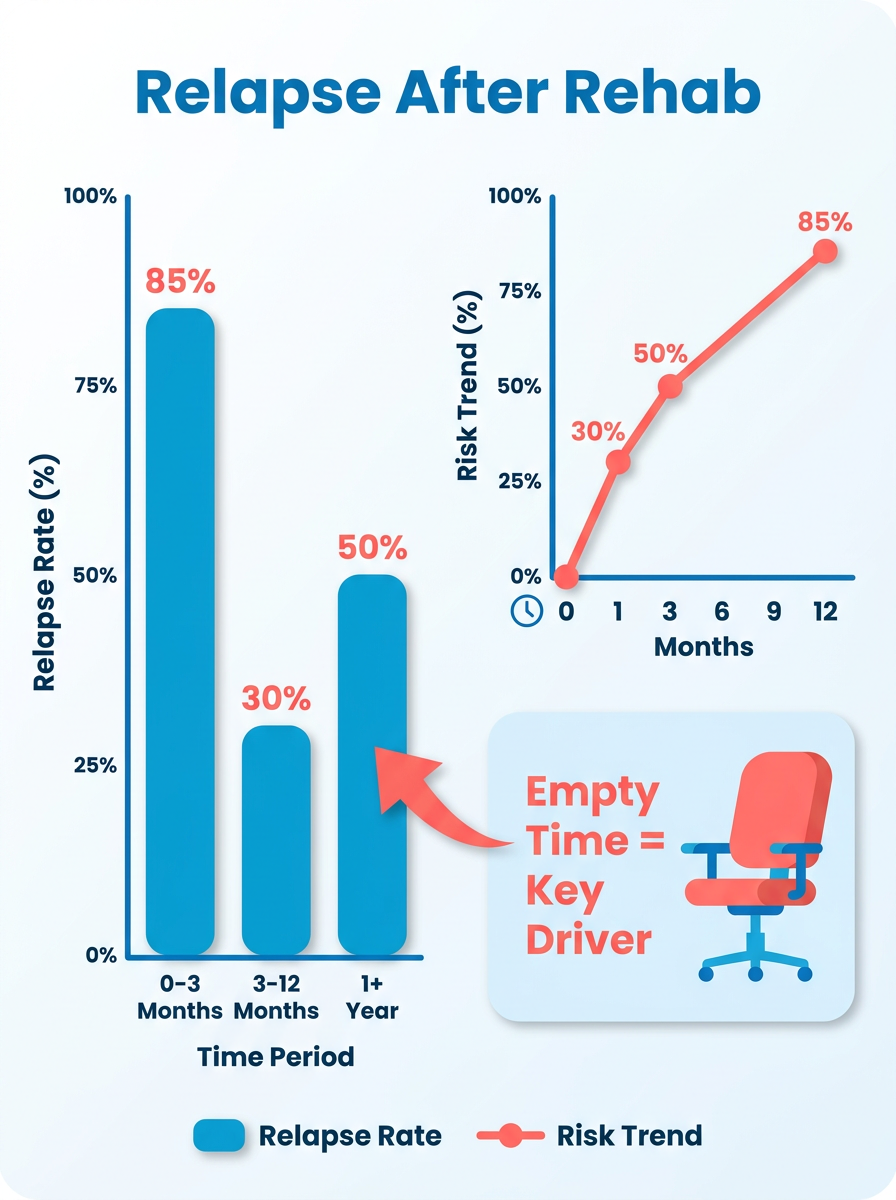
Why does structure protect sobriety?
A consistent daily routine reduces stress and keeps focus on recovery by removing uncertainty that triggers cravings. When your day has shape, your brain isn't left scanning for something to fill the void. It also cuts the chaos that pulls people back toward familiar cues.
The basics do real work here. Aim for 7 to 9 hours of sleep on a consistent schedule and 30 to 60 minutes of exercise at least five days a week. Better sleep, lower anxiety, steadier physical health metrics — all of it flows from the same weekly scaffolding.
Dr. Mariam Zakhary puts it this way: "a consistent yet flexible routine reinforces stability in recovery." The flexible part matters. A rigid template that ignores where you actually are will break.
Isn't all downtime a relapse risk?
No. The same study found rest was the most frequent activity at 31% even on busy days, yet also flagged unused time as a craving trigger. That looks contradictory until you split it out.
Intentional rest protects you. Empty time endangers you. Scheduled sleep, meditation, and quiet self-reflection belong in the plan. Aimless idle hours do not. Build rest in as a deliberate activity rather than trying to eliminate it.
How MADE Recovery paces routine-building
The trickiest tension in the research is this: structured routines are essential to sustaining recovery, but people leaving treatment are often only in the preparation stage of change. They need time before they can implement a full schedule. Same study, both truths.
That's why we don't hand you a fixed template on day one. Our team-based coaching calibrates a weekly routine to your readiness, then ramps intensity as your footing improves. We meet you at the transition point and adjust the plan week by week as you build stability and confidence.
| Routine Element | Daily Time | Weekly Frequency | Difficulty (1-5) | Primary Benefit | MADE Support Option |
|---|---|---|---|---|---|
| Consistent sleep schedule | 7-9 hrs | 7 days | 2 | Mood and craving control | Routine check-ins |
| Exercise | 30-60 min | 5 days | 3 | Anxiety reduction | Routine building support |
| Meditation / reflection | 15 min | 7 days | 2 | Restorative rest | Companionship and routine support |
| Real-world engagement | 30-60 min | 2-3 days | 3 | Connection and meaningful activity | Companion-guided experiences |
| Balanced meals | 45 min | 7 days | 3 | Physical stability | Nutrition guidance and meal prep |
| Coaching session | 45 min | 1-2 days | 1 | Routine calibration | 1:1 or team coaching (virtual or in-person) |
Each element builds on the last. Together they fill the stretches of open time where relapse risk is highest.
Critical path: sleep comes first. Without steady rest, exercise and everything downstream fall apart. Lock in sleep, then layer in exercise, then add meals and meaningful activity. Sequence beats ambition every time.
Sleep, Food, Water, Light: Start Here
Four pillars hold up everything else in your week: sleep, nutrition, hydration, and daily light exposure. Get these steady, and the harder work of rebuilding life after rehab gets easier. Skip them, and no calendar of meetings or therapy will hold.
A trap we watch repeatedly during the transition home: people walk out of treatment ready to overhaul everything at once, then crash within two weeks. Instead of forcing a massive lifestyle shift immediately, focus on a baseline. Small, manageable habits let your daily capacity catch up with your long-term goals.
Why does sleep come before everything else?
Sleep regulates the brain chemistry that early sobriety has thrown off balance. When sleep is erratic, the prefrontal cortex, the area responsible for impulse control and decision-making, struggles to function. A predictable sleep-wake cycle helps stabilize these neural pathways, making it easier to manage stress throughout the day. Same bedtime, same wake time, even on weekends.
A few sleep-hygiene basics worth building into your routine:
- Fixed wake time anchors the whole day, even after a rough night.
- No screens for the hour before bed.
- Cool, dark room and caffeine cut off by early afternoon.
- Wind-down cue like reading or a warm shower, so your body learns the signal.
One caveat worth naming: sleep disruption is stubborn in early recovery, and it doesn't fix itself overnight. Set a realistic target of two solid weeks holding the same wake time before judging whether it's working. Track it simply — a checkmark on a calendar beats a sleep app you'll abandon by Friday. Consistency, not perfection, is what resets the clock.
How do nutrition and hydration steady your mood?
Balanced meals and enough water stabilize blood sugar and cut cravings. When blood sugar drops, the body releases adrenaline and cortisol, triggering physical sensations that feel identical to anxiety or a brewing craving. Spacing protein, complex carbs, and fat across three real meals prevents those spikes and crashes. Proper hydration supports cellular repair and helps flush out residual toxins, easing physical discomfort.
Our coaches help you rebuild healthy eating habits that support physical healing and emotional balance, so this doesn't become another thing to overthink. You don't need meal prep spreadsheets in week one. You need to not skip lunch.
What does a "Day-Zero" schedule look like?
Two small anchors complete the foundation. Get 15 to 30 minutes of morning sunlight to reset your circadian rhythm and lift mood. Drop in 3 to 5 minute mindfulness moments to interrupt automatic thought loops before they build.
A sample Day-Zero morning:
- 7:00 wake, water, 15 minutes of sunlight
- 7:30 balanced breakfast, 3-minute breathing pause
- 12:30 real lunch, refill water
- 3:00 short walk, mindfulness reset
- 10:00 screens off, wind-down, lights out
That's it. The kind of first-90-days foundation our team builds on starts here. This minimal structure provides a reliable framework, and our support adapts naturally as you find your rhythm. Start here. Grow later.
Morning Routines for the Weeks Right After Rehab
The first few weeks of life after rehab are when morning routines matter most — and when they're least likely to exist. People leave treatment without a template for the hours before the day's demands kick in, and that gap is where cravings find their footing earliest.
Our approach is to fill that gap with routine-building scaled to where someone actually is in recovery. We help clients establish morning anchors that reduce cognitive fatigue and build early-morning resilience. Simple on paper; harder to hold when motivation is still fragile.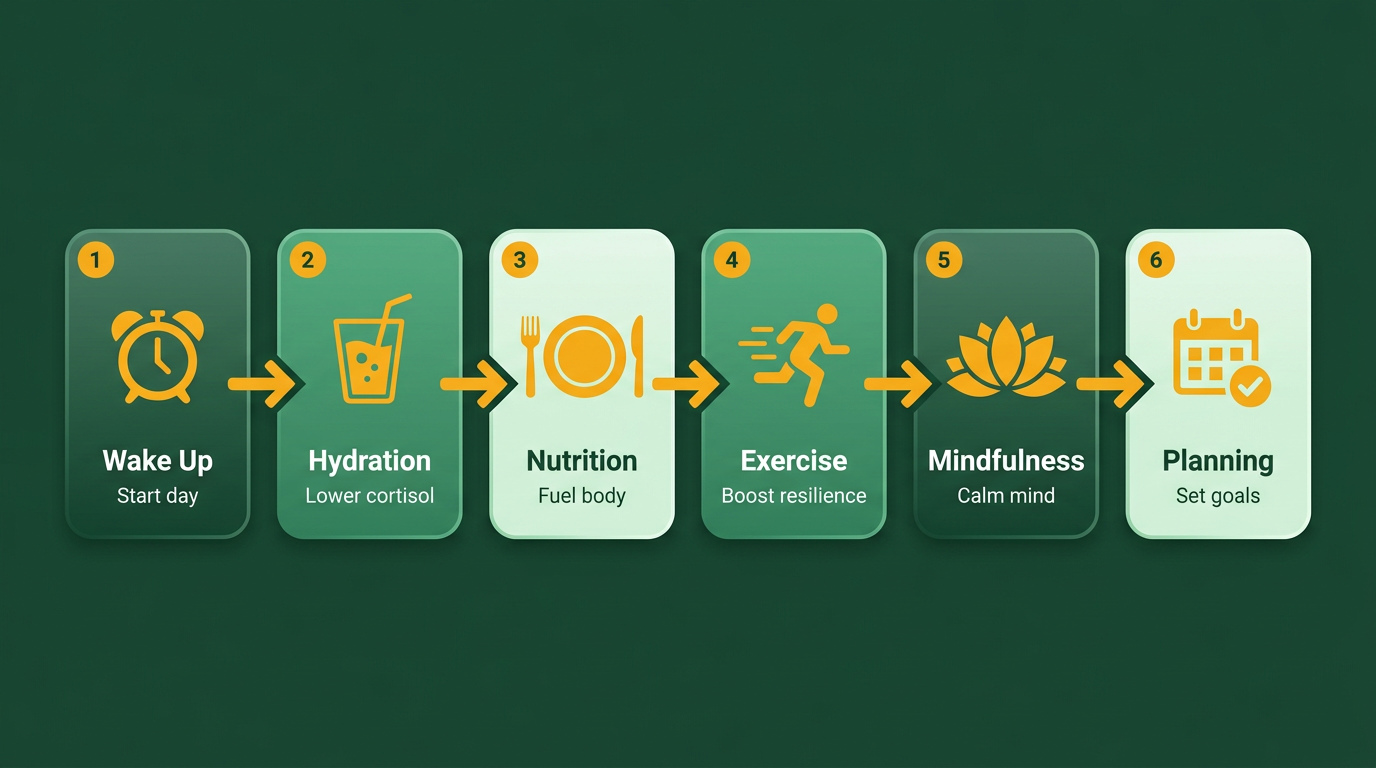
Building a morning anchor after rehab
Each element earns its place. Hydration first raises cortisol metabolism and sharpens attention before the brain starts looking for shortcuts. For movement, low-impact options like stretching, yoga, or a brisk walk balance cortisol without overtaxing a nervous system still recalibrating from treatment. Gentle morning physical activity grounds the body and sets a calmer tone for the hours ahead.
Meditation gets the most pushback but delivers the most consistent value. Short sessions reduce the brain's reactivity to substance-related cues before the day's stressors arrive. Our coaching methodology prioritizes stable daily rhythms first, layering in restorative practices once the basics feel manageable and reviewing progress regularly to keep clients accountable.
Journaling comes next. A brief morning check-in gives clients a way to notice where their emotional baseline sits before the day begins. Spotting elevated anxiety or irritability at 7 a.m. is an early warning sign — one that shows up well before any actual craving peaks. The routine makes those signals visible instead of invisible.
How we adapt the routine to real schedules
The template above is a starting point, not a prescription. Our coaches customize the daily plan around two things: the client's natural energy window and their work schedule.
For someone whose mornings are their highest-craving period, we might center the day on movement and early light exposure — a combination that occupies time that had previously felt dangerous. The structure does much of the work. Clients aren't doing extra recovery work; they're filling the newly free hours that can otherwise increase risk.
Shift workers and weekenders need a modified version. The key is anchoring to wake-up time, not clock time. Clients in the first 90 days are especially vulnerable to weekend drift, when structure loosens and unscheduled hours multiply fast. As clients find their rhythm, our support intentionally tapers — but during periods of intense stress, we help them scale back to essential physical maintenance and basic check-ins rather than break the routine entirely.
"The goal of a structured routine isn't just to stay sober; it's to create a life you love and look forward to living each day." - addicted.org recovery guide
Scheduling Recovery Activities & Accountability Check‑ins
An empty block on your weekly calendar is not neutral. Unscheduled hours can quickly fill with old thoughts and habits. Proactively scheduling recovery activities keeps your time directed toward growth rather than left open to chance.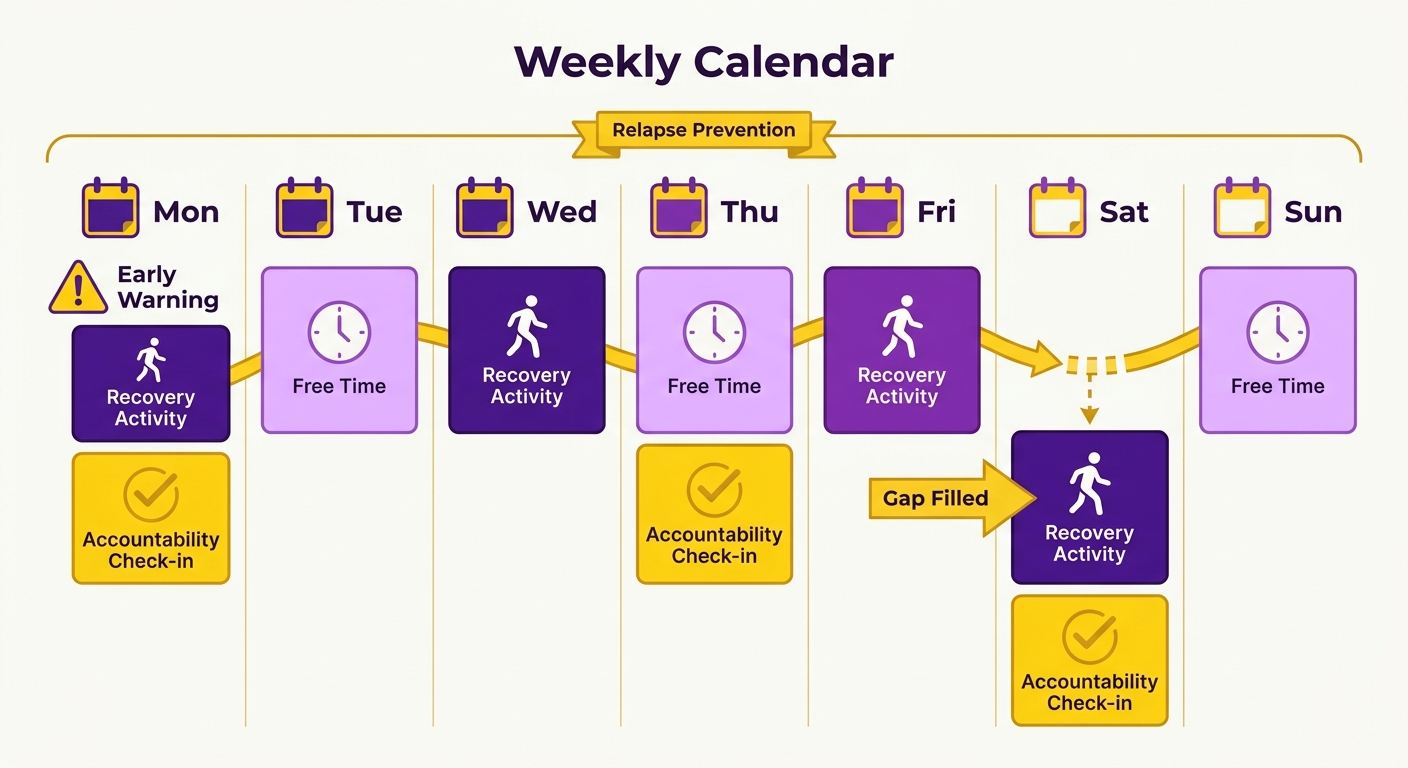
How many recovery touchpoints should a week have?
Aim for at least three recovery-related touchpoints per week. Consistent touchpoints reinforce accountability, guidance, and real human connection — the fundamentals lasting recovery is built on. That's the rhythm we build the week around.
A working template looks like this:
- 2–3 therapeutic slots: individual therapy or coaching sessions
- 1 medication review where relevant
- 2–3 peer-support meetings: AA, SMART Recovery, or virtual groups
- 2 sober social gatherings: in-person or virtual, so connection isn't only clinical
We start with a manageable pace to avoid overwhelming you during the early weeks. Our team calibrates touchpoint intensity week by week, matching the schedule to your current capacity and expanding your independence as you gain confidence.
What are accountability windows?
An accountability window is a short 10-minute check-in with a coach or sponsor right after a high-risk moment. Not a scheduled session — a rapid response. You text or call after a stressful meeting, a triggering encounter, or an unexpected empty afternoon.
These windows plug the danger zone that formal appointments miss. A therapy slot on Thursday does nothing for a craving that hits Monday at 4pm.
Pair every window with a "what-if" plan. When a craving lands during an unscheduled gap, you don't want to improvise. You want to know exactly who to call and what to do first. Our coaches provide consistent, real-world support during the moments that matter most, so you're not managing those high-risk points alone. A client facing a brutal work deadline feels the pressure spiking mid-afternoon. Instead of white-knuckling it, she opens an emergency video call with her coach for ten minutes. The window resets her. The deadline gets met sober. That's the mechanism working as designed.
How do you fit recovery around work and family?
Use the flex-slot method: reserve movable blocks that shift around work or school without disappearing. A recovery block that competes with a shift will lose. A flex-slot moves to a different hour but stays on the calendar.
Color-code recovery blocks in your calendar app so they read as non-negotiable. Regular check-ins with your coach help keep those blocks on track so nothing gets quietly dropped.
Build family into the week too. We map a weekly check-in call, a couple of shared meals, and one joint activity. Family involvement steadies post-rehab routines, and it gives the people around you a role beyond worrying.
Tracking Progress and Knowing When to Pull Back
A weekly routine that never changes will eventually stop working. Life after rehab shifts week to week, and the routine has to shift with it. That means measuring what's actually happening, adjusting based on the data, and gradually pulling back external support as you get steadier on your own feet.
A routine that feels balanced in week two might feel restrictive or insufficient by week six. Ongoing assessment lets you scale your daily structure up or down based on your current emotional and physical state, so the routine stays a supportive tool rather than an added stressor.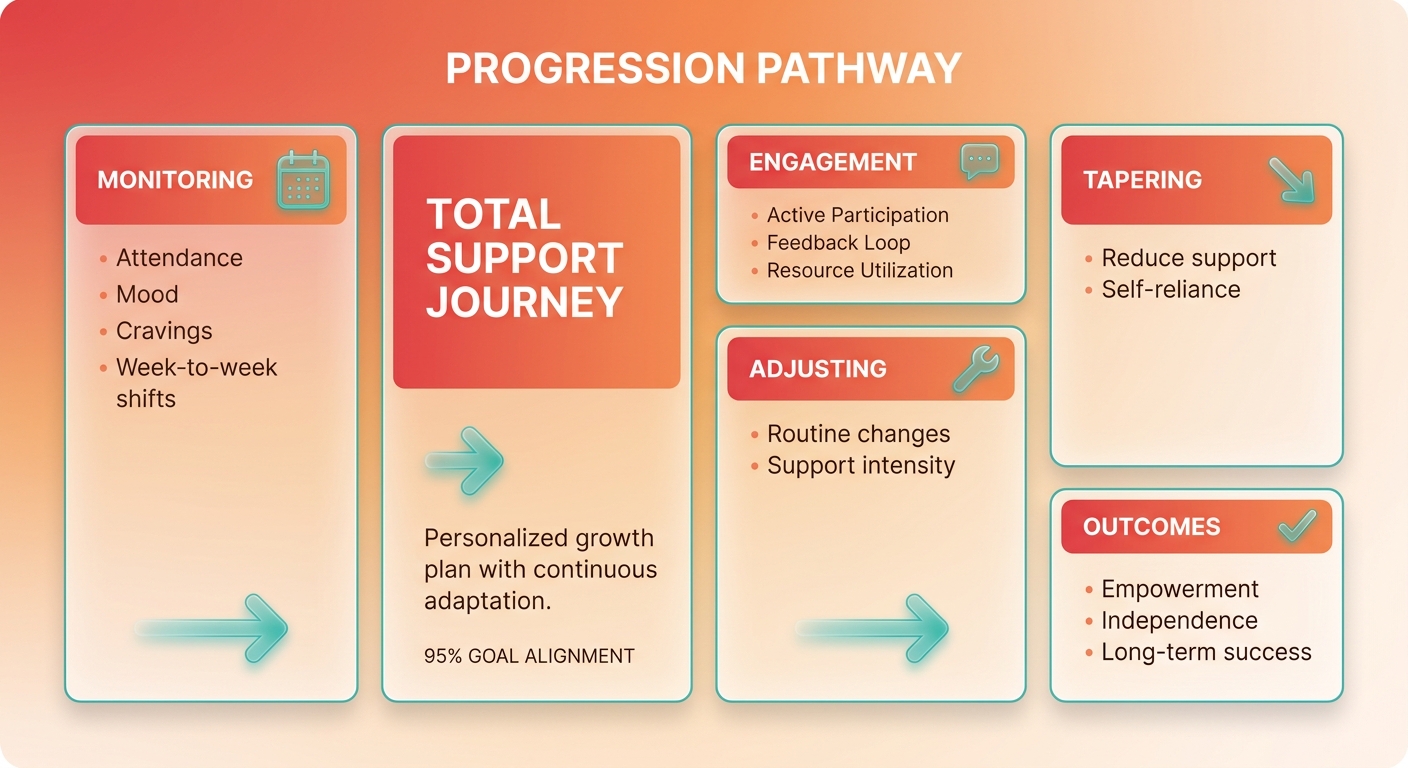
What should a weekly review actually measure?
Track four numbers each week: craving intensity, mood rating, sleep quality, and adherence percentage. Score craving and mood on a simple 1-to-10 scale, rate sleep by how rested you feel, and calculate adherence as the share of planned recovery activities you actually completed. Four numbers, under ten minutes.
Add two reflection prompts to the numbers: which block this week felt hardest to hold, and which one you'd protect if the week fell apart. Numbers tell you what happened. Prompts tell you why.
Habit-tracking apps, mood charts, and wearable sleep trackers make this nearly automatic. The point isn't precision — it's spotting a trend before it becomes a relapse.
When do you add, modify, or drop a habit?
Let the data decide. If adherence sits above 80% for two straight weeks and cravings stay low, you're ready to add something. If adherence keeps dropping, the schedule is too heavy. Modify or cut before you burn out, not after.
Pay attention to how you feel during transitions between activities. If certain days feel rushed while others leave you feeling disconnected, adjust the pacing. The goal is a steady, sustainable flow of energy through the week — not sudden shifts in momentum that can compromise your focus.
How does tapering support work?
Tapering means reducing coach contact in phases as your self-efficacy grows, not cutting it off at once. The frequency drops step by step: frequent early check-ins, then spaced-out ones, then mostly self-directed weeks with a coach on call.
As direct coaching sessions decrease, self-directed habits take on greater weight. Regular physical activity, mindfulness practices, and community engagement fill the space previously occupied by formal support. This transition builds self-reliance while keeping a safety net in place.
If a setback occurs, re-engage your support system without delay. A lapse is a signal to temporarily increase accountability, analyze what led to the slip, and return to the foundational daily pillars. Adjusting your level of support in response to challenges gets you back on your feet quickly rather than slowly.
References
[1] How to Build a Daily Routine in Recovery - https://www.ikonrecoverycenters.org/how-to-build-a-daily-routine-in-recovery/
[2] Structure and Daily Routines: Essential Building Blocks for ... - https://www.addicted.org/after-treatment/structure-and-daily-routines/
[3] (PDF) Habits and Routines of Adults in Early Recovery ... - https://www.researchgate.net/publication/368599802_Habits_and_Routines_of_Adults_in_Early_Recovery_From_Substance_Use_Disorder_Clinical_and_Research_Implications_From_a_Mixed_Methodology_Exploratory_Study
[4] Addiction Relapse Prevention - https://pubmed.ncbi.nlm.nih.gov/31855344/
Frequently Asked Questions
1. What if I work night shifts and can't follow a standard morning routine?
Anchor your routine to your wake-up time, not the clock. Shift workers build the same sequence—hydration, light, movement, and check-ins—starting whenever their day begins. Maintaining this consistent sequence, regardless of the hour, helps stabilize your internal clock and provides a reliable daily structure.
2. How is scheduling rest different from just having free time?
Intentional rest is a planned, purposeful activity designed to restore your mental and physical energy, such as meditation or reading. Unstructured free time, by contrast, lacks direction and often leaves the mind open to old habits and intrusive thoughts. By scheduling your rest, you treat recovery-focused downtime as a deliberate choice rather than an empty gap.
3. What should I do when a craving hits during an unscheduled gap in my day?
Activate your pre-planned response immediately. Reach out to a sponsor, coach, or supportive peer for a quick check-in to break the isolation. Having a pre-determined list of immediate actions—such as changing your physical environment or calling a specific contact—removes the need to make decisions when your willpower is tested.
4. I feel ready to overhaul my entire life after treatment. Is that a mistake?
Taking on too much too quickly can lead to early burnout. In the initial weeks following treatment, your energy and focus are best spent on basic physical stabilization. Focus on establishing consistent daily habits—like sleep, nutrition, and hydration—before attempting major lifestyle changes. Letting your routine grow gradually ensures long-term sustainability.
5. How do I know when to add a new habit versus scale back my routine?
Monitor your consistency over a multi-week period. If you are successfully maintaining your current schedule with minimal stress, you can gradually introduce a new activity. However, if you find yourself consistently skipping planned tasks, your schedule may be too demanding. Simplify your routine immediately to prevent frustration and fatigue.
6. What happens to the routine if I relapse?
If a setback occurs, immediately contact your support network to re-establish accountability. Treat the event as a learning opportunity to identify where your routine broke down. Temporarily scale back to your foundational daily pillars and increase your check-ins until you feel stable enough to resume your regular schedule.
7. How does MADE Recovery decide how much structure to give me at the start?
We begin by assessing your current energy levels, daily commitments, and personal triggers. Rather than imposing a rigid schedule, our coaches work with you to design a highly personalized plan that focuses on basic stability first. As you build confidence and establish consistent habits, we collaborate to gradually introduce more activities and responsibilities at a pace that feels manageable.