Build Your Sober Routine in the First 90 Days After Rehab
August 4, 2026

Key Takeaways
- Phase 1 (Days 1‑30) – often framed as a period focused on stabilization; many programs describe the difficulty as moderate.
- Phase 2 (Days 31‑60) – typically emphasizes swapping old routines for new ones; this stretch is frequently reported as the most challenging.
- Phase 3 (Days 61‑90) – usually shifts toward community integration and habit tracking, with difficulty often described as low‑to‑moderate.
- Some frameworks use a weekly support‑intensity score to guide how often and in what format a coach reaches out.
- The three‑block structure is intended to align recovery milestones with a predictable timeline.
- Coaching often tapers after Day 60 so that clients can practice self‑management while still receiving occasional tracker‑based feedback.
Related Video
Watch: Early Recovery Advice | Tips for the First 90 Days of Recovery by Fostering Resilience
Quick Summary
The first 90 days are commonly divided into three phases—recalibration, routine building, and community integration. Each phase carries its own typical time blocks, effort estimates, and difficulty ratings.
- Phase 1 (Days 1‑30) – early stabilization: addressing physical needs, managing initial cravings, and introducing coping tools.
- Phase 2 (Days 31‑60) – rebuilding lifestyle: adding wellness‑focused habits around nutrition, movement, and structured daily plans.
- Phase 3 (Days 61‑90) – consolidating progress: reducing direct coaching while encouraging independent habit maintenance within a broader community.
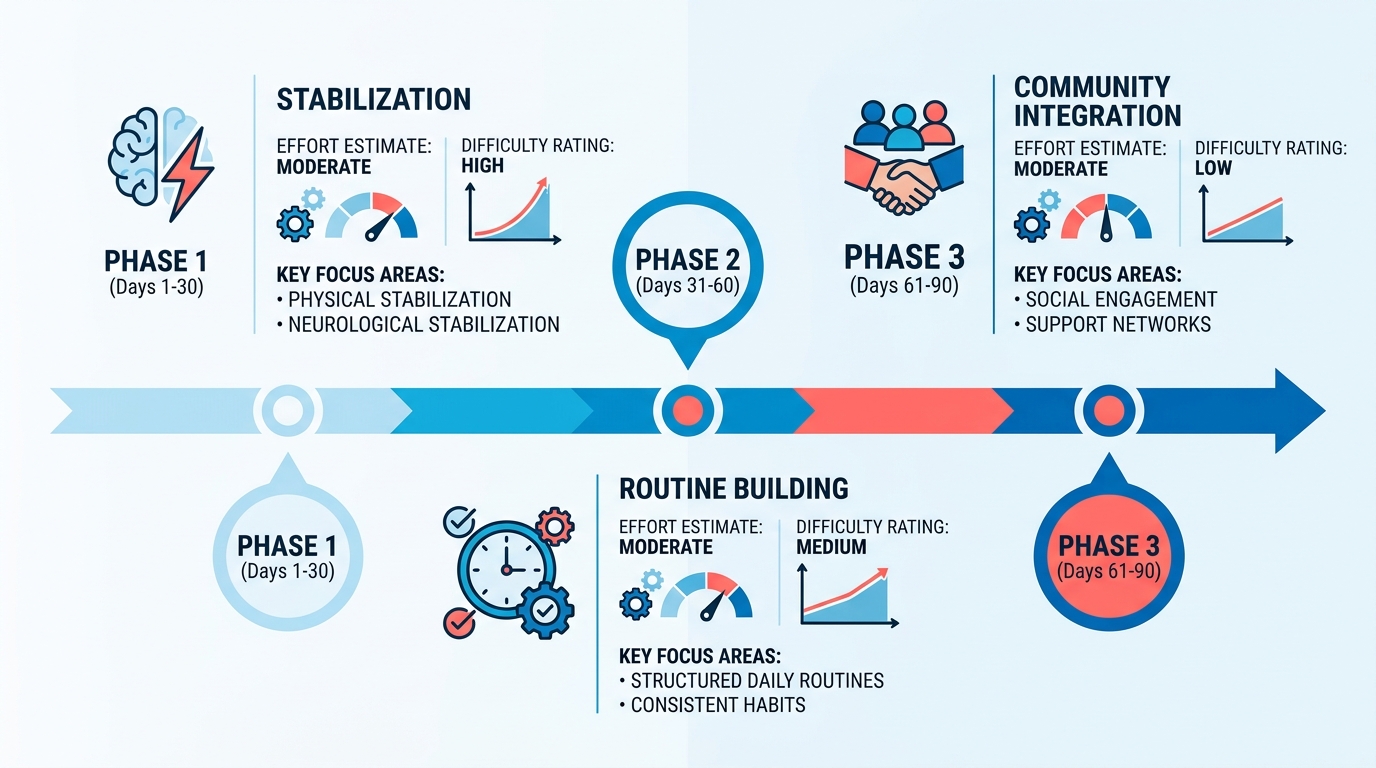
What the accountability framework actually looks like
Many programs assign a weekly score that influences the frequency and format of coaching contacts. Coaches typically review self‑reported progress and noted triggers, then adjust outreach to match the client’s current needs—more contact during rough weeks, less when stability is observed.
| Day Range | Focus Area | Time / Effort | Difficulty | Key Benefits |
|---|---|---|---|---|
| 1‑14 | Acute recalibration (med safety, sleep) | Regular short check‑ins | Moderate | Reduced withdrawal symptoms, stable vitals |
| 15‑30 | Coping skills & family communication | Weekly coaching sessions | Moderate‑High | Craving identification, coping tools |
| 31‑45 | Routine cement (exercise, meals) | Weekly planning meetings | High | New habit formation, increased energy |
| 46‑60 | Community outreach & support | Ongoing coaching with optional group activities | Moderate | Social connection, accountability |
| 61‑90 | Tapered coaching & self‑monitoring | Reduced‑frequency check‑ins | Low‑Moderate | Greater independence, confidence |
These figures are illustrative rather than prescriptive, offering a starting shape for the first three months.
Why the roadmap earns its keep
A visual map can help clients anticipate tougher periods and allocate energy accordingly. Early recovery often depletes willpower quickly, so foreknowledge of upcoming challenges may reduce the impact of unexpected setbacks.
Some clients report that a roadmap makes the process feel more navigable, providing a reference point that can be adjusted as they progress. The combination of weekly coach adjustments, a repeatable schedule, and flexible support aims to create redundancy—if one pillar wavers, another can help catch the slip. This layered approach differs from static self‑help worksheets that are typically consulted only once.
In practice, the summary table becomes a living document: coaches update the support level each week, clients log daily habits in a shared app, and the next week’s plan reflects those edits. The routine maintains early momentum while gradually returning control to the client.
Why the First 90 Days Matter
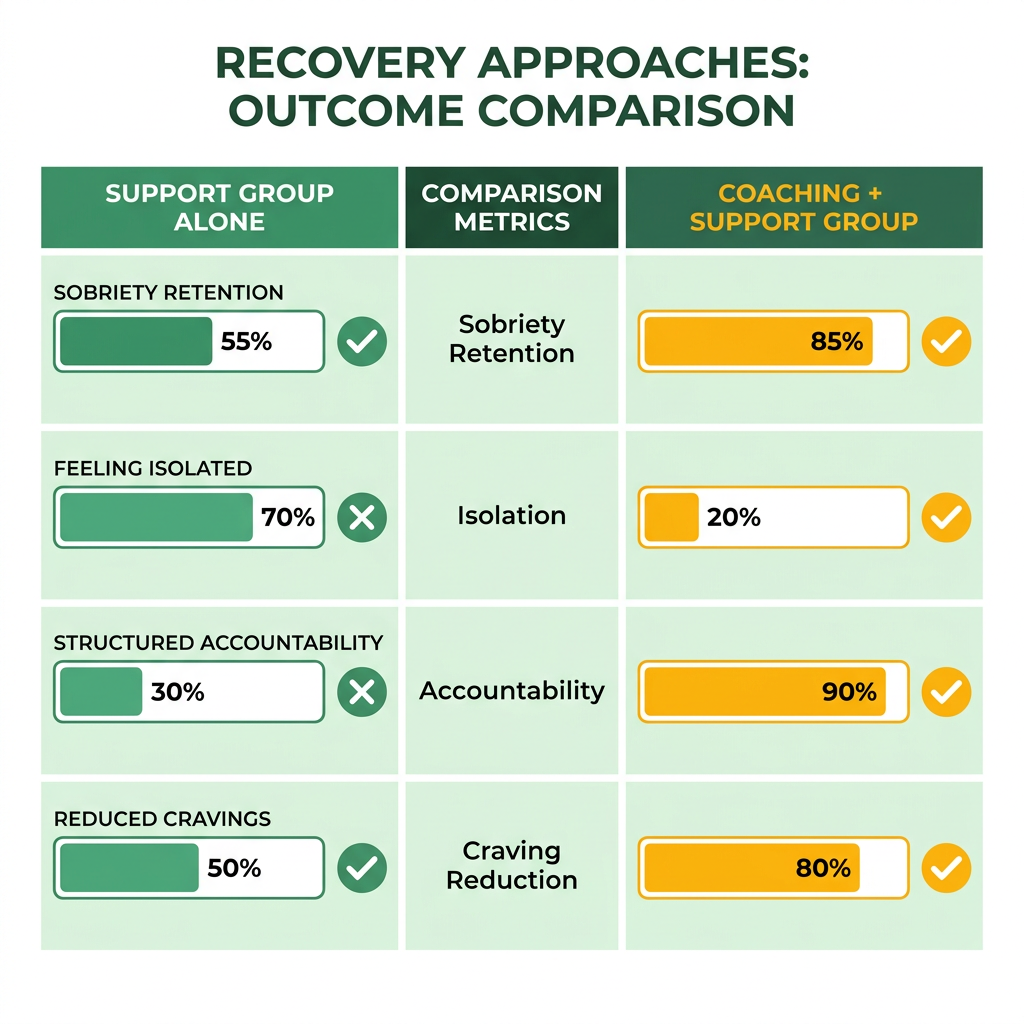
Many experts note that the first 90 days set the tone for longer‑term recovery habits. Support groups provide community, but they often lack the day‑to‑day accountability that a coach can supply.
During this window the brain is still adjusting; mood swings, foggy concentration, and a sense of “not quite yourself” are commonly reported as temporary experiences. Coaches typically help clients design daily schedules that align with energy levels and known triggers.
How a coach‑led framework supports recovery
- Personalized planning – sessions identify concrete tasks for the upcoming days.
- Flexible support – coaches adjust structure based on actual progress.
- Ongoing encouragement – successes are highlighted, and difficulties are addressed before they compound.
When traditional support groups are enough
For individuals who already maintain a tight daily routine, experience low‑level cravings, and feel internally motivated, peer‑led meetings can serve as a solid supplement. When unstructured time is abundant, one‑on‑one coaching often adds the accountability that groups alone may not provide.
Turn the treatment schedule into a living plan
The schedule used during treatment can serve as a useful foundation. Rather than discarding it, many coaches help adapt that structure for life outside the facility, where formal guardrails are no longer present.
By the end of the 90‑day period, some clients notice improvements such as steadier sleep, fewer mood swings, and a clearer sense of purpose. Families often benefit from brief strategy sessions that keep them informed without turning them into supervisors.
Establishing a Daily Routine
Start simple: a consistent wake‑up and bedtime, three meals, and regular therapy or meeting slots. Once those anchors are in place, flexible blocks for exercise, hobbies, and brief coach check‑ins can be added.
- Sleep block – choose a steady rise time and a wind‑down routine; regular sleep patterns often support recovery.
- Nutrition block – aim for three balanced meals plus a snack; stable blood sugar can help reduce irritability.
- Therapy/meeting block – reserve at least one hour for counseling and one slot for a peer meeting to build structure and connection.
- Self‑care block – include short walks, mindful moments, or a hobby to fill newly available time with healthy activities.
When to adjust the schedule
Weekly coaching check‑ins typically guide any schedule tweaks. If a client reports heightened anxiety on certain days, the coach may shift a self‑care block earlier or introduce a quick grounding exercise. Coaches monitor attendance and engagement, offering alternatives when planned sessions cannot occur.
- Trigger‑driven tweaks – after each call, noted triggers can prompt a shift of high‑risk periods into lower‑stimulus times.
- Intensity scaling – early weeks may involve more frequent contacts, with a gradual reduction to encourage independence.
- Progress monitoring – coaches review daily patterns and adjust structure accordingly.
Where peer‑support groups sit in the routine
Peer groups work well as fixed social anchors, often scheduled at the same time each week (e.g., Tuesday evenings). If a meeting is missed, a brief coach check‑in can maintain the recovery‑focused connection for that day.
Physical and Emotional Healing
The first 90 days involve physical care, emotional work, and responsive coaching. Groups supply community; a weekly coach provides guidance that can adapt as needs evolve.
How PAWS shapes early recovery
Post‑acute withdrawal syndrome (PAWS) refers to the neurological adjustment phase that follows detox, often manifesting as low mood, irritability, and brain fog weeks after acute symptoms subside. Coaches can help clients label these shifts, suggest coping strategies, and involve medical professionals when clinical support is needed.
Nutrition that supports healing
Balanced meals that stabilize blood sugar may help ease irritability and cravings. Coaches typically offer general nutrition guidance—emphasizing whole foods and flexible meal plans that fit individual lifestyles.
How sleep and exercise fit a coach‑led plan
Consistent sleep and moderate movement are commonly recommended for neurological recovery. Coaches may suggest regular bedtime routines and low‑intensity activities such as walking, yoga, or light cycling, tailoring recommendations to each client’s health status.
Emotional practices that complement coaching
Mindfulness, meditation, and journaling are often introduced to build inner awareness and help clients notice triggers early. Integrated into the plan, these practices can occupy the mind and reduce boredom‑related cravings.
How therapy connects to the framework
Therapy provides evidence‑based tools that reinforce coaching work. Coaches usually coordinate with therapists, sending reminders and brief check‑ins to help clients apply therapeutic insights between sessions. Family involvement can be incorporated in a low‑key manner to support the client without adding pressure.
Building Social Support Networks
A durable recovery network does more than fill calendar slots. Attending support groups for addicts offers peer accountability, shared experience, and a sense of belonging that can steady early cravings. Coaches typically help fit those groups into the overall plan and provide guidance when additional support is needed.
One common challenge is treating a group as a stand‑alone solution. Early relapse risk is generally highest in the initial weeks, so pairing group attendance with a dedicated sober coach can provide the extra layer of accountability that groups alone may not cover.
Choosing the right support groups
Match a group’s rhythm to the emerging schedule and personal goals. Start by listing local or virtual meetings that align with the daily structure built in the first weeks. Attend a trial session, observe the atmosphere, and give it a couple of weeks before deciding whether to continue.
- Check meeting times against the coach‑built schedule.
- Observe how members discuss cravings and coping.
- Ask facilitators about attendance expectations.
- Re‑evaluate after a short trial and adjust with the coach’s help.
What a sponsor adds to the framework
A sponsor serves as a peer mentor who can complement group dynamics and daily life. While the coach manages overall scheduling, a sponsor can focus on real‑time problem solving—such as rehearsing how to decline a drink before a high‑risk event.
- Choose a sponsor with several months of sobriety.
- Keep boundaries clear: sponsors offer guidance; coaches handle schedule tweaks.
- Log discussion topics in a shared format.
- Bring sponsor feedback to regular coach sessions.
How families help without overstepping
Family involvement works best when it’s structured and educational. A brief family orientation can explain the coach‑led model and outline supportive roles, such as a daily check‑in or a low‑stress weekend activity. A communication plan that limits spontaneous calls during high‑stress moments helps maintain focus while providing emotional safety. Families who attend a group meeting can see the environment firsthand and learn to reinforce recovery language at home.
- Hold a short family briefing early in the process.
- Designate one family member as the recovery liaison for weekly updates.
- Share positive connection through non‑clinical activities (e.g., a walk).
- Review family feedback during mid‑program coach sessions.
Filling new free time without triggering cravings
Some research suggests that unoccupied time can increase cravings, while structured activities help keep the mind engaged. Coaches often assist clients in identifying meaningful pursuits—skill classes, volunteer work, creative projects—and fitting them into the daily routine. Plans are reviewed regularly, allowing swaps as energy and interests evolve.
- List three interests you’ve been postponing.
- Reserve one hour per day for a chosen activity, repeating weekly.
- Track mood before and after the activity and discuss observations with the coach.
- Refresh the activity roster every couple of weeks to maintain variety.
Integrating support groups, sponsors, family allies, and purposeful free‑time plans creates a flexible network that adapts as the client moves from stabilization to community integration.
Maintaining Long‑Term Sobriety Habits
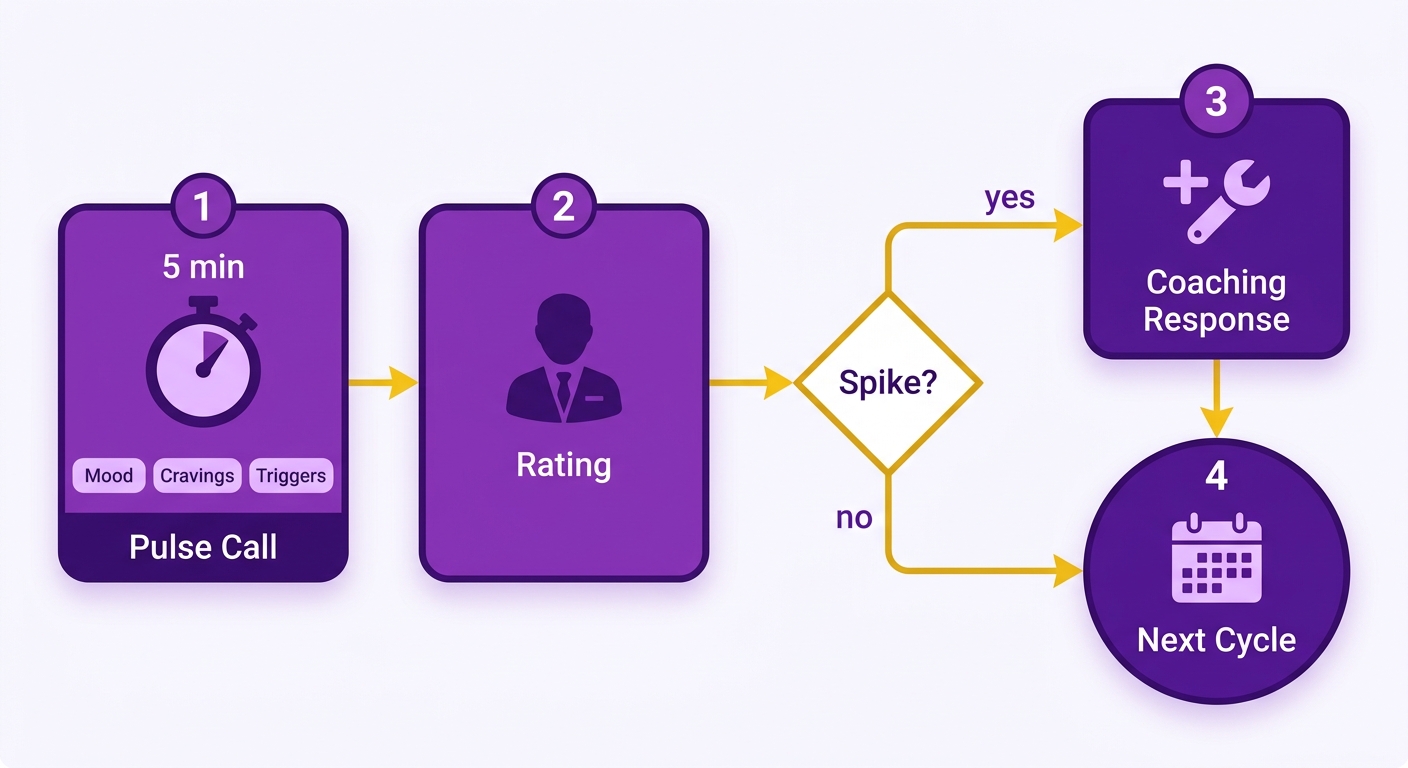
After the initial three months, many programs shift from daily prompts to a predictable review cycle that still catches early warning signs. Typically, a brief pulse call every two weeks asks the client to rate cravings, stressors, and progress on set goals. If a rating spikes, the coach may add a targeted coping tool or an extra touchpoint.
- Quick check‑in: a short rating of mood, cravings, and trigger exposure.
- Adaptive follow‑up: an additional focused session when a rating exceeds a preset threshold.
- Goal refresh: each month a micro‑goal (e.g., trying a new hobby) is set and reviewed on the next pulse call.
Where peer support fits into ongoing recovery
Peer meetings remain a complementary pillar rather than a sole solution. Coaches help select groups that align with the client’s current life stage—whether 12‑step, mindfulness‑based, or online forums. If a meeting feels overwhelming, the coach can suggest alternatives or debrief afterward to extract useful insights.
- Scheduled attendance: keep a recurring slot to avoid gaps.
- Coach debrief: spend a few minutes after each meeting processing highlights and discomfort.
- Group diversification: rotate between a couple of groups each quarter to broaden perspective.
How to keep growing and avoid complacency
Comfort can introduce risk, so many frameworks incorporate a learning loop that pairs skill‑building with regular self‑assessment. Quarterly recalibration sessions allow clients and coaches to review wins, identify emerging triggers, and map new competencies (e.g., stress management, budgeting, vocational training). When a client feels overly comfortable, the coach may intentionally raise the challenge by adding a new habit or responsibility.
- Skill focus: choose one new recovery‑related skill each quarter.
- Self‑rating: use a simple scale to gauge confidence before and after practice.
- Adjustment plan: the coach updates the habit map based on the rating, adding reinforcement or new challenges as needed.
Maintaining real‑time coach adjustments, purposeful group participation, and a structured growth loop helps transform the intensity of the first 90 days into a lasting framework for continued sobriety.
References
- What to Expect in the First 90 Days of Sobriety: A Compassionate Guide – https://www.theblanchardinstitute.com/what-to-expect-in-the-first-90-days-of-sobriety-a-compassionate-guide/
- The first 90 days of recovery: Building a routine that lasts – https://www.rosecrance.org/blog/summer-of-recovery-celebrating-three-months-sober/
- The First 90 Days of Recovery – https://archangelcenters.com/recovery/first-90-days/
- Your First 90 Days Sober | Addiction Treatment Center – https://chapter5recovery.com/first-90-days-sober/
- Life After Rehab: First 90 Days Guide – https://trustsocal.com/blog/life-after-rehab-first-90-days
- How Building a Daily Routine Adds Much‑Needed Structure in Addiction Recovery – https://www.spectrumhealthsystems.org/how-building-a-daily-routine-adds-much-needed-structure-in-addiction-recovery/
- Habits and Routines of Adults in Early Recovery From … – PMC – https://pmc.ncbi.nlm.nih.gov/articles/PMC9926005/
- Early Recovery Advice | Tips for the First 90 Days of Recovery by Fostering Resilience – https://www.youtube.com/watch?v=sRPtU9jTEC8
Frequently Asked Questions
1. How should I modify my routine if PAWS symptoms seem to worsen after the first month and a half?
If PAWS‑related symptoms intensify, a coach may adjust the daily schedule—shifting restorative activities earlier, increasing check‑in frequency, or introducing additional grounding techniques—to help manage temporary spikes in anxiety or irritability.
2. Is it safe to rely only on peer‑support groups during the first 90 days of sobriety?
Peer groups provide valuable community, but they typically lack the personalized, day‑to‑day oversight that a coach can offer. A coach‑led framework adds tailored scheduling, medication safety monitoring, and sleep‑hygiene support that complement group participation.
3. What does the “support intensity score” actually measure, and how does it affect my coaching contacts?
The weekly metric evaluates current vulnerability and progress, translating those insights into a customized communication plan—such as adjusting the frequency of calls or messages—to align with immediate needs.
4. How can I involve family members in my recovery plan without overwhelming my schedule?
Clear boundaries are established through structured communication channels. Scheduled updates and low‑stress shared activities allow loved ones to support the client without adding pressure or disrupting the daily routine.
5. What happens if I miss a scheduled therapy or group meeting—does the program compensate?
When an absence occurs, a backup protocol is typically activated to maintain continuity. The coach will connect with the client to review any missed material and help process the day’s challenges, aiming to keep the client anchored to the recovery plan.
6. In what ways does the daily habit‑tracker differ from a regular to‑do list for early recovery?
Unlike a static to‑do list, a digital habit tracker functions as an active feedback loop. It captures consistency patterns, enabling the coach to spot trends, anticipate potential setbacks, and adjust support before cravings intensify.