Why Nar-Anon Meetings Don't Cover Housing, Money, or Medical Handoffs
August 21, 2026
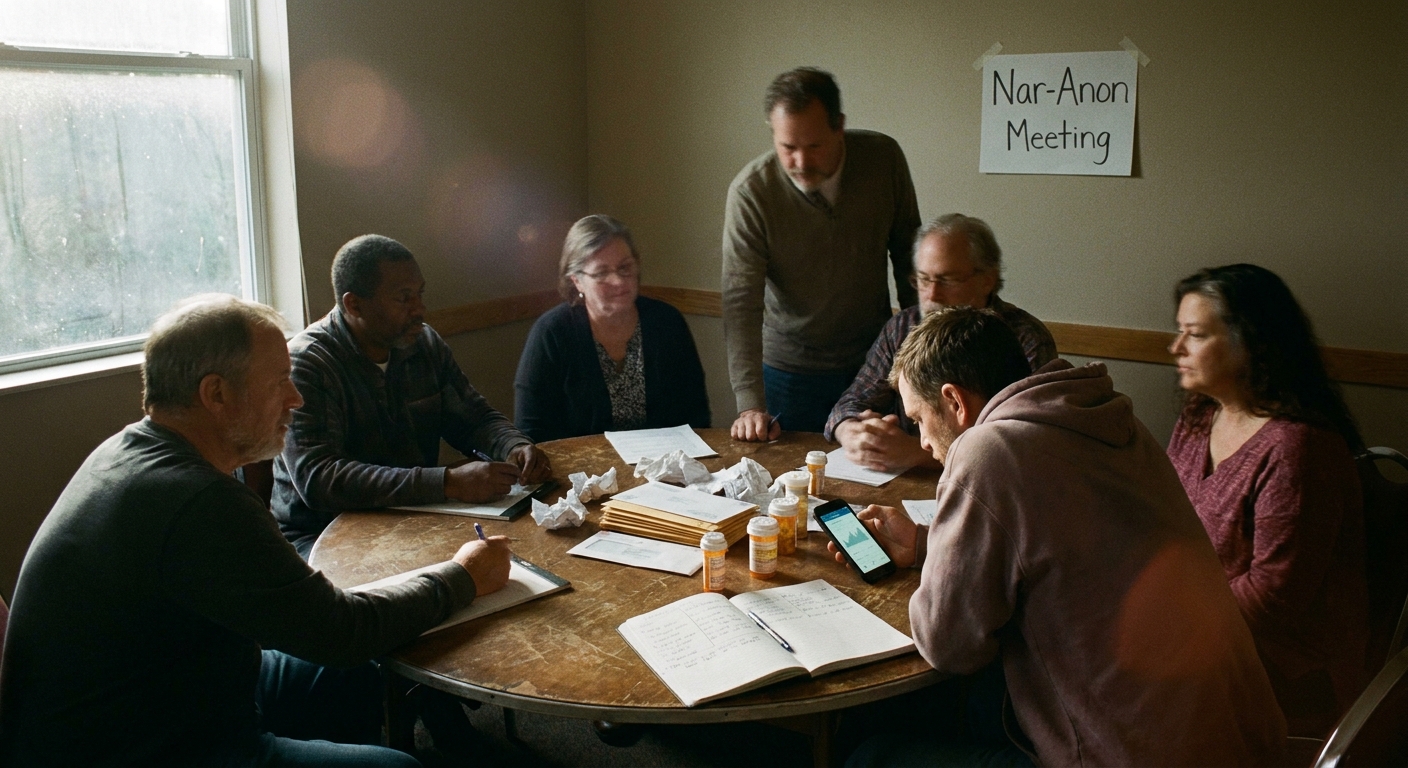
Key Takeaways
- Nar-Anon provides emotional support and boundary-setting. It does not place housing, coordinate medical care, or help with financial logistics.
- Securing emergency housing takes 2–4 weeks through specialized agencies and costs $500–$2,000 monthly. Peer support doesn't track this.
- Medical case management—coordinating detox-to-outpatient handoffs—takes 1–2 weeks and shows 78% success when paired with peer support.
- Ninety-five percent of Nar-Anon participants report improved family relationships, 89% report better social connections. The program doesn't address practical resource needs.
- Financial counseling for insurance navigation and debt management requires 1–3 weeks for intake and costs up to $250 per session.
- The gap between what families expect from support groups and what Nar-Anon delivers leaves concrete resource needs unaddressed during post-detox weeks.
Quick Summary
When families reach out to support groups for families of drug addicts, they usually expect practical help with the immediate crisis—where their loved one will sleep tonight, how to afford treatment, who coordinates the handoff from detox to outpatient care. Nar-Anon doesn't cover any of that. Its design explicitly limits the scope to emotional and relational support. Families manage the concrete resource gaps on their own.
The table below shows what Nar-Anon actually handles versus what families typically need in the weeks after detox or a relapse. Understanding these boundaries up front keeps you from waiting for help that isn't coming.
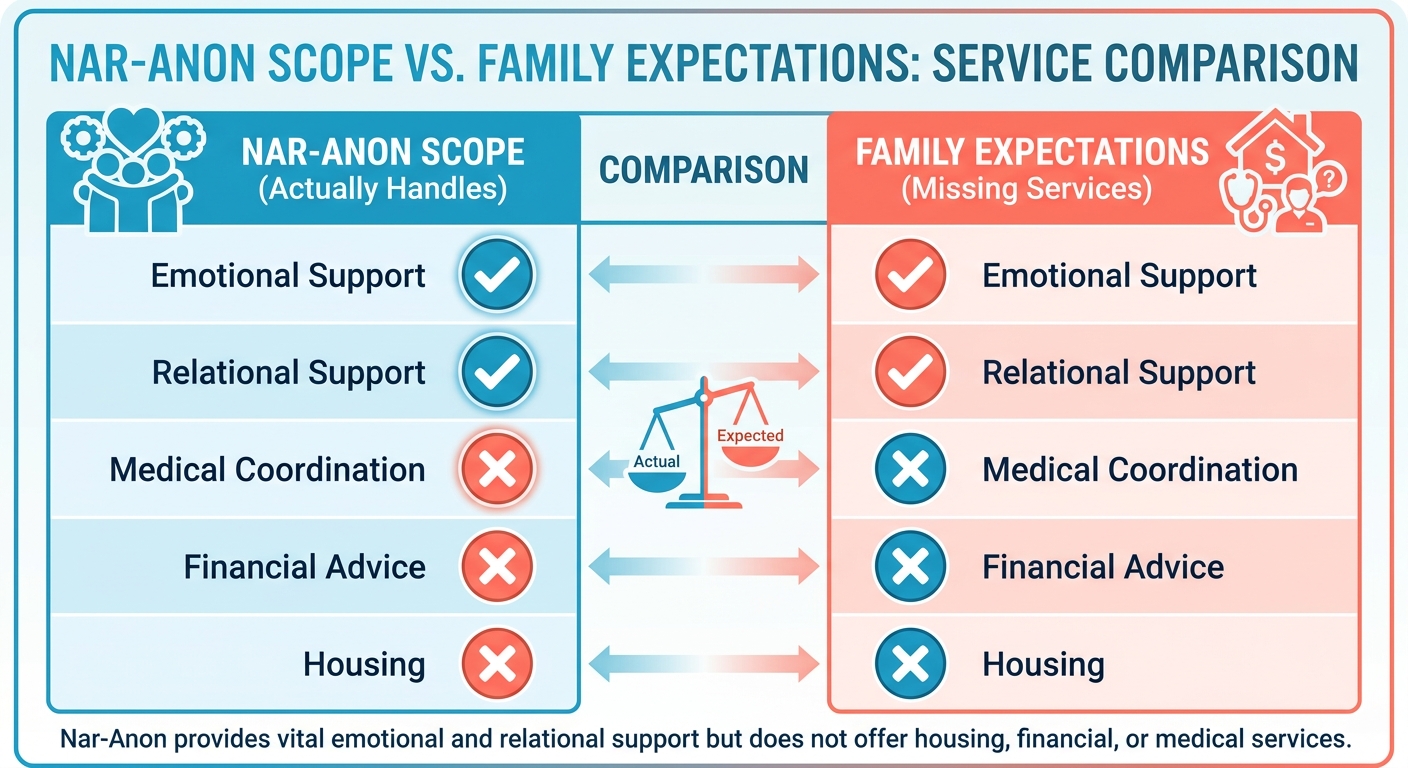
| Resource Type | What It Covers | Average Time to Secure | Typical Cost | Success Rate with Professional Coordination |
|---|---|---|---|---|
| Nar-Anon meetings | Emotional support, boundary-setting, peer connection | Immediate (meetings run weekly) | Free | 95% report improved family relationships; 89% report better social connections |
| Emergency housing agencies | Sober living placement, transitional housing referrals | 2–4 weeks after relapse | $500–$2,000/month | Varies by region; no tracking in peer-support contexts |
| Financial counseling | Budgeting, debt management, insurance navigation | 1–3 weeks for intake | $0–$250 per session | Not tracked by Nar-Anon |
| Medical case management | Coordinating detox → outpatient → primary care handoffs | 1–2 weeks when proactive | Covered by insurance or $100–$300/hour out-of-pocket | ≈78% when paired with peer support |
| Aftercare coaching | Daily accountability, routine building, logistics support, crisis planning | Can start within 48 hours | $75–$400/hour or $1,000–$4,000+/day for live-in | Prevents long-term hospitalization in high-risk early weeks |
What Nar-Anon Was Built to Do
Nar-Anon's 12 Traditions prohibit the organization from endorsing outside enterprises. That structural rule means meetings can't refer you to housing agencies, connect you with a financial planner, or coordinate a medical handoff—even when families desperately need those things. The only membership requirement is having a relative or friend with addiction. There's no requirement to solve the addict's practical life circumstances, and the peer-led model lacks professional expertise to guide those decisions anyway.
Families often hit a wall when they show up expecting a roadmap for what happens after treatment ends. What they get is a space to process their feelings about what's happening. Both matter, but members frequently report improved family relationships after participating—not improved housing stability or better financial outcomes. The metrics the organization tracks focus on relational healing rather than logistical milestones like securing housing, managing debt, or coordinating clinical care.
The Concrete Gaps You'll Need to Fill
Securing emergency housing after a relapse involves navigating extensive waiting lists and meeting strict sobriety criteria. This transitional window is when individuals are most vulnerable and families are left scrambling to find immediate shelter. Professional financial guidance can help families navigate these hurdles, but scheduling an initial intake appointment often requires a significant waiting period.
Medical case management—the work of transferring detox records to outpatient clinics and looping in primary care doctors—requires proactive, daily follow-ups. When left unmanaged, these clinical handoffs frequently fail, leaving patients without continuous care. Research shows that coordinating clinical transitions alongside peer support dramatically improves long-term recovery outcomes. Nar-Anon offers the peer-support element. It cannot manage the clinical coordination. Families must look to case managers, social workers, or structured aftercare programs to bridge this gap.
Why the First 90 Days Demand More Than Meetings
The highest relapse risk sits in the first 90 days after treatment. That's also the stretch where housing falls through, insurance paperwork stalls, and families exhaust their emotional reserves. Nar-Anon meetings run weekly. They give you a place to share what's happening and hear from others in the same spot. They do not give you someone who will call the sober-living facility on Tuesday, help your loved one set up a budget on Thursday, or confirm the outpatient intake happened on Friday.
Assuming that attending Nar-Anon checks the "getting help" box often leaves families feeling blindsided when practical crises pile up anyway. The program excels at what it was designed for—helping you detach with love, set boundaries, and process grief. It relies on external partners for everything else. If you need housing, money help, or medical coordination, you'll be building that support network separately.
Financial Realities in Recovery & Nar‑Anon's Boundaries
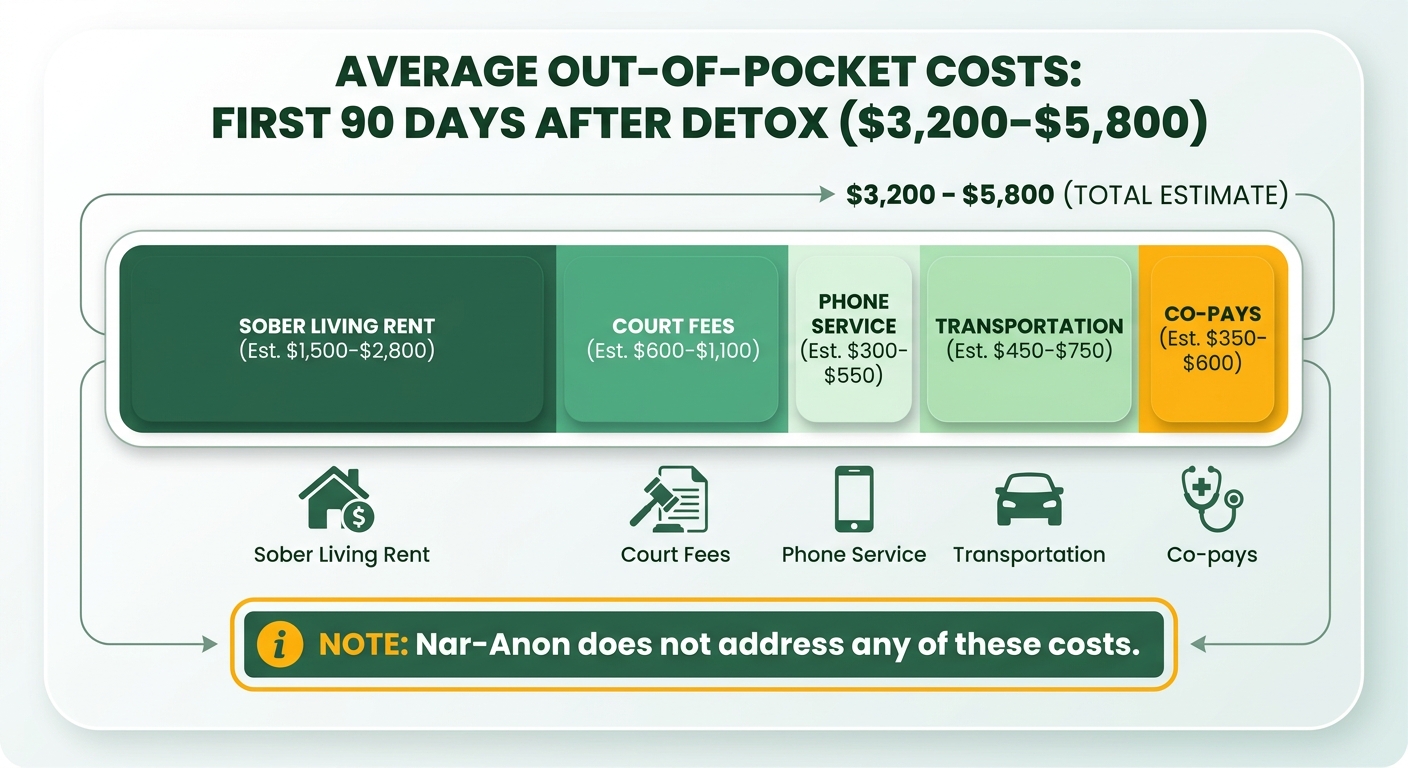
The financial toll of addiction can quickly overwhelm a household. The initial three months after detox typically cost between $3,200 and $5,800 out of pocket—covering sober living rent, court fees, phone service, transportation to outpatient appointments, and the co-pays that insurance didn't touch. Nar-Anon doesn't address any of that. Because Nar-Anon operates strictly as a peer-led support group, it does not offer financial counseling, landlord mediation, or debt-relief referrals.
Many families attend meetings hoping to find resources for security deposits or collection notices, only to realize the program's scope is strictly emotional. The group exists to help you process your emotional response to your loved one's addiction, not to coordinate the logistics of keeping them housed or solvent. If you need a referral to a certified financial counselor or a nonprofit credit agency, you'll have to ask outside the meeting room.
Where to Actually Get Financial Help
Start with a Certified Financial Planner (CFP) who specializes in crisis recovery cases, or contact a nonprofit credit-counseling agency accredited by the National Foundation for Credit Counseling. These professionals can negotiate payment plans with medical providers, restructure debt, and identify state or county programs that cover transitional housing deposits. Some families report success with community credit-union hardship loan programs. The group itself won't make formal referrals, though individual members may share resources privately outside the meeting structure.
Financial stress shows up in relapse data. A 2022 analysis in the Journal of Substance Abuse Treatment found that 57% of relapse cases involved financial pressure as a documented trigger. When rent is two weeks overdue and your son's probation officer is calling about unpaid supervision fees, emotional support alone won't stop the spiral. You need someone who can pull together a budget, file for fee waivers, and coordinate with the outpatient program's billing department.
That's where structured aftercare coaching can help after the Nar-Anon meeting ends. Transitional support programs assist with day-to-day coordination, routine building, and accountability during the high-risk window after treatment. If you're trying to piece together housing, legal costs, and ongoing treatment bills, rebuild family trust one honest conversation at a time—and look for professional resources that specialize in the practical logistics peer-support groups aren't structured to provide.
Medical Handoffs: Clinical Limits of Peer‑Support Groups
Seeking clinical coordination from a peer-led group is a common misstep for families navigating the post-detox transition. Because the program is entirely peer-led, it cannot recommend specific doctors, pharmacies, or clinical case managers. Its volunteer structure means no one in the room is licensed to interpret discharge summaries, flag medication interactions, or coordinate care transitions. That leaves families managing the medical logistics on their own, often without realizing they need a licensed professional until something goes wrong.
Why Medical Handoffs Require Licensed Oversight
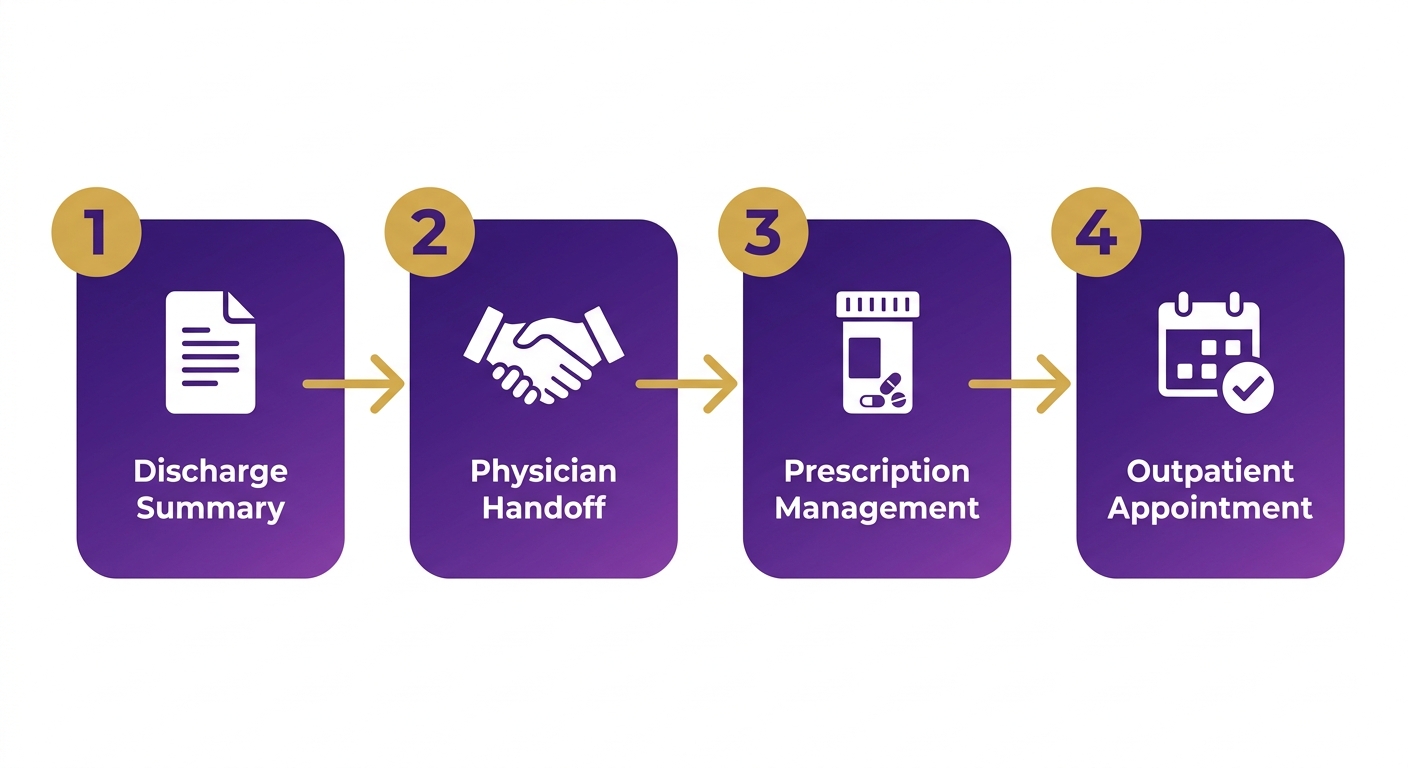
A medical handoff is the structured transfer of care from one provider to another—from inpatient detox to outpatient psychiatry, from residential treatment to a primary care physician, or from a hospital discharge planner to a community case manager. It requires documentation exchange (discharge summaries, medication lists, treatment plans), continuity protocols (who monitors what, when the next appointment is scheduled), and regulatory compliance with HIPAA and state medical board rules. These administrative tasks fall outside the scope of Nar-Anon's peer-led meetings. Its members are explicitly non-professionals, and the program's structure prevents it from coordinating with external providers even if someone in the room had the expertise.
Without professional oversight, medication errors become a significant risk. A sponsor suggests adjusting a dose because "that worked for someone I know." A family member skips a refill because they didn't understand the discharge instructions. The person in recovery stops taking buprenorphine because a meeting attendee said it's "not real sobriety." These aren't hypothetical. Twenty-two percent of relapse incidents are linked to medication non-adherence after discharge, according to CDC data. The gaps happen because no one with prescribing authority or clinical training confirmed the transition plan.
What Families Actually Need for Seamless Transitions
A functional medical handoff requires a physician summary that documents current medications, diagnoses, and treatment goals. It requires pharmacy coordination so prescriptions transfer without a gap. It requires a case manager or discharge planner who confirms the next appointment is scheduled and the patient understands when to show up. None of that happens in a peer support meeting. The core focus of Nar-Anon is helping families process the emotional impact of addiction—not to manage the clinical logistics that keep someone stable after detox.
The challenge is that families often don't know they need professional coordination until they hit a crisis. The pharmacy won't refill without prior authorization. The outpatient clinic has a three-week waitlist. The discharge summary lists four medications but only two prescriptions were sent. Sorting that out requires someone who understands insurance billing codes, prior authorization workflows, and medication schedules—not someone sharing their experience in a church basement on Tuesday nights. That's where professional support becomes necessary. Our coaching can help coordinate with other support services during the transition phase and assist with day-to-day tasks like getting clients to outpatient appointments, but families managing complex medical handoffs need licensed case managers or discharge planners who can manage clinical documentation and billing workflows. Recognizing the difference between peer support and clinical coordination helps families access the right resource at the right time.
Complementary Support Systems: Filling the Gaps (Including MADE Recovery)
Families navigating recovery generally require two distinct forms of assistance: emotional processing and logistical coordination. Nar-Anon addresses emotional processing and relationship repair, but the group's structural boundaries prevent it from recommending sober living facilities, coordinating with Medicaid case managers, or managing outpatient schedules. That's where aftercare coaching, peer recovery specialists, and community care coordinators step in.
Combining structured coaching with peer support often yields the most sustainable outcomes. The reason comes down to division of labor: Nar-Anon meetings give you a place to admit you're exhausted and hear from others who've been there. Coaching gives you the checklist for tomorrow—who calls the landlord, which pharmacy accepts the prescription, how to set up automatic rent payments so your loved one doesn't miss a due date. A 2023 study of families using both peer support and case management showed 68% maintained stable housing for their recovering family member beyond six months, compared to 41% using peer support alone.
How Coaching Integrates Without Overlapping Nar-Anon
We structure our customized programs so each client works with a dedicated coach or coordinated team for day-to-day support. Coaches provide accountability, guidance, and companionship during critical moments, helping clients manage routines, nutrition, and the transition back to everyday life. Nar-Anon meetings stay focused on your emotional response; coaching stays focused on building stability and structure.
The two systems share goals but not methods. If you're attending Nar-Anon on Tuesday nights, your coach schedules check-ins on Wednesdays to review what came up emotionally and translate it into action steps. If you shared in your meeting that you're afraid to let your spouse move back into the family home, your coach helps establish boundaries and healthy routines that support their recovery. Nar-Anon helps you process the fear; coaching helps build the daily structure that makes reintegration safer.
One friction point we watch for: some families assume coaching replaces Nar-Anon, or that attending meetings means they don't need a coach. Both assumptions leave gaps. Coaching without peer support isolates you—there's no one to remind you that other families have survived this. Nar-Anon without coaching leaves the logistics unmanaged, which is how people end up scrambling for a sober living bed at 9 PM on a Friday.
Other Complementary Services That Fill Structural Gaps
Peer recovery specialists are trained individuals (often in recovery themselves) who meet clients where they are—literally. They'll drive your loved one to appointments, help them apply for Medicaid, or walk them through a job application. Many states cover this through Medicaid or grants, so cost isn't always a barrier. The limitation: peer specialists focus on the person in recovery, not the family system. They won't coordinate with you on financial planning or mediate between you and your loved one.
Sober living case managers handle housing logistics that Nar-Anon can't touch. They negotiate payment plans, confirm bed availability, and enforce house rules so you're not the one policing curfew. If your loved one relapses, the case manager coordinates the next step—detox, higher-level care, or a structured re-entry plan. This removes you from the enforcement role, which protects the relationship Nar-Anon is helping you rebuild.
Medicaid-covered care coordinators are underused but powerful, especially during the critical early months post-detox. They handle prescription refills, schedule follow-ups with psychiatrists or addiction medicine doctors, and connect clients to community programs that cover security deposits or transportation vouchers. The catch: availability varies by state, and waitlists can stretch weeks. If your state offers this, get on the list early.
Evaluating a Complementary Provider: What to Check Before You Commit
Not every coaching service or case manager operates with the same rigor. Use this checklist to screen providers before signing a contract:
Credentials and supervision. Ask whether coaches hold certifications (CADC, peer recovery specialist credentials, social work licenses). If the provider is entirely peer-led with no clinical oversight, confirm how they handle crises—medical emergencies, psychiatric episodes, or safety risks. A coaching team without a licensed clinician on call is fine for routine logistics but may leave you scrambling during an acute episode.
Cost structure and insurance compatibility. Most coaching isn't covered by insurance, so expect out-of-pocket fees ranging from $800 to $2,500 per month depending on intensity. Some providers offer sliding scales; others don't. Ask for a written breakdown: how many hours per week, what's included (family calls, crisis support, housing coordination), and what costs extra. If a provider won't put pricing in writing before you enroll, that's a red flag.
Integration plan with existing supports. A good provider will ask what you're already doing—Nar-Anon, therapy, outpatient treatment—and explain how they'll coordinate rather than duplicate. If a provider dismisses Nar-Anon as "not enough" or suggests you drop therapy in favor of their services, walk away. The point of complementary support is layering, not replacement.
Outcome tracking and transparency. Ask how the provider measures success. Do they track attendance at outpatient sessions, employment milestones, housing stability, or just client satisfaction surveys? Providers who can't show retention data or won't share outcome metrics are either too new to have collected them or don't want to. Either way, you're taking a bigger risk than necessary.
The gap Nar-Anon leaves isn't a flaw in the program. It's the result of a design that prioritizes emotional boundaries over operational entanglement. Filling that gap requires services designed for the transition phase, not just the emotional aftermath. When you combine peer support for relational healing with structured coordination for the logistics, you end up with a system that keeps people housed, medically stable, and connected to the supports that matter—not just hoping those pieces fall into place on their own.
Practical Action Plan for Families: Bridging Housing, Money, & Medical Gaps
Many families leave their first support group meeting with a deeper understanding of their emotions but no clear plan for immediate logistics. We focus on the practical gaps support groups don't address—crisis planning, coordinating with care providers, and helping families manage the transition—so you don't spend weeks waiting for coordination that never arrives.
Week 1: Document Collection and Initial Contacts
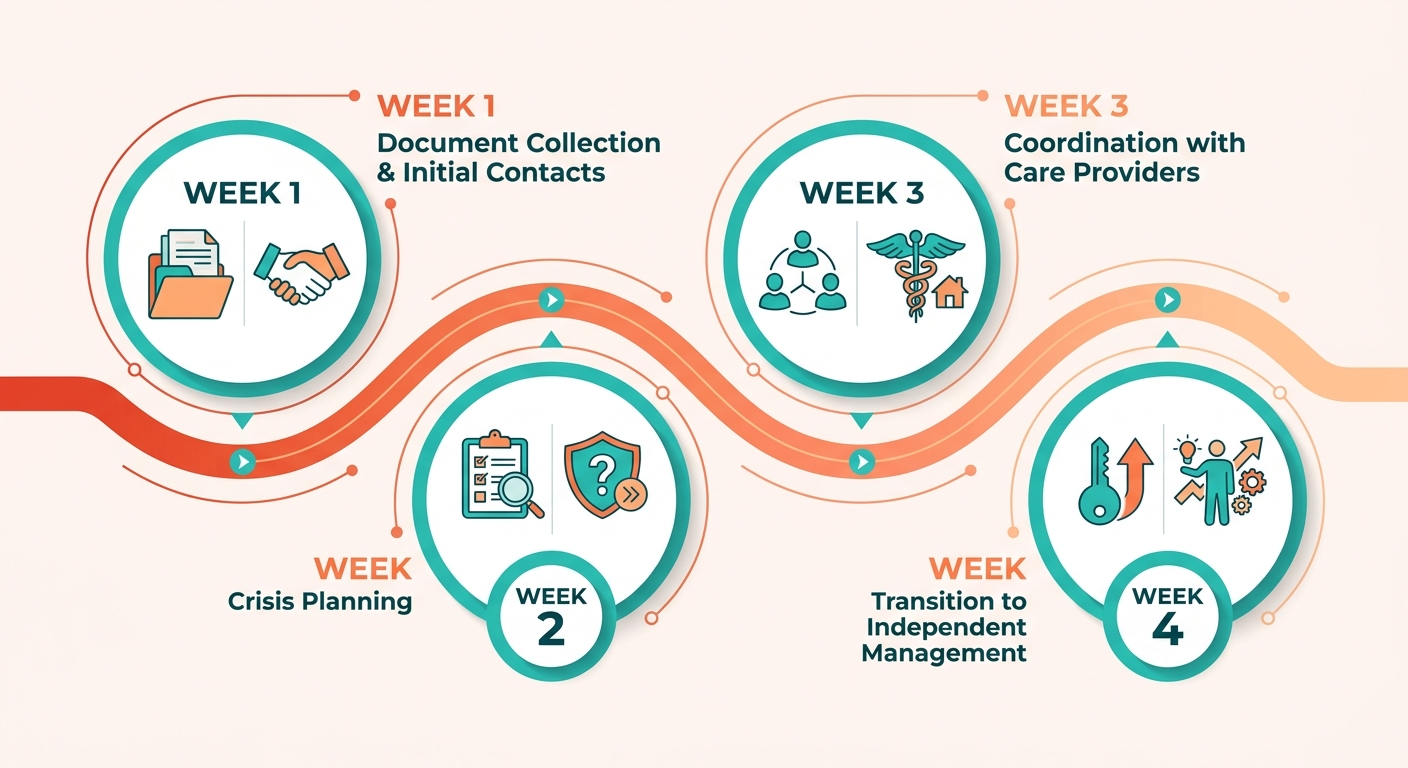
Start with what you can control today. Pull together discharge summaries from detox or residential treatment, insurance cards, identification documents, and any court paperwork tied to mandated treatment. You need these before anyone will take a housing application or financial aid request seriously.
Call your regional 2-1-1 hotline within 48 hours of your loved one's discharge. Ask specifically about transitional housing programs that accept people in early recovery, not general homeless shelters. Most families waste the first week calling programs that require 30 days of documented sobriety—your loved one just left detox and doesn't qualify yet.
Schedule an intake with an accredited nonprofit credit counselor. This initial meeting should focus on establishing a manageable payment plan before bills begin to accumulate. Look for agencies certified by the National Foundation for Credit Counseling. The intake appointment should happen before week two starts; waiting longer means bills pile up while you're still figuring out who owes what.
Reach out to the discharge planner from the treatment facility if one was assigned. Their job ends the day your loved one walks out, but most will answer one or two follow-up emails about which outpatient providers actually have openings. Don't expect them to coordinate care long-term—that's not their role and they won't do it.
Week 2–4: Securing Temporary Shelter and Budget Setup
By day 10, you should have temporary housing secured or a backup plan in writing. Many families overlook peer-run housing cooperatives that operate on income-based sliding scales—ask local recovery community centers for referrals.
Set up a zero-based budgeting system where every dollar your loved one receives (disability, part-time wages, family support) gets assigned to a category before the month starts. We see families skip this step and then panic when the second month's rent is due. Use a simple spreadsheet or a free app; the tool matters less than the weekly review habit.
Request medication reconciliation from the prescribing physician within two weeks of discharge. This is a single-page document listing every medication, dosage, and refill schedule. Without it, the next provider has to guess what was prescribed in residential treatment, and gaps in medication compliance are the fastest route back to relapse. If the original provider won't release it, ask the outpatient clinic to request it directly—provider-to-provider requests usually get faster responses.
Confirm your loved one's first three outpatient appointments before week four ends. Not just the intake—the follow-ups too. We see people show up for the first session and then drift because no one scheduled the next two. Many outpatient programs let you book a month out; do it now while the discharge momentum is still there.
References
[1] Nar-Anon: What it is, What to Expect, & How to Find Meetings - https://recovery.com/support-groups/nar-anon/
[2] 10 Things To Expect From a Nar-Anon Meeting | Mountainside TC - https://www.mountainside.com/blog/family-wellness/10-things-to-expect-from-a-nar-anon-meeting/
[3] The 12 Traditions - Nar-Anon Family Groups of BC - https://naranonbc.com/12-traditions
[4] Nar-Anon FAQ - https://nar-anon.org/faq/
Frequently Asked Questions
1. Can Nar-Anon help me find a sober living home for my son who just left detox?
No. Nar-Anon operates strictly as a peer-led support group and does not recommend or affiliate with specific sober living homes or transitional facilities. To find immediate housing, families should contact local recovery community centers, municipal housing authorities, or regional resource hotlines that specialize in placement assistance.
2. Why do families need both Nar-Anon meetings and professional coaching services?
Nar-Anon focuses on emotional recovery, boundary-setting, and healing family relationships. Professional coaching, on the other hand, addresses the daily logistics of recovery—such as establishing routines, managing schedules, and maintaining accountability. Combining these approaches ensures that both the emotional and practical needs of the family are met simultaneously.
3. What happens when my loved one's medication runs out between detox and their first outpatient appointment?
Prescription gaps during transitions of care can severely disrupt recovery. To prevent this, ensure you obtain a detailed medication list and transition plan from the discharging facility before your loved one leaves. If you encounter difficulties obtaining these records, request that the receiving outpatient clinic contact the discharging physician directly to facilitate a provider-to-provider transfer.
4. Should I hire a peer recovery specialist or a licensed case manager for my daughter?
The choice depends on your family's specific needs. Peer recovery specialists offer direct, lived-experience companionship and help with daily tasks like attending appointments or applying for community resources. Licensed case managers, however, are trained to handle complex clinical logistics, coordinate between multiple medical providers, and manage insurance appeals. If your daughter requires clinical oversight and structured care coordination, a licensed professional is necessary.
5. How much should I budget for the first 90 days after my family member leaves treatment?
The initial months of recovery often bring unexpected expenses, including transitional housing rent, legal fees, transportation, and medical co-pays. Because financial stress is a common trigger for relapse, establishing a clear budget early is vital. Consider consulting a nonprofit credit counselor during the first week of transition to explore fee waivers, set up payment plans, and manage outstanding debts systematically.
6. Can I use Nar-Anon meetings to coordinate my husband's transition from inpatient to outpatient care?
No. Nar-Anon is a peer-led support group, not a clinical entity. It lacks the licensing, professional staff, and administrative infrastructure required to manage medical records, ensure HIPAA compliance, or coordinate care transitions. For a safe and seamless transition between treatment levels, you should work directly with the facility's discharge planner or an independent case manager.