Why 12-Step Family Programs Miss the Scheduling, Medical, and Housing Tasks
August 22, 2026
Key Takeaways
- A significant portion of people leaving detox return to their primary substance within the first 90 days when logistical support is thin.
- Peer-based family programs handle emotional coping. They leave scheduling, medical coordination, and housing entirely unmanaged.
- The first month often requires a substantial time commitment for active coordination per week before routines settle.
- When one person absorbs most of the caregiving by default rather than by capacity, burnout follows and appointments start slipping.
- Missed doses and skipped follow-ups can drive hospital days that carry real financial cost for families.
- Stable sober living is a baseline requirement in early recovery, not a bonus. Housing instability undermines everything else.
- Relapse risk concentrates in the gap between emotional support and operational support, and no standard family program is built to close it.
Quick Summary
Most groups for families of addicts teach emotional coping. Al-Anon, family therapy, peer support all matter. But they leave a gap: nobody helps you build the medication schedule, coordinate the follow-up appointments, or sort out where your loved one sleeps next week.
That window is when the risk of returning to active use peaks. The jump from structured treatment to an unstructured home happens fast, and families are left holding it. The logistics you can't Google your way through are the ones that break families down.
Here's the fast reference for the three tasks 12-step programs skip.
Where 12-Step Family Programs Fall Short
Peer groups build connection. They don't build systems. That's the split between emotional support and operational support, and both carry weight during early recovery.
- Scheduling coordination. Someone has to track therapy, medical visits, and check-ins. When it falls to whoever said yes first, that person burns out and appointments start slipping.
- Medical coordination. Nursing support, prescription refills, and detox handoffs need active management. Missed doses and missed follow-ups can drive the extra hospital days that cost families dearly.
- Housing support. A stable, sober living environment isn't optional. Uncertainty about where someone lives next month undermines everything else.
What Your First-Month Checklist Should Cover
Expect to put real hours in during these first weeks to get a routine working. Front-loading the work is what prevents the scramble.
- Map who currently handles each task, then reassign by capacity rather than habit. Overload one family member and you get missed appointments and a system that breaks.
- Build a medication and appointment calendar everyone can see. Shared visibility beats one person holding it all in their head.
- Confirm housing stability for at least the next 90 days before discharge, not after.
- Rotate the crisis-contact role so no single person absorbs every late-night call.
- Schedule by energy, not equal hours. Time is fixed; capacity renews.
MADE's coordinated coaching fills these operational gaps directly. Families get a single dedicated coach or a full team that manages the logistics 12-step groups never touch. As clients find their rhythm, that support tapers on purpose, nudging toward independence while the checklist below keeps early planning on track.
Why the Missing Logistics Are Where Families Break
The reason logistics get skipped comes down to design. Peer groups were built to hold you emotionally, not to run your loved one's calendar. That leaves the highest-risk period after discharge without a system, and the numbers show what happens next.
Research consistently shows the window right after discharge carries the greatest concentration of relapse risk. A substantial portion of that risk sits inside what we call the recovery gap: the stretch between formal care and stable daily life. Most groups for families of addicts never touch this window. They send you home with coping tools and no operational plan.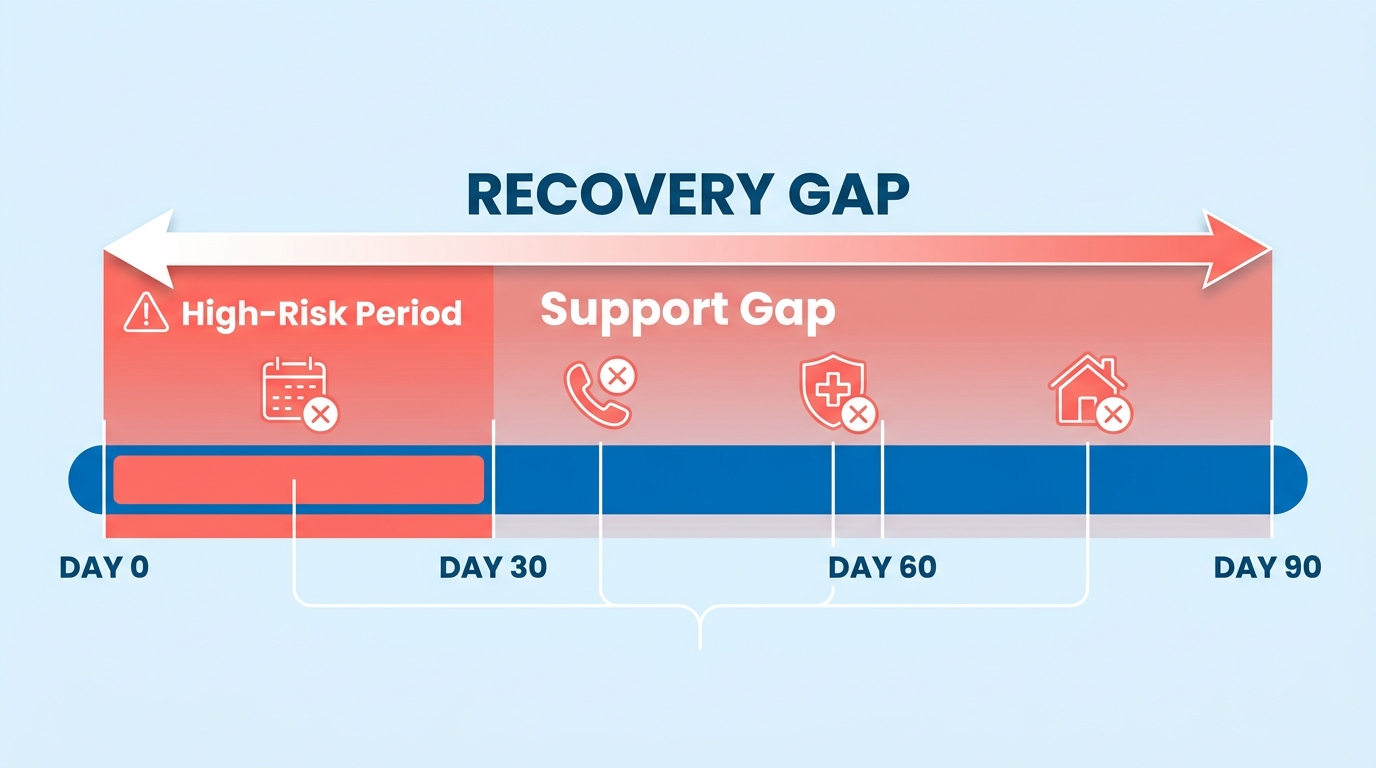
Why the Recovery Gap Wrecks So Many Families
The recovery gap is the period between discharge and a settled routine, and it drives most early relapse risk. Three concrete failures live here: missed appointments, medication chaos, and unstable housing. Each one is fixable with coordination, which is exactly what emotional support alone can't provide.
Here's how each pillar breaks down when nobody owns it.
- Scheduling. Missed therapy sessions, skipped meetings, and forgotten doses correlate directly with early relapse. When no one owns the calendar, the plan built in treatment quietly falls apart within weeks.
- Medical coordination. Failures here can push emergency-room visits up significantly among recent graduates of residential programs. Prescriptions lapse, follow-ups get dropped, and a small gap becomes a crisis.
- Housing. Housing instability can dramatically increase the odds of relapse within six months. Without a secure, predictable environment, the daily grind of transition makes every other recovery habit harder to hold.
What Happens When Families Do It All Alone
They burn out. A notable share of families forced to become the scheduler, the medical liaison, and the housing coordinator report burnout doing it. You can't be a calm, trusting parent or partner while also running a discharge-planning operation solo.
Offloading the administrative load is what prevents that exhaustion. It lets families focus on rebuilding relationships instead of managing logistics, and a steady daily rhythm is what supports recovery over the long haul.
Where Weekly Meetings Fail the Daily Crisis
Weekly meetings were never designed to manage a daily crisis. That's the core scheduling problem: the support structure runs on a seven-day cycle while the recovery risk runs on a 24-hour one. In the first month after discharge, a missed dose or a skipped therapy appointment isn't an inconvenience. It's a crack in the foundation.
What Scheduling Gaps Actually Cost Families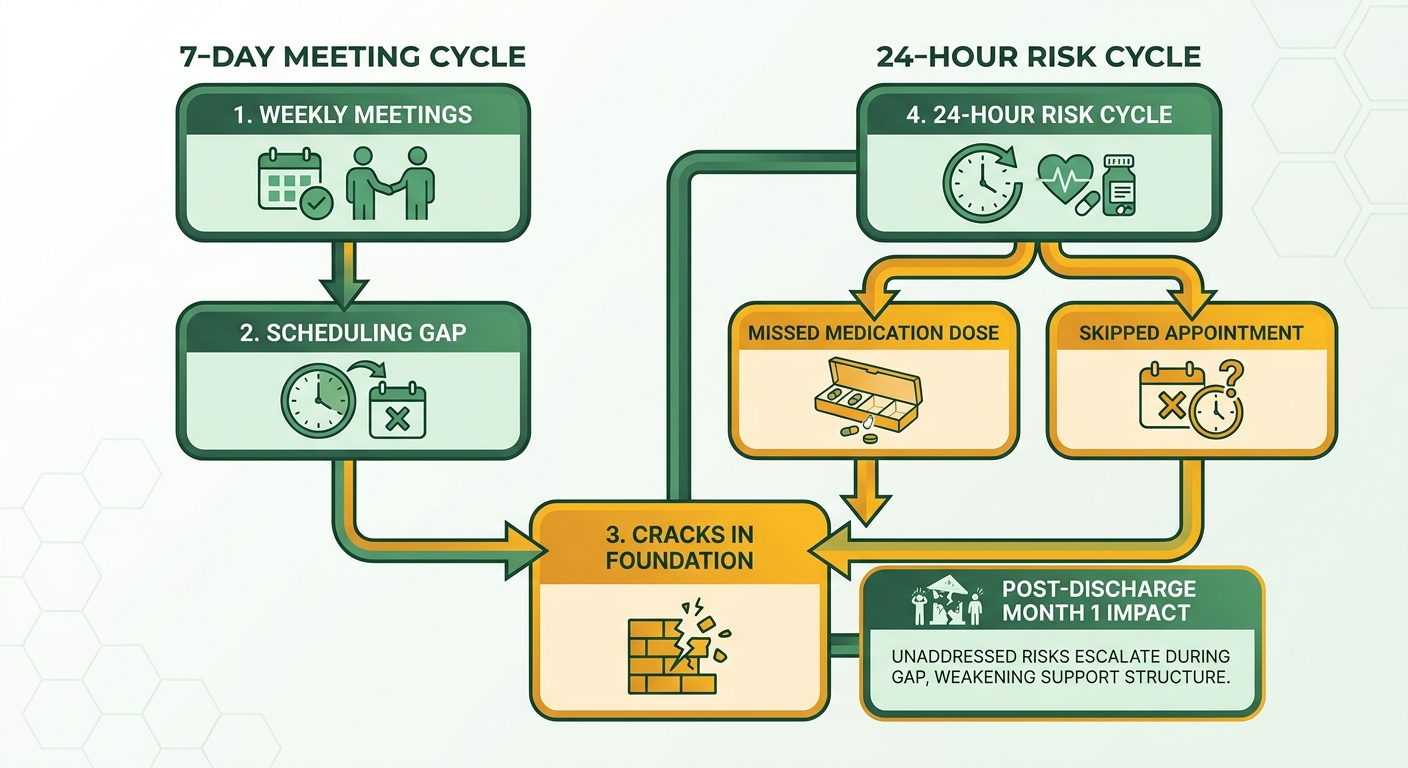
The mismatch between meeting frequency and real-world need creates a predictable failure pattern. A family attends their weekly session, feels supported, then spends the next six days managing medication pickups, outpatient appointments, and work schedules with no coordination system in place. When those pieces collide, say a therapy slot that overlaps with someone's work shift, or a prescription that needs collecting the same morning as an AA meeting, something gets dropped.
In our experience, the dropped thing is rarely the work shift.
-
Confirm daily check-in coverage for the first 30 days. Weekly peer meetings leave six days of unstructured time. A daily touchpoint, even a brief call, catches conflicts before they become missed doses.
-
Build a shared calendar before discharge, not after. Medication schedules, outpatient appointments, and peer meetings need to live in one place. Families juggling separate phone calendars and paper schedules consistently miss the overlaps that matter.
-
Map every appointment against work and school obligations. Uncoordinated schedules push recovering adults toward absenteeism. The conflict usually isn't visible until it's already happened.
-
Assign one person to own the calendar. Shared responsibility with no named owner means nobody catches the gap. Professional coordination helps families map weekly commitments and set clear boundaries.
-
Set medication reminders that don't depend on memory. A third-day dose missed because of a scheduling conflict looks identical to a relapse trigger in the data. Phone-synced reminders tied to the actual prescription schedule close this gap.
-
Review the schedule weekly for conflicts, not just attendance. The question isn't whether your loved one showed up to their meeting. It's whether next week's calendar has two things booked at the same time.
The families we work with don't fail because they stop caring. They fail because nobody handed them an operational system when they walked out of the treatment facility. Building routine and structure in those early weeks is the work peer groups weren't designed to do, and the work aftercare coaching exists to fill.
Medical Care Coordination Shortfalls
Medical care is where most family support breaks down completely. Only a minority of families in 12-step programs have a formal liaison with a primary care or psychiatric provider. That leaves most families guessing about medications, doses, and warning signs during the exact window when getting it wrong turns dangerous.
This is the hardest gap for families to close. Emotional peer support can't read a taper schedule or flag a drug interaction. When nobody owns the medical picture, the calendar and the pharmacy stop talking to each other, and the person in recovery pays for it.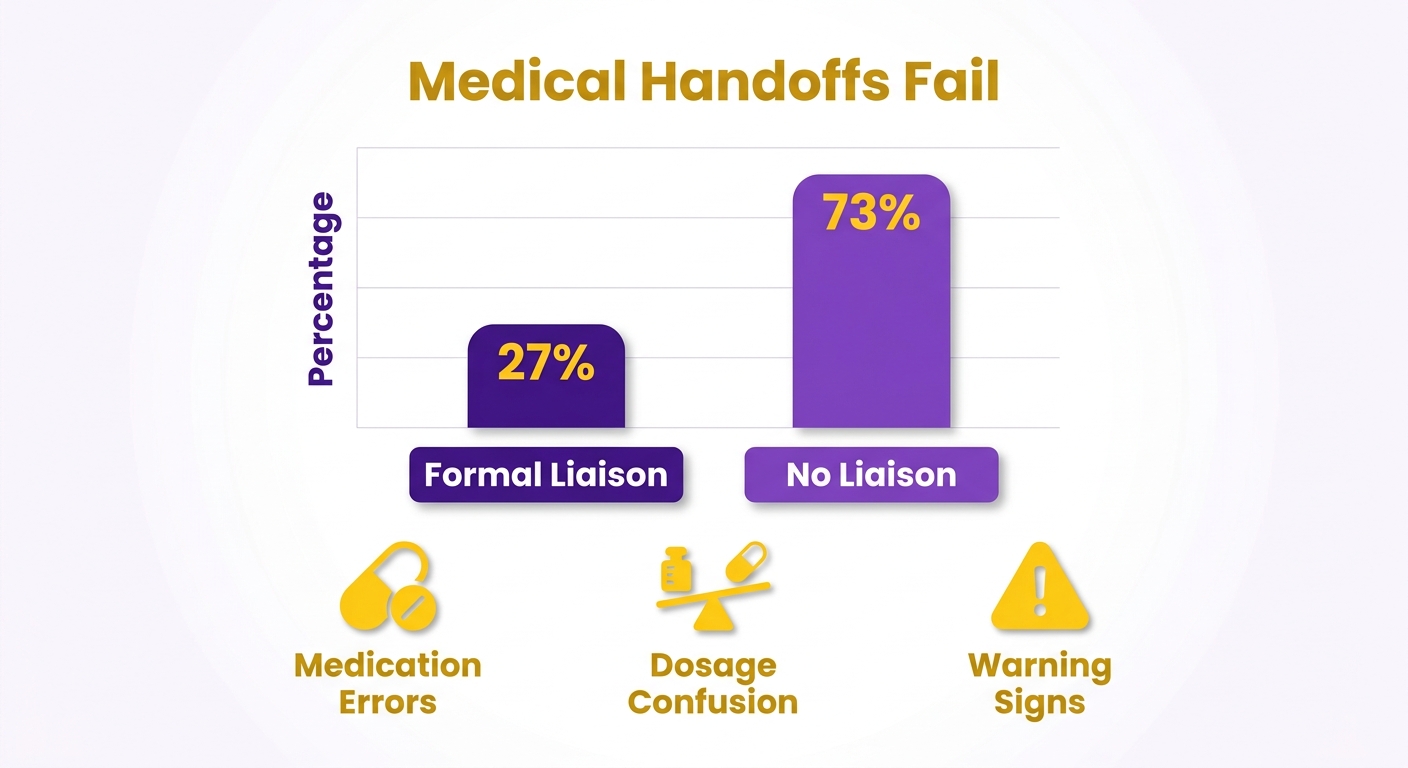
Why Medical Handoffs Fail After Detox
Medical handoffs fail because no single person is assigned to track them. Discharge paperwork gets handed to a family that has never managed a psychiatric prescription. Medication adherence can drop significantly when families lack clear medical guidance, and missed doses in early recovery aren't minor slips. Consider a scenario where someone leaves detox on a taper their family barely understands. Nobody explains the schedule or what withdrawal looks like. Days later they hit a severe withdrawal episode that lands the family in crisis, because the medical thread simply dropped.
The data backs the pattern. Opioid-related emergency-room visits can climb within 30 days of discharge when no medical coordinator is assigned. Insurance makes it worse. Families often can't secure coverage for after-care services, so the follow-up appointments they need never get booked.
What Closes the Medical Coordination Gap
A named coordinator and consistent check-ins. Tele-health is badly underused in family support, despite improving follow-up rates. It removes the transportation and scheduling excuses that kill appointments in month one.
Here's what belongs on your medical checklist during the transition:
- Assign one person as the medical liaison who talks directly to the prescribing provider and holds the full picture.
- Write out the medication and taper schedule in plain language so the whole household knows the doses and the warning signs.
- Set weekly medical check-ins to catch missed doses early. Aftercare services can bridge this by talking directly with medical providers to keep the treatment plan on track.
- Book tele-health follow-ups instead of relying on in-person slots that fall through.
- Confirm insurance coverage for after-care before discharge, not after a gap appears.
For families steadying the day-to-day, our guide on caregiver support in early recovery pairs well with this checklist.
Housing Support Deficiencies in 12-Step Family Programs
Housing is the gap that swallows all the others. A meaningful share of people leaving residential treatment lack stable housing within 30 days. When your loved one doesn't know where they'll sleep next week, no medication schedule or therapy plan survives contact with that stress.
Most families have no path to fix this. Al-Anon can hold your fear about it. It can't walk you through a subsidized-housing application or call a landlord on your behalf. Transitional-housing resources and landlord-mediation services sit completely outside the peer-support model, and that absence costs families the exact stability they're trying to protect.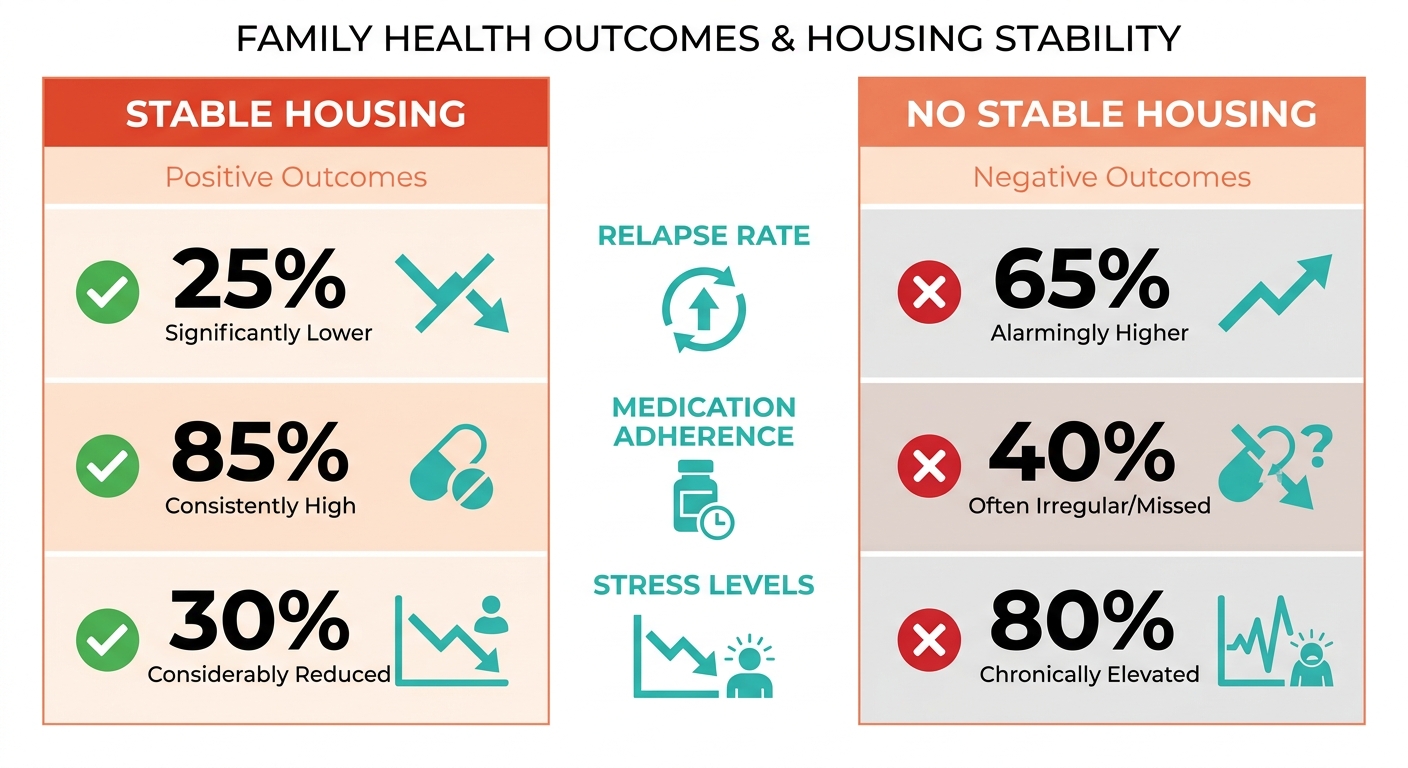
Why Housing Instability Triggers Relapse
Housing instability raises cortisol, and elevated cortisol is a documented relapse trigger. Chronic stress hormones wear down the same self-control your loved one needs to stay sober. When the housing question stays open, the body stays in alarm mode.
A logistics gap can undo progress fast. A family places someone in a rental after discharge, nobody manages the subsidized-housing application in time, and an eviction follows within weeks. The relapse that often comes next isn't a character failure. It's a logistics failure nobody was assigned to prevent.
Policy makes it worse. Many funding streams, including Medicaid, require a documented housing plan before they'll cover continued care. Families working only from a 12-step framework rarely have the paperwork or the know-how to produce one, so they lose funding at the worst possible moment.
What Evidence-Based Housing Support Looks Like
The models that work are specific, not vague encouragement. "Housing First" and peer-run sober living homes have been shown to cut relapse rates. Both share one trait: they stabilize the roof before demanding everything else fall into place.
Here's a checklist families can use to close the housing gap.
- Confirm a stable housing arrangement is locked in before discharge, not after. The 30-day window is when instability does the most damage.
- Identify vetted sober-living options in advance, so a placement is ready if the home environment isn't safe.
- Assign one person to own the subsidized-housing application, tracking every deadline and document.
- Prepare the documented housing plan Medicaid and other funders require, before the funding review hits.
- Set up landlord mediation early, so a missed rent conversation doesn't become an eviction.
Navigating these housing requirements takes specialized knowledge. Professional coordinators help families identify vetted sober-living environments and secure the documentation that keeps funding and placement stable.
Integrated After-Care Checklist: Closing the Three Gaps
This checklist closes all three gaps at once. Work through it before discharge, then run the trackers through the first 90 days. Every item exists because families lose ground when it goes unmanaged.
Print it. Assign each line to a real person. A task with no owner is a task that fails.
What Families Should Audit Before Discharge
Run this audit in the final 48 hours before your loved one leaves treatment. It catches the scheduling, medical, and housing holes while staff are still available to fix them.
- Build a shared digital calendar with every appointment, medication time, and meeting logged. One calendar, visible to family and coach, kills the "I thought you had it" problem.
- Write the full medication list with doses, timing, and refill dates. Doses drift after detox, so this list needs an owner who updates it.
- Assign one medical point-person to hold contact info, insurance authorizations, and tele-health links. Nobody else calls the provider.
- Confirm the housing contract or start a housing-needs journal within 48 hours. Know where your loved one sleeps for the next 30 days before discharge, not after.
- Log AA and family meeting times alongside self-care blocks so the week has structure, not just crisis response.
An external coordinator spreads these tasks out objectively, so no single family member carries the entire administrative load.
How Coaches and Centers Keep the Plan Alive
Coaches run a gap analysis at intake, embed tele-health follow-ups, and keep a live housing-resource directory. Treatment centers hold up their end with a discharge-readiness plan that names all three pillars.
- Coaches: run the gap analysis at intake to find which pillar is weakest before day one.
- Coaches: set the review cadence at 3-day, 7-day, and 30-day check-ins with measurable milestones, not vague "how are you feeling" calls.
- Centers: require a discharge-readiness plan covering scheduling, medical, and housing before anyone walks out the door.
- Centers: partner with local sober-living providers so housing is a warm handoff, not a phone number on a discharge sheet.
A structured transition plan, with objective oversight, is what builds the consistent daily routines a successful return to independent living depends on.
References
Frequently Asked Questions
1. Can I use Al-Anon and coordinated coaching at the same time?
Yes. These two approaches complement each other. While peer groups offer vital emotional validation and shared experiences, professional coaching focuses on the practical execution of daily schedules, medical appointments, and housing stability. Using both ensures you are supported emotionally while your loved one's recovery logistics are managed systematically.
2. How many hours per week should I expect to spend on recovery logistics?
The initial weeks of transition require a significant time commitment to manage appointments, coordinate prescriptions, and secure housing details. While this administrative workload decreases as daily routines become established, failing to organize these logistics early on often results in missed appointments and increased household stress.
3. What happens if one family member ends up handling everything?
When a single person takes on the role of coordinator, caregiver, and crisis manager, they quickly experience severe exhaustion. This strain directly impacts the quality of care, leading to overlooked details and missed medical visits. Distributing responsibilities across a wider support network or utilizing professional coordination helps protect family relationships and ensures no single person is overwhelmed.
4. Why does housing instability matter more than the other gaps?
Without a secure and predictable living environment, the psychological stress of transition makes it nearly impossible to maintain other recovery habits. Constant worry about shelter prevents the brain from exiting a state of chronic fight-or-flight, which directly undermines the effectiveness of therapy, medication adherence, and outpatient programs.
5. Does insurance actually cover after-care coordination services?
Coverage depends heavily on your specific policy and provider. Many traditional plans do not automatically cover non-clinical coordination services, and public funding streams often have strict documentation requirements that must be met prior to discharge. It is critical to verify your benefits and submit any required transition plans early to avoid unexpected out-of-pocket costs or sudden disruptions in care.
6. How is tele-health useful for medical coordination after detox?
Virtual appointments eliminate common logistical barriers such as travel time, transportation access, and scheduling conflicts with work or school. By utilizing virtual consultations, families can maintain consistent contact with psychiatric and medical providers, ensuring medication adjustments and wellness checks occur on schedule without disrupting daily routines.
7. Does coordinated coaching mean my family stays dependent on outside help?
No. The ultimate objective of professional aftercare coordination is to foster self-sufficiency. Initial high-touch support is systematically reduced as your loved one establishes stable daily habits and demonstrates the ability to manage their own calendar and medical needs. This gradual transition ensures that the family eventually operates independently, equipped with a proven system for long-term stability.