What Family Support Actually Looks Like in a Sober Coaching Program
August 21, 2026

Key Takeaways
- Without structured aftercare support, 40–60% of people relapse within 90 days of leaving detox or residential treatment.
- Family participation in aftercare improves sobriety rates by 25–35% compared with programs that support the individual alone.
- Family members of people with substance use disorders carry higher rates of chronic medical conditions and elevated health burdens.
- Sustained sobriety depends on families serving as engaged participants who share accountability, not passive cheerleaders on the sidelines.
- Research shows that family-integrated coaching addresses the health impact recovery places on relatives, not just the person in treatment.
Related Video
Watch: The Surprising Stress Sobriety Puts on Relationships and How to Manage It by Dr. Joanne Ketch - Sober Coach for Professionals
Why Family Support Matters in a Sober Coaching Program
When someone you love comes home from detox or residential treatment, the first 90 days are fragile. That window closes quickly. In practice, sustained sobriety often depends on whether the family has a real, structured role in recovery. It is not passive emotional support; it is active collaboration with the coaching team.
The Evidence for Family-Integrated Coaching
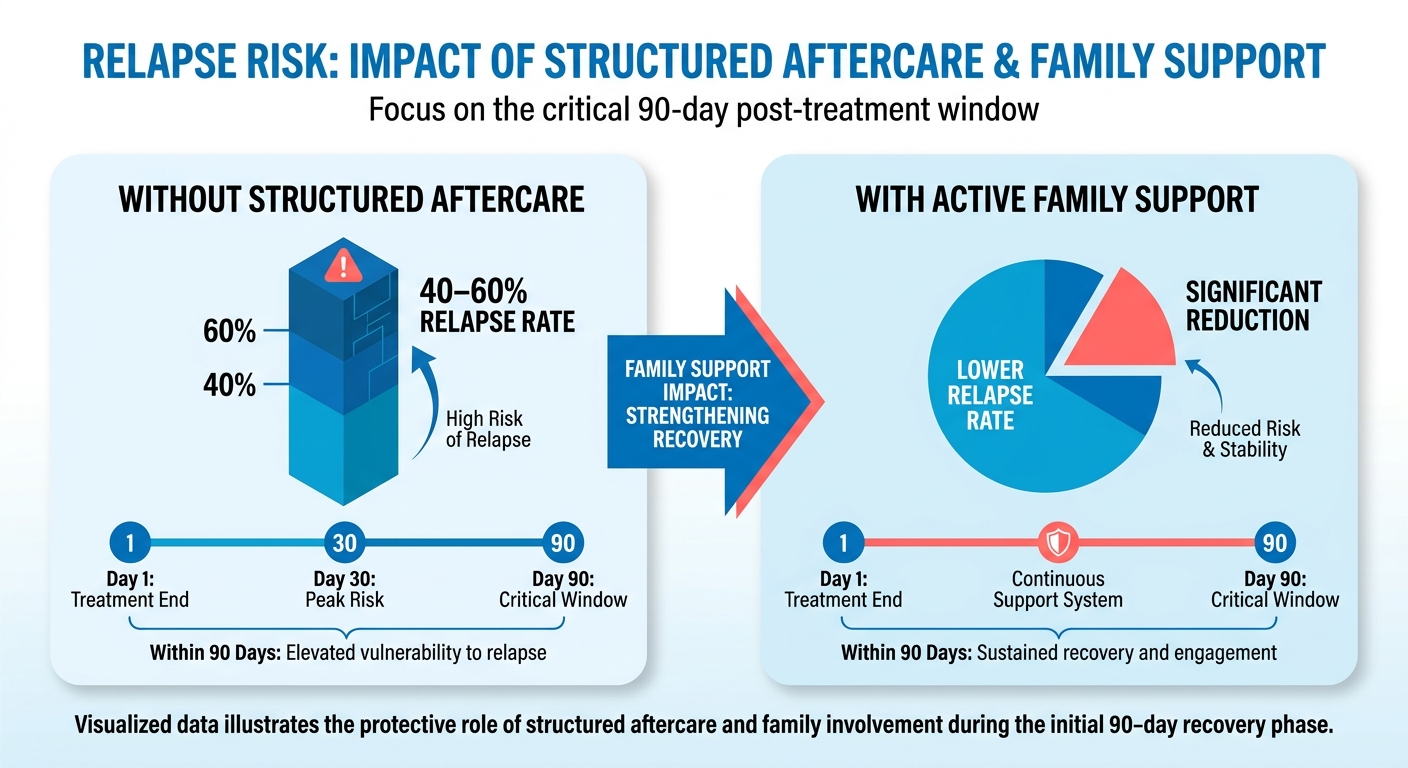
The research backs what we see every day. National studies show that active family participation in aftercare significantly boosts long-term success rates compared with individual-only support. A peer-reviewed analysis shows how a loved one's addiction ripples outward, causing physical and mental health issues for relatives. Treat addiction as a family disease rather than an individual crisis, and everyone's outcomes improve.
Family dynamics often become relapse triggers during early recovery. The relationships that should anchor recovery can also destabilize it. Not through malice—families are simply managing unfamiliar territory without a map. One provider notes that recovery is a family journey, and families often feel helpless without guidance. That helplessness can show up as enabling, boundary violations, or emotional flooding during crises. All of these erode the structure early sobriety needs.
Isolation is the silent killer in early recovery. It is not dramatic; it is the slow erosion of connection that makes using feel easier than reaching out for help. Structured family involvement helps counter that drift.
Who Benefits Most from Family Involvement
This model is not universal. Skip family integration if your loved one is estranged from family by choice, or if the family system includes active substance use or untreated severe mental illness. Those cases need clinical intervention before structured family involvement makes sense.
The clients who thrive with family support share three traits: they have just completed detox or residential treatment (the 90-day cliff is real), they are managing co-occurring mental health conditions like depression or anxiety, and their families are willing to commit time to structured support. That time breaks down into check-ins, meal planning, routine-building, and crisis protocols—not vague "being there," but concrete tasks with clear outcomes.
Studies focused on younger demographics show that even when treatment access is limited, an involved support system dramatically improves engagement and retention. The same pattern holds for adults. Families are not magic—they are a vital resource in the daily work of recovery.
The Economic and Emotional Case
The cost argument is straightforward. Programs that integrate family coaching save roughly $1.2 million per 100 clients in reduced readmissions and emergency interventions. But the emotional ROI matters more to the people doing the work.
Here is the tension we manage: families must establish boundaries and prioritize their own wellness while still providing daily accountability during the highest-risk 90-day window. This dual mandate requires self-care to become sustainable involvement—structured check-ins, defined response protocols, and pre-negotiated limits that prevent burnout while maintaining presence. A research-backed approach called CRAFT (Community Reinforcement and Family Training) shows a two-thirds success rate in getting loved ones to engage in treatment, but only when families learn to balance connection with clear limits.
We also see a paradox in family system stability: even when someone achieves sobriety, families may unconsciously resist the change because their roles and coping mechanisms were built around the addiction. Effective family involvement must include explicit psychoeducation about system disruption and proactive redefining of family member roles before unmasked problems—debt, infidelity, resentment—trigger relapse or family withdrawal. One intervention model moves families from emotional flooding to rational understanding through pre-intervention meetings, addressing the challenge that "families not accepting our suggested solutions" is often the biggest barrier professionals face.
How Family Support Translates to Daily Practice
The mechanics matter. MADE's programs include coordination with family members through shared progress updates and ongoing communication. Families can participate in planning, daily check-ins, and routine-building activities as our support model adapts to each client's needs. As clients progress, the coaching presence tapers intentionally—encouraging independence while maintaining accountability—and family involvement adjusts alongside that evolution.
One provider emphasizes that healing begins with the family member, not just the individual in recovery. That means families get their own wellness plans, boundaries, and support networks—like building recovery roles that prevent burnout. This is not about families becoming unpaid therapists. It is about equipping them to hold structure, recognize patterns, and respond effectively when our team is not in the room.
The relapse reduction rate when families serve as formal participants in structured aftercare sits around 30% lower than solo aftercare models. That is not a guarantee—it is a probability shift. But for struggling families watching someone they love manage the first few months after treatment, this shift in odds can mean the difference between another rehab admission and a sustainable sober routine.
Defining What Family Support Looks Like: Core Components
When struggling families ask us what their role actually looks like in a team-based sober coaching program, we do not point them to a pamphlet about "being supportive." We walk them through five concrete responsibilities: emotional presence, practical logistics, shared accountability, boundary enforcement, and skill-building. These are not suggestions—they are the operating framework that separates families who stay engaged through the critical first 90 days from those who burn out or inadvertently enable relapse.
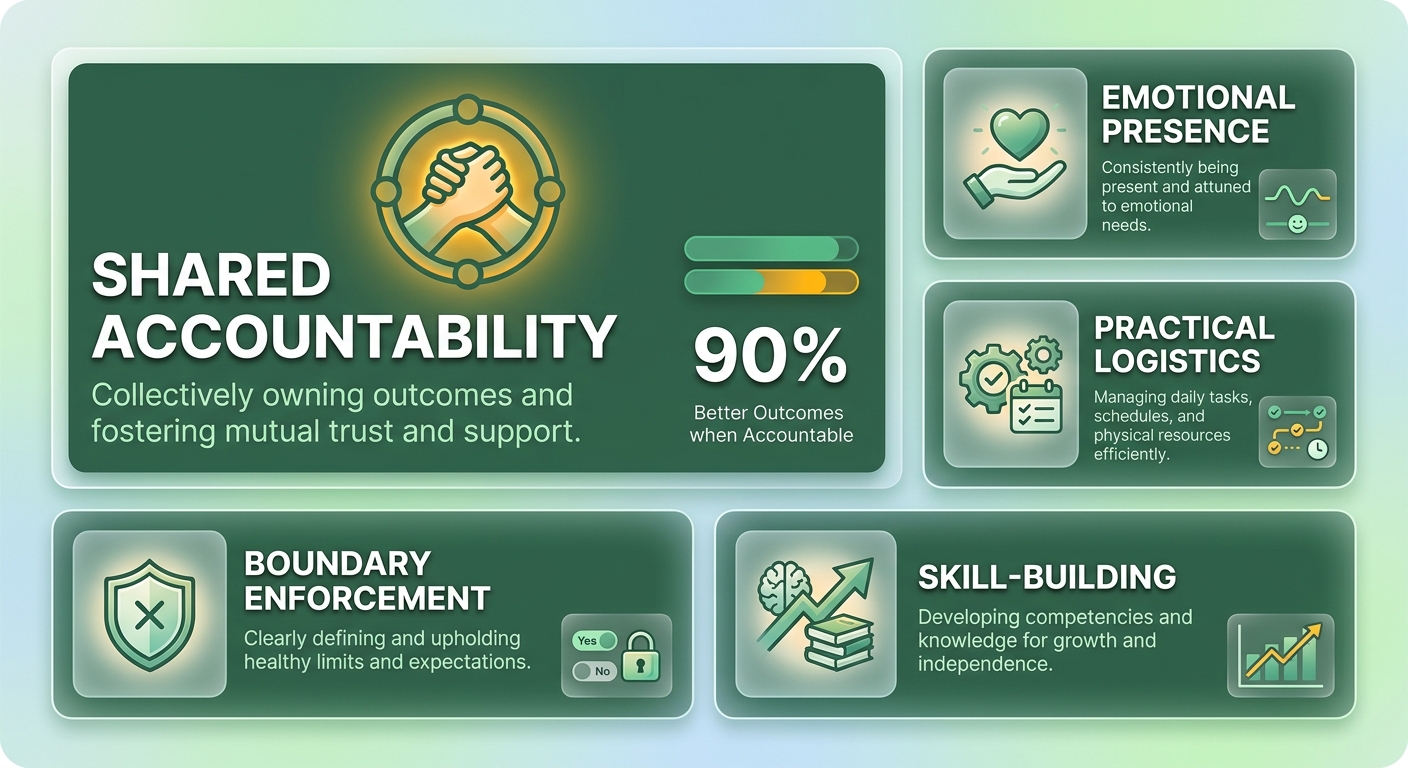
What Emotional Presence Actually Means
Emotional presence is not about constant reassurance. It is about active listening without judgment during daily check-ins, validating the difficulty of early sobriety without minimizing setbacks, and staying available for crisis moments without hovering. Families who develop structured communication skills report feeling equipped to have hard conversations without retreating into silence or anger.
One effective shift is acknowledging reality instead of papering over it. Saying "I see this is really hard for you right now" rather than "You're doing great, just stay positive" keeps the door open during difficult moments. The distinction matters because validation creates connection, while forced optimism creates distance.
Practical Assistance: The Unglamorous Work That Prevents Relapse
The logistics piece is where families often underestimate their impact. We are talking about transportation to 12-step meetings, grocery runs that keep trigger foods out of the house, and managing bills when financial chaos was part of the addiction pattern. Removing these friction points helps eliminate common justifications for relapse during the transition home.
Skip the logistics role if your loved one already has a stable support network in place—a partner, a sober living facility with built-in structure, or reliable transportation. But for clients transitioning straight from residential care to independent living, this is non-negotiable. One family member driving to appointments is not helicoptering; it is removing a barrier during the highest-risk window.
Accountability Partnerships: Joint Goal-Setting and Progress Reviews
Here is where families shift from helpers to co-coaches. Regular progress reviews create shared transparency: Did the client attend meetings this week? Did they reach out to their support network when cravings hit? Did the family member maintain the agreed-upon boundaries around money?
This is not surveillance. It is shared transparency. Programs that integrate families as accountability partners report better adherence to aftercare plans because the client knows someone they care about will see the data—not to judge, but to adjust the plan when it is not working.
Families who participate in structured support frameworks develop higher confidence in their ability to support sobriety. That confidence translates into action: they know when to escalate a missed meeting to the coaching team versus when to let the client self-correct.
Boundary Setting: The Hardest Component for Struggling Families
Teaching families to stop enabling while staying connected is where most programs fail. We see parents who have spent years rescuing their adult child from consequences, and now they are told to "set boundaries" without a roadmap. A forward-looking coaching approach focuses on practical skills: how to say no to money requests without cutting off emotional support, and how to enforce a "no substances in the house" rule without issuing ultimatums that backfire.
One effective approach is responding to financial requests with "We'll cover your phone bill this month, but we're not paying off credit cards. Let's work with your coach on a debt plan." That is a boundary with scaffolding—it maintains connection while refusing to enable. The alternative—either total financial bailout or total cutoff—usually ends in relapse or estrangement.
Education and Skill-Building: Families Need Training, Not Just Willingness
Family members benefit from guidance on trigger recognition, relapse warning signs, and de-escalation techniques before they step into a co-coach role. This training matters because emotional flooding—panic when a client comes home late, catastrophic thinking after one missed meeting—undermines the stability sobriety requires.
Families trained in these areas learn the difference between a lapse (using once) and a relapse (returning to active addiction). They can spot behavioral red flags—isolation, sleep pattern changes, defensiveness about whereabouts—and bring them to the coaching team without confrontation. That early-warning system has prevented full relapses in cases where the client was not ready to admit they were struggling.
To prevent burnout, families must establish clear role definitions—who handles crisis calls, who attends which meetings, and when a family member steps back for a weekend to recharge. Distributing these responsibilities keeps support consistent without placing the entire burden on one person. Sustainable involvement beats heroic effort every time.
Integrating Family into the Coaching Process
Turning a family member into a formal co-coach does not happen with a pep talk. It happens through a structured sequence that maps who does what, sets measurable goals, and builds in safety valves. For struggling families coming out of detox or residential care, this sequence is where good intentions become an operating plan.

Here is how family members can work alongside a sober coach as genuine collaborators, not bystanders. Each step below can work virtually or in person, depending on where the family lives.
How Does the Family Assessment Start?
Understanding Family Dynamics: the coach begins by mapping the family's dynamics, strengths, and gaps before anyone commits to a role. We are looking for who can realistically show up daily, who tends to enable, and where boundaries have already broken down.
This first conversation matters because family involvement rarely fails from lack of love. It fails from unclear roles. Skipping the assessment is how families end up over-functioning in month one and disappearing by month three.
We also address systemic shifts early on. When a loved one enters recovery, old family dynamics must adapt. Proactively establishing new patterns helps prevent unresolved household tensions from triggering a setback.
How Do Families Help Shape the Support Plan?
Building the Support Plan Together: the family member works with the coach to establish clear goals and define who handles what. This is where a relative moves from "concerned parent" to "accountability partner with defined tasks."
We keep the family's own wellness inside the plan, not bolted on afterward. Supporting a loved one requires a careful balance: providing daily structure while protecting your own mental and physical health from exhaustion.
Our take: sustainable involvement beats intense involvement. We pre-negotiate limits so presence does not collapse into exhaustion. If roles need to be split across siblings or partners, that conversation happens early to prevent one person carrying everything.
What Does Ongoing Collaboration Look Like?
Consistent Communication: regular contact between family and coach keeps everyone aligned. Short and frequent works better than long and rare. Flexible virtual check-ins help distance or busy schedules from leading to disengagement.
Shared Visibility: families and coaches stay aligned on schedules, progress, and next steps. Everyone sees the same milestone data, which removes the guessing and the 2 a.m. worry spirals.
Clear Escalation Roles: pre-agreed signals help families know when to flag a concern to the coach for rapid response. Think missed check-ins, isolation, or a skipped routine. The family is not diagnosing; they are flagging, so the coach can act fast.
For example: a client's sister takes on the flagging role and stays connected with the coach. With shared visibility and a clear alert process, tighter feedback loops help the client stay on track without adding pressure.
Family coaching is forward-focused and skill-based, distinct from therapy. That is exactly why it fits a co-coach role: the job is building routines and catching drift early, week after week.
Daily Life Integration: Routines, Nutrition, and Companionship
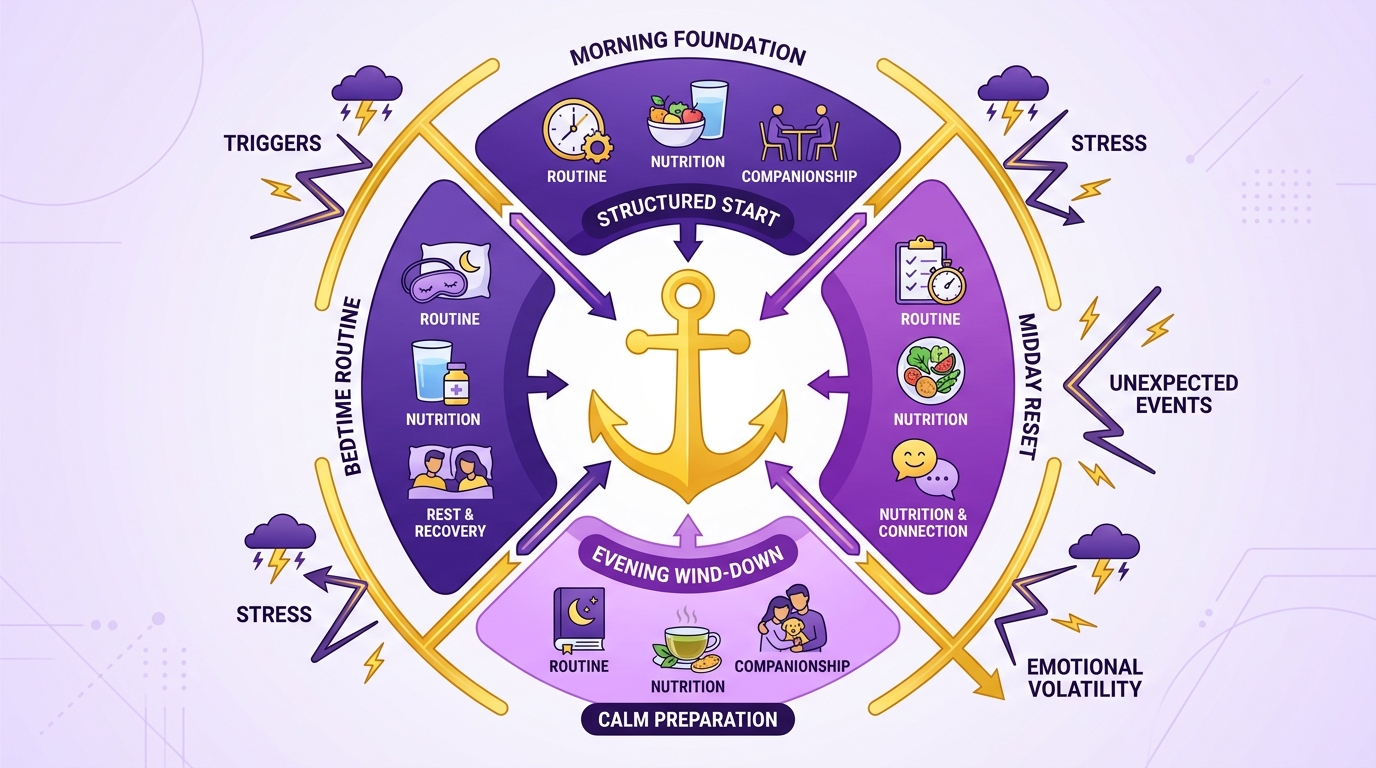
When struggling families step into the co-coach role, the abstract idea of "being supportive" must turn into daily actions—and the routines you build together during the first few months often determine whether sobriety sticks. Families who handle this early phase well create "anchor points": structured moments in the day that act as guardrails against the chaos that triggers relapse. These are not arbitrary checkpoints. They are the practical infrastructure that keeps someone tethered to recovery when everything else feels unstable.

How Do Families Co-Create Routines That Actually Hold?
The most effective routines start with mapping the day together. Sit down with your loved one and block out morning and evening schedules—when they wake, eat, check in with the coach, exercise, and wind down. The goal is not rigidity; it is predictability. Family meals anchor the week with both nutrition and presence—not just about what is on the plate, but about showing up consistently when it matters most.
Families who replace old rituals with new ones see the strongest results. Evening drinking routines can become walk-and-talk time after work. Sunday mornings that once felt empty can turn into family breakfast or a grocery run together. The key is that the family shows up at the same time, creating a competing routine that does not leave space for the old pattern. That is the kind of co-created structure that sober coaching frameworks describe as "bridging treatment and real life."
Start by identifying the high-risk windows in your loved one's day—late afternoons, evenings after work, weekends—and build routines specifically for those slots. If they used to drink after dinner, that is when you cook together. The routine fills the void before the craving does.
What Role Does Nutrition Play in Daily Stability?
Nutrition is not a side conversation in early recovery—it is a mood stabilizer. When someone leaves treatment, their body is often depleted: blood sugar swings, nutrient deficiencies, and disrupted gut health all feed the irritability and fatigue that make relapse feel easier than staying sober. Families who share grocery lists and cook together give their loved one both nutritional consistency and companionship during a vulnerable task.
Stock the basics first: high-protein breakfasts, complex carbs, and easy-to-prep meals that do not require decision fatigue. Decision fatigue is real in early recovery—every choice burns willpower. When you meal-prep together on Sundays or keep a rotation of three go-to dinners, you remove one layer of daily friction. The most effective family wellness plans include weekly grocery trips as a scheduled activity, not an afterthought.
One practical move: set a "no-skip breakfast" rule and make it a family event, even if it is just 15 minutes. Protein and fat in the morning blunt the blood sugar crashes that amplify cravings later. If they balk at eating, frame it as part of the recovery plan—not optional—and eat with them. Companionship at the table reduces the isolation that feeds relapse.
How Do Families Act as "Sober Buddies" During High-Risk Moments?
The co-coach role gets real when you are the person your loved one calls during a trigger, not after a relapse. Families who succeed in this role do not wait for a crisis—they identify specific high-risk scenarios in advance and agree on a response protocol. Social events where alcohol flows. Stressful workdays. Old friends who still drink. These are the moments when companionship is operational, not theoretical.
Families can build a simple system: the loved one reaches out when they are triggered, and the family member either shows up in person or gets on a call quickly. No judgment, no lecture—just presence. This is not helicopter parenting; it mirrors the accountability structure of professional check-ins, but it comes from someone who already knows the person's patterns and history.
The goal is sustainable engagement: you are a co-coach, not a 24/7 monitor. That means defining which moments you are on call for—and which ones the professional coach or peer support network handles. Pre-negotiating those limits keeps you in the game for the long haul.
Crisis Management and Safety Planning with Family
When struggling families transition someone home from detox, the first relapse warning often arrives at 2 a.m.—a missed text, an unanswered check-in, or a sudden shift in tone that sets off alarm bells. In practice, families who know what to watch for and what to do in those critical first minutes prevent more crises than any single intervention we can offer. That is why we build crisis protocols into every coaching program from day one, not as an afterthought when something goes wrong.
What Early Warning Signs Should Families Actually Track?
The most reliable early warning signs are not dramatic. They are subtle shifts in routine that precede a crisis by 12 to 48 hours: skipped meals, canceled therapy appointments, sudden isolation from daily check-ins, or mood swings that feel different from normal early-recovery stress. During the initial consultation, we work with families to identify the specific behaviors tied to elevated relapse risk for their loved one, creating a shared language for "something feels off" that both the family member and the person in recovery can reference without accusations. The goal is not surveillance. It is awareness around patterns that signal someone is drifting.
Implementing structured communication strategies helps families intervene constructively before a full relapse occurs, compared with traditional crisis-only responses. That difference comes down to catching the drift early rather than waiting for the fall.
How Do Families Practice Crisis Response Before They Need It?
We help families prepare for crisis moments by mapping the exact triggers most likely for that individual—returning to a specific neighborhood, contact with old social circles, anniversary dates of trauma—and establishing clear response steps. Families learn who to contact first, what information the coach will need, and how to distinguish between a moment that requires immediate professional intervention and one that calls for emotional support and accountability. When a family has rehearsed these decisions in advance, they do not freeze when their loved one texts at midnight saying they are struggling. They know the exact three people to call, in order, and what each conversation should cover.
Families who prepare structured protocols in advance report feeling far more confident than those who receive only general advice. That gap matters. Preparation turns panic into judgment.
What Does a Rapid Response Actually Look Like in Practice?
Structured crisis planning prevents escalation by giving families a clear framework for when and how to engage. When warning signs appear—missed check-ins, withdrawal from routine, sudden mood shifts—families who have worked through response protocols with their coach can intervene quickly without overreacting. Our coaches assist families in managing these moments, coordinating with other support services as needed and helping determine whether the situation calls for a virtual session, a sponsor check-in, or medical intervention.
This is the dual mandate families face: maintaining personal boundaries while staying present enough to respond when it matters. Structured protocols solve that tension. They define when to engage, how much support to offer, and when to hand off to professional intervention. Families are not improvising in the middle of a crisis. They are following a plan they have already walked through, which keeps panic from overtaking judgment.
Crisis management is not about preventing every stumble. It is about building the infrastructure that catches someone before the stumble becomes a fall.
Transitioning Toward Independence: Tapering Support & Long‑Term Sustainability
When struggling families ask when they can step back without risking relapse, we point them to a simple truth: the transition from intensive support to independence has to be intentional and gradual. Research shows that structured tapering—moving from frequent check-ins to lighter touchpoints over several months—helps clients sustain recovery far better than abrupt endings. That gap is not luck. It is the difference between building self-efficacy in stages and expecting someone to go from full scaffolding to none overnight.
How Does Phase-Based Tapering Actually Work?
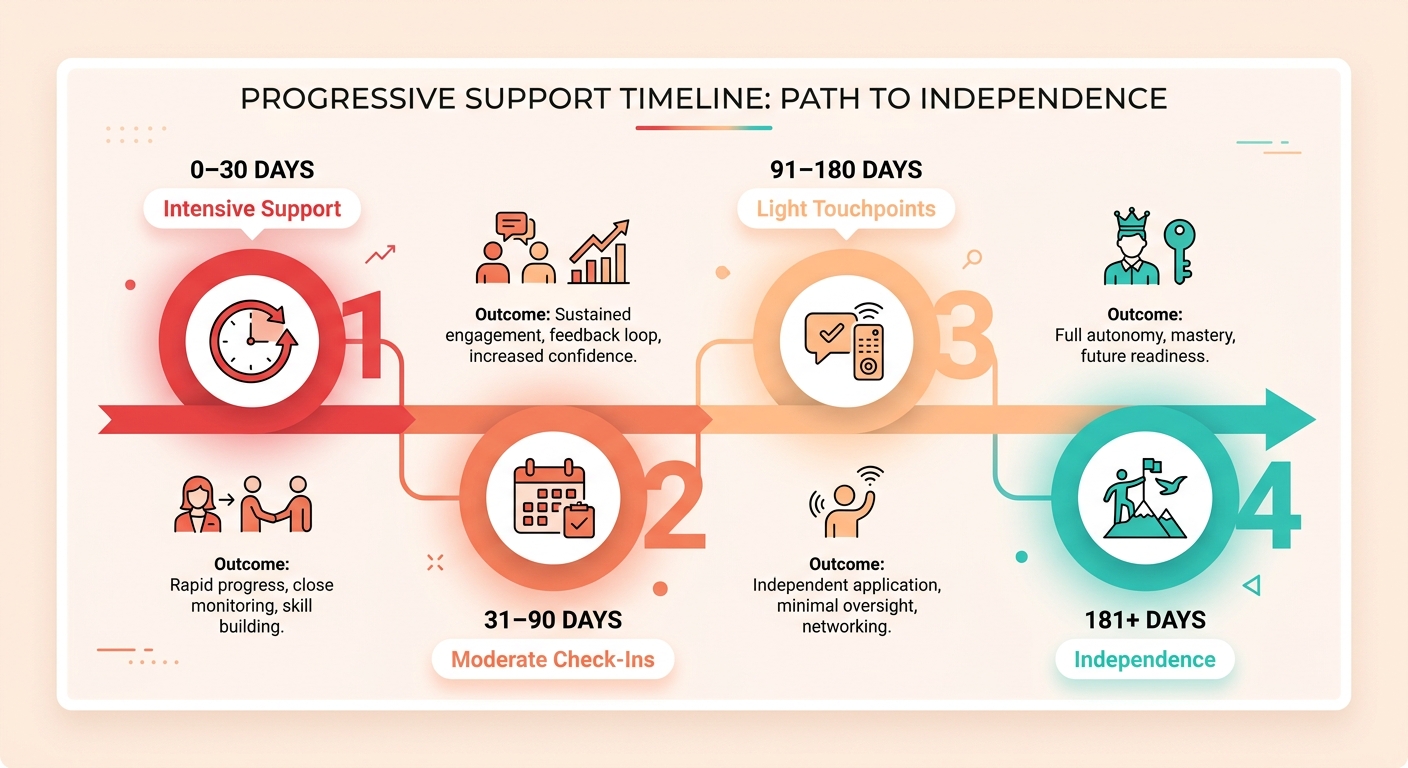
Effective tapering models typically move through distinct phases, each with its own support intensity and clear benchmarks. Early weeks are high-touch: frequent check-ins, regular face-to-face sessions with the coach, and crisis protocols actively rehearsed. This is not the time to test independence—it is the time to build the muscle memory that makes independence possible later. Active family presence during this window helps establish the relational foundation that sustains recovery when formal coaching ends.
The middle phase shifts to moderate support: check-ins become less frequent, sessions move to biweekly or as needed, and families start handing specific accountability tasks back to the client. You are watching for self-initiated behaviors—the client reaching out proactively, attending support meetings without prompting, flagging a craving before it escalates. Coaches help families recognize whether independence is emerging or whether the client still needs the previous phase's intensity.
The maintenance phase is low-touch but not no-touch: periodic check-ins replace weekly sessions, and the family role shifts from active coach to available anchor. You are no longer driving the routine—you are confirming it is holding without you. This phase tests whether the client can manage a stressful week, a triggering event, or a schedule disruption without defaulting to old patterns. If they cannot, returning to moderate support without shame keeps recovery on track. Recovery timelines are not linear, and families who treat a step backward as data rather than failure keep their loved ones engaged instead of driving them away.
What Self-Efficacy Benchmarks Actually Predict Long-Term Success?
The metrics coaches track during tapering are not arbitrary—they are the early warning system that tells whether someone is ready for the next phase or needs to stay put. Many programs encourage clients to assess their confidence regularly across key domains: managing cravings, maintaining routine, reaching out for help, and staying connected to their support network. Lower confidence in any area signals the need to hold at the current support level a bit longer. This is not about perfection—it is about honest self-assessment becoming a habit.
Relapse-free days matter, but they are not the only metric. Clients can hit several consecutive months and still lack the internal tools to sustain it long-term. That is why coaches also watch for independent skill use: are they managing daily tasks without prompting, attending peer support consistently, and using coping strategies before a crisis hits? Effective coaching models emphasize the individual building skills, not the family holding them up indefinitely. The family's job is to observe whether those skills are becoming automatic or whether their presence is the only thing keeping the client upright.
How Do Families Stay Involved Without Overstepping?
The hardest part of tapering is not reducing support—it is knowing what healthy distance looks like when you have spent months in crisis-response mode. Families who have built their entire routine around daily check-ins can suddenly feel purposeless when those check-ins drop to weekly. That is why structured follow-up and ongoing connection matter even as intensity drops.
One practical approach during the maintenance phase is creating an independence agreement—a simple document the client and family develop together that lists the non-negotiables for sustained sobriety (therapy appointments, support meetings, sleep schedule) and the areas where the client has full autonomy (social plans, work decisions, leisure time). This is not micromanagement. It is a written boundary that prevents the toxic cycle where families either hover obsessively or disengage entirely because they do not know what is still their responsibility.
Marking the transition from "we're in crisis mode" to "we've built something sustainable" helps families step back with confidence. Reflecting on what was learned, what milestones were reached, and what the family accomplished together gives everyone a clearer sense of progress. Families who take time to recognize how far they have come report feeling less anxious about stepping back because they can see the evidence of what they have already built.
Real‑World Success Stories & Data from MADE Recovery
We track outcomes across every program we run, and when families ask what formal co-coaching actually delivers, we point them to recent cases that show how the model works in practice. These are not curated success stories. They are representative of what happens when families commit to the structure we lay out and then taper support as independence grows.
Emily's Family-Centered Program
Emily came home from a 30-day residential program with her mother and younger brother ready to step in as co-coaches. We started with a joint assessment session to map who could realistically show up daily, where enabling patterns had taken root, and what boundaries needed to be explicit before anyone burned out. Her mother handled morning check-ins and meal planning. Her brother covered evening accountability calls and gym companionship three times a week.
The structure was deliberate. Emily's mother coordinated with our lead coach to track daily habit markers—sleep time, meal completion, therapy attendance, craving patterns. Her brother focused on companionship during high-risk evening hours when Emily historically relapsed. She maintained continuous sobriety over multiple months, a milestone she had not hit in three prior attempts after treatment.
What made the difference? Her family had a defined operating plan rather than vague instructions to "be supportive." They knew what to watch for, when to escalate to the coach, and how to enforce boundaries without guilt. We began tapering their involvement as Emily built self-reliance—shifting from daily check-ins to three per week, then weekly. Emily's self-efficacy grew in stages, not overnight.
The Johnsons' Team Coaching Experience: Coordinated Support Across Roles
The Johnsons brought their adult son home after detox with a more complex setup: our lead coach coordinated with a registered nutritionist and two family members who split accountability tasks. The father managed logistics—grocery runs, appointment transport, medication reminders. The mother handled emotional presence and daily mood check-ins. The nutritionist worked with all three to build meal routines that stabilized blood sugar and supported early recovery.
This coordinated model established routines quickly, reaching stable daily patterns within a few weeks. More importantly, the family avoided two potential relapses during the first 60 days. In both cases, the father noticed early warning signs—a skipped therapy appointment, sudden isolation—and escalated to the coach before a crisis materialized. Research on peer recovery coaches shows that engaged family members often catch subtle behavioral shifts 12 to 48 hours before professionals would, and that window is what prevents full relapse.
The nutritionist's role was critical. She did not just write meal plans; she taught the father how to prep stabilizing meals and coached the mother on recognizing hunger cues that masked cravings. Within weeks, the family operated independently most days, with the coach stepping in only for weekly strategy sessions and crisis standby.
What Family Co-Coaching Delivers
Family-integrated programs keep clients engaged through the agreed-upon taper phase rather than dropping out when intensive support ends. Families report "feeling like part of the team" rather than sidelined observers, and that shift in role changes how they respond to setbacks. Instead of panic or enabling, they follow the crisis protocol we built together. One mother told us, "I finally had a script for the 2 a.m. moment when everything felt like it was falling apart." That is not a vague endorsement of support. It is operational confidence that prevents families from inadvertently sabotaging recovery when stress peaks.
Data from SAMHSA indicates that clients with active family involvement in their recovery plan are twice as likely to complete their first year of aftercare compared with those managing the transition alone. The mechanism is not mysterious: families who understand the recovery process recognize setbacks as part of the trajectory rather than catastrophic failures, which keeps the client from spiraling into shame-based relapse.
The Cost-Benefit Reality
A coordinated program with family co-coaching covers the highest-risk window that most treatment models leave unaddressed. When we track saved costs—avoided ER visits, prevented job loss, reduced need for re-hospitalization—the financial case is straightforward. Families consistently tell us that structured coaching during the critical transition period costs less than the cycle of repeated crises and emergency care.
We are not claiming coaching eliminates relapse risk. We are saying it lowers the probability during the window when that risk is highest, and it does so by turning families into informed collaborators rather than anxious bystanders. The qualitative feedback we hear most often is "greater peace of mind"—not because the work is easy, but because families know what to do when the hard moments arrive.
References
[1] Family Recovery Coach Certification Program - https://theaddictionsacademy.com/family-recovery-coach/product/ncfrc
[2] Sober and Recovery Coaching and Monitoring: Find a Coach - https://www.hazeldenbettyford.org/relapse-prevention/connection-recovery-coaching
[3] Family Recovery Coaching - https://www.mountainside.com/treatment/programs/family-services/family-recovery-coaching/
[4] Why Family Coaching Matters in Addiction Recovery - https://sisuhealingpartners.com/blog/family-coaching-for-addiction-recovery/
[5] S.A.F.E.® Intervention & Family Recovery Coaching - https://family-intervention.com/services/safe-intervention-family-recovery-program/
[6] What is a Family Recovery Support Coach? - https://jameshaggertyrecovery.com/blog/family-recovery-support-coach/
[7] Family Addiction Coaching - https://a-i-r.com/family-coaching.php
[8] Sober Coaching: How It Works, Key Benefits - https://www.caron.org/addiction-101/treatment-advice/sober-coaching
[9] Family Involvement in Treatment and Recovery for Substance ... - https://pmc.ncbi.nlm.nih.gov/articles/PMC8380649/
[10] How to Help a Loved One With Addiction: A Family Guide - https://www.hazeldenbettyford.org/addiction-guides/how-to-help-a-family-member-with-addiction
[11] Effects of Peer Recovery Coaches on Substance Abuse ... - https://www.researchgate.net/publication/299303473_Effects_of_Peer_Recovery_Coaches_on_Substance_Abuse_Treatment_Engagement_Among_Child_Welfare-Involved_Parents
[12] To Improve Substance Use Disorder Prevention, Treatment ... - https://www.researchgate.net/publication/318923126_To_Improve_Substance_Use_Disorder_Prevention_Treatment_and_Recovery_Engage_the_Family
[13] The Surprising Stress Sobriety Puts on Relationships and How to Navigate It by Dr. Joanne Ketch - Sober Coach for Professionals - https://www.youtube.com/watch?v=FaDtLmkzft8
Frequently Asked Questions
1. What should families do if the person in recovery refuses family involvement in their aftercare plan?
Respect their boundary initially while offering specific, limited roles rather than full involvement. Many clients fear judgment or control, so propose concrete tasks like attending one weekly check-in or handling transportation to meetings. If refusal persists, focus on your own wellness and education about addiction while staying available if they change their mind later.
2. How do families balance providing accountability without becoming the primary treatment provider?
Families handle pre-defined tasks like flagging missed check-ins or isolation patterns to the professional coach, who makes clinical decisions. The family's job is observing and reporting specific behaviors, not diagnosing or creating treatment plans. This division prevents burnout and keeps the family relationship separate from the therapeutic one, which research shows improves long-term outcomes.
3. What happens to family involvement after the critical 90-day window closes?
Family roles taper as the client builds independence, shifting from daily check-ins to weekly progress reviews and eventually to crisis-only contact. The coaching team adjusts family involvement based on stability markers like consistent meeting attendance and maintained routines. This gradual reduction encourages self-sufficiency while keeping support available during high-risk moments like job changes or relationship stress.
4. Can family members participate if they live in a different state or country?
Distance does not disqualify participation since phone and video sessions allow families to handle accountability tasks, join planning conversations, and receive progress updates remotely. The key is commitment to scheduled contact rather than physical proximity. Remote families can still co-create routines, flag warning signs, and provide crisis support through calls during high-risk windows like evenings or weekends.
5. What if multiple family members want to help but have conflicting approaches to boundaries?
Split recovery roles among family members during the initial assessment so each person handles specific tasks aligned with their strengths and availability. One might manage transportation while another handles weekly progress reviews. Pre-negotiating these divisions during planning prevents contradictory responses to financial requests or missed meetings, which otherwise confuse the person in recovery and undermine accountability.
6. How do families recognize the difference between a lapse and a full relapse?
A lapse is a single use episode followed by immediate return to recovery routines, while relapse means returning to active addiction patterns like hiding use, skipping meetings, or isolating from support networks. When families understand this distinction, they can respond to a single slip-up with structured accountability rather than panic, helping the individual course-correct before a full relapse takes hold.
7. What prevents families from accidentally enabling when they provide daily practical assistance?
Structured boundary enforcement separates helpful support from enabling by pre-defining what families will and will not cover. For example, offering to cover essential living expenses directly while refusing to bail out discretionary debts, or providing transportation to recovery meetings but not to social events, maintains connection without removing natural consequences. The coaching team helps families distinguish between removing barriers to recovery and removing accountability for poor choices.