Track Your Recovery Progress With Honest Weekly Check-Ins
August 31, 2026

Key Takeaways
- Weekly check-ins give your support team data for care decisions.
- Setup stalls for many clients. Too much choice kills the habit.
- Three formats work well: spreadsheet, recovery app, or worksheet.
- Friction kills consistency. Use the format you will actually open.
- Sunday evening is a natural anchor for weekly check-ins.
- A 10-minute timer keeps entries focused and manageable.
- If you need more than 10 minutes, you may be avoiding.
Getting the Check-In System Running

Building a steady check-in habit is one of the first practical steps we take with clients in early life after rehab. The format matters less than getting started. Once it runs, the log gives you and your team an objective baseline as things change.
Many people stall in those first weeks because open-ended routines feel confusing. Clear structure removes that friction.
Picking a Format You'll Actually Use
Don't overthink the medium. Pick what fits your life, then try it for two weeks.
-
Choose your tracking tool. Comfortable with data? A spreadsheet makes trends easy to spot. Prefer prompts? A recovery app handles reminders. Need something off-screen? A physical journal works fine. Pick one and leave it closed when you're done.
-
Set a weekly anchor time. Sunday evenings work well for most people — the weekend is still fresh, and the week has not started yet. The day matters less than showing up at the same time each week.
-
Cap your reflection time. Set a 10-minute timer. Brief, focused entries give cleaner data than sessions that drift.
-
Protect your entries. A password-protected folder or private app keeps this space honest. You need to feel safe writing the truth, and that means controlling who reads it.
Bringing Your Support Team Into the Loop
This is the step most aftercare programs skip — and the one that makes the data worthwhile. Your check-ins feed directly into conversations with your coach about whether the current level of support still fits.
Early in rebuilding your routine, you might need daily coach contact. Four months in, a weekly summary to a sponsor may be enough. That calibration is what our programs are built around. Support tapers intentionally as stability builds.
-
Share a weekly summary with one support person. Your coach, sponsor, or a trusted family member. One person keeps accountability clear. Two or more, and it gets muddy.
-
Automate the reminder. A calendar alert or recurring notification takes willpower out of the equation. Set it before you close this page.
-
Run a two-week pilot, then review. At week two, go over the format with your coach. If entries feel forced or incomplete, adjust the questions before changing anything else. Frequency is the last lever to touch.
What Goes in the Template (and Why It Has to Be Yours)
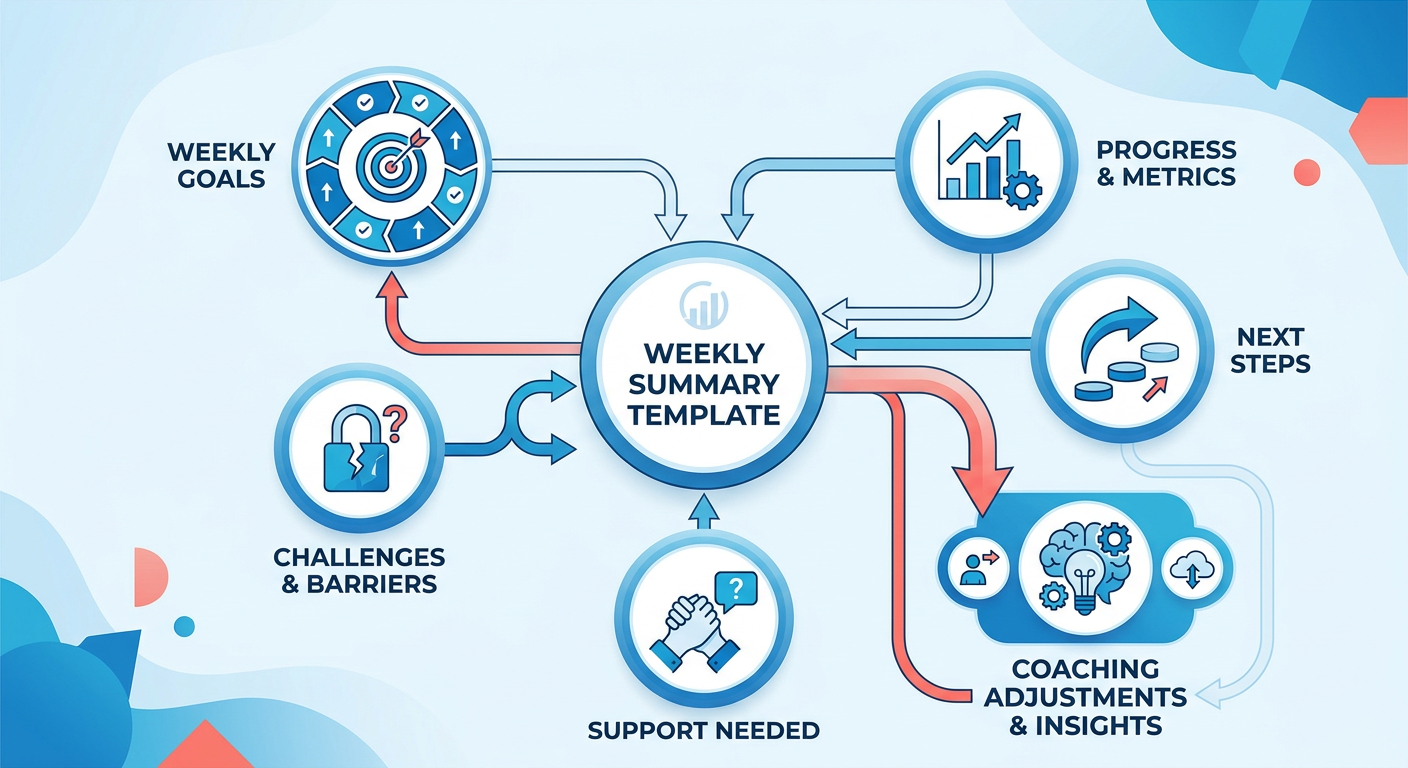
The biggest gap in most aftercare plans is the lack of objective tracking. A concrete record helps you and your team know when to adjust routines and how to approach upcoming milestones without guessing.
One design principle drives everything here. Research on goal monitoring in addiction treatment shows that clients who actively engage in tracking discussions have better outcomes than those who don't. The same research also finds that clients push back against goals handed to them by clinicians. So this template is scaffolding you fill in, not a form we prescribe. You own the data. That makes the entries honest enough to use.
Before You Open the Template
Give yourself five minutes to settle. Use a quiet room, no distractions, and one brief breathing reset. What you write should reflect the week you actually had, not the version that feels easier to report.
The Six Things to Track
Each one takes about two minutes. Score where prompted, add one short note, and move on.
- Mood and Energy (1–10). One number, one short descriptor. Tracked consistently across weeks, a single score reveals patterns faster than memory will.
- Cravings and Triggers. Log frequency, intensity (1–10), and context: where you were and what was happening right before. SMART Recovery's urge-tracking approach shows that noting context, not just intensity, improves trigger recognition over time.
- Sobriety Metrics. Days sober, any slips, and the trigger if one occurred. Honest entries here let your team respond proportionately instead of guessing.
- Nutrition and Physical Health. Meal quality (1–10), sleep hours, exercise days. Physical and emotional stability track together more closely than most people expect in early recovery.
- Routine and Structure. Tasks completed versus missed, with a short note on any gaps. Routine erosion tends to show up here before it appears anywhere else in the template.
- Support Interactions. Coach calls, peer meetings, family check-ins. What happened and whether it felt useful. This is how we read whether your current team is actually working for you.
A completed week looks like: "Mood 6, felt anxious Thursday after work; Craving 2 episodes, both managed with breathing; Nutrition 7, 4 balanced meals, 1 fast-food night." It should be specific enough to act on, and brief enough to sustain each week.
Your Weekly Recovery Index
Average the six scores. Weight sobriety and cravings at 1.5x — those two carry the strongest predictive signal. A predictive modeling study trained on 2,934 weekly surveys found that consistent behavioral self-reports could predict lapse events with an AUC of 0.829. That holds only when the data is honest and unbroken, which is exactly why template ownership and honest preparation matter.
Color-code the result for quick scanning: green (7.0 and above) means on track; yellow (5.0–6.9) means closer attention is needed; red (below 5.0) means a direct conversation with your team this week. A pattern of yellow weeks is worth raising with your coach. Programs can add accountability or structure when the data calls for it. A sustained stretch of green reflects the stability that makes stepping back appropriate. Coaching intensity tapers to build the long-term independence lasting recovery depends on.
Turning the Data Into Action
A weekly summary only matters when it changes something. In the post-rehab phase, these check-ins help you and your support network catch problems early and notice what is working. That gives you time to adjust before a drift becomes a slide.
Our team-based model keeps every observation in the plan. Coaches, family, and other coordinating support stay aligned as needs shift.
How Patterns Should Change Your Support
One red week is normal. Three consecutive reds in the same category mean something needs to change: more check-in frequency, a specialist, or additional family involvement.
- Watch for three-week trends, not single-week spikes. One bad score is noise. Three in a row is the trigger for a proactive coaching call, not a reactive one.
- Turn a red score into one specific micro-goal. "Add a protein source to lunch three times this week" changes behavior. "Eat better" doesn't. Precision makes a goal trackable.
- Send a one-paragraph summary to a trusted family member. Factual and focused. It gives caregivers a concrete way to help without overwhelming the relationship.
- Log the trigger behind a craving spike, not just the score. When coaches can see the pattern — a particular time of day, environment, or stressor — they can introduce targeted strategies instead of generic ones.
When to Pull Back on Coaching Hours
Moving toward self-reliance is intentional, not automatic. As habits solidify, the frequency of professional check-ins should decrease so you can practice these skills on your own.
- Look for steady improvement across mood stability, craving frequency, and routine adherence. That consistency, not a calendar date, is the signal to reduce formal session hours.
- Taper in steps. Daily to three-times-a-week before going weekly. One difficult week during the taper is information, not failure.
- Keep your personal tracking routine. As external oversight decreases, your internal monitoring has to stay constant. That's your early-warning system.
Why People Stop Checking In (And How to Keep Going)
The pull to present a clean recovery story is real. When you minimize what is actually happening, your support team cannot give you the help you need. Sugarcoated entries look fine on paper and miss the point.
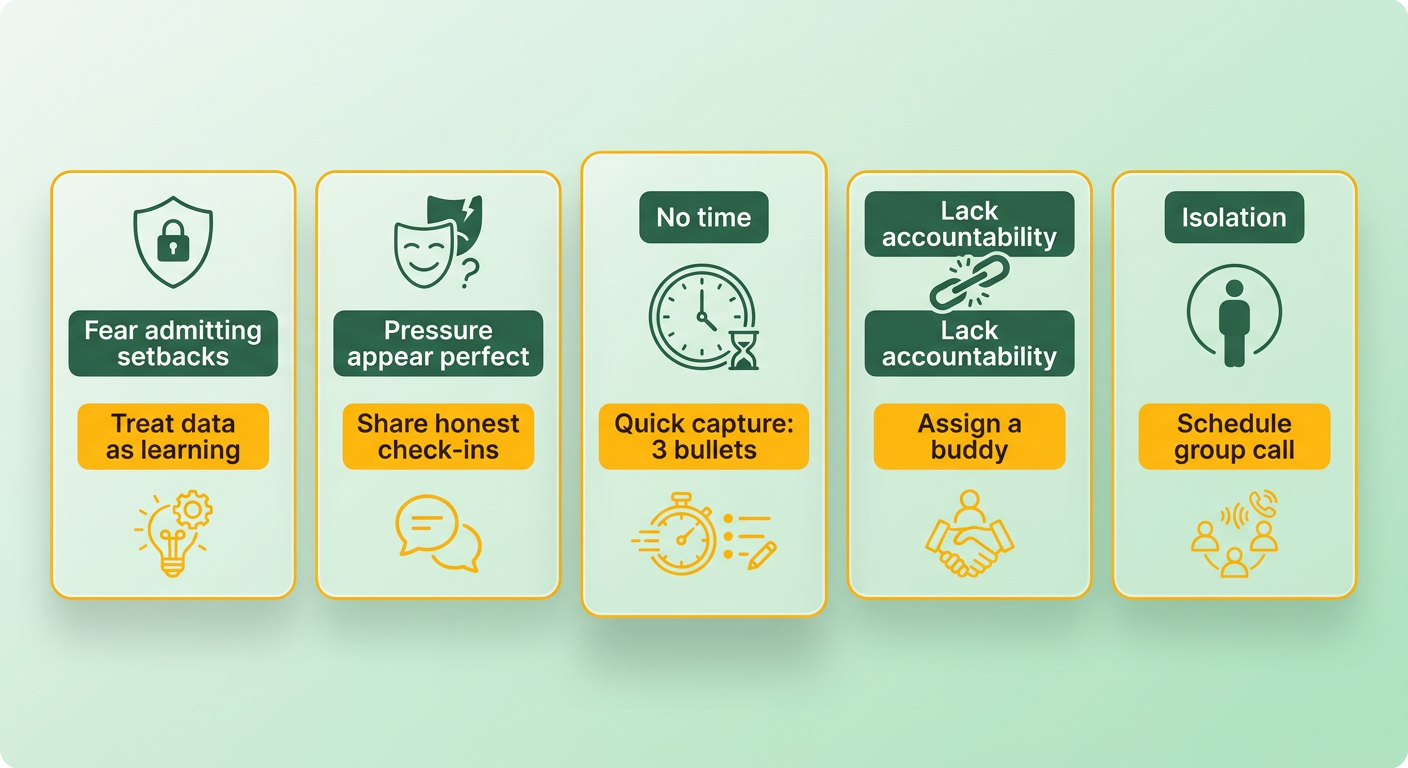
Most obstacles have a simple fix. Here are the five we see most often.
What Gets in the Way After Rehab
-
Fear of admitting setbacks. Lapses and hard days are diagnostic data, not character judgments. That information helps refine your coping strategies — it doesn't define your progress.
-
No time. Use quick-capture mode: three honest bullet points, five minutes, done. Partial data beats no data.
-
Emotional overwhelm before you even open the check-in. Try 4-7-8 breathing first: inhale for 4 counts, hold for 7, exhale for 8. One cycle lowers activation enough to write clearly.
-
Technology fatigue. Switch to the paper worksheet for one week. No apps, no logins. Return to digital the week after. Cycling between formats is part of rebuilding a sustainable post-rehab routine.
-
A missed week. Use the reset protocol: bring your last two weeks of notes to your next session, reconstruct the patterns with your coach, and pick up from there. A gap doesn't erase your progress.
Motivation tip: Before your next check-in, name a non-substance reward for four consecutive honest submissions. Having something concrete ahead of you changes the math on showing up.
What if I relapsed? Document it honestly and contact your coach the same day. A relapse is the most important data point your team can act on, and the sooner we know, the faster we adjust.
Can I skip a day? Keep a short note, but aim for the weekly rhythm. Consistency matters more than perfection.
Recovery Commitment Card (print and keep visible)
I commit to completing an honest weekly check-in, even when it feels hard. My check-in data helps my team adjust who is on my support team and when.
My personal pledge: ______________________________________
My reward at 4 honest check-ins: _________________________
References
[1] SMART Recovery Toolbox - https://smartrecovery.org/toolbox
[2] Goal setting and monitoring with alcohol and other drug use disorders - https://pmc.ncbi.nlm.nih.gov/articles/PMC8671316/
[3] Predictive modeling of addiction lapses in a mobile health ... - https://pubmed.ncbi.nlm.nih.gov/24035143/
Frequently Asked Questions
1. If a crisis can happen any day, why is a once-weekly check-in considered sufficient to catch problems early?
A weekly check-in is meant to spot gradual drift, not manage emergencies. A crisis still requires immediate outreach. Long-term stability is usually threatened by slow changes in sleep, mood, or routine. Weekly review helps you and your coach catch downward trends before they turn into a lapse. Daily touchpoints remain available for immediate support.
2. What should I do if my Recovery Index stays in the yellow zone for multiple weeks without ever going red?
Persistent mid-range scores mean you are not in an active crisis, but your coping tools are under strain. Bring the trend to your next coaching session. It may point to a need for more accountability, a different daily structure, or help with a recurring stressor.
3. Why does the template recommend sharing check-in summaries with only one support partner instead of a larger care team?
Sharing personal data with a large group can create the bystander effect. Everyone assumes someone else is watching. One dedicated point of contact keeps communication clear and responses focused when you need guidance.
4. If I'm feeling fine subjectively, does tracking my Recovery Index honestly still matter?
Yes, because feeling fine can hide small behavioral changes. Objective metrics like sleep hours, meeting attendance, and minor cravings help you catch early warning signs of routine erosion. Your mind may overlook those changes during periods of high confidence.
5. Should I keep doing weekly check-ins after my coaching sessions taper off, or can I stop once formal support reduces?
You should absolutely continue. The goal of tapering is to move from external oversight to self-directed management. Keeping the habit builds self-awareness and preserves a continuous record. That record is valuable if you ever need to step up support again.
6. Does spending more time on a check-in entry mean I'm reflecting more deeply?
Not necessarily. Long writing sessions often turn into rumination or self-criticism instead of useful analysis. Focus on objective facts, such as specific triggers and behavioral responses, rather than lengthy stories. A brief exercise is easier to keep as a habit.