Rebuild Your Routine Post-Rehab: Sleep, Nutrition, and Support Systems
August 7, 2026
Key Takeaways
- Your body needs 11.5 to 15.5 cups of water a day to function well, and rehydrating is one of the first repairs after rehab.
- Up to 50% of people with eating disorders also misuse substances. Appetite and nutrition often suffer long after treatment.
- Sleep consistency rates a 2 out of 5 for difficulty, but it pays back more than almost anything else.
- Physical habits like sleep and meals come first, because the body is still repairing in early recovery.
- Structured activity fills 4 to 6 hours a day and rates a 4 for difficulty.
- Support check-ins run 15 to 30 minutes a day and head off isolation, one of the biggest relapse triggers early on.
- A flexible rest slot lets the day bend under pressure instead of snapping, and it costs almost no effort.
Quick Summary
A good recovery routine in the first 90 days after rehab isn't complicated. Five building blocks matter most: sleep, meals and hydration, structured activity, support check-ins, and a flexible rest slot. Clients who lock in these basics before chasing bigger goals hold sobriety steadier while easing back toward work.
The order matters. Physical habits come first because your body is still repairing. Nutrition research from Gateway Foundation shows how substance use disrupts metabolic pathways and drains key nutrients. Close those physical gaps early, and your energy stabilizes. That makes the rest of the day possible.
What a strong early routine actually looks like
A strong early routine balances low-effort, high-impact habits against the harder work of daily life. The table rates each piece by difficulty, so you and a coach can see where to start and where to wait.
| Routine Element | Typical Time / Day | Difficulty (1‑5) | Key Metric | Benefit Highlight |
|---|---|---|---|---|
| Sleep (consistent schedule) | 7‑8 h | 2 | Steadier mood, sharper decisions | Cuts anxiety and depression symptoms |
| Meals & Hydration | 3 meals + ~2 L water | 3 | Stable blood sugar, fewer cravings | Replenishes B vitamins, magnesium, electrolytes |
| Structured Activity (work, hobby, exercise) | 4‑6 h | 4 | Fills newly open time | Reduces stress, builds a sense of progress |
| Support Check‑ins (coach, peer, family) | 15‑30 min | 2 | Real-time accountability | Keeps you from isolating |
| Flexible Rest Slot (mindfulness, reading) | 30‑45 min | 1 | Better stress resilience | Lets the day bend without breaking |
Sleep and hydration sit low on the difficulty scale, but they bring outsized returns. They help regulate cortisol and steady mood swings. Structured activity rates hardest at 4 because it means re-engaging with outside responsibilities and managing time again.
Why start with the easy wins
The sequence in that table is deliberate. On their own, sleep and nutrition advice sound like separate chores. Stacked together, they become a foundation: steady rest plus stable blood sugar frees up the mental energy you'll need for the harder job of going back to work.
That's why we don't push clients into a full work schedule in week one. Adrienne Webster, LAC calls nutrition "a powerful aspect of sustained recovery from substance use disorders." We agree, and we sequence around it.
When to skip the rigid plan
Skip the strict all-day structure if you're still wiped out from detox. Forcing a 6-hour activity block on a body that can't sleep just backfires. Ease the rest slot up first, then layer activity on top.
Steer clear of restrictive eating trends, too. American Addiction Centers warns they cause deficiencies that stall recovery. Whole foods over restriction, every time. Our coaches set the difficulty ladder to your baseline energy, so returning to work fits your pace, not a template's.
Why Rebuilding Your Routine Matters
The best recovery routine in your first 30 days home isn't the one that looks impressive on paper. It's the one you can run on a workday. That stretch right after you leave detox or residential care is usually where routines either take root or fall apart, because the schedule that held you together in treatment disappears the second you walk out the door.
The timing is the whole problem. A recovery routine has to work hardest exactly when your body is least cooperative and your calendar is most chaotic. Sleep problems and mood swings are common in the first month post-rehab, and that's often the same month people try to head back to work. Professional guidance earns its keep during this window.
Why the 30-day window is the highest-risk stretch
The first month piles physical triggers on top of scheduling chaos. Withdrawal symptoms peak, nutritional gaps from substance use are still unresolved, and going back to a job scrambles your sleep and meal timing. It's the worst possible moment to lose structured support, and it's usually the exact moment it vanishes.
The numbers back up the stakes. In one review of English recovery services, 48% of people who left treatment were still dependent. Relapse risk stays high through the first year, so the routine you build early isn't busywork. It's the scaffolding that holds while everything else is shaky.
How routine actually cuts cravings
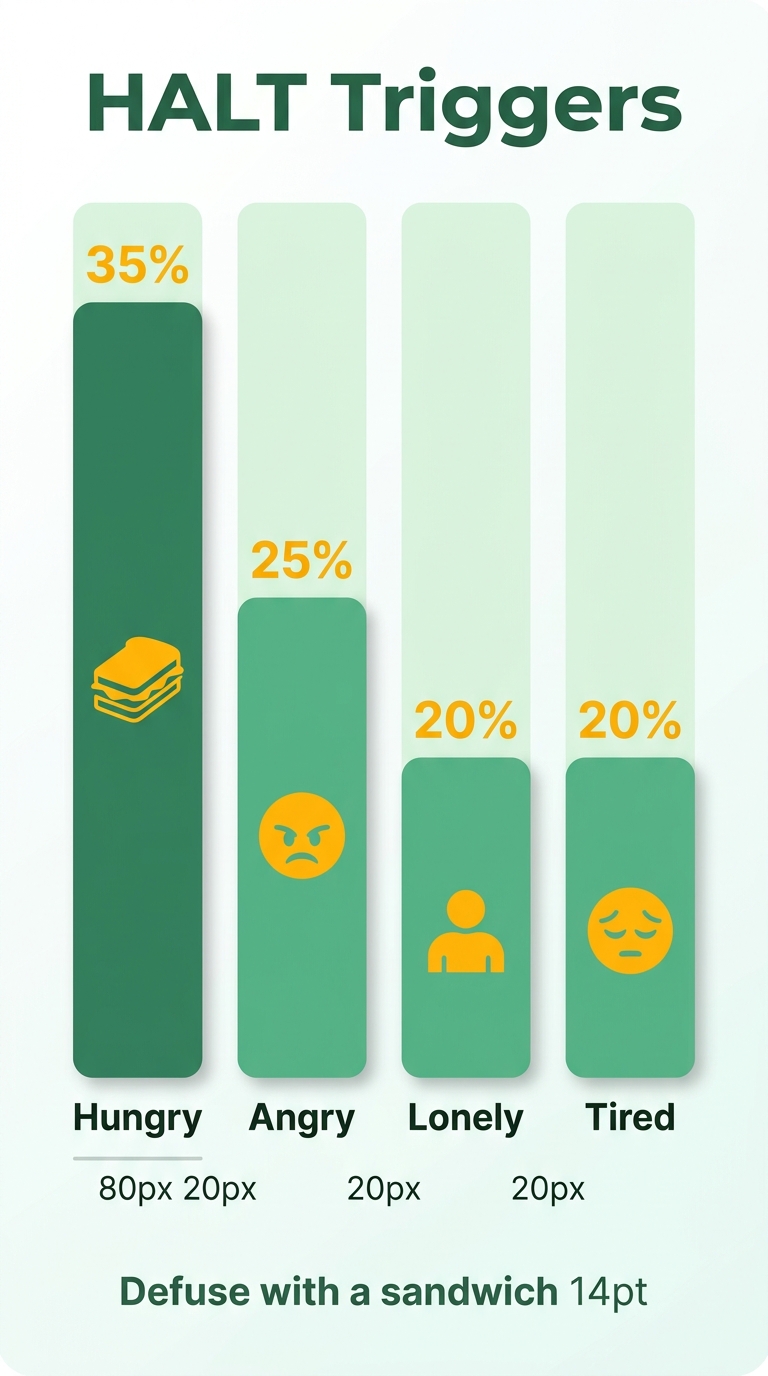
Routine works because it takes apart physical craving triggers before they stack up. The HALT framework names four common triggers, and three of them, Hungry, Lonely, and Tired, are physical states, not just moods.
Here's the link we lean on with clients. Irregular sleep fires the "Tired" trigger. Skipped meals fire the "Hungry" one. Together they build a compounding load that a fixed schedule quietly disarms. Fix the timing of sleep and meals, and you knock out two triggers at once. That protects you more than treating either alone.
One honest caveat on sleep. CBT for insomnia improves sleep quality and daytime function in alcohol-dependent patients, but it doesn't independently prevent long-term relapse. A consistent sleep schedule does correlate with better emotional stability and fewer cravings day to day. Both are true. Treat sleep as a foundational stabilizer for the hard early weeks, not a standalone relapse shield.
Who benefits most from rebuilding routine now
Anyone heading back to a job while still managing early sobriety. Loneliness hits this group hard; 69% of people with substance use disorder report it, and strong social ties raise survival odds by half. A routine that builds in support check-ins protects you where isolation does the most damage.
We build these routines flexibly on purpose, so a shift change or a rough night doesn't collapse the whole system. If you're trying to gauge whether recovery is holding, these signs recovery is working make a useful gut check.
Assessing Your Current Sleep Patterns
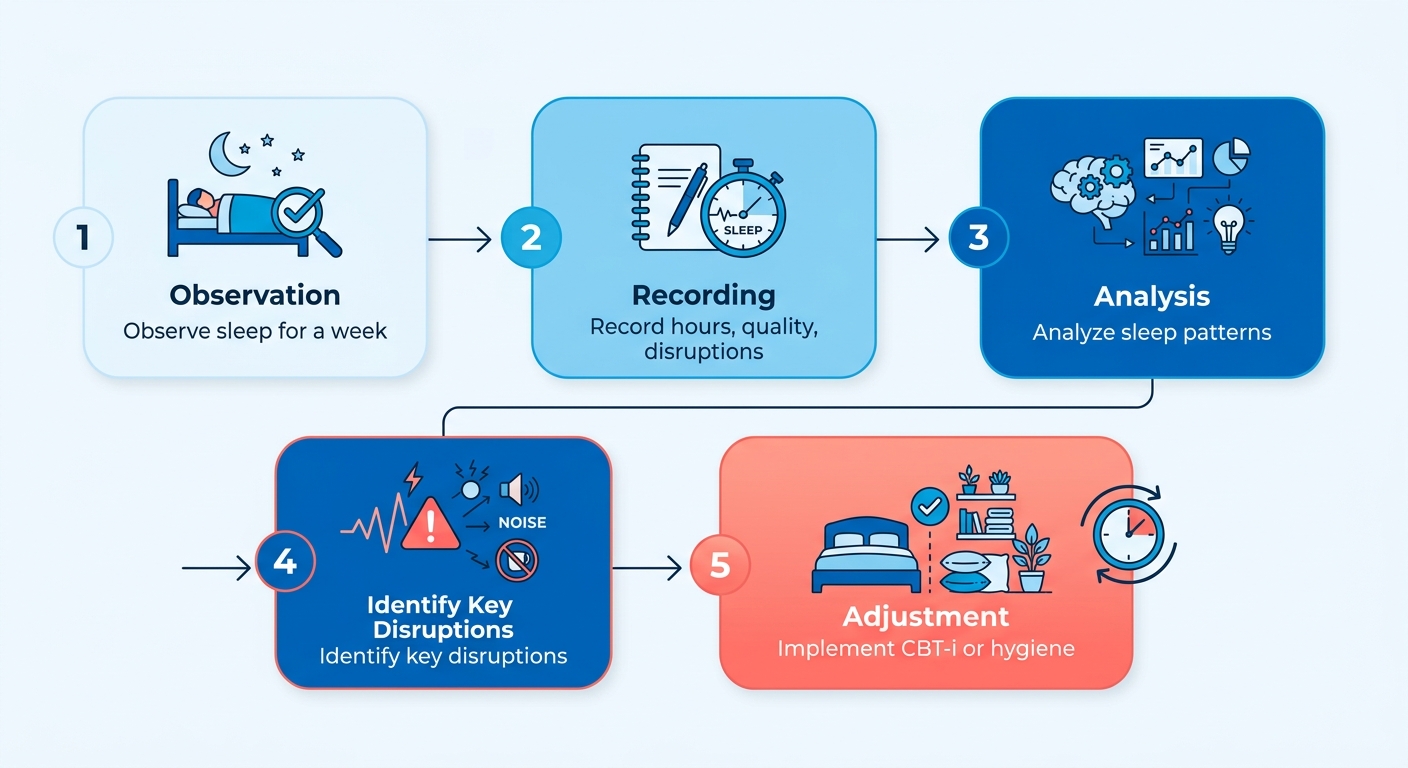
Before you fix your sleep, you need an honest picture of what it looks like right now. That starts with a week of plain observation, not a rigid overhaul. The first weeks home, when the structure of treatment fades and real life crowds back in, tend to be when sleep is most disrupted and most worth addressing, because your body is still recalibrating.
Rebuilding a healthy circadian rhythm is gradual. Clinical interventions like CBT-i improve sleep quality by targeting the thoughts that block rest, but even a simple, structured daily routine helps reduce anxiety and depression symptoms by making the day predictable. Daily consistency eases the nervous system back toward balance.
How to track your sleep
Start with a simple log, not a wearable. For seven nights, write down when you got in bed, roughly when you fell asleep, how many times you woke, and how you felt at 10 a.m. That morning-energy note matters more than the numbers.
Why bother? Tracking sleep next to daily energy shows you your patterns of physical vulnerability. When fatigue piles up, it lowers your threshold for stress and makes you more prone to sudden impulses. Log it, and you can see exactly when a run of bad rest starts to compromise your judgment. MyRecoveryPal points to physical exhaustion as a primary driver of that vulnerability, which makes tracking a real preventative tool.
What realistic sleep goals look like
Aim for 7 to 9 hours a night, but don't expect to land there in week one. Most recovery sources converge on 7 to 9 hours for emotional balance and clear thinking. Chase it too fast, and you just add pressure.
Set the anchor first: a fixed wake time, seven days a week, even after a rough night. A steady wake time drags your bedtime into place faster than any bedtime rule. As one source puts it, quality sleep restores physical and mental health, sharpens self-control, and lowers hostility. That self-control is exactly what you draw on when a craving hits mid-afternoon.
And skip the sleep-tracking apps and 3 a.m. score-checking for now. In early recovery, they tend to feed anxiety more than they help.
A bedtime routine that survives a workday
A consistent bedtime routine is a short, repeatable wind-down you can run whether you're home by six or nine. Keep the room dark and cool, and go screen-free for the last stretch before bed.
This is where coaching does its real work. We don't hand you a generic protocol. Because every MADE program is built around the individual and shifts as your needs change, the wind-down gets shaped to your actual daily life. A hard day doesn't blow up the whole routine. That flexibility is what keeps the habit alive past week two.
The payoff compounds over the month. A steady sleep schedule stabilizes circadian biology, which supports emotional regulation. Nail the assessment now, and every other piece of your routine gets easier to build on top of it.
Planning Balanced Nutrition
A workable nutrition plan usually gets skipped because cooking feels exhausting in early recovery. But feeding yourself well is a direct way to steady physical vulnerability. When blood sugar drops, it mimics the physical sensations of anxiety, which are easy to misread as an urge to use. Keeping simple, nourishing food within reach heads off those dips before they escalate. MyRecoveryPal calls managing physical states like hunger a cornerstone of staying stable.
Skipped meals and blood-sugar crashes don't just make you irritable. Poor nutrition can promote drug-seeking behavior, because the brain's reward circuitry lights up for both food and substances. Feed the body on a schedule, and you starve one of your loudest triggers.
What your plate should look like now
Balanced meals in recovery mean protein, complex carbs, and healthy fats at every sitting. Aim for roughly 20% to 35% of your daily calories from healthy fats, with protein and whole-grain carbs filling out the rest. That mix steadies your energy and cuts cravings, which matters most on a workday when your schedule is unpredictable.
Micronutrients do quiet, important work here. Common deficiencies after substance use include B vitamins, magnesium, and electrolytes, and drug-dependent people often show low serum copper, zinc, and iron. You don't need lab work to start eating well, but it helps to know that fatigue and low mood can be a deficiency talking, not a character flaw.
Which foods and supplements actually help
Focus on whole foods over quick fixes. Nutritional support with vitamin B12, folate, and omega-3 has been shown to reduce cravings and lift mood in recovering patients. The research consistently ties good nutrition to sustained recovery from substance use disorders.
Avoid restrictive eating trends. Cutting whole food groups in your first month home can trigger new deficiencies and stall recovery. This is the wrong window for keto experiments or aggressive calorie cuts. Your job right now is repletion, not restriction.
How to meal prep without burning out
Prep in batches so a tired evening never turns into a skipped meal. Cook two or three proteins and a pot of grains on your day off, portion them out, and keep water bottles in sight. The goal is removing decisions, so a rough day doesn't knock out your nutrition. Programs that fold in nutrition education report higher success at maintaining sobriety.
Worth naming a gap here. Official protocols like the NICE guidelines still give nutrition minimal emphasis, even though frontline programs that add it see better outcomes. We don't wait for the guidelines to catch up. Our nutrition coaching treats meal planning as standard care in that first month, so your plate is one less thing to figure out alone while you ease back toward work.
Building a Support Network
A recovery routine falls apart fast if you try to rebuild it alone. Our coaching runs on a simple truth: recovery is a collaborative process, and staying connected gives you steadier footing. Isolation compounds risk in early recovery, exactly when physical adjustment and returning to work collide. Connection is a practical necessity, right alongside sleep and meals.
What catches people off guard: family and friends matter, but peer support, the kind where everyone in the room has walked the same path, outperforms many established therapies for maintaining abstinence. We watch this play out with the clients we coach. The one who stays plugged into a recovery group manages the 30-day chaos better than the one who tries to white-knuckle it with loved ones alone, because peers catch the warning signs loved ones miss.
Why peer support beats solo accountability
Peer-led recovery and 12-step programs work because they remove the communication barriers. When a family member asks if you're okay, it's easy to deflect. A peer who's been there reads the subtle behavior shifts that come before a slip. Shared experience creates instant credibility, which is why peer-led services do better at supporting long-term abstinence. We steer clients toward groups focused on practical problem-solving, like navigating social events or a changing work schedule, rather than rooms that run on shame. If a meeting doesn't feel constructive, find a different one.
Family and friends anchor your life outside recovery, but they shouldn't carry the full load. We see burnout fast when one person, usually a partner or parent, becomes the only support contact. Spread the weight. One person for late-night check-ins, another for meal accountability, a third for weekend plans. A supportive living space helps, but a real network means no single person is your entire relapse-prevention plan.
Using technology without letting it replace real connection
Apps and tracking tools help, but they're supplements, not substitutes. They can lighten the mental load of remembering sleep logs, meal reminders, and daily check-ins, so you spend less energy tracking data and more energy actually talking to people. Call-back counseling quitlines improved cessation rates among people with co-occurring substance use disorder, which tells us remote support works when it's structured and human-led, not just an app notification.
Avoid apps that gamify sobriety with badges and streaks. The research on motivation says external rewards like points, levels, and virtual trophies don't build lasting behavior change in recovery. Use technology to track patterns and schedule real conversations, not to replace them. If an app makes you feel accountable to a screen instead of a person, delete it.
Our coaching is built around real human connection, offered through virtual and in-person sessions and, when needed, a coordinated team rather than a single contact. The 30-day window is when work re-entry collides with physical withdrawal triggers, and that collision is exactly when people drop their support routine because they're too tired to keep it up. Steady, real-world support during those moments closes the gap, because there's a human on the other end who knows your baseline.
That's the division of labor that holds. Technology for logistics. Humans for crisis and companionship. Neither works alone, which is why we keep steady coaching in place during the moments that matter, so clients never feel like they're facing recovery by themselves.
What a functional support network actually looks like
A strong network in early recovery isn't aspirational. It's operational. You need contacts for three scenarios: routine check-ins, unexpected cravings, and logistical chaos. In our experience, clients who map this out in week one hold steadier than the ones who assume they'll figure it out when something goes wrong.
Routine check-ins keep the baseline visible. These are the daily or twice-weekly calls with a peer sponsor, coach, or accountability partner where nothing dramatic happens. You just confirm you slept, ate, showed up to work. It's not therapy. It's pattern recognition. When your check-in language shifts, "I'm fine" instead of "I slept six hours, ate breakfast, feeling okay," that's the signal someone needs to dig deeper.
Craving contacts are the people you call when impulse hits. These can't be the same people as your routine check-ins, because cravings don't follow a schedule. We tell clients to name two people they can text at 11 PM without apology. If that list is empty, find a peer support group where late-night contact is normal, because waiting until morning to process a trigger is how relapses happen.
Logistical contacts handle the mundane stuff that can derail a routine: rides to meetings, picking up prescriptions, coverage when a work shift runs late. This is where family and friends shine. They may not fully get the clinical side of recovery, but they can drop off groceries or handle a chore so you can make your session. That practical support protects the structure sleep and nutrition need to function.
The common mistake? Building a network that looks supportive but doesn't actually activate when you need it. Test your contacts early. Send the text. Make the call. If someone doesn't respond, or responds with judgment instead of help, replace them before you hit a crisis. A support network only works if it's been used before it's needed.
Tracking Progress and Adjusting Your Routine
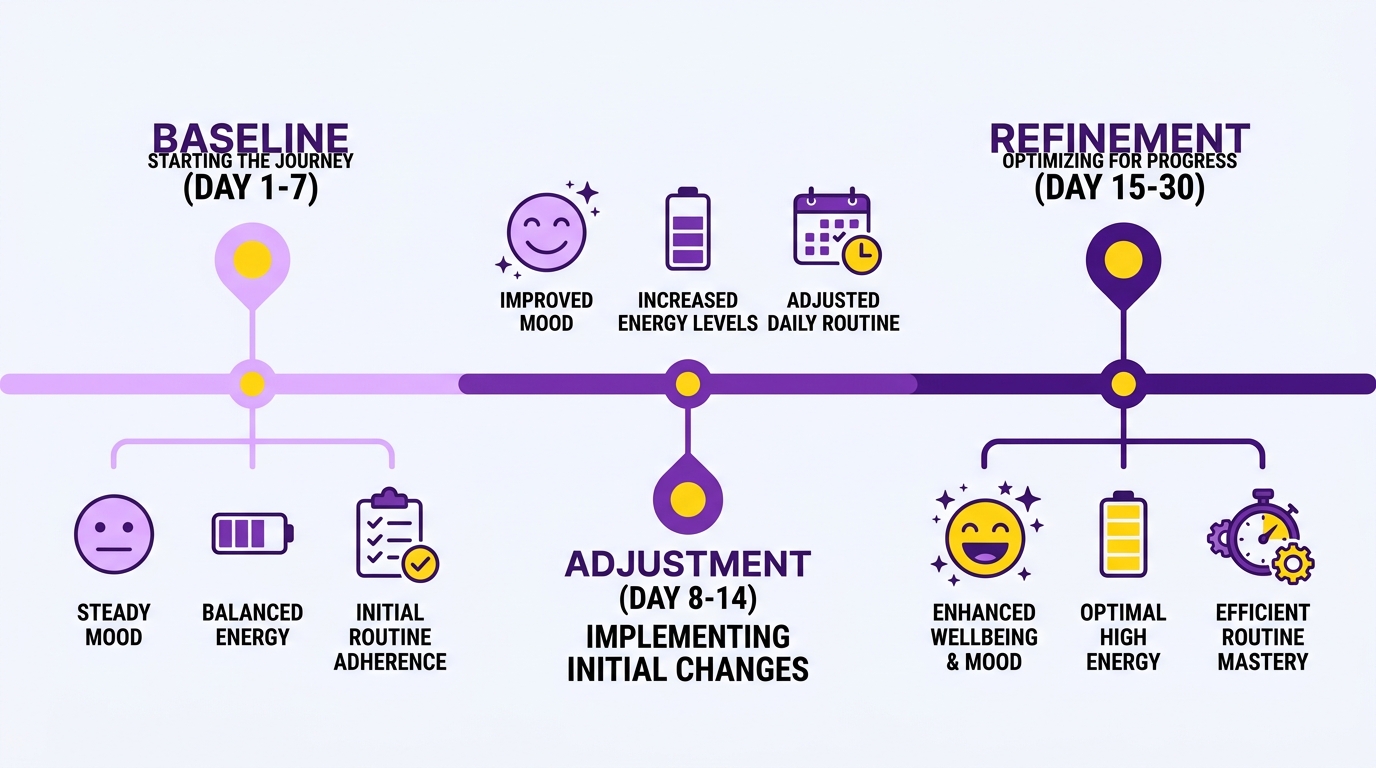
A good routine isn't a static plan you set on day one. It has to adapt as your body recovers and your schedule fills back in. In the first month, tracking progress means watching a few simple indicators, not grading yourself against an idealized checklist.
Measure the routine by how well it supports your daily function, not by how perfectly you check every box. Structure builds discipline and self-control, but too much rigidity turns into frustration the moment your schedule shifts. Flexibility isn't a weakness in the plan. It's what makes the plan survive.
How to track progress in early recovery
Track the physical basics first, because they move before mood does. Watch three numbers: hours slept, meals eaten, check-ins made. They're concrete, and they tell you whether the foundation is holding.
We coach clients to log what actually happened with rest and food, not what they intended. Tracking over time surfaces trends, like a string of late nights or skipped meals, before they hit your mood. Using resources like Gateway Rehab to guide routine building gives you a baseline of physical stability, so a week of disrupted sleep reads as an early warning sign to address, not a personal failure.
Steadier energy and a calmer morning are strong signs of progress. To see how those daily habits add up to bigger milestones, the clinical markers of signs recovery is working give helpful context.
What signals it's time to adjust
Adjust when a physical trigger keeps firing despite your best effort. Rising irritability, skipped meals two days running, cravings that spike in the late afternoon, they all point to the same thing: the routine isn't matching your real schedule.
When several habits slip at once, the physical strain climbs. A single bad night or one missed meal is manageable. Stack them together, and the cumulative stress makes everything harder to handle. MyRecoveryPal notes that spotting this compounding effect lets you step in early by prioritizing rest or food before it snowballs.
Use your daily log as a tool for immediate adjustment, not a permanent scorecard. The goal in the early weeks is stabilization, not perfection. Once sleep and meals reach a steady baseline, you can start shifting toward broader lifestyle goals.
Adjusting without disrupting your recovery
Change one thing at a time. When a client's routine stops fitting a new work shift, we move a single anchor, like breakfast or a check-in call, instead of rebuilding the whole day.
Exercise is a useful lever, because it doubles as a craving coping tool, not just wellness. The 30 to 60 minutes, five days a week guideline is a ceiling to grow toward, not a week-one demand. A ten-minute walk on a chaotic day still counts.
Review the routine weekly with your coach, then adjust. Guidelines lag behind frontline practice, so we build routine tracking and healthy habit tracking into the plan from day one rather than waiting for a symptom to force it. That steady loop of tracking, spotting, and tweaking is what keeps a routine job-ready without knocking your sobriety off balance.
Maintaining Long-Term Sobriety Through Routine
A structured routine proves its worth long after the move home, especially once the novelty fades and daily responsibilities pile up. People who stay sober over the long haul usually rely on the same foundational habits: consistent rest, regular meals, physical activity, and ongoing connection, until those actions run on autopilot.
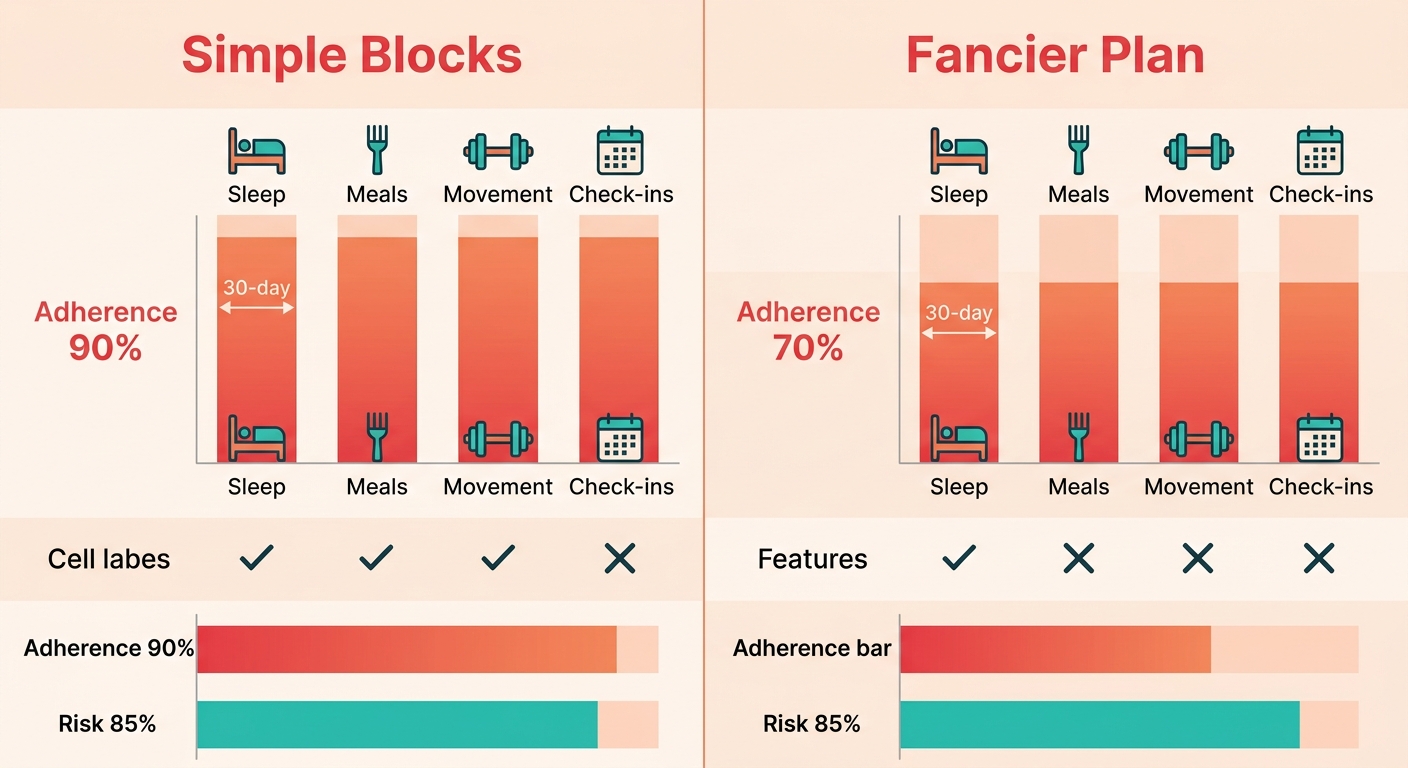
That consistency is a real defense against relapse. People in recovery face a 40% to 60% relapse likelihood, with risk peaking at 85% during the first year. A structured routine doesn't erase that risk, but it lowers it by reducing physical vulnerability and filling free time.
The long-term payoff of keeping a routine
A routine keeps paying off long after early withdrawal fades, because it builds the discipline and predictability that keep you out of risky situations. Structure develops self-control and cuts stress and boredom, and it fills your time with something meaningful instead of leaving gaps where old habits creep back in.
Physical activity is a key part of that long-term structure. A 2014 meta-analysis found exercise increased abstinence rates for opioid, alcohol, tobacco, and polydrug users compared with support alone. Regular movement gives stress a healthy outlet and helps regulate dopamine, which makes it a practical craving tool.
How to avoid relapse past the first month
Long-term relapse prevention comes down to protecting your routine when life gets busy, and adding support instead of dropping it. As your work schedule fills back in, the temptation is to trim the "extra" pieces first. Don't. The check-ins and the movement are what keep the physical trigger load low once your calendar tightens.
A few guardrails we lean on:
- Keep one non-negotiable anchor each day, a fixed wake time or a standing meeting, so the routine survives a chaotic week.
- Protect recovery before big life changes. Many clinicians recommend focusing on personal recovery for at least a year before pursuing serious romantic relationships. Not a rule to follow blindly, but the logic holds: don't stack destabilizers early.
- Address tobacco when you're ready. Contrary to the worry that quitting mid-recovery is destabilizing, smoking cessation doesn't worsen substance use outcomes.
Why ongoing support keeps sobriety steady
Sobriety holds longest when support runs past the initial treatment phase. Recovery is an ongoing process that needs sustained attention, and a structured routine helps you keep that attention where it belongs. A coach can bridge the gap after formal programs end, so the structure that held you together stays intact as you move back into daily life.
Our approach is to keep adjusting alongside you as work, family, and energy shift. The routine that fits month one won't fit month six, and that's fine. A plan you can flex is a plan you'll actually keep.
References
[1] Structure and Daily Routines: The Foundation for Lasting ... - https://www.addicted.org/after-treatment/structure-and-daily-routines/
[2] Sleep, Nutrition, and Exercise: Rebuilding Your Body in ... - https://www.myrecoverypal.com/resources/resource/sleep-nutrition-exercise-recovery/
[3] Nutrition for Addiction Recovery: Best Foods, Diet Tips, & Healing Support - https://americanaddictioncenters.org/blog/4-nutrition-tips-for-early-recovery
[4] Life After Rehab | What to Expect & How SaVida Can Help - https://savidahealth.com/life-after-rehab-what-to-expect-how-savida-can-help/
[5] Healthy Habits to Support Recovery After Rehab - https://www.recoverycentersofmontana.com/blog/healthy-habits-to-support-recovery-after-rehab.html
[6] Building a Healthy Routine in the Early Stages of Recovery - https://www.gatewayrehab.org/blog/building-a-healthy-routine-in-the-early-stages-of-recovery
[7] How Healthy Routine Can Help Recovery - Recovered.org - https://recovered.org/blog/building-healthy-daily-routines-in-recovery
[8] Nutrition to Help Your Body Heal in Addiction Recovery - https://www.gatewayfoundation.org/blog/nutrition-for-substance-abuse-recovery/
[9] The importance of nutrition in aiding recovery from ... - https://www.researchgate.net/publication/318925653_The_importance_of_nutrition_in_aiding_recovery_from_substance_use_disorders_A_review
[10] Sleep and Substance Use Disorders: An Update - https://www.researchgate.net/publication/264903743_Sleep_and_Substance_Use_Disorders_An_Update
[11] Nutrition Therapy for Eating Disorders, Substance Use ... - https://www.researchgate.net/publication/287305806_Nutrition_Therapy_for_Eating_Disorders_Substance_Use_Disorders_and_Addictions
[12] Lifestyle interventions in the management of substance use ... - https://www.researchgate.net/publication/362387793_Lifestyle_interventions_in_the_management_of_substance_use_disorder
[13] (PDF) Nutrition, sleep and recovery - https://www.researchgate.net/publication/233182137_Nutrition_sleep_and_recovery
Frequently Asked Questions
1. Should I force myself back to work in the first week after rehab even if I'm exhausted?
No. Forcing a full work schedule before your sleep and nutrition stabilize typically backfires. Start with the easier routine elements—consistent sleep times and regular meals—then gradually add structured activity as your baseline energy improves, not according to a rigid timeline.
2. Can I rely on sleep-tracking apps to improve my sleep quality in early recovery?
Sleep-tracking apps often increase anxiety in early recovery rather than helping. Instead, use a simple written log noting bedtime, wake time, and how you feel at 10 a.m. Focus on establishing a consistent morning alarm before worrying about optimization.
3. Why does the article say peer support works better than family support for recovery?
Peer support eliminates communication barriers because people with shared experience can recognize subtle behavioral changes that family members might overlook. While loved ones provide vital practical assistance, peers offer a unique level of credibility and mutual understanding that helps maintain accountability.
4. If I can't cook after work, does that mean my nutrition plan will fail?
Not at all. Preparing simple meals in advance or keeping healthy, pre-portioned options on hand removes the decision-making burden when you are tired. The goal is to keep nourishing food easily accessible so that physical exhaustion does not lead to skipped meals and blood sugar drops.
5. Is it normal to still feel cravings even when I'm following the routine perfectly?
Yes. A structured routine helps minimize physical stressors, which reduces the frequency and intensity of cravings, but it will not eliminate them entirely. The primary purpose of these habits is to build resilience and conserve mental energy so you are better equipped to navigate cravings when they do arise.
6. What should I do if my work schedule makes a consistent bedtime impossible?
Focus on keeping a consistent wake-up time instead, even after a late shift. Keeping your morning alarm at the same time helps regulate your body's internal clock more effectively than trying to force sleep at night. You can also use a brief, repeatable wind-down routine to signal to your body that it is time to rest, regardless of when you get home.
7. How many support contacts do I actually need to avoid isolation in early recovery?
It is helpful to have contacts who can support you in different ways: some for daily accountability, others for urgent craving support, and some for practical help. Try to identify a few individuals you can reach out to during difficult moments, alongside peers for regular check-ins and family members who can assist with daily logistics.