Rebuilding After Rehab When You've Lost Your Home and Job
September 22, 2026

Why rebuilding after rehab is the hardest part
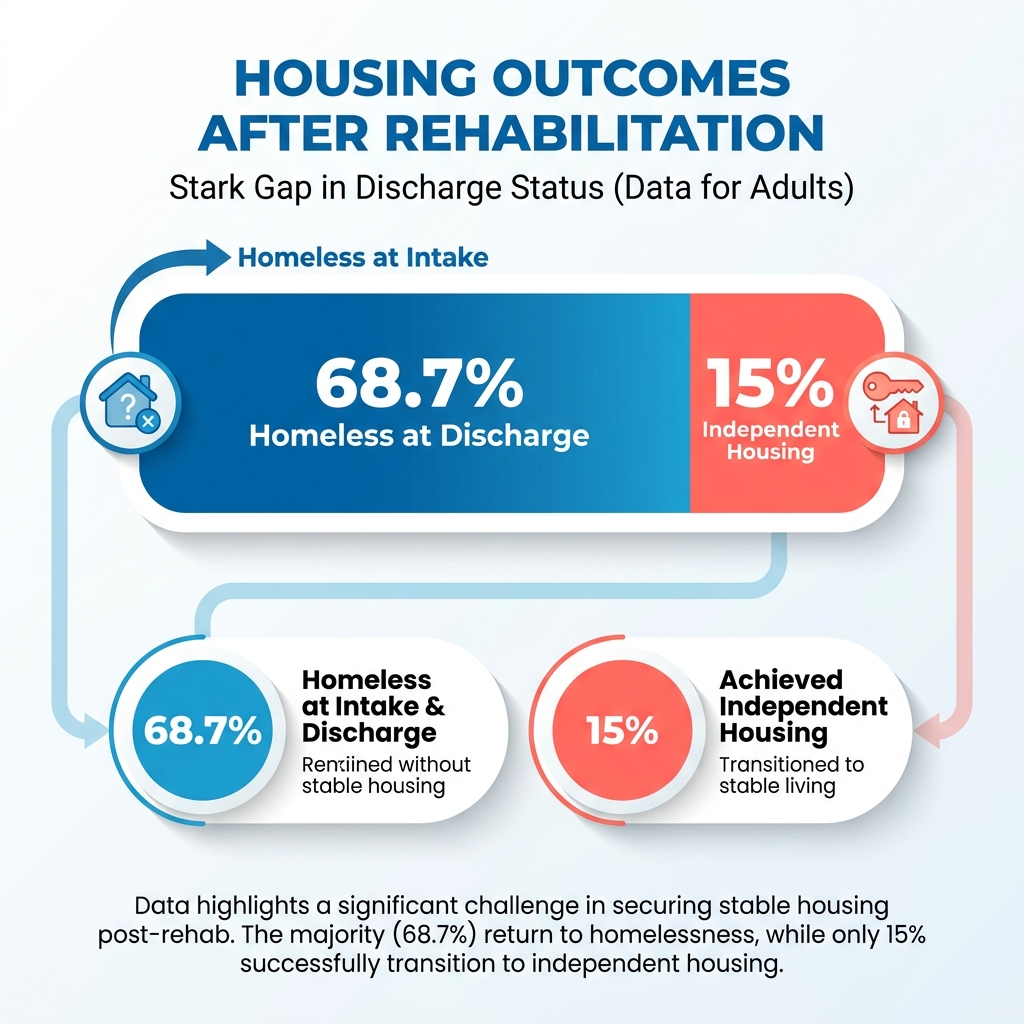
The day someone leaves treatment is often the day they have the least left to lose. In a national look at housing outcomes after treatment, many adults who were homeless when they entered substance use disorder programs were still homeless when they walked out. Only a small share left with independent housing. That is the drop we watch people fall into, and it is exactly where losing a home and a job at once turns a rough week into a relapse.
The timing is what makes it brutal. The first weeks home are the highest-risk window, because the structure that held someone up in treatment disappears overnight. Then job-search stress lands on top. One recovery center puts it plainly: unmanaged stress from losing work can leave relapse "right around the corner." Peak danger and peak instability show up in the same weeks.
Stability is not the reward for recovery. It is the fuel.
Sobriety doesn't hold on its own. It holds when someone has a safe place to sleep and a reason to get up. Recovery housing can support abstinence, employment, and income better than usual care.
Housing and work are also how a sober circle gets built. Lose both, and you lose the ground that circle stands on.
Housing and job readiness have to move together, not in sequence
The old model treats these as steps: get sober, then get housed, then find work. The evidence argues for doing them at once. A 14-week program studied by Harvard's Division on Addiction paired employment training with residential housing, a stipend, transportation, and job coaching. Graduates gained ground in employment, housing, health, and substance use together.
That is why our team-based sober living pairs a safe place to stay with structure, accountability, and routine from day one. Waiting to rebuild until housing is "sorted" wastes the window when momentum matters most.
Worth one caveat. That Harvard program required abstinence before and during, and the gains weren't universal. People who started with serious mental illness or skipped mental health care afterward did worse. Meanwhile, Housing First research in New York found clients given housing without a sobriety requirement actually used substances less. So structured sober living fits people fresh out of rehab who are already sober and need to protect it. It is the wrong tool for someone who can't clear a sobriety bar first.
The re-entry gap is structural, not just personal
Losing your home after rehab isn't only a personal-failure story. The 2015 Hunger and Homelessness Survey named lack of affordable housing, not addiction, as the leading driver for families. Background checks, no rental guarantor, a résumé gap — they stack the deck. We watch it play out constantly, and it's why targeted support beats telling someone to try harder.
The numbers behind this: National discharge data show many adults who entered substance use programs homeless left homeless too, with only a small share securing independent housing. A 2025 systematic review found recovery housing produced higher abstinence, more employment, and higher income than usual care, cost-effectively. Harvard's 14-week program pairing employment training with residential housing, stipends, transportation, and job coaching improved employment, housing, health, and substance use together. Housing First research in New York found clients given housing without any sobriety requirement actually used substances less, not more. And the 2015 Hunger and Homelessness Survey named lack of affordable housing, not addiction, as the leading driver of family homelessness.
Stable housing comes before everything else
The exit from treatment becomes a cliff fast. In the national discharge data, most adults who arrived at substance use programs without a home left without one too. Stable housing after treatment is what makes the rest of recovery possible, and it's exactly what many people leave without. Rehab treats the addiction, then hands people back to the void. Securing housing in the after-rehab window isn't a bonus step. It protects everything else.

We help clients think it through from the emergency end to the durable one.
What are your short-term housing options after rehab?
If you're couch-surfing, in a shelter, or somewhere unsafe, the first move is stabilizing the roof, not finding the perfect one. Emergency shelters and transitional housing buy you time. Be clear-eyed, though: some shelters turn away people with active addiction, as drug rehab reporting notes, which leaves the most vulnerable exposed, especially in cold months.
Treat this stage as triage. If your safety or legal obligations are on the line, address housing before the job search. A pending court date or an unsafe living situation outranks a résumé every time.
Why sober living homes beat going home
Returning to your old place feels natural. It's also one of the riskier moves you can make. As American Addiction Centers puts it, going back to the home and the people that fed the addiction can make staying in recovery substantially harder.
Sober living changes the odds. Residents who enter sober living after treatment often have lower substance use and incarceration rates than people who go straight back to their communities. Recovery capital tends to grow the longer you stay.
When you evaluate a home, ask about peer-support structure, curfew and accountability rules, and whether staff actively help with employment. Ask how residents cover rent and what's included, so you know exactly what you're committing to.
Should housing depend on staying sober?
Here the evidence splits, and it matters. Vocational programs like the Moving Ahead Program help homeless adults work toward competitive employment, and a prospective study of graduates saw positive outcomes across employment, housing, health, and substance use. That kind of structure can fit someone fresh out of rehab who is already sober and needs support to guard it.
But for chronically homeless adults with serious mental illness, Housing First research found the opposite works: clients given housing without a sobriety requirement had lower substance use and were less likely to leave than sobriety-mandated peers. The lesson we carry is not to make a roof depend on perfect sobriety for the people least able to clear that bar.
Most readers here sit in the first camp. Recently sober, needing steady structure while rebuilding daily life. That's what our team-based coaching is built to deliver: a dedicated coach or coordinated team, accountability, and routine building that tapers as you find your footing.
Rebuilding work and income without risking recovery
Losing a job and a home at the same time isn't two separate crises. It's one, and it hits hardest in the same weeks when sobriety is most fragile. That overlap is why the return to everyday life can feel so overwhelming, and why structure and accountability matter most in the first weeks home. Waiting until you feel settled to start job readiness usually means starting too late.
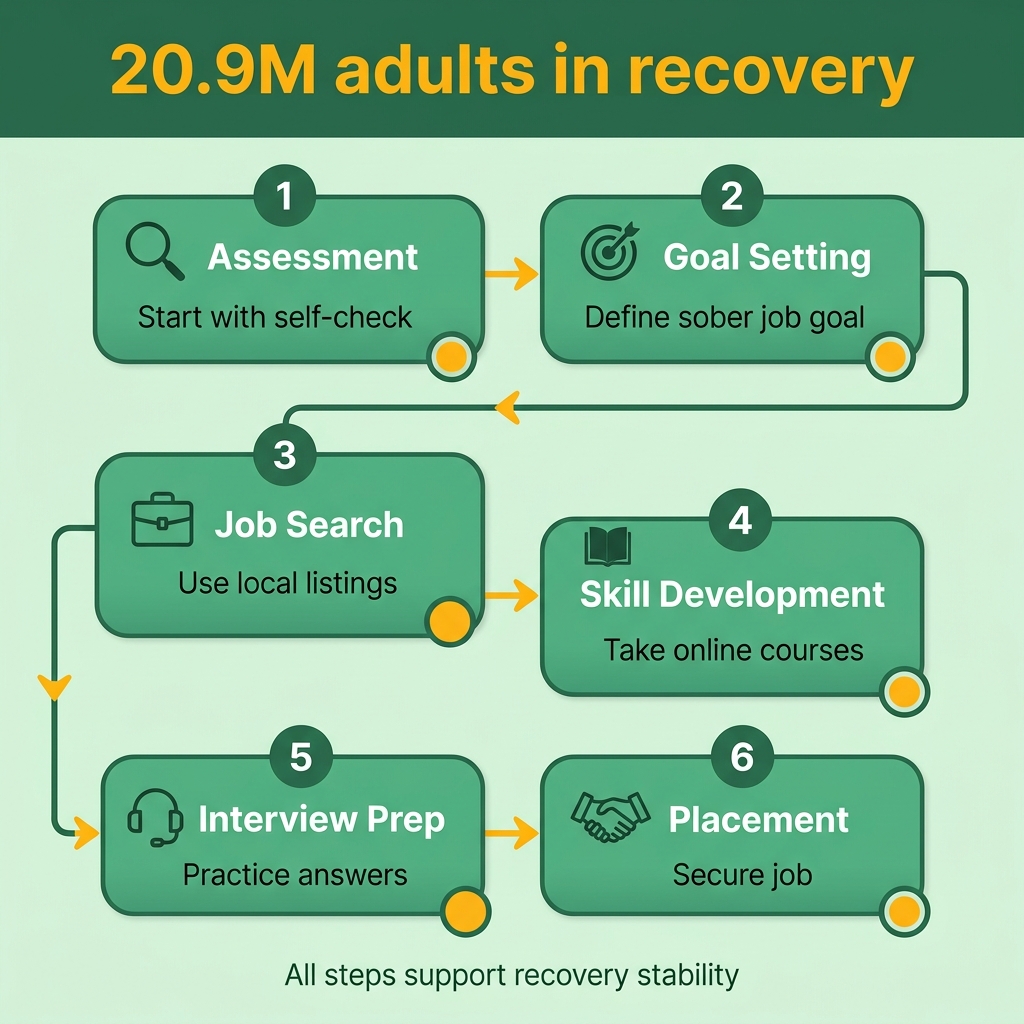
You're not rebuilding from zero, and you're not alone in it. Per SAMHSA's national survey cited by Addiction Center, more than 20.9 million adults consider themselves in recovery. Many of them went back to work after rehab and stayed sober doing it. What follows is practical guidance on approaching work in a way that supports recovery instead of threatening it.
What kind of job protects your recovery?
Be selective. Grabbing any job to stop the bleeding often backfires. As Addiction Center notes, the stress from a poor-fit role can itself trigger relapse, and people in recovery tend to do better in work with a set routine than in high-pressure roles with shifting deadlines.
Look for three things in a listing: clear expectations, a structured environment, and room to grow. An entry-level role with a predictable schedule beats a higher-paying job that keeps you on edge. Starting small in a new field through an internship or a volunteer shift is a real strategy, not a step backward.
The employment gap and what to disclose
Your résumé needs your most recent experience and highest education, and a friend or a local workforce coalition can help you build it if you're starting cold. The gap from treatment doesn't need a full explanation. As The Recovery Village puts it, "You have control over how much information you share, including the option to keep things entirely private."
Know your legal footing too. FMLA can protect leave for treatment, but only if you worked at least 1,250 hours in the prior year at a site with 50 employees within 75 miles. It does not cover coming to work under the influence. That line matters once you're back on payroll.
Why housing and job readiness belong in one plan
A Harvard-affiliated study of the Moving Ahead Program tracked 97 graduates of a job-skills program that paired 14 weeks of employment training with residential housing, a stipend, transportation, and ongoing coaching. Outcomes improved across employment, housing, and substance use at once.
The gains weren't universal, and that honesty matters. People who made only small gains in work skills, or who skipped mental health care afterward, did worse. But the model itself makes the case: securing a place to sleep and a path to income together works better than tackling them in sequence.
Our team-based sober living and travel-companion approach is built to catch exactly that gap.
Rebuild your support network and accountability
The people you can call at nine on a bad night decide more about your recovery than any single decision you make in daylight. That's why rebuilding your support network belongs in the same after-rehab week as securing a bed and starting a job search, not three months later once things feel calm. The evidence here is blunt: rebuilding a sober social circle, not willpower, is the strongest predictor of recovery that lasts.
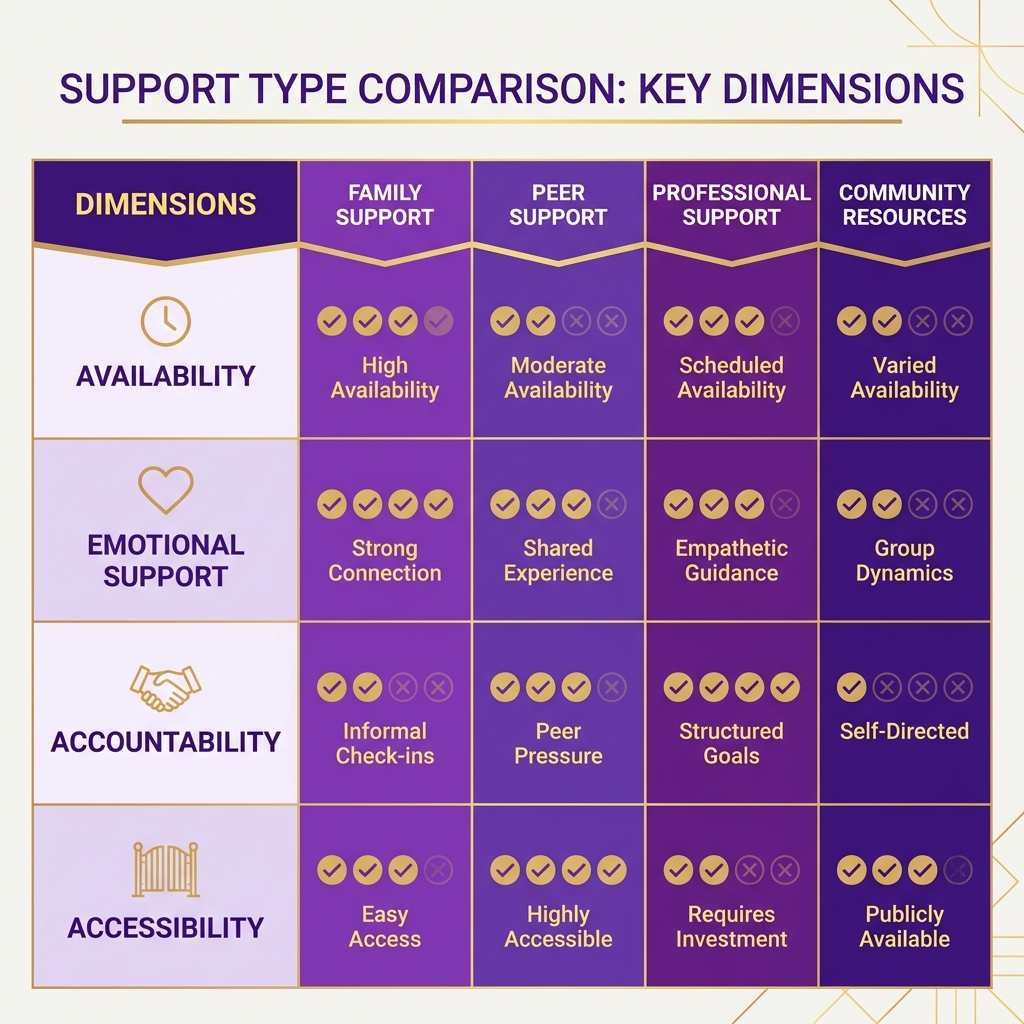
We build support in three layers at once. Peer groups give you a room full of people who get it. A sober companion or coaching team gives you daily accountability. Family, handled carefully, gives you a reason. When housing and work are both unstable, those layers are what keep a hard afternoon from becoming a relapse.
Where do you find peer support that welcomes newcomers?
Start with meetings you can walk into this week. Twelve-step programs like AA and NA run free daily meetings in most towns, and their national sites list schedules by zip code. If a higher-power framing doesn't fit you, secular options like SMART Recovery cover the same ground with a different toolkit.
Online meetings matter more than people expect, especially in the first weeks when you may not have transportation or a stable address. A meeting you can join from a phone removes the excuse to isolate. Go more than once before you decide a group isn't for you. The right room is worth shopping for.
Does sober companionship actually lower relapse risk?
The case for supportive living is straightforward, with a caveat worth naming. As Addiction Help puts it, the early weeks are the most fragile and the most protectable, and recovery runs on a plan more than raw willpower. A companion or coaching team supplies those daily anchors, which is how recovery capital, the personal and social resources that sustain sobriety, gets built.
Now the tension. Some treatment discharge data links shorter stays to more independent housing outcomes. Those findings measure different things. Length of stay helps when the setting is built to grow your social and recovery resources. It doesn't help when the setting is a clinical program with no housing mission. That distinction is the whole reason we pair a team-based sober living home with a travel companion who keeps you steady on the way to a meeting, a job interview, or a court date.
How do you reconnect with family after treatment?
Family reconnection works best when you lead with a plan, not a promise. Tell two or three people exactly what you need from them and what you don't. Vague apologies invite old dynamics back. A specific ask ("call me at 7pm on Tuesdays") gives everyone a role they can actually keep.
That's where structured accountability earns its place. A simple check-in schedule, a written agreement on daily routines, and a coaching team tracking whether the plan holds all turn good intentions into something you can measure. If you want a fuller picture of rebuilding those bonds, our team wrote more on rebuilding friendships and purpose.
Build a daily routine that holds when nothing else does
A routine is easy to picture when you have a home to wake up in and a job to show up to. In the after-rehab crisis this section is really about, you often have neither. Which is why structure has to be built on purpose instead of borrowed from a life you no longer have.
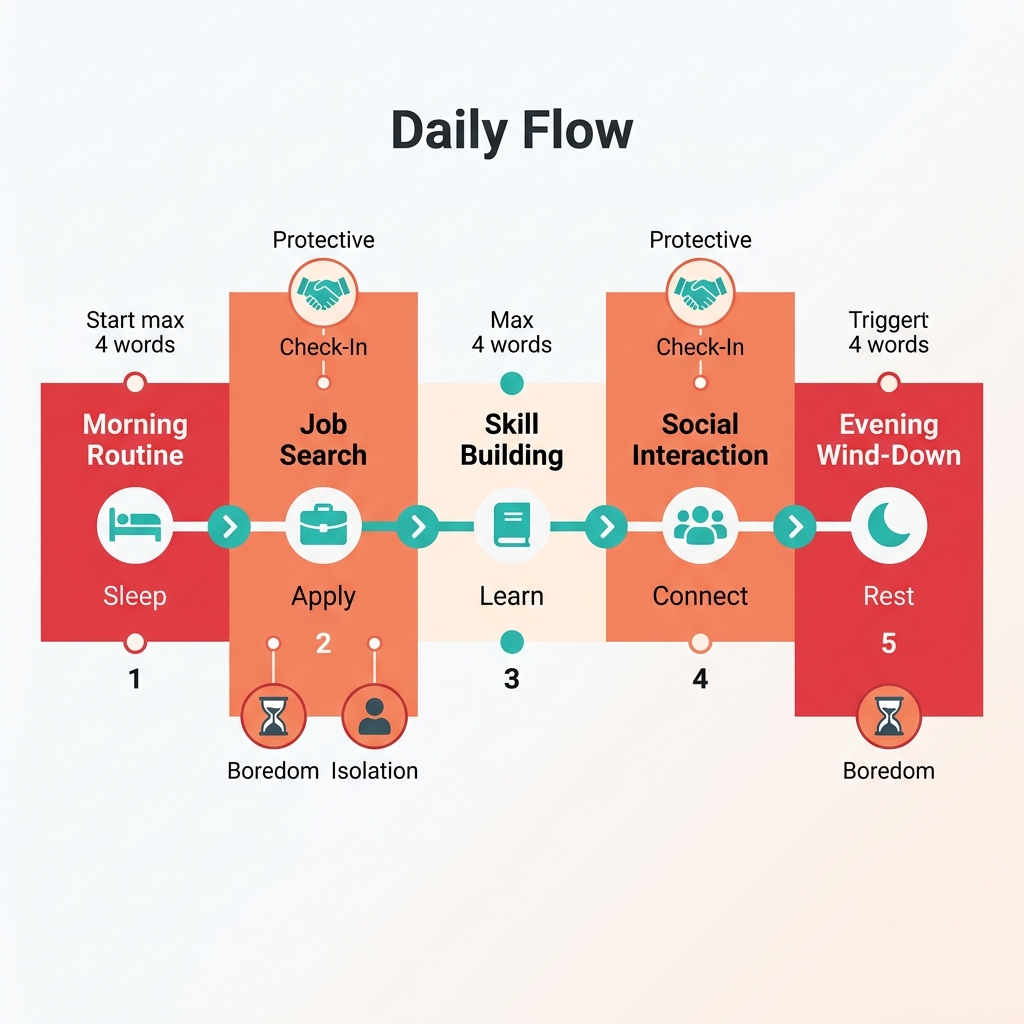
The trap is simple. Job-search stress is itself a relapse trigger, and the empty hours between applications are where boredom and isolation do their damage. Addiction Help calls those two among the most common setups for a slip. So the after-rehab day needs shape whether or not a paycheck or a lease is in place yet.
Anchors beat an hour-by-hour grid
You don't need a rigid schedule broken into fifteen-minute blocks. You need anchors. Start with sleep and meals at consistent times, because a regulated body craves less and copes better. Then lock in the non-negotiables: a recovery meeting or two, any outpatient session, medication if it's part of your plan, and a little movement.
Fill the rest with ordinary sober activity. Recovery Centers of America suggests waking at the same time daily, an exercise routine, planning healthy meals, journaling on your current step, and carving out specific slots for job hunting. In our experience, when housing and work are both unstable, those job-search slots belong on the calendar next to the recovery ones, not instead of them.
One counterintuitive rule we hold to: step away from the job hunt on purpose. RCA makes the same point. Breaks refresh your mind so you can refocus, and treating the search as a marathon rather than a sprint keeps the stress from stacking into a trigger.
Coping skills are a drill, not a feeling
Relapse-prevention techniques only work if you've rehearsed them before the craving hits. Short breathing exercises, riding out an urge until it passes, a five-minute meditation — slot them into the same fixed times each day so they become automatic when a hard afternoon lands.
The old saying still holds. RCA quotes it plainly: "anything you put before your recovery, you risk losing." Put the coping drill before the résumé edit, not after.
A slip handled in hours is a course correction
Plan for the bad moment before it arrives. Addiction Help is direct about what actually turns a lapse into a full relapse:
"A slip handled quickly can stay a slip."
That's the contingency plan in one line. Name two or three people you'll call, and rehearse who gets the call before you need it.
This is where a coach earns their place. We help clients adjust the routine over time based on what the week actually looked like, adding a meeting where the schedule got thin, moving the workout, protecting sleep when the job search runs late. As clients find their rhythm and gain independence, our support intentionally tapers toward long-term stability. The point isn't a perfect plan. It's a plan that holds up when both your housing and your income are still in motion.
Line up after-care support, including MADE Recovery
The most useful thing we can tell you about after-care support is that the early weeks home are both the most fragile and the most protectable. As Addiction Help's recovery guide puts it, recovery doesn't run on willpower alone. It runs on a plan: somewhere safe to live, a daily routine, ongoing care, and a few sober people you can call. You are not choosing between staying sober and getting back to work. The right structure supports both.
This is the gap we built our service around. Rehab treats the addiction, then discharges people into a stretch where housing and a paycheck are both missing at once. Our after-rehab coaching exists to catch that fall. We're a nonmedical sober coaching provider, not a clinic, so think of us as the team that keeps the plan moving once the medical piece is done.
The hand-off failure nobody owns
A written aftercare plan (safe housing, a daily routine, ongoing care, and sober support lined up before you discharge) is what carries the work forward, as Addiction Help's recovery guide explains. The structure that held you up in treatment falls away the moment you walk out the door, and the old triggers are right where you left them.
Yet most people leave treatment with none of that lined up. That's the hand-off failure. No single provider owns the space between discharge and independence, so it gets skipped. Our team-based model is our answer: one coach or a coordinated group holds housing, routine, and daily support in the same plan instead of leaving you to stitch services together alone.
What our coaching actually covers
We tailor every program, but the pieces are consistent. Customized coaching, virtual or in-person, so support fits your schedule. Day-to-day sober companionship at home for the hours that get dangerous. Sober travel companions when a trip could otherwise derail you. Access to our sober living home. And intervention support for families still trying to get a loved one into treatment.
We also coordinate the practical work: grocery runs, meal prep, routine-building, and coordination with nursing support when it's needed. As you steady out, we taper the support on purpose. The goal is your independence, not your dependence on us. As clients find their rhythm, that sequencing shifts week to week toward greater self-sufficiency.
Your first two weeks, in order
- Days 1 to 3: Clear the house of substances and tell two or three people what you need.
- Days 1 to 7: Confirm your bed. Apply to at least three housing options if a lease or sober living isn't set.
- Week 2: Start job readiness in parallel, not after you "feel ready."
- Ongoing: Track it on one visible page or a simple spreadsheet so nothing slips.
What if you have a criminal record? It narrows some doors, not all. Many employers and sober residences work with records, and a coach can help you target the ones that do rather than burning weeks on rejections.
Two numbers to keep close: SAMHSA at 1-800-662-HELP for treatment and detox referrals, and 988 for any crisis. When you want a plan built around your situation, reach our team at 661-369-6255. Help starts with a conversation.
References
[1] Coping with Job Loss and Rebuilding Your Life - https://recoverycentersofamerica.com/blogs/coping-with-job-loss-and-rebuilding-your-life/
[2] How To Find Your First Job After Rehab - Addiction Center - https://www.addictioncenter.com/community/find-first-job-rehab/
[3] Transitioning Back to Work After Drug Rehab | Legal Protection and More - https://www.therecoveryvillage.com/recovery/going-back-to-work-after-rehab/
[4] How do homeless adults change their lives after completing an intensive ... - https://pmc.ncbi.nlm.nih.gov/articles/PMC5659287/
[5] Life After Rehab - Protecting Your First Weeks Home - Addiction Help - https://www.addictionhelp.com/recovery/life-after-rehab/
[6] Rebuilding Your Life and Finding Purpose After Addiction | RCA - https://recoverycentersofamerica.com/blogs/rebuilding-your-life-and-finding-purpose-after-addiction/
[7] Homelessness and Substance Abuse - Drugrehab.com - https://www.drugrehab.com/addiction/homelessness/
[8] Where to Live After Rehab Ends: Rehab Aftercare Options - https://americanaddictioncenters.org/rehab-guide/aftercare/where-to-live-after-rehab
[9] Substance Use Outcomes Among Homeless Clients with Serious ... - https://pmc.ncbi.nlm.nih.gov/articles/PMC2916946/
[10] Housing Outcomes of Adults Who Were Homeless at Admission to ... - https://www.psychiatryonline.org/doi/full/10.1176/appi.ps.202100430
Questions People Ask
What if a shelter won't take me because I still have active addiction?
Some emergency shelters turn away people with active addiction, which leaves the most vulnerable exposed in cold months. If that happens, treat housing as triage and look at transitional housing or recovery residences. A pending court date or unsafe living situation outranks a resume, so stabilize the roof before the job search.
Does FMLA actually protect me if I need leave for treatment?
Know that line before you request leave once you are back on payroll.
Do I have to tell an employer I was in rehab?
You control how much you share, including keeping it entirely private. Your resume needs your most recent experience and highest education. A friend or local workforce coalition can help you build it if you are starting cold.
Should I take any job I can get to stop the financial bleeding?
Grabbing any job often backfires, because stress from a poor-fit role can itself trigger relapse. People in recovery tend to do better with a set routine than in high-pressure roles with shifting deadlines. Look for clear expectations, structure, and room to grow. An entry-level, predictable schedule beats a higher-paying job that keeps you on edge.
Is a sobriety requirement always the right approach for housing?
The evidence splits by situation. Structured sober living fits people fresh out of rehab who are already sober and need protection for it. But Housing First research in New York found chronically homeless adults with serious mental illness used substances less when given housing without a sobriety requirement. Match the tool to who can clear the bar.
How is MADE Recovery different from the treatment center I just left?
MADE Recovery is a nonmedical sober coaching provider, not a clinic. We do not diagnose, detox, or manage medications. We catch the hand-off gap after discharge, holding housing, daily routine, and sober support in one plan through coaching, companionship, sober living, and family intervention support. Think of us as the team that keeps the plan moving once the medical piece is done.
Does having a criminal record shut me out of housing and work?
A record narrows some doors, not all. Many employers and sober residences work with records. A coach can help you target those specifically rather than burning weeks on rejections. Background checks stack the deck, but targeted support beats trying harder blindly against employers who screen everyone out.
Who do I call if I hit a crisis before my support network is in place?
For any crisis, call 988. For treatment and detox referrals, SAMHSA runs a free line at 1-800-662-HELP. Beyond hotlines, name two or three people ahead of time and rehearse who gets the call. Don't let shame and silence turn a slip into a full relapse.