Idle Hours Sink Recovery: Build a Purposeful Day After Treatment
September 22, 2026

Key Takeaways
- Rest was the most common way people filled their time in early recovery, at 31.0% on their busiest day and 36.6% on their least busy day.
- Depression and relapse risk climb when positive reinforcement for healthy behavior drops and rewarding activities disappear from a person's environment.
- Non-specialist drug and alcohol workers have been trained to deliver behavioral activation, and effective versions can run in short, focused sessions.
- Evidence for sober companions remains mixed, with some trials showing benefit and others finding no clear edge over active comparisons.
- Behavioral activation aims to increase rewarding activities in daily life.
Why Idle Hours Sink Recovery
Idle time is one of the most underrated relapse risks after rehab. When someone stops spending their day obtaining, using, and recovering from substances, they inherit a startling amount of empty space. A mixed-methods study of adults in early recovery documented how much newly unoccupied time opens up once the old daily grind of using disappears. That vacuum doesn't fill itself with healthy habits.
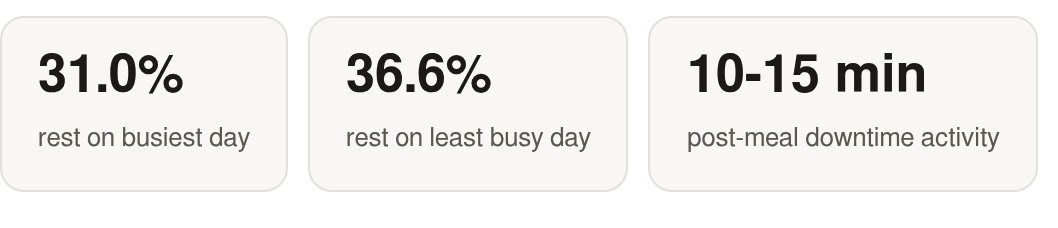
Those free hours default to inactivity, not growth. Left unplanned, they drift toward doing nothing, and doing nothing is where cravings do their loudest talking. Structuring that time on purpose is where our coaching can help.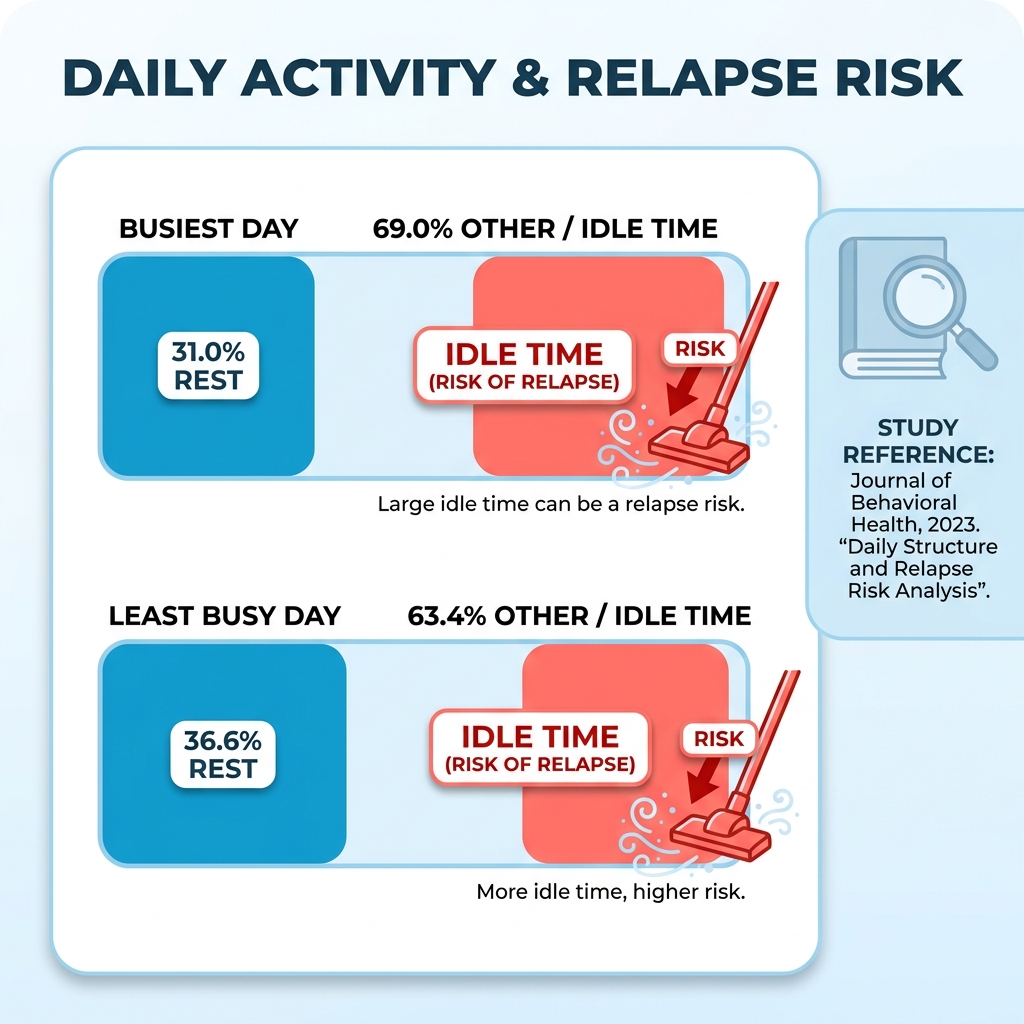
Why does boredom trigger cravings in early recovery?
Boredom isn't neutral downtime. When positive reinforcement for healthy behavior drops, relapse risk climbs. People with substance use disorders already have fewer non-drug reinforcers on hand. Empty hours make that gap wider.
Relapse risk tends to concentrate in the unstructured stretches of the day. Old habit loops are cue-driven, and an idle afternoon on the couch is a familiar cue. That's why our support focuses on the hours when structure is thinnest.
Does structure alone fix idle time?
Not quite. This is where two camps disagree. One school argues you should leave no blank spaces where boredom sets in. Another warns that a schedule too stringent to follow just breeds its own stress.
Both are half right. The goal isn't to cram every minute. It's to replace idle hours with value-driven, rewarding activity. Busy for busy's sake wears thin fast.
How can micro-coaching turn downtime into practice?
Behavioral activation doesn't require a clinician. Non-specialist drug and alcohol workers have been trained to deliver it, and effective versions can run in short, focused sessions.
That's the reasoning behind a sober companion. A trained companion can coach you through an idle hour in real time, turning a risky gap into a rep of relapse-prevention practice. The evidence isn't airtight. Results across trials are mixed, with some studies pointing to benefit and others finding no clear edge over active comparisons. What holds up well is the underlying practice of structuring rewarding time, even if no single branded protocol has proven itself superior.
Map your riskiest gaps first. A simple planning table can help:
| Time Block | Common Idle-Hour Triggers | Recovery-Focused Activity | Approx. Duration | Support Level |
|---|---|---|---|---|
| Post-meal downtime | Sluggishness, "what now?" | 10-min walk, quick coach check-in | 10-15 min | Coach or companion |
| Waiting (bus, appointment) | Restlessness, anxiety | Breathing practice, values journal | 5-10 min | Self-directed |
| Late afternoon lull | Loneliness, low mood | Meal prep, text a support person | 20-30 min | Companion |
| Late-night TV | Boredom, old cues | Wind-down routine, reading | 20-30 min | Self-directed |
Idle hours don't self-correct, so structure them on purpose. Start today by naming your single hardest hour and pre-loading one rewarding activity into it. When you're ready to build the full plan, we can help you map it and staff the hardest hours with real-time support.
Build a Day That Doesn't Leave Gaps
Once the treatment schedule disappears, the biggest planning mistake we see is assuming those free hours will sort themselves out. They won't. In the mixed-methods study of early recovery, rest was the single most common way people filled their time on both their busiest day (31.0%) and their least busy day (36.6%). Idle hours don't drift toward growth. They drift toward the couch.
So the job in your first weeks after rehab isn't to cram the calendar. It's to replace idle blocks with activity that actually rewards you. That distinction matters, because the behavioral activation research focuses on increasing positive, reinforcing activities in daily life. A practical way to approach it is one block at a time, morning, mid-day, and evening, with coaching support to help you build routines that hold.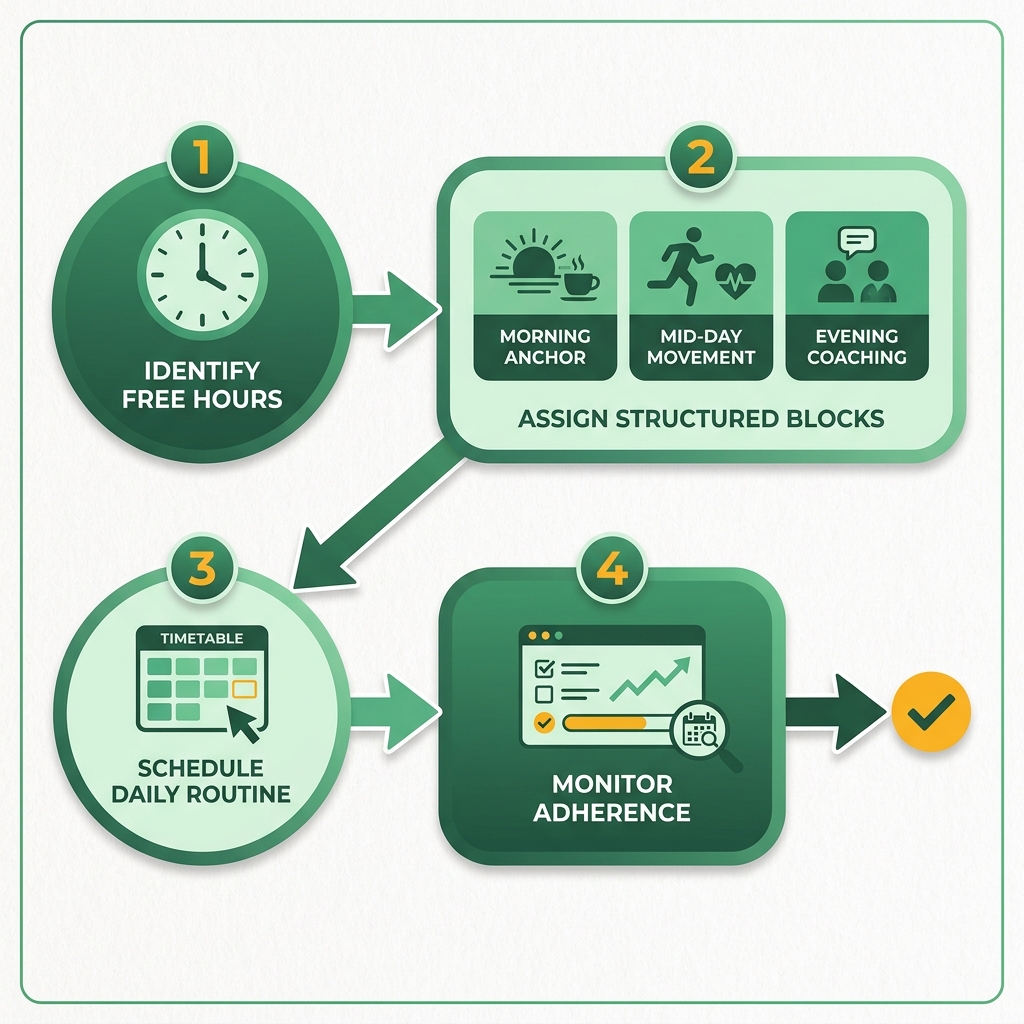
What should the morning block look like?
Start with the low-effort wins that stabilize the rest of the day. Hydrate, eat something, move your body, take five minutes to sit with your thoughts. A systematic review of behavioral activation found that engaging in alternative activities like exercise or creative work was linked to reduced substance use. Morning is where that habit gets its foothold.
We pair this with a short text check-in from a sober companion. Not a therapy session, just a "what's your first block?" nudge. Consistent, real-world support during the moments that matter most is part of what we do, and a two-minute morning exchange can carry more weight than it looks.
How do you fill mid-day idle gaps?
Mid-day is where the plan usually breaks. Lunch ends, energy dips, and a blank hour opens up. This is the block to schedule a 10-minute video call or a quick grounding exercise you can run anywhere. Even short, rewarding activities help. The behavioral activation research keeps pointing to non-substance activities as a way to counter the pull toward old patterns.
You don't have to face that idle hour alone. Our coaches and sober companions offer nonmedical, in-the-moment support, meaning coordination, accountability, and real human connection, so a blank hour doesn't have to turn into a risk. That day-to-day companionship is something we build into the plan.
What about the evening wind-down and staying flexible?
Evenings need connection, not just quiet. Slot in a virtual sober meet-up or a quick community connect, then a reflection ritual before bed. The Serenity Recovery guidance puts it bluntly: leave "no blank spaces where you can get bored."
But don't overcorrect into rigidity. Ashley Addiction Treatment warns that a schedule too stringent to follow only adds stress, which undermines recovery. New habits take time to settle, so aim for predictable anchors with flexible fill. Prioritize the blocks that protect your sobriety, not the ones that look busiest. If you want help building that structure, our coaches can work with you to set the daily anchors that fit your life.
Use Your Support System: Coaching, Companionship, and Sober Living
Going it alone through the first weeks after rehab puts every idle hour on your shoulders. That's a lot to carry when the treatment scaffolding is gone. The support systems we build are designed to catch those exact gaps, the loose Saturday afternoon or the empty stretch after work, and turn them into small, repeatable practice.
The aim is to make those unstructured hours into micro-coaching moments instead of danger zones. A dedicated sober companion isn't there to hover. They're there to help you rehearse the decisions that get harder when nothing's on the calendar.
What does a sober coach actually do during the day?
Our coaching runs on rhythm, not surveillance. A daily check-in sets an intention for the morning and reviews how the evening went. In between, the coach is a phone call away when an idle stretch starts to feel heavy.
The idle-hour intervention is the part people underestimate. Say a free weekend turns into hours of binge-watching and the cravings start whispering. That's the moment a quick text or call can redirect the day toward something that rewards you instead. We plan those alternatives in advance so you're not improvising when it's hardest.
Coaching is nonmedical support. We're not doctors, we don't diagnose, and we don't replace clinical care. What we do is help you build a plan and stick to it.
How do you match support to a real schedule?
Work and travel don't stop for recovery, so the support can't be rigid. In-person companionship covers the high-risk windows: early sobriety, a first trip, a stressful family event. Virtual check-ins keep the thread going when you're back to a normal week.
Sober-living environments add structure by design. Scheduled meals, communal chores, and shared quiet hours mean the day already has shape before you fill it in. That built-in routine does some of the heavy lifting for you.
The goal is more independence over time, not permanent hand-holding. We taper the level of support as your own routines hold. If you want a starting framework, our guide on building a daily recovery routine that holds up after rehab pairs well with any coaching plan.
Track, Adjust, and Sustain Your New Rhythm
A new habit doesn't set overnight, and the first month after rehab is where your purposeful-day plan either sticks or slips. Difficulty tends to peak early, then eases as routines settle. Tracking is how you find out which way it's going before a rough patch turns into a relapse. You can't adjust what you're not watching.
You don't need a clinician to run this. In a pilot trial delivered by drug and alcohol workers, non-specialist staff delivered brief sessions built around monitoring daily activity and scheduling rewarding time. A trained sober companion can do the same tracking in real time, during the exact idle hours where cravings show up.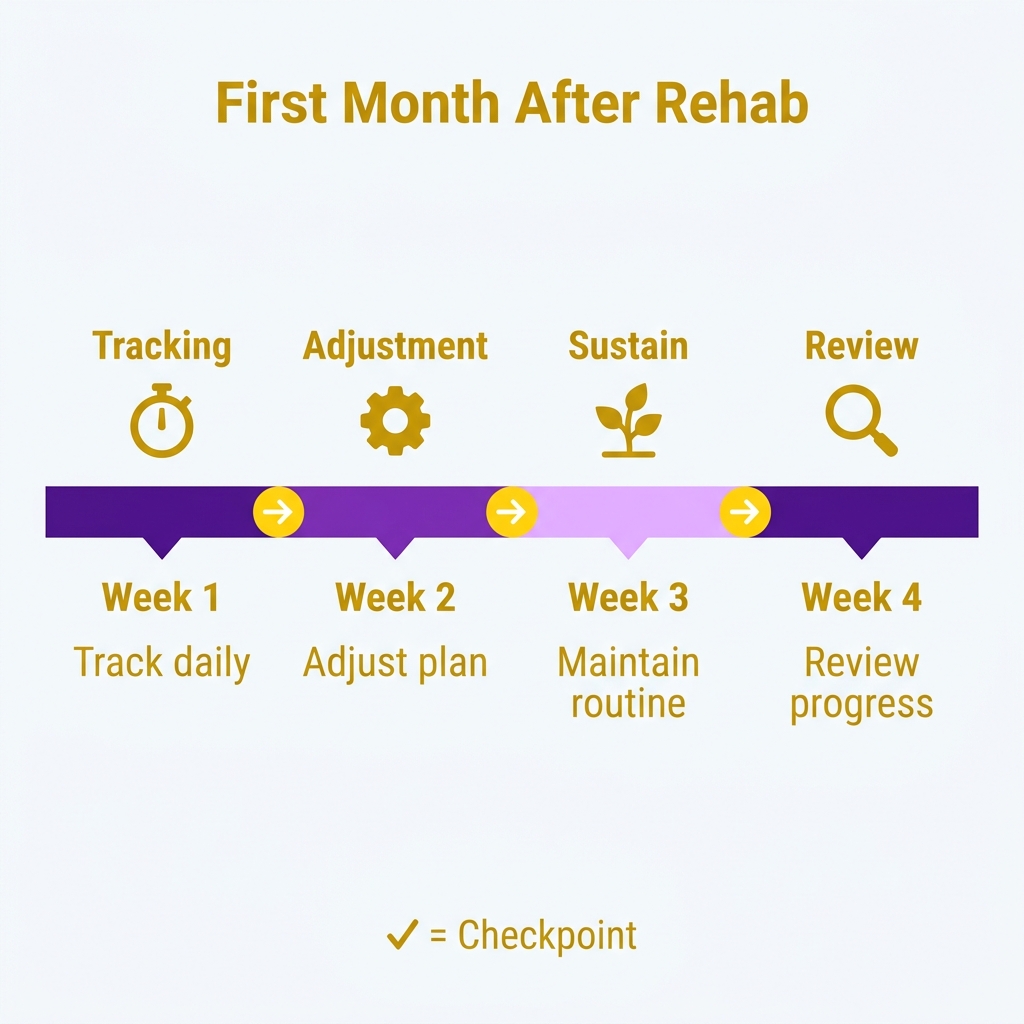
Three Numbers Worth Tracking Every Day
Keep it simple. A few things are worth logging each day: your idle-hour count (unplanned stretches with nothing scheduled), a mood rating on a 1-to-10 scale, and a coach-contact count (how many times you reached out or checked in). That's it. A notes app, a spreadsheet, or a habit-stacking app all work fine.
Why these three? Internet-based recovery tools tested on young adults leaned on daily activity monitoring as a core piece, delivered in short, repeatable modules. Short and consistent beats detailed and abandoned. Keep the log quick, or you'll stop doing it.
The activity research gives you a reason to watch mood alongside idle hours. Depression can rise when rewarding activity drops. So a falling mood score and a rising idle-hour count usually move together. Catching that pattern early is the whole point.
The Weekly Review Is Where Adjustments Happen
Once a week, sit down with your log and your coach for fifteen minutes. Look for trends, not single bad days. Which activities actually lifted your mood, and which just filled time? Double down on the ones that rewarded you and drop the dead weight.
This is also where you resist the urge to over-schedule. There's real tension in the research here. Some recovery guidance cautions that a routine that's too stringent or hard to follow can add stress and work against recovery. The goal isn't a packed calendar. It's replacing idle blocks with activity that pays you back. Use the weekly review to tune the density, not maximize it.
Set one measurable 30-day target, like cutting unplanned idle stretches from five a day to two. Small and trackable beats vague and ambitious. Our coaching can help you build those daily blocks and adjust them as your needs change.
Signs It's Time to Turn Up Support
Your log is an early-warning system. Watch for idle hours creeping back up, mood scores sliding for several days running, or coach-contact dropping to zero right when you need it most. Those are the moments to ask for more support, not less.
Recovery has a maintenance phase, and maintenance isn't autopilot. It's ongoing adjustment. When your numbers signal trouble, that's the time to add a check-in, extend companionship hours, or lean harder on the structure that's been working. Reaching out sooner isn't a setback. It's the plan doing its job.
Putting It All Together: A Sample 7‑Day Purposeful‑Day Blueprint
Here's where everything so far turns into an actual calendar. Treat this as an illustration of how the pieces fit together, not a template to copy exactly. It shows how morning anchors, mid-day movement, and evening coaching touchpoints stack into a day that doesn't leave gaps for cravings to fill.
Fill in your own activities, but keep the rhythm. Every day gets a morning anchor, a mid-day reset, and an evening check-in. Weekends get extra attention, because that's where the open hours pile up after rehab.
What does a filled-in week actually look like?
| Day | Morning | Mid-Day | Evening |
|---|---|---|---|
| Mon | 7am hydration + 5-min breathing | 12pm 15-min walk | 8pm 10-min coach text |
| Tue | 7am hydration + intention set | 12pm meal prep block | 8pm reflection + log |
| Wed | 7am walk + breathing | 12pm coach call (mid-week review) | 8pm added check-in after high-stress day |
| Thu | 7am hydration + stretch | 12pm 15-min walk | 8pm coach text |
| Fri | 7am intention set | 12pm social lunch | 8pm plan the weekend |
| Sat | 8am cook breakfast | Afternoon: sober companion outing | 8pm log the day |
| Sun | 8am walk | Midday meeting or hobby block | 8pm review week, set next |
Notice Wednesday. After a stressful Tuesday, a coach can add a second evening check-in and shift the mid-day walk to a call. That's the adjustment loop in action. Nothing about this plan is fixed.
Saturday is where a sober companion earns their keep. An open afternoon becomes a planned outing instead of a drift toward old habits. If you're traveling, a sober travel companion slots into the same block so the trip doesn't blow up your rhythm.
Your first week, step by step
Run through these five before you commit to a week:
- Identify your idle hours. Circle the blocks where nothing's scheduled.
- Pick three new activities you'll actually do, not ones that sound good.
- Set your check-in frequency with a coach. Daily beats weekly early on.
- Choose one tracking tool. A notes app works fine.
- Schedule a weekly review. Same day, same time, no exceptions.
Start with one solid day. Then repeat it.
References
[1] Habits and Routines of Adults in Early Recovery From Substance Use ... - https://pmc.ncbi.nlm.nih.gov/articles/PMC9926005/
[2] Structure and Daily Routines: The Foundation for Lasting Recovery ... - https://www.addicted.org/after-treatment/structure-and-daily-routines/
[3] Daily Routines in Recovery - Ashley Addiction Treatment - https://www.ashleytreatment.org/rehab-blog/the-importance-of-a-daily-routine/
[4] How To Structure Your Routine in Early Recovery - https://serenityrecovery.org/blog/how-to-structure-your-routine-in-early-recovery/
[5] The Effect of a Behavioral Activation Treatment for Substance Use on ... - https://pmc.ncbi.nlm.nih.gov/articles/PMC5807178/
[6] Effects of behavioural activation on substance use and depression - PMC - https://pmc.ncbi.nlm.nih.gov/articles/PMC6162964/
[7] Behavioral Activation - an overview | ScienceDirect Topics - https://www.sciencedirect.com/topics/psychology/behavioral-activation
[8] [PDF] Behavioral activation for depression delivered by drug and alcohol ... - https://eprints.whiterose.ac.uk/id/eprint/185460/1/BA_pilot_trial_pre-print_2022.pdf
[9] The effect of a behavioral activation treatment for substance use on post ... - https://pubmed.ncbi.nlm.nih.gov/28963853/
[10] [PDF] Is behavioral activation an effective and acceptable treatment for co ... - https://eprints.whiterose.ac.uk/id/eprint/172332/1/BA_Meta-Analysis_pre-print_2021.pdf
[11] LETS Act: a behavioral activation treatment for substance use and ... - https://www.researchgate.net/publication/303939235_LETS_ACT_A_Behavioral_Activation_Treatment_for_Substance_Use_and_Depression
Questions People Ask
1. Is a sober companion the same as a therapist or clinical treatment?
A sober companion provides nonmedical recovery support, not clinical care. MADE Recovery coaches don't diagnose conditions, manage medications, or deliver therapy. They help you build a daily plan, coach you through idle hours in real time, and coordinate accountability. Medical and clinical treatment stays with outside licensed professionals.
2. Does behavioral activation require a licensed clinician to work?
No specialist credential is required. A pilot trial showed non-specialist drug and alcohol workers delivered brief behavioral activation sessions built around monitoring daily activity and scheduling rewarding time. A trained sober companion can run the same tracking during the exact idle hours when cravings surface, without acting as a medical provider.
3. How is filling my day with activities different from behavioral activation?
Staying busy and behavioral activation aren't the same thing. Cramming every minute breeds stress and wears thin fast. Behavioral activation targets positive, reinforcing activities that actually pay you back, not busywork. The measure isn't how packed your calendar looks, it's whether an activity lifts your mood and protects your sobriety.
4. My work and travel schedule keep changing. Can this structure still hold?
Support adapts to your real schedule rather than forcing rigidity. In-person companionship covers high-risk windows like early sobriety, a first trip, or a stressful family event. Virtual check-ins keep the thread going during normal weeks. A sober travel companion can slot into the same daily blocks so a trip doesn't blow up your rhythm.
5. How do I know when to reduce support versus turn it back up?
Your daily log works as an early-warning system. Idle hours creeping up, mood scores sliding for several days, or coach-contact dropping to zero are signals to add support, not cut it. As your routines hold steady, MADE Recovery tapers support toward more independence. Maintenance is ongoing adjustment, not autopilot.