How to Help a Loved One Stay Sober
August 15, 2026

Key Takeaways
- Somewhere between 40 and 60% of people in alcohol or drug treatment relapse during recovery.
- The first 30 days after detox or residential treatment are the riskiest and least supported.
- One survival-analysis study found a 30.42% relapse rate among patients still in treatment centers.
- Family support can backfire when it becomes enabling or high-conflict pressure.
- The structure that protects someone in treatment disappears at discharge.
- Quality of support matters more than simple presence.
- Poorly run support can hurt recovery.
- A coordinated team handles post-discharge support better than one exhausted family caregiver.
The most dangerous month is the one with no structure
When someone leaves detox or residential treatment, the formal scaffolding falls away. The work of staying sober often lands on family. That handoff is where caregiver support either holds or quietly falls apart. A large share of people in rehab face a return to substance use, and research from the Australian Drug Foundation shows how common these setbacks are. Relapse happens even inside treatment. Survival-analysis data published on ResearchGate documents a meaningful number of patients lapsing before discharge.
The vulnerability gap opens the moment someone walks out the door. Our approach to caregiver support is built to fill it, with a coordinated team instead of one exhausted person. 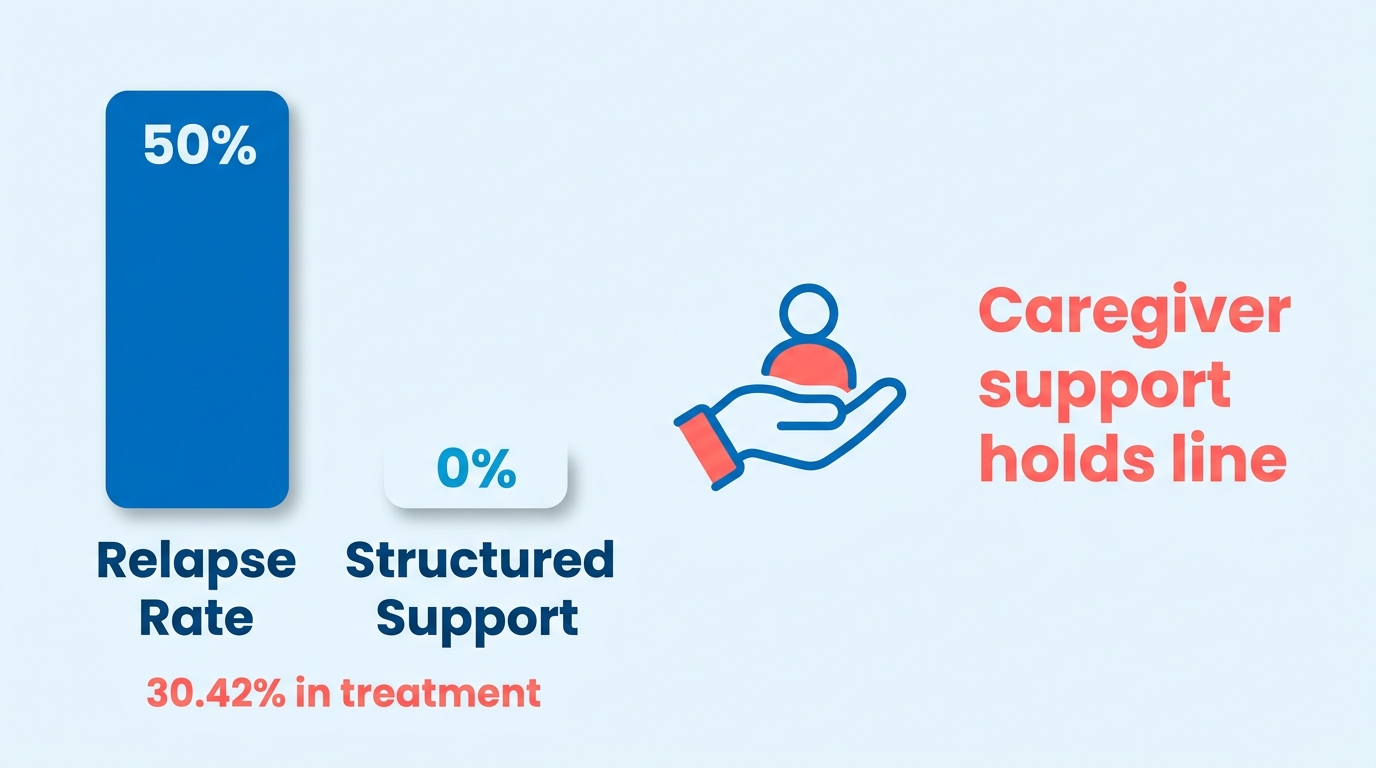
Why quality of support beats presence of support
Support is not automatically good for recovery. The same research that names family ties a major protective factor also warns that support can turn into enabling or high-conflict pressure. One set of researchers even argues that future work should study the negative effects of social support.
Presence is not the variable. Structure is. A well-run team beats one overwhelmed spouse because it spreads the load and catches enabling patterns a single person cannot see from the inside. That is why our team-based coaching leans on accountability, guidance, and real human connection in the first weeks out.
Who a team-based model actually helps
Both the person in recovery and the people around them. Family-involved relapse prevention outperformed individual-only approaches, and a Western family intervention transferred successfully to alcohol-dependent patients in India. Family involvement travels across cultures, even when the specific tactics need local tuning.
But one caregiver cannot carry it alone. Finding your own support prevents the burnout that becomes its own relapse trigger.
| Support strategy | Who leads it | Time/week | Difficulty | Relapse-prevention strength | Best for |
|---|---|---|---|---|---|
| Solo family support | One relative | 15–25 hrs | High (burnout risk) | Moderate, uneven | Very early, short-term |
| Peer/mutual-aid groups | Peers | 3–5 hrs | Low | Moderate | Ongoing connection |
| Family education + boundaries | Household | 5–8 hrs | Medium | Good | Rebuilding trust |
| Team-based sober coaching | Coach + family | Flexible, customized | Medium | Strongest for the 30-day gap | Post-discharge transition |
| No structured plan | Nobody | 0 hrs | N/A | Poor | Not recommended |
What accountability actually does
Accountability turns good intentions into a daily routine someone else can see. Recovery is a lifelong process, and a lapse does not mean someone has failed. Our coaching spreads that accountability across a team during the first weeks, so no single caregiver breaks and no warning sign slips past everyone.
Build a Support Network, Not a Single Point of Failure
A support network works best when it is built as a team. The strongest predictor of staying sober through the transition is not willpower. It is who shows up and how the work gets shared. Good caregiver support spreads the load across family, friends, peers, and a coach so no single person burns out holding the line.
The evidence for this is direct. A randomized trial at an inpatient facility in India found that folding a partner or relative into the recovery plan significantly reduced household dysfunction over six months. It works because it moves the dynamic from monitoring to collaboration. But that same involvement can quietly strain the primary caregiver if they try to manage it alone.
Why one caregiver can't carry the whole load
One caregiver carrying everything is a relapse risk in itself. As addiction medicine specialist Brian Bartlett notes, caregivers have to protect their own mental health to stay effective. When a single partner or parent absorbs all the monitoring, the driving, and the emotional labor, exhaustion turns into resentment. That resentment leaks straight back to the person in recovery.
So distribute the proven benefit of family involvement across several people. A coach handles daily check-ins and accountability. Family handles the home environment. Peers handle the "I get it" conversations relatives simply cannot have. Depending on the level of care needed, a client might work with one dedicated coach or a coordinated team. Either way, the support outlasts a single person's stamina.
How to set boundaries without enabling
Boundaries are the rules that protect both people. Set them clearly. Say them once. Enforce them consistently. Support is not control, and it is not covering.
Sources split on how forceful to get. Hazelden Betty Ford argues that pressure and control backfire once someone is already in treatment. HelpGuide documents a family staging an intervention that pushed a resistant person into treatment. Match intensity to the timeline. A direct push fits pre-treatment denial. Once someone is out of detox and working a plan, ease off the control and hold the boundary instead. Rebuilding trust runs on honest conversations, not surveillance.
What a strong network looks like
Peer groups. A room of people who have walked the same path breaks the isolation that fuels use. Social support drags shame, secrecy, and isolation back into the open.
Shared sober time. Fill the calendar with drug-free activity. As case management director Scott Bartlett notes, hours spent together in calm, pleasant activity heal the relationship and reinforce the routine.
One caveat holds throughout: support is not automatically good. A structured network lowers that risk by spreading interactions out, so family dynamics stay supportive instead of high-conflict.
Customize the Plan or Watch It Snap
The difference between caregiver support that holds and support that collapses is customization. A plan built for someone fresh out of residential treatment will not fit someone managing triggers at a high-stress job six months later. Tailoring the approach to the person's specific challenges, living situation, and stage of recovery keeps the early transition from becoming a relapse statistic.
Start with what's actually happening right now
Before you build anything, figure out what the person is dealing with today. Are they living where the substance use happened? Are they managing withdrawal, an untreated mental health issue, or chronic stress? Are they walking back into a job that was part of the old pattern? We start every client with a consultation to assess their needs before designing the program around them.
One behavioral health director put it plainly: "Your patience and stamina may have been exhausted but prepare yourself that you will need to draw on these strengths every day as you move forward." So the plan has to account for the caregiver's capacity too. If the person needs round-the-clock monitoring but the family member works full-time, that is a structural gap, not a willpower problem.
Build a plan that moves with the stages
Recovery is not linear. People move back and forth between stages of readiness, and the plan has to flex with them. In the first week home, focus on removing triggers and creating a sober living space. Living in a sober environment significantly improves recovery odds, according to recent behavioral health research. That might mean clearing out the alcohol, skipping certain social events, or setting up check-ins.
By week three, shift toward building new routines. Re-establishing shared positive experiences rebuilds relational trust and swaps old habits for new ones. If Friday night used to mean drinking, Friday night now means something the person actually wants to do. Our coaches help clients find passions and try new hobbies that make sober living feel full instead of empty.
Later, support shifts toward managing urges without the caregiver present. Urges typically last 15 to 30 minutes and can be ridden out with distraction. At this stage the person needs their own tools, and the caregiver's role gets less hands-on.
When a one-size plan fails
Generic advice fails because it ignores the individual's stressors. About half of people who complete alcohol treatment for the first time stay alcohol-free; the other half may relapse. The difference often comes down to whether the plan addressed their specific triggers. Someone relapsing out of shame needs a different intervention than someone relapsing from unmanaged chronic pain.
We customize through an initial consultation that assesses each person's needs. If they left treatment before and relapsed, what happened in the week leading up to it? Did they stop going to meetings? Did they isolate? Did a specific person or place trigger the slide? Build the new plan around closing those gaps, because staying sober takes long-term reinforcement even after formal treatment ends.
Our packages evolve as needs change. Some weeks need daily contact. Others need a lighter touch. Rigid plans snap when reality hits. Adaptable ones bend and hold.
Managing Challenges and Setbacks
A text to a coach, a walk, a 20-minute wait-it-out rule. Vague good intentions collapse under a real craving. A concrete script holds.
Intervene, or step back?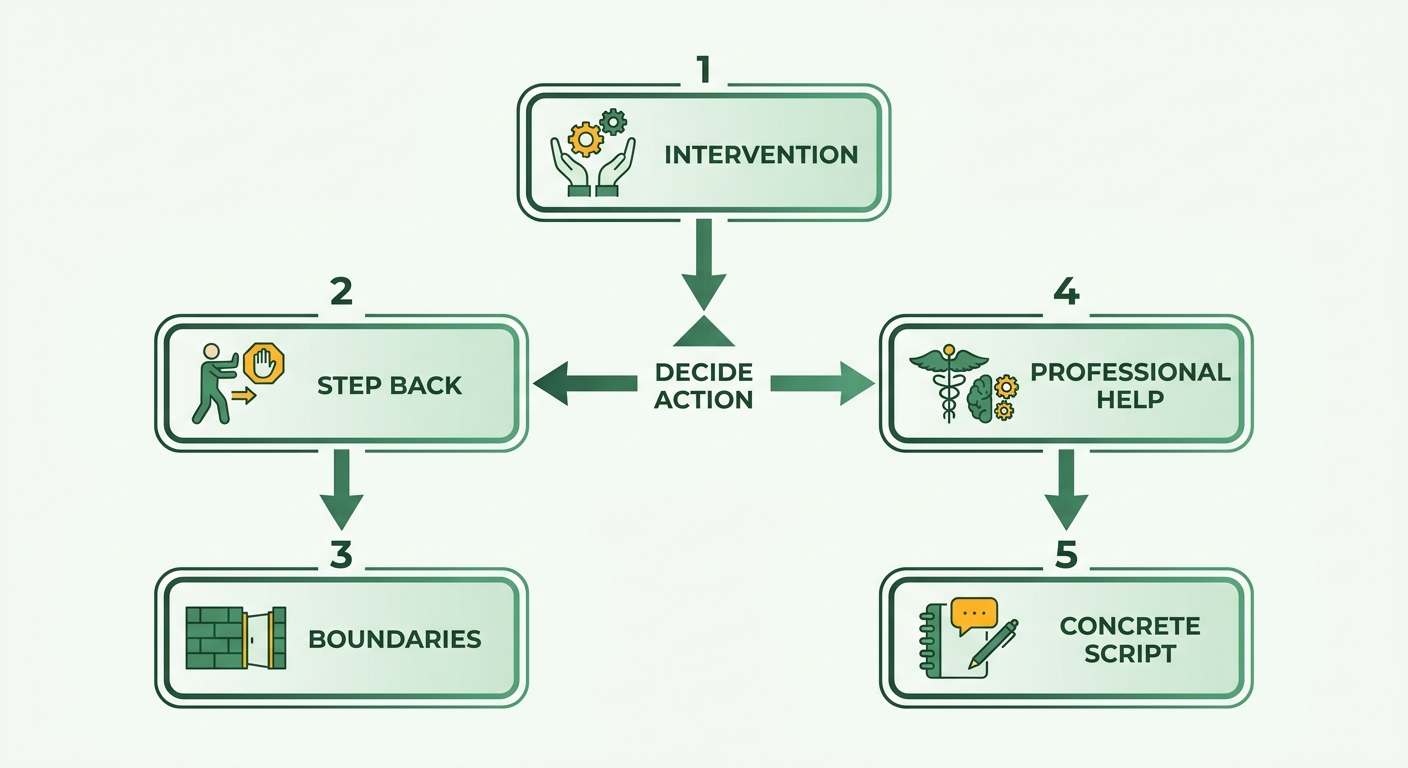
Both, depending on where the person is. When a setback hits, families have to balance encouraging professional help against the reality that direct talk about substance use is often what breaks through denial. The trick is avoiding emotional escalation while keeping the person safe.
Intensity should match the moment. Pre-treatment denial calls for the direct push. Someone fresh out of detox and actively working a plan needs boundaries and room, not a hovering supervisor. Read the stage, then pick your volume.
The setback nobody plans for: caregiver burnout
The single biggest setback we see is caregiver burnout, and it is avoidable. When support collapses onto one exhausted person, its quality drops at the exact moment it matters most. That is the practical case for team-based coaching. A coach carries the accountability calls. The wider team covers the moments that matter. Family gets to be family again instead of full-time monitors. It bridges the gap between treatment and independence with structure and consistent care, rather than leaving people to lean on willpower.
Write the setback plan while things are calm, not mid-crisis. Decide in advance who gets called, what a lapse triggers, and how you will respond without blame. Recovery is not linear, and a support structure built to expect the dips is the one still standing when the transition gets hard.
Maintaining Long-term Sobriety
Long-term sobriety is not the absence of cravings. It is the presence of structure that outlasts them. Holding onto abstinence is a real challenge, as HelpGuide's overview of alcohol recovery lays out. The gap between the people who succeed and the people who struggle is not willpower. It is what fills the day once the crisis passes.
This is where caregiver support has to change jobs. In the early weeks it looks like crisis coverage. After that, it becomes maintenance: protecting routines, defending healthy habits, and keeping accountability alive long after the initial fear fades. Plenty of families run the early sprint well, then run out of gas right when the marathon starts. The shift is from active monitoring to long-term encouragement, as David Hampton's work on recovery support describes.
Why routine outlasts willpower
Routine works because it removes decisions. When sleep, meals, and movement happen at set times, the brain stops negotiating with itself about whether today is a good day to use. Cravings get easier to ride out too. Intense urges are temporary, as WebMD's sobriety tips note, and a predictable schedule gives someone somewhere to put their energy during those windows.
Healthy habits do real physiological work. Exercise releases endorphins that lift mood, which matters because low mood is a common relapse trigger. Nutrition rebuilds the physical stability erratic use tore down. We build these into a daily structure instead of treating them as extras, and we've written more on that in our guide to building a daily routine that keeps you sober.
Shared activities matter here too. Low-stress, enjoyable hobbies done together rebuild the relationship naturally. That is why we help clients build a life they want to stay sober for, whether that is cooking together, picking up new hobbies, staying active, or trying things that make sober living feel full.
How ongoing coaching keeps support healthy
More support is not automatically better support. Structure matters more than sheer presence. Research on social support dynamics warns that poorly structured help can create pressure or enable negative behavior. On the flip side, positive reinforcement and emotional stability are strongly linked to sustained recovery.
Those findings are not in conflict. Support helps when it is coordinated and hurts when it is anxious or controlling. A coach keeps the structure consistent while family provides connection, so nobody's emotions turn into the person's relapse risk. As independence returns, we taper the support on purpose, handing responsibility back to the person instead of holding on.
Once someone has years of stable recovery and their own systems, drop the heavy scaffolding. At that stage, constant check-ins read as distrust. The goal was never permanent oversight. It is a life full enough that staying sober is the obvious choice.
References
[1] Supporting a Loved One in Recovery: 5 Dos and Don'ts - https://www.riversideonline.com/en/patients-and-visitors/healthy-you-blog/blog/h/how-to-support-a-loved-one-in-recovery
[2] My Loved One Isn't Staying Sober. Now What? - https://www.hazeldenbettyford.org/articles/why-loved-one-wont-stay-sober
[3] 7 Ways to Support Your Newly Sober Partner - https://www.bannerhealth.com/healthcareblog/advise-me/how-to-support-recovery-for-a-newly-sober-loved-one-or-partner
[4] 7 tips for supporting someone recovering from addiction - https://www.healthpartners.com/blog/how-to-support-someone-through-substance-use-recovery/
[5] How Do I Help A Recovering Alcoholic? - https://www.addictioncenter.com/rehab-questions/how-do-i-help-a-recovering-addict-or-alcoholic/
[6] Supporting someone through recovery - https://adf.org.au/talking-about-drugs/family-and-friends/supporting-recovery/
[7] 11 Tips To Help You Stay Sober - https://www.webmd.com/mental-health/addiction/tips-stay-sober
[8] How to Help an Alcoholic: Dealing with Someone's Drinking - https://www.helpguide.org/mental-health/addiction/how-to-help-alcoholic
[9] Role of Social Support in Relapse Prevention for Drug ... - https://www.researchgate.net/publication/343193788_Role_of_Social_Support_in_Relapse_Prevention_for_Drug_Addicts
[10] The relationship between family support factors and ... - https://www.researchgate.net/publication/389491188_The_relationship_between_family_support_factors_and_substance_abuse_relapse_an_updated_literature_review
[11] a prospective study at an addiction treatment facility in India - https://pubmed.ncbi.nlm.nih.gov/20553667/
[12] The Role of Family Support and Encouragement in Relapse ... - https://www.researchgate.net/publication/403574047_The_Role_of_Family_Support_and_Encouragement_in_Relapse_Prevention_among_Methamphetamine_Users_A_Phenomenological_Study
Frequently Asked Questions
1. What should I do if my loved one relapses during the first 30 days after treatment?
Treat relapse as part of recovery, not failure. Immediately activate your pre-written crisis plan: contact their coach or therapist, remove substances from the home, and reassess triggers without blame. Because the initial transition period carries the highest risk of setback, a lapse simply means the support structure needs adjustment, not that recovery is impossible.
2. How can I tell if I'm enabling my loved one instead of supporting them?
Enabling means protecting someone from consequences, covering their responsibilities, making excuses, or providing money that might fund use. Support means holding boundaries while offering connection. If you feel exhausted, resentful, or constantly cleaning up their problems, you've likely crossed from support into enabling territory and need to reset those boundaries.
3. When should family step back and let the person manage recovery independently?
Step back gradually as the person demonstrates consistent sobriety and builds their own systems, typically after several months of stable recovery. Early weeks require active family involvement: removing triggers, attending appointments together, and filling empty time. Later stages need space, not surveillance, because constant monitoring can signal distrust and undermine the autonomy that sustains long-term sobriety.
4. Can one family member successfully support someone through recovery alone?
Attempting to manage a loved one's recovery alone often leads to caregiver exhaustion, which can negatively impact the home environment. While family involvement is beneficial, sharing the responsibility among a broader network, including professionals and peer groups, helps maintain a stable, low-stress environment for everyone involved.
5. What's the difference between a lapse and a full relapse?
A lapse is a brief return to use followed by immediate corrective action: calling a coach, attending a meeting, and reengaging the plan. A full relapse is sustained use that abandons the recovery structure entirely. Lapses become relapses when they are hidden, denied, or met with blame instead of problem-solving. How the support network responds determines which direction the slip goes.
6. How do I rebuild trust with someone who's relapsed multiple times?
Rebuild trust through consistent boundaries and shared sober time, not surveillance or control. Focus on present behavior rather than past failures. Engaging in low-stress, positive activities together helps repair the relationship naturally. Trust grows from repeated proof of reliability, and that process takes months of sustained sobriety, not days.
7. Should I remove all reminders of their substance use from our home?
Yes, during early recovery. Removing environmental cues that trigger cravings is a critical step in establishing a safe home space. Clear out alcohol, drugs, and paraphernalia immediately after discharge. Later, as recovery stabilizes and the person builds coping tools, the physical environment matters less than the daily routine and social support maintaining sobriety.