How to Build Your Recovery Routine Around Sleep, Food, and Movement First
August 11, 2026

Key Takeaways
- Sleep deprivation triggers a 22% increase in next-day calorie intake and disrupts hunger hormones that control cravings.
- Adults restricted to four hours of sleep showed 40% slower glucose clearance, impairing the body's ability to process energy.
- Recovery routines built on sleep, food, and movement working together regulate the biology that makes sobriety sustainable.
- Poor sleep lowers leptin and raises ghrelin, creating hormonal conditions that amplify hunger and make resisting cravings harder.
- Consistent 7-9 hour sleep schedules serve as a reset mechanism for the nervous system during early recovery periods.
- Sleep quality directly affects nutrition and movement capacity, making it the foundational anchor rather than an eventual fix.
- Recovery benefits extend beyond athletes—everyone requires structured rest to support physical and neurological repair processes.
Why Recovery Routines Matter
Working with clients fresh out of detox, we see a pattern: the ones who stabilize fastest build structure around sleep, food, and movement within 72 hours home. This isn't discipline. It's biology. When sleep is compromised, metabolic signaling suffers. Sleep deprivation drives a 22% jump in next-day energy intake because the brain seeks quick-energy foods to compensate for fatigue. Lower leptin, higher ghrelin: your hunger hormones shift into a state that makes resisting cravings harder on a chemical level, not just a willpower one.
We help clients build healthy routines tailored to their level of care, because these physical systems either support long-term stability or work against it.
Sleep Anchors the Entire System
Too many clients treat sleep as something they'll fix later. That's backward. Insufficient rest directly impairs metabolic function. Healthy adults restricted to four hours of sleep showed 40% slower glucose clearance, which compromises cellular recovery. During early sobriety, the nervous system requires a stable baseline to recalibrate. Recovery is essential for everyone, not just athletes. The brain needs uninterrupted cycles to process emotional and physical stressors. This cellular repair window typically requires several days of consistent rest to resolve systemic fatigue.
One detail worth trying: two kiwifruit an hour before bed. A trial with elite athletes dropped their Pittsburgh Sleep Quality Index score from 6.47 to 4.13 and added nearly an hour of sleep per night. Not a magic fix, but for clients who struggle with sleep onset, it's a low-risk experiment.
Nutrition Fuels Stability, Not Just Energy
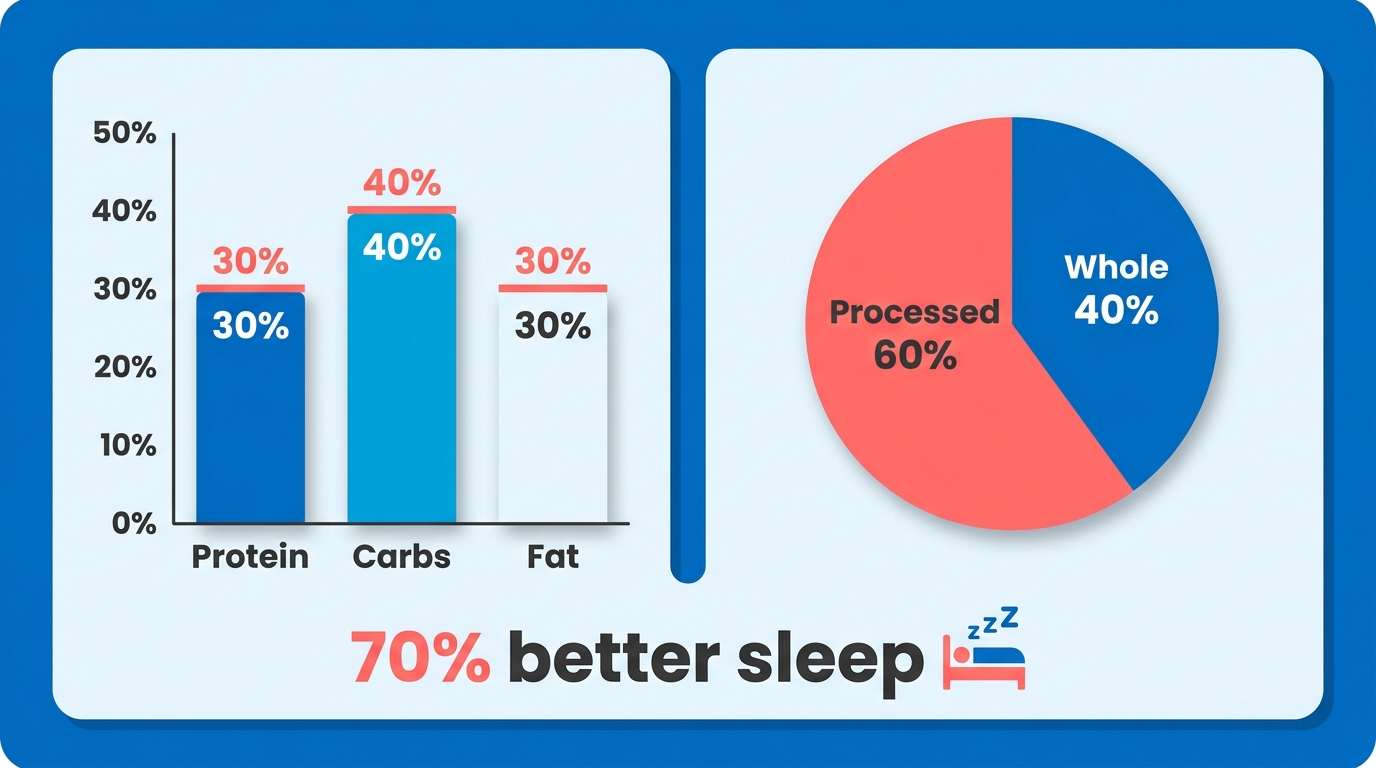
We help clients rebuild healthy eating habits that support physical healing, emotional balance, and daily energy. Research points to omega-3s, B vitamins, and complex carbohydrates as raw materials the brain uses to produce serotonin and dopamine. A nutrient-rich diet group scored 78.4 on mood, 74.6 on stress resilience, and 81.3 on cognitive performance in a study of 256 university students, while processed-food groups lagged across all metrics. That gap matters when you're rebuilding routines from scratch.
Skip high-protein meals within two hours of bedtime—they fragment sleep. Save protein for earlier in the day. If you're experimenting with pre-sleep supplements, a small dose of alpha-lactalbumin may help sleep onset, but the benefit disappears if you're already hitting 2.5 grams of protein per kilogram of body weight daily. Timing beats volume.
Movement Builds Resilience Without Breaking You
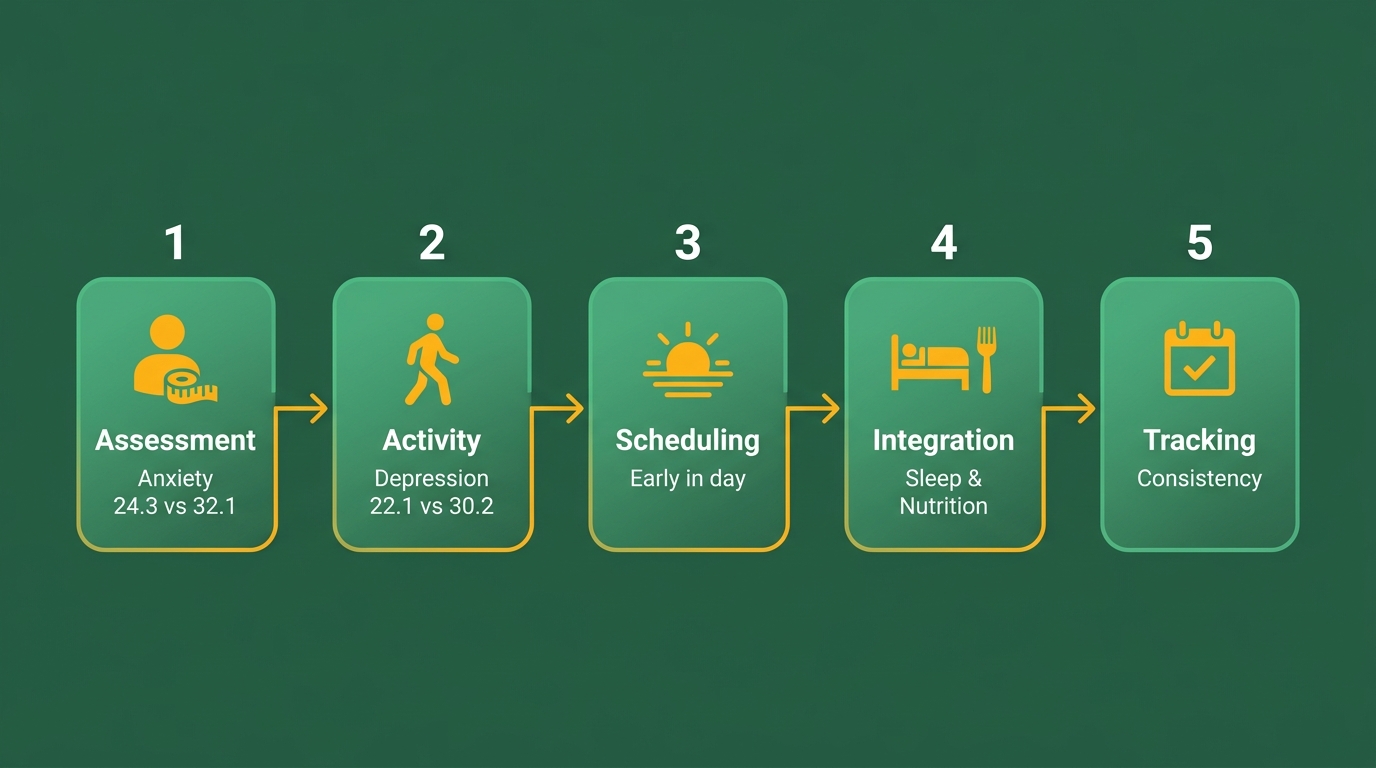
Most recovery programs push intensity too early. Drop-out rates from physical activity programs exceed 50% in substance-use-disorder treatment. Overtraining raises cortisol, affecting mood and insulin sensitivity, exactly what you're trying to stabilize. Low-to-moderate movement like walking, yoga, or light cycling tends to be more sustainable. Regular exercisers reported anxiety scores of 24.3 versus 32.1 for non-exercisers, depression scores of 22.1 versus 30.2, and stress scores of 26.5 versus 36.7.
One approach that works: adventure-based programs like rock-climbing, hiking, and rafting produced measurable improvements in self-esteem, autonomy, and craving intensity in an eight-week Greek pilot. The autonomy piece matters: when clients choose their movement, they stick with it.
Why This Framework Holds Up
Almost one-third of Americans get less than seven hours of sleep, and only 12% meet criteria for optimal metabolic health. The default state for most people entering recovery is metabolic chaos. Fixing one pillar without the others backfires. A 12-week exercise regimen reduced restless leg syndrome severity and improved sleep quality, while nutrition, sleep, and exercise together support your brain, regulate your mood, and build resilience in ways single interventions can't match.
If you're coming off residential treatment, the first 72 hours home are the highest-risk window. We provide consistent, real-world support during the moments that matter most: coordination with nursing support, grocery shopping, meal prep, and day-to-day life management, so you're not managing uncertain moments alone. Even 10-15 minute bouts of brisk walking lower anxiety and depression scores, so start there if a full workout feels impossible. The routine matters more than the intensity.
For more on structuring your post-rehab routine, see our guide on building daily recovery habits that hold up.
Establishing a Consistent Sleep Schedule
Sleep is the anchor of the recovery routine, not one of three equal pillars. When you're fresh out of detox, your body is in a high-repair state, and sleep is where most of that repair happens. Get sleep steady first, and nutrition and movement fall into place behind it. Let it stay chaotic, and the other two pillars work against you.
Physical activity is one of the few levers shown to improve sleep in people who've used alcohol. Fix sleep, and movement fixes sleep further. It's a loop that only starts turning once bedtime holds. When sleep fails, coordination and reaction time drop by the same margin you'd see at the legal drink-drive limit—your system can't tell the difference between exhaustion and intoxication.
How Many Hours Should You Actually Aim For?
Standard guidelines from Australian health authorities outline baseline rest requirements for the general public, but individuals undergoing intense physical recovery often require significantly more. Competitive athletes undergoing strenuous conditioning cycles need 10 to 12 hours of sleep to facilitate tissue repair. Early sobriety places a similar metabolic demand on the body, making extended rest a necessity rather than a luxury.
Our take: early recovery is a high-repair phase, closer to the athlete end than the minimum. If you're sleeping longer and still tired, that's not laziness. Your nervous system is healing, and it's asking for more.
What Goes Into a Bedtime Routine That Holds?
A consistent bedtime routine means the same wind-down, same lights-out, and same wake time every day, weekends included. The single most effective change we see is fixing the wake time first. It sets the whole rhythm.
Good sleep hygiene, as the research on athletes lays out, comes down to a few practical moves:
- Fixed bedtime and wake time, ideally within a 30-minute window each night.
- No screens in bed. Light exposure delays sleep onset.
- A cool, dark room. Keep the bedroom on the cold side.
- Limit caffeine and alcohol, which fragment sleep even when they help you fall asleep.
Consuming a full high-protein meal within an hour or two of bed can disrupt sleep continuity by elevating core body temperature and metabolic rate. Opting for lighter, easily digestible options prevents these nocturnal disruptions.
Do Daytime Naps Help or Hurt?
Short naps help after a rough night; long or late naps sabotage bedtime. Keep them to 20 to 30 minutes and out of the late afternoon. A 30-minute post-lunch nap restored 20-meter sprint times after four hours of lost sleep.
Skip the nap entirely if you're already struggling to fall asleep at night. The daytime rest is stealing from the nighttime block you're trying to protect.
Our coaching is tailored to each person. We help build the wake time, wind-down, and daily rhythm around your level of care, and we taper support as those habits start to hold on their own. To see how these sleep habits integrate with nutrition and exercise, explore our post-rehab routine guide for a complete daily schedule.
Nutrition and Meal Planning for Recovery
Food either fuels your repair or fights it. In a structured recovery routine, nutrition isn't about strict dieting. It's about feeding a brain and body that are rebuilding after detox. What you eat shapes your mood, your thinking, and how well you sleep tonight.
Research on dietary patterns and mental health reveals that diets high in processed food and sugar raise the risk of depression and anxiety. A Mediterranean-style eating pattern, by contrast, shows protective effects against mood disorders in clinical trials. Early sobriety is exactly when you need mood and cognition on your side, so we coach clients to build meals around this evidence.
What foods actually fuel recovery?
Recovery nutrition means nutrient-dense whole foods that rebuild brain chemistry. Focus on dietary sources that support cellular repair and neurotransmitter synthesis. Fatty fish, walnuts, and flaxseeds provide fatty acids that support brain structure. Combining these with diverse micronutrient sources like leafy greens and slow-digesting complex carbohydrates helps maintain steady glucose levels throughout the day.
We help clients rebuild healthy eating habits around whole foods like these, because the goal is physical healing, emotional balance, and steady daily energy. Nutrition, sleep, and exercise function as an interdependent triad, where dietary improvements directly enhance sleep quality and physical stamina.
How should you time meals around sleep?
Meal timing is where nutrition and sleep connect. The sequencing matters as much as the food itself. Eat your heaviest meals earlier, and keep the hours before bed light.
Research on athletes shows a contradiction: a small pre-sleep protein supplement can shorten how long it takes to fall asleep, yet a heavy meal close to bedtime fragments sleep by forcing the digestive system to work when the body should be resting. Our read: it comes down to dose and timing, not avoiding protein. Keep the late-night portion small.
The same review highlighted how specific foods can act as natural sleep aids. Consuming antioxidant-rich fruits before bed was shown to improve sleep efficiency and increase total sleep time over a four-week period, offering a food-based alternative to pharmacological sleep aids.
A simple recovery meal plan template
Structure a day so each pillar supports the next:
- Breakfast: eggs, oats, and berries. Protein and complex carbs to anchor energy.
- Lunch: lean protein, quinoa, leafy greens, olive oil. Your largest protein load.
- Snack: walnuts or Greek yogurt to bridge the afternoon.
- Dinner (3+ hours before bed): fish, sweet potato, vegetables. Nutrient-dense, not heavy.
- Pre-bed: kiwifruit or a light tryptophan-rich snack.
We build these plans with clients rather than handing over a rigid diet sheet. Someone stepping down from residential care needs different portions and support than someone managing cravings at home. Pairing meal timing with the sleep and movement schedule turns three separate goals into one routine, a transition we detail in our post-rehab routine guide.
Incorporating Physical Activity into Your Routine
Movement is the third pillar, but in early sobriety it works best when it stays gentle and stays scheduled. A balanced recovery routine doesn't ask you to train hard. It asks you to move consistently, early in the day, in ways that support the sleep and nutrition you've already stabilized. Movement reinforces both, which is why routine building sits at the center of the coaching we provide.
In a study of university students, regular exercisers scored far lower on anxiety, depression, and stress than their sedentary peers, demonstrating the direct link between physical exertion and mental health. Even short 10 to 15 minute bouts of activity can trigger these psychological benefits, making it an accessible tool for daily mood regulation.
Why start slow when you want to feel better fast?
Start at low-to-moderate intensity. Not because it's easy, but because pushing hard early backfires. Your body is still recalibrating after detox, and a gentle load lets tendons, joints, and energy systems adapt without triggering soreness that becomes a reason to quit. Excessive physical stress raises cortisol and hurts mood and insulin sensitivity, which can disrupt the delicate hormonal balance you are trying to rebuild.
Gentle movement isn't a soft compromise. It's what keeps you in the routine and keeps stress hormones from working against your sobriety. Moderate-intensity activity three times a week is enough to reduce depressive symptoms and build fitness.
When should you move during the day?
Move earlier, not later. The Sleep Foundation notes that exercise too close to bedtime can work against your sleep, while a systematic review of alcohol users highlights how structured exercise helps stabilize sleep architecture over time. Both are right once you separate timing from the activity itself. Daytime movement captures the sleep benefit without the pre-bed arousal cost.
Pick activities you'll actually repeat. Walking, gentle yoga, and mobility work improve circulation and reduce stiffness, Health and Wellbeing Queensland notes. Mind-body options work too: a 12-week Tai Chi program improved sleep quality and lowered withdrawal symptoms.
A simple weekly movement template
Keep it flexible. One starting frame worth trying:
- Mon/Wed/Fri: 20 to 30 minute morning walk
- Tue/Thu: 15 minutes of gentle yoga or mobility
- Sat: a longer walk or light outdoor activity you enjoy
- Sun: rest, remembering that muscle repair takes 48 to 72 hours to fully complete
Track it. A fitness tracker or a simple journal turns "I should move more" into a pattern you can see. Noting two things tends to help most: what you did and how you slept that night. Watching those lines climb together is what makes the routine stick, and our coaches help clients build and adjust routines like this as their needs evolve, long before everyday life resumes.
Creating a Structured Daily Routine
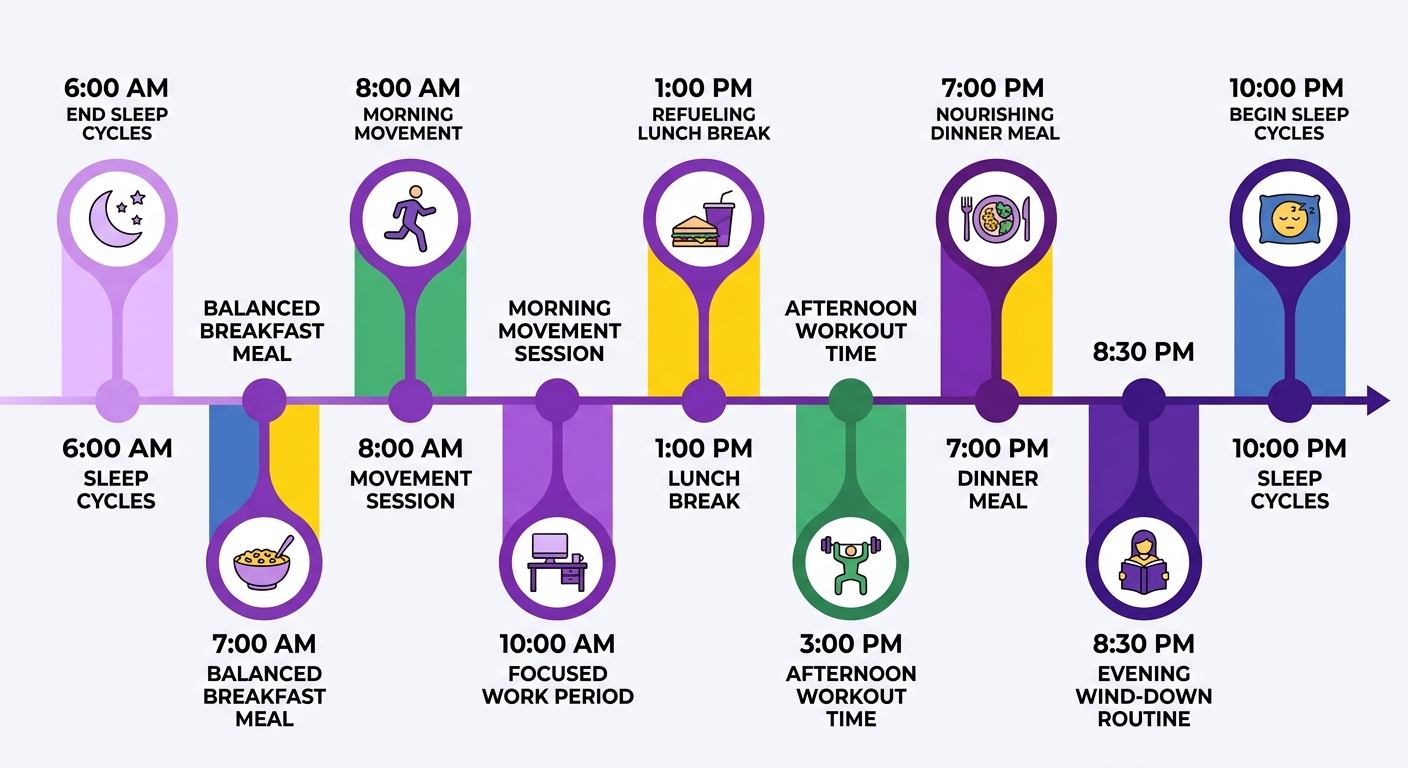
A successful recovery routine in early sobriety isn't built on pure willpower. It's built on a daily structure that keeps sleep, nutrition, and movement locked into predictable time slots so they reinforce each other automatically. When you leave detox and structure vanishes, a deliberate schedule becomes the scaffolding that holds your day together while your brain and body repair.
We see routines fail when clients treat them as fixed blueprints. A static plan designed in week one rarely survives week eight. Your body's repair demands shift, your energy stabilizes, and old triggers resurface in new forms. That's why our customized programs evolve with you, starting with tight structure when everything feels chaotic, then tapering as independence returns.
What a Recovery Routine Must Do Before It Can Hold
Your routine needs three layers to last beyond the first hard week. Non-negotiable anchors come first. These are the fixed points that never move: your wake time, your sleep time, your daily check-in with a coach or support group. Research on physical activity and sleep in alcohol users demonstrates that consistent exercise directly correlates with improved sleep efficiency, which means your morning movement slot becomes an anchor that protects tonight's sleep. Miss it once, and tomorrow's rest suffers.
The middle layer is adaptive. Work hours, therapy sessions, grocery runs: these blocks flex with your week but stay scheduled. You're not winging it. You're planning the flex. The third layer is deliberate downtime, scheduled rest that prevents burnout. Foam rolling for 30 to 90 seconds per muscle group is active recovery that fits into this slot without demanding effort your body doesn't have yet.
Through our tailored coaching approach, we help clients identify these three layers and build them into a daily pattern that fits their actual life. A routine that looks impressive on paper but collapses by Wednesday is a design flaw, not a discipline problem. The goal is consistency over perfection, repeatable actions that compound over weeks rather than heroic efforts that flame out by Friday.
Sequencing Your Day So Each Pillar Supports the Next
Timing rules matter more than people expect. Movement placed in the morning or early afternoon improves sleep quality by aligning physical fatigue with the body's natural circadian dip. Eating your largest meal mid-day instead of two hours before bed keeps digestion from interfering with deep sleep stages. During deep sleep, growth hormones are released for muscle repair, which is why sleep serves as a foundation for physical healing and emotional balance.
Wake at the same time daily, even weekends. Morning light exposure within 30 minutes of waking helps stabilize your circadian rhythm. Movement comes next, a 20-minute walk or light strength work that triggers the sleep benefit hours later. Meals spaced four to five hours apart keep blood sugar steady and prevent the cravings that destabilize nutrition plans. Evening wind-down starts 90 minutes before bed: no screens, no heavy food, just low-stimulation activity that signals your body to shift gears.
That sequencing turns abstract advice into a single daily flow where each pillar's timing supports the next. Studies show that consistent meal timing improves glucose regulation and reduces metabolic dysfunction, while erratic eating patterns increase insulin resistance even when total calories remain constant. The order and spacing of your daily activities create biological signals that either stabilize or destabilize your recovery.
Building Flexibility Without Losing the Structure
A rigid routine breaks the first time life throws a curveball. A sick kid, a late work shift, an unexpected trigger: these moments test whether your structure can bend or only snap. Our programs build flexibility into the routine from day one by separating must-do anchors from nice-to-have extras.
Your wake time and sleep time are non-negotiable. Your morning movement is non-negotiable. Everything else can shift within reason. Therapy moves from Tuesday to Thursday this week? Fine, as long as the anchor points hold. Missed your usual dinner window? Eat lighter and earlier the next day instead of skipping the meal entirely and wrecking tomorrow's energy.
The mistake most people make is treating every deviation as failure. One missed workout doesn't erase the pattern. Three missed workouts in a row means the routine isn't fitting your real life, and it's time to adjust the design, not blame your discipline. We help clients track what's working and what's breaking through our ongoing support and guidance, so adjustments stay ahead of frustration instead of reacting to it after the routine has already collapsed.
Self-compassion isn't a soft skill here. It's what keeps you showing up to rebuild the routine on day four after a rough day three. Patience with the process matters because a new habit takes more than two months to become automatic, and early sobriety demands the routine most when it's hardest to maintain.
References
[1] Why rest, recovery and sleep matter more than you think - https://hw.qld.gov.au/blog/rest-and-recovery/
[2] Recovery Routines: Foam Rolling, Mobility, and Sleep - https://www.ideafit.com/recovery-routines-foam-rolling-mobility-and-sleep/
[3] The Power Of Lifestyle: Nutrition, Sleep, And Exercise In ... - https://doralhw.org/the-power-of-lifestyle-nutrition-sleep-and-exercise-in-mental-health-recovery/
[4] The Three Pillars of Health: Sleep, Nutrition, and Movement - https://www.thenewhealthorder.com/sleep-diet-and-exercise-for-health/
[5] How to Keep Your Body and Mind in Sync: The Wellness ... - https://www.chenmedicalcenters.com/articles/how-keep-your-body-and-mind-sync-wellness-trio-exercise-nutrition-and-sleep
[6] The Connection Between Diet, Exercise, and Sleep - https://www.sleepfoundation.org/physical-health/diet-exercise-sleep
[7] The Role of Recovery and Sleep in Maximizing Strength ... - https://www.vailhealth.org/news/the-role-of-recovery-and-sleep-in-maximizing-strength-and-longevity/
[8] (PDF) Nutrition, sleep and recovery - https://www.researchgate.net/publication/233182137_Nutrition_sleep_and_recovery
[9] (PDF) Sleep, Nutrition, and Recovery in Athletes. - https://www.researchgate.net/publication/386011269_Sleep_Nutrition_and_Recovery_in_Athletes
[10] (PDF) The Impact of Physical Activity on Sleep in Alcohol ... - https://www.researchgate.net/publication/393466384_The_Impact_of_Physical_Activity_on_Sleep_in_Alcohol_Users_A_Systematic_Review
[11] Analyzing How Physical Health Factors Such as Sleep ... - https://www.researchgate.net/publication/389206457_Analyzing_how_physical_health_factors_such_as_sleep_nutrition_and_exercise_influence_mental_healh_outcomes
[12] Enhancing Substance Use Disorder Recovery through ... - https://www.researchgate.net/publication/380874505_Enhancing_Substance_Use_Disorder_Recovery_through_Integrated_Physical_Activity_and_Behavioral_Interventions_A_Comprehensive_Approach_to_Treatment_and_Prevention
Frequently Asked Questions
1. Why does sleep need to come first instead of fixing nutrition or exercise first?
Sleep drives the hormonal and metabolic systems that make nutrition and movement effective. Without adequate sleep, the body's ability to process carbohydrates is severely impaired, hunger hormones shift to increase cravings, and cellular recovery is compromised, making it difficult to sustain exercise or maintain healthy eating habits.
2. Can I replace whole meals with protein shakes or meal replacements during early recovery?
Whole foods provide the fiber, micronutrients, and blood sugar stability that isolated supplements can't replicate. Rebuilding physical health requires complex nutrient matrices that support gut health and neurotransmitter production, benefits that processed powders and shakes typically lack.
3. What should I do if I'm too exhausted to exercise even at low intensity?
Focus on very short, low-effort activities like gentle stretching or a brief walk around the block. Even minimal movement helps regulate the nervous system and supports sleep quality without draining your energy reserves. If profound fatigue persists despite consistent rest and nutrition, it may indicate a need for medical evaluation rather than physical exertion.
4. How do I know if my sleep schedule is actually working or just feels consistent?
Track wake time stability and how long it takes you to fall asleep. A working sleep schedule shows sleep onset under 20 minutes and a wake time that varies by less than 30 minutes daily. If you are getting a full night's rest but still feel exhausted after several weeks, your body may still be in a deep repair phase, or you may need to evaluate your sleep quality with a professional.
5. Should I force myself to eat breakfast if I'm not hungry in the morning?
Prioritize meal timing over forcing food when your body isn't ready. Eating your largest protein load at lunch and keeping dinner light works better than skipping structure entirely. Morning appetite often returns as sleep quality improves and stress hormones stabilize, typically within two to three weeks of consistent bedtimes.
6. What happens if I miss a workout or sleep poorly for a night—does it reset my progress?
One disrupted night or missed workout does not erase established patterns. The key is to avoid consecutive disruptions, which can quickly lead to a breakdown of the routine. Focus on returning to your schedule at the very next opportunity rather than letting a single slip derail your overall progress.
7. Can I use melatonin or sleep supplements instead of fixing my bedtime routine?
Supplements do not replace the circadian rhythm established by a fixed wake time and morning light exposure. While certain dietary adjustments can support sleep quality, they only work effectively when paired with consistent sleep hygiene. Relying on supplements without routine structure masks sleep issues rather than resolving their underlying causes.