How to Build Recovery Routines That Fade Support as Independence Grows
August 9, 2026

Key Takeaways
- A quick‑look table summarises “what, how long, why” so support gaps are easy to spot.
- Consistent sleep of around 7‑8 hours is often linked to steadier mood and lower mental strain.
- Regular meals and adequate hydration can help maintain blood‑sugar balance, which many people find reduces impulsive cravings.
- Structured daily activity that occupies a good portion of the day may lower idle time that can trigger relapse.
- Brief accountability check‑ins provide human connection that many clients find reinforcing.
- A short, flexible “rest” slot can boost stress resilience without disrupting the overall routine.
Quick Summary
Recovery routines tend to be most effective when a clear snapshot shows where support is needed and where independence can grow. A concise table lets clients and families see gaps early, allowing the coaching team to taper help without leaving anyone feeling abandoned.
How do we summarise recovery routines for easy reference?
A quick‑look table answers the “what, how long, why” questions in one place. It helps the coach coordinate the team’s involvement and then step back as the client gains confidence.
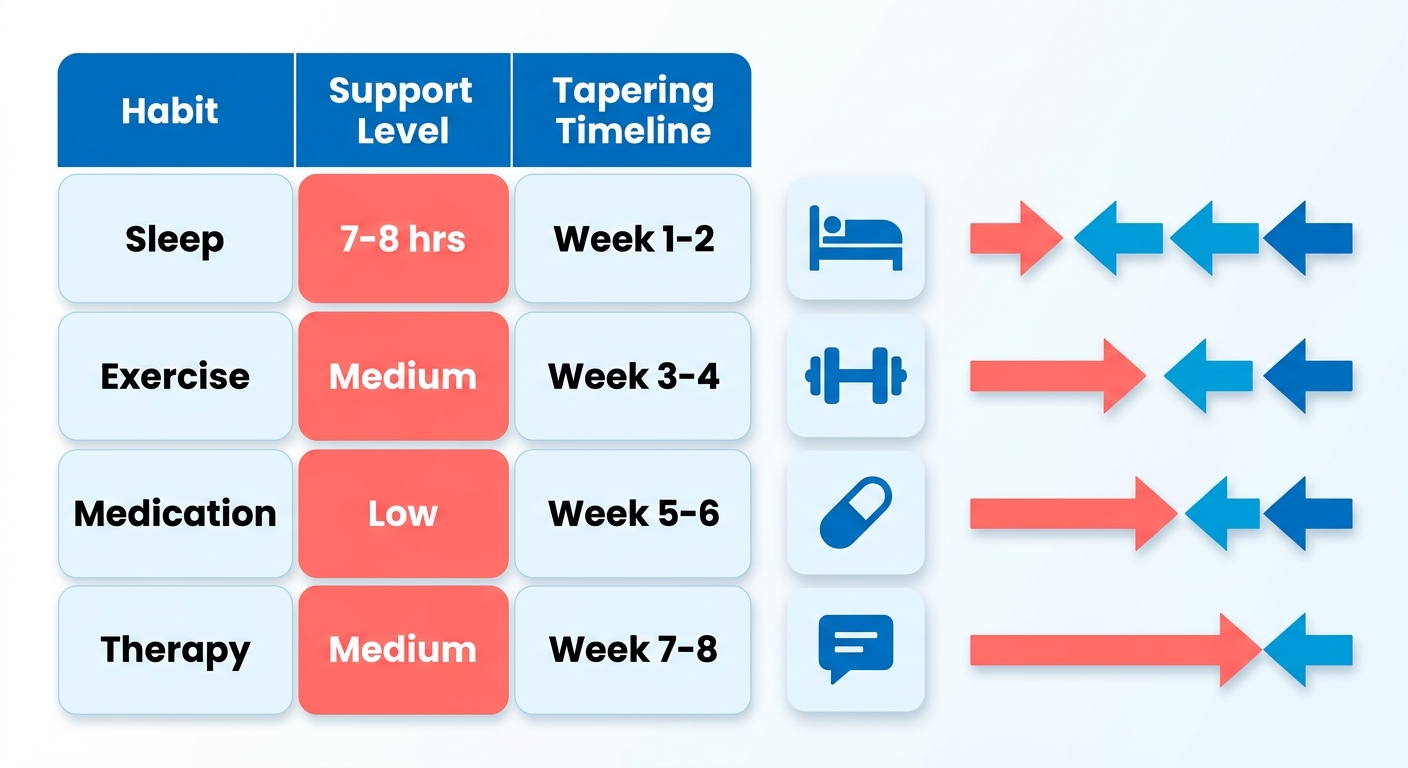
| Routine Element | Typical Time / Day | Key Focus | Benefit Highlight |
|---|---|---|---|
| Sleep (≈7‑8 h) | 7‑8 h | Mood & decision‑making | May lower mental strain, a common relapse trigger |
| Meals & Hydration | 3 meals + adequate water | Blood‑sugar stability | Steady energy can curb impulsive cravings |
| Structured Activity (work, school, hobby) | Several hours | Idle‑time reduction | Fills free hours that can lead to relapse |
| Accountability Check‑ins (coach, peer, family) | Brief (e.g., 10‑20 min) | Real‑time support | Reinforces human connection and guidance |
| Flexible “Rest” Slot (meditation, light reading) | Short (e.g., 30‑45 min) | Stress‑resilience | Allows adaptation without breaking the routine |
Basic physiological habits—sleep, nutrition, brief check‑ins—are often low‑effort but high‑impact. Coaches usually prioritise these first because they create a stable foundation before adding more demanding elements like structured activity. When a client consistently meets the foundational items, the team can discuss expanding the schedule as capacity grows.
Coaches use the table as a conversation tool, noting areas where a client reliably meets goals (for example, maintaining regular sleep) and then collaboratively exploring the addition or extension of other activities.
If a client encounters a significant stressor, the coaching team may temporarily place greater emphasis on core habits—sleep, meals, check‑ins. This focused approach helps preserve stability while the client regains balance before re‑introducing additional routine elements.
The overview table gives each client a visual roadmap that evolves with their independence, ensuring support fades only when the routine proves resilient.
Why gradual support tapering matters
Tapering slots into the daily structure you already use turns intensive coaching into periodic reinforcement.
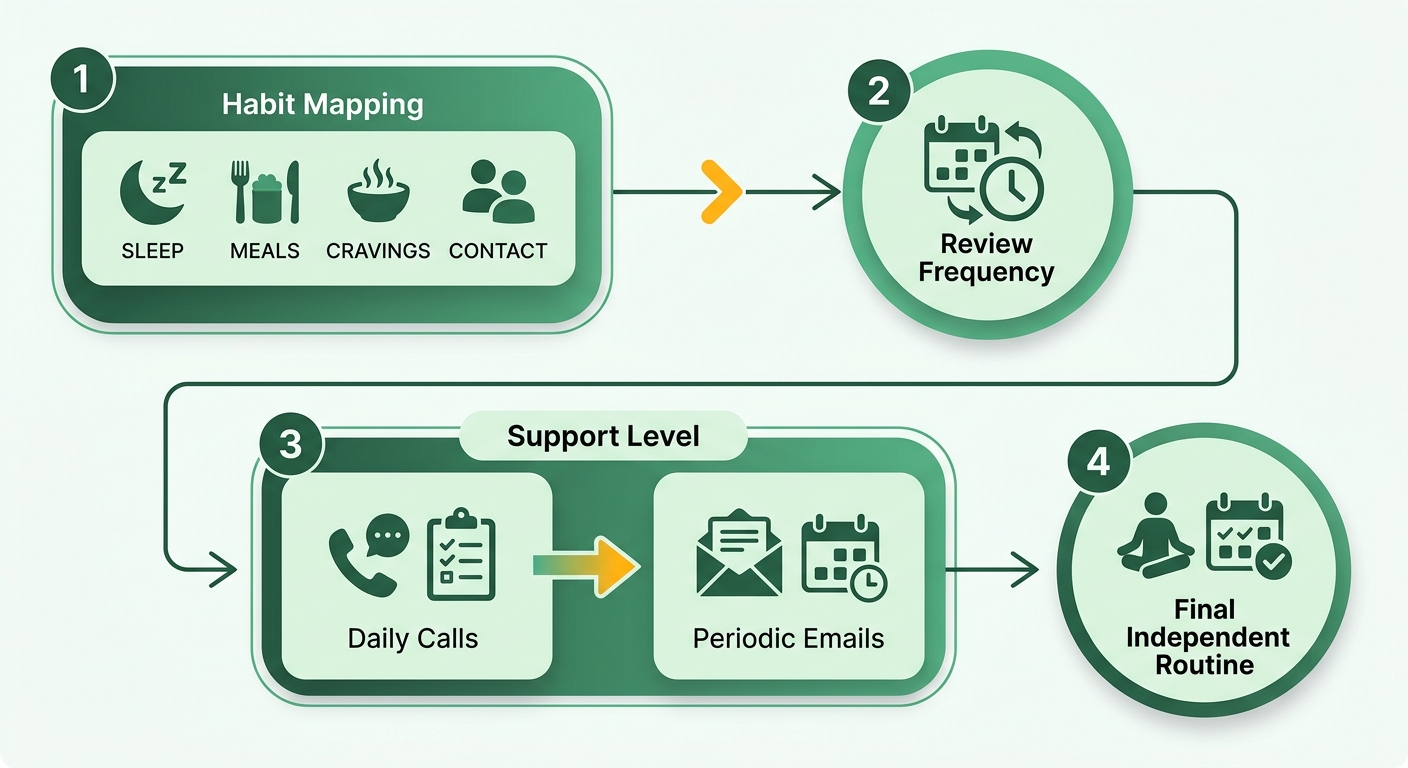
We start by mapping every habit—sleep, meals, cravings‑log, peer‑contact—into a visual schedule. Then we align a coach‑led review frequency with the perceived difficulty of each habit. Early weeks might include a brief morning call, while later weeks shift to a concise email summary. This alignment keeps the routine intact while the coach steps back.
When should we skip tapering?
Tapering is usually paused when a client faces acute psychiatric distress or a high‑risk relapse trigger that requires continuous, high‑level oversight.
If a person is experiencing a severe anxiety flare, a mood episode, or recent trauma, pulling back could leave them exposed. In those cases the team maintains full‑time coaching until stability returns, then re‑enters the taper plan. This carve‑out protects both the client and the support team from unintended setbacks.
The MADE tapering model can be adapted for clients with chronic conditions, long‑term alcohol dependence, or opioid use disorder, allowing support to mirror the ebb and flow of lived experience. The structured taper also provides families with clear signals about when help steps in and when it steps back.
For a concrete example of how tapering can be embedded into everyday life, see the guide on building a daily sober routine in the first 90 days. It walks through a checklist that many coaches use to transition from intensive coaching to autonomous recovery routines while keeping a safety net.
Assessing recovery needs and individual baselines
We begin by capturing a clear snapshot of where each person stands. Our team blends self‑report tools with personal conversations to create an individual baseline that guides the taper while keeping a safety net in place.
How do we gather baseline data?
Our three‑step information‑gathering plan gives both the client’s voice and the context needed for safe tapering:
- Intake survey – a brief online form covering substance‑use history, trigger awareness, sleep quality, social support.
- Initial consultation – a video or phone conversation where a coach reviews the survey, asks follow‑up questions, and begins shaping a personalised plan.
- Regular check‑in – short, scheduled calls or messages that let the coach confirm how the client is feeling, address any gaps, and adjust the plan as needed.
After reviewing this information together, coaches identify strengths and areas that may need extra attention. This collaborative review helps decide where more frequent check‑ins are useful and where the client can start managing on their own.
How do we translate baselines into tailored recovery routines?
We turn the baseline into a personalised set of actions that gradually shift from coach‑led to self‑managed. The process follows three core steps:
- Collaborative goal setting – the coach works with the client to define realistic, meaningful objectives that reflect the client’s current situation and aspirations.
- Priority discussion – together they rank the goals, focusing first on the areas that most influence stability and confidence in early recovery.
- Support‑reduction schedule – the team creates a tapering plan that starts with frequent brief contacts, then moves to less‑often check‑ins, eventually transitioning to periodic summaries once the client consistently meets their goals.
For example, a client who reports difficulty establishing a regular sleep routine might begin with nightly check‑ins focused on bedtime habits, while a client who feels isolated could receive daily companionship calls that later shift to weekly support messages. As confidence grows, the coach gradually reduces the frequency of these contacts, encouraging independence while maintaining a safety net.
This structured progression ensures that early‑stage support directly matches the individual’s baseline, keeping the transition smooth and the recovery routines sustainable.
Designing a recovery micro‑cycle: load, volume, rest
Coaches begin with a gentle level of guidance, increase involvement as new habits take hold, and later reduce contact as the client demonstrates consistent stability.
- Personalised activity planning – early sessions focus on establishing manageable daily tasks such as meal preparation, light exercise, simple mindfulness practices. As the client becomes comfortable, additional activities are introduced at a pace that feels right for them.
- Routine building – consistent sleep, nutrition, and structured time are emphasized first; once these basics are reliable, coaches help expand the routine to include hobbies, social engagements, and work‑related goals.
- Flexible pacing – throughout the process, coaches regularly check in to gauge stress levels and cravings, adjusting the amount of contact and the complexity of assignments to avoid overwhelm.
What supports help us personalise the plan?
Our team relies on ongoing conversation, client‑provided feedback, and collaborative planning to keep each programme aligned with the person’s evolving needs:
- Regular check‑ins – daily or weekly virtual or in‑person sessions give coaches a clear view of how the client is feeling and what adjustments may be helpful.
- Client self‑reporting – individuals share their experiences, cravings, and energy levels, allowing the coach to fine‑tune goals and activities.
- Team collaboration – when a client works with a coordinated team, coaches share insights and coordinate support, ensuring consistency across all touchpoints.
Because progress is shared openly within the coaching team, family members can stay informed and feel included in the recovery journey, reinforcing the safety net while the client moves toward greater independence. This collaborative approach keeps the recovery plan responsive to real‑time progress.
Implementing the MADE 2 FADE framework for support tapering
Recovery routines thrive when the coach‑coordinated team gradually loosens its grip while the client’s daily structure stays solid. MADE’s approach to tapering support provides a clear pathway for moving from intensive guidance to purposeful, spaced‑out check‑ins.
Our process begins with a quick audit of each daily routine component—physiological needs, self‑monitoring logs, social connections—and tags them with a “fade level.” This audit creates a visual map that highlights where we can step back safely and where the safety net must stay tight. The map becomes the backbone of the taper plan, ensuring the client never feels abandoned.
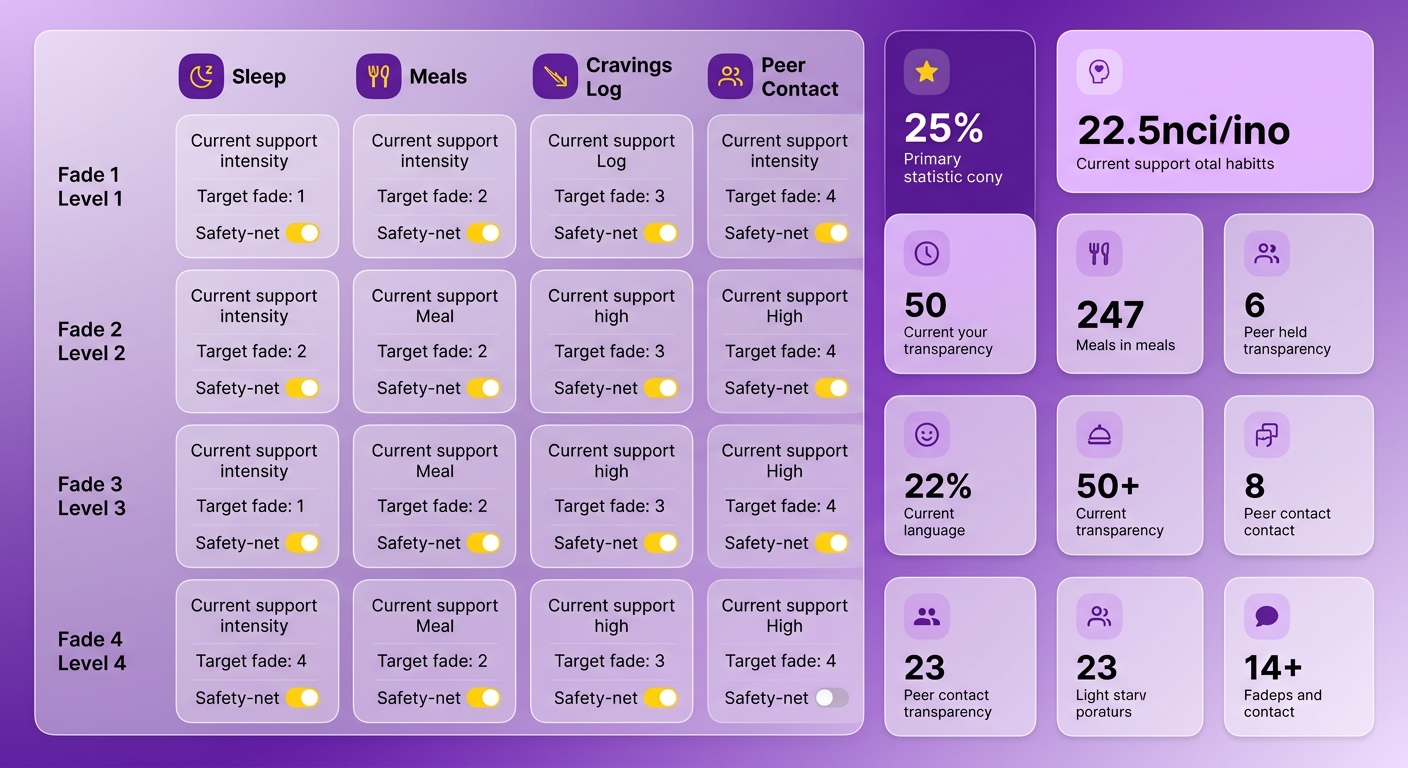
How support tapering works
We break the process into four steps: Focus, Assess, Decrease, Evaluate.
- Focus – Identify the top three recovery‑routine pillars that need the most support.
- Assess – Use weekly observations (e.g., self‑rated craving intensity, sleep quality, attendance at peer groups) to set a baseline.
- Decrease – Gradually reduce coach contact in line with the client’s demonstrated stability, allowing more independence over time.
- Evaluate – Review outcomes, adjust the fade level, and decide whether to continue tapering or pause.
Coaches track progress through regular check‑ins and client‑maintained journals, keeping the whole team informed of any significant changes. This simple system helps spot early signs that may require a temporary pause or a brief intensification of support.
Practical steps to keep tapering on track
We recommend a three‑step rollout that blends goal‑setting, feedback loops, and contingency planning:
- Set clear milestones – Define concrete, time‑bound goals for each pillar (e.g., “maintain a consistent sleep window for two weeks”). Record them in the client’s journal and review them together regularly.
- Create a feedback loop – Schedule brief “pulse checks” every few days during the first month, then shift to a weekly summary. Using the same simple template each time makes trends easy to spot.
- Plan for resistance – If a client reports a sudden increase in cravings, the protocol calls for a short‑term re‑intensification of contact, after which the fade level returns to the previous safe point.
By anchoring every reduction to observable observations and maintaining transparent communication within the coaching team, recovery routines stay resilient even as the coach steps back. Clear parameters let clients safely test their autonomy while still having access to guidance.
Building self‑efficacy through skill mastery
Self‑efficacy emerges as clients transition from intensive coaching to a more autonomous daily rhythm. MADE’s approach weaves confidence‑building tasks into recovery routines, giving clients a tangible sense of control that fuels motivation and helps maintain adherence.
Our method breaks each new habit into a skill‑mastery loop: a tiny, measurable target, immediate feedback, and a quick acknowledgment. When the target is realistic, the brain registers success, which then raises the confidence bar for the next challenge.
What strategies boost self‑efficacy in recovery routines?
We pair clear micro‑goals with real‑time feedback and progressive difficulty. A micro‑goal might be a brief breathing exercise, and feedback can come from a simple log or a short coach text confirming completion.
Clients start with a goal‑setting worksheet that turns abstract ambition into concrete steps, such as “prepare a balanced breakfast before 9 am.” As the client ticks off each step, a brief acknowledgment reinforces the win.
Which skills translate into independence when support tapers?
We focus on stress‑management and time‑management skills because they directly reduce relapse triggers and free mental bandwidth for new responsibilities. Mastery of these skills creates a self‑sustaining loop that keeps the client steady as coaching contacts become less frequent.
For stress management we teach a three‑part routine: a grounding breath, a brief body scan, and a written reflection. Clients practice it during a craving cue, log the outcome, and review the log with the coach every other week. Over time the routine can become automatic, reducing the need for prompts.
Time‑management training starts with a simple block‑schedule template. Clients fill in work, self‑care, and recovery activities, then adjust based on daily energy levels. By the end of the second micro‑cycle many clients can anticipate when cravings are likely to arise and slot a coping activity before they spike. A client who experiences mid‑afternoon restlessness might introduce a short exercise routine; after consistently managing this habit independently for several weeks, they can transition from daily activity logs to a broader weekly check‑in, reflecting growing confidence in self‑regulation.
The coaching model is designed to gradually reduce support as clients demonstrate consistent use of these skills. This intentional taper aligns with the goal of fostering independence while still providing a safety net when needed. Developing self‑directed habits provides the foundation for long‑term stability.
Establishing sustainable daily routines
A sustainable daily routine offers structure and accountability—two pillars that keep recovery routines resilient as coaching contact tapers. When a client can anticipate the next hour without guessing how to stay sober, the anxiety that often fuels relapse diminishes.
A predictable schedule reduces decision fatigue, frees mental bandwidth for coping skills, and creates natural checkpoints for the coach‑coordinated team to observe progress without hovering.
How do we build a routine that grows with you?
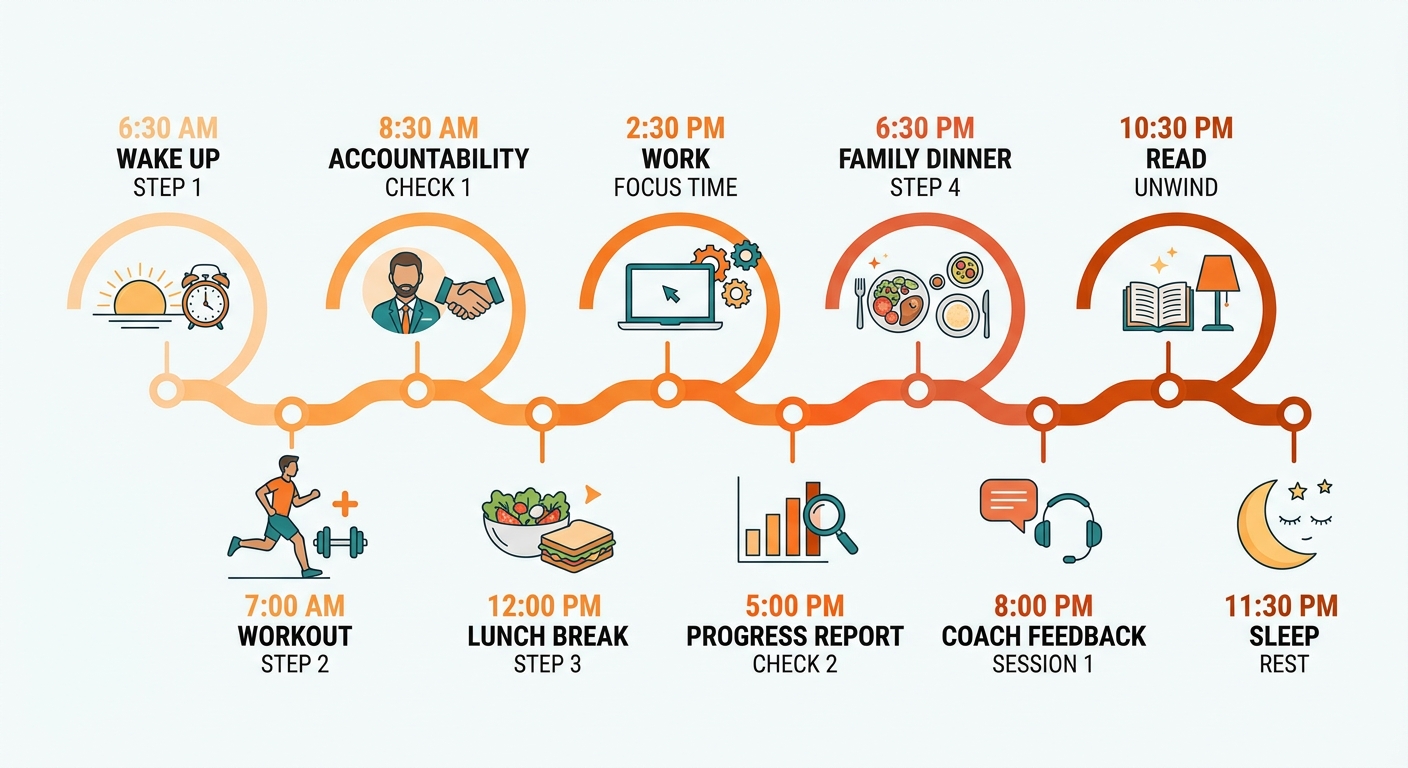
We start by mapping three core blocks: wake‑up, mid‑day, wind‑down. Each block contains one anchor activity that stays constant, plus optional add‑ons that fade as confidence rises.
- Define the anchor – choose a non‑negotiable habit (e.g., a 10‑minute breathing exercise at 7 am).
- Layer supportive actions – add a brief journal entry, a protein‑rich breakfast, a short walk.
- Set a fade schedule – after a period of consistency, the journal reminder can be removed so the client self‑tracks.
Coaches regularly review the anchor activity during early sessions and provide brief support if challenges arise, gradually reducing direct contact as the client gains independence.
Which tools help keep the routine on track?
We recommend simple, low‑tech aids that reinforce habits without becoming a crutch:
- Phone alarms labelled with the anchor activity keep the cue visible.
- Wearable step counters give instant feedback on movement goals, letting clients see progress at a glance.
- Digital habit trackers (generic apps that let you tick off tasks) provide a visual streak that the coach can discuss during scheduled check‑ins.
These tools complement the personalised coaching plan and can be referenced during regular conversations. For a deeper dive on setting up that plan, see our blog post on building a daily routine that keeps you sober.
What does a sample day look like?
Morning – wake, hydrate, brief mindfulness, quick log of cravings, breakfast.
Afternoon – scheduled lunch with a supportive peer, short walk, optional brief text check‑in with the coach.
Evening – screen‑free wind‑down, gratitude note (which can fade after a few weeks), set tomorrow’s anchor, lights out at a consistent hour.
By anchoring each part of the day and letting peripheral elements fade, the core routine remains stable while the coaching net gradually loosens. This balance lets clients own their schedule and gives the team a clear, low‑touch way to stay informed.
References
Frequently Asked Questions
1. When should I temporarily stop the tapering process?
Tapering is usually paused if a client shows signs of clinical regression, significant emotional instability, or faces an overwhelming life stressor. In those moments the support team temporarily increases contact frequency to stabilise the situation, returning to the gradual reduction plan only after the client demonstrates consistent coping capacity again.
2. Which low‑tech tools help track routine adherence without becoming a crutch?
Tools that require minimal screen time and manual input work well—simple tactile logs, basic notification reminders, or straightforward progress charts keep the focus on the habit itself rather than the technology.
3. How does the difficulty rating affect how often a coach checks in?
Difficulty ratings are used by some coaches as a heuristic to allocate resources where they are needed most. Tasks that demand significant executive function or social exposure often receive closer monitoring early on, whereas foundational physiological habits may transition to self‑management sooner.
4. Can the MADE 2 FADE framework be used for someone with a co‑occurring mental‑health condition?
Yes. The framework is designed to integrate clinical recommendations from a client’s primary mental‑health providers. Aligning the tapering schedule with therapeutic milestones helps ensure that support levels adjust dynamically to both psychiatric stability and substance‑recovery goals.
5. What purpose does the flexible rest slot serve as support fades?
A dedicated daily rest period acts as a buffer against unexpected stressors. By scheduling unstructured time, clients learn to self‑regulate and decompress without relying on external prompts, strengthening their overall capacity to handle daily challenges independently.
6. How can I move from daily accountability texts to weekly email summaries without losing momentum?
Transition gradually by introducing intermediate steps—such as moving from daily check‑ins to every‑other‑day updates—before shifting to a weekly digest. This step‑down approach allows the client to build confidence in self‑reporting while keeping the coach informed of progress.