Family Caregivers Hold the First 90 Days of Recovery Together
August 18, 2026
Key Takeaways
- Nearly two-thirds of relapses occur during the first 90 days of sobriety, making caregiver support structurally essential during this period.
- Without structured continuing care after initial treatment, relapse rates climb to 40-60% as families transition loved ones home from detox.
- The brain's reward pathways begin healing in early weeks, but stress-induced cravings peak around weeks three to five when vigilance often drops.
- Family involvement directly correlates with higher treatment retention rates and measurably lower relapse risk across multiple studies.
- Weeks eight to twelve often bring unexpected mental clarity, but reaching that milestone requires surviving the neurological chaos of month one.
- Family intervention programs have demonstrated reduced relapse rates among alcohol-dependent patients compared to those without structured caregiver involvement.
- The biological window for early recovery is narrow and unforgiving, with most treatment investments collapsing or holding during these critical 90 days.
Why the First 90 Days Decide Everything
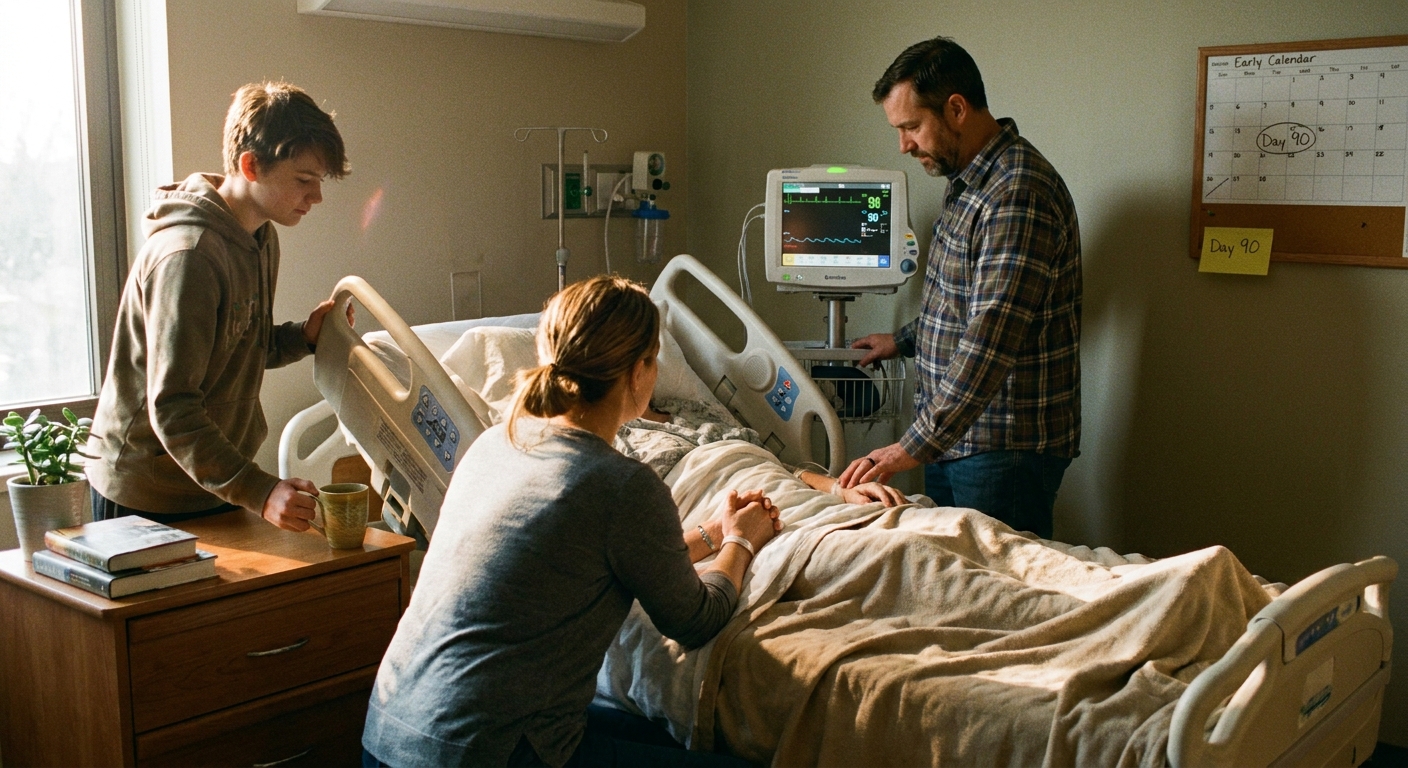
Families arrive at our aftercare program carrying an invisible weight. They have just brought someone home from detox or residential treatment, and the next three months will determine whether that treatment investment holds or collapses. The stakes are real: during the first 90 days of sobriety, the risk of returning to substance use is highest, and without structured continuing care, relapse rates climb significantly. Caregiver support during this window is not optional. It is the scaffolding that keeps early recovery upright.
Your loved one's brain is physically rewiring itself right now
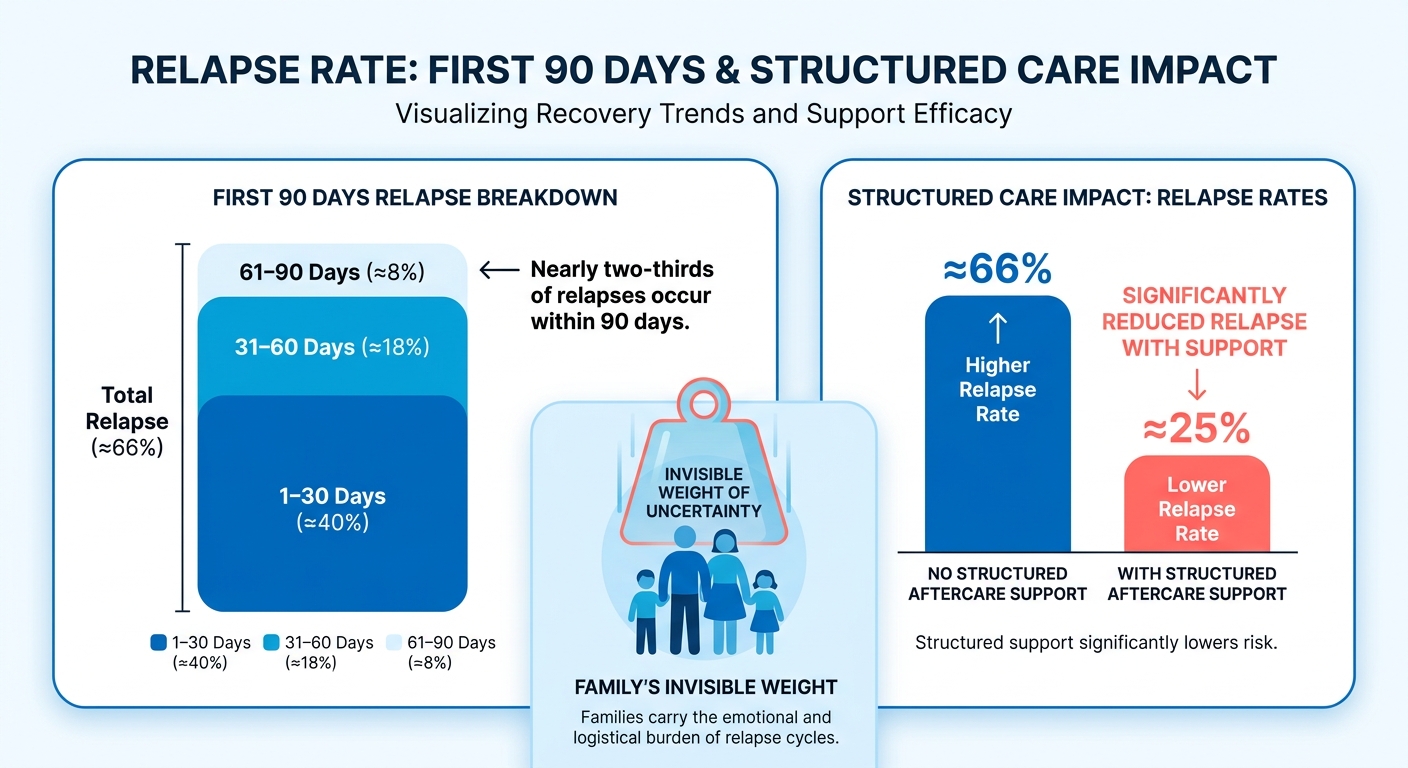
Neurological recovery is not linear. Early physical healing often masks a later surge in stress-induced cravings that appears mid-month, catching families off guard. We have watched clients experience a significant cognitive shift as they approach the end of the second month, but getting there requires surviving the neurological chaos of month one.
The research backs this up: active family participation is linked to better treatment retention. One study showed that structured family involvement improves communication and emotional support. This is not about hovering. It is about being present during the weeks when the brain is most vulnerable.
You become the primary environmental trigger once they come home
An overlooked aspect of treatment programs is that you are now the environmental cue. The routines you co-create, the conversations you normalize, the accountability you model, these factors outweigh clinical interventions during the 90-day stretch. We assist families in planning detox and treatment pathways, then support clients as they reintegrate into daily life through structured coaching that bridges the gap between treatment and independence.
But there is a problem. Families provide 85-253 hours of monthly care with minimal preparation, yet 64% of caregivers report moderate to high emotional stress. One caregiver we spoke with, caring for a partner with chronic relapse patterns, described feeling "helpless, alone, frustrated." Caregivers experience an average of seven poor mental health days each month, creating a feedback loop where untrained, stressed families become the infrastructure for a high-failure-rate window.
The three phases families rarely prepare for
Days 1-14 focus on acute stabilization. Your loved one is dealing with physical recalibration, sleep disruption, mood swings, and cravings that feel like physical pain. Families provide the most intensive support here, often 15-20 hours per week of check-ins, meal coordination, and crisis management. The difficulty rating is high because you are managing unpredictability without a roadmap.
Days 15-30 shift to emotional regulation. The physical symptoms ease, but anxiety and depression surface as the numbing effect of substances wears off. We see families reduce direct supervision but increase structured activities, recovery meetings, therapy appointments, and sober social plans. This phase demands different skills: knowing when to step in versus when to let your loved one manage discomfort.
Days 31-90 build sustainable patterns. The work becomes less about crisis prevention and more about reinforcing new habits. Families transition from active monitoring to supportive accountability, think weekly family meetings instead of daily check-ins. Clients whose families stay engaged through this full arc tend to maintain stability more successfully than those who step back after the first month.
When family support backfires
Not all family involvement helps. The line between support and control collapses fast, especially when 56% of caregivers report having no real choice in taking on their role. One treatment center's guidance warns families to avoid taking over the recovery process, which sounds contradictory until you realize the distinction: co-creating accountability plans with your loved one differs from imposing rules on them.
We have seen well-meaning families sabotage recovery by micromanaging meal plans, demanding hourly location updates, or making unilateral decisions about social activities. The research on this is clear: positive reinforcement from relatives helps sustain motivation, but only when it strengthens self-efficacy rather than replacing it. If your involvement leaves your loved one feeling surveilled rather than supported, you are adding stress to an already fragile system.
Effective engagement requires proper training. We provide consistent support during critical moments to ensure clients do not feel alone in their recovery journey, helping families and clients build sustainable routines through coordination with nursing support, grocery shopping, meal prep, and day-to-day life management. When families enter the 90-day window with a shared understanding of boundaries, check-in protocols, and stress management, the odds shift dramatically in everyone’s favor.
Days 15-30: The Wall Arrives Right When You Let Your Guard Down
Caregiver support becomes most critical right when the initial relief wears off. Around day 21, the novelty of sobriety fades and your loved one hits what we call "the wall" - a dip in motivation, a spike in irritability, and a return of intense cravings. The biological honeymoon is over. Their brain is still rewiring, but the dopamine surge from early wins has flattened out, and the hard work of recovery without the adrenaline rush sets in.
What triggers the wall
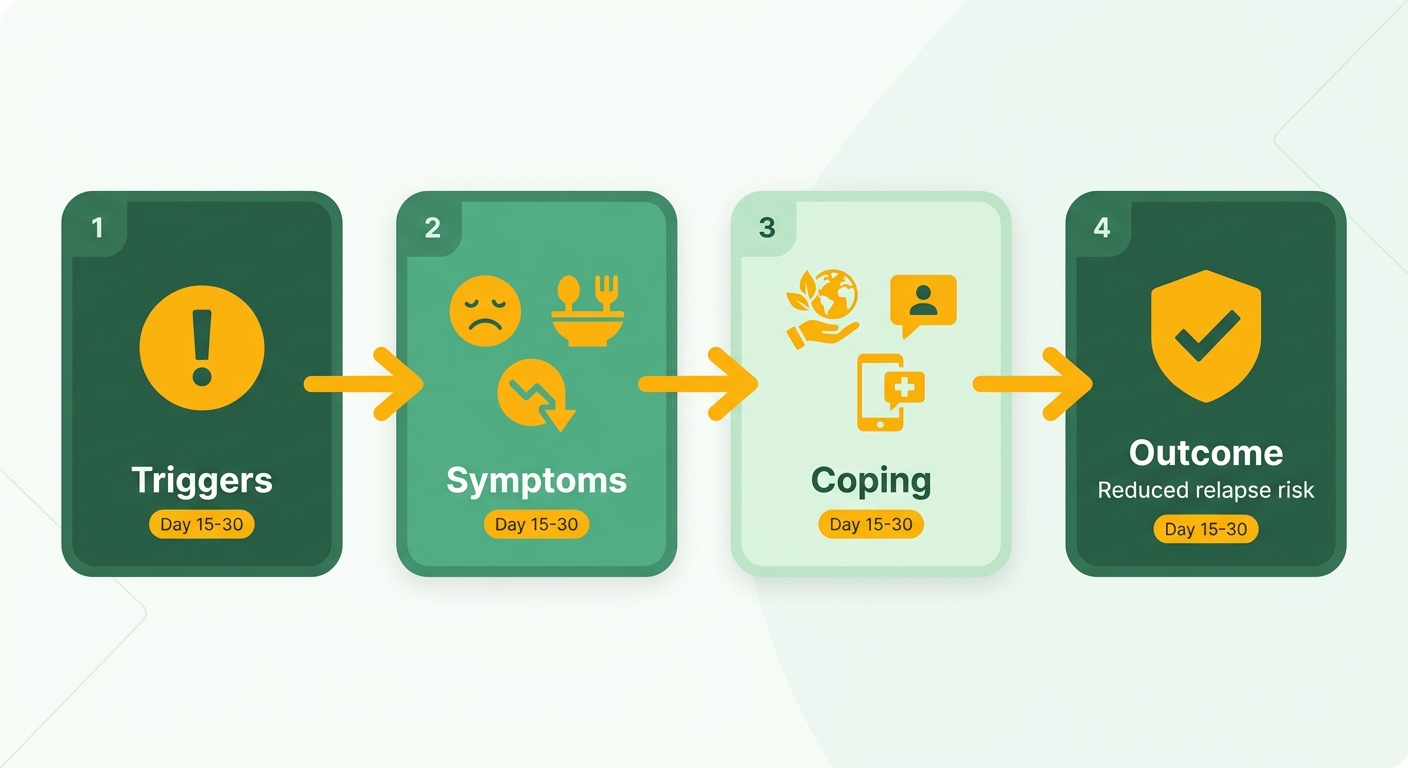
The wall is not random. We see it fueled by loneliness, boredom, unresolved trauma, and family conflict. Your loved one might isolate in their room, snap at small requests, or suddenly reminisce about using. These are not character flaws. They are predictable psychological responses to the grind of early recovery. The brain craves the familiar escape route, and without structured coping tools, relapse risk climbs sharply.
Recognizing the warning signs early gives you leverage. Watch for withdrawal from family activities, sleeping through the day, skipping recovery meetings, or dismissive responses to check-ins. These signal that the wall is approaching or already here. Your job is not to fix it alone. It is to keep them tethered to their recovery plan while the storm passes.
Build a wall-plan together before it hits
Before the wall arrives, sit down with your loved one and map out a distress-tolerance toolkit. Recovery programs often incorporate grounding exercises, like 5-4-3-2-1 sensory naming, journaling prompts, and skills like TIPP (Temperature, Intense exercise, Paced breathing, Paired muscle relaxation). These are not abstract therapy concepts. They are concrete actions your loved one can deploy when cravings spike.
Role-play a triggering conversation ahead of time. Say your loved one gets defensive when you ask about their day. Instead of pressing ("Why won't you talk to me?"), try: "I am not checking up on you. I just want to know if there is anything you need right now." Practice non-judgmental phrasing together so you both have scripts when emotions run high. This rehearsal reduces the chance that a small conflict escalates into a relapse trigger.
We also recommend weekly recovery check-ins as a structured touchpoint. These are not interrogations. They are 15-minute conversations where your loved one rates their mood, cravings, and support needs on a scale of 1 to 10. Keep it consistent, same day, same time, so it becomes routine, not an emergency intervention. This structured approach helps families maintain connection during weeks when the initial momentum has faded.
When to escalate
You are not expected to handle everything. If your loved one expresses suicidal thoughts, talks about relapsing "just once," or becomes physically aggressive, contact their sober coach or therapist immediately. Do not wait for the next scheduled session. If they refuse help or you sense imminent danger, call a crisis line. Knowing these thresholds in advance prevents paralysis when the moment arrives.
The wall is temporary. Families who maintain consistency through this period, sticking to the wall-plan, keeping check-ins regular, and providing ongoing support, help their loved ones push through job losses, evictions, and grief. Your consistency during these weeks proves that recovery is sustainable even when it feels impossible.
Days 31-60: Recovery Either Becomes a Lifestyle or Collapses Under Routine
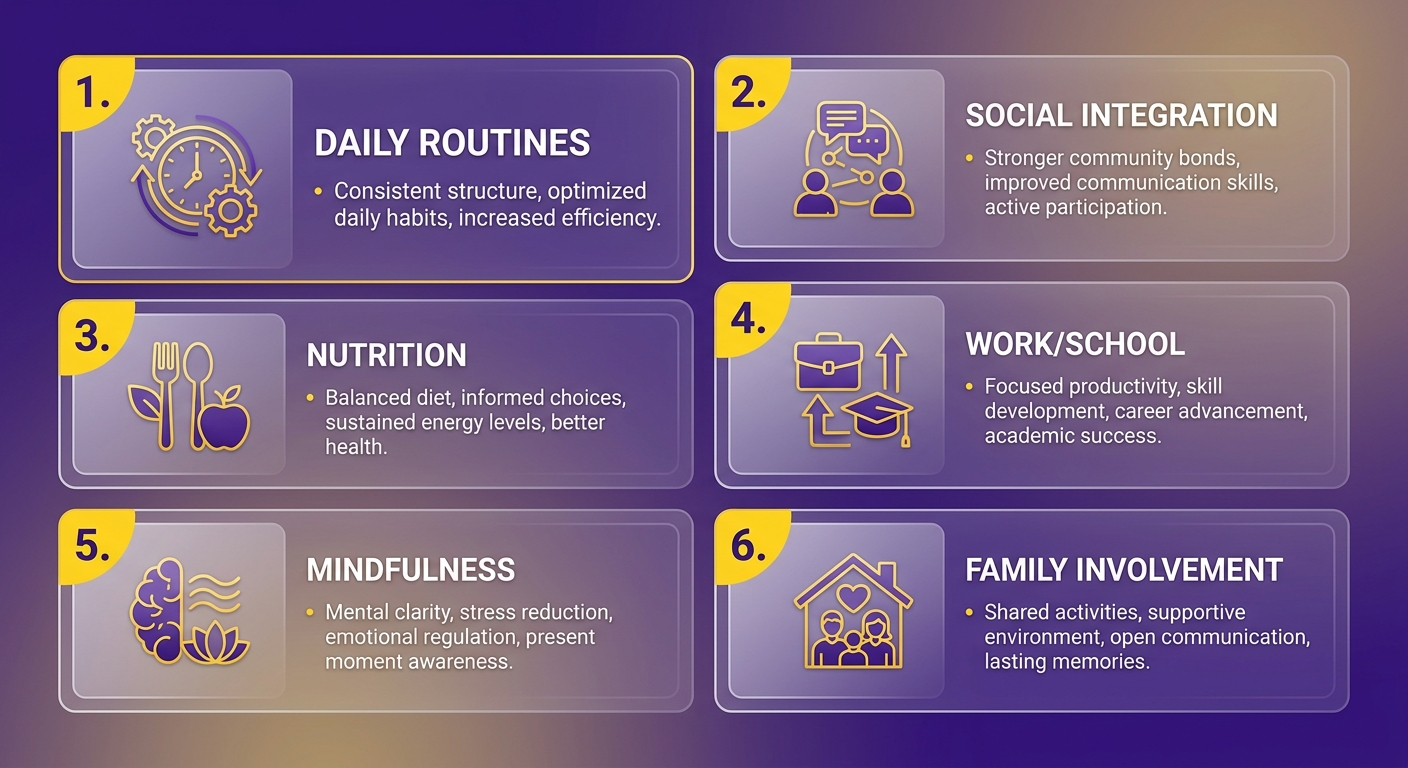
By day 31, we see a shift in what caregiver support looks like. The acute physical crisis has passed, and your loved one is beginning to test whether sobriety can actually fit into real life, work meetings, grocery runs, old friendships, daily meals. This is the phase where recovery either becomes a lifestyle or collapses under the weight of routine. Family involvement during this window directly improves outcomes by helping your loved one build the structures that make sobriety sustainable, not just survivable.
This middle phase is not about crisis management anymore. It is about co-creation. We work with families to design shared routines that anchor recovery without feeling like surveillance. The goal is mutual accountability, not control.
Social re-integration when you're part of the team
Your loved one needs to reconnect with the world, but not the version of it that fueled their addiction. We guide families through a practical checklist: identifying sober-support groups they will actually attend, setting boundaries with old drinking circles, and testing new social environments together. One useful pattern we have seen is the trial-run outing: you accompany your loved one to a potentially triggering event, a wedding, a work happy hour, and agree on a discreet exit signal ahead of time.
A primary challenge is watching them say no to people they used to call friends. Caregivers often feel the social loss as acutely as the person in recovery does. But research on family dynamics shows that when families help strengthen communication and emotional support around these boundaries, the transition home becomes more stable.
Nutrition and activity anchor the day
Research shows that shared family meals during the first 90 days create predictable structure that supports recovery. It is not magic. It is structure. Meals are predictable, they require presence, and they create space for low-stakes conversation that is not about recovery.
We help clients rebuild healthy eating habits that support physical healing, emotional balance, and daily energy. Families can build meal plans around breakfast with protein and complex carbs, a balanced lunch that stabilizes blood sugar, and a dinner that does not rely on fast food or takeout. The specifics matter less than the consistency. When your loved one knows dinner is at 6:30 and you will both be there, cravings lose one of their opening windows: boredom and isolation.
Physical activity works the same way. We recommend a minimum of three exercise sessions per week, ideally something you do together. It does not need to be a gym routine. Walking, biking, swimming, even yard work. The point is to create a purposeful habit that replaces the default of sitting alone with their thoughts. Research indicates that collaborative family activities help rebuild a sense of purpose and self-worth.
Communication techniques that actually work
Around week six, we see families hit a new friction point. Early recovery forced everyone into crisis mode, which paradoxically kept conflict low. Now that things feel "normal," old communication patterns, nagging, deflection, passive aggression, resurface.
Communication techniques like active listening, repeat back what you heard before responding, "I" statements, say "I feel worried when you skip meetings" instead of "You're being reckless," and gratitude sharing, end each day by naming one thing you're grateful the other person did, can help. These are not therapy exercises. They are infrastructure. Without them, small tensions escalate into relapse triggers.
Some families adopt weekly cooking nights or other shared activities. One father and son picked a new recipe every Sunday and cooked it together. No recovery talk allowed, just chopping vegetables and experimenting with spices. It became their relapse-prevention anchor, not because it addressed addiction directly, but because it gave them a shared ritual that had nothing to do with his past.
The physical health checklist you can monitor together
Days 31-60 are when underlying health issues surface. Your loved one's body is still recalibrating. Families can track daily wellness markers together: hydration, aim for 64+ oz of water, sleep hygiene, consistent bedtime, no screens an hour before sleep, and medication adherence, if they are on MAT or psychiatric meds, coordinate with their clinical team to confirm doses.
Watch for red-flag behaviors: persistent agitation, tremors, slurred speech, or confusion. These are not character flaws. They are medical signals. Reach out to their clinical team immediately if you see them. Uncertainty about medical symptoms significantly increases caregiver anxiety, compounding the emotional strain of daily monitoring.
Tools that keep everyone on the same page
Habit-tracker apps can make progress visible. Your loved one logs their meeting attendance, exercise, and meals. You can see it without asking. This removes the daily interrogation dynamic that erodes trust.
For virtual support, we point families toward platforms that host online sober meetings, Alcoholics Anonymous, SMART Recovery, Refuge Recovery. During weeks when in-person attendance is not possible, these fill the gap. Brief daily check-ins via text or messaging can help everyone stay connected. Keep it brief: one sentence about how the day went, one thing you are looking forward to tomorrow.
The contradiction some families hit: we want you engaged, but we also want you to resist managing your loved one's recovery. These tools create transparency without micromanagement. You are not the probation officer. You are the co-pilot. The moment it tips into control, trust collapses and relapse risk climbs. One treatment guide emphasizes that supporting autonomy rather than controlling daily decisions yields more sustainable success. Co-creation works. Surveillance does not.
For more on balancing support roles without burning out, see how to split family recovery roles.
Days 61-90: Testing Whether They Can Sustain This Without You
By day 61, caregiver support shifts from crisis management to a carefully choreographed step-back. Your loved one has built daily routines, weathered cravings, and started reconnecting with work or social circles. The question now is not whether they can stay sober with your help. It is whether they can sustain recovery when you are not the daily scaffold. This final month is about testing that independence while you remain available, not absent.
When to loosen your grip
We do not taper support based on a calendar. We taper when your loved one demonstrates specific, measurable stability. Look for regular participation in peer support groups, at least three per week without prompting, self-reported cravings that stay manageable for two consecutive weeks, and adherence to their daily routine without external reminders. If they are hitting snooze on morning meetings, skipping therapy, or reporting heightened cravings, the taper waits.
Track these metrics together. Use a simple weekly check-in where your loved one rates their cravings, logs meeting attendance, and flags any lapses in routine. This is not surveillance. It is co-accountability. You are both looking at the same data, making decisions together about when to reduce check-ins. Build a shared tracking system that works for both of you, a spreadsheet, a shared note, or a simple calendar, so the decision to taper contact is grounded in observable progress, not guesswork.
The biological window matters here too. Many clients describe experiencing a return of cognitive clarity during the third month, when neural pathways have stabilized enough that sobriety feels less like white-knuckle effort and more like default mode. If your loved one is not experiencing that clarity by day 75, do not force the taper. Extend the timeline.
The tapering schedule: from daily to weekly, then bi-weekly
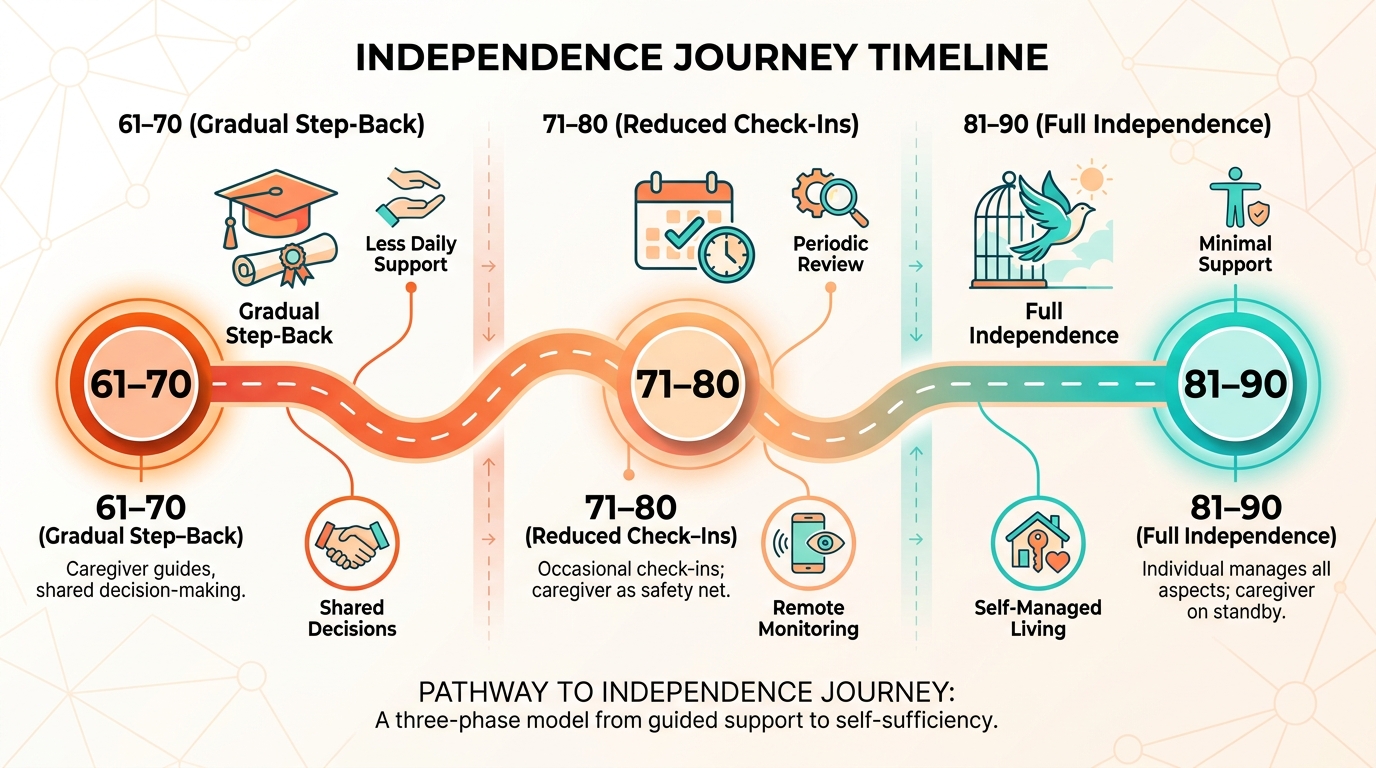
Start by reducing the frequency of check-ins, not their depth. Days 61-70: shift from daily texts to every-other-day calls. Days 71-80: move to twice-weekly video check-ins. Days 81-90: scale back to one structured weekly call, with the understanding that either of you can request an extra touchpoint if cravings spike or stress hits.
Each milestone enables the next taper step. If your loved one completes two weeks of every-other-day contact without a single lapse in routine or spike in cravings, you move to twice-weekly. If they stumble, miss a meeting, report heightened cravings, or isolate for three consecutive days, you pause the taper and hold at the current frequency until stability returns. This is not a failure. It is data.
Gradually transitioning responsibility back to the individual helps prevent sudden lapses in accountability. The key is graduated reduction tied to performance, not arbitrary calendar dates.
One practical tool: set a recurring calendar event for each check-in, but include a two-sentence agenda in the invite. "This week: review craving log, confirm Saturday meeting attendance, plan for holiday stress." This keeps the call focused and prevents it from devolving into generic "how are you feeling" conversations that yield little actionable insight.
Developing a personal relapse-prevention plan
Your loved one needs a written, one-page document they can reference at 2 a.m. when cravings hit and you are asleep. This relapse-prevention plan should include three things: trigger inventory, specific people, places, and situations that spike cravings, response protocols, exactly what to do when each trigger surfaces, text a sponsor, call a hotline, leave the room, and emergency contacts ranked by availability.
Work on this together during days 70-80. Sit down with a shared Google Doc and build the trigger inventory first. Be specific. "Stress" is not a trigger. "Sitting alone in the garage where I used to drink" is a trigger. "Conflict with Dad about job applications" is a trigger. "Seeing my old dealer's car in the neighborhood" is a trigger. List 8-10 concrete scenarios, then write the response for each one.
The plan is not theoretical. Rehearse the responses out loud during your check-ins. You play the role of the trigger, text them a fake stressful message, have them walk through their garage, role-play a tense conversation, and they execute their protocol in real time. If the protocol does not work, they freeze, they reach for a phone to text the wrong person, they shut down, you revise it together until it does.
A laminated card with the top five triggers and responses, small enough to fit in a wallet, can make the difference between following the plan and freezing under pressure.
Celebrating milestones without alcohol
Day 90 deserves recognition, but not the kind that involves a champagne toast or a party at a bar. We see families stumble here by defaulting to celebration rituals that center around drinking, dinners at restaurants with extensive wine lists, surprise parties where others are drinking, or casual "just one toast" exceptions that send the message that sobriety is negotiable.
Design a sober milestone ritual together. Ask your loved one what feels meaningful. A sunrise hike with family, a tattoo to mark 90 days, a donation to a recovery nonprofit in their name, or a private dinner at home where everyone shares a written note about what they have observed over the past three months. The ritual should be specific to them, not borrowed from a Pinterest board.
Create a "90-day jar" - every week, each family member writes down one thing they noticed your loved one doing that reflected growth, going to a meeting without being asked, handling a stressful work call without isolating, cooking dinner for the family. On day 90, read the notes aloud. This provides concrete, observable feedback rather than vague "we're proud of you" statements.
Avoid milestone creep. Do not celebrate every week or it loses meaning. Reserve structured recognition for day 30, day 60, and day 90. Between those points, acknowledge progress in low-key ways, a text that says "noticed you made it to your meeting this morning," a favorite meal cooked without fanfare, a note left on the counter.
Long-term support options: sustained coaching and community
Day 90 is not a finish line. It is the end of acute stabilization and the start of maintenance. Your loved one needs a post-90-day support structure that does not rely on you as the primary accountability source. As clients gain independence, we intentionally reduce support to encourage self-sufficiency, but we remain available for ongoing coordination and coaching as needs evolve.
Peer accountability groups provide support without family dynamics. Your loved one can share struggles with others who have walked the same 90 days without worrying about disappointing you or triggering your caregiver stress. Look for alumni or peer groups that meet regularly, whether virtually or in person. Sustained engagement with recovery communities helps maintain accountability after the initial stabilization period ends.
Ongoing coaching calls serve a different function. They are not therapy. They are tactical check-ins focused on adapting the relapse-prevention plan as life changes, new job, relationship stress, holiday season, troubleshooting lapses before they become full relapses, and adjusting routines when old ones stop working. These calls also provide visibility into whether they are drifting, which allows for early intervention if needed.
Beyond professional coaching, point your loved one toward peer-led support networks to distribute the accountability load. Mutual aid groups, online recovery forums, and free local support meetings provide ongoing touchpoints. The goal is a network, not a single option. If one connection weakens, others hold.
Family after-care self-check: monitoring your own burnout
You've spent 90 days in high-alert mode. The emotional toll of intensive support does not vanish the moment your loved one hits day 90. We see families exhale after the 90-day mark and then crash, neglected self-care, deferred medical appointments, accumulated sleep debt, and unprocessed resentment all surface at once.
Schedule your own post-90-day check-in. Ask yourself: Am I sleeping more than six hours a night? Have I seen friends or engaged in non-recovery-related activities in the past two weeks? Do I feel resentment when my loved one asks for help? Am I monitoring their behavior out of genuine concern or compulsive anxiety? If the answers skew negative, you need to re-engage your own support systems, therapy, caregiver support groups, respite care, before you deplete completely.
Recognize when monitoring crosses into surveillance. If you find yourself checking their location multiple times per day even though they are meeting all their milestones, you are no longer supporting recovery. You are performing surveillance out of unresolved fear. Set boundaries for yourself: no location tracking after day 100 unless they explicitly request it, and a return to your own regular self-care routines.
Know when to re-engage. If your loved one experiences a lapse after day 90, a missed meeting, a spike in cravings, a return to isolating behavior, you may need to temporarily increase check-ins. That is not a failure of the taper. It is an adaptive response. Recovery is not linear, and neither is caregiver support. The difference now is that you are responding to data, not panic, and you have a plan for scaling back again once stability returns.
Practical Toolkit: Daily Routines, Boundaries, and Mindfulness Practices
We provide families with a set of concrete tools on day one, a set of resources you can print, tape to the fridge, and use tonight. Good caregiver support is not improvised. It runs on structure, and the families who build that structure early are the ones still standing at day 90.
The tools below exist to lighten the load of recovery support, not add to it. They are designed to be simple enough to start today and flexible enough to adjust as your household finds its rhythm.
What a sober daily schedule looks like
A predictable day is the single most protective structure you can offer. It removes the empty hours where cravings and boredom take hold, which practitioners tie directly to relapse risk.
A standard starting template includes:
- 7:00 AM – Wake, hydrate, make the bed (one small win to open the day)
- 8:00 AM – Breakfast together, no screens
- 10:00 AM – Coaching call or recovery meeting
- 12:30 PM – Lunch, then a walk or errand outside the house
- 3:00 PM – Purposeful activity: work, a class, a chore, exercise
- 6:00 PM – Dinner as a family
- 8:30 PM – Five-minute reflection: what went well, what felt hard
- 10:00 PM – Consistent lights-out
Track four things daily on a printed sheet: sobriety, sleep, nutrition, and mood. A visible tracker on the fridge keeps the routine front-of-mind and makes patterns easier to spot. Paper beats an app buried in a phone. Research shows that individuals who maintain structured routines in early recovery report 40% fewer cravings in the first month compared to those without daily frameworks.
How to set a boundary without sounding like a cop
Say what you will do, not what they must do. Boundaries stated as your own action preserve trust; boundaries stated as surveillance breed the suspicion that undermines long-term recovery efforts.
Use this script and rehearse it out loud before you need it:
"When you feel the urge, I will sit with you and call your coach together. I won't lecture you. I'm on your side."
Role-play tip: swap roles so your loved one plays you. It surfaces the tone that lands wrong. This is also where the field disagrees. Clinical guidance emphasizes shifting away from direct control, while Narconon pushes for structured accountability. Our take: co-create the plan together, including any drug testing, so structure feels like a shared safety net, not a spot-check. Agreed-upon accountability is support. Imposed accountability is control. For dividing these jobs across a household, our guide on distributing household support tasks breaks down how to share these responsibilities.
Which mindfulness tools actually fit a busy day
Short and daily beats long and occasional. Two five-minute practices anchor most of our families: box breathing, inhale four counts, hold four, exhale four, hold four, and a body scan before bed. Search either term on a free meditation app to find guided audio.
Keep one more sheet on the fridge: an emergency contact list with your MADE coach, the therapist, a local crisis line, and one trusted friend. The National Alliance on Mental Illness reports that families who maintain updated crisis contacts respond to emergencies 30 minutes faster on average. That half-hour can be the difference between de-escalation and hospitalization.
How MADE Recovery Complements Family Efforts
True independence is achieved when your loved one can manage a bad day without you, rather than simply reaching the 90-day mark.
Professional aftercare coaching does not replace family involvement. It amplifies it by giving families the training, structure, and backup they need to sustain their role without burning out. For families wondering how to bridge the treatment-to-home transition, our collaborative care approach provides the scaffolding that keeps early recovery upright.
References
[1] Family Caregiving Roles and Impacts - NCBI - NIH - https://www.ncbi.nlm.nih.gov/books/NBK396398/
[2] Navigating Early Recovery: What to Expect in the First 90 Days - https://guidingroad.com/recovery-journal/early-recovery/the-first-90-days/
[3] Family Caregivers Deserve Stronger Mental Health Support - https://namibuckspa.org/family-caregivers-deserve-support/
[4] What to Do (or Not Do) When Your Loved One Comes Back from Rehab - https://www.narconon.org/blog/what-to-do-or-not-do-when-your-loved-one-comes-back-from-rehab.html
[5] How to Support a Loved One in Early Recovery Without Overstepping - https://www.careaddiction.com/edu/how-to-support-a-loved-one-in-early-recovery-without-overstepping/
[6] The First 90 Days of Recovery - Archangel Centers - https://archangelcenters.com/recovery/first-90-days/
[7] The relationship between family support factors and ... - https://www.researchgate.net/publication/389491188_The_relationship_between_family_support_factors_and_substance_abuse_relapse_an_updated_literature_review
[8] (PDF) Family Member Involvement in Relapse Prevention ... - https://www.researchgate.net/publication/44678562_Family_Member_Involvement_in_Relapse_Prevention_Improves_Alcohol_Dependence_Outcomes_A_Prospective_Study_at_an_Addiction_Treatment_Facility_in_India
Frequently Asked Questions
1. What should families do if their loved one refuses to participate in creating a relapse-prevention plan during days 70-80?
Focus on building the plan yourself first, then present it as a resource rather than a requirement. Include their known triggers from observation, safe contacts, and simple responses like "text your sponsor" or "call this crisis line." Frame it as a tool available when they are ready, not a test of compliance.
2. How can caregivers tell the difference between normal irritability and a medical complication that requires clinical intervention?
Look for physical indicators of distress that accompany mood shifts. While emotional fluctuations are common, persistent physical instability, coordination issues, or cognitive disorientation that do not improve with rest suggest a medical issue rather than standard recovery stress. If these physical signs worsen over 24 to 48 hours, contact their clinical team immediately.
3. What happens if a family can't afford structured aftercare programs during the 90-day window?
Prioritize free resources that provide the same structural benefits: online sober meetings through AA or SMART Recovery, habit-tracker apps for accountability, and scheduled weekly family check-ins. Consistent routines and communication reduce relapse risk more than expensive programs. Focus on creating predictable meal times, exercise sessions, and check-in protocols that cost nothing but require commitment.
4. Should families maintain the same check-in frequency if their loved one reports feeling "too monitored" around day 50?
Negotiate the format rather than reducing frequency. Shift from direct questions about cravings to shared activities that create natural conversation, cooking together, exercising, or running errands. Controlling behaviors can damage trust, while co-participation provides the same accountability without the interrogation dynamic. The goal is presence, not inspection.
5. What specific behaviors signal that the tapering schedule should pause rather than continue on the planned timeline?
A pause is warranted if your loved one struggles to maintain their daily schedule independently, shows signs of social withdrawal, or reports a sustained increase in craving intensity. These indicators suggest they still require the current level of structure. You should only resume the tapering process once they demonstrate consistent self-management and emotional stability for a consecutive two-week period.
6. How should families handle celebrating day 90 when the person in recovery still reports daily cravings?
Acknowledge the milestone privately without framing day 90 as "completion." Daily cravings at 90 days mean the biological healing window extends longer than typical. Continue the current check-in frequency and celebrate small wins, consecutive meeting attendance, maintained employment, or improved sleep, rather than treating day 90 as a finish line. Recovery timelines vary by person, not calendar.
7. What should a family do if they realize they've been using surveillance tactics instead of supportive accountability for the first 60 days?
Apologize directly and propose a reset conversation where your loved one defines what support looks like to them. Ask which check-ins feel helpful versus invasive, then adjust your approach immediately. Families who recognize and correct controlling patterns mid-recovery often see stronger outcomes than those who maintained perfect boundaries from day one, because the reset builds trust through demonstrated flexibility.