5 Bills Families Should Prioritize When Recovery Income Drops Suddenly
September 2, 2026

Key Takeaways
- Five bills-housing, utilities, healthcare, food, and transportation-eat 55-70% of what a family has left each month when recovery disrupts income.
- Housing is the top priority at $1,500-$2,000 a month, or 25-30% of median household income.
- Healthcare protects treatment continuity. A single lapsed premium or unfilled prescription can trigger relapse in a recovering loved one.
- Assistance programs usually cover housing and utilities, freeing your own cash for the bills no program touches.
- Once you set up a tracking system, managing these five bills takes about 2-3 hours a week.
- Utilities run $300-$450 a month. Negotiating a minimum payment keeps the power on during a hard stretch.
- HUD housing programs, LIHEAP energy help, and a Medicaid eligibility check offer real relief when a paycheck vanishes mid-recovery.
Quick Summary
When recovery cuts into income, five bills swallow most of what's left: housing, utilities, healthcare, food, and transportation to treatment. The order you pay them in matters more than ever, because a lapse in the wrong one can sever treatment and trigger relapse. Financial assistance for families exists to cover the top two, which frees up cash for the bills no program touches.
Plan on a small block of time each week to track these five once you have a system.
Which five bills come first?
Housing, then utilities, healthcare, food, and transportation to therapy. Housing and utilities protect shelter and safety. Healthcare protects treatment. Food and transport keep your loved one fed and in the room where recovery happens.
| Bill Type | Avg. Monthly Cost (US) | % of Median Income | Urgency | Difficulty to Reduce (1-5) | Quick-Win Tip |
|---|---|---|---|---|---|
| Housing (rent/mortgage) | $1,500-$2,000 | 25-30% | High | 5 | Call your lender before missing a payment; HUD programs assist struggling homeowners and renters. |
| Utilities | $300-$450 | 6-8% | High | 3 | Apply to LIHEAP for energy costs; negotiate a minimum payment to stay connected. |
| Healthcare (insurance + meds) | $400-$600 | 8-10% | High | 4 | Never let a treatment-related premium or prescription lapse; check SNAP and Medicaid eligibility. |
| Food | $600-$900 | 10-14% | High | 2 | Enroll in SNAP; food banks free up cash for fixed bills. |
| Transportation to therapy | $200-$400 | 4-6% | Medium | 2 | Ask about refinancing a car loan; coordinate rides to appointments. |
Where we land on the insurance debate: one insurer's guidance ranks insurance premiums above food, while other budget guides put housing, utilities, food, and medications first. For recovery families, we side with the second view, with one exception. If a premium keeps ongoing treatment active, protect it like housing. A lapsed policy that covers therapy or medication does immediate harm to both health and sobriety.
What moves save $100-$300 in month one?
Three moves free up cash the fastest. Each takes a phone call or a form, not a lifestyle overhaul.
- Call every creditor before you miss a payment. Reaching out early cuts down collection harassment and opens repayment options. As Equifax puts it, "Some may be willing to work with you to help you catch up on what you owe."
- Stack assistance programs on the top two bills. HUD covers housing, LIHEAP covers energy. That sequencing is the whole point: assistance absorbs your two biggest bills, so your own cash can protect medication and rides to therapy that no program funds.
- Have an honest money talk at home. Families that talk openly about financial strain often find collective fixes, including older kids taking part-time work. It also builds the shared accountability recovery already runs on.
The short version
Start with housing and utilities, then protect anything tied to active treatment. Apply for HUD, LIHEAP, SNAP, and Medicaid the same week income drops so assistance can shoulder your two heaviest bills. Guard the healthcare line as fiercely as rent, because a missed medication or dropped policy risks relapse, not just a late fee.
For families rebuilding structure at the same time, MADE offers customized, team-based sober coaching that helps set daily routines and lower stress alongside a checklist like this.
Why the order of these five bills matters
Missing one of these five does more than dent your credit. For a household in recovery, a lapsed payment can pull the floor out from under a fragile routine. That's why financial assistance matters most in the first weeks after income drops. It buys back the mental space a person in early recovery needs to stay in treatment.
The stakes are physical, not abstract. The National Consumer Law Center's guidance ranks debts by immediate harm: eviction, utility shut-offs, and unpaid medical bills top the list because they endanger health and safety directly. Families facing eviction show documented stress, instability, and disrupted routines for kids. In recovery, that same instability is a live relapse trigger.
How one missed bill cascades
The cascade is the danger, not the single bill. A missed utility payment leads to a shut-off. The shut-off creates unsafe living conditions. Those conditions spike anxiety, and anxiety is exactly the stress state that pulls someone back toward using.
Wisconsin Extension puts the fix plainly: "The sooner you look at your household budget, the more options you have and the better off you will be in the long run." That lands harder for recovery families. Every delayed decision narrows the exits and raises the pressure.
Our take: stable shelter isn't just a line item. It's part of the treatment environment. Protect housing first and you protect the physical space where recovery actually happens.
Why healthcare is a stability bill, not a medical bill
For recovery families, healthcare sits beside housing because a treatment interruption threatens sobriety directly. Standard financial advice often says to defer medical bills during a crisis. Doing that with active recovery costs is risky. A lapse in coverage or a missed prescription can halt progress instantly. The safer approach: protect active treatment costs and defer older, non-essential medical debt instead.
- Confirm your insurance covers ongoing treatment before you defer the premium. A lapse here can cut off both care and recovery support in one move.
- Never skip recovery medications to pay a lower-priority debt. Missed doses are a direct trigger, not a budget line to trim.
Who benefits when you sequence these bills
Everyone in the household benefits, and so does your coaching team. A focused bill order frees mental bandwidth for therapy, job searches, and daily routines instead of crisis firefighting. In our experience, families who map these five priorities early spend less energy panicking and more energy showing up.
Our coaching is customized and shifts as needs change, so building daily structure sits at the center of what we do in those first weeks. That same routine work helps clients reach a stability that lowers stress before triggers hit.
- Set clear household expectations during the transition. When everyone understands the temporary adjustments, friction drops and daily habits line up with the recovery plan.
- Reach out to service providers early about temporary adjustments. Starting these conversations before an account falls into arrears shows goodwill and often leads to better terms.
Housing: rent and mortgage
Housing is the first bill to protect when recovery income drops. Miss it, and you risk eviction or foreclosure, which every prioritization guide ranks as the most immediate harm a family can face. The University of Minnesota Extension and American Family Insurance both put rent or mortgage at the top for a reason: losing your home ends everything else at once.
For a household in recovery, housing does more than keep a roof overhead. Stable shelter is part of the treatment environment. That's why you target this bill before any credit-card or lower-priority debt, a point Understood Care makes plainly. Eviction produces documented stress and instability, and for someone in early sobriety that upheaval is a live relapse trigger. Protecting the home is relapse prevention, not just budgeting.
Is your housing actually affordable right now?
The rule of thumb: housing should stay under 30% of gross income. When a paycheck or treatment stipend gets cut, many recovery households blow past 45%. That gap is where the crisis lives, and it's the first number to run.
- Calculate your housing-to-income ratio today. If it clears 30%, you're overexposed and need to act before you miss a payment.
- List your true cash-on-hand for the next 72 hours and the next 30 days. Understood Care recommends this two-horizon snapshot so you're not guessing.
- Separate housing from every non-essential expense. SDFCU's guidance is blunt that fixed costs like rent are the first place to renegotiate or downsize.
How to negotiate with a landlord or lender
Call your landlord or mortgage servicer the moment you see a shortfall coming. Lenders and property managers generally have hardship protocols, but those are usually only open to you before formal delinquency starts.
A simple script to open the conversation: "My income dropped this month. I want to stay current. Can we set up a partial payment or a short-term plan?" Families who talked to creditors before missing payments found more flexible terms.
- Ask for a payment plan or a temporary reduction in writing. Get any agreement documented before you send money.
- Look into federal and state housing stabilization grants. These are built to prevent displacement and can carry you while you restructure.
- Get on the Section 8 waitlist even if you don't need it yet. Waits are long, so early registration is the move.
The housing safety-net checklist
A one-page safety net turns panic into a plan: the affordability ratio, the next payment date, your landlord's or lender's hardship contact, and every assistance program you've applied to.
This works best when the whole household sees it. Open communication manages expectations and lowers the shared anxiety that housing insecurity feeds. That lets the family focus on supporting their loved one's recovery. For families rebuilding routines after treatment, MADE helps clients set healthy daily routines and coordinates support as they move back into everyday life-work that pairs well with a plan like this.
Utilities: electricity, water, gas, internet
Utilities come second, and for a recovery household the internet line matters as much as the electric meter. Connectivity isn't a luxury anymore. Roughly 90% of U.S. homes rely on broadband for work, school, and health support. A shut-off doesn't just kill the lights. It can sever the tele-coaching sessions that hold early recovery together, which is why we treat utilities as safety infrastructure, not a bill to shave.
Keeping the power on protects health directly. The NCLC's priority ranking notes that families without utilities face real health risks in extreme weather, and its case work shows households who prioritize these payments are less likely to hit a shut-off. When cash runs short, protect this bill before any credit card gets touched.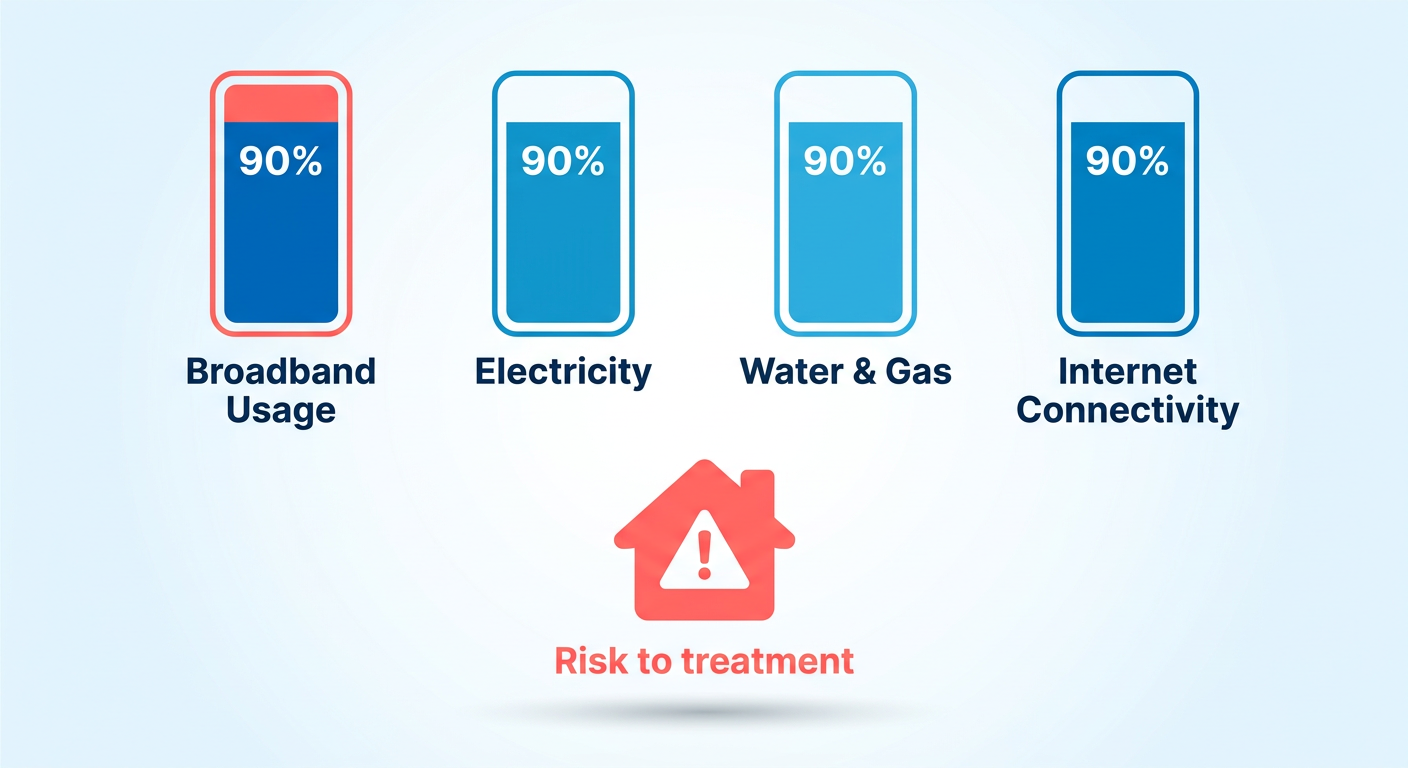
What assistance covers utilities when income drops
Three doors open when you can't cover the full amount. Government programs, company hardship plans, and low-cost internet tiers each cut a piece of the bill.
- Look into LIHEAP to offset seasonal heating and cooling costs, which can meaningfully lower your monthly out-of-pocket.
- Ask your utility providers about balanced billing or hardship programs. Many spread costs evenly across the year, preventing the sudden spikes of peak season.
- Lock in low-cost internet. Discount programs and municipal Wi-Fi can trim $30 to $50 a month. For a household running virtual coaching, that keeps the connection at a fraction of the cost.
One caution on partial payments. Some utilities let you keep service by paying a minimum instead of the full bill, but Equifax's catch-up guidance warns that arrears still stack up. Our take: use a minimum as a bridge for a month or two, not a standing habit. The balance doesn't disappear.
How to cut the bill without cutting connectivity
Small home fixes cut usage by 10 to 20% without touching your internet or heat. Programmable thermostats, LED bulbs, and water-saving fixtures pay for themselves fast, and none of them threaten the connection you need for a coaching call.
Cutting the bill is one piece of the day-to-day life management our coaching can include. As we help clients rebuild routines, keeping utilities stable becomes part of a home environment that lowers stress. Freeing up cash on a recurring bill matters when income drops and no program touches every gap.
- Bundle or switch providers. SDFCU's guidance on reduced income notes many companies will negotiate rather than lose you. Combining internet and phone often drops the total.
- Get the household into energy-conscious habits. Small changes in daily routine add up and lower the monthly bill.
Protect the internet line above all. Skip the streaming add-ons and cable tiers first. Keep the connection that keeps your loved one in session.
Food: groceries and meals
Food ranks fourth, but for a household in recovery it does double duty. Balanced meals protect physical healing and stabilize mood, and steady blood sugar is one of the quietest guards against a craving spike. The upside: nutrition is one of the few essentials you can trim without cutting quality, which makes food assistance a smart target when every dollar is spoken for.
The USDA's Thrifty Food Plan pegs a nutritious month at roughly $215 for a family of four on the leanest budget tier. That's achievable, but only with a plan. SNAP and Medicaid cover groceries and healthcare directly, per Equifax's catch-up guide, which frees cash for the bills no program touches. Layer in local food banks and, for a senior in the household, Meals on Wheels.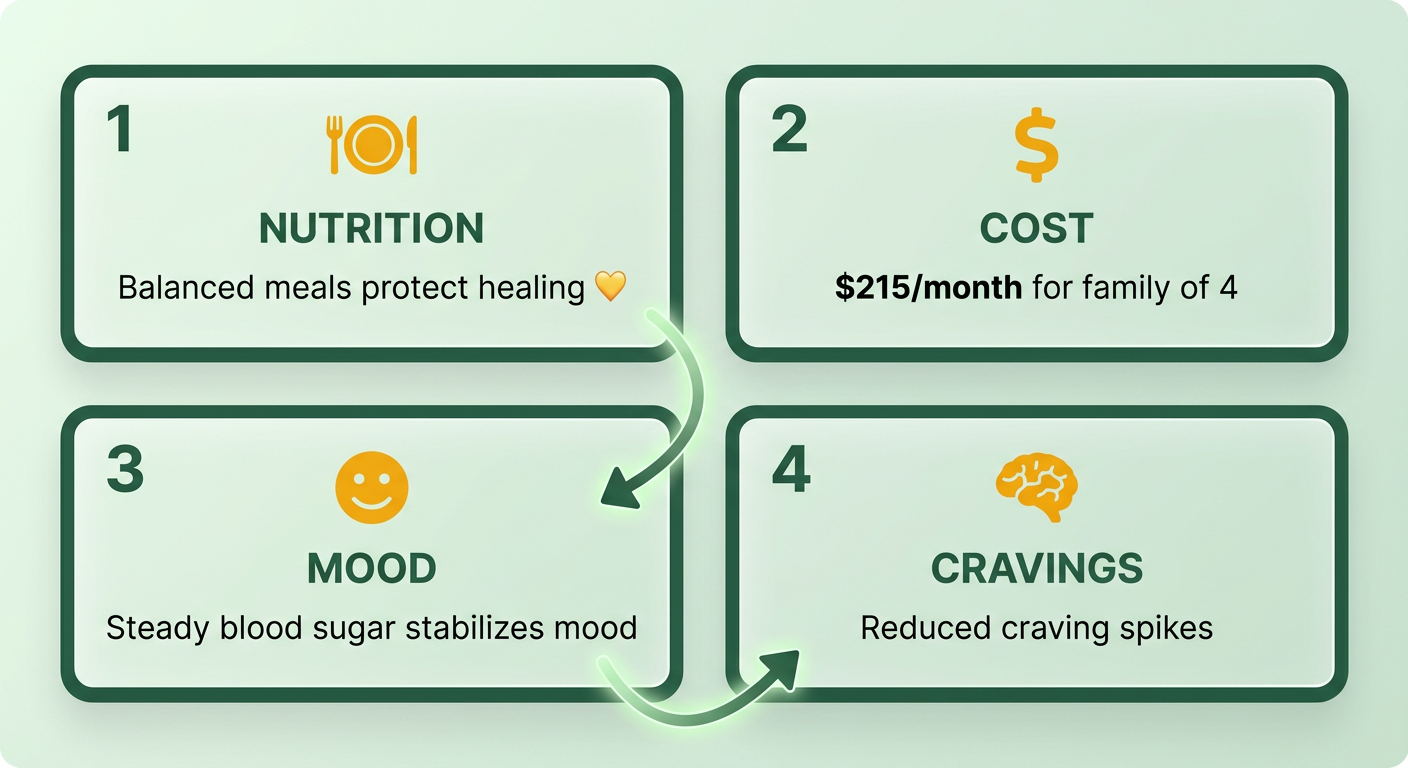
What food help to tap first
Start with the programs that put food on the table without touching your rent money. SNAP is the anchor. Food banks fill the gap between benefit deposits. Meals on Wheels handles an elderly member's daily meals. USU's income-drop plan names food banks and community resources as first-line strategies when a paycheck disappears.
- Apply for SNAP the week income drops, not after savings run out. Benefits deposit monthly and stretch a thin grocery budget the most.
- Map your two nearest food banks and their distribution days. They bridge the gap between SNAP deposits without dipping into housing cash.
- Enroll a senior in Meals on Wheels if one lives with you. It removes a full meal-set from your grocery math.
How to eat well on under $5 a day
Build a weekly meal plan around a shelf-stable pantry, and the per-day cost drops fast. Beans, rice, oats, and frozen vegetables can anchor low-cost meals while keeping protein and fiber steady. At MADE, we help clients rebuild healthy eating habits that support physical healing, emotional balance, and daily energy-coaching that can include grocery shopping and meal prep as part of daily life management.
The lever here is planning, not deprivation. A structured meal-plan worksheet organizes grocery shopping and cuts impulse buys, keeping food costs predictable.
- Batch-cook two base meals on Sunday to anchor the week and cut the impulse takeout that wrecks a tight budget.
- Shop from a list built off your plan, not the aisles. That's where the $5-a-day math holds.
What belongs on the skip list
Cut high-sugar and high-caffeine items first. They spike and crash mood, which can amplify cravings in early recovery, so trimming them saves money and protects sobriety at once. This is one place where the cheapest cut is also the healthiest one.
Getting everyone into meal prep spreads the effort and makes budget eating a household project, something we cover in how to split family recovery roles.
- Swap soda and energy drinks for water or herbal tea to steady mood and drop a recurring line item.
- Assign meal-prep roles across the family so no single person carries the whole load.
Transportation: car payments, fuel, transit
Transportation ranks fifth, but for a recovery household it protects two things at once: the paycheck and the treatment schedule. Miss the ride to work and you lose income. Miss the ride to a support meeting or coaching session and you lose the routine that keeps early recovery intact.
That double role is why we treat this bill as a work-related essential, not a discretionary cost. American Family Insurance ranks car payments right after basic needs because reliable transportation maintains employment. Target the fixed costs above this line first, then free cash to keep the car running or the transit pass loaded. The average car payment runs about $560 a month, and fuel adds roughly $150 on top.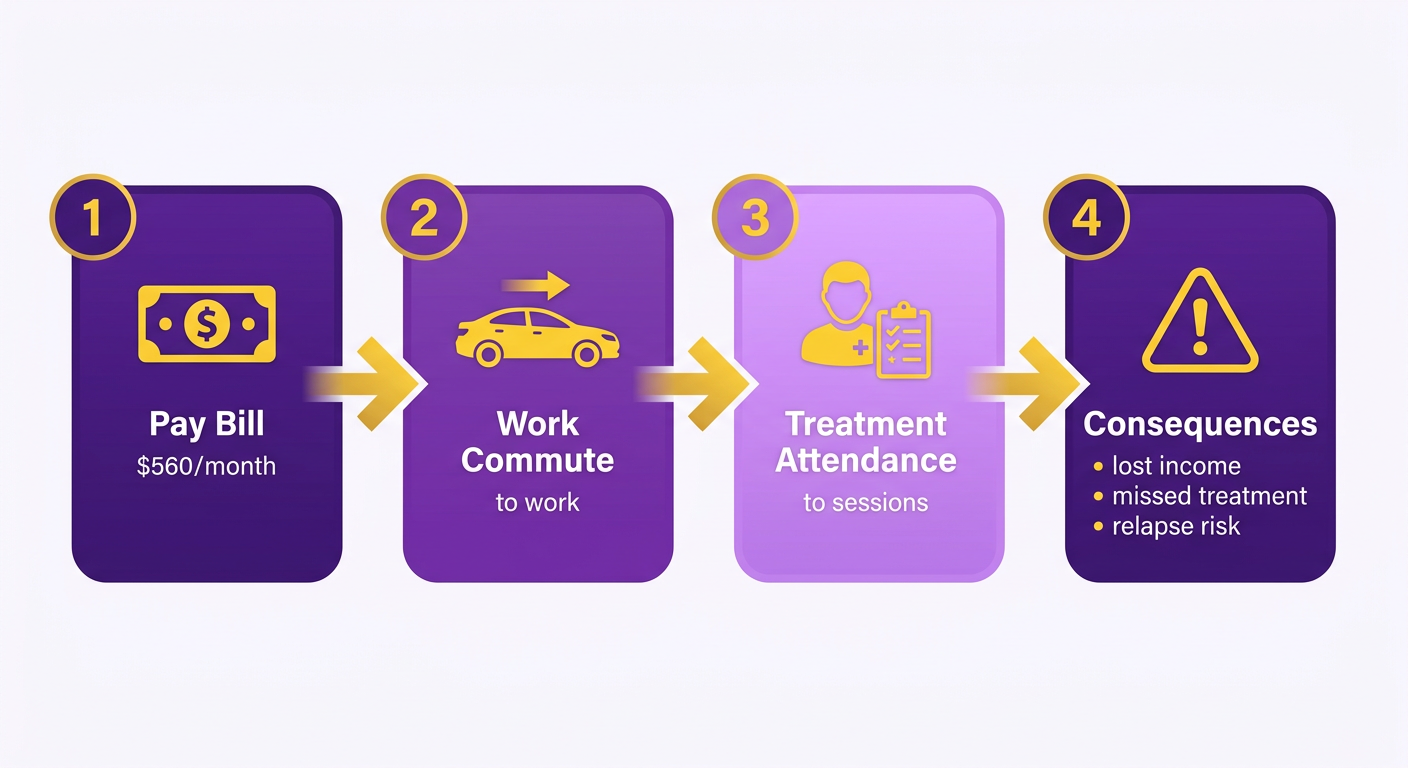
How to cut transportation costs without cutting treatment
Start with the two biggest levers: the loan and the vehicle count. American Family Insurance notes you can refinance a car loan to make payments more manageable. If your household runs two cars but only needs one, dropping one can free hundreds a month. A family that drops full coverage on a paid-off older vehicle and switches to liability-only can cut an annual premium by more than 40 percent, and that freed-up cash goes straight toward copays instead of an insurer's margin.
- Refinance the car loan to lower the monthly payment, then redirect the savings toward higher-priority bills.
- Apply for reduced-fare transit. Many transit authorities offer discounted passes for low-income households.
- Check ride-share credit programs. Some NGOs partner with ride-hailing services to cover trips to treatment for people in recovery.
- Ask about insurance discounts. Bundling, safe-driver rates, and usage-based policies can shave a premium that's stretched thin.
Why car maintenance belongs in the routine
A surprise breakdown is the expense that wrecks a tight recovery budget. A dead battery or a failed alternator can pull cash straight from rent or a copay. Preventive checks cost far less than the emergency they prevent.
Routine building is one of the fundamentals our coaching runs on, and steady daily structure is exactly what keeps a curveball like a breakdown from derailing recovery. When car maintenance lives inside a household routine, it stops competing with treatment costs at the worst possible moment.
- Check tires, brakes, and fluids every quarter to catch small problems before they become tow-truck bills.
- Track your registration and inspection dates so a lapsed sticker doesn't turn into a fine you can't absorb.
- Keep a small repair buffer if any cash allows, so one breakdown doesn't force a missed appointment.
One caution: don't drain funds on a car loan if that risks housing or a medication copay. Understood Care warns families to avoid draining money on lower-priority obligations when it threatens essential services. If cash is short, reach out to your auto lender about deferral options. Many offer formal loan modification for temporary hardship to keep the wheels turning toward the next session.
Healthcare: premiums, medications, therapy
Healthcare belongs higher on the list than most budgeting guides put it. For a recovery household, an insurance lapse or a missed medication harms health immediately and risks relapse. That's why we treat coverage and prescriptions as stability infrastructure, not a "medical bill" to defer. This is also where financial assistance does its quietest, most important work.
When you manage healthcare costs, prioritize direct treatment needs. Keeping essential prescriptions filled and therapy sessions active is what prevents relapse. The NCLC ranks medical costs among debts whose non-payment causes immediate harm, and its case work shows families with sudden income drops sliding toward stress and bankruptcy over unpaid medical bills. Cutting the cost before it becomes debt is the better play.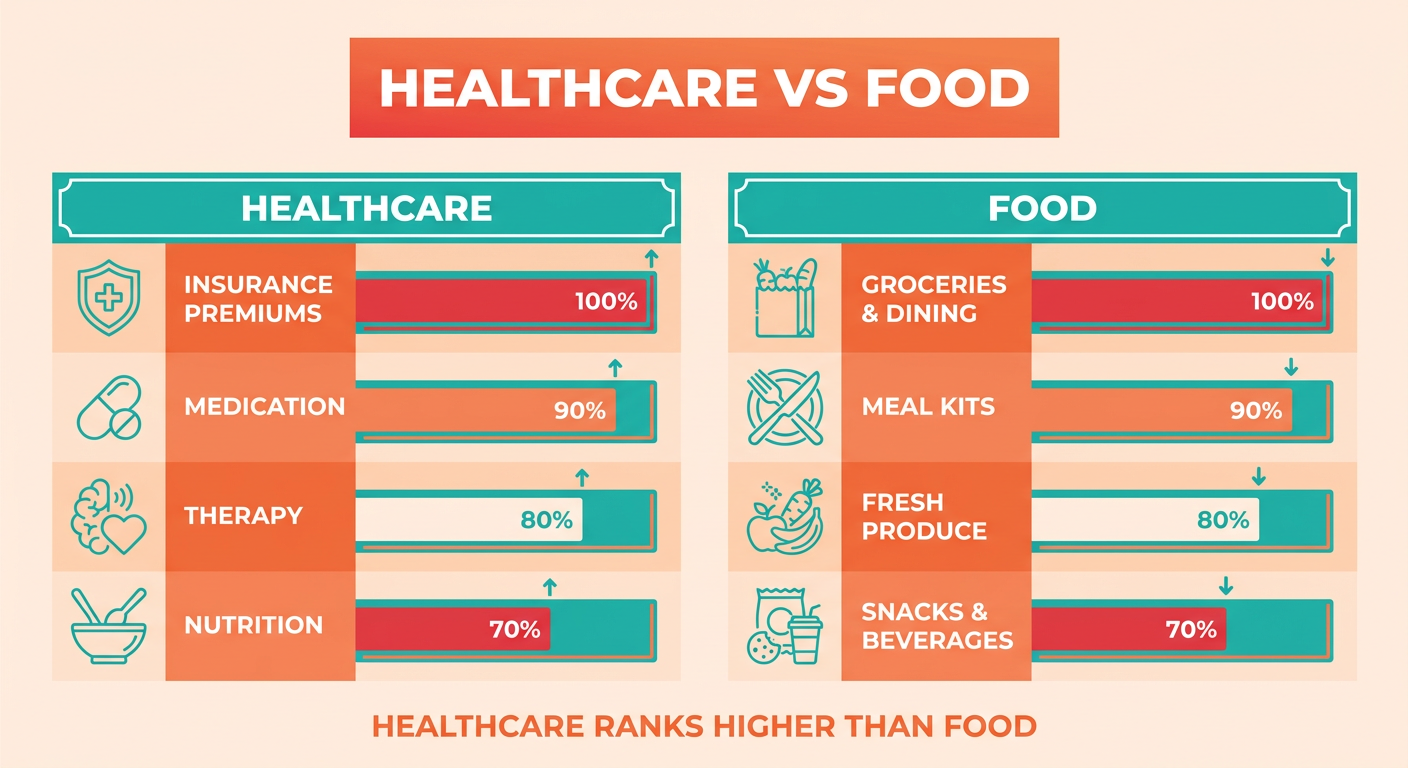
How to cut healthcare costs without losing coverage
The fastest wins come from three moves: prescription discounts, coverage eligibility checks, and cheaper delivery of the same care.
- Check Medicaid eligibility first. An income drop often qualifies a household that didn't qualify before. Coverage protects both premiums and prescriptions in one step.
- Stack a prescription discount card on top of coverage. Pairing a state assistance program with a discount card can significantly lower out-of-pocket costs for critical recovery medications, preserving cash for other needs.
- Ask about manufacturer copay cards for brand-name recovery medications. These target the specific drugs a plan covers poorly.
- Call your providers' billing offices about sliding-scale fees or interest-free payment plans. Many clinics run internal assistance programs for patients hit with sudden income changes.
Can tele-health replace some in-person visits?
For many check-ins, yes. Virtual therapy and coaching often cost 30 to 40% less than in-person visits, and they erase the travel cost and time off work that in-person care adds. For a household already stretched, that's real money back each month.
Our virtual coaching can stand in for some in-person check-ins without breaking the treatment routine. That matters because financial strain worsens stress and health, and fewer trips means fewer chances for the schedule to slip. We're honest about the limit: some appointments, like medication management or a crisis, need in-person contact. Tele-health trims routine visits, not everything.
What to review each open enrollment
Open enrollment is your one clean shot to cut waste. Review your plan against the medications and providers you actually use, not the ones you signed up for a year ago.
- Confirm your recovery medications are on the formulary. A plan that covers them cheaply beats a lower premium that doesn't.
- Check whether your coaches and providers are in-network to avoid surprise out-of-pocket bills.
- Re-run Medicaid eligibility if income changed mid-year. Don't wait for the next crisis to find out you qualify.
Talking through healthcare decisions as a household keeps everyone aligned on treatment continuity, and it takes the emotional weight off the person in recovery.
References
[1] Dealing with a Drop in Income - Financial Education - https://finances.extension.wisc.edu/articles/dealing-with-a-drop-in-income/
[2] How to prioritize bills and expenses - American Family Insurance - https://www.amfam.com/resources/articles/money-matters/how-to-prioritize-bills
[3] How to prioritize bills when you cannot pay everything | Understood Care - https://understoodcare.com/uc-articles/how-to-prioritize-bills-when-you-cannot-pay-everything/
[4] How to Catch Up When You've Fallen Behind on Paying Your Bills - Equifax - https://www.equifax.com/personal/education/debt-management/articles/-/learn/pay-bills-to-catch-up-when-behind/
[5] Prioritize Debts Whose Non-Payment Immediately Harms Your Family - https://library.nclc.org/book/surviving-debt/rule-1-prioritize-debts-whose-non-payment-immediately-harms-your-family
[6] Ask an Expert: What to Do if Your Income Drops — A 4-Step Financial ... - https://www.usu.edu/today/story/ask-an-expert-what-to-do-if-your-income-drops--a-4-step-financial-survival-plan
[8] Setting Priorities for Paying Your Debts When You Can't Pay All Your ... - https://www.ptla.org/setting-priorities-paying-your-debts-when-you-can%E2%80%99t-pay-all-your-bills
[9] Deciding which bills to pay first - University of Minnesota Extension - https://extension.umn.edu/community/family-and-wellness/managing-money/deciding-which-bills-to-pay-first
Frequently Asked Questions
1. What if I can't pay any of the five bills in full this month?
Focus on securing shelter first by making partial payments if necessary, and communicate with other service providers to request temporary payment extensions. Use available community resources for core living costs to preserve your remaining cash for essential recovery-related expenses.
2. Should I use my emergency savings before applying for assistance programs?
Submit applications for public assistance immediately when your income changes, as approval timelines can vary. Keeping your remaining savings intact provides a financial buffer for sudden, unexpected expenses that programs do not cover.
3. Is internet really essential enough to prioritize over other cuts?
A reliable internet connection is vital for virtual support groups, online therapy, and remote employment. To lower this bill, consider downgrading to a basic high-speed tier or removing entertainment add-ons while keeping the primary connection active.
4. How much time does managing these prioritized bills actually take each week?
Once you establish a basic tracking system, keeping up with these accounts requires only a short weekly review. Creating a simple document to track payment dates, contact numbers, and pending applications helps streamline the process and reduces daily financial stress.
5. Can lowering car insurance coverage free up meaningful money for treatment?
Adjusting your auto insurance policy can yield immediate savings. You might consider raising your deductible or exploring low-mileage discounts, which lowers your monthly premium without compromising your ability to get to work or treatment.
6. Which foods should I cut first when tightening the grocery budget?
Focus your grocery budget on nutrient-dense, whole foods that support physical recovery and stable energy levels. Eliminating expensive processed snacks and sugary beverages reduces your checkout total and supports wellness during a stressful transition.
7. Why involve children in family money conversations during a recovery crisis?
Discussing financial adjustments openly helps set realistic expectations and reduces confusion about changes in household routines. This transparency fosters a supportive environment where everyone can contribute to keeping the home stable, ensuring that no single family member carries the entire emotional burden.