4 Roles to Assign at Home Before You Join a Family Support Group
August 24, 2026

Key Takeaways
- Assign four household roles before your first family support group meeting. This gives everyone a plan for the week.
- The Primary Caregiver (difficulty 4/5, ~5-8 hrs/week) manages daily routines, meals, and sober-friendly sleep habits.
- The Information Hub (difficulty 3/5, ~2 hrs/week) centralizes recovery data, insurance forms, and treatment plans.
- The Emotional Anchor runs daily check-ins, listens without fixing, and tracks mood patterns.
- The Logistics Organizer (difficulty 2/5) handles appointments, rides, and supplies. Success means zero missed appointments in one month.
- Setup takes about 1-2 hours for the family meeting. Each role then needs 15 minutes weekly for check-ins.
- A home sober coach coordinates all four roles. This connects your household plan with your upcoming group work.
Quick Summary
Before attending a group for families of addicts, assign four household roles. Otherwise, everyone may leave the meeting without a plan for the six days between sessions. A home sober coach can connect your household plan with the group work ahead.
The four roles divide daily routines, logistics, paperwork, and emotional labor. Assign owners before your first meeting, not afterward.
The four roles and what they cost you
Each role has a clear goal, weekly time commitment, and first step. Setup takes about 1-2 hours for the initial family meeting. Each role then needs 15 minutes per week for check-ins.
- Primary Caregiver (Difficulty 4/5, ~5-8 hrs/week): Keeps daily routines sober-friendly, including meals and sleep. First step: hold a family meeting and name one owner. Success means steady structure without burnout.
- Information Hub (Difficulty 3/5, ~2 hrs/week): Centralizes recovery data, paperwork, and schedules. First step: choose one digital or paper tool. Success means everyone can reach one source of information.
- Emotional Anchor (Difficulty 3/5, ~2 hrs/week): Provides daily encouragement and attentive listening. First step: set a short daily check-in. Success means tracking mood patterns and noting small wins.
- Logistics Organizer (Difficulty 2/5, ~2-3 hrs/week): Manages the calendar, transportation, and supplies. First step: build a shared calendar. Success means zero missed appointments in one month.
Where the sober coach fits
A home sober coach coordinates all four roles. This keeps the work from falling on one exhausted relative. During the high-risk first three months, MADE provides coordinated support from one coach or a full team. Support then tapers as your family finds its rhythm.
For more guidance on rotating roles before burnout, see our guide on splitting family recovery roles.
Call us to discuss your situation and build a support structure for your first family meeting this week.
Why home roles matter before you ever join the group
Assigning home roles before your first group meeting reduces chaos. It also protects the person in early recovery. When everyone knows their job, the household relies less on panic. That structure helps a group for families of addicts remain useful.
Here is a common pattern. A family joins a group with hope, then returns to the same undefined problems. Nobody owns logistics, but everyone responds to crises. The person in recovery absorbs the tension. Defined roles interrupt that pattern early.
Why roles make the group work harder for you
Clear roles reduce decision fatigue. Early recovery can exhaust someone who recently left detox. Each unanswered question adds pressure. When someone else manages transportation, meals, and appointments, that person can focus on staying sober.
Dividing tasks also reduces burnout. Guidance on sustaining family support groups describes the same principle: assigned roles keep one person from carrying everything. The principle applies at home, too.
A sober coach can connect the home plan with the group setting. The coach helps bridge detox discharge and daily household life. MADE helps families plan detox and treatment pathways. It also supports clients returning to daily life.
Who needs this most
- People fresh out of detox face the highest early-relapse risk. A structured home can reduce noise that triggers cravings during the first weeks.
- Families with limited outside support may benefit because they cannot outsource the workload. Dividing it internally makes clear roles more important.
- Families new to recovery may confuse helping with rescuing. Defined roles separate support from enabling.
If your loved one already has strong outside support and a stable routine, you may need less structure. For a household supporting someone directly after treatment, skipping role assignments can create conflict. Knowing where support ends and enabling begins is central to dividing recovery roles.
Sizing up your home before the group starts
Before assigning roles, map what your household already has and where it falls short. A quick assessment shows which roles need the most support. It also shows which tasks someone already handles.
The goal is to identify gaps before making assignments. A MADE sober coach can build a daily plan around those gaps. This helps the group work and household plan support each other.
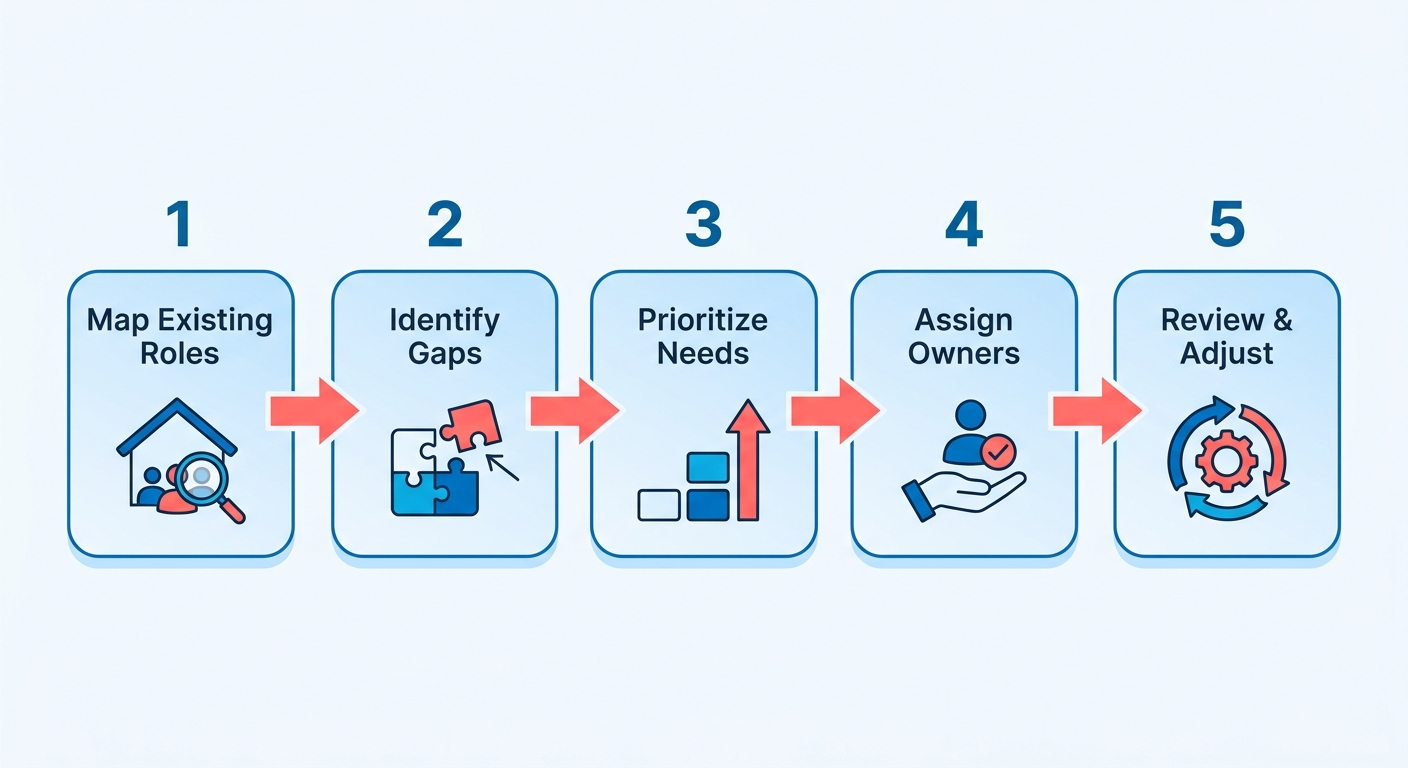
Running a quick SWOT on your household
A household SWOT provides a four-box view of recovery at home. Spend 30 minutes on it before your first family meeting. List strengths, weaknesses, opportunities, and threats related to your daily routine. Keep each item specific.
- List your strengths. Note routines that already work, such as a stocked kitchen or reliable morning schedule. These become anchors for other roles.
- Name your weaknesses. Identify what falls apart under stress, such as skipped meals or untracked appointments. Assign your strongest helper to these areas.
- Map daily stress points. Identify moments that could trigger cravings, such as evenings alone or a chaotic dinner rush. Give each point an owner or plan.
- Spot the threats. Consider old drinking friends, an open liquor cabinet, or a high-conflict relative. Naming them early helps prevent surprises.
Scoring your support gap
A Support Gap Score is a 1-to-10 rating of how much outside help your household needs. It turns a general concern into a number. Lower scores may allow you to rely on informal helpers. Higher scores may call for a dedicated sober coach.
- Inventory your informal helpers. List each person, such as a spouse, sibling, or close friend. Record how many hours they can realistically give each week. Capacity matters more than good intentions.
- Run a quick comfort check. Ask each family member to rate their comfort with caregiving tasks from 1 to 5. This shows which tasks concern them.
- Pick your communication style. Choose a shared calendar, digital board, or weekly huddle. Use one system consistently.
- Set the score, then prioritize. A 7 or higher means coaching should manage daily care coordination and logistics first. MADE builds coaching packages that shift with your needs. Support can begin with one coach or a coordinated team, depending on the level of care.
When your support gap score is high, match tasks to each person’s comfort level. This can reduce burnout.
Role 1 – Primary Caregiver: running the daily machine
The Primary Caregiver manages the daily recovery routine. This person makes sure meals happen, medication reminders appear, and morning and evening routines stay consistent. Assigning this role early supports daily stability.
Daily care often fails when nobody formally owns it. Someone gradually takes over, burns out, and the routine collapses. A home coach can support this caregiver. The caregiver runs the plan, while the coach provides backup.
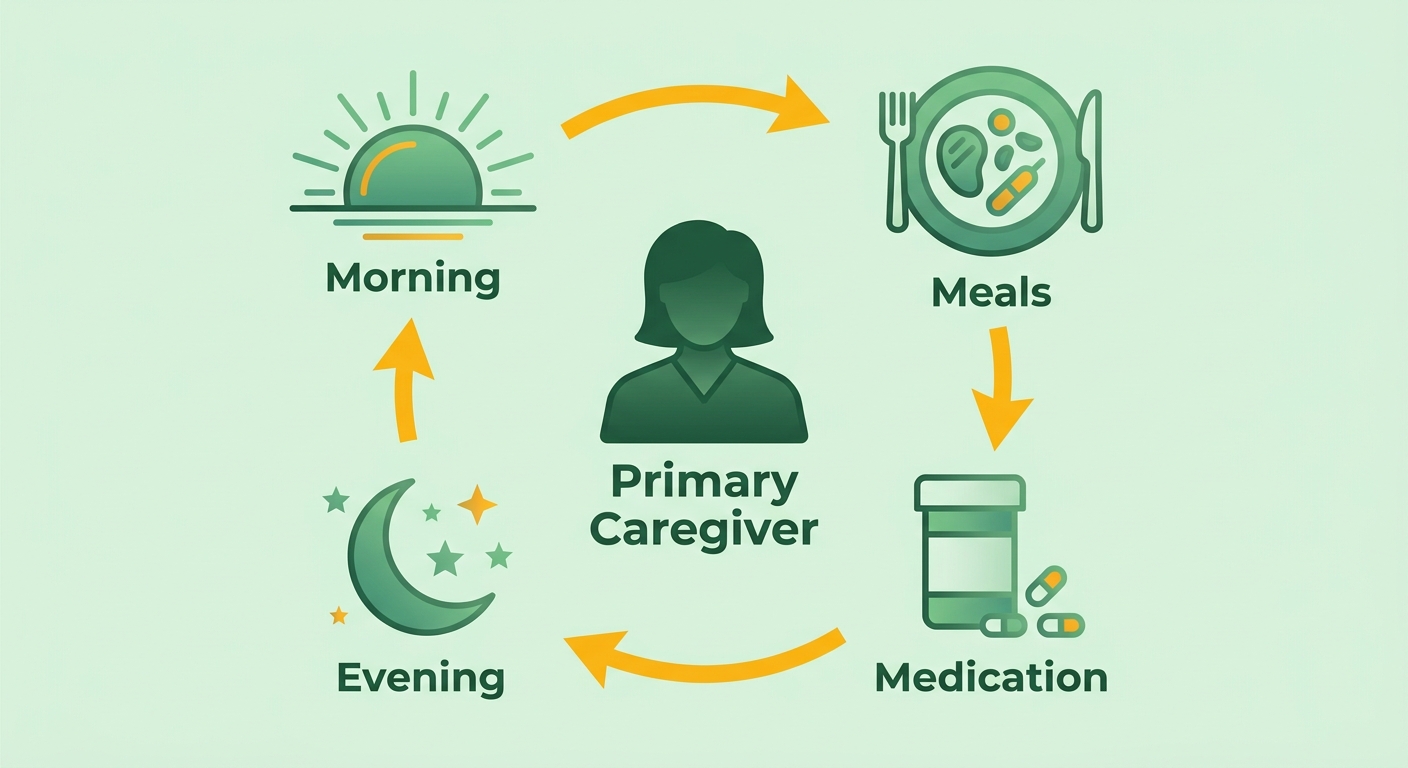
What the Primary Caregiver actually does each day
Primary Caregiver: the lead who manages and protects the daily recovery routine. The duties should be specific rather than general advice to “be supportive.”
- Schedule and protect meals. Regular eating can steady mood and energy during early recovery. Skipped meals may increase cravings and irritability.
- Manage medication and therapy reminders. Set alerts for every dose and appointment. Missed reminders can increase relapse risk.
- Own the morning and evening routines. Consistent bookends reduce decision fatigue after detox.
- Watch mood cues. Attention and empathy can identify a difficult day before it becomes a household crisis.
MADE coaches help clients build routines that lower stress and restore balance. Coaching can include nursing support coordination, grocery shopping, and meal preparation. These services can reduce pressure on the household lead.
Keeping the caregiver from cracking
Caregiver burnout is a common failure point. One person cannot manage meals, medication, appointments, and mood monitoring indefinitely.
Build in self-care time and rotate the workload. Give another family member the evening routine two nights each week. Use a shared calendar and habit-tracking app to show progress across the household.
Preventing caregiver fatigue requires a structured system. Our guide on splitting family recovery roles explains one approach.
Role 2 – Information Hub: one place for everything
The Information Hub manages recovery paperwork and calendar dates. This person creates one place for appointments, medication lists, treatment plans, and emergency contacts. A dedicated information lead helps prevent lost details.
Without a dedicated lead, information slips. Appointments may be missed because reminders live on several phones and in one person’s memory. An in-home coach coordinates with this hub to keep schedules and clinical notes aligned.
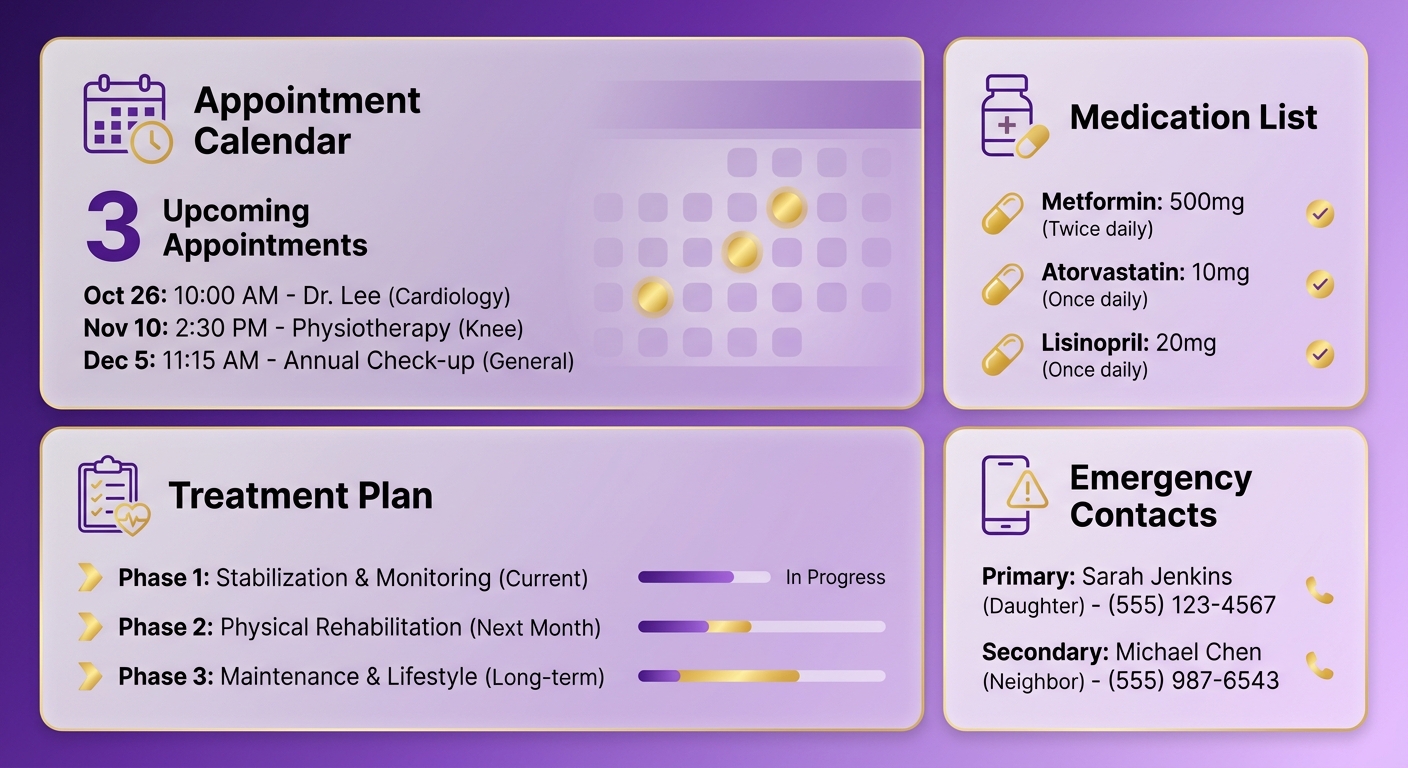
What the Information Hub sets up first
Information Hub: the family member who centralizes recovery data. Their first task is choosing one tool and moving everything into it. Digital and paper systems can both work. Using two systems creates confusion.
- Build a single source of truth. Use a Trello board, Notion template, or color-coded spreadsheet. Make sure everyone knows where it is.
- Track the paperwork. Store insurance forms, treatment plans, and coach notes in one folder. This makes information easier to find during a crisis.
- Facilitate communication. Relay schedules among the person in recovery, the coach, and outside support groups.
Hitting 100% confirmed appointments
Confirm every appointment 24 hours ahead for the first 60 days. Set a reminder for the previous day. Check each appointment off in the shared tool.
Choose one place the family can open from any device. Give that system one owner. Keeping schedules, coach notes, and reminders together may reduce missed details.
Safety tip: Add an emergency protocol to the hub. List local crisis lines and the after-hours program contact at the top.
A centralized hub helps family members exchange responsibilities cleanly. This supports effective recovery role sharing.
Role 3 – Emotional Anchor: the encouragement job
The Emotional Anchor manages encouragement. This person runs daily check-ins, listens without fixing, and acknowledges small wins. They provide emotional support without also managing the daily routine.
Naming an emotional lead makes support deliberate. Families may assume emotional support will happen naturally, but it can be overlooked. A home coach works with the Anchor to identify useful mood patterns for family meetings.
What the Emotional Anchor does every day
Emotional Anchor: the family member who provides encouragement, listening, and honest reinforcement during early recovery. This role depends on short, repeatable habits.
- Run a daily check-in. Use a verbal or written two-minute check-in about feelings, cravings, and wins. Consistency matters more than length.
- Ask open questions, then reflect back. Instead of asking, “Did you have a good day?” ask, “What was the hardest hour today?” Repeat what you heard before responding. This reflects motivational interviewing and keeps the person talking.
- Track mood in a simple journal. One line per day is enough. Share the trend with your MADE coach so guidance reflects actual patterns.
- Aim for consistency over perfection. Record at least one affirmation when possible. Missed days can be followed by a fresh start.
Where the Anchor draws the line
Encouragement is not enabling. The Anchor supports effort without excusing missed responsibilities.
- Hold a no-excuse policy for missed meetings. Support the person, name the missed meeting, and do not cover for it. Warmth and boundaries can coexist.
- Keep affirmations honest. Praise the action taken rather than an imagined version of the person.
The Anchor role works best for someone who already listens well. It does not necessarily belong to the person most eager to help. A MADE coach can provide conversation starters and affirmation prompts. Companionship support is available during important moments.
Role 4 – Logistics Organizer: calendar and supplies
The Logistics Organizer manages the calendar and supply shelf. This person books group sessions, arranges rides, and keeps recovery supplies stocked. A designated logistics owner keeps practical tasks moving.
Practical logistics can fail despite good intentions. A missed ride can become a missed meeting. Clear ownership of rides and scheduling reduces that risk. MADE coaching includes coordination with other support services and day-to-day life management.
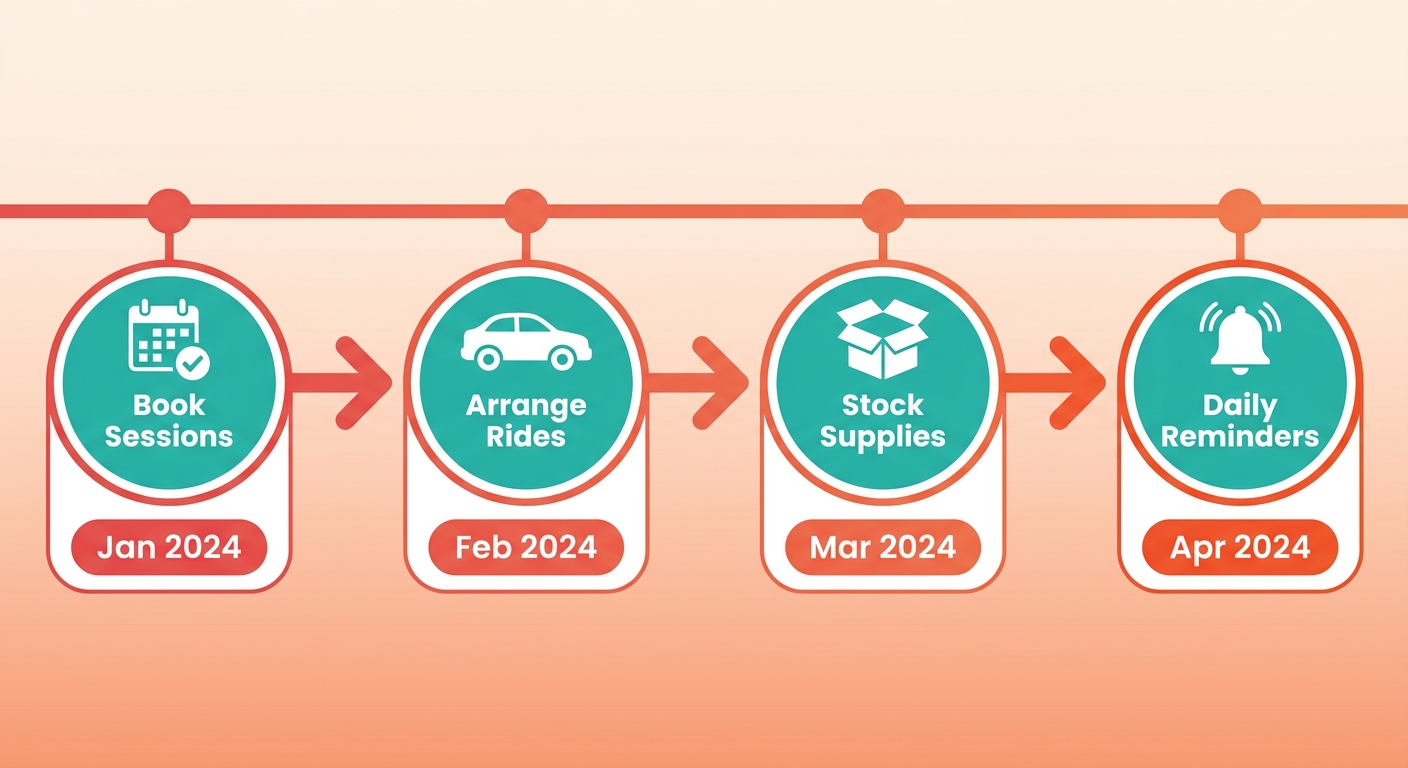
What the Logistics Organizer sets up first
Logistics Organizer: the family member who manages the calendar, transportation, and supplies. This helps prevent recovery plans from stalling.
- Build a master calendar for support-group meetings, coaching calls, and rides. Share it across the household.
- Stock a recovery supply kit: water bottles, healthy snacks, medication, a recovery journal, and prescribed supplements. Keep everything in one place.
- Track mileage and transportation costs. A simple log helps with budgeting and provides clear numbers for your coach or insurer.
Keeping attendance from slipping
Aim for 95% on-time attendance across the first 90 days. Assigning rides and reminders makes this target easier to manage.
A car-pool rotation can help. A weekly driver roster prevents one person from handling every ride.
- Keep a backup driver list and a small supply of ride-share credits. The meeting can still happen if the primary ride falls through.
- Pre-pack a quick kit for emergencies. This keeps coaching calls or crisis runs from waiting on supplies.
Transportation and scheduling provide the practical framework for dividing recovery roles.
Reviewing, adjusting, and scaling roles over time
Roles assigned before a family group are not permanent. Review them monthly, measure what works, and taper support as the person in recovery gains independence. Fixed assignments can contribute to burnout or excessive control.
The group and home plans should inform each other. A group for families of addicts provides a place to process. A monthly review provides information for action. A sober coach can connect the two.
Running a monthly role review
Monthly role review: a 30-minute family meeting to check metrics, identify problems, and plan next steps. Keep the agenda focused on three KPIs.
- Recap the metrics. Track attendance rate at groups and appointments, routine adherence (how many days the daily plan held), and mood-log consistency. Together, these measures show whether a role is working.
- Name the pain points. Ask each role owner where they felt stretched. This can identify burnout early.
- Plan for upcoming needs. Consider a new job, school schedule, or medication change. Adjust caregiving and logistics in advance.
When to start tapering and rotating roles
Start tapering the Primary Caregiver once routine adherence remains around 90% for a full month. This suggests the person in recovery is managing more of their daily load. Pull back gradually.
- Taper the caregiver’s involvement when adherence stays high. Our role-splitting guide explains how to hand off tasks without gaps.
- Rotate or share roles so one person does not carry the same workload for months. Swapping the Information Hub and Logistics Organizer can refresh both roles.
- Write a Recovery Playbook. Document what worked so the next family member, or your next group round, can use those lessons.
Coaching check-ins can provide an outside review. An external perspective may identify problems a tired household misses.
References
[1] Starting and Sustaining Family Support Groups
[2] Blog – Roles that develop in families coping with addiction
Frequently Asked Questions
1. What if only one person is available to take on all four roles?
If you manage the household alone, prioritize daily care and scheduling. Automate medication reminders and calendar sharing where possible. Professional coaching can also help with crisis planning and resource coordination.
2. How do I know if my family actually needs formal role assignments?
Formal assignments can help when moving someone from an inpatient facility back home. Frequent miscommunication, missed appointments, or high daily stress also signal a need for clear responsibilities.
3. What’s the difference between the Emotional Anchor and simply being supportive?
General support can blur into codependency or rescuing. The Emotional Anchor provides objective encouragement. This means validating recovery work while maintaining boundaries around program requirements. Empathy should not replace accountability.
4. Who should you pick for the Emotional Anchor role?
Choose someone who stays calm under pressure and listens without immediately solving problems. A steady, nonjudgmental presence is more effective than an eager helper who projects personal anxiety.
5. How is the Information Hub different from the Logistics Organizer?
The Information Hub manages medical records, insurance details, and clinical updates. The Logistics Organizer manages daily schedules, rides, and physical supplies. Together, they cover administrative and practical needs.
6. When should we stop relying so heavily on assigned roles?
Reduce structured roles gradually. Base the change on the individual’s demonstrated self-management. As your loved one manages their schedule and self-care consistently, family members can return to normal household dynamics. Keep records of successful strategies in case they are needed again.
7. How often should we revisit whether roles are still working?
Regular check-ins keep the household adaptable. Review daily routines and new sources of friction on a set schedule. Adjust responsibilities before burnout occurs or schedules change.