3 Support Groups That Accept Families the Week Someone Comes Home
August 25, 2026

Key Takeaways
- Relapse risk spikes the week someone comes home from detox. That's when families need their own support most, in the first seven days.
- Al-Anon and Nar-Anon run free, donation-based peer meetings most days of the week for families dealing with substance use.
- SMART Recovery Family & Friends teaches communication and boundary-setting for households where twelve-step language doesn't land.
- NAMI Chicago runs facilitated groups that fit families where addiction overlaps with anxiety, depression, or trauma.
- All three of our top picks take family members right away, no waitlist. Help this week, not next month.
- Every option here is free, so cost isn't a reason for a parent, partner, or sibling to go without support.
- The family needs its own footing, not just the person in recovery.
Quick Summary
The trip home from detox is a high-risk stretch, and families often feel underwater during it. In our experience, that first week goes better when the household has support of its own, not just the person in recovery. A support group for families of drug addicts gives parents, partners, and siblings a room where they can stop guessing and start acting.
We pulled together three options that welcome families right away, so you can compare them at a glance and pick one before discharge day.
Which family support groups work at home?
Here's the quick comparison. Each one takes family members without a waitlist, which matters when you need help this week.
| Support group | Best for | Starting price | Key strength | | . | . | . | . | | Al-Anon / Nar-Anon | Families wanting peer connection and a proven format | Free (donation-based) | Wide availability, meetings most days | | SMART Recovery Family & Friends | Families who want tools over a spiritual framework | Free | Practical, skills-based sessions | | NAMI Chicago support groups | Families where mental health and addiction overlap | Free | Trained facilitators, local and virtual |
What each group does best
Al-Anon and Nar-Anon: Daily access to peer support, almost everywhere. The most reliable option when you need a room this week.
SMART Recovery Family & Friends: Practical, cognitive-behavioral tools for households that want an alternative to step-based or spiritual frameworks.
NAMI Chicago: Facilitated sessions built for households juggling co-occurring mental health struggles alongside substance use.
Our take: start with whichever group meets soonest. Momentum beats the "perfect" match. You can always switch once your person is home and you see what your family actually needs. For families who want daily structure alongside a group, our sober coaching helps set healthy routines and plan detox and treatment pathways, so a peer group and hands-on daily support can run side by side.
Why one group rarely covers the whole week
No single support group fits every family in that first week home. The right choice depends on cost, format, and how much guidance you actually need when discharge day arrives. That's why it pays to compare a few options before you commit.
Most peer-led groups are free and meet on a fixed schedule. That works fine for a lot of households. But a free weekly meeting leaves a gap when the crisis is happening at 9 p.m. on a Tuesday and the next meeting isn't until Thursday.
What to weigh before you pick
Cost, coverage, and fit are the three things to check first. Free peer groups cost nothing but run on their own timetable. Coached or clinical options cost more but respond when you need them. That gap between the two models is where most first-week decisions get made.
Here's how the trade-offs line up:
| Factor | Free peer groups | Coached / structured support | | . | . | . | | Cost | Free or donation-based | Paid, varies by plan | | Availability | Set meeting times | Between-meeting access | | Fit | General, all-comers | Tailored to your household | | Growth flexibility | Same format long-term | Scales as needs change |
The gaps show up fast in week one. A peer room gives you a place to talk, and that alone helps. What it rarely gives you is a plan for your home. Who answers the door on relapse day? What does the family say when cravings hit? Structured support is where that gets filled in.
So be honest about your situation. Skip paid coaching if your household is stable, your loved one is engaged, and a weekly room of peers is enough. You don't need to spend money to feel less alone. But if the first week feels like a house on fire, a coached model earns its cost.
Needs also change over the week, which is where a program that evolves with the household earns its place. At MADE, coaching is tailored to each person and adjusts as things shift, with support tapering on purpose as clients find their rhythm and gain independence.
Alternative 1 - Featured
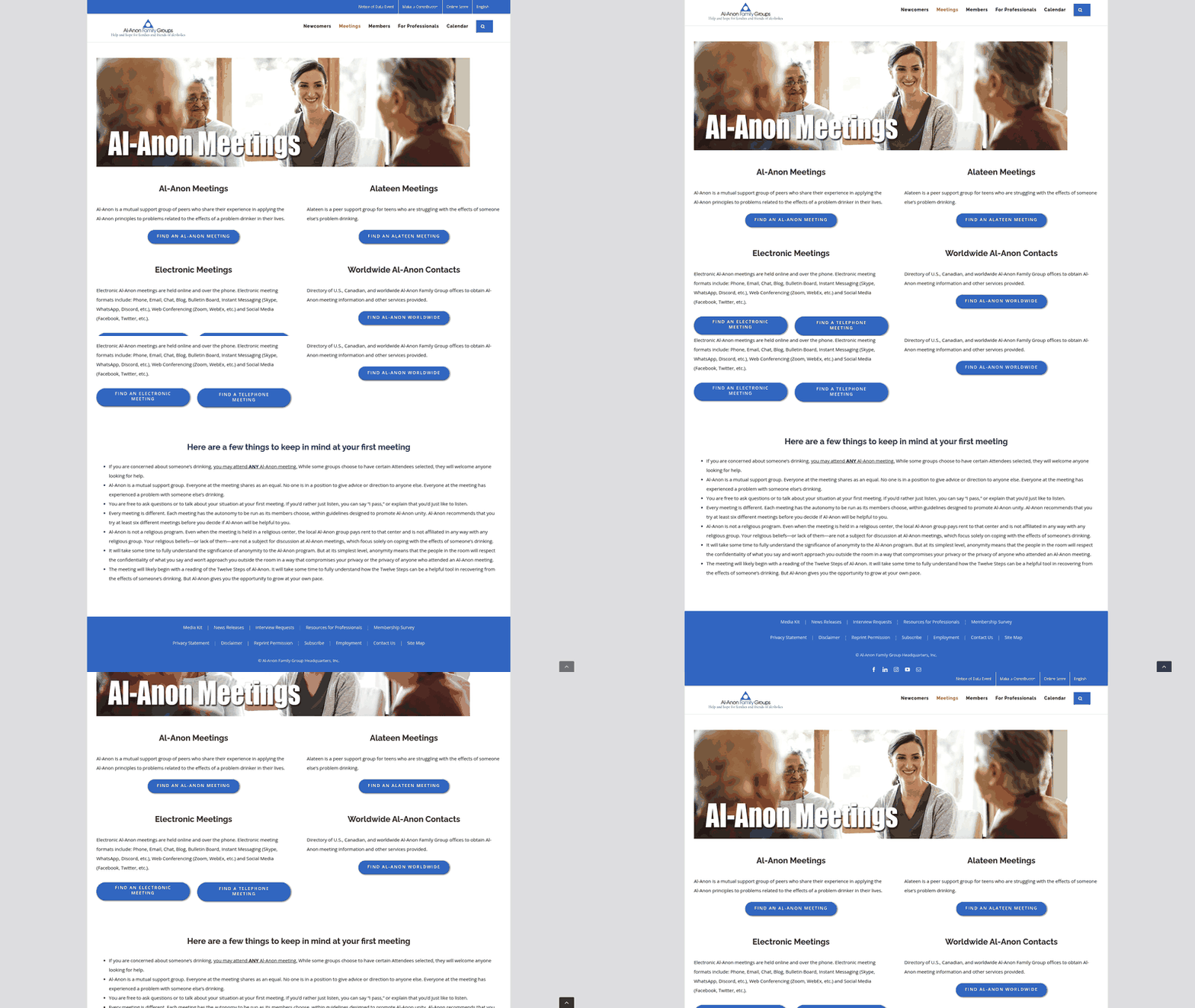
Al-Anon is our top pick for families who need a support room the same week their person comes home from detox. It's free, meets daily in most cities, and welcomes parents, partners, and siblings with no intake. You can walk into a meeting tonight and start tomorrow.
That immediacy is why we point families here first. When discharge is days away, the last thing you want is a waitlist. Al-Anon doesn't have one.
What makes Al-Anon work?
It's a peer-led fellowship built specifically for the people around someone with a substance problem. Meetings run on a set schedule, cost nothing, and follow shared principles focused on the family member's own wellbeing. You get a room of people who've lived the same first week you're facing.
The format is simple. You show up, you listen, you share if you want to. Nobody assigns homework or bills you.
In our experience, that low bar to entry is exactly what a rattled household needs on day two or three. The structure gives you somewhere to be when the house feels like it's holding its breath.
Who is Al-Anon best for?
Families who want steady peer support and can work around a set meeting schedule. If your crises tend to hit between meetings, you'll feel the gaps. That's the honest trade-off with any free, fixed-schedule group.
Skip it as your only resource if you need on-demand, round-the-clock contact during high-stress moments. Pair it with structured individual guidance in that case. For families who mainly need to stop feeling alone and start learning the ropes, it's hard to beat.
| Feature | Al-Anon | | . | . | | Format | In-person and online peer meetings | | Starting price | Free | | Access | No waitlist, walk-in | | Best for | Families wanting daily peer support | | Key strength | Immediate availability the week of discharge |
Our assessment: a strong 4.5 out of 5 for first-week access, docked half a point only because the fixed schedule leaves after-hours gaps. If you want peer support paired with daily structure, combining these meetings with structured daily planning helps bridge those gaps.
Alternative 2
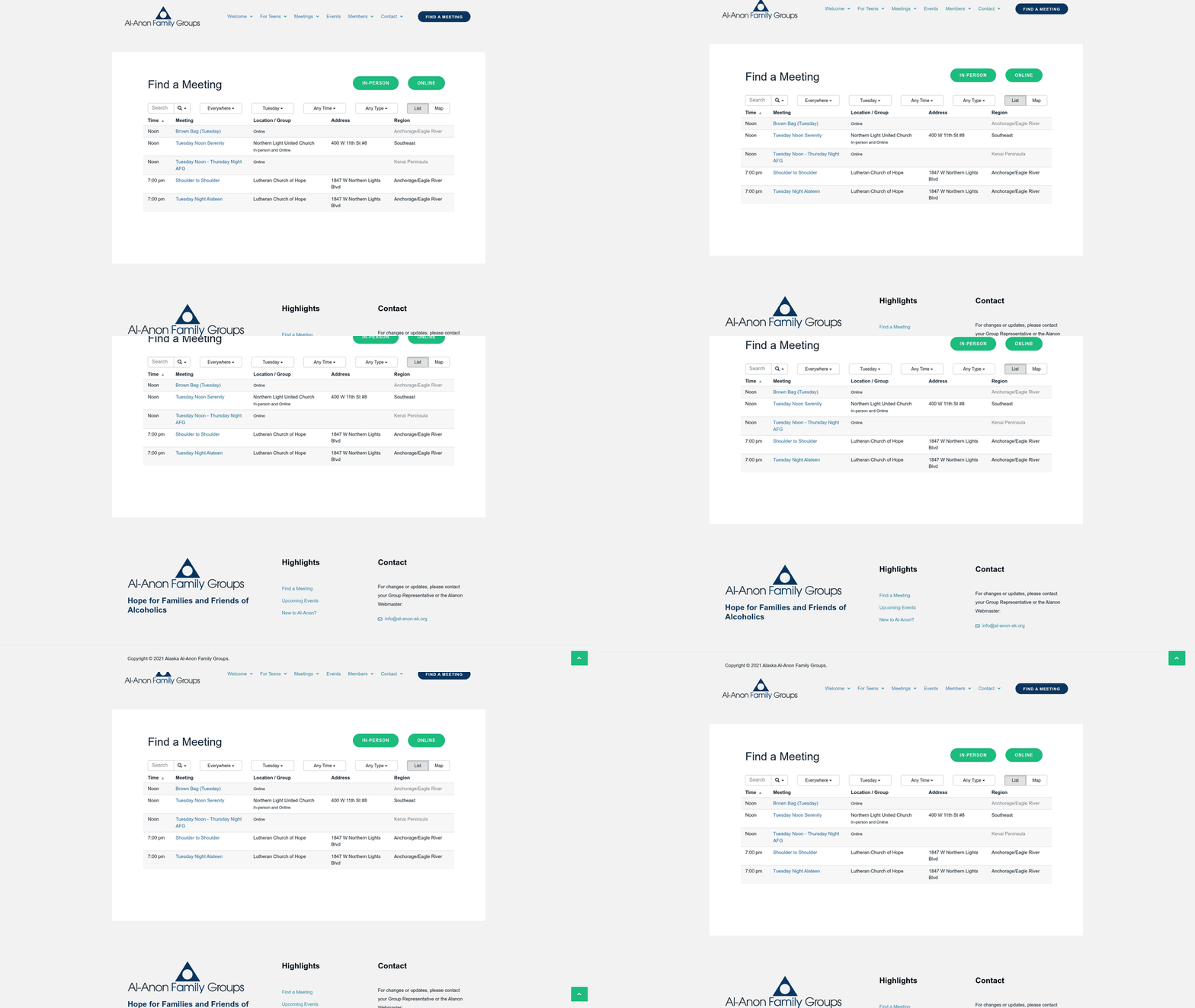
SMART Recovery Family & Friends is our pick for families who want a skills-based room instead of a spiritual framework. It's free, runs in-person and online, and takes parents, partners, and siblings with no intake step. You can join a meeting within days of discharge.
We point science-minded households here when Al-Anon's steps don't fit their worldview. This one teaches concrete tools rather than surrender-based principles. That difference matters in the first week home, when you need real strategies to de-escalate household tension on the spot.
What SMART does differently in week one
It's a peer-led program built on cognitive-behavioral and motivational tools. It borrows from CRAFT, an approach that trains family members to shift how they respond to a loved one's substance use. You learn communication moves, boundary-setting, and self-care techniques you can use the same night you learn them.
That practical focus is the draw. Instead of only sharing stories, you leave with something to try. For a partner or parent facing the raw first week after detox, having an actual script for a hard conversation beats guessing.
The trade-off: SMART has fewer meetings than Al-Anon in many cities, so same-day access isn't guaranteed everywhere. Online meetings help close that gap.
| Feature | SMART Family & Friends | | . | . | | Format | In-person + online, peer-led | | Cost | Free | | Approach | CBT and CRAFT-based skills | | Best for | Families who want tools, not steps | | First-week access | Good online; varies locally in person |
Pros: Free, skills you can use immediately, secular framing, strong online coverage.
Cons: Thinner local meeting schedules than Al-Anon, less crisis coverage between sessions.
Our rating: 4.5/5 for tool-focused families in the first week home.
One honest carve-out: if something hard comes up between sessions, a weekly group can't step in immediately. Families who need continuous accountability or active crisis planning may want to add one-on-one guidance on top of these meetings.
Alternative 3
MADE Recovery coaching is our pick for families who want a real person guiding them through that first week home, not just a weekly meeting to wait for. We build family guidance right into the post-detox transition plan, so parents and partners get coached support the same days their person is most fragile. That's the gap free peer rooms leave open.
Unlike the free groups above, our approach pairs your household with a coach who knows your specific situation. We provide consistent, real-world support during the moments that matter most, with virtual and in-person options that fit around real life. In our experience, that hands-on presence is what keeps the first week from tipping into relapse.
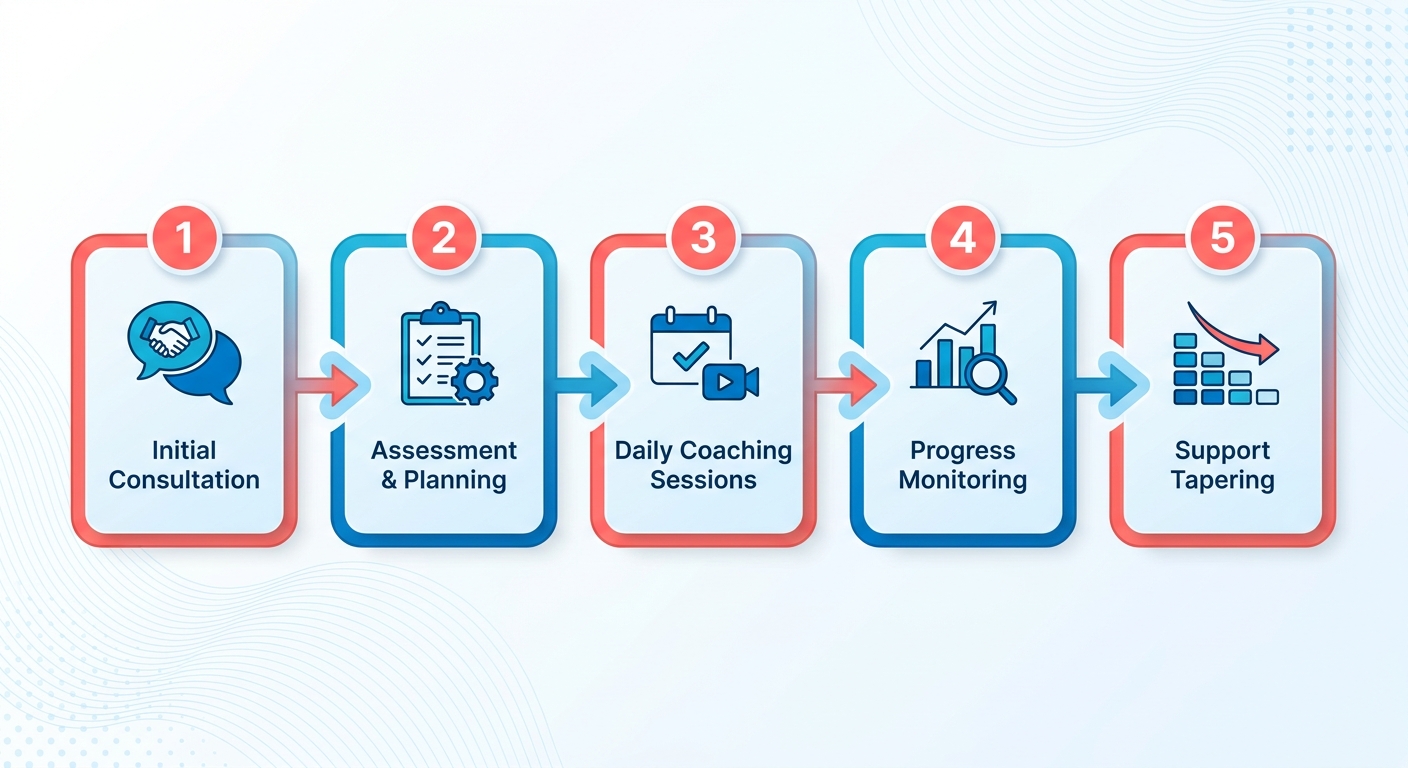
What coached family support does differently in week one
We help families manage the recovery pathway, not just the person in recovery. Peer groups give you a room of people who understand. We give you a plan for your kitchen, your boundaries, and your specific triggers, adjusted as the week unfolds. You get structure to act on, plus someone accountable for helping you use it.
That matters because the first seven days rarely follow a script. You need someone who can adapt the plan when your person has a rough night, not generic advice. We help the household plan and coordinate the same sober routine work we do in the first 90 days, so the family and the person in recovery pull in the same direction.
Skip this if a free weekly meeting already covers your needs. If your household is stable and you mainly want peer connection, Al-Anon or SMART will serve you fine at zero cost. Coaching earns its price when the first week is high-risk and you need hands-on guidance.
| Support group | Format | Cost | Response speed | | . | . | . | . | | MADE Recovery coaching | 1:1 coached, family guidance | Paid / custom | Consistent support | | Al-Anon | Peer-led, daily meetings | Free | Next meeting | | SMART Family & Friends | Peer-led, skills-based | Free | Next meeting |
Pros: personalized plan, consistent real-world support, family guidance. Cons: paid, not a walk-in peer room. Best for: high-risk first weeks that need hands-on guidance.
Alternative 4
Nar-Anon is our pick for families whose person is specifically in drug recovery, not alcohol. It's free, peer-led, and runs the same twelve-step format as Al-Anon, but the stories in the room center on drug use. That focus matters when you want a room full of people who understand exactly what you're facing. When the substance is the whole point, Nar-Anon takes parents, partners, and siblings with no intake, no waitlist, and no cost. Find a meeting this week and walk in tomorrow.
What makes Nar-Anon fit?
It's a fellowship for the family and friends of people with a drug problem. The format mirrors Al-Anon, so you get shared readings, a sponsor system, and a focus on your own wellbeing rather than controlling your person. The difference is that every story in the room involves drugs specifically.
That specificity helps when discharge day arrives. You hear from people who have lived the exact fears that keep you up at night. In our experience, that recognition speeds up how fast a family feels less alone.
Here's how it stacks up against the other options in this roundup.
| Support group | Cost | Format | Best for | | . | . | . | . | | Nar-Anon | Free | Peer-led, in-person and online | Drug-specific family match | | MADE Recovery | Paid | Coached, virtual and in-person | Real-time first-week guidance |
Pros: Free, drug-specific, no waitlist, meetings most days in larger cities.
Cons: Fewer meetings than Al-Anon in smaller towns. Like every peer room, it runs on a fixed schedule, so the Tuesday-night crisis still has to wait for the next meeting.
Skip Nar-Anon if your person's issue is alcohol alone. Al-Anon has far more meetings and a better local match there. But when drugs are the story, this is the group we send families to first for a room that speaks their exact language. When the fixed schedule leaves gaps, families often pair these meetings with personalized daily check-ins to keep momentum between sessions.
Alternative 5
Community mental health and family peer-support networks are our pick for families who need more than one meeting a week but can't pay for coaching. Groups like NAMI run free family support programs, and they layer education on top of the peer room. That mix helps when you're managing both your own stress and a household in crisis. When the free twelve-step rooms feel too narrow and you want structured learning alongside peer connection, this category adds a teaching component most fellowships skip. NAMI Chicago, for one, runs family support groups led by trained facilitators who've lived it themselves.
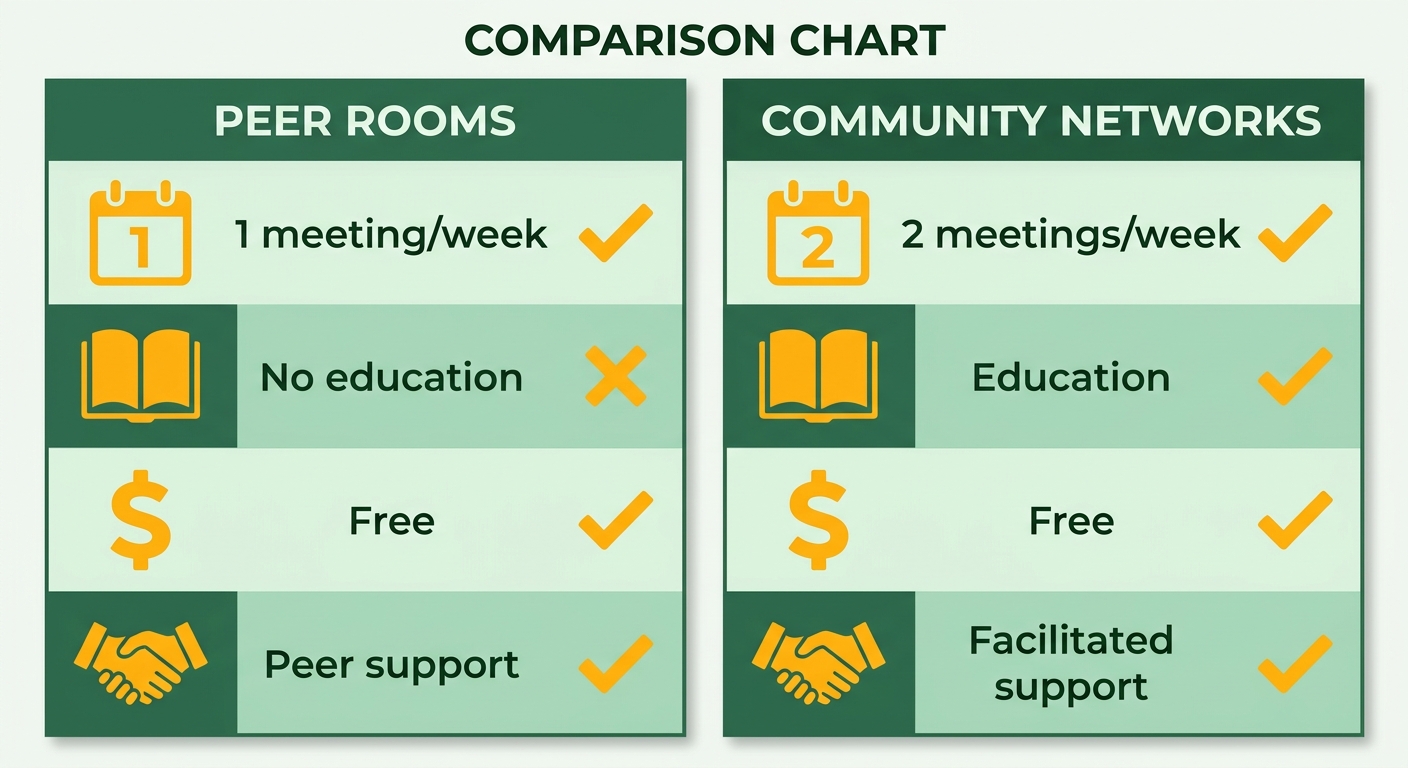
What community programs add in week one
They pair peer support with practical education about substance use and mental health. You get a facilitated room plus tools for understanding what your person is going through. For families juggling co-occurring mental health issues, that dual focus matters more than a single-issue meeting.
The trade-off is scheduling. Many run on fixed weekly or monthly calendars, and availability varies by city. In a smaller town, the nearest facilitated group might be an online session rather than an in-person room. That's fine for week one, but it won't give you immediate, personalized help during an off-hours emergency.
Pros, cons, and who this fits
| Feature | Community family support (e.g. NAMI) | | . | . | | Cost | Free | | Format | Facilitated peer groups + education, in-person and online | | Waitlist | Usually none; varies by location | | Best for | Families managing co-occurring mental health needs | | Key gap | Fixed schedules; no on-demand crisis support |
Pros: Free, facilitator-led, and stronger on education than pure peer rooms. Good fit when mental health and substance use overlap.
Cons: Availability depends on your city. No same-day crisis response between sessions.
Skip this if your household needs immediate, on-demand contact during off-hours. For those high-risk windows, structured individual guidance can bridge the gap where fixed-schedule community groups leave off, helping families set stable routines during the move home.
Alternative 6
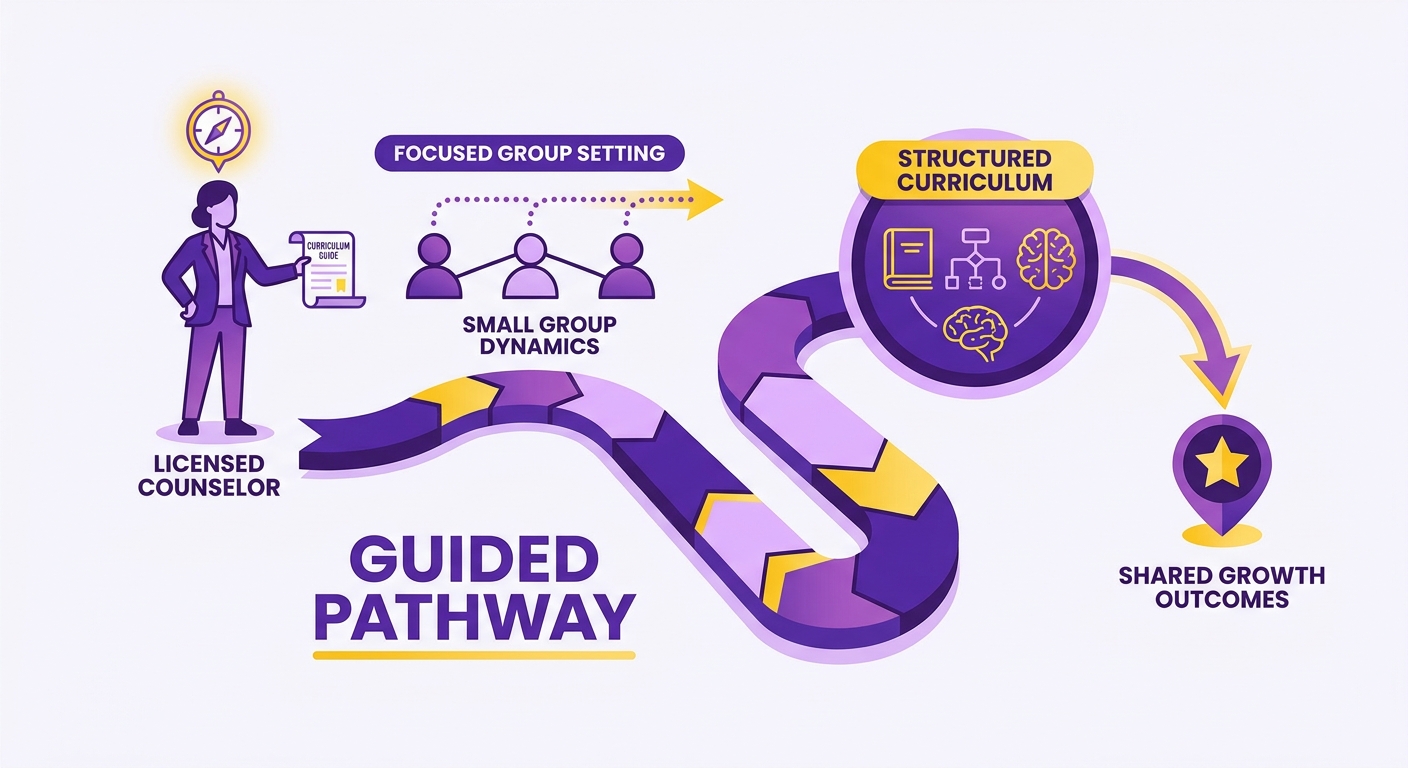
Therapist-led family support groups are our pick for households that want clinical structure without hiring a full-time coach. These are paid groups run by a licensed counselor, not a peer volunteer. You get professional facilitation, a set curriculum, and a room small enough that everyone talks. Good fit for families who found the free rooms too loose.
We point people here when they want a therapist steering the conversation. A Chicago therapist's guide from Balanced Awakening lays out how these clinician-run family groups differ from twelve-step fellowships. The short version: a professional keeps the group focused on skills and boundaries instead of open-ended sharing.
What a therapist-led group adds in week one
A licensed facilitator can spot a crisis pattern the same session it surfaces. That matters when your person is three days out of detox and the household is raw. Peer rooms lean on shared experience. A clinical group adds trained eyes that catch enabling, codependency, and safety risks early.
The trade-off is cost and access. These groups charge per session or run on insurance, and many have a short intake before you join. That intake can cost you the exact days you need help. So call before discharge, not after.
| Option | Best for | Cost | Availability week one | | . | . | . | . | | Therapist-led family group | Clinical structure on a budget | Paid / insurance | Often needs intake first | | MADE Recovery coaching | Hands-on, customized family guidance | Paid | Starts with a conversation |
Skip this if discharge is imminent and the clinical group requires a long intake. In that tight window, a walk-in peer fellowship or an on-demand support service will cover your household much faster, letting you set up a safety net before discharge day.
Choose a therapist-led group when you have a week or two of runway and want professional facilitation you can afford long-term.
Alternative 7
Online, always-open family communities are our pick for households that need support at 2 a.m., not just at the next scheduled meeting. These are free, text-based forums and virtual rooms where parents and partners post the moment a crisis hits. That timing fills the exact gap most scheduled family groups leave open.
They shine when the hardest moments land after hours. A weekly meeting can't give you feedback at midnight; an online forum offers a steady stream of peer perspective instead. Statewide efforts like the California opioid response family resources list these virtual and text-based options alongside traditional meetings.
Do online family support groups actually help?
Yes, for connection and round-the-clock access, though they trade depth for availability. A review of mutual-help groups for affected others found that peer connection reduces isolation for family members, and online formats extend that reach to anyone with a phone. At home, that reach matters more than polish.
The honest limit: text threads can't read tone or safely manage an acute emergency. Skip online-only forums if your household is facing active safety risks or severe behavioral crises. In those situations you need professional clinical resources or direct emergency services.
| Feature | Online family communities | | . | . | | Cost | Free | | Access | 24/7, on demand | | Best for | Late-night support, rural families | | Pros | Always open, no travel, anonymous | | Cons | No live crisis steering, uneven quality |
A user in a recovery thread put the mindset well:
"long term sobriety takes more than just 'not quitting.' It's a whole new way of life (sleep, other good habits, etc.)" - a Reddit user in r/PornAddiction
That's the value of an always-on room. It keeps a family building the new normal, day and night, through the shakiest week.
Alternative 8
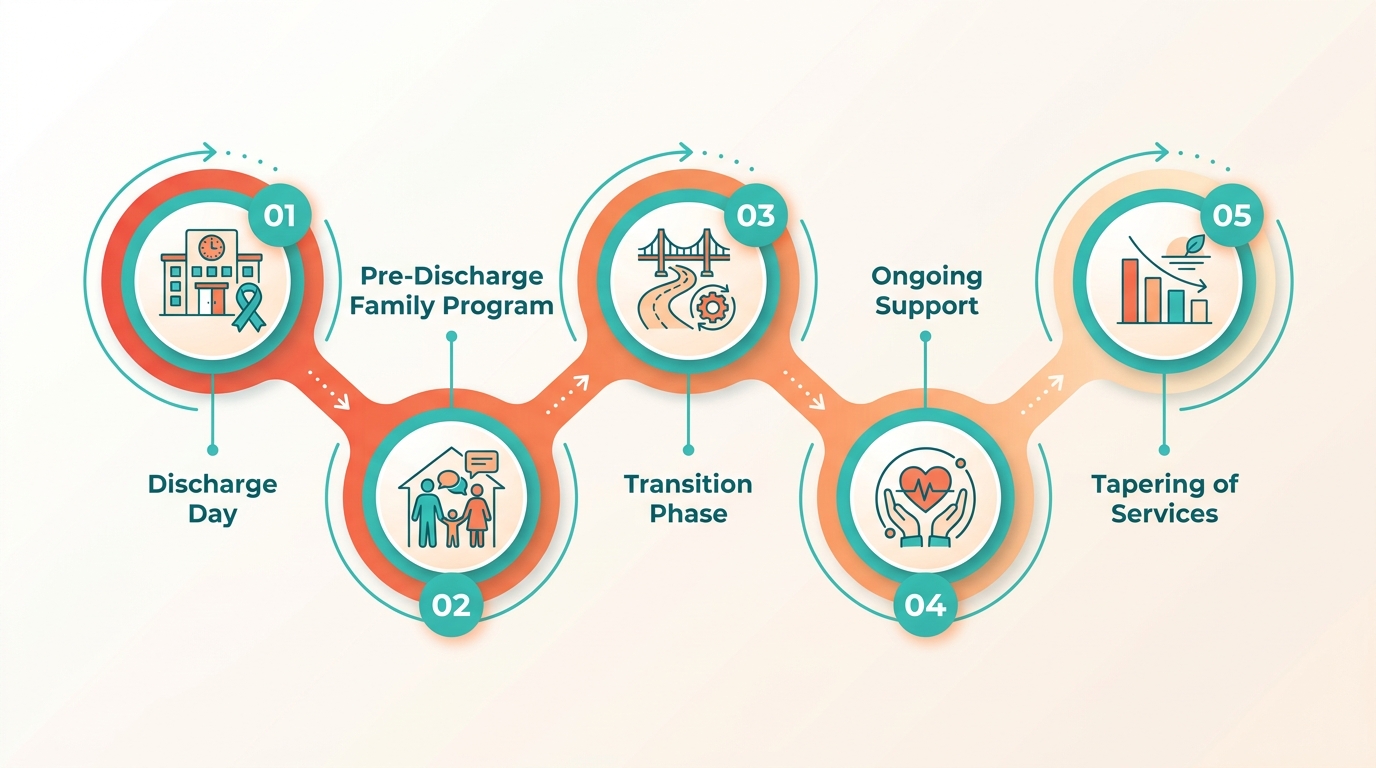
The detox or treatment center's own family program is our pick for households that want support tied directly to the discharge plan. Many facilities run a family track while your person is still in care, then keep the door open after. That built-in continuity is something most standalone groups can't match. It fits families still inside the treatment window who haven't picked an outside room yet. The clinical team already knows your person's case, so the guidance you get lines up with the actual aftercare plan, not a generic one.
What a facility program adds in week one
It connects you to the same team managing your person's care, so the advice matches the discharge plan. You learn the warning signs specific to their substance and their triggers. Then you carry that into the house the week they come home.
The catch is scope. These programs often taper off once formal treatment ends. So you get strong support during the handoff, then a gap unless you line up a peer room or coaching to follow. Book that next step before the program winds down.
Pros, cons, and who it fits
| Feature | Facility family program | | . | . | | Cost | Often bundled into treatment; verify before discharge | | Format | In-person or virtual, tied to the care team | | Best for | Families still inside the treatment window | | Main limit | Support often ends when formal treatment does |
Pros: guidance matches the real aftercare plan, the team already knows the case, and there's no separate intake.
Cons: coverage usually stops at discharge, and quality varies by facility. If your center's family track is thin, one of the free peer rooms above will serve you better.
Our take: use this program fully while it's active, then move to an ongoing community resource before the first week ends. Line up your next step early so there's no gap once the facility's program concludes.
What I'd actually recommend
Here's where we land after weighing every option. The right pick comes down to three things: what you can spend, how fast you need help, and how much hands-on guidance your household needs at home.
Most families do well starting with a free peer room and adding more support if the gaps show. Side by side, the differences are mostly cost, timing, and structure.
Which option fits your household best?
| Pick | Best for | Cost | Why it wins | | . | . | . | . | | NAMI / community programs | More than one meeting a week | Free | Adds structured education to the peer room | | Grief and loss circles | Families mourning a relapse | Free | A space built for setbacks, not just progress | | Faith-based support | Values-driven households | Free | Meets inside a community you already trust | | Therapist-led groups | Clinical structure, small room | Paid | Licensed facilitator, set curriculum | | Online communities | 2 a.m. crises | Free | Someone's awake when the meeting isn't | | Facility family program | Still in the treatment window | Varies | Advice matches the actual discharge plan | | MADE Recovery coaching | Real-time first-week guidance | Paid | A coach who knows your specific situation |
Best for after-hours crises: online communities. When the panic hits late and no meeting is scheduled, a forum or chat thread puts you in front of people who have stood exactly where you're standing.
Best for treatment-window timing: a facility family program. If your loved one is still in care, the program's advice lines up with the actual discharge plan, so you're not guessing at next steps.
Best for hands-on first-week support: individualized coaching. Direct, personalized guidance built around your household's schedule and triggers, with a dedicated partner during the hardest transition days.
Our honest verdict: pick a free room before discharge day. Nobody should go into that first week with an empty calendar. Add coached or clinical support if the free schedule leaves you stranded when the hard moments hit.
References
[1] Support Groups - NAMI Chicago - https://namichicago.org/support-groups/
[2] Chicago Support Groups for Families of People with Addiction - https://balancedawakening.com/blog/which-addiction-support-group-is-right-for-you-a-chicago-therapists-guide-for-families
[3] Substance Use Disorder Support for Families - https://californiaopioidresponse.org/resource/substance-use-disorder-support-for-families/
[4] (PDF) Mutual-Help Groups for Affected Others - https://www.researchgate.net/publication/391482617_Mutual-Help_Groups_for_Affected_Others
Frequently Asked Questions
1. Can I attend a family support group before my loved one is discharged from detox?
Yes. Fellowships like Al-Anon, Nar-Anon, and SMART Recovery do not require registration or intake, allowing you to attend a meeting today. Additionally, if your loved one is currently in a facility, ask if they offer an internal family program you can participate in prior to discharge.
2. What's the difference between Al-Anon and Nar-Anon for families?
While both follow a twelve-step structure and focus on the family member's personal well-being, their primary focus differs. Nar-Anon meetings center specifically on the challenges of narcotics and drug use, whereas Al-Anon is historically focused on alcohol. Because Al-Anon has a much larger network, it is often easier to find local, in-person meetings for Al-Anon than for Nar-Anon.
3. Which support group should I pick if my loved one has both addiction and depression?
For co-occurring mental health conditions, community-based organizations like NAMI are highly effective. Their facilitated sessions address the intersection of substance use and psychiatric diagnoses like depression or anxiety. If your household is dealing solely with substance use without underlying mental health diagnoses, peer-led groups like SMART Recovery or Al-Anon are generally more direct fits.
4. What happens if a crisis hits at night between scheduled meetings?
If an urgent situation arises outside of scheduled meeting hours, peer-led groups cannot offer immediate assistance. In these moments, online forums and text-based communities can provide rapid peer feedback. However, for severe safety concerns, active relapse risks, or medical emergencies, you should contact professional crisis lines, local emergency services, or utilize pre-arranged clinical support.
5. Are these family support groups actually free, or are there hidden costs?
Community fellowships and national programs (such as Al-Anon, Nar-Anon, SMART Recovery, and NAMI) are entirely free and funded by voluntary donations. Private options, including clinician-led groups and individual recovery coaching, require out-of-pocket payment or insurance coverage. These paid services are designed for households seeking structured, customized plans rather than general peer sharing.
6. How do I choose between a free peer group and paid coaching for the first week home?
A free peer group is ideal if you primarily need a safe space to share experiences and your household is relatively stable. Individualized coaching is better suited for high-stress transitions where you require a customized safety plan, active boundary-setting guidance, and direct access to a professional between scheduled meeting times.
7. Can I switch support groups after starting, or should I commit to one?
You are never locked into a single program. In the critical first week, attending the earliest available meeting is often the best way to break the ice. As the transition unfolds, you can adjust your strategy—such as moving from a twelve-step group to a skills-based meeting, or combining peer support with professional guidance as your household's needs clarify.