Your First Week Home From Rehab: Build the Daily Routine That Holds
August 10, 2026

Key Takeaways
- A structured schedule can help reduce decision fatigue and add predictability when cravings arise.
- Regular sleep‑wake cycles are associated with more stable circadian rhythms, which many clinicians consider important for mood regulation in early sobriety.
- Consistent meal times may help avoid blood‑sugar fluctuations that some people find aggravate irritability.
- Scheduling peer‑support or therapy sessions can provide cognitive scaffolding as the brain adapts to recovery.
- Coach‑led accountability often reinforces the routine you co‑design, turning intention into follow‑through.
- Some research on routine‑based recovery models suggests they can improve early outcomes, though effects differ across groups.
Why a Daily Routine Matters in Recovery
A daily routine creates predictability, which can lower stress. Reduced stress is often linked to more manageable cravings. This is why routine‑based recovery models appear repeatedly in the literature as a protective factor.
When you leave residential treatment, you move from a highly structured environment to a home setting where external cues (e.g., a wake‑up call at 6 a.m.) are no longer present. The routine you co‑design with a sober coach becomes your new structure—one you own rather than one imposed by a facility schedule.
What a routine actually does for early sobriety
A well‑structured day is thought to support mood stability, sleep quality, and relapse risk reduction. The National Institute on Drug Abuse notes a link between consistent sleep‑wake cycles and mood regulation, and many clients report feeling more balanced when they keep a regular bedtime and wake time, even on weekends.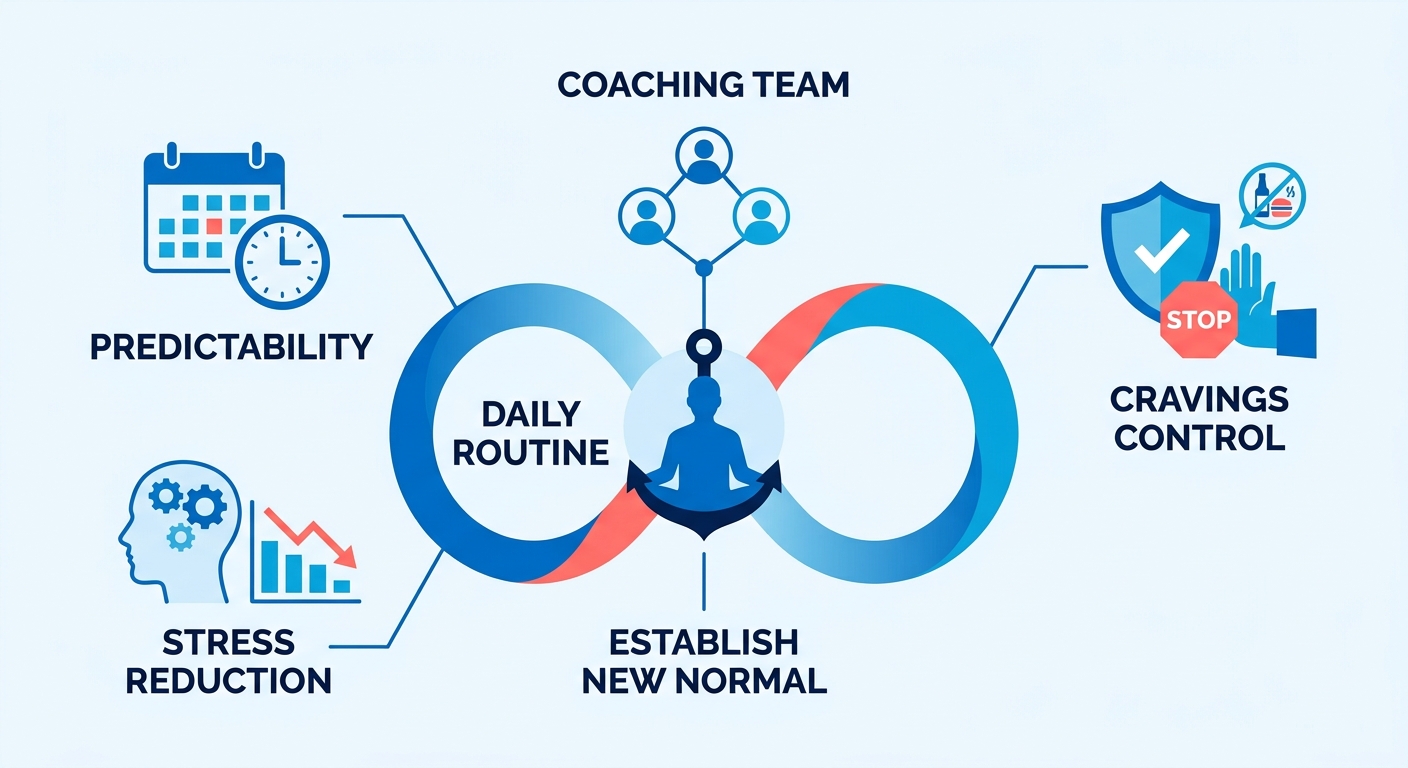
- Predictability can replace feelings of chaos with a baseline sense of safety.
- Balanced nutrition and hydration are intended to keep blood sugar steady, which some people find reduces irritability.
- Scheduled meetings (e.g., AA, therapy, coach check‑ins) embed accountability into the day without relying solely on willpower.
These elements are often described as supporting the brain’s rewiring process that occurs in early recovery. The routine functions as scaffolding while the prefrontal cortex works to rebuild executive function.
Coach‑led accountability in the first week
Coaches typically match a client’s home environment, family dynamics, and personal goals to a customized plan that begins as soon as the client leaves the treatment facility.
A common outline includes:
- Morning anchor – a brief grounding exercise followed by a hydration cue.
- Mid‑day checkpoint – a short text or call with the coach to review progress and adjust tasks if needed.
- Evening wrap‑up – a reflection journal and a preview of the next day’s schedule, shared with the support team.
Plans are adapted to each household. Whether a client lives with a supportive family, a sober‑living roommate, or alone, the routine can be tailored to fit that situation. Some providers observe that clients who receive tailored accountability tend to maintain more consistent daily routines during the first week.
Common pitfalls in the first week
A rigid “do‑everything” checklist can become counter‑productive if it doesn’t align with daily reality. Flexibility helps prevent burnout and keeps the routine sustainable. Many coaches suggest treating the first few weeks as a trial phase: allowing occasional missed days without harsh self‑judgment and using those moments as reset points.
- Over‑scheduling may lead to fatigue, which some consider a relapse trigger.
By pairing a research‑informed routine with coach‑led, team‑based accountability, clients receive a personalized roadmap that aims to turn the chaotic post‑rehab period into a structured, supportive launchpad.
Day 1‑3: Establishing a Foundation
The initial focus is often on confirming that the living space, medication supply, and emergency contacts are in place, then sharing that checklist with the coaching team. A safe environment can reduce uncertainty, a common trigger in early sobriety.
- Medication check: Verify dosages, set up a pill organizer, and log the first dose with the coach.
- Physical safety: Remove alcohol‑related items, lock away substances, and confirm smoke‑detector function.
- Support network: Share the daily schedule with a trusted family member or roommate who agrees to a brief daily check‑in.
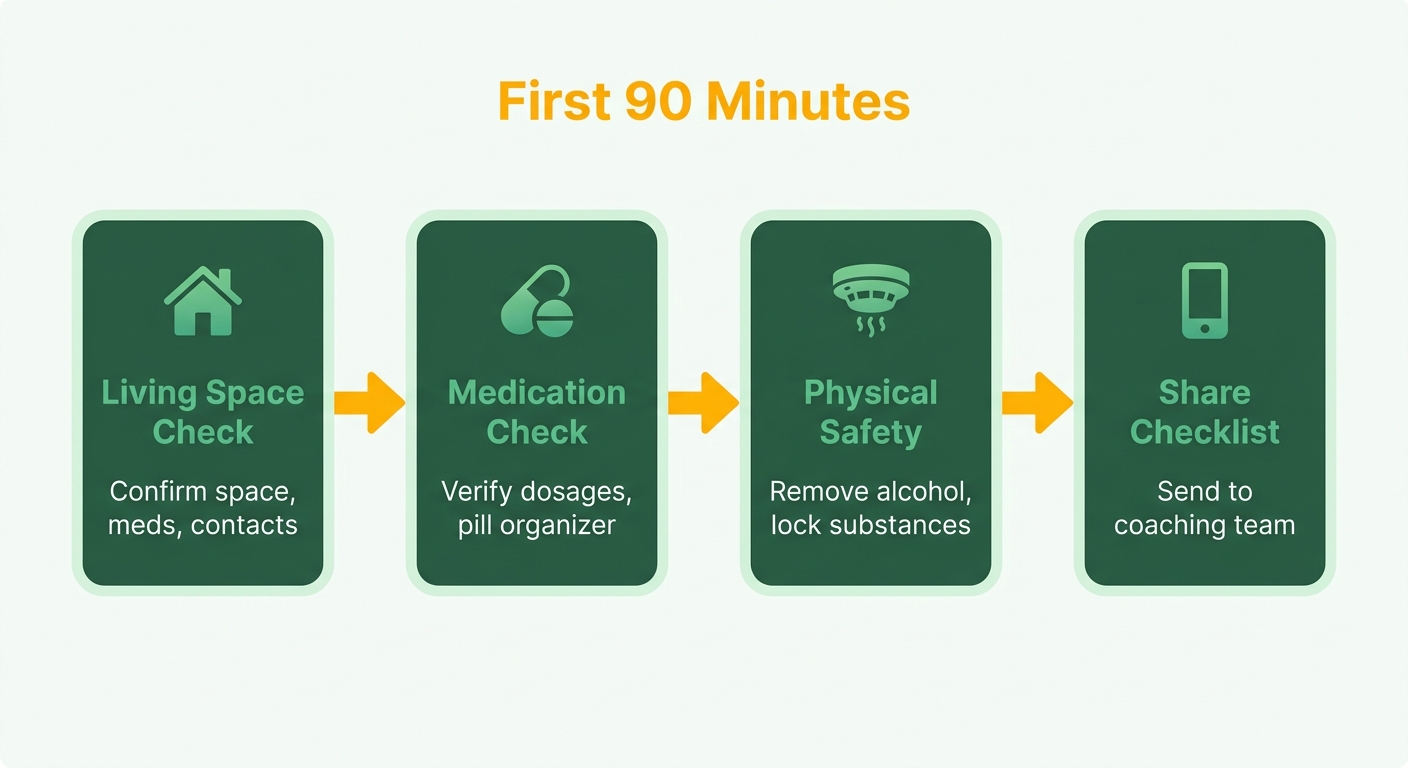
Coaches often coordinate communication so that safety becomes a shared habit.
What a coach‑led routine might look like in the first part of the day
A typical morning window functions as a micro‑routine. A consistent wake‑time helps regulate the sleep‑wake cycle, while immediate physical anchors can aid focus.
- Wake at a consistent time. Start with a glass of water and a brief breathing exercise (a few minutes).
- Medication and health check. Log any meds, note side effects, and confirm intake.
- Protein‑rich breakfast. Options such as an omelet or Greek yogurt are often suggested to help stabilize blood sugar.
Templates are adapted to kitchen layout, work schedule, and family meals so the routine feels natural rather than forced. Flexible timing is usually allowed to accommodate weekend variations.
Tracking and adjusting the plan
Many programs use a simple habit tracker that logs wake time, meals, medication, and a brief mindfulness rating. The coach reviews the tracker nightly and may suggest micro‑adjustments. Some research indicates that forming a new automatic behavior can take several weeks, so plans often aim for short‑term wins while keeping a longer‑term view.
- Daily log: Tick boxes for each core activity; add a brief note on mood or cravings.
- Weekly sync: A short video call where the coach and a family member discuss trends and tweak timing.
- Progress dashboard: Visual charts show streaks; missing a day may trigger a “reset reminder” rather than a failure label.
By the end of day three, many clients report improvements in sleep patterns, medication routines, and a sense of accountability that includes themselves, their coach, and home support. This early stability can provide momentum for the next phase.
Day 6‑7: Building a Support Network and Planning Aftercare
The focus shifts from day‑to‑day rhythm to integrating people into that rhythm. Coaches help turn friends, family, and peer‑support contacts into a coordinated safety net that mirrors the routine established during the first five days.
A support network works best when each member knows how and when to check in. Coaches often assist clients in outlining a simple check‑in plan and capturing expectations in a shared note, turning accountability into a shared habit rather than a solo burden.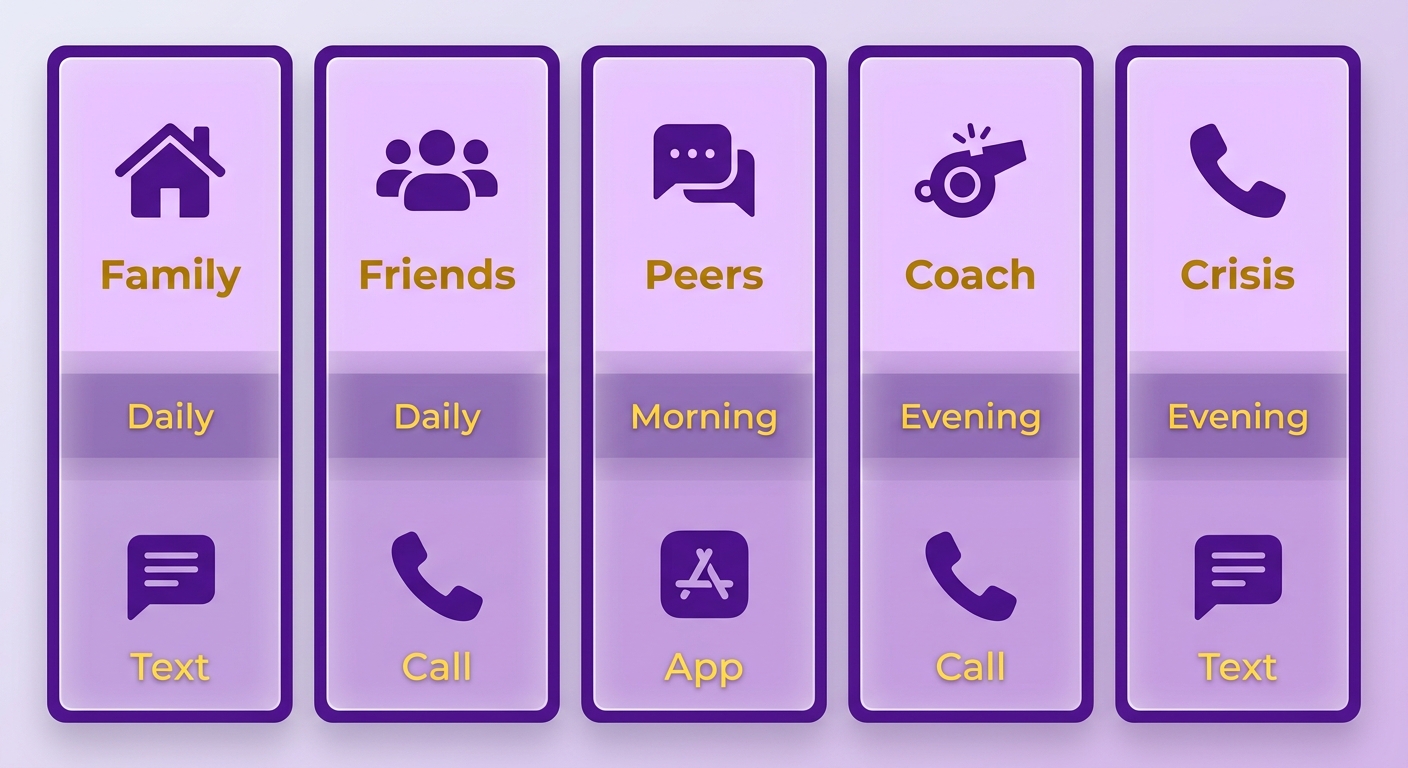
Mapping your support network
The process typically begins by listing anyone who already offers support—whether a roommate who locks the liquor cabinet, a sibling who sends a morning affirmation, or a peer‑support group leader who hosts weekly calls.
- Identify core allies: Ask each person what role they feel comfortable filling (daily text, weekend visit).
- Set communication cadence: Agree on a brief check‑in time that aligns with the existing routine (e.g., morning coffee, post‑work wind‑down).
- Document expectations: Coaches often capture the plan in a shared note so details are not lost.
What an aftercare plan may include
An aftercare plan usually blends habit‑building practice with real‑world contingencies. A typical framework layers three pillars onto the daily schedule:
- Goal tracking – short‑term milestones (e.g., attend a set number of meetings) feed into a centralized tracking tool that the team reviews.
- Trigger log – clients record cravings, time of day, and context; coaches look for patterns and suggest micro‑adjustments.
- Crisis protocol – a step‑by‑step script (call coach, reach out to a designated ally, use a grounding technique) that can be saved on a phone lock screen.
When to keep your network lean
If privacy is a concern—such as in a shared dorm or a workplace with strict confidentiality rules—adding many contacts can feel risky. In those situations, a lean network of one trusted adult and a peer‑support hotline may be more appropriate. Coaches help evaluate trade‑offs and keep the plan realistic for the client’s environment.
By the end of day seven, the goal is to have a living document that lists who will call, what will be tracked, and how to respond if a craving spikes. This document becomes the core of ongoing aftercare, and coaches stay in touch regularly to review and adjust the plan as needed.
Maintaining Momentum and Overcoming Challenges
Stress can be turned into a cue by pairing it with a concrete, time‑boxed action that the coaching team knows and can reinforce.
- Early‑day tracking: Log initial hydration and mood rating in the shared tracker to establish baseline stability.
- Scheduled stress checks: Set aside a few minutes each afternoon to connect with a peer or coach, aiming to preempt late‑day fatigue.
- Reflective closure: Share a brief end‑of‑day update with the team to review progress and prepare mentally for the next day.
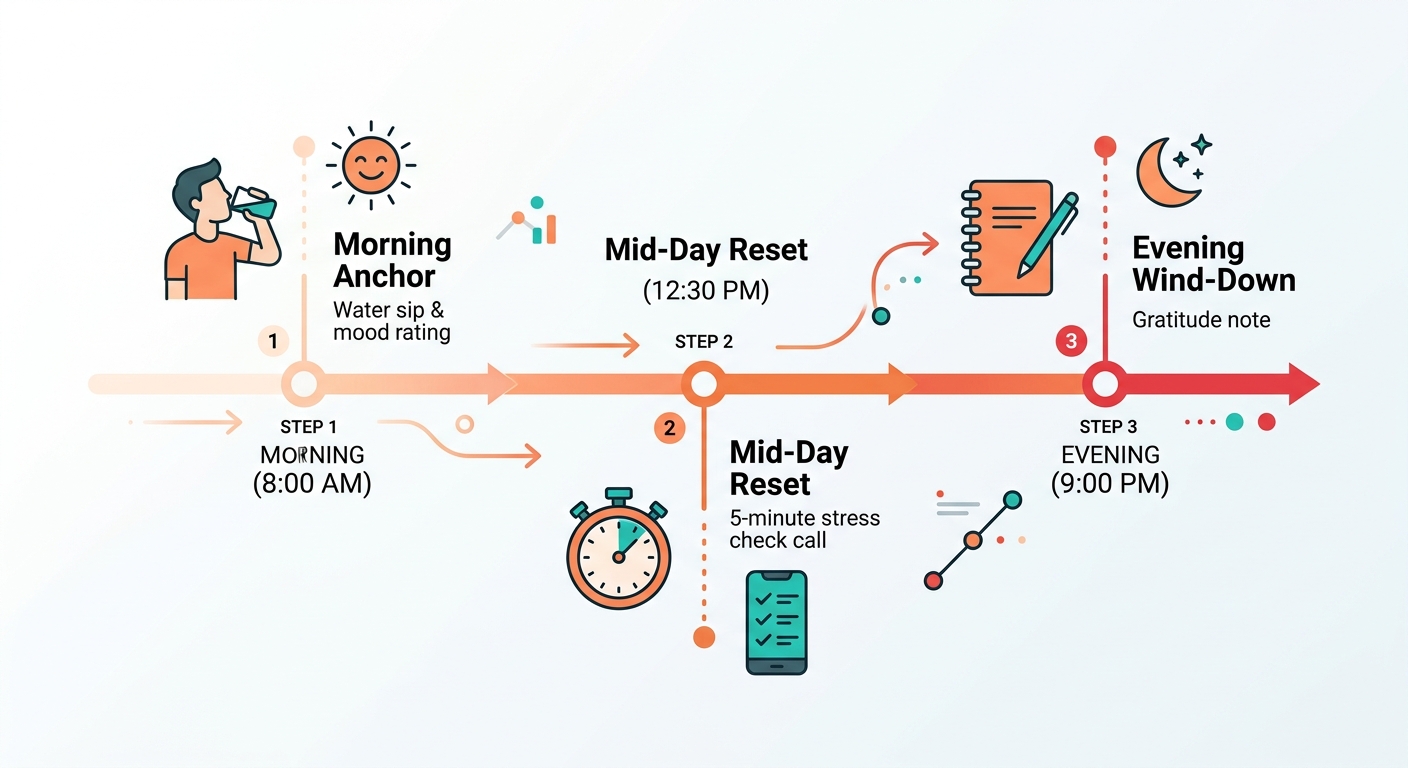
These anchors work because they embed stress management inside the routine rather than treating it as an extra task. If a client experiences overwhelming anxiety that a brief check‑in does not calm, the recommendation is often to skip the self‑managed step and contact a crisis line—self‑help alone may not be sufficient in that scenario.
Growth mindset and setbacks
Adopting a growth mindset can help reframe setbacks as data points rather than failures. Some observations suggest that many people need several weeks of consistent practice before a new behavior feels automatic. Programs often encourage clients to celebrate early wins while planning for fine‑tuning over the following weeks. Missing a day is viewed as a signal to recalibrate the plan with the coaching team rather than as a break in the chain.
- Reflect, don’t regret: After a missed check‑in, note what disrupted the cue and discuss alternatives with the team.
- Iterate the routine: Adjust wake time or meal timing if work shifts change, keeping the core structure flexible.
- Document learning: Use a shared journal where each “reset” is logged, turning slips into concrete improvement steps.
Team‑based check‑ins for accountability
A coordinated check‑in system spreads accountability across several trusted people, so no single person bears the entire load.
Coaches often establish a centralized communication plan that outlines the specific roles of the coach, family members, and peer‑support leaders. This collaborative framework helps everyone understand their responsibilities, creating a transparent safety net that allows the team to monitor progress and intervene proactively.
- Daily brief: A quick text from the primary coach confirming the morning anchor.
- Mid‑week sync: A short video call with a family ally to review nutrition and mood logs.
- Weekend review: A group message thread where peers share one win and one challenge, reinforcing community.
When the team notices a pattern of missed contacts, they may adjust the schedule rather than waiting for a relapse. If a client’s environment lacks reliable internet or a stable phone line, low‑tech options—such as a paper checklist reviewed during in‑person visits—can keep the accountability framework functional.
Establish early‑day anchors, treat setbacks as learning, and distribute check‑ins across a coordinated team. By weaving these practices into a personalized routine, momentum can be maintained long after the first week ends.
References
[1] Daily Routines in Recovery - Ashley Addiction Treatment - https://www.ashleytreatment.org/rehab-blog/the-importance-of-a-daily-routine/
[2] How to Rebuild Your Daily Routine After Residential Rehab - https://annandalebh.com/how-to-rebuild-daily-routine-after-residential-rehab/
[3] Building a Healthy Daily Routine After Rehab: Where to Start - https://destiny-rc.com/building-a-healthy-daily-routine-after-rehab/
[4] How Building a Daily Routine Adds Much‑Needed Structure in... - https://www.spectrumhealthsystems.org/how-building-a-daily-routine-adds-much-needed-structure-in-addiction-recovery/
Frequently Asked Questions
1. How can I adapt the daily routine if I work night shifts?
Adjusting a routine for night‑shift workers typically involves keeping the same wake‑up and bedtime relative to the sleep window, then shifting the “morning anchor” to the first light‑exposure after a shift ends. Coaches can log the new times, embed hydration and mindfulness cues, and keep the support team synchronized.
2. What makes a habit‑tracker different from a simple checklist?
A habit‑tracker often captures contextual data such as daily mood trends and craving intensity alongside task completion. This additional information can give coaching teams insights needed to make proactive adjustments rather than merely verifying that tasks were done.
3. Is the “21‑day habit” claim accurate for recovery routines?
No. While popular culture suggests three weeks is enough, clinical observations indicate that establishing automaticity can take longer. Programs usually treat the initial weeks as an experimental trial phase, allowing adjustments without viewing setbacks as failures.
4. Can I rely on a single family member for accountability, or should I build a larger support network?
Relying on one trusted family member can work if that person can commit to daily check‑ins that align with the schedule; however, a broader network provides redundancy, so if one contact is unavailable the routine still receives reinforcement. Coaches help map both lean and expanded networks based on living situations.
5. What should I do if cravings surge during the first 90 minutes after leaving rehab?
If cravings intensify shortly after waking, pausing scheduled activities to perform a short grounding drill and then contacting the coach is a common recommendation. The team can then guide a coping exercise and adjust morning anchors to help prevent future spikes.
6. How does the program stay effective when I have limited internet access?
Programs often adapt tracking methods to offline alternatives, using physical logs and scheduled voice calls. This ensures the accountability structure remains active and progress is regularly reviewed without requiring a digital connection.