Why Willpower Alone Fails Most People Leaving Treatment
July 31, 2026
Why Willpower Alone Fails Most People Leaving Treatment
Key Takeaways
- Willpower is a limited mental resource that depletes with each effort, especially under stress.
- Early recovery demands constant decisions, unresolved trauma, and daily pressures.
- Environmental redesign, decision-delay tactics, and habit formation preserve self-control.
- Coaches provide daily check-ins and pre-planned responses, reducing decision-making.
- Scheduling high-stakes decisions early in the day uses peak mental energy.
- Structured strategies often build more confidence than resolve alone.
Why Willpower Alone Fails
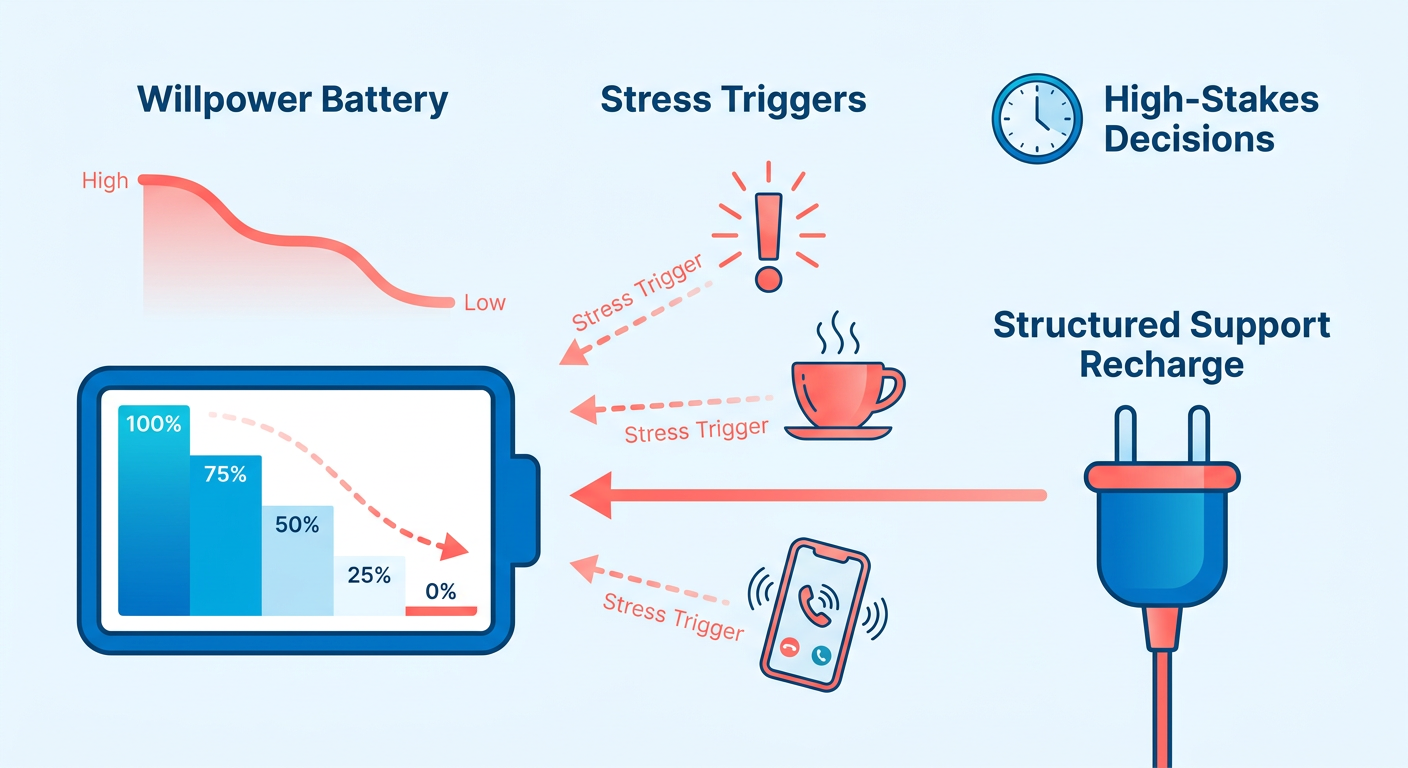
The prefrontal cortex handles self-control, and it fatigues fast when overloaded. In the weeks after discharge, clients face constant decisions, unfamiliar social dynamics, unresolved emotional stressors, and daily logistics. This ongoing cognitive demand drains mental reserves, leaving little capacity to resist sudden urges.
Relying only on internal determination ignores this physiological limit. External systems of support protect vulnerable cognitive resources. The brain isn't designed to white-knuckle through every trigger indefinitely.
What strategies replace raw willpower?
Rather than forcing yourself to resist temptation, successful recovery depends on modifying the environment, automating daily choices, and adding cognitive buffers.
Systematically restructuring your surroundings reduces the number of active decisions you make each day. This means organizing living spaces to eliminate visual cues and reserving emotionally complex tasks for periods of peak alertness. Learning to pause when an urge arises lets the nervous system settle and prevents automatic stress-driven reactions.
How does early-stage coaching fill the gap?
Professional guidance acts as an external regulatory system, helping clients navigate daily challenges before their own coping mechanisms become automatic.
Coaches work with clients to design personalized action plans for predictable obstacles. Responses to stress get decided in advance, not in the heat of the moment. This reduces decision fatigue and helps individuals navigate high-risk settings with a clear plan. Over time, structured guidance builds self-efficacy, shifting clients from reactive crisis management to proactive lifestyle design.
Adding a coaching layer right after discharge bridges the gap between motivation and sustainable action. It provides the environmental control and strategic planning needed to stay sober after rehab.
The Need for Structured Support
Structured support creates a predictable, low-trigger environment and supplies real-time accountability. When a loved one or coach monitors daily habits, the client no longer relies on internal monitoring alone. Participants who moved to a cue-free living space reported dramatically fewer urges, a finding echoed in interviews with people who achieved stable recovery (environmental control study).
What elements make support effective?
Consistency, personalization, and multi-level engagement matter. Daily check-ins pair with a customized "trigger audit" that maps high-risk situations. Family members can reinforce new routines. The same qualitative study shows that combining environmental modifications with active peer involvement significantly improves long-term adherence to recovery goals. Social accountability acts as a buffer against unexpected stressors (strategic planning research).
When might structured support be unnecessary?
In rare cases where a person has a completely stable home, no residual trauma, and an already strong coping toolbox, adding oversight layers can feel redundant. Most clients still find that at least one external touchpoint provides valuable reinforcement when stressors persist.
We organize support around three core actions:
- Daily accountability calls - a brief, scheduled conversation that flags emerging cravings and reinforces recovery goals.
- Environment audit - a systematic review of living spaces, digital media, and social circles to remove or neutralize cues.
- Family and peer integration - guided sessions that teach loved ones how to respond constructively, turning them into allies rather than inadvertent triggers.
When a client returns home to a household where alcohol is still present, an environment audit can negotiate a temporary no-alcohol zone, stock the fridge with alternatives, and set up nightly check-ins. Clients often report a noticeable reduction in craving intensity after these steps.
Reddit communities dedicated to early recovery echo this pattern: users share that "having a buddy who texts me every morning" or "my sister attending my therapy session" made the difference between a shaky first month and steady progress. These real-world voices reinforce what research tells us: external structures matter more than raw resolve.
If you lack a reliable support circle, build one before discharge. Otherwise, the risk of willpower fatigue increases sharply, and relapse becomes far more likely.
Behavioral Interventions for Recovery
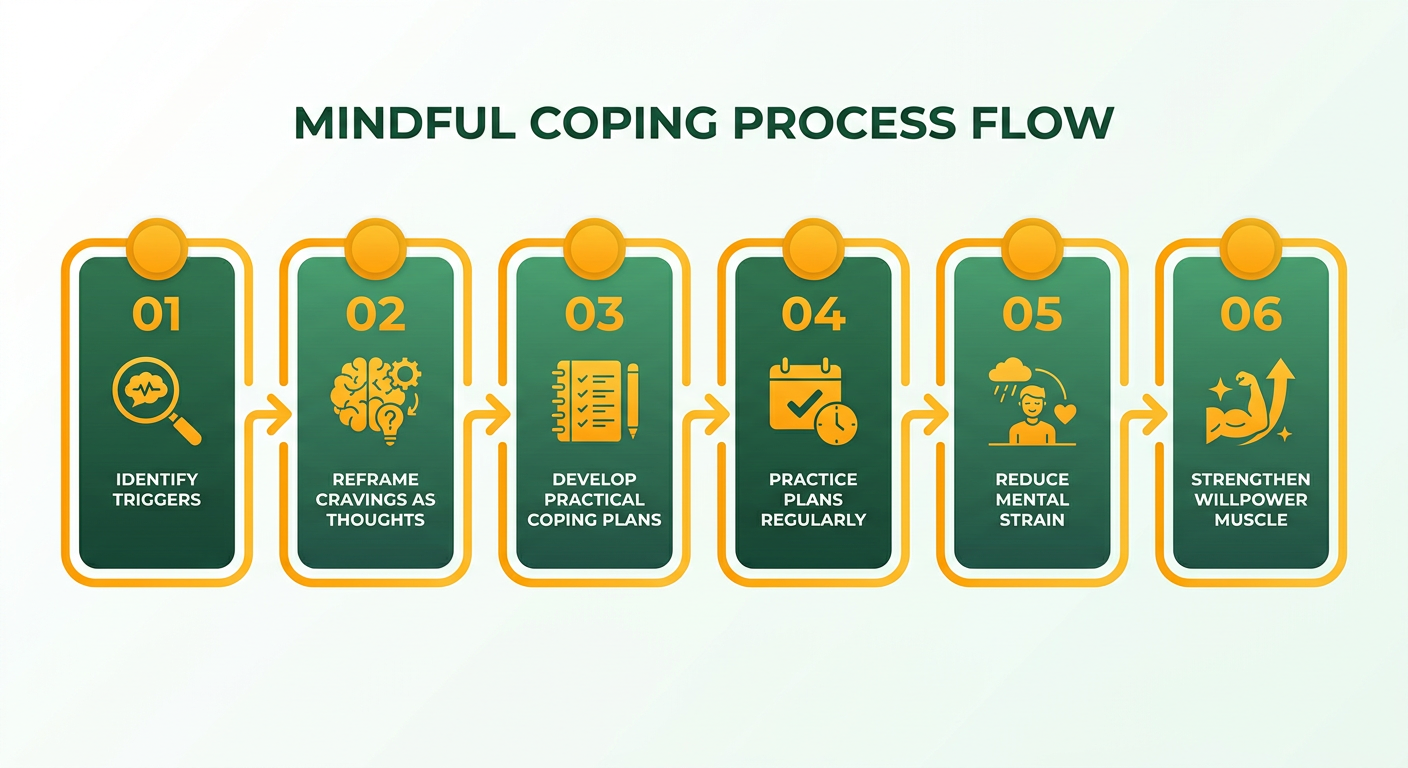
Coaching provides step-by-step guidance to reframe cravings as manageable thoughts, conserving self-control for the moments that truly matter.
Through cognitive reframing, clients learn to view urges as temporary physical sensations that will naturally peak and subside, not commands they must obey. This shift prevents the exhausting internal debate that drains mental energy. By establishing these cognitive habits, individuals build new neural pathways that make sobriety the default response to stress rather than an ongoing struggle.
How does supportive coaching help with early cravings?
Focused support calms the nervous system during stressful moments, reducing the surge that can overwhelm willpower.
Through regular check-ins, virtual or in-person, coaches teach grounding techniques and stress-reduction habits that keep anxiety in check. This ongoing guidance lowers cortisol spikes, supporting clearer thinking and better self-control when cravings arise.
How can routine building create a safety net?
Structured routines turn healthy actions into automatic habits, removing the need for conscious willpower each time.
Consistent daily patterns around meals, exercise, and recovery-related activities anchor these actions to reliable cues. The brain learns to reward sobriety automatically, providing a steady safety net during the transition back to everyday life.
"Recovery is dependent on developing strategies to preserve willpower by controlling the environment." – Anke Snoek, researcher
When personalized coaching, routine building, and supportive companionship work together, they create a comprehensive safety net that protects cognitive reserves during the transition phase. Clients can focus on long-term healing rather than constant crisis management.
Relapse Prevention and Planning
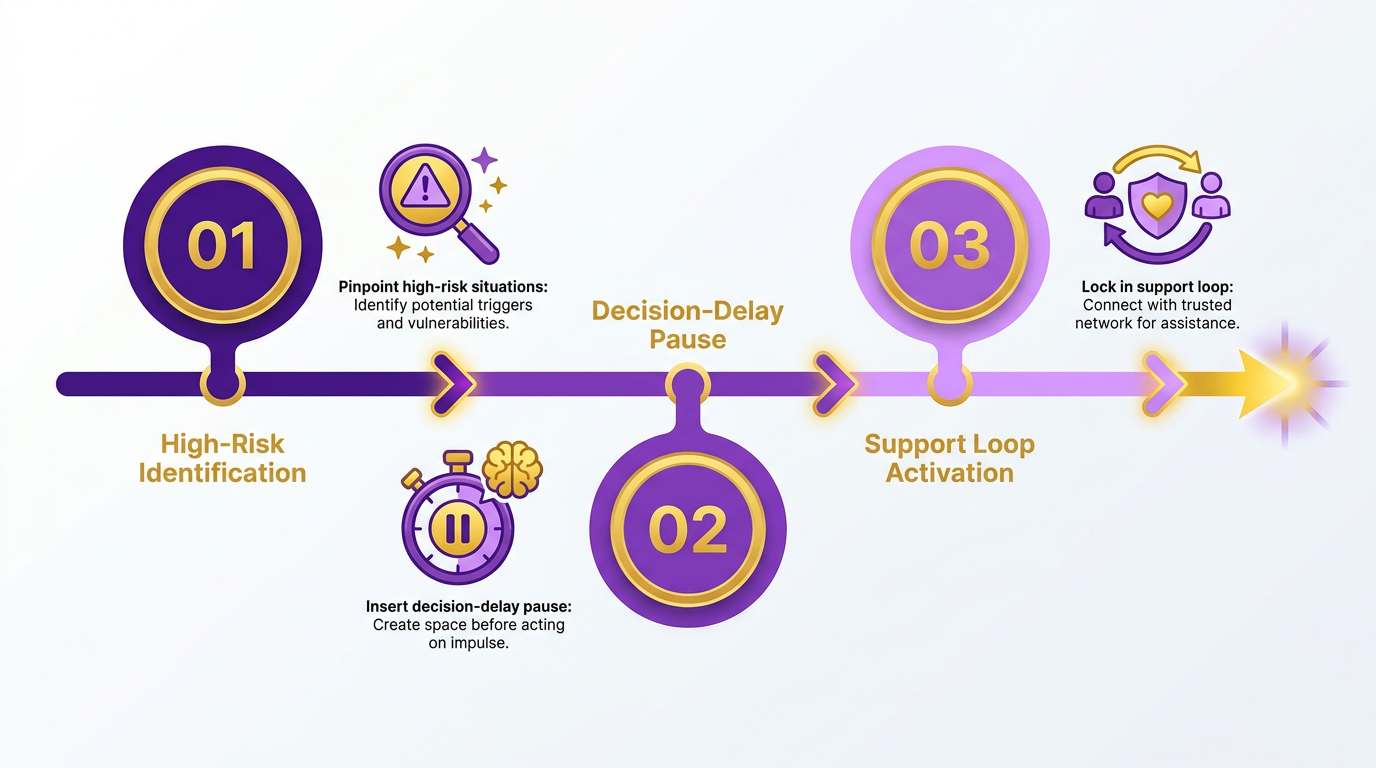
A relapse prevention plan isn't a document you write and forget. It's a step-by-step map that identifies your highest-risk moments, adds a decision-delay buffer, and locks in a support loop you can activate instantly.
- Pinpoint high-risk situations. During the initial assessment, identify people, places, and emotions that have historically sparked cravings.
- Insert a decision-delay pause. When a craving hits, practice a brief "pause-and-plan" before acting. This simple habit recharges the self-control muscle that otherwise depletes quickly (willpower-building study).
- Activate a safety network. A primary coach and trusted allies, family or sober peers, get alerted when you flag a high-risk cue. Real-time check-ins replace the internal monitoring that drains the prefrontal cortex under stress (why willpower fails in recovery).
- Schedule demanding tasks early. Complex decisions, managing finances, attending job interviews, and participating in therapy are best handled during morning hours when cognitive capacity peaks. Metabolic energy reserves are highest early in the day, reducing the likelihood of impulsive choices later on.
A client who moved into a sober-living home flagged "passing the local bar" as a trigger. By pausing, texting their coach, and taking a short walk, they avoided the impulse without feeling ashamed. That small win reinforced the habit.
How do we use ongoing monitoring to keep you on track?
Continuous feedback turns a static plan into a living guide that adapts as stressors shift.
Coaches check in regularly through brief video or text messages to note cravings or challenges. Those check-ins help spot patterns, such as spikes after night shifts, and adjust delay techniques or add extra supportive calls before the next high-risk window. Coaches also provide timely encouragement and coping skill reminders after you share a trigger.
When should medication-assisted treatment be considered?
In the first month, the focus is on behavioral scaffolding. Medication gets added only when a clinical assessment shows persistent physiological cravings that coaching alone cannot quell.
Evidence from broader addiction literature indicates that combining medication with behavioral support improves outcomes. But the immediate impact of medication during the initial 30-day transition is modest compared with gains from structured coaching and trigger management. A medication review after the first two weeks of coaching helps determine whether medication-assisted approaches, such as buprenorphine or naltrexone, will complement the relapse-prevention plan.
"The regular coach texts kept me from slipping when cravings hit at night." – client feedback
Personalized trigger identification, decision-delay pauses, real-time accountability, and selective medication review, woven into a single protocol, provide a strong defense against the willpower fatigue that threatens staying sober after rehab.
Real-World Examples and Success Stories
Effective aftercare blends scheduled check-ins, flexible support, and habit-building that turns abstract goals into repeatable actions.
In the initial transition phase, the focus is on stabilizing daily rhythms and identifying immediate environmental cues. As clients gain confidence, the coaching relationship shifts toward building long-term autonomy, helping them navigate complex social situations and celebrate milestones with their support network. This gradual progression prevents clients from feeling overwhelmed by sudden lifestyle changes and helps them build lasting self-reliance.
Illustrative scenarios
- A professional returning to a fast-paced office works with a coach to develop quick coping tools, including brief breathing exercises that can be used before meetings.
- A parent re-entering school-age childcare gets help with simple meal-planning strategies to reduce the stress of last-minute food decisions.
- A student returning to a busy college campus maps out alcohol-free study spaces, identifies supportive peer groups, and establishes a schedule that avoids high-risk weekend social triggers.
When might a standard aftercare approach fall short?
It falls short when the support schedule is static and does not adapt to the client's evolving stressors.
If a client's life changes, such as a new job shift, a family crisis, or an unexpected social event, rigid weekly calls leave gaps where cravings can surface. In those cases, on-demand crisis check-ins and a prompt trigger review after any major change become necessary. Skipping this flexible layer leaves clients without timely support during periods of rapid transition.
Keeping the aftercare plan fluid, personalized, and responsive supports clients as they move from just surviving to truly thriving in sobriety.
References
[1] Strong-willed but not successful: The importance of strategies in recovery ... - https://pmc.ncbi.nlm.nih.gov/articles/PMC5143362/
[2] Why Willpower Fails in Recovery - https://cfhh.ca/blog/why-willpower-fails-and-what-helps-instead/
[3] Beyond Willpower: Strategies for Reducing Failures of Self-Control - https://www.psychologicalscience.org/publications/beyond-willpower-strategies-for-reducing-failures-of-self-control.html
[4] Willpower building: a new element in relapse prevention - https://www.researchgate.net/publication/307787508_Willpower_building_a_new_element_in_relapse_prevention
Frequently Asked Questions
1. Can a smartphone app replace a personal coach for early‑recovery support?
Apps can supplement but not fully replace a personal coach because they lack real-time empathy and individualized planning. Most recovery apps offer reminders, habit tracking, and basic coping tips, yet a coach tailors decision-delay practice, monitors mental fatigue, and provides instant accountability that software alone cannot replicate.
2. How should I adapt the decision‑delay pause if I work rotating night shifts?
Adapt your routine by identifying your personal "morning," the period immediately after waking, regardless of the clock, to handle complex tasks. Use grounding exercises and text updates to your coach during your active hours, maintain strict sleep hygiene, and treat the start of each shift as a transition point requiring deliberate focus.
3. What steps can I take if I live with family members who still drink alcohol?
Establish clear boundaries regarding shared spaces, communicate your recovery needs directly to family members, and plan alternative activities outside the home during times when drinking is likely to occur. Working with a coach can help you practice these boundary-setting conversations and identify local sober-friendly spaces where you can retreat when needed.
4. Is medication‑assisted treatment ever appropriate within the first week of discharge?
Immediate medical intervention is typically determined by clinical assessments of withdrawal severity or a history of rapid relapse. While behavioral strategies are introduced immediately to build long-term habits, medical professionals evaluate the need for pharmacological support based on physiological markers and individual clinical history.
5. Can these willpower‑preserving strategies be applied to other compulsive behaviors like gambling or overeating?
The same framework works for gambling, overeating, and other compulsions. Remove triggers, such as blocking gambling websites or modifying food storage, establish mindful interruption cues, and enlist a coach or peer for real-time accountability. Habit-stacking with healthy alternatives reinforces the new pattern across different behaviors.
6. What if I cannot afford one‑on‑one coaching—are group sessions or peer support equally effective?
Group or peer support can provide accountability and shared strategies at lower cost, though they may miss the personalized trigger mapping a one-on-one coach offers. Combining a weekly group with occasional brief coach check-ins often yields comparable outcomes for budget-constrained clients, especially when the group follows a structured curriculum.