Where to Live After Rehab: Sober Housing vs. Going Home
August 26, 2026
Key Takeaways
- About one‑third of people entering treatment lack stable housing.
- Four realistic paths exist after rehab: sober living, home, halfway house, or home with sober coaching.
- Going home costs the least and provides immediate family contact.
- Sober living homes are resident‑funded, open‑ended, and usually prohibit children.
- Halfway houses are often government‑run, cheap, and may require a court order.
- Home plus sober coaching offers tiered support that fits around family life.
- For first‑time parents, the decision hinges on home stability and triggers.
The short version
After rehab you have four realistic places to land. The “best” option depends on how stable your home actually is. Sober living, going home directly, a halfway house, and coaching‑supported home life each trade cost against structure differently.
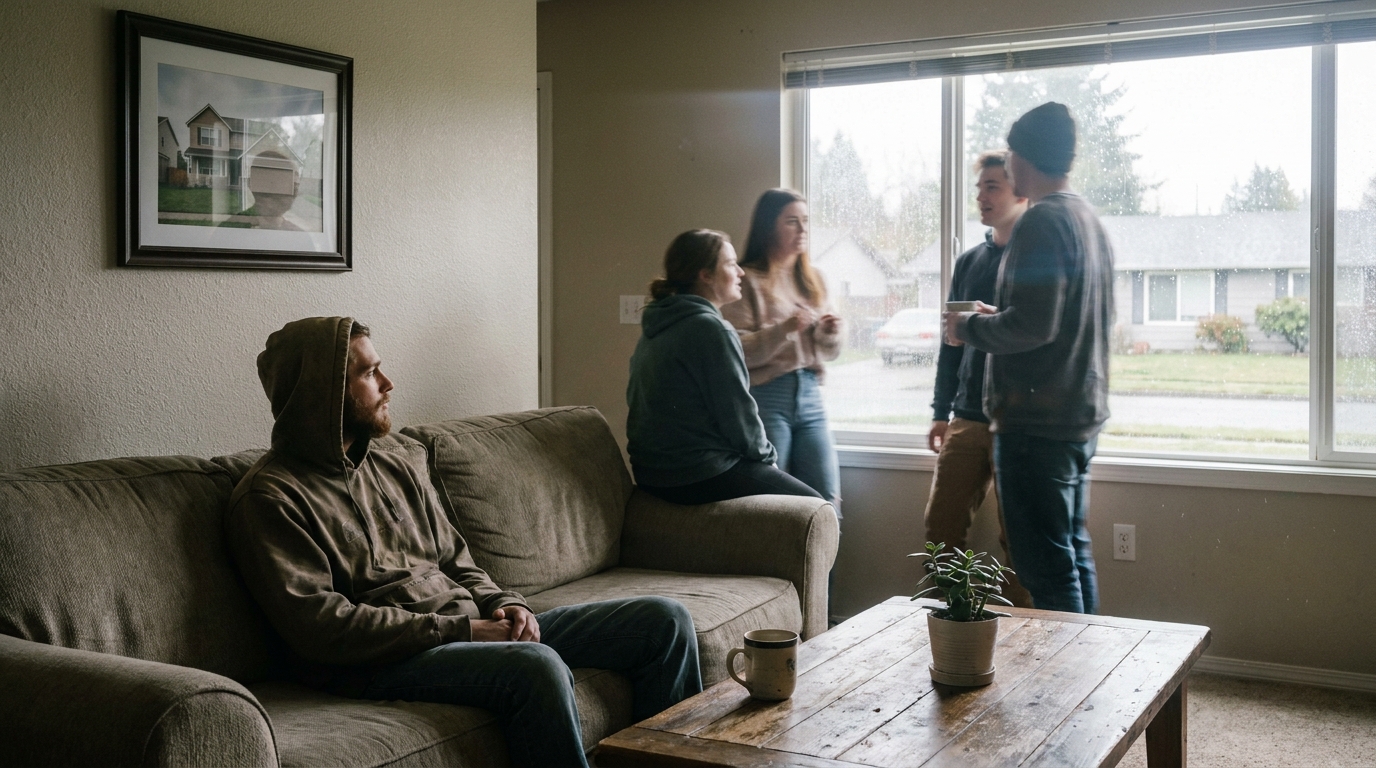
The stakes are higher than most guides admit. About one‑third of people entering treatment report unstable living situations. That number reframes everything. “Just go home” carries real risk if the home contains triggers.
The four paths, side by side
| Option | Cost | Structure | Parenting Fit | Best For |
|---|---|---|---|---|
| Sober living home | Resident‑funded, no fixed endpoint | Weekly meetings, curfews, rules | Limited; most houses cannot host children | Parent whose home isn’t yet stable |
| Going home directly | Lowest (no added cost) | None beyond self‑created habits | Full family access from day one | Parent with a supportive, trigger‑free home |
| Halfway house | Often government‑run, low/no cost | Strict; may need a court order | Poor; institutional setting | People tied to the justice system |
| Home + sober coaching | Tiered by contact level | Custom, tapers as you steady | Strong; support wraps around family life | Parent who wants structure without leaving home |
The difference between sober living and halfway houses matters here. Sober living is voluntary and flexible. Halfway houses are often government‑run and can require a court order, which rules them out for most first‑time parents choosing freely.
Does the data favor any one path?
Sober living residents report higher sustained sobriety than people who go straight home after rehab, per Columbus Recovery Center. Recovery residences also show better employment and lower substance use up to 18 months later.
The benefit isn’t automatic. The Sober Living Network study of 330 California residents found outcomes depend on the house itself, not the “sober” label on the door. Houses tied to larger organizations and treatment programs did best.
Research splits on the driver. One analysis says peer support and 12‑step involvement create gains. The Recovery Answers review says treatment affiliation separates good houses from mediocre ones.
Both factors matter. Peer support works in freestanding houses. Treatment linkage adds a boost. Choose a sober living home linked to a program, not a random rooming house with a “sober” sign.
Which fits a first‑time parent?
The key question is simple: does your child live with you? Most sober homes cannot house young children. This forces a split between recovery structure and parental presence.
That is why the home‑plus‑coaching model exists. Coaching keeps you under your own roof with your child while providing the structure a house would normally impose. Support scales up during school pickups or rough weeks, then eases off as you steady. If your home is safe but you feel unready, coaching bridges the gap a facility schedule can’t.
Skip “go home directly” if your home carries active triggers. Motivation to stay sober for your child is real, but it rarely overpowers a destructive environment. In that case, start with a program‑affiliated sober home, then transition back gradually.
Why the address matters more than you'd think
Where you live after rehab shapes brain recovery more than most expect. For a first‑time parent, returning to a familiar space can trigger old patterns before coping skills activate. The research on sober living houses shows physical distance from old cues helps reward pathways settle, softening cravings.
Evaluate the return home clinically, not sentimentally. The family home isn’t automatically safe. Look for safety, stability, and whether household members understand early‑recovery demands.
When each option is the right fit
| Option | Best for | Structure | Key trade‑off |
|---|---|---|---|
| Coaching‑supported home (MADE) | Stable home, young child needing parent present | Customized coaching, virtual or in‑person | Requires a home low on triggers |
| Sober living | High‑trigger home, flexible custody timeline | Curfews, screenings, peer community | Time away from the child |
| Halfway house | Court‑linked or referral cases | Strict rules, often mandated | May require a court order |
| Direct to home | Genuinely stable, low‑risk household | Self‑directed | No built‑in accountability |
Sober living is a privately run, voluntary residence built around peer community and routine. Residents share chores, attend house meetings, and hold each other accountable. It is a cooperative setup by design.
How long should you really plan to stay?
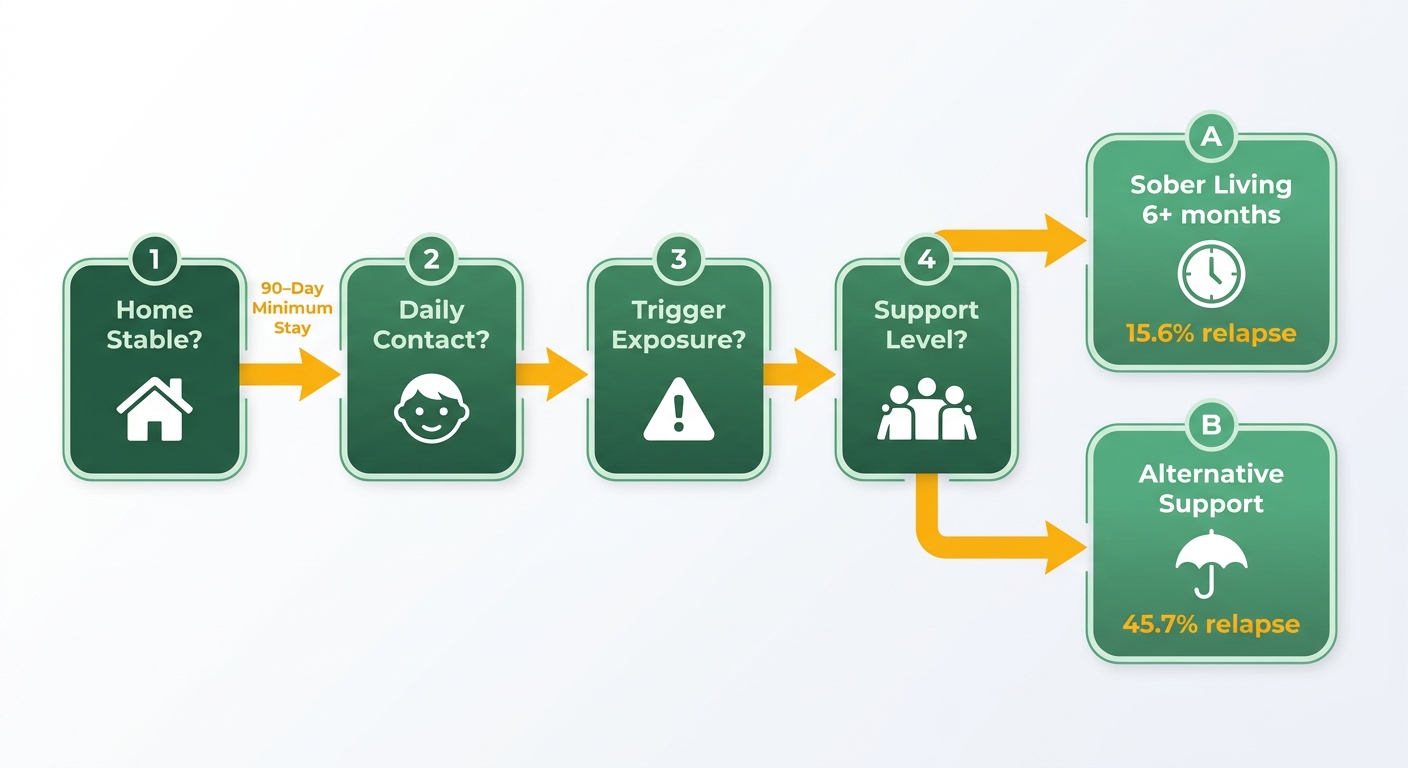
Plan around six months, not just 90 days. Hazelden Betty Ford recommends a minimum 90‑day stay to reinforce new habits. Benefits begin at 90 days but peak later. Residents who stay six months or more show significantly better outcomes. Oxford House data reports a 15.6 % relapse rate for long‑term residents versus 45.7 % for shorter stays.
Treat the 90‑day mark as a milestone, not a finish line. Build the child‑reintegration timeline around six months for a gradual transition. A coaching program during that window sets sustainable routines and adjusts support as the parent grows into the dual role.
Does the type of home matter more than just being sober?
Yes. Internal dynamics carry the weight. A study of the CSTL model found sober houses produce abstinence gains driven by peer support and 12‑step involvement, even without formal clinical ties. The social environment acts as a therapeutic agent, letting residents practice real‑world coping in a safe space.
When choosing a residence, prioritize an active peer community. Formal clinical connections add valuable resources, but daily mutual accountability sustains change. For a returning parent, a home with a live, supportive culture is essential.
Feature Comparison
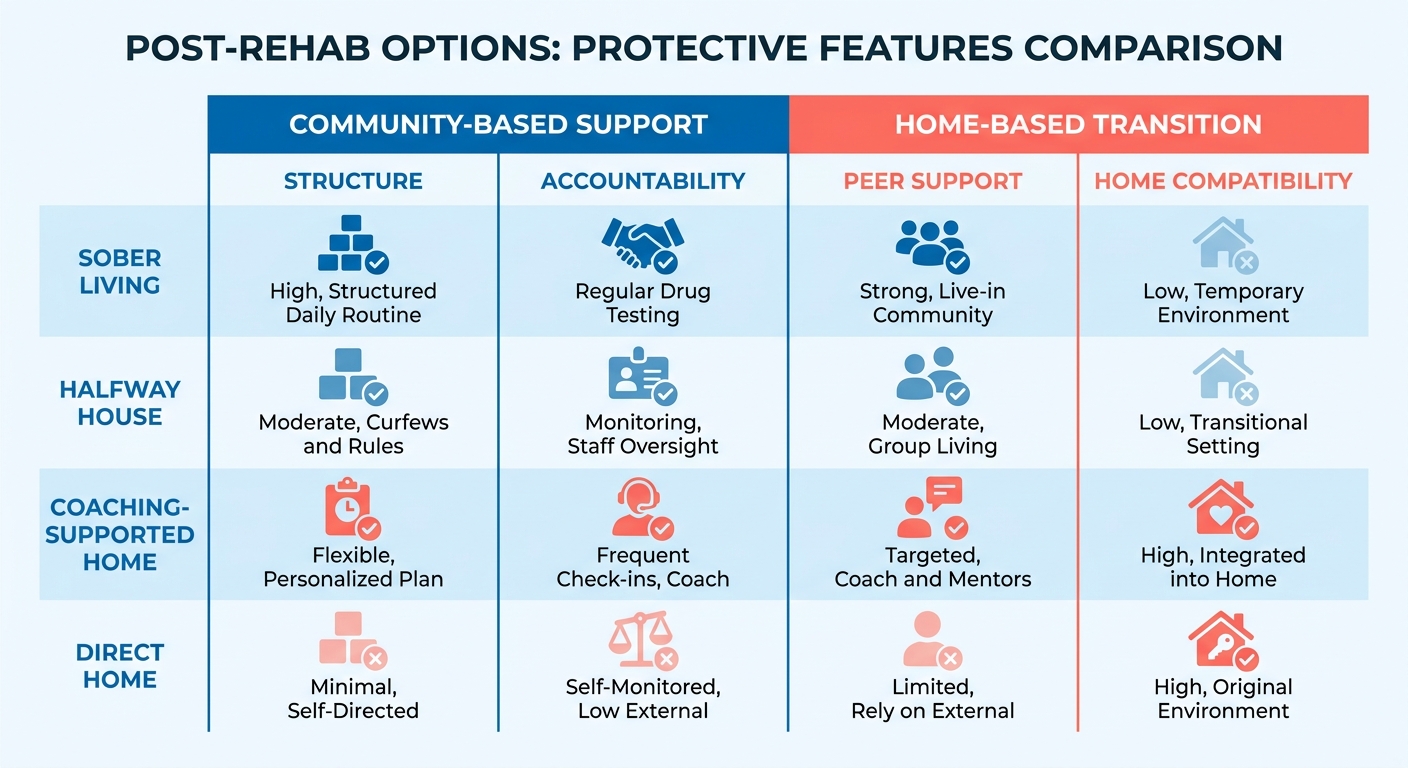
The features that protect a returning parent are structure, accountability, peer support, and the ability to stay in your own home. Cost or curfew rules matter less. When structure and accountability align, parenting and recovery reinforce each other. Removing either weakens both.
Which features matter most for a parent?
Structure sets the daily rhythm. Accountability catches slips early. Peer support carries you when motivation dips. The National Alliance for Recovery Residences (NARR) sorts homes into four levels, from peer‑run Level 1 to Level 4 with credentialed clinical services. Knowing a home’s level helps parents match intensity to need.
| Feature | Going Home | Sober Living | Halfway House | Coaching‑Supported Home |
|---|---|---|---|---|
| Daily structure | Self‑created | High | High | High, in your own home |
| Voluntary entry | Yes | Yes | Often court‑ordered | Yes |
| Live with your child | Yes | No | No | Yes |
| Support in your home | No | No | No | Yes |
| Peer accountability | None by default | Strong | Strong | Coach‑led |
Does sober housing work on its own?
Freestanding sober housing provides a solid foundation, but it works best when paired with outside clinical care. Peer‑led environments build personal accountability. Adding professional therapy reaches deeper psychological issues.
Peer support and clinical care complement each other. The house offers a daily safety net; therapy provides specialized coping strategies.
Layering matters. Housing combined with concurrent outpatient care can double length of stay in treatment. Longer engagement strongly predicts success through the first year.
Where does coaching fit for first‑time parents?
Coaching‑supported home life keeps a parent present for daily milestones while a structured recovery plan runs underneath. It is built for people returning to a safe, supportive home who still need professional guidance.
If the home has active stressors or unsupportive relationships, a residential setting is the safer first move. A highly structured residence lets someone build a foundation before taking on household duties.
Otherwise, coaching builds the recovery scaffold directly into the existing routine. Customized sessions set daily habits that lower stress, using virtual or in‑person formats that fit around parenting.
The trade‑offs, honestly
Every housing option after rehab offers something and costs something. For a first‑time parent, the trade is rarely money. It’s about how much structure you can bring home without losing daily contact with your child.

The best choice adds structure where the home is weakest, without separating the parent from the child more than necessary. That constraint shapes every pro and con below.
What are the real trade‑offs?
| Factor | Sober Living | Halfway House | Going Home | Coaching‑Supported Home |
|---|---|---|---|---|
| Parenting presence | Low | Low | High | High |
| Built‑in structure | High | High | Low | Medium‑High |
| Speed to set up | Medium | Slow | Immediate | Fast |
| Cost | Moderate | Low | Low | Moderate |
Sober living homes provide strong structure and peer accountability but require living away from family. You miss daily routines like bedtime and morning scramble.
Halfway houses are highly structured and institutional. They often serve people transitioning from the justice system, prioritizing compliance over family integration.
Going home directly offers maximum parenting time but minimal built‑in structure. It works only when the home is stable.
Does treatment affiliation actually change outcomes?
Yes. Formal clinical connections give a real advantage. Structured environments with professional oversight help residents secure stable employment and achieve long‑term recovery milestones, creating a fuller safety net during transition.
You don’t have to choose between peer support and clinical oversight. A parent can combine peer meetings with a professional coach to replicate the accountability an affiliated residence would provide.
How should you plan for a slip?
Plan to intensify support at home, not to move the family. Research shows recovery capital drops sharply when people lapse and leave their environment, while those who slip but stay continue improving.
A slip should trigger an immediate bump in local accountability and professional contact hours, not an abrupt change in residence. Keep the household stable while you address the setback with targeted coping strategies and an adjusted routine.
If the home itself is a primary source of stress, safety elsewhere comes first. A dedicated sober home provides distance to build resilience before returning to domestic life.
Use Cases and Ideal Users
The right option depends less on diagnosis and more on home environment. The deciding factor is whether the house you return to helps you stay sober or works against you. A young child raises the stakes on both sides: you need daily contact and a stable environment.
A common pitfall is rushing the transition. Early milestones feel encouraging, but long‑term stability requires sustained effort. Research on residence effects shows extended engagement in structured environments dramatically improves outcomes, supporting a phased return rather than a sprint.
Who should choose sober living over going home?
Choose structured sober housing when the home lacks stability. A chaotic household or one with active substance use threatens recovery. A secure, substance‑free residence protects both parent and child.
Sober living acts as a bridge: it offers routine, peer encouragement, and space to rebuild habits before taking on full‑time parenting.
Which parent fits which path?
| Your Situation | Best Fit | Why |
|---|---|---|
| Home has active triggers, co‑parent available | Sober living (6 + months) | Peer support drives abstinence gains |
| Home is stable, you are primary caregiver | Coaching‑supported home (MADE) | Keeps child contact intact while adding structure |
| Court involvement, mandated housing | Halfway house | Meets legal requirements |
| Stable home, strong outside support | Direct return + outpatient care | Lowest cost, highest parenting time |
When evaluating sober living options, look for homes with established professional networks. Those connections ensure smooth handoffs to outpatient services if clinical needs arise.
When does coaching‑supported home life win?
Coaching‑supported home life wins when the home is safe but the parent needs structured accountability. The coach helps set daily routines, runs regular check‑ins, and addresses early‑recovery challenges in real time.
Flexibility is the advantage: support levels adjust as progress is made. Instead of an abrupt end to structured support, the parent receives a gradual step‑down, keeping recovery and family responsibilities balanced.
What I'd actually tell a parent
For a first‑time parent, choose the option that adds structure where your home is weakest, without pulling you out of your child’s house. Cost and curfews are secondary; environment and daily contact matter most.
If your home presents real recovery obstacles, going straight back is high‑risk. Determination rarely overcomes a chaotic living situation alone. Assess the home objectively and avoid treating it as the automatic default.
Which option fits which parent?
| Your Situation | Best Fit | Why |
|---|---|---|
| Stable home, needs light accountability | Coaching‑supported home (MADE) | Keeps you present with your child while adding daily structure |
| Home has active triggers, needs full separation | Sober living | Certified NARR levels match service intensity to need |
| Court‑involved, referral required | Halfway house | Government‑run, often tied to a court order |
| Ready to reintegrate in phases | Sober living, then coaching at home | No fixed endpoint lets you extend stay to match child’s pace |
Coaching wins exactly one category: the stable‑home parent who mostly needs accountability and wants to stay in the house. That is the honest fit, not every scenario.
Does sober housing actually work better?
Yes. Peer accountability, shared goals, and structured daily expectations reinforce the behavioral changes started in treatment. Those mechanisms make recovery stick.
Some studies emphasize peer‑led mutual aid; others highlight formal organizational standards. Both contribute. A strong peer culture provides daily motivation, while professional standards keep the residence safe and consistent.
For a parent, the quality of the support network matters most. Whether you choose a residential home or return directly to family life, clear accountability and regular peer contact are essential.
My bottom‑line recommendation
Start with the highest structure your family can absorb, then step down as your child adjusts. Sober living’s no‑fixed‑endpoint model enables a phased return that matches a child’s adjustment pace, not a program’s calendar.
The self‑pay model can create an affordability barrier for low‑resource parents. If cost blocks sober living, coaching at home imports structure and accountability into the house you already have. A customized coaching program built around your daily routine, with support that tapers as independence grows, can carry a stable‑home parent who cannot leave their child.
Pick the option that protects both sobriety and presence. For most first‑time parents with a workable home, structured coaching at home is optimal. When the home itself is the trigger, choose separation first, then return in stages.
References
[1] What Did We Learn from Our Study on Sober Living Houses ... - https://pmc.ncbi.nlm.nih.gov/articles/PMC3057870/
[2] Transitioning From Rehab to Home | NDFW in California - https://www.newdirectionsforwomen.org/transitioning-from-rehab-to-home/
[3] How Sober Living Improves Recovery Success - https://willingway.com/how-sober-living-improves-recovery-success/
[4] What is Sober Living - Things to Know - https://www.hazeldenbettyford.org/articles/what-is-sober-living
[5] Sober Living vs. Halfway House: What's the Difference? - https://www.columbusrecoverycenter.com/treatment-programs/aftercare/sober-living-vs-halfway-house/
[6] Where to Live After Rehab Ends: Rehab Aftercare Options - https://americanaddictioncenters.org/rehab-guide/aftercare/where-to-live-after-rehab
[7] (PDF) What Did We Learn from Our Study on Sober Living ... - https://www.researchgate.net/publication/49821781_What_Did_We_Learn_from_Our_Study_on_Sober_Living_Houses_and_Where_Do_We_Go_from_Here
[8] Outcomes Among Sober Living House Residents Who Relapse - https://pubmed.ncbi.nlm.nih.gov/37326458/
[9] Recovery housing for substance use disorder - PubMed - https://pubmed.ncbi.nlm.nih.gov/40115346/
[10] An examination of main and interactive effects of substance ... - https://pubmed.ncbi.nlm.nih.gov/17567399/
[11] The Role of Recovery Housing During Outpatient Substance ... - https://pmc.ncbi.nlm.nih.gov/articles/PMC8748296/
[12] Recovery housing for substance use disorder - PMC - NIH - https://pmc.ncbi.nlm.nih.gov/articles/PMC11922849/
[13] Recovery residences: Which housing characteristics ... - https://www.recoveryanswers.org/research-post/recovery-resident-positive-outcomes/
[14] Sober Living Houses for Alcohol and Drug Dependence - PMC - https://pmc.ncbi.nlm.nih.gov/articles/PMC2860009/
Frequently Asked Questions
1. Can my partner stay in a sober living home with me while I recover?
Sober living homes are designed for individual recovery and usually cannot house children or partners. Home‑based coaching provides structure without separating the family.
2. What happens if I relapse while living at home instead of a facility?
Increase professional support and accountability immediately. Adjust daily routines to address triggers while keeping the family stable.
3. How do I know if my home has too many triggers to return to directly?
Active substance use by household members, high conflict, or unclear boundaries indicate a risky environment. Consider temporary sober housing to build stability first.
4. Does a cheaper halfway house make sense for a first‑time parent?
Halfway houses are affordable but institutional, with strict curfews that limit parenting. They are generally less practical for parents who can choose their living arrangement.
5. What NARR level of sober living should I look for?
Higher NARR levels integrate professional staff and therapeutic activities, offering a stronger safety net for early‑recovery parents.
6. Is a 90‑day stay long enough before going home to my child?
A three‑month minimum is common, but outcomes improve significantly with longer stays. Extending to six months deepens new habits and reduces relapse risk.
7. Does coaching‑supported home life replace outpatient treatment?
Coaching complements outpatient therapy. Together they provide daily accountability and deeper therapeutic support.