What SAMHSA's Family Toolkit Leaves Out About the First 72 Hours
August 22, 2026

Key Takeaways
- The first 72 hours home can establish or disrupt new routines.
- Discharge planning should begin on day one of treatment.
- A Queensland study of 1,056 people found 12.9% had a drug- or alcohol-related event within 30 days.
- The same study found risks of 30.8% at six months and 56.8% within two years.
- Researchers identified the first month after treatment as the highest-risk period.
- Families without a 72-hour plan face greater risks after discharge.
- A dedicated aftercare coach can help carry out the plan.
Why the First 72 Hours Matter
Moving from a clinical schedule to home can feel jarring. Many families feel isolated and overwhelmed during this period. Peer-led community networks can provide emotional support. This is why support groups for families of drug addicts can matter during the first few days.
Emotional support, however, does not replace logistics. Clinical recommendations must become part of daily life. That work should begin when someone returns home, according to Partnership to End Addiction. A coach can help turn discharge paperwork into practical steps.
How dangerous is this window, really?
Risk does not end after the first weekend. The Queensland data-linkage study found that post-treatment risk continues for months. Vigilance should continue beyond the first week.
The Caron team describes the first 72 hours as a time to build habits. Those habits support the higher-risk weeks that follow. A stable routine can help prevent an early lapse from escalating.
The substance also matters. In the study, alcohol as the primary drug carried a higher risk (aHR 1.58) than other substances. If your loved one's drug of choice was alcohol, legality does not make it safer.
What should families check in the first three days?
This is where “make a routine” becomes a safety protocol. Forty-two percent of post-discharge presentations were ED visits, and 42% were hospital admissions. Planning an escalation path is practical preparation.
- Sweep the home for triggers before your loved one arrives. Remove alcohol, drugs, and paraphernalia. Access can shape the first night.
- Build an hour-by-hour schedule for the first three days. Caron recommends this because structure leaves less room for cravings.
- Pre-map your ED and hospital by name and address. Rehearse who drives, who calls, and what to say.
- Confirm naloxone is in the house and everyone knows where it is and how to use it.
- Sign the HIPAA release and consent paperwork so you can speak with providers before a crisis.
When do you call EMS versus a coach?
Match the response to the situation. Call 911/EMS for slowed or stopped breathing, unresponsiveness, or pinpoint pupils. Call a crisis line for acute distress or suicidal talk without a medical emergency. Call your recovery coach for cravings, routine problems, or a difficult day requiring accountability.
A coach can support daily check-ins, nutrition, sleep, and structure. This accountability helps families follow the plan they created.
Medication: Where the First 72 Hours Make or Break
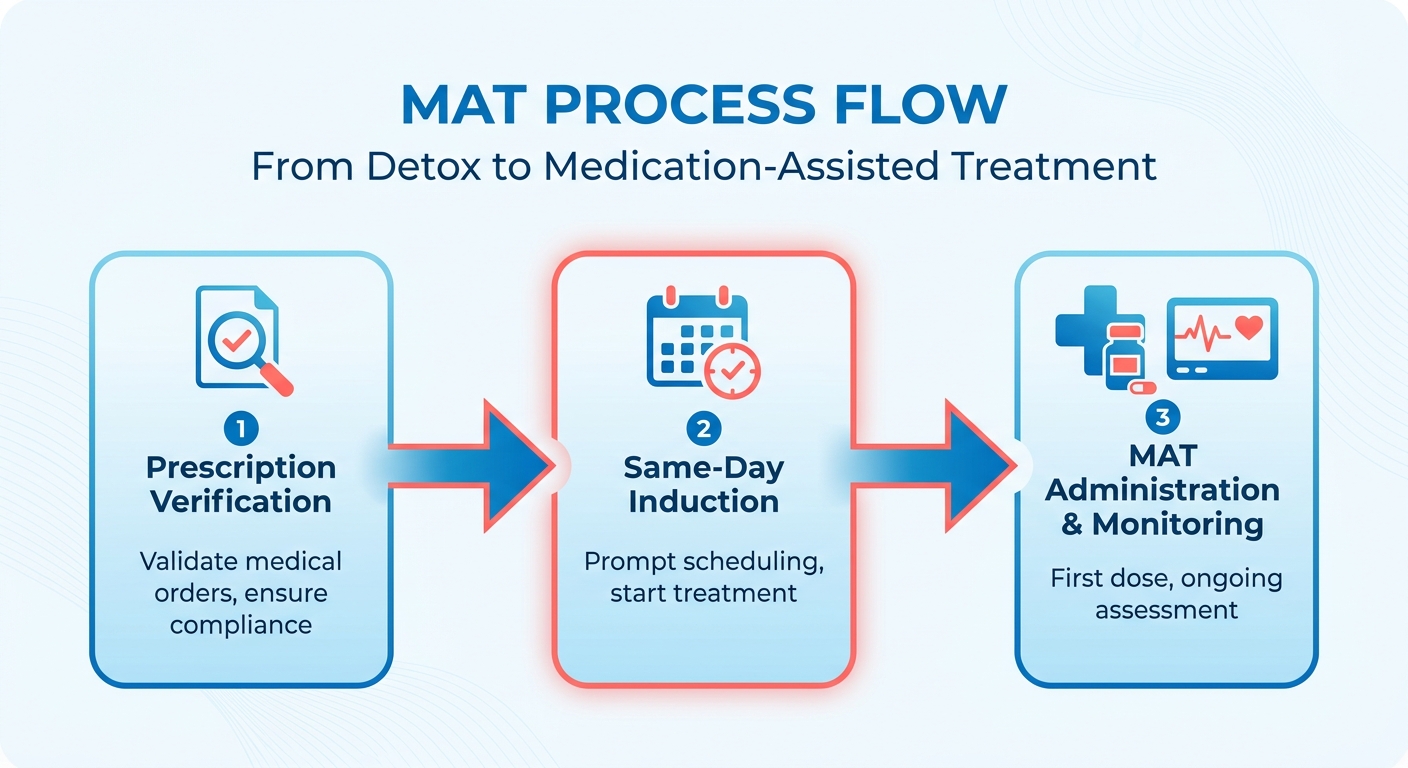
Medication management is critical during these three days. The SAMHSA toolkit provides limited guidance on this issue. If someone leaves detox with a medication-assisted treatment (MAT) plan, doses must begin on schedule within a day. Peer support provides emotional comfort. Clinical coordination serves a different purpose.
At MADE, we help families plan detox and treatment pathways. We also coordinate with nursing support as clients return to daily life. The checklist below provides structure for the first few days.
What to confirm about MAT before discharge
Confirm that the prescription exists, the pharmacy can fill it, and the first dose is scheduled within 24 hours. Delays in these areas are common during early aftercare.
- Verify the exact MAT prescription (buprenorphine, naltrexone, or methadone), including the dose and frequency, before your loved one leaves the facility.
- Call the pharmacy ahead to confirm the medication is in stock. Buprenorphine and methadone can face supply and authorization hurdles that delay filling by days.
- Book a “first-dose” appointment within 24 hours. Telehealth induction is an option when in-person appointments are full. It can prevent a treatment gap.
How to monitor the first few days
Track side effects, withdrawal, and adherence on one sheet. A daily COWS score provides a specific number to report instead of a vague “he seems off.”
- Log a daily COWS score to identify under-dosing or breakthrough withdrawal early.
- Note side effects and every dose taken on one shared sheet visible to the household.
- Set up a medication lockbox and fixed dosing schedule. This limits access to an open bottle and makes adherence visible.
- Keep naloxone on hand and know the missed-dose protocol. If a dose is skipped, call the prescriber before doubling up. Treat any overdose sign as an emergency.
A late or incorrect starting dose can contribute to first-week relapse. Consistent structure and care are important during this period.
Handing Off to Ongoing Aftercare
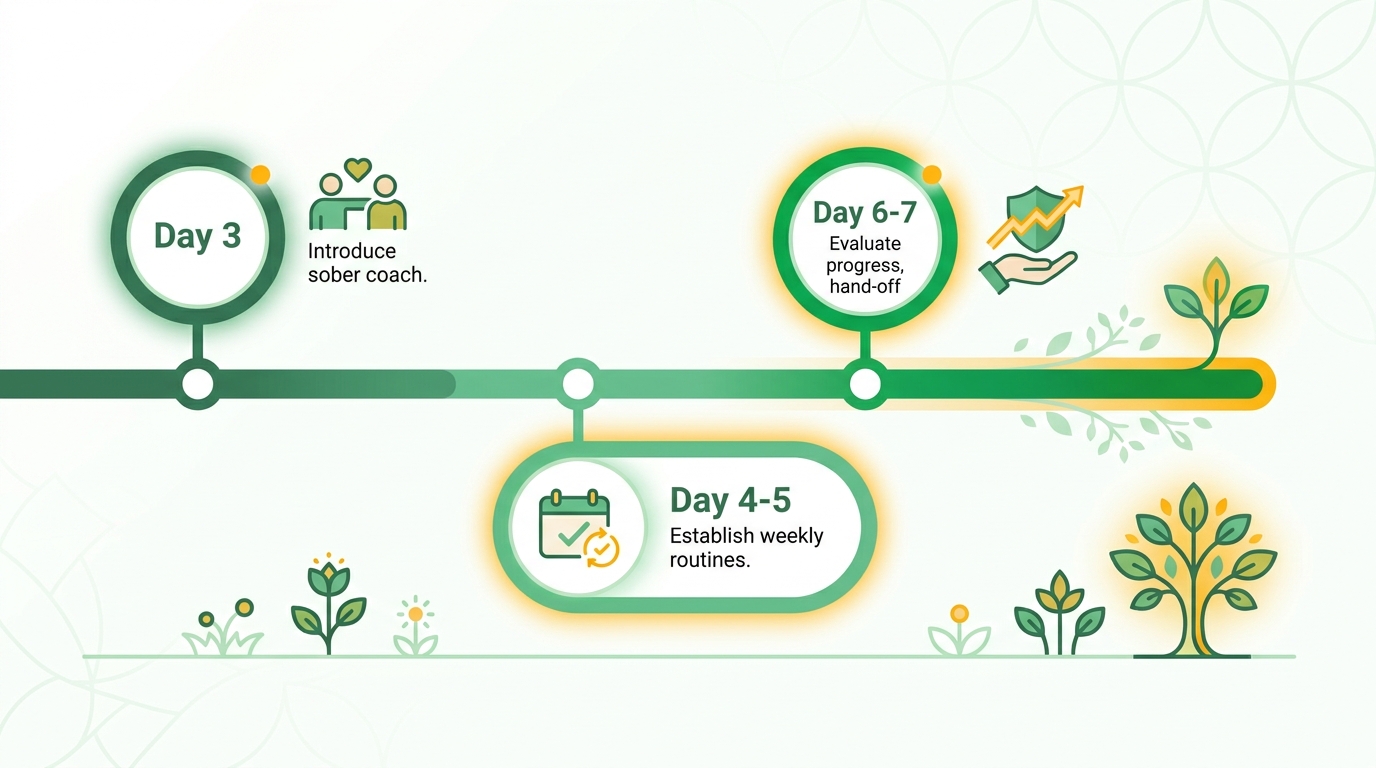
After 72 hours, the focus shifts from crisis management to ongoing support. The best time to bring in a dedicated sober coach is Day 3 through Day 7. The routine is still fresh, but old habits may return. Community networks are one part of a wider support system.
Peer meetings and family groups provide emotional support. They may not set weekly goals, verify a nutrition plan, or coordinate an outpatient counselor's schedule. A coach can handle those tasks. MADE focuses on transitional coaching that connects treatment with independence through accountability, guidance, and real human connection. This steady structure can help prevent long-term hospitalization.
How to hand off to a sober coach
Begin the transition before the crisis window ends. This ensures that someone remains responsible for support. The coach can turn the discharge plan into weekly, measurable goals.
- Establish the coaching relationship early so support begins before the family's energy fades.
- Set three weekly goals covering treatment, routine, and one social or family task.
- Match the support level to the person. Our programs are tailored to each individual. Support may come from one dedicated coach or a coordinated team, depending on the level of care needed. As clients find their rhythm, support tapers to encourage independence.
The routine that supports recovery
Structure can be more reliable than willpower during the first weeks. Regular meals, sleep, and movement provide predictable anchors.
- Plan three real meals a day. Blood-sugar crashes can mimic and amplify cravings.
- Protect sleep hygiene. Fixed wake and sleep times help reset the body after detox.
- Add daily physical activity, even a short walk, to steady mood and reduce restlessness.
- Connect the family to a support group for its own resilience, not only the client's.
How to track and close out the hand-off
Write the plan down. A simple “graduation” document records completed 72-hour tasks. It also lists next-step services, names, and dates.
- Log progress in one shared place, such as a phone checklist, shared sheet, or client portal.
- Draft the graduation document naming the coach, counselor, and follow-up dates.
- Confirm the first outpatient appointment before closing out the file.
The Complete 72-Hour Checklist, in One Place
The sections above can be combined into one checklist. Print it, place it on the fridge, and check each box as you go. It covers gaps that standard community resources may not address.
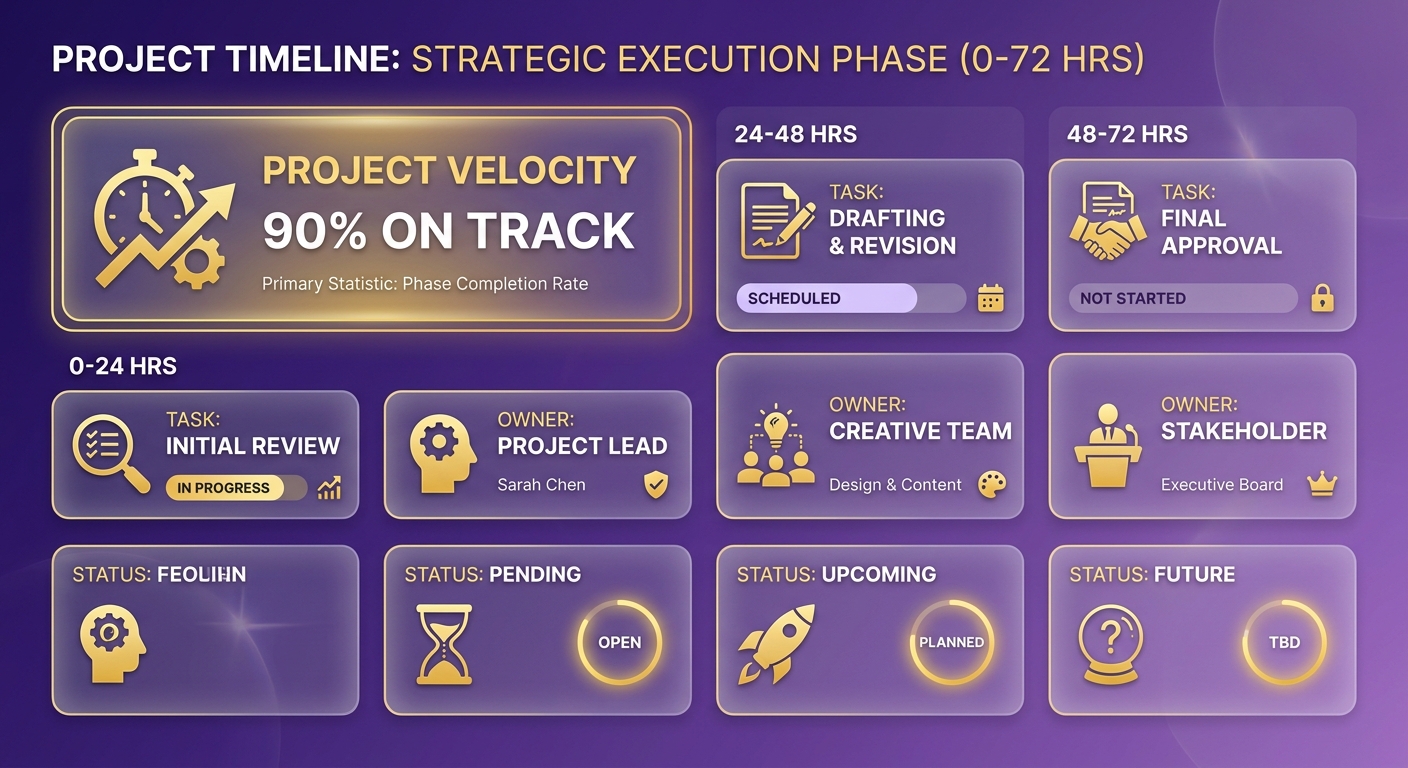
The checklist covers three windows: 0-24 hours, 24-48 hours, and 48-72 hours. Each item identifies who owns it. Work from top to bottom.
What goes on the 72-hour checklist?
Assign each item to a specific person, not “the family” generally.
Hours 0-24 (family + clinician):
- Finalize medication logistics at the local pharmacy to prevent a dosing gap.
- Secure naloxone in the home and show two people how to use it. For opioids, this is non-negotiable; for alcohol or stimulants, adjust to the relevant risks.
- Post the crisis number and know local EMS response times. National opioid-crisis response averages around 12 minutes, so home readiness matters during that gap.
Hours 24-48 (family + coach):
- Book the first outpatient counselor appointment. Add it to a calendar, not a to-do list.
- Set one daily routine anchor: a shared meal, walk, or check-in time.
- Split family recovery roles so one person does not carry everything. Our team explains this in the MADE blog.
Hours 48-72 (coach + family):
- Finalize the transition to your ongoing support specialist to maintain accountability.
- Run a quick self-audit: “Did we secure medication? Yes/No. Naloxone? Yes/No. Next appointment booked? Yes/No.”
- Confirm every family member can answer one question: “What is our next step?”
The goal is straightforward. By hour 72, every family should be able to state the next step. If you cannot, call for help.
Get your personalized 72-Hour Transition Plan. Start with an initial consultation with a MADE Recovery coach. We will build the checklist around your loved one's substance, medications, and household.
References
[1] How to Make a Discharge Plan When Your Child Leaves Addiction Treatment
Frequently Asked Questions
1. Does relapse risk actually drop after the first 72 hours pass?
Risk remains elevated after the initial transition. Data shows that post-treatment vulnerability persists for months. Return-to-use events are most concentrated during the first few weeks. The first three days are not a finish line. They establish structure for the longer high-risk period.
2. My loved one's drug of choice was alcohol, not opioids. Is the risk lower?
Alcohol carries a higher statistical risk of post-discharge events than many other substances. Because alcohol is legal and common, environmental triggers can be harder to avoid. A structured transition plan remains important for alcohol recovery.
3. Can a family support group replace a dedicated recovery coach?
Peer support groups offer community and shared experience. They may not provide individual case management. A recovery coach can manage schedules, coordinate with clinical providers, and provide direct accountability. This complements a support group's emotional support.
4. What's the difference between calling EMS, a crisis line, and a coach?
Emergency medical services are for life-threatening situations. These include physical overdose signs or loss of consciousness. Mental health crisis hotlines address acute psychological distress or self-harm risks. A recovery coach helps with cravings and schedule changes before they become a crisis.
5. What if the pharmacy can't fill the MAT prescription right away?
Contact the discharging facility's medical team immediately. Ask about alternative pharmacies or temporary bridging options. Virtual care providers may also expedite authorization and help prevent an interruption during the first day home.
6. Why sign HIPAA paperwork before a crisis instead of during one?
During a crisis, privacy laws may prevent doctors and therapists from sharing information with you. Signed releases allow you to coordinate with the treatment team during a relapse or medical emergency. They can also reduce administrative delays.
7. When should we bring in a sober coach for the ongoing hand-off?
The transition should occur during the latter half of the first week home. This allows the client to settle in briefly. It also establishes professional accountability before initial motivation begins to wane.