What a Sober Coach Actually Does in Your First Week Home
September 3, 2026
Key Takeaways
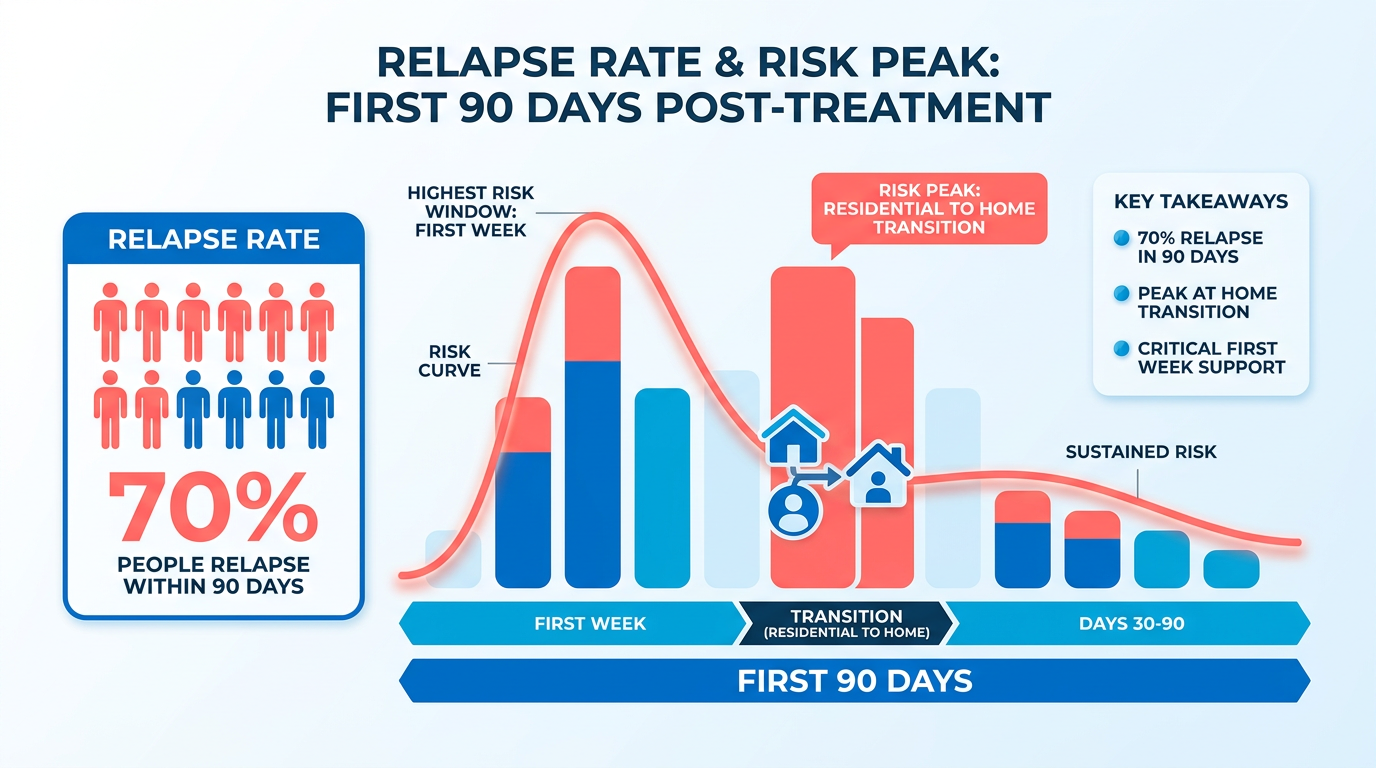
- Somewhere between 65% and 70% of people relapse within the first 90 days after treatment, and the risk peaks when residential structure falls away.
- Caron Treatment Centers reports a 95% recovery rate at 30 days when active support stays in place during early recovery.
- The seven days after coming home are the highest-risk stretch.
- A sober coach works as a real-world safety system, not therapy, during that first week home.
- Week one strips away the monitored structure and drops people back among old triggers and isolation.
- Good support tapers on purpose instead of ending cold, holding accountability as structure fades.
- A solid week-one plan fills the space between check-ins with routines that run on their own, so unsupervised days do not become openings for relapse.
Why the First Week Home Is the Part No One Prepares You For
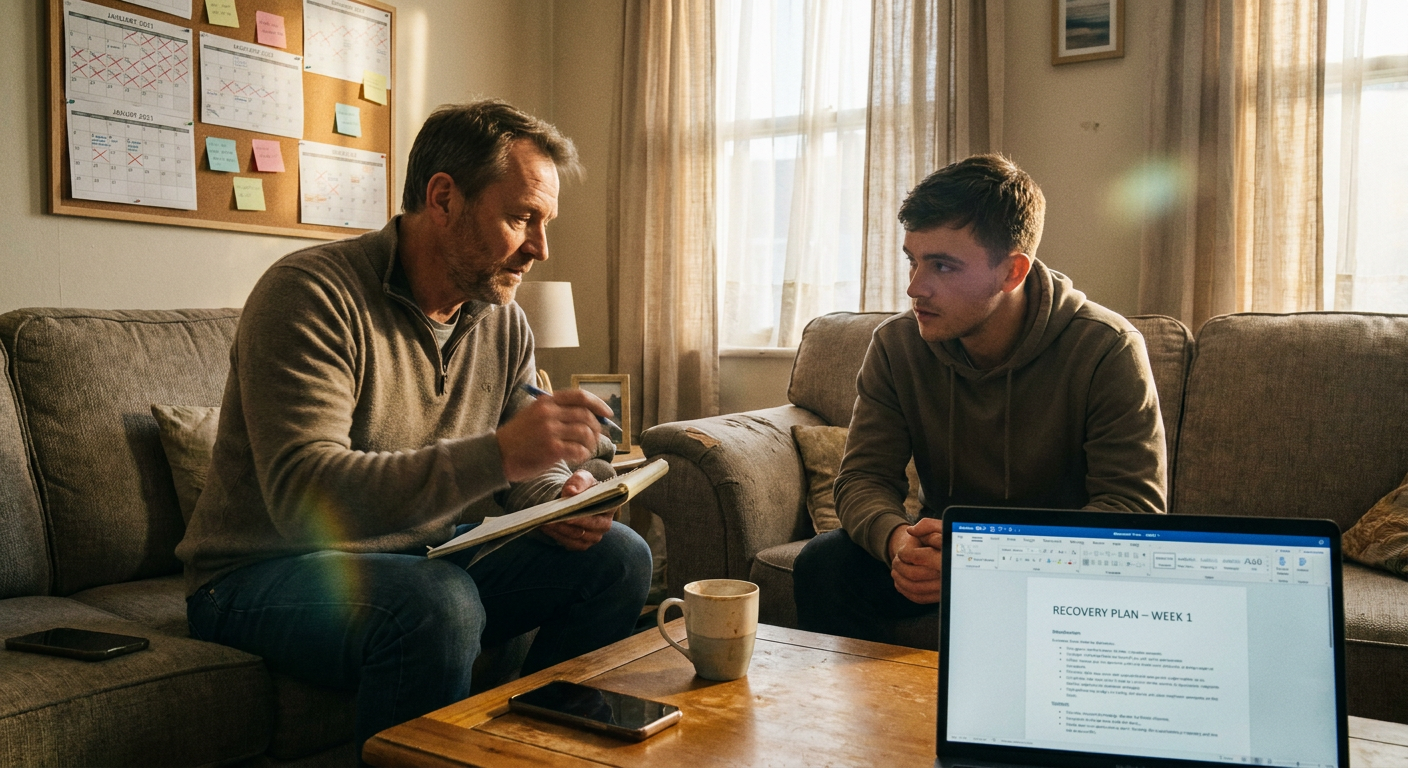
Coming home after treatment is a hard cut in scenery. One day you're inside a controlled clinical program, the next you're back in your kitchen. The gap between those worlds is where trouble starts. This is what sober coaching after rehab is for. Not therapy. A safety system for the days when nobody else is watching.
Structured treatment and independent living sit on opposite sides of a real gap. When active support stays in place during early recovery, people hold their progress far better. As that support naturally scales back, the pull toward old habits climbs again. Week one is not about the coach being everywhere at once. It is about building systems that hold in the hours between contacts.
Why the first week carries the most relapse risk
The first stretch is dangerous because it swaps a heavily monitored setting for familiar, unstructured ground. Walking back into your home means running into the old cues: a specific room, a few names in your phone, the late-afternoon hours that used to belong to using. And it leaves out the clinical oversight that had your back last week. Take away the fixed schedule, and isolation plus old habits fill the vacuum fast.
So early intervention is about bridging the gap between professional care and life on your own. Put a reliable framework in place from day one, and the unsupervised hours stop reading as openings for a setback. The point is to grow habits that keep you steady when you're the only one in the room.
- Map every high-risk time and place in your home before day two, so triggers get named instead of ambushing you.
- Lock in a fixed wake, meal, and sleep schedule to rebuild the structure detox gave you.
- Put your weekly coach contacts on the calendar, then plan for the days in between.
How a team-based coach front-loads your safety plan
A team model puts support where relapse risk actually lives instead of paying for a body in the room around the clock. And the cost spread here is wide. Peer sessions can run $30, sometimes free, while intensive services with 24/7 emergency support and transportation are premium and mostly out-of-pocket, since most insurance plans do not cover sober coaching.
Families rarely need to buy round-the-clock presence. What they need is a pod: a dedicated coach or coordinated team for scheduled check-ins, plus on-call backup for the 2 a.m. moment when a craving spikes. That's where the money should go.
For the family, the value is plain. An extra set of trained eyes takes the edge off being the only one watching. Healthy routines that cut stress and build resilience start in week one, and because support is coordinated across a team, relapse gets treated as something to plan around rather than a failure to face alone.
- Assign a primary coach for scheduled contacts, and name your on-call escalation path for emergencies.
- Concentrate spending on the highest-risk hours instead of paying for continuous coverage you will not use.
- Give one family member the "extra eyes" role with clear check-in language, not surveillance.
Day-by-Day: What Your Coach Actually Sets Up in Week One
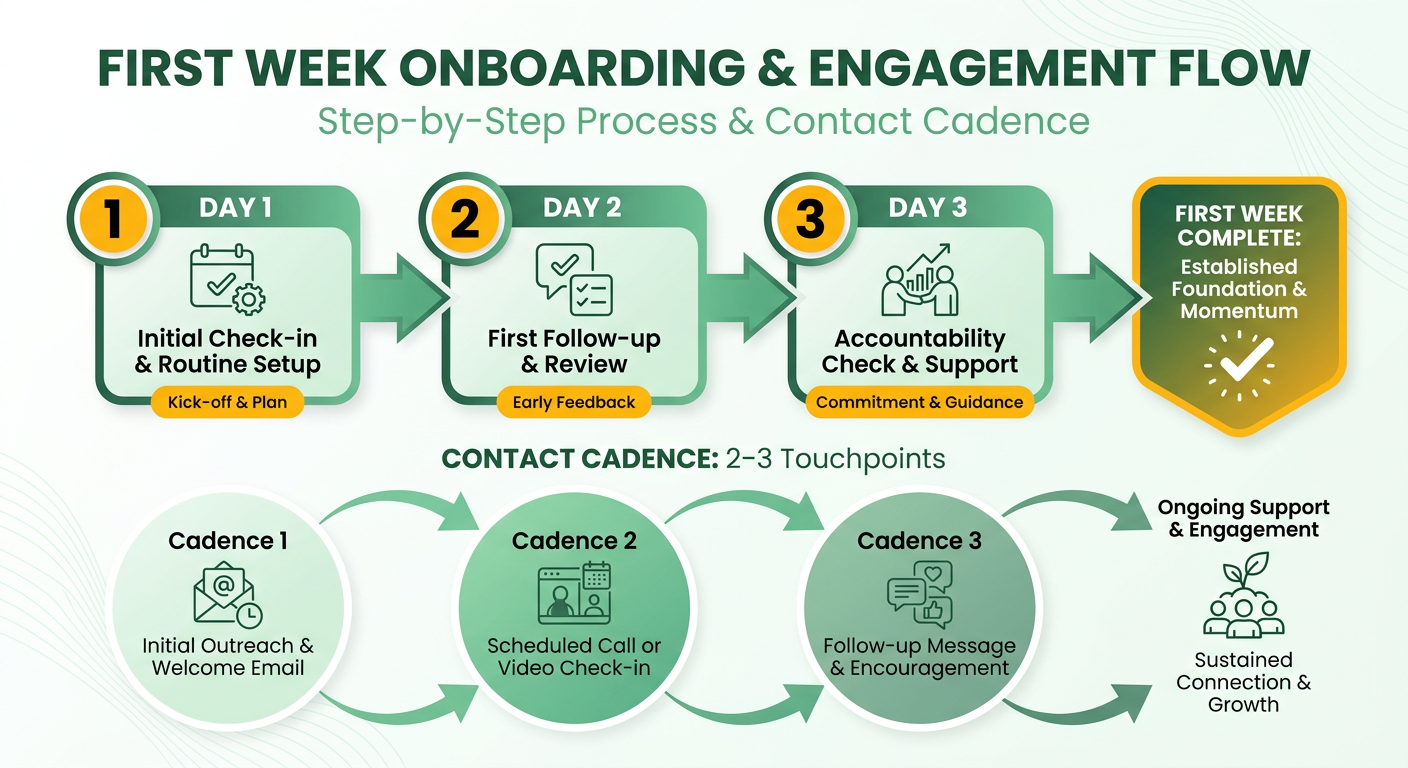
Every first-week plan we build starts from one fact: your coach can't be in the room 24/7, so week one is about installing systems that hold between check-ins. Most recovery coaches recommend only 2 to 3 contacts per week in the first month. That gap is exactly where relapse lives, which is why good sober coaching after rehab front-loads structure and accountability early, not weeks later.
The first week gets tailored to you, with the fundamentals layered in so structure and stability start taking hold from the outset.
The first few days: safety, routine, craving response
These early days set up safety, routine, and craving response. They are the layers that fail first when structure disappears, so we build them before anything social or nutritional.
- Day 1 – Home-base setup. We walk your living space with you and get you oriented to consistent, real-world support for the moments that matter most, so you're not facing high-risk hours alone. It's the kind of companionship intensive coaching models are built around.
- Day 2 – Routine foundations. We set a fixed wake-up time, plan three meals, add one short walk, and run your first virtual check-in. Empty time is a trigger; a skeleton schedule fills it.
- Day 3 – Craving toolkit. We map your personal triggers, write two or three coping scripts you can read aloud under pressure, and coordinate any short-term medication questions with your prescriber. Coaches don't diagnose or treat, so this step is liaison, not prescribing.
Days four through six: accountability, people, and fuel
Now the work shifts from crisis-proofing to daily maintenance. Your routine starts taking real shape.
- Day 4 – Accountability loop. We keep you accountable through steady check-ins and real human connection. Relapse gets treated as a learning signal, not a verdict, so honesty stays safe.
- Day 5 – Social connection plan. We list supportive people to reconnect with and script the boundaries you'll set with old contacts tied to using.
- Day 6 – Nutrition & energy. We build a grocery list, pick two simple balanced recipes, and start a hydration tracker. Steady blood sugar blunts craving intensity.
Day 7: measure what held, prep the taper
Day 7 is where we measure what held and adjust what did not. We review your progress, tighten the weak spots, and bring in reduced-frequency check-ins so support tapers on your terms, not by accident. That deliberate taper is our answer to the erosion of structure that follows treatment.
- Day 7 – Progress review and plan revision. We rebuild next week's schedule around what worked and set the new contact rhythm.
| Day | Primary Goal | Coach Action | Client Action | Difficulty (1-5) |
|---|---|---|---|---|
| 1 | Home-base setup | Orient space, establish companionship | Walk the space, list support contacts | 3 |
| 2 | Routine foundations | Set schedule, first check-in | Follow wake/meal times | 2 |
| 3 | Craving management | Map triggers, medication liaison | Write coping scripts | 4 |
| 4 | Accountability | Consistent check-ins | Report honestly | 2 |
| 5 | Social connection | Draft boundary scripts | Reach out to one ally | 3 |
| 6 | Nutrition & energy | Build grocery/recipe list | Shop, track hydration | 2 |
| 7 | Review & taper prep | Assess progress, adjust plan | Reflect, confirm new cadence | 3 |
Our coaching is built around real life, with fully customized packages that shift as your needs do. By tuning check-in frequency to your weekly progress, we keep the level of support matched to your growing independence.
The Tools We Reach for in Week One
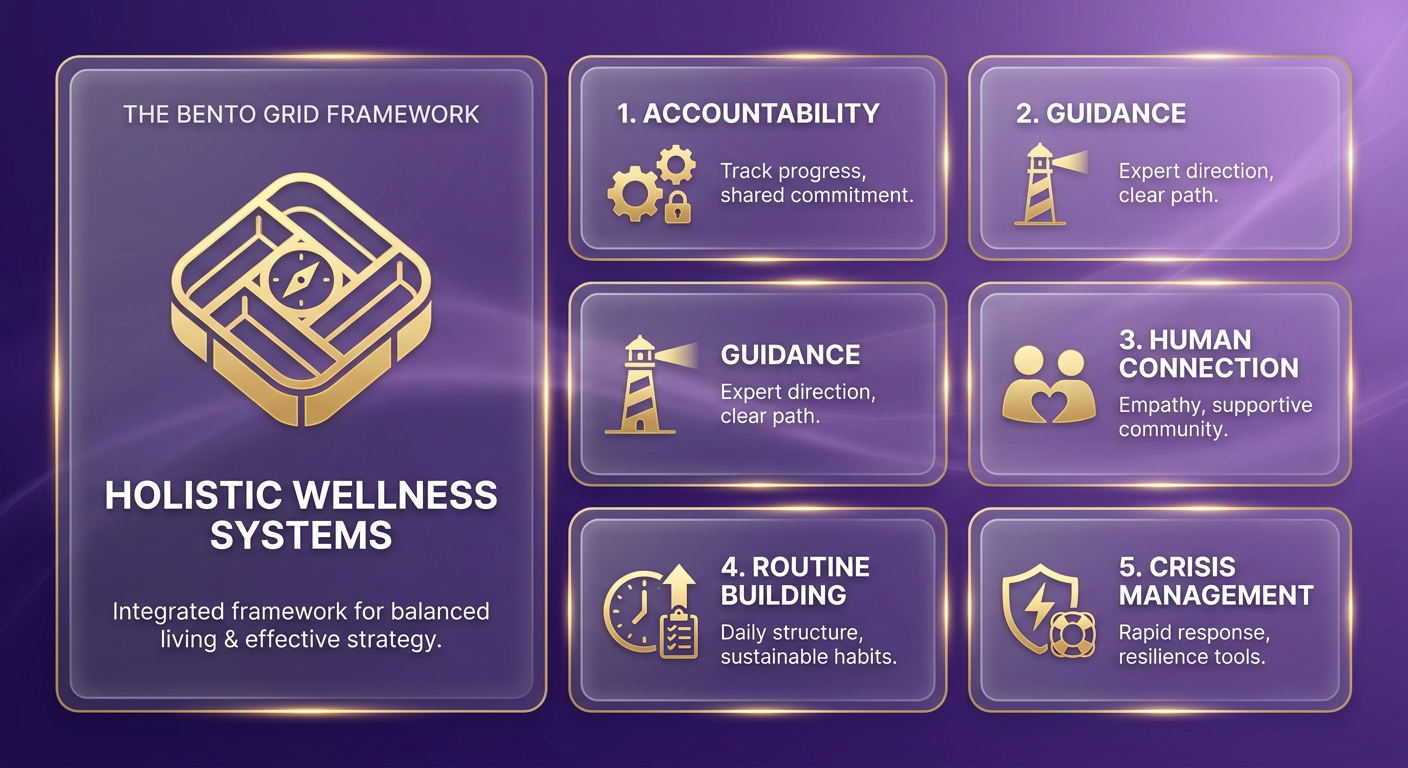
The tools we use in week one all answer one question: how do you keep someone safe when the coach can only check in a few times? A good plan turns that gap into a design problem and builds tools the client runs on their own between calls. Here's what we set up, and how you use each one yourself.
Building routine and keeping you accountable
A structured schedule grounds recovery in concrete actions instead of moods. A steady routine turns vague "bad days" into clear patterns you and your coach can actually read together.
- Build a daily routine you can follow so progress is something you do, not just something you feel. "Attend one meeting Tuesday" beats "stay motivated."
- Keep a simple daily record, paper or digital, noting how the day went and what made it harder. We use these to spot which times of day and which people spike your risk.
- Lean on accountability from your coach every time a hard moment hits. Real human connection means you don't have to ride out the urge alone.
Bring those notes to a check-in and your coach is not guessing. They see that Sunday evenings run hot, and they build a plan for that exact window.
The support that keeps you connected
Steady communication bridges the gap between scheduled sessions. It gives you a reliable sounding board when something unexpected lands.
- Stay connected through virtual or in-person check-ins, scheduled around your real life. This clears out the isolation that erodes early recovery.
- Reach your coach or coordinated team depending on the level of care you need. Some clients work with a single dedicated coach; others draw on a full team. Many providers also offer 24/7 emergency support for crisis moments.
- Name your own reason for staying sober with your coach. Your motivation in your own words holds better than it does in ours.
Coming home puts you close to old routines and social circles right as clinical supervision ends. Regular contact keeps you focused through that adjustment, so familiar spaces do not pull you back into old habits.
Where nutrition fits the safety plan
Physical shape feeds emotional resilience more than people expect. Managing what you eat keeps you from running on empty, and depletion gets mistaken for distress or craving all the time.
- Rebuild healthy eating habits with your coach so you're not making hungry, depleted decisions. We help with grocery shopping and meal prep so it sticks.
- Set up grocery delivery if leaving the house is a trigger route in week one. Cutting the drive past an old bar is quiet, effective harm reduction.
Working meal planning into the week also reinforces the shape of your day. Consistent meal times give you natural anchor points that break up empty hours and reduce the decision fatigue that so often tips into stress.
After Week One: Handing the Structure Back to You
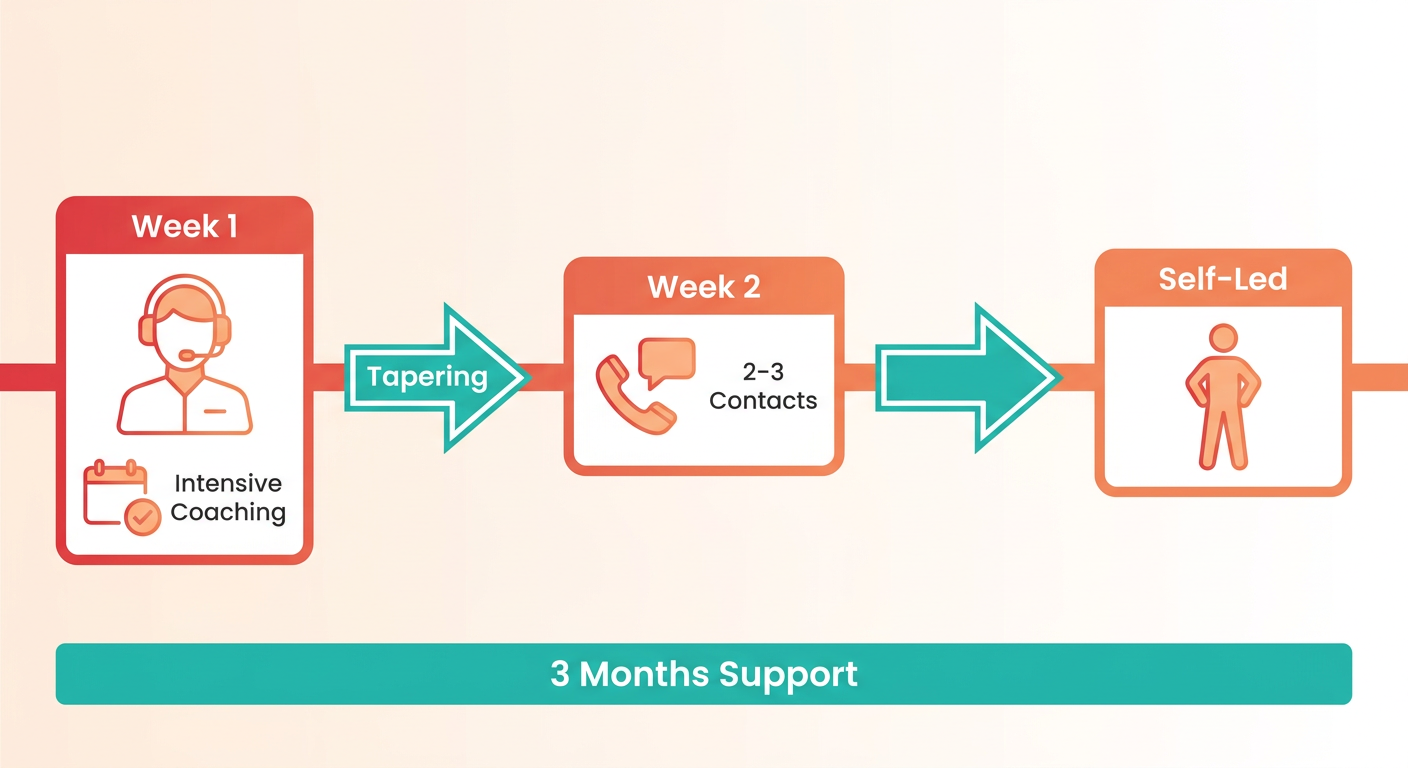
Week two is where good coaching proves its worth: not by adding structure, but by handing it back to you. From here the goal is a controlled step-down, where contact drops but the skills you built in week one stay put. It's a gradual shift from coach-led accountability to self-led independence.
Why taper at all instead of stopping cold? Because recovery is not linear, and your plan should track your actual progress. Research on continuing care suggests support lasting at least three months tends to produce better outcomes than short bursts of intensive help. So match the support to the risk in front of you, not to a fixed calendar. Adjust coverage to your comfort level, and lighten it as your own follow-through gets stronger.
As the week-two check-in comes around
This check-in is grounded in real life, not a pep talk. We look at what actually held, name the wins plainly, and flag the gaps still open. If the week had rough moments, we treat them as data to sharpen the strategy, not as setbacks.
- Revisit how week one went together, so cravings, sleep, and trigger moments become a pattern you can see instead of a blur.
- Introduce self-check-ins by shifting the daily screening from coach-led to self-led, so you own the morning read on your own state.
- Name one lingering gap and build the next week's plan around closing it, instead of celebrating and coasting.
What a taper actually looks like
The right pace depends on severity, any co-occurring disorders, and how safe home feels. The step-down gets customized so you hold stability at every stage. The core idea holds across situations:
- Lighter contact for stable clients with solid housing and consistent follow-through, easing from near-daily contact toward periodic check-ins.
- Steadier contact for the middle case, holding more frequent sessions early before stepping down gradually.
- Sustained contact for relapse history or co-occurring conditions, keeping close support deep into the high-risk window before easing off.
- Fully customized packages that evolve as needs change, so support can flex up or down as life does.
Staying supported after the coach steps back
You replace paid contact with free, standing structure. This is where the taper stops being subtraction. Community and family become the scaffolding that holds between the thinning check-ins.
- Lock in community resources like AA or NA meetings, peer-support groups, and local sober activities before contact drops, not after.
- Set a family involvement plan so loved ones get scheduled updates instead of playing full-time watchdog.
- Keep long-term habits on a cadence with ongoing nutrition guidance and routine building to hold the pattern steady.
As you move toward more independence, picking the right long-term support matters. Some people do best with a single, consistent mentor and the deep rapport that builds; others need a coordinated team for more complex needs. Either way, the goal is the same: bridge the gap between structured treatment and living on your own.
References
[1] The First 30 Days with a Recovery Coach: What to Expect - https://allthewaywell.org/first-30-days-with-a-recovery-coach/
[2] Sober Coaching: How It Works, Key Benefits,… - Caron Treatment Centers - https://www.caron.org/addiction-101/treatment-advice/sober-coaching
Frequently Asked Questions
1. Does insurance cover the cost of a sober coach?
Because sober coaching is classified as a non-clinical support service rather than medical treatment, it is generally not covered by insurance. Families typically fund these services out-of-pocket. To manage costs effectively, many choose to schedule coaching sessions during specific high-risk times of the week rather than paying for continuous, round-the-clock supervision.
2. Can a sober coach prescribe or adjust my medication?
No. Sober coaches operate in a non-clinical capacity and do not manage medical treatments. If you have questions about prescriptions or dosage adjustments during your first week home, your coach will help you contact your doctor or psychiatrist. The coach's role is to support your daily routine and help you stay consistent with your healthcare provider's instructions.
3. Should I choose a single-coach model or a team-based model?
The choice depends on your personal needs and recovery history. A single-coach approach is ideal for building a deep, consistent relationship with one mentor. Conversely, a team-based approach is highly effective for individuals navigating complex challenges, such as co-occurring mental health conditions, as it provides diverse expertise and broader scheduling coverage.
4. What if my home environment is stable and my relapse risk is low?
If you have a supportive home and a lower risk profile, you likely do not need intensive, round-the-clock coaching. Instead, you can opt for a lighter schedule of check-ins. This allows you to maintain accountability and have a professional available for occasional guidance without investing in unnecessary, high-intensity supervision.
5. How does nutrition affect relapse risk in early recovery?
Physical depletion can easily be misinterpreted by the brain as a craving for substances. When you skip meals or experience sudden drops in energy, your vulnerability to stress increases. Establishing regular eating patterns helps stabilize your physical state, making it easier to maintain emotional balance and make clear decisions during your first week home.
6. What happens if I have a rough day or slip during the first week?
Difficult days are treated as opportunities to evaluate and strengthen your recovery plan. If you experience a setback or a near-miss, your coach will help you analyze what triggered the event. This collaborative, non-judgmental approach ensures you can be completely honest, allowing you to adjust your daily routine and prevent future challenges.
7. Why do coaches only check in 2-3 times per week instead of daily?
The goal of coaching is to help you build independent living skills rather than creating a new form of dependency. By spacing out contacts, you are encouraged to practice using your coping strategies and maintaining your schedule on your own. This structure helps you build confidence in your ability to navigate daily life independently.