What a Sober Coach Actually Costs, and What You Pay for in Value
September 26, 2026

Before we get into it, the short version:
- Sober coaching pays off relative to the care it helps you avoid.
- The higher your potential relapse-recovery costs, the more it makes sense.
- The headline rate rarely tells the whole story. Extra charges can appear through on-call fees, travel add-ons, and unclear scope.
- Providers price by the hour, by the day, or by package. Compare the model first.
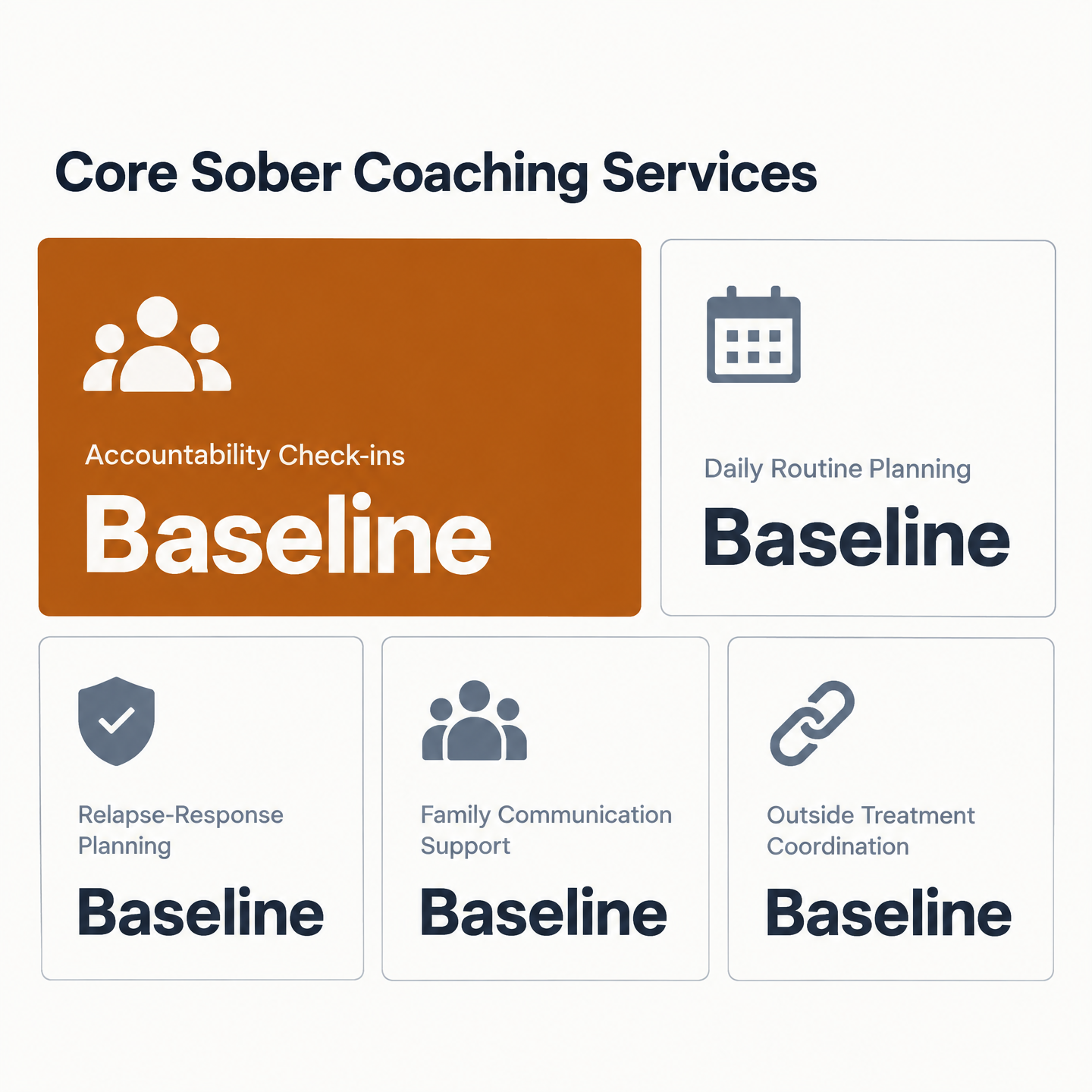
- Five services recur across most post-rehab coaching: accountability check-ins, routine planning, relapse-response planning, family communication support, and coordination with your outside team.
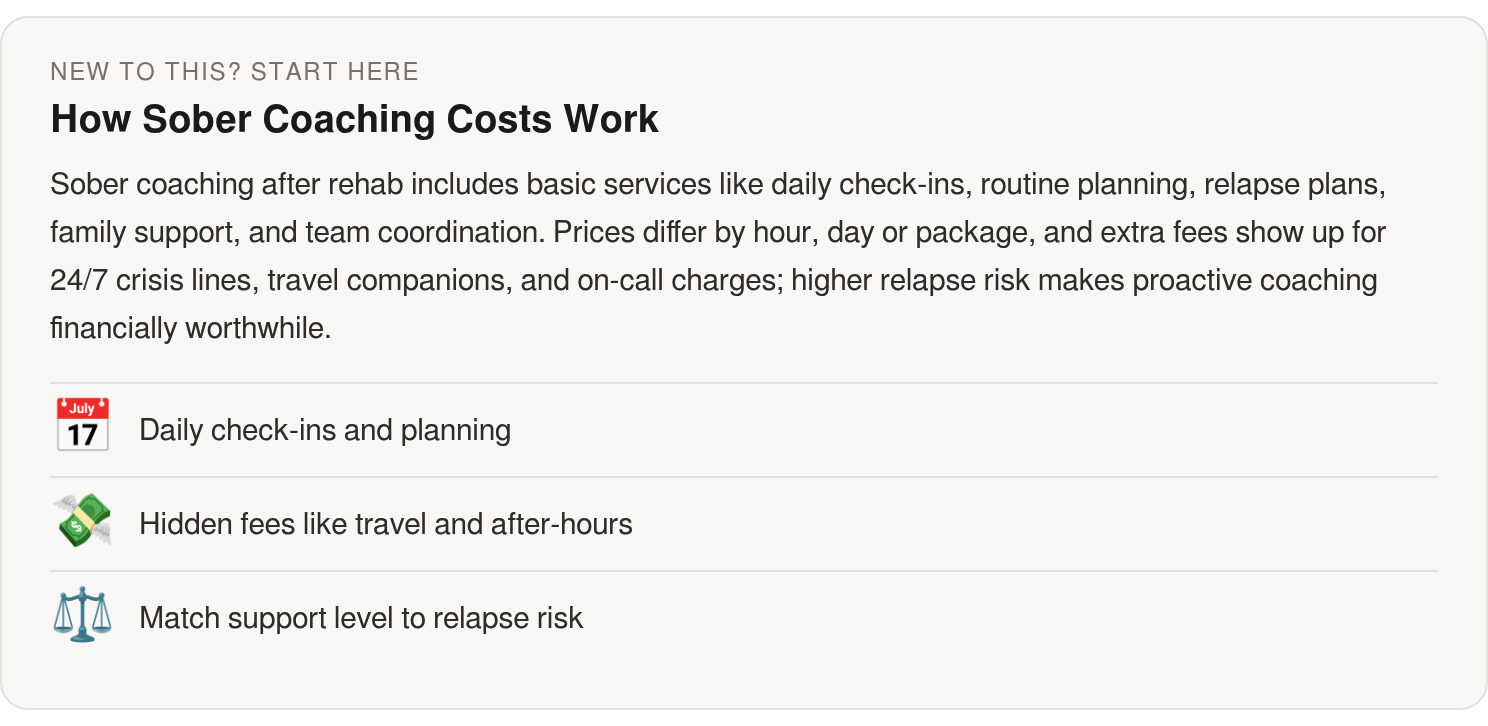
- Baseline fees usually cover daily check-ins and planning. A 24/7 crisis line and travel companionship often cost extra.
- "Sober companion" is an unregulated title, so vetting falls on families. A coach who pressures you to use only their services is a red flag.
The Money Conversation Nobody Has Until It's Too Late
Money is often the quietest reason a recovery plan falls apart. When people leave treatment without a clear picture of what sober coaching after rehab actually costs, sticker shock or surprise fees can show up right when stability matters most. That financial stress can become its own trigger.
So getting honest about price isn't a side conversation. It's part of the plan. Knowing the full cost of aftercare up front can help families make calmer decisions and stay engaged, instead of getting caught off guard later.
What does the relapse math actually look like?
A single relapse-driven return to residential treatment is expensive enough to reframe the whole cost debate. Research on the economic benefits of recovery coaching has looked at how coaching can reduce the need for costlier downstream care. Residential stays run high.
Hold that next to premium coverage. Reporting from Fortune has documented executives hiring round-the-clock sober companions during recovery. Set against the cost of a single hospital return, prevention-focused support can pay for itself.
The takeaway is simple. The higher your potential relapse-recovery costs would be, the more sense proactive support makes. Coaching's value grows with the size of the care it helps you avoid.
| Cost item | What it reflects | What it buys |
|---|---|---|
| One residential readmission | Often substantial | Reactive care after relapse |
| Premium sober companion | Priced per day | Round-the-clock coverage |
| Team-based coaching + sober living (MADE Recovery) | Customized package | Dedicated coach or coordinated team, tapering as you gain independence |
| Recovery coaching support | Cost-effective vs. downstream care | Structure and accountability that can reduce hospitalization |
Where do hidden fees ambush families?
The trap is rarely the headline rate. It's the on-call charges, travel add-ons, and unclear scope that pile up unnoticed. Futures Recovery Healthcare makes a sharp point in its sober coach guide: clarify the model before you compare prices. Hourly, daily, or packaged? What's included versus billed extra?
This is where structure helps. We build coaching, sober living, and travel companion support into a plan tailored to each client, and it evolves as needs change. With a single coach or a coordinated team, the scope is defined around your situation rather than left open-ended.
That same guide names a red flag worth repeating: a coach who pressures you to use only their services instead of building a broader support network. Because companions aren't a regulated title, the burden of vetting falls on you. Team-based providers with defined roles reduce that risk.
Is the cheapest option really the cheapest?
Not usually. "Free" or low-cost coaching often means limited availability and thin personalization, which leaves the exact high-risk hours uncovered. Our approach is built around the right level of support when you need it.
That's the standard: the level that keeps you stable and moving forward, not the maximum you can buy. For someone stepping back into a high-pressure job or a travel-heavy schedule, that may genuinely be intensive coverage. For a routine transition with strong existing support, it's far less. A customized plan lets you match the two honestly.
What You're Actually Paying For Each Week
Most sober-coach programs promise the same core bundle, and knowing what sits inside that baseline is the first step to judging whether a price is fair. In our experience, sober coaching after rehab tends to include five recurring services: accountability check-ins, daily routine planning, in-the-moment relapse prevention, family communication support, and coordination with your outside treatment team. Futures Recovery Healthcare lists these same functions as the practical work of a coach, and they line up with what we deliver every week.
The service clients rank highest is rarely the flashiest one. It's the structure during the vulnerable hours: evenings, weekends, and travel days. That's also where the tradeoff between coaching cost and relapse cost gets decided, because those are the windows where momentum quietly slips.
What the Baseline Fee Actually Buys
Here's how the standard services break down, and where providers commonly add charges.
| Service | What it does | Baseline or add-on |
|---|---|---|
| Accountability check-ins | Short daily contact to confirm routines and flag risk | Baseline |
| Routine and week planning | Structured session to map appointments, meetings, meals | Baseline |
| Relapse-response planning | A written plan for high-risk moments | Baseline |
| Family communication support | Coaching families on boundaries and language | Often baseline |
| 24/7 crisis line | On-call access outside session hours | Frequently an add-on |
| Travel companionship | A coach who travels with you | Usually a premium surcharge |
Notice that the two costliest situations, round-the-clock access and travel companionship, are exactly the ones most solo coaches bill separately. That's the hidden line item that turns an advertised weekly rate into a surprise.
Match the Support to the Actual Risk
There's a real tension in the pricing conversation worth naming. Good support should fit the risk in front of you. Too little structure leaves exposure. Too much can create cost without adding stability. Some clients need broad coverage during the first step-down from treatment. Others need a lighter accountability layer around a mostly solid routine.
The point isn't to buy the most impressive-looking package. It's to choose the amount of presence, planning, and backup that matches the life you're actually returning to. If your calendar is packed with triggering environments, the budget should reflect that. If your days are predictable and your home support is strong, the plan shouldn't pretend otherwise.
Customized Packages Fold In the Expensive Extras
This is where our approach differs from an à la carte coach. We offer sober travel companions and a sober living home, and we build them into fully customized packages that evolve as needs change rather than leaving them as scattered line items. A client stepping down into our sober living home gets housing structure and accountability in one place, with support that intentionally tapers as independence grows.
The buyer's real job is scope. Ask whether the plan has roles, limits, backup, and a path toward less support over time. A team-based model can keep help available without turning every need into a separate upcharge.
MADE Recovery: Coverage That Doesn't Fail in the Gaps
Most sober-coach setups run on a single coach and a single relationship. That works until your coach is asleep, on vacation, or simply not a fit. Our model is built differently, because sober coaching after rehab tends to fail in the gaps, not in the sessions.
We run a team-based approach. Instead of relying on one person, you can work with a single dedicated coach or a coordinated team, depending on the level of care you need. That flexibility is part of the point. When the goal is lowering the long-term cost of relapse, support that matches your situation is worth paying for.
The Support Options That Flex With Your Risk
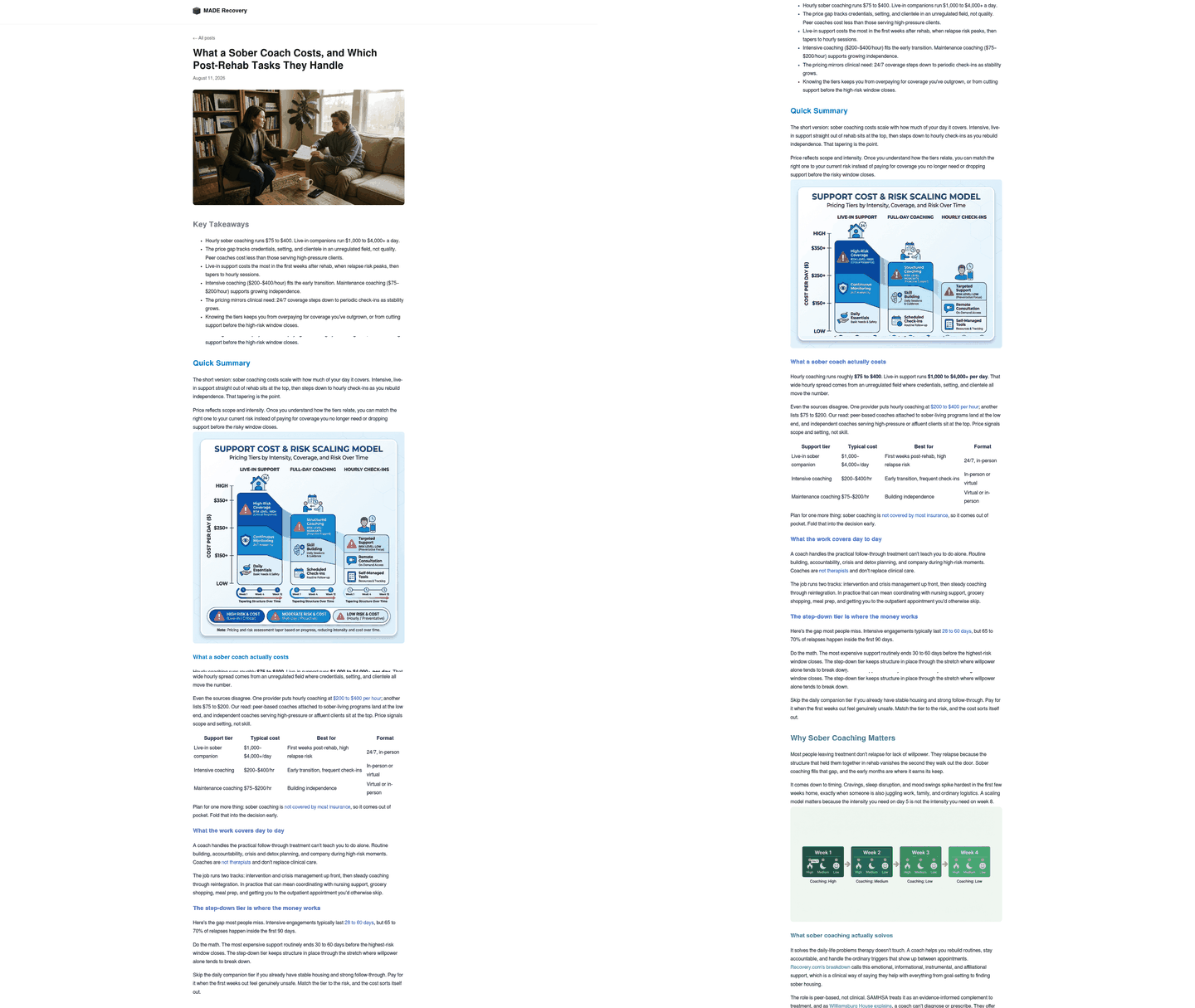
Recovery isn't static, so pricing shouldn't force you into one rigid package. We offer support that scales up during hard stretches and eases off as stability returns. That taper matters. Paying for round-the-clock help forever is wasteful. Having nothing when a trigger hits is dangerous.
| Support option | What it covers | Best fit |
|---|---|---|
| Virtual coaching | Remote check-ins, planning, accountability | Stable routines, ongoing structure |
| In-person coaching | Face-to-face sessions and local support | Early transition out of treatment |
| Day-to-day companionship | Extended presence through daily life | High-risk windows, isolation |
| Travel companion | Support during trips and work travel | Business travelers, executives |
| Sober living | Structured, substance-free housing | Rebuilding a stable home base |
The travel companion piece is where we see the biggest hidden savings. Work trips, funerals, and holidays are classic relapse points, and a short burst of coverage can protect progress someone has already worked and paid for.
Where We're the Wrong Choice
Be honest with yourself here. If you're solidly stable and just want an occasional accountability call, our integrated model is more than you need. A single-coach or peer arrangement fits that budget better.
We're the right call when you need layered, flexible support and can't afford a quiet slide backward. Modeling on recovery coaching suggests it adds cost early but tends to pay off over time, and that's exactly the tradeoff our structure is built around. To see how the day-to-day work looks, our team breaks it down in this guide on sober coaching after rehab.
We provide nonmedical recovery support, not clinical treatment, and we coordinate with your outside providers rather than replace them.
How to Match Your Needs and Budget to the Right Support Level
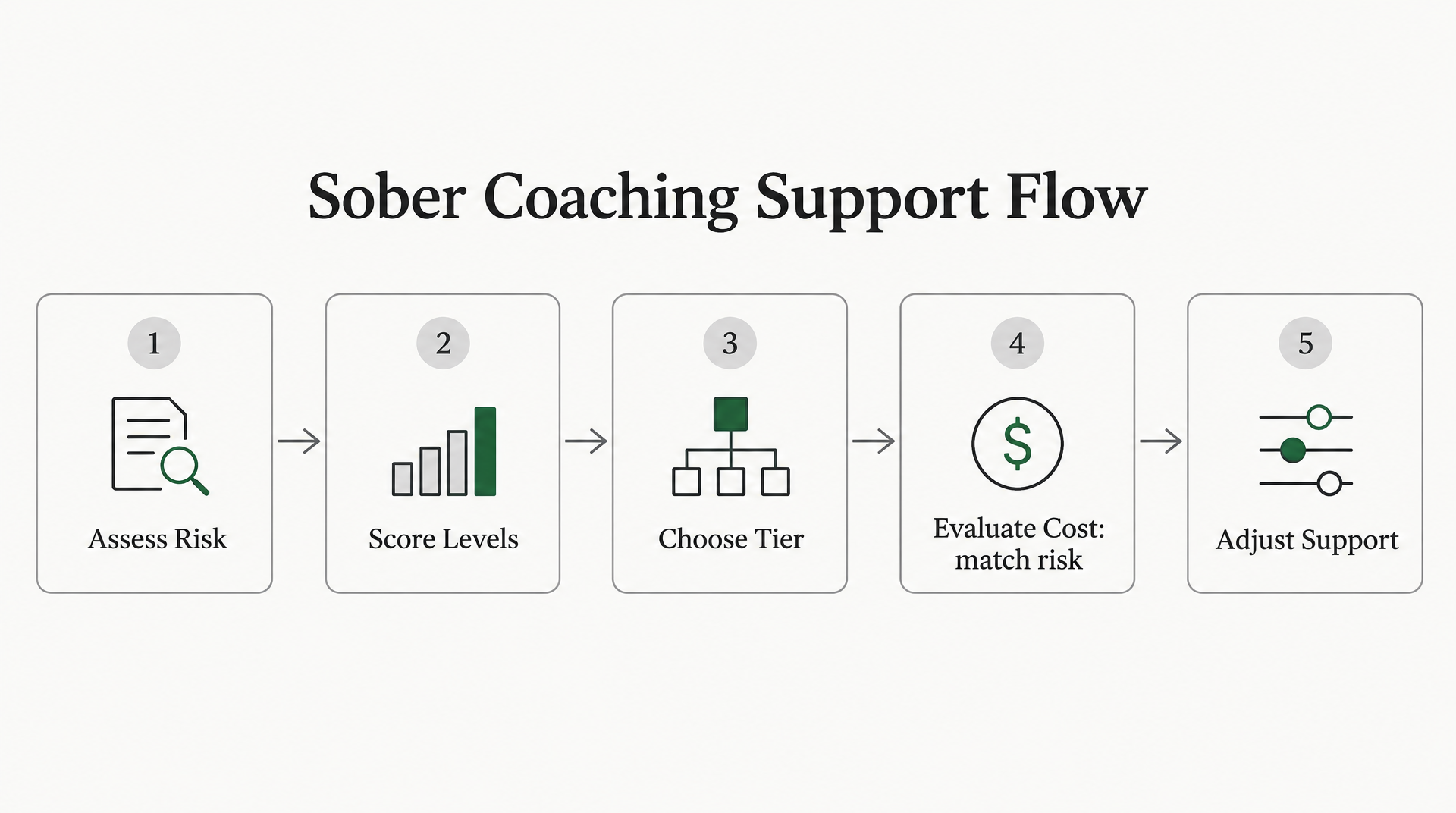
Start with the question underneath every good pricing decision: what amount of support will actually hold the transition you're facing? Futures Recovery Healthcare puts the emphasis on matching support to the person's needs, and we agree. The goal of sober coaching after rehab is to fit your actual risk, not to over-purchase peace of mind.
But "minimum" cuts both ways. Underbuying can be the more expensive choice if the support you picked fails to hold during a high-risk window. That's the tension this section is built to resolve.
Score Your Risk Before You Price Anything
Before you look at a single rate, take an honest read on where you are. We walk families through a few concrete indicators that predict how much structure the coming months will demand.
- How long since discharge? The first 90 days can bring the most decision fatigue and overconfidence, which can make the transition out of treatment shaky.
- How confident are you in self-management? If you know what to do but struggle to do it consistently, the gap is follow-through, and coaching is built for that.
- What's on your calendar? A wedding, a work trip, a return to a high-pressure job with heavy alcohol exposure. These raise the bar temporarily.
- What's your relapse history? After multiple relapses you need more layers of support, not more self-criticism.
Score each one low, medium, or high. A stack of "highs" means you're in a window where thin coverage is a false economy.
The Four Tiers, and Who Each One Actually Fits
Here's where the market's real spread shows up. Some arrangements are built for routine accountability. Others are built for extended presence during a concentrated risk period. The price difference should track the amount of coverage, the degree of access, and whether backup exists when one person is unavailable.
| Support tier | Typical fit | What to weigh |
|---|---|---|
| Solo coach | Mid-recovery, stable routine, needs accountability | Cheapest, but fails in the gaps when one person is unavailable |
| Team-based (MADE Recovery) | Early transition or fluctuating risk | Coverage doesn't collapse when a coach is off; roles are defined |
| Companion-only | High-exposure event or travel stretch | Highest daily cost; best used situationally, not open-ended |
| Premium sober living | Rebuilding environment and daily structure | Combines housing with recovery routines |
Fit matters more than labels. A solo coach may be plenty for someone who mainly needs follow-through. A team model makes more sense when the risk changes week to week. A companion can be useful for a defined stretch, but it shouldn't become a vague arrangement with no endpoint.
Combine Tiers Instead of Overbuying One
You don't have to pick a single lane. We often build blended plans: a weekend companion during a risky stretch layered over lighter monthly coaching once things settle. That flexes cost up when risk spikes and eases it down when you stabilize.
The lever you're pulling is fit, not hours. Buy the coverage that matches your risk, and revisit it as that risk changes. Our programs are fully customized and evolve as your needs change, with support intentionally tapering as you find your rhythm and build independence.
One structural note worth flagging: a legitimate provider should reduce your dependency over time, not lock you in. Open-ended solo engagements with no defined scope are where hidden costs hide. Defined roles and clear exit paths, which is how we structure our team model, are the cheapest insurance against paying for support long after it has stopped adding value.
Red Flags and Hidden Costs to Watch For
The most expensive contracts are rarely the ones with the biggest sticker price. They're the ones with quiet add-ons that surface after you've signed. When you're comparing sober coaching after rehab, the base rate is only half the story. The other half hides in the fine print.
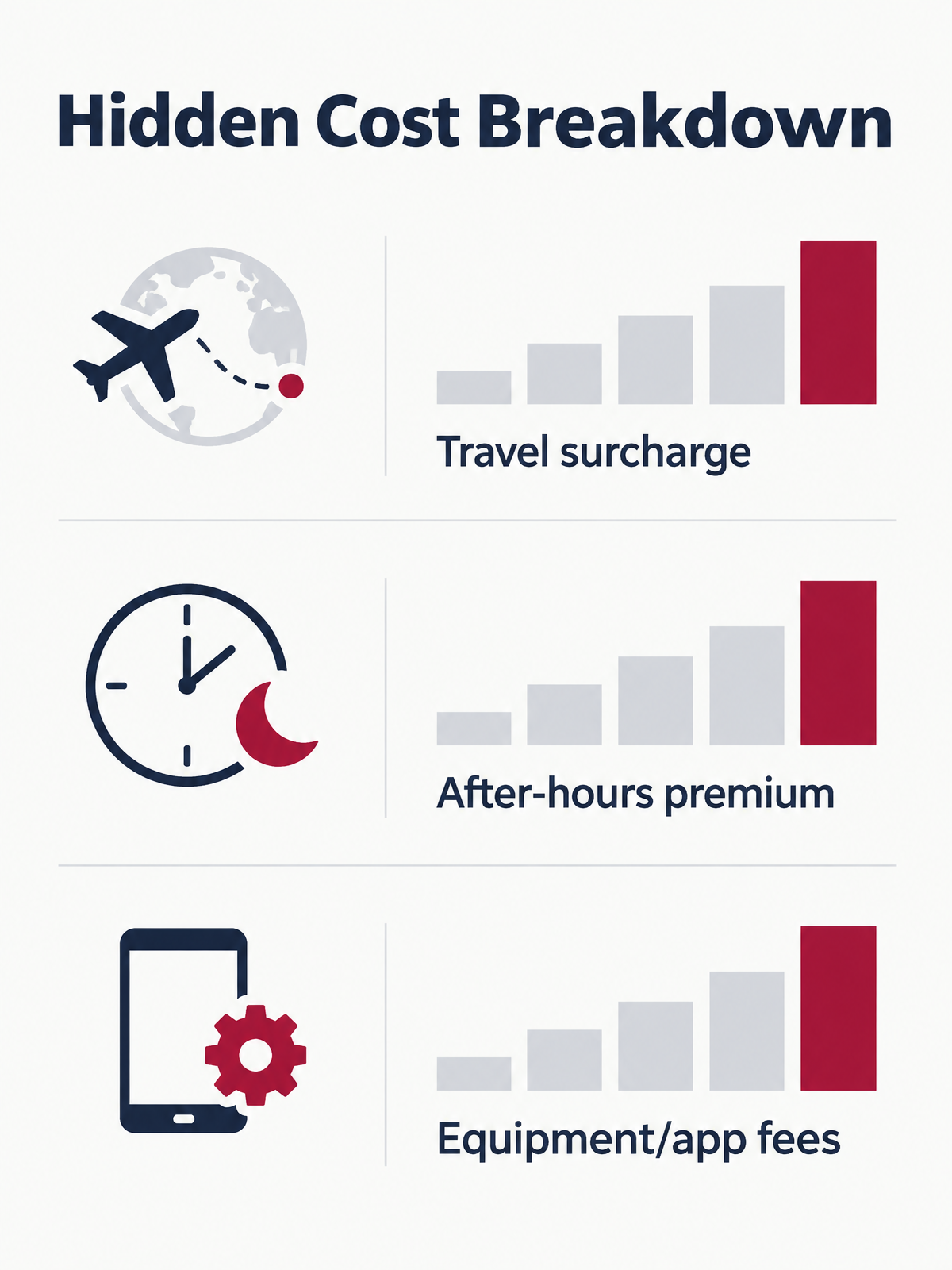
Three fee categories tend to catch people off guard. A travel surcharge that turns a companion service into a per-mile meter. An after-hours premium that charges extra for the exact evenings and weekends when risk peaks. And mandatory equipment or app fees bolted onto a monthly plan. Each one is defensible on its own. Stacked together, they can double what you thought you agreed to.
Vague Promises Are the Real Warning Sign
Watch the language a provider uses to describe what you get. "Ongoing support" and "whenever you need us" sound reassuring, but they don't tell you who answers at 11pm or what happens during a crisis. Vague scope is how limited service gets sold at premium prices.
Ask for specifics. If a provider can't tell you their escalation path in plain terms, that gap becomes your problem during the exact moment support matters most. A missed high-risk window can undo progress quickly, and the financial damage usually lands after the emotional damage has already started.
The Red-Flag Checklist
Before you sign anything, run through these:
| Red flag | Question to ask | What a solid answer sounds like |
|---|---|---|
| Vague scope | "What exactly is included each week?" | A named list of check-ins, planning, and coverage hours |
| Hidden after-hours cost | "Is evening and weekend support extra?" | Clear yes/no with the rate stated up front |
| Travel surcharges | "How is travel companionship billed?" | A flat structure, not open-ended per-trip fees |
| No escalation path | "What happens if I'm in crisis at 2am?" | A defined chain to a person, not voicemail |
| Single point of failure | "Who covers when my coach is off?" | A backup coach or team, not a gap |
Our team-based model exists partly to close that last gap. Clients can work with a coordinated team rather than a single coach, so support isn't tied to one person's schedule. Transparent scope up front is cheaper than discovering, under pressure, that the help you thought you bought isn't actually available.
Paying for Aftercare Without Getting Blindsided
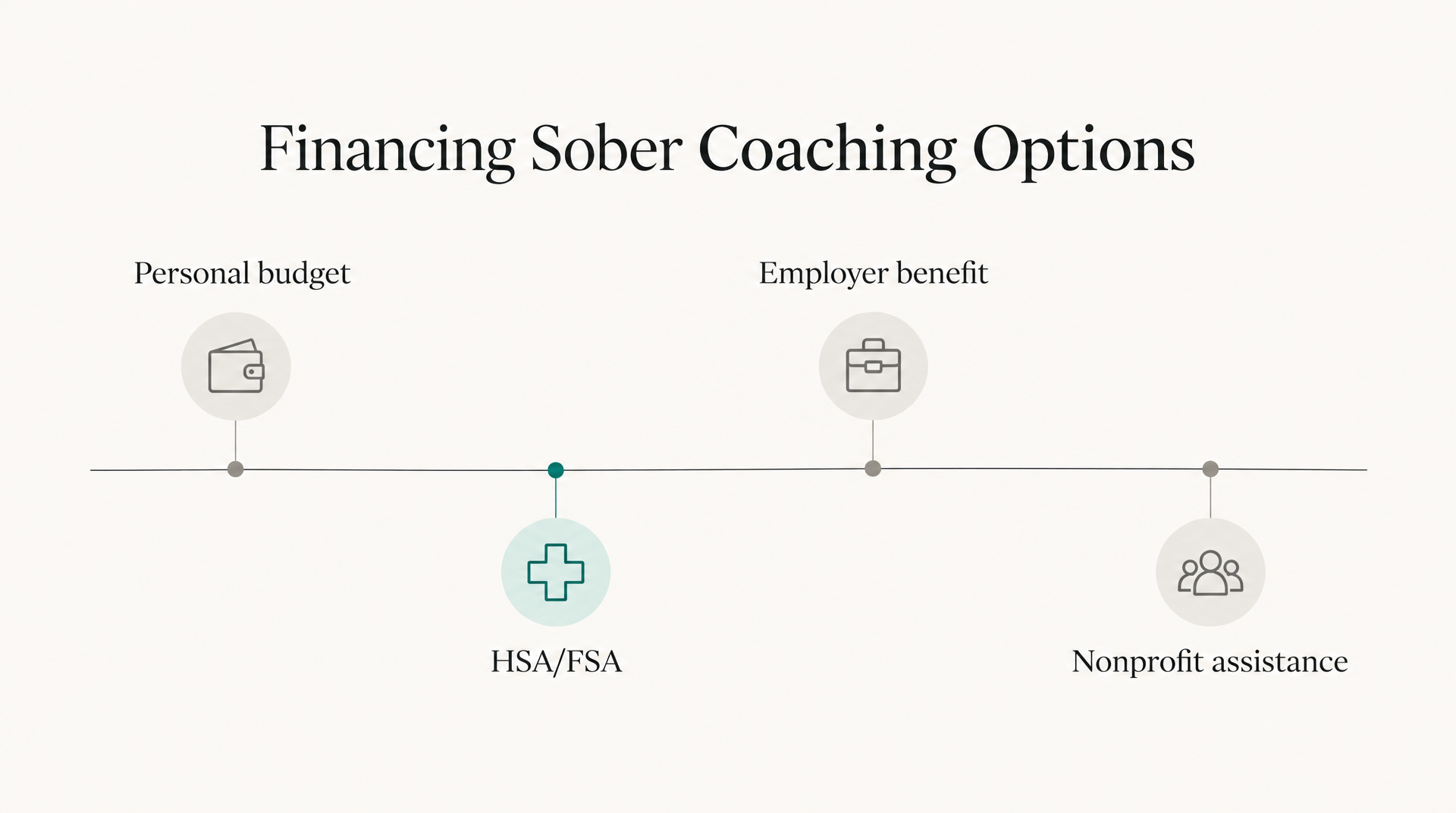
Paying for sober coaching after rehab rarely comes from one clean source. Families often combine a few: a personal budget, a monthly payment schedule, and sometimes a tax-advantaged account or an employer benefit, if those apply. The goal is to spread the cost so support stays in place during the exact weeks when dropping it would be most expensive.
Frame every option against the same principle: steady aftercare is easier to plan for than emergency spending. Our programs are fully customized, drawing on coaching, sober living, and sober travel companionship, so you can build the mix of support that fits where you are rather than paying for pieces you don't need.
Which funding sources actually apply?
Each source has different reach and different strings attached. Here's how the common ones compare.
| Funding source | What it can cover | The catch |
|---|---|---|
| Personal budget / payment plan | Any coaching package, spread monthly | Requires steady cash flow |
| Sliding-scale / income-based rates | Reduced fees for qualifying income | Not every provider offers it; ask directly |
| HSA / FSA | Coaching only if tied to medical treatment | Nonmedical coaching usually doesn't qualify |
| Employer assistance program (EAP) | Short-term counseling or referral support | Coverage varies; check with HR confidentially |
| Nonprofit or grant assistance | Partial aftercare costs | Limited funds, eligibility windows |
Be careful with HSA and FSA money. Because coaching is nonmedical support, it typically won't qualify unless it's part of a documented treatment plan. Don't assume the card will work. Confirm eligibility before you count on it.
How do you keep a recovery budget realistic?
Start with the minimum support that holds your stability, then plan the ramp-down. Our support is designed to taper intentionally as you build independence, so the level of coaching you need can shift over time rather than staying fixed. Ask any provider to map that curve for you before you sign.
Want to talk through what this could look like for you? Reach out to MADE Recovery to discuss your situation, and we'll help you build the right sober coaching program. Help starts with a conversation.
References
[1] What Is a Sober Coach? | Benefits, Costs, and How to Choose One - https://futuresrecoveryhealthcare.com/alcoholism/what-is-a-sober-coach/
[2] 50 Best Recovery Coaching in California (With Pricing) - https://recovery.com/california/recovery-coaching/
[3] Executives with addictions are hiring sober companions for up ... - Fortune - https://fortune.com/well/2023/10/25/sober-companions-executives-addiction-recovery-journey-prevent-relapse/
[4] The potential economic benefits of recovery coaching - https://www.recoveryanswers.org/research-post/potential-economic-benefits-recovery-coaching/
FAQ
What's the difference between a sober coach and a sober companion?
A sober coach is usually focused on planning, accountability, and practical follow-through between treatment appointments. A sober companion provides more direct presence through daily life or a defined high-risk stretch. The cost difference usually comes from time, access, and whether the person is simply checking in or physically helping you move through triggering environments.
Does sober coaching replace therapy or medical treatment?
No. Coaching sits beside clinical care; it does not take its place. A coach can help you follow the plan, manage routines, communicate with family, and stay accountable, but medical decisions and therapy belong with licensed providers.
How long will I need a sober coach after rehab?
The timeline depends on your risk, support system, and ability to stay consistent outside treatment. The healthiest plans usually change over time: more structure when life feels unstable, less structure as routines become reliable. Ask any provider how they decide when to step support down.
Is virtual coaching enough, or do I need in-person support?
Virtual coaching can work well when your environment is stable and the main need is consistency. In-person support is more useful when the issue is exposure, isolation, or a difficult transition back into daily life. The better question is not which format is best, but which format covers the moments where you are most likely to drift.
When is paying for a travel companion actually worth it?
It is worth considering when the trip itself raises the risk: business entertaining, family conflict, grief events, or time away from your normal support network. In those cases, a companion is not just extra attention. It is environmental support during a period when routine safeguards are missing.
Is free or low-cost sober coaching a good deal?
Sometimes, especially if you are already stable and mainly need light accountability. The risk is availability. If the low-cost option cannot respond during the moments you most need help, the savings may come with a gap you have to manage alone.
Can HSA or FSA funds pay for sober coaching?
Only in limited circumstances. The key issue is whether the coaching is connected to a qualifying medical plan rather than general wellness support. Before budgeting around those funds, check the rules for your account and get documentation if your provider says it may qualify.