Stock Your Kitchen for Steady Energy in Early Sobriety
August 5, 2026

Key Takeaways
- Chronic drinking leaves 86% of people with alcohol-use disorder short on vitamin D, and 52% with weakened bones.
- Sobriety fatigue isn't ordinary tiredness. A full night's sleep doesn't touch it.
- Your body can't make energy without the B vitamins, magnesium, zinc, and omega-3s heavy drinking burns through.
- A stocked kitchen is a relapse-prevention tool. It handles early recovery's physical demands that willpower can't reach.
- The "tired but wired" state comes from three things at once: a recalibrating nervous system, a hunger-hormone reset, and nutrient depletion that stalls energy production.
- You don't rest your way out of this. You have to feed your way out.
- What you eat in the first weeks directly affects mood and alertness.
Why the exhaustion won't sleep off
The tiredness you feel in early sobriety isn't the kind sleep fixes. As Dr. Jeremy Dubin puts it, "Sobriety fatigue is not ordinary tiredness. The defining feature is that a full night in bed does not fix it." For the clients and family groups we coach through those first weeks, that one distinction changes the whole plan. You can't rest your way out. You rebuild your way out, and the kitchen is where rebuilding starts.
Food is the lever because chronic drinking strips the body of the exact nutrients it needs to make energy. One review of substance-use recovery found 86% of alcohol-use-disorder subjects were vitamin D deficient, with 52% showing osteopenia. Shortfalls in B vitamins, magnesium, zinc, and omega-3s are common too, according to sober-living meal-planning practice. An empty tank doesn't run, no matter how long you lie there. So we treat a stocked kitchen as prevention, not a chore.
Why does early sobriety feel "tired but wired"?
It's a triple collision, and meal prep has to hit all three. Sobriety fatigue comes from a nervous system still finding its baseline. A hunger-hormone rebound adds another layer. Micronutrient depletion blocks energy at the cellular level. People stall when they treat fatigue as one problem.
The ghrelin timing is worth untangling. One source reports ghrelin elevated in the first week of withdrawal, then fluctuating. Another finds it suppressed during active drinking, then rising in abstinence. Both are right, at different phases: low during use, a sharp rebound around week one, then unstable. Our move is to have protein-forward breakfasts prepped before those hunger swings land, so you're not deciding what to eat while your hormones are shouting.
How long it lasts, and who it hits
Sobriety fatigue can strike anyone, but its length scales with your history. One recovery resource notes it shows up regardless of how heavily someone drank, while flagging that duration varies by drinking history, age, and health, sometimes running six months or longer. Universal trigger, variable timeline.
The rough map: acute withdrawal eases in 5 to 7 days, with protracted symptoms lasting 2 to 12 months. Most people turn a corner between weeks 2 and 6. Sleep architecture needs 30-plus days of abstinence to rebuild. Your grocery plan should move with these phases, not sit static.
What belongs in the starter cart
Keep the first list short and nutrient-dense. Nutrient-dense options give you steadier energy over longer periods.
- Lean protein: eggs, chicken, fish, beans, tofu
- Complex carbs: oats, quinoa, brown rice, sweet potatoes
- Omega-3s and antioxidants: salmon, walnuts, berries, leafy greens
Budget 60 to 90 minutes for a weekly shop-and-prep session. The habit itself is simple. Doing it while exhausted is the hard part, which is exactly where a coach and your support people earn their keep. Skip the elaborate fad plans. They cause deficiencies and slow recovery.
The nutrients your energy actually runs on
Same frustration comes up again and again in early recovery: "I'm eating, I'm sleeping, why am I still this tired?" People expect exhaustion to lift once detox ends. It doesn't. Chronic drinking and drug use strip the body of the nutrients it needs to make energy at the cellular level. You're not tired because you need rest. You're tired because your mitochondria don't have the raw materials to do their job.
Your body is also burning through nutrients faster now than it did during active use. Tissue repair, neurotransmitter rebalancing, and liver detox all demand fuel. One Egyptian intervention study tracked 40 men in early recovery and found that adding antioxidant-rich foods (carrots, guava, kiwi, pomegranate, yogurt, peanut, wheat germ, green tea) for just 15 days dropped liver enzymes by 38% in one group. The body was healing, but it needed something to heal with. Take those nutrients away and the exhaustion drags on for months.
Protein: the block you're not eating enough of
We see this pattern constantly. Someone swaps alcohol for sugar, eats when hungry, and still feels weak. The problem is usually protein. A review of nutritional interventions in recovery recommends 1.2 to 1.5 grams per kilogram of body weight per day for alcohol-use disorder, scaling up to 2.0 g/kg for stimulant users. For a 150-pound person, that's 80 to 135 grams daily, far more than most people eat when they're just "trying to eat better."
Protein does three jobs in early sobriety. It stabilizes blood sugar, which heads off the mood swings families often mistake for cravings. It supplies amino acids for neurotransmitter production, since the brain needs tryptophan, tyrosine, and phenylalanine to rebuild serotonin and dopamine pathways. And it repairs muscle in people who lost lean mass during active use. A PubMed review found that people with alcohol and drug use disorders typically show altered body composition and low albumin, both markers of protein depletion.
The fix is practical: stock lean proteins you can eat cold. Rotisserie chicken, hard-boiled eggs, Greek yogurt, canned beans. All of it works when cooking feels like too much. We tell families to batch-cook a protein source on Sunday, whether that's baked salmon, grilled chicken thighs, or a pot of lentils, so there's always something ready. One recovery home's meal plan runs scrambled eggs with spinach for breakfast, grilled chicken salad for lunch, hitting 30-plus grams of protein per meal. That's the baseline.
Complex carbs and healthy fats: the energy you can feel
Simple carbs spike your blood sugar, then drop it out from under you. Complex carbs release glucose slowly and keep you steady. A Hanley Center guide says it plainly: "Eating whole foods high in fiber and protein provides steadier energy over longer periods." That's oats, quinoa, brown rice, sweet potatoes, whole-grain bread. The fiber slows digestion and flattens the roller coaster.
Healthy fats do a different job. They support brain function and reduce inflammation. A 2017 review tracked polysubstance users given 3 grams of omega-3 fatty acids daily for three months. Anxiety dropped significantly and stayed low for three months after the intervention ended. The mechanism is worth knowing: alcohol and drugs inflame the gut, which drives systemic inflammation into the brain's amygdala, heightening cravings and depression. Omega-3s from salmon, walnuts, flaxseed, and chia counter that.
In practice, the best results come when people pair a complex carb with a healthy fat at every meal. Oatmeal with ground flaxseed. Brown rice with avocado. Sweet potato with a handful of almonds. Nutritional psychiatry research shows that pairing stabilizes mood and reduces cravings by influencing gut microbes, which help regulate serotonin.
The micronutrients almost everyone is missing
Vitamins and minerals don't carry calories, but they run the machinery that turns food into energy. The Egyptian study added foods supplying 530 mg vitamin C, 4,125 µg vitamin A, 45 mg vitamin E, and 325 mg omega-3s daily. Underweight participants dropped from 33% to 12.5% in 30 days, and liver enzymes improved across the board. The antioxidants shielded cells from oxidative stress while the body detoxified.
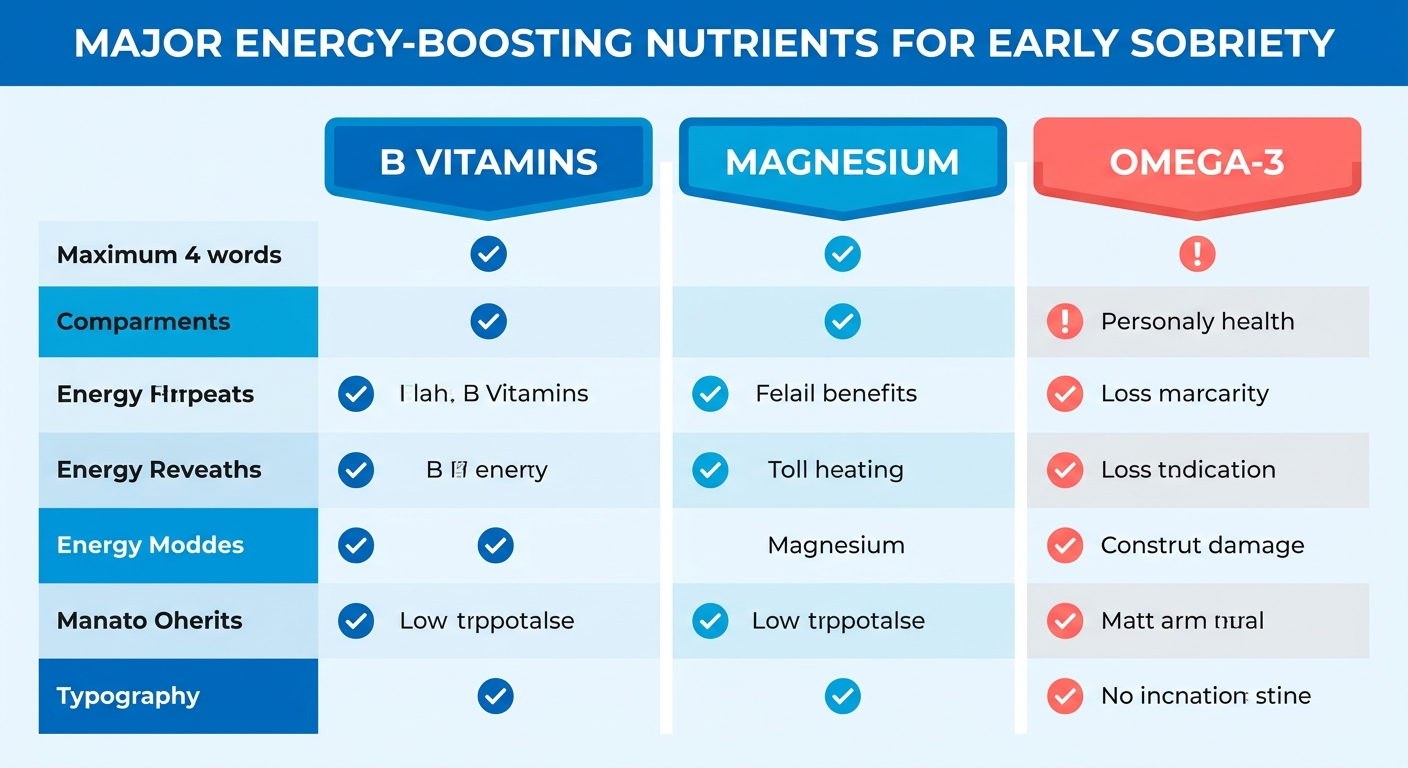
B vitamins are the most urgent gap. Thiamine (B1) prevents Wernicke-Korsakoff syndrome, a neurological emergency that shows up in alcohol-use disorder. A recovery nutrition guide lists B6, folate, and B12 as critical for brain function and mood. You'll find them in fortified cereals, eggs, leafy greens, and nutritional yeast. Magnesium sits in nuts, seeds, spinach, and black beans; low levels track with anxiety and muscle cramps, both common early on. Zinc supports immune function and wound healing, and lives in oysters, beef, pumpkin seeds, and lentils.
Vitamin D deserves its own paragraph because it behaves more like a hormone than a vitamin, regulating over 200 genes tied to energy metabolism and mood. The 2017 review notes that low levels track with reduced lean muscle and slower physical recovery, which is part of why fatigue lingers even after someone starts eating well. We suggest 20 minutes of sun twice a week, or a D3 supplement if that's not workable. Pair it with fatty fish, fortified milk, or egg yolks, since vitamin D absorbs best alongside dietary fat.
What this looks like on a plate
We walk family groups through a simple frame: every meal needs a palm-sized protein, a fist-sized complex carb, a thumb-sized healthy fat, and as many non-starchy vegetables as you want. One sample recovery meal plan runs baked salmon with quinoa and roasted broccoli for dinner. That covers protein and omega-3s (salmon), complex carbs (quinoa), fiber (broccoli), and a spread of vitamins in one sitting.
For people who can't cook yet, we lean on assembly meals. Greek yogurt with berries and walnuts. Canned tuna on whole-grain crackers with cucumber. A smoothie with frozen spinach, banana, protein powder, flaxseed, and almond milk. Skip fad diets. They create new deficiencies and add stress when your structure is already fragile.
Timing matters as much as the food. A recovery nutrition protocol recommends eating within 30 minutes of waking, then every 2.5 to 4.5 hours, five to six small meals. That pattern steadies blood sugar and blunts the "tired but wired" feeling. It also calms hunger hormones, which cuts down on the sudden physical cravings people often misread as substance urges.
So if you're stocking for steady energy, prioritize these: lean proteins that travel well, whole grains you can batch-cook, nuts and seeds for quick fats, leafy greens and colorful vegetables for vitamins, fatty fish or a quality omega-3 supplement, a refrigerated probiotic, and a multivitamin split into two daily doses, since absorption improves when you space it out. As one recovery center's nutrition summary puts it, "Proper nutrition is key to building a strong foundation for long-term recovery." The kitchen is where that foundation gets built, one meal at a time.
Building the grocery list that does the work
Walking into the kitchen during week two can feel like too much. You open the fridge, find the same nutrient-poor staples, and the fatigue doesn't budge. Chronic substance use depletes the micronutrients your cells need for basic function, and rebuilding takes a deliberate focus on foods that refill those reserves.
Our coaching centers on habits that support physical healing and emotional balance. During the first fifteen days, the detox and acute withdrawal window, the priority is foods that help the liver and lower oxidative stress. Clinical research on recovery nutrition found that people who ate more cruciferous vegetables (broccoli, Brussels sprouts, cabbage) and sulfur-rich foods (garlic, onions) early on showed improved detox enzyme activity within three weeks. These aren't specialty items. They're everyday vegetables that back up the liver's repair work when your body needs it most.
The energy trifecta: protein, complex carbs, healthy fats
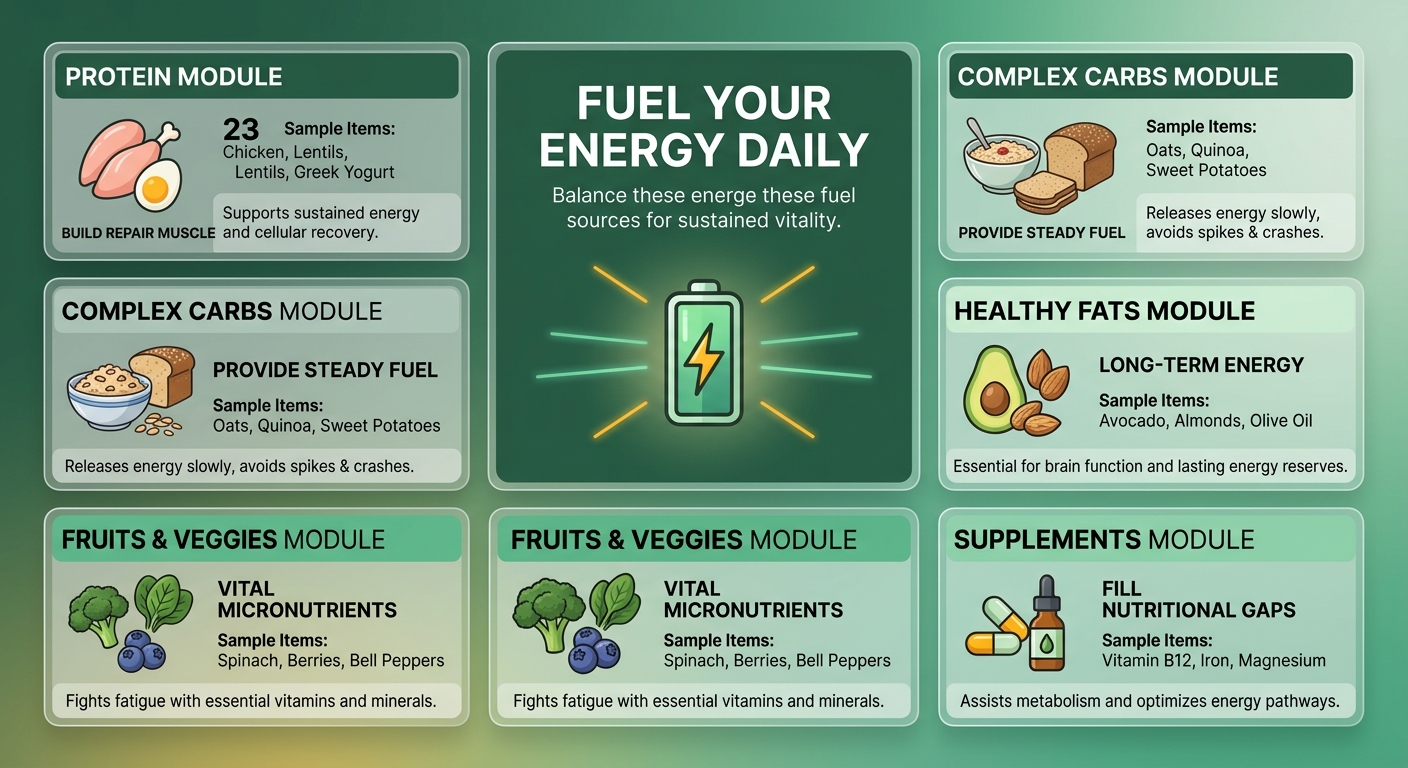
Balanced meals with protein, complex carbs, and healthy fats at every sitting stabilize the blood-sugar swings that drive cravings and mood crashes. Lean proteins: chicken, turkey, fish, eggs, beans, tofu. Complex carbs: whole grains, brown rice, quinoa, oats, sweet potatoes. Healthy fats: avocado, nuts, seeds, olive oil, and fatty fish like salmon.
The mistake families make is stocking only one category. A fridge full of chicken breasts won't fix the energy problem if there's no quinoa or avocado to go with it. Combining all three at every meal helps regulate appetite and prevents the sudden energy drops the brain can read as a craving. A protein-rich breakfast like a tofu scramble or Greek yogurt bowl works. A plain bagel doesn't.
Here's the practical list. Pantry: whole grains (brown rice, quinoa, oats, whole-grain bread), legumes (black beans, lentils, chickpeas), nuts and seeds (almonds, walnuts, chia, flaxseed), and healthy oils (olive, avocado). Fridge: lean proteins (chicken breast, turkey, salmon, eggs, Greek yogurt, tofu), leafy greens (spinach, kale, arugula), colorful vegetables (bell peppers, carrots, broccoli, sweet potatoes), fresh fruit (berries, apples, bananas, citrus), and dairy or fortified plant milks for calcium and vitamin D. Freezer: backup proteins (frozen fish, chicken thighs) and frozen vegetables for the nights when fresh prep isn't happening.
Hydration, and the short list of things to skip
Hydration is the foundation people overlook. Recovery nutrition guidelines recommend 30 to 50 ounces of water daily, not soda, not coffee, not sugary sports drinks. Your brain is 75% water, and dehydration amplifies the fatigue and brain fog you're already fighting. Keep a water bottle visible on the counter. Add lemon or cucumber if plain water feels like a chore.
Now the skip list. Sugary drinks (soda, sweetened iced tea, energy drinks) spike blood sugar and crash it an hour later, restarting the cravings-and-exhaustion cycle you're trying to leave. Processed snacks (chips, cookies, packaged pastries) are calorie-dense and nutrient-empty; they won't rebuild the vitamin D or magnesium you're short on. High-caffeine drinks (multiple espressos, pre-workout mixes) can worsen anxiety and disrupt the sleep recovery depends on. Complex nutrients give sustained stamina, well past the temporary spikes from refined carbs or caffeine.
Families often ask whether any sugar is allowed. The answer is nuanced. A review of recovery nutrition found that people in early recovery pull up to 31% of their daily calories from added sugar, driven by the brain confusing substance cravings with sweet-food cravings. You can't cut sugar entirely; fruit has it, so does yogurt. But you can swap added-sugar snacks for naturally sweet, nutrient-rich options: dates, fresh berries, Greek yogurt with honey, dark chocolate at 70% cacao or higher. Pair them with a handful of almonds or a spoonful of peanut butter to blunt the spike.
Meal prep as fatigue insurance
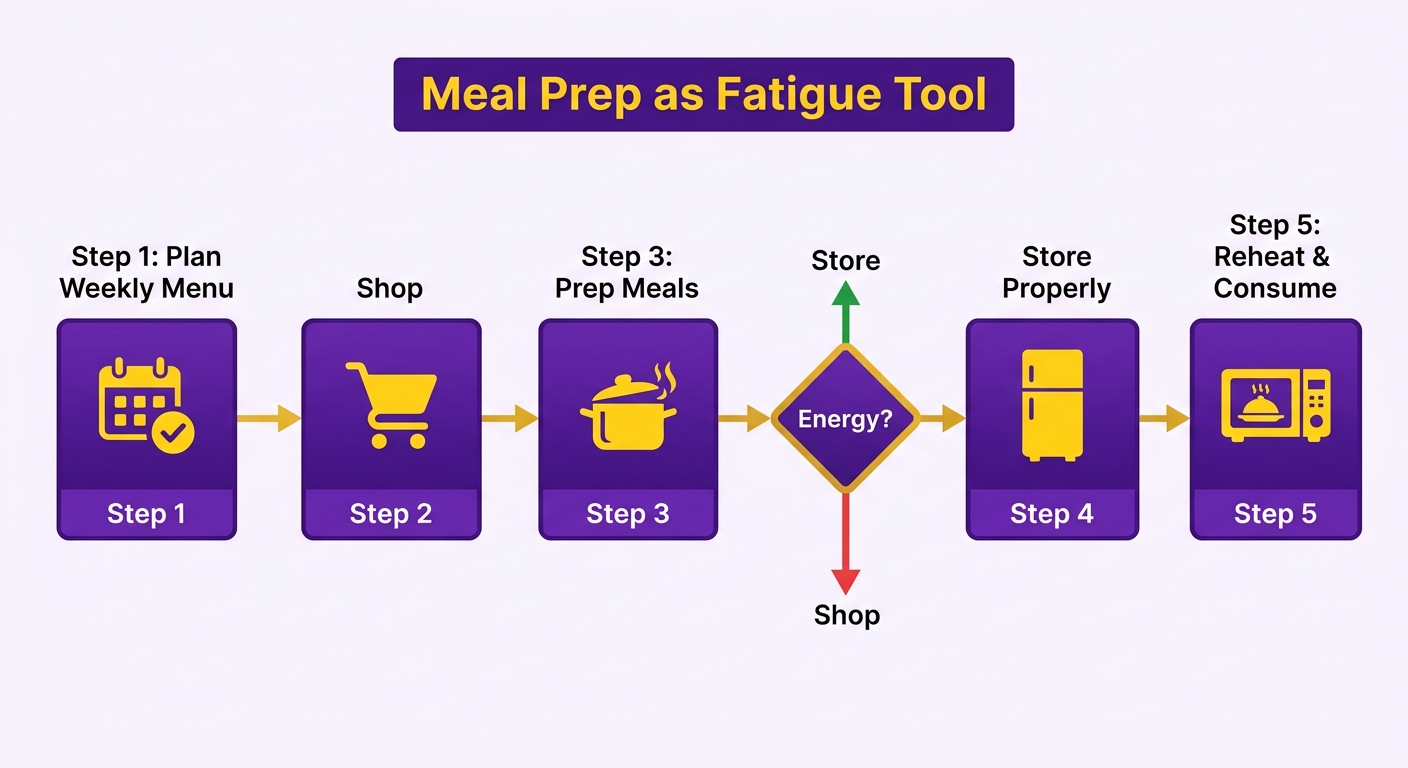
Meal prep works because early recovery wrecks your decision-making when you need it most. When exhaustion peaks, pre-assembled options stop you from reaching for the quick, low-nutrient fix.
A prepped meal is a decision you already made when your mind was clear. You're not negotiating with a hungry, exhausted brain at 7 p.m. The food is just there. In our experience, that single shift does more for steady energy than any supplement because it protects the days when motivation drops to zero.
Why batch cooking beats cooking every day
Batch cooking front-loads the effort into one session, then coasts. You cook once when you have energy and eat from that work when you don't. This matters because sobriety fatigue isn't evenly distributed. Some days you can chop vegetables. Some days getting off the couch is the win.
The tools are simple. A slow cooker turns cheap cuts and beans into six servings while you do nothing. One-pot meals like turkey chili, or a sheet pan of roasted chicken thighs and sweet potatoes, cover protein and complex carbs in a single cleanup. Turkey roll-ups, grilled chicken over greens, brown rice bowls. None of it is fancy. All of it reheats. Cooking pulls double duty too, working as a mindful practice on a good day and a stocked pantry on a bad one.
How prep should shift across the first six weeks
Your prep should move as your body moves through phases, not stay frozen on one grocery list. Early on, the main metabolic task is cellular repair and detox. As the weeks pass, physical stamina starts to stabilize and you can shift toward heartier, energy-sustaining meals.
Those two aren't in conflict. They're sequential. Prep antioxidant-heavy, liver-supporting foods first, the carrots, kiwi, and pomegranate from that study. Then move toward protein-forward batch meals as the energy window opens.
Storing food so it actually gets eaten
Store prepped food where you'll see it and reach for it inside safe windows. Cooked proteins and grains hold three to four days in the fridge; freeze anything beyond that. Portion into single-serving containers so a meal is grab-and-heat, not assemble-from-scratch. Label with dates, and keep the "eat now" containers at eye level. Whole foods only help if they make it onto your plate.
Hydration and supplements without the guesswork
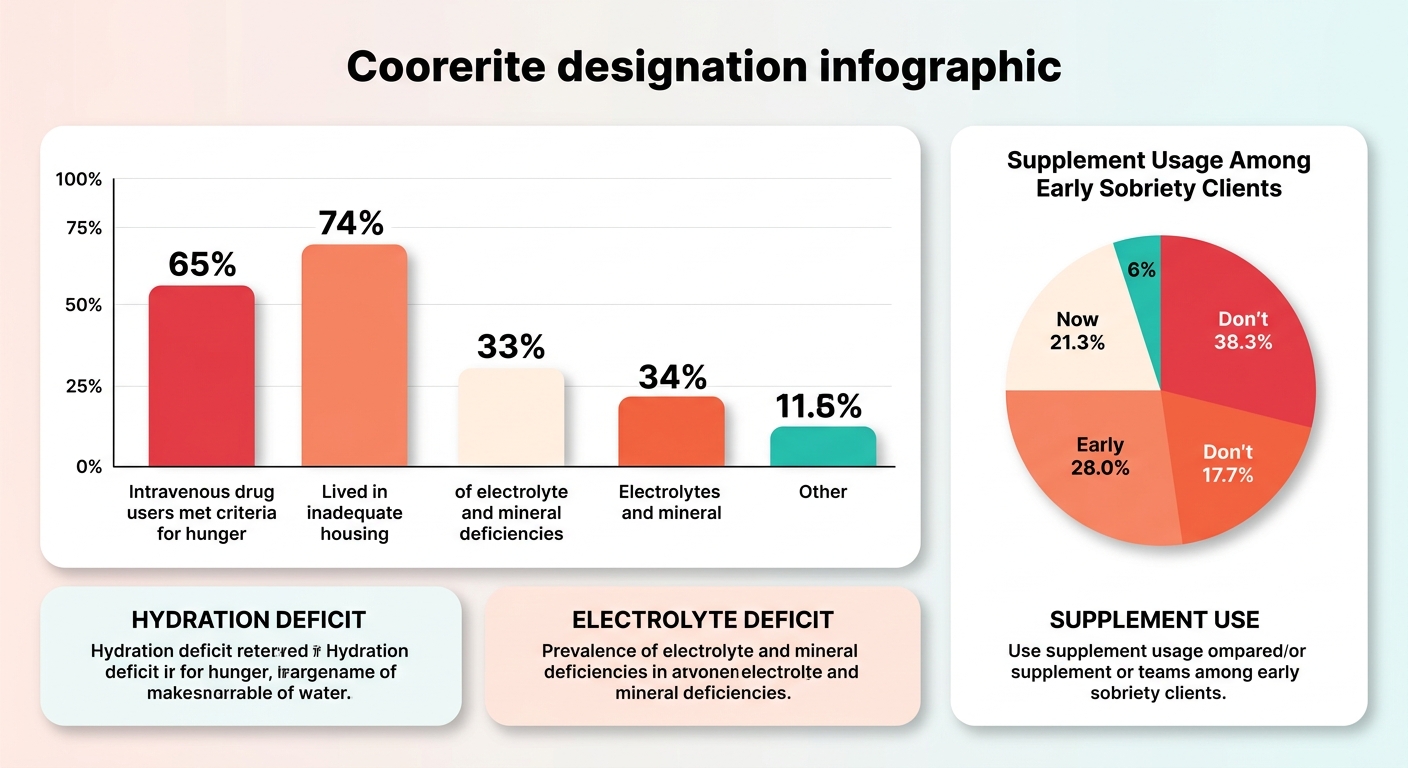
Clients walk into their first week expecting hydration to be simple: drink water, feel better. It isn't that clean. Research tracking substance-use recovery shows that 65% of intravenous drug users met criteria for hunger, and 74% lived in inadequate housing. In that state your body isn't just low on water. It's running a deficit in electrolytes, minerals, and the micronutrients that make cellular energy possible. Hydration is step one, but only half the solution.
Long-term substance use also blunts the body's ability to absorb and use key micronutrients. Drinking water isn't enough if the underlying pathways are still compromised. A randomized trial of hospitalized alcoholic hepatitis patients given 7 days of oral probiotics (1,500 mg/day) restored bowel flora and reduced inflammatory markers. Your gut needs repair work before your body can absorb what you're drinking or eating.
What hydration actually looks like early on
Start with 2 to 3 liters of water daily. Replace soda, energy drinks, and juice with plain water or unsweetened green tea. The Academy of Nutrition and Dietetics declared back in 1990 that "nutrition intervention is an essential component of treatment and recovery from substance use disorders." That covers hydration, but it also covers electrolyte balance. You're not just refilling a tank. You're restoring a system.
Add electrolyte-rich foods: bananas, spinach, avocados, sweet potatoes, and coconut water (no added sugar). If you're sweating through workouts or dealing with withdrawal symptoms, a low-sugar electrolyte powder can help. Skip the sports drinks; they spike blood sugar and crash your energy. The groups we work with see the biggest gains when they pair hydration with small, frequent meals. Drinking water between meals keeps digestion moving without overwhelming it.
Which supplements support energy without a crash
Deficiencies in B vitamins, vitamin D, and key minerals are well-documented in recovery. Chronic alcohol impairs absorption, disrupts liver metabolism, and burns through these nutrients faster. You have to replace them on purpose. What works, in our experience:
Start with a full-spectrum multivitamin/mineral split into two doses, one with breakfast, one with dinner, to keep absorption steady. Add a B-complex on top. Coming off alcohol, your thiamine stores are likely depleted, and Wernicke-Korsakoff syndrome is a real risk that consistent B1 supplementation helps prevent.
Vitamin D3 is next. Most people in early sobriety run low, so supplement 2,000 to 5,000 IU daily, or get 20 minutes of sun twice a week. Inadequate vitamin D contributes to lingering fatigue and makes mood harder to steady during withdrawal. Testing your baseline tells you whether you need the higher end of that range.
Omega-3 fatty acids at 3 grams daily reduce inflammation and stabilize mood; look for a DHA-rich formula, not just EPA. Consistent omega-3 intake supports neurological recovery and helps manage the baseline anxiety that tends to shadow early abstinence. Pair it with a refrigerated probiotic. Your gut is recovering from chronic inflammation, and probiotics help restore the microbiome that regulates energy, mood, and cravings.
When supplements earn their cost, and when they don't
In a small study, N-acetylcysteine (NAC) reduced cue-induced cravings in cocaine-dependent individuals. That's a targeted option worth considering if cravings are persistent. But skip the trendy adaptogens and nootropic stacks for the first 90 days. Your body is already under metabolic stress, and unproven supplements can strain the liver and gut further.
Get the basics right first: hydration, multivitamin/mineral, B-complex, vitamin D, omega-3, and a probiotic. Those address the core deficits the research actually supports. If you're still dragging after six weeks, talk to a healthcare provider about testing iron, zinc, and magnesium. Low magnesium tracks with the "tired but wired" feeling so many people describe.
This is where coaching connects the dots. Our programs can include coordination with nursing support, so bloodwork and acting on the results become part of the routine instead of one more thing to figure out alone. Precision needs real data. Over-the-counter guessing wastes money and stalls progress. Build your baseline first, then refine based on what your labs actually show.
References
[1] What Is Sobriety Fatigue? Causes, Timeline, and a 7‑Day Recovery Plan - https://porchlighthealth.com/sobriety-fatigue/
[2] Nutrition and Meal Planning for Men in Sober Living - https://elevaterecoveryhomes.com/cooking-for-recovery-nutrition-and-meal-planning-for-men-in-sober-living/
[3] 6 Ways to Have More Energy For Addiction Recovery - https://www.hanleycenter.org/6-ways-to-have-more-energy-for-addiction-recovery/
[4] The Unspoken Exhaustion: Why Sobriety Makes You So Tired (and ... - https://www.chooseyourhorizon.com/blog/sobriety-fatigue
[5] Nutrition for Addiction Recovery: Best Foods, Diet Tips, & Healing Support - https://americanaddictioncenters.org/blog/4-nutrition-tips-for-early-recovery
[6] Nutrition For Addiction Recovery - https://havenhealthmgmt.org/nutrition-for-addiction-recovery/
[7] How Good Nutrition Helps Your Sobriety - https://willingway.com/how-good-nutrition-helps-your-sobriety/
[8] The importance of nutrition in aiding recovery from ... - https://pubmed.ncbi.nlm.nih.gov/28806640/
[9] The importance of nutrition in aiding recovery from ... - https://www.researchgate.net/publication/318925653_The_importance_of_nutrition_in_aiding_recovery_from_substance_use_disorders_A_review
[10] The Role of Nutrition in Addiction Recovery | Request PDF - https://www.researchgate.net/publication/330060363_The_Role_of_Nutrition_in_Addiction_Recovery
[11] Importance of Education and Nutrition Intervention on Drug ... - https://www.researchgate.net/publication/330003307_Importance_of_Education_and_Nutrition_Intervention_on_Drug_Addiction_Recovery
Frequently Asked Questions
1. Why doesn't extra sleep fix sobriety fatigue the way it fixes normal tiredness?
Sobriety fatigue is a metabolic and neurological issue, not just a lack of rest. Chronic substance use disrupts cellular repair mechanisms and alters neurotransmitter pathways. Until the body's nutritional foundations are restored and the nervous system stabilizes, sleep alone cannot resolve the deep-seated exhaustion.
2. How quickly will I notice energy improvements after changing my diet?
Energy levels typically begin to stabilize gradually over the first few weeks as cellular repair progresses. While initial metabolic improvements occur relatively quickly with targeted nutrition, full physical and neurological recovery is a gradual process that unfolds over several months of consistent support.
3. Can I rely on a multivitamin instead of changing what I eat?
Multivitamins cannot substitute for whole foods because the body requires the macronutrient matrix: fiber, protein, and healthy fats to properly absorb and use micronutrients. For instance, fat-soluble vitamins require dietary fat for absorption, while neurotransmitter synthesis relies on the complete amino acid profiles found only in dietary protein.
4. What if I crave sugar constantly during early sobriety should I just avoid it completely?
Sugar cravings are incredibly common in early recovery as the brain seeks a quick dopamine replacement for alcohol or substances. Rather than trying to eliminate sweets entirely, focus on pairing naturally sweet foods with healthy fats or proteins to slow digestion and prevent the rapid blood-sugar spikes that lead to subsequent energy crashes.
5. How much protein do I actually need if I wasn't physically active during drinking?
Protein requirements are significantly elevated during early recovery to support tissue repair and neurotransmitter synthesis. Consuming adequate protein throughout the day provides the essential amino acids needed to rebuild dopamine and serotonin pathways, while also stabilizing blood sugar to help manage mood fluctuations.
6. Why do some recovery programs recommend eating every 2-3 hours instead of three meals?
Frequent, smaller meals help maintain stable blood glucose levels throughout the day. This consistent fuel supply prevents the sharp drops in blood sugar that trigger stress hormones, helping to minimize sudden mood swings and physical sensations that can easily be mistaken for cravings.