Steady Money, Steady Recovery: Handle Bills in Your First Month Home
August 29, 2026

Key Takeaways
- Financial hardship is a strong predictor of relapse. Bill management belongs in early recovery planning.
- People with substance use disorders often earn less and face higher unemployment. They may carry greater financial pressure into recovery.
- About 41% of people report anxiety about their personal finances without the added pressure of early sobriety.
- Unpaid bills keep the nervous system on high alert. Chronic stress can also contribute to cravings.
- Financial repair should run alongside clinical treatment. It should not wait until someone "feels stable."
- The first month home is where recovery meets real life. Money trouble can quietly undermine hard-won sobriety.
- Steady bill management protects more than a credit score. It also supports recovery.
Why the First Month Home Is Where Money Gets Dangerous
The first month home tests recovery against real life. Financial stress is a strong predictor of early relapse. That is why bill management belongs beside meetings and coaching. Getting your money under control protects your credit and sobriety.
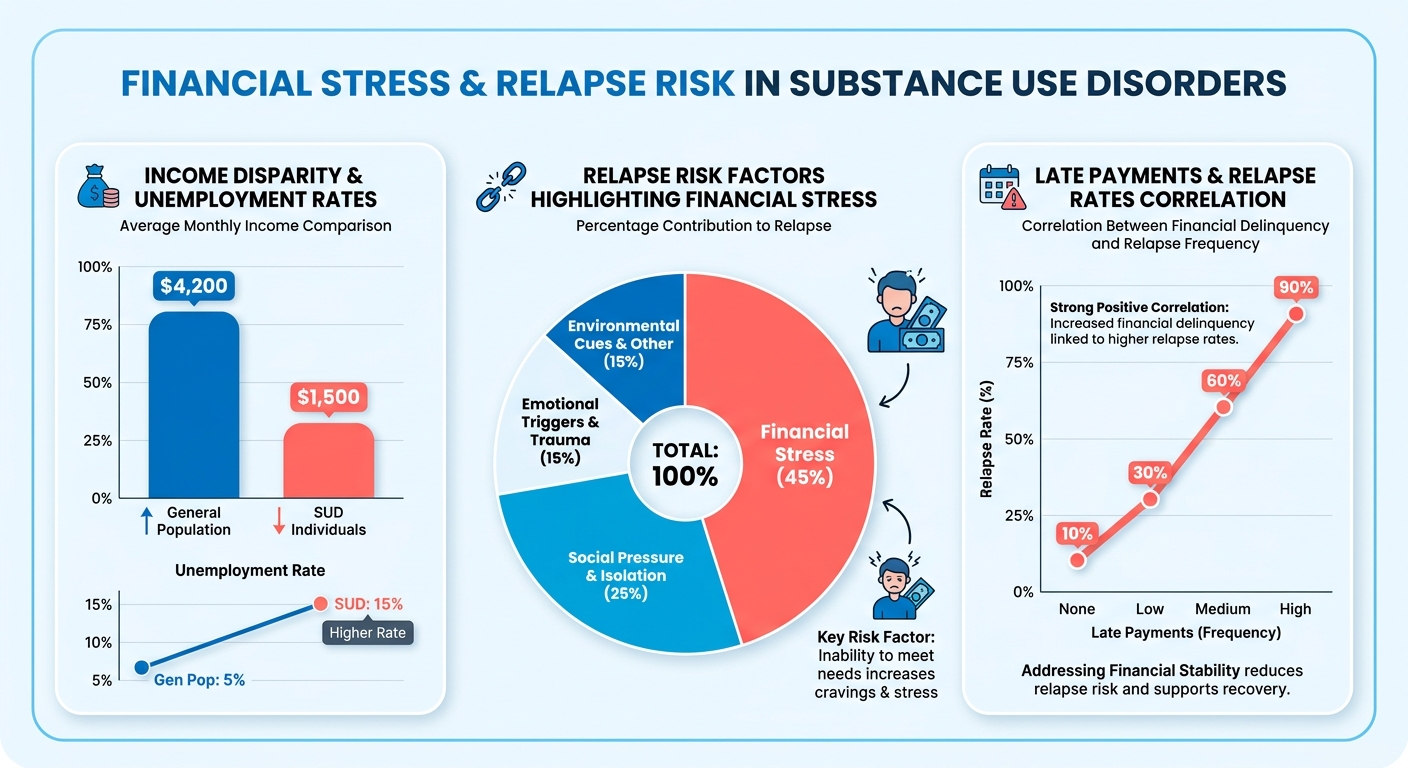
Here's the connection many people miss. People with substance use disorders earn less and face higher unemployment than the general population. Economic hardship ranks among the strongest predictors of relapse in early recovery. Also, 41% of people report feeling anxious about their finances outside recovery. Add that stress to a fragile first month, and the risk becomes real.
Why bill stress hits sobriety so directly
Unpaid bills create a slow panic that can mirror cravings. When rent is overdue and the phone keeps ringing, your nervous system stays on high alert. That chronic stress can fuel relapse. Reducing everyday stressors supports lasting recovery.
Financial repair should run parallel to clinical work. Waiting until you "feel stable" to open the mail is a trap. Facing the mail can help you stay stable. Daily routines that lower stress and restore balance provide useful recovery structure.
Who benefits most from a solid first-month budget
You benefit most if you are returning home to real bills. This is especially true with reduced or uncertain income. That describes many people leaving detox or residential treatment. Families benefit too. A clear plan can end emergency rescues that quietly enable relapse.
Our view is simple: paying bills by consequence of non-payment can also support treatment. Housing and utilities come first. That is sound budgeting advice from Michigan State University Extension. Keeping a roof over your head removes a major stressor that could pull you back toward using.
If your family has been paying your bills, shift from rescue to structure. As clients find their footing, our support tapers toward independence and long-term stability. Families can then move toward a sustainable plan.
What a first-month plan should actually track
Track five categories on one page. Keep the page visible. This view can reduce avoidance and prevent missed payments from becoming a spiral.
| Category | What It Covers | Difficulty | Time to Set Up |
|---|---|---|---|
| Income | Wages, benefits, family support (assume it is lower than normal) | Easy | 20 min |
| Fixed Bills | Rent, utilities, insurance, phone | Easy | 30 min |
| Variable Bills | Groceries, gas, transport | Medium | 30 min |
| Recovery Costs | Coaching, meetings, co-pays, medication | Medium | 20 min |
| Emergency Fund | Start toward a $1,000 buffer | Hard | Ongoing |
One important exception: do not fund aggressive debt payoff this month. The FTC's advice to negotiate with creditors is sound. In early recovery, calling a creditor for more time is smart. Draining rent money to clear a card is not. Contact creditors, reduce the pressure, and protect basic needs first.
Structured coaching can support this process. Guidance, routines, and accountability can lower stress and steady the budget. Paying rent on time during your first sober week is a milestone worth recognizing.
Start With Your Real Income and What Housing Actually Costs
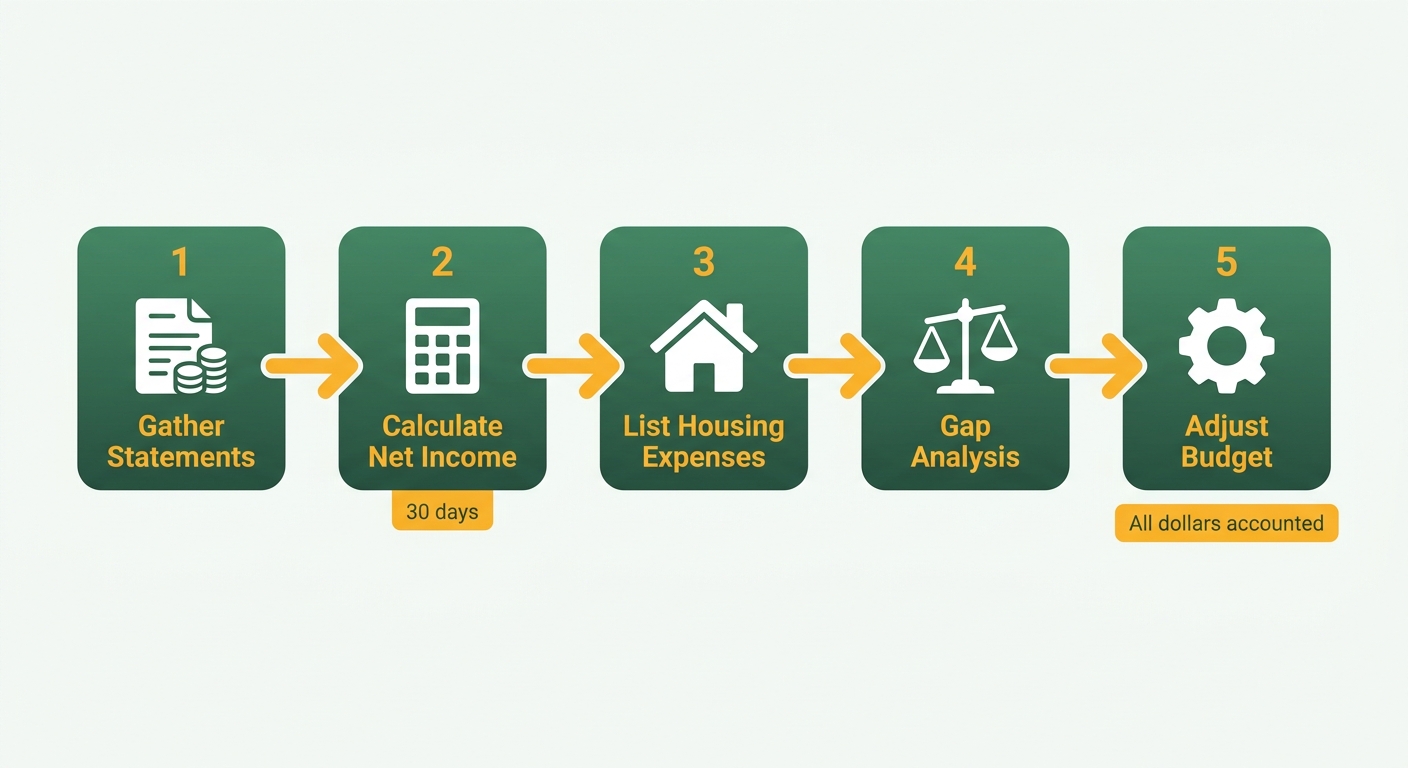
Start with one number: your real net income for the next 30 days. Do not use past earnings or hoped-for income. Count the actual dollars reaching your account this month. A realistic baseline matters during the transition back to work or a reduced schedule.
That requires a different budgeting approach. Plan around guaranteed funds, not an old paycheck. Treat this period as financial stabilization. Assign every dollar to an immediate need.
What counts as real income right now
Net income is the money available after taxes and deductions. Add your take-home pay, disability payments, unemployment benefits, and reliable family support. Then stop. If a source is uncertain, leave it off the list.
Include recovery-related income too. Some insurance plans reimburse coaching or outpatient services. Those reimbursements are real cash flow for the month. American Addiction Centers' finance guide recommends listing all income and bills first. That inventory provides a useful foundation for recovery money management.
Which housing costs hit in month one
Housing costs fall into two groups: one-time and recurring. Missing one-time costs can break your budget during the first week.
One-time costs may include a security deposit, moving truck, cleaning fees, or application fees. A security deposit often equals one to two months of rent. Recurring costs include rent or mortgage, renter's insurance, and utilities. Utilities may include electric, gas, water, and internet.
Put housing and utilities first. Securing shelter supports clinical stabilization. Addressing these pressures also creates mental space for your daily program. If a traditional lease is out of reach, sober living environments can reduce immediate pressure. They can also provide early recovery structure.
The income-versus-housing worksheet
Write two columns. On the left, list each income source and amount. On the right, list housing costs. Separate one-time costs from recurring costs. The difference between them provides a reality check.
Someone leaving residential care with a part-time paycheck and disability benefit may face high move-in costs. A security deposit and utility connection fees could consume most available cash. That leaves little room for unexpected expenses.
Seeing that small margin is a clear signal. Pause non-essential payments. Instead of draining rent money to pay old credit card balances, secure your living situation first. Your recovery plan needs room to adjust.
Build a One-Month Budget That Covers Every Obligation
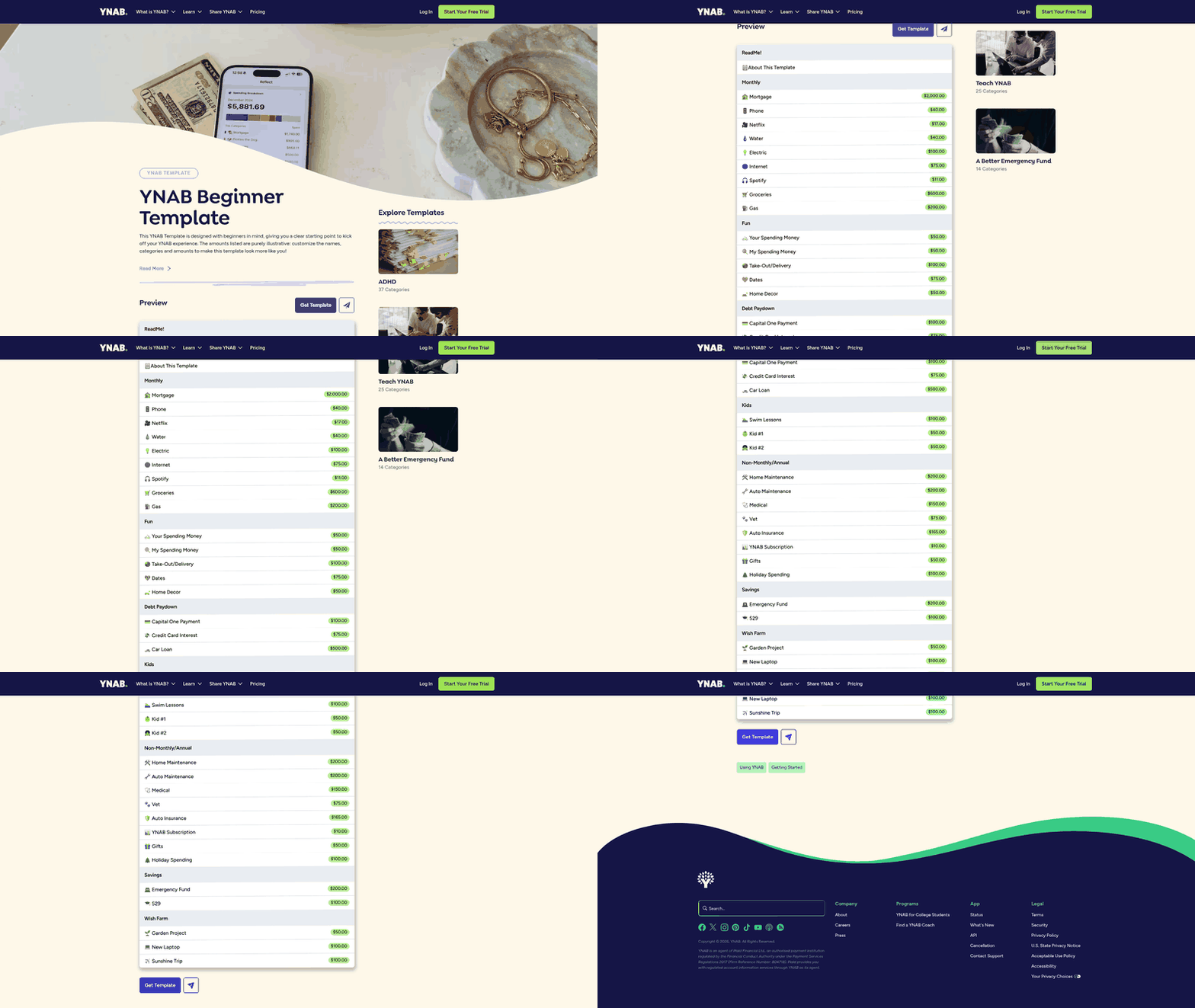
A one-month budget gives every dollar a job. Start with a barebones income baseline. Rank bills by the consequences of non-payment. Reserve a small buffer for recovery costs. This approach can reduce money-related stress.
Give each dollar an assignment. Zero-based budgeting works well during these first weeks. It requires every dollar to have a purpose. Income minus planned expenses should equal zero. Writing down every obligation also exposes hidden costs.
What goes on your 30-day budget sheet
Build a simple sheet with four columns: line item, amount, due date, and payment method. Separate fixed and variable costs. This keeps estimates realistic.
Fixed costs usually stay the same. Examples include rent, phone, insurance, and coaching fees. Variable costs change monthly. Examples include groceries, transportation, and discretionary spending. Understanding fixed, variable, and periodic expenses helps create a budget that can last.
For groceries, budget for protein-rich, low-sugar meals. This is not only about cost. Steady blood sugar supports mood stability during cravings. Healthy eating habits also support physical healing and daily energy.
How to rank which bills come first
Rank bills by the consequences of non-payment. A practical order is shelter, power and heat, food, then recovery support. Utilities fall just below rent. Losing heat, water, or electricity can quickly create safety and stress problems. Stress can fuel relapse.
This triage supports both financial and clinical stability. Protecting your living environment protects your sobriety from housing instability.
Some sources recommend contacting creditors immediately. Ashley Treatment emphasizes stabilizing basic needs first. Both ideas can work together. Ask creditors for temporary hardship terms, but do not use rent or utility money to pay them. A phone call costs nothing. A missed rent payment could cost your housing.
Where the recovery buffer fits
Set aside 5 to 10 percent of income for unexpected recovery costs. These may include coaching sessions, medication refills, or an extra therapy appointment. Recovery costs belong in the budget.
Treat this as a smaller emergency fund for month one. Financial stress deserves attention alongside cravings. Include it in daily check-ins and support meetings.
Stress-test the sheet before the month starts. Run one scenario with a paycheck delayed by one week. Run another with a surprise bill. If either scenario breaks the plan, reduce variable spending now. A budget that handles delays on paper can maintain a $0 unassigned balance in practice.
Set Up Autopay So You Never Face a Due Date Alone
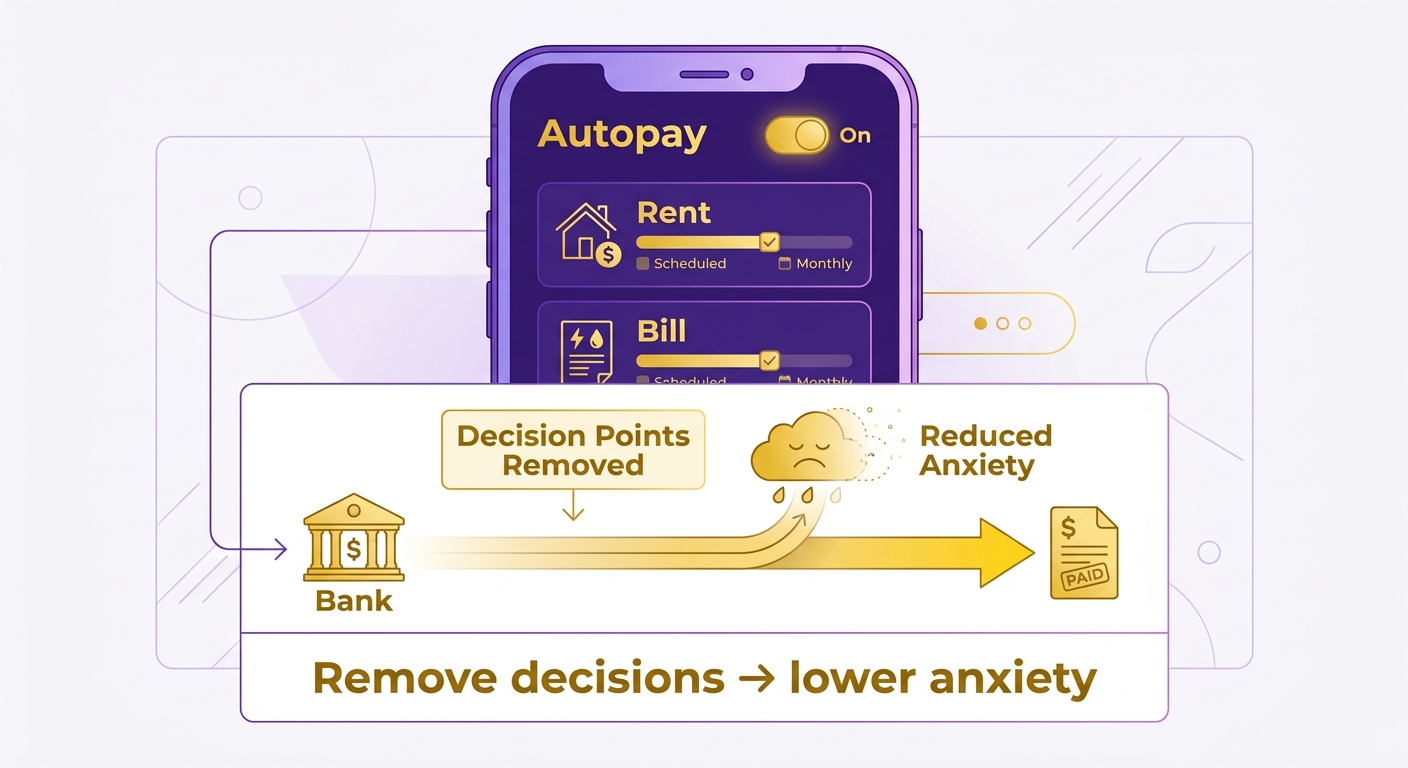
Autopay can simplify bill management during early recovery. It removes decisions and reduces opportunities for financial anxiety. Structure supports both sobriety and money management. When rent leaves your account automatically, you do not need to remember or reconsider the payment.
Financial strain and related anxiety can increase relapse risk. Automating bills helps preserve your priority ranking. Set housing and utilities to pay first. Then let the system protect your living situation while you focus on meetings, sleep, and recovery.
Why autopay lowers relapse risk
Autopay reduces the mental work that contributes to financial stress. Fewer due dates mean fewer moments of panic. Automating essential bills frees mental energy for recovery work. It also creates a predictable routine.
The logic is straightforward. Autopay can mean fewer missed payments and late fees. It can also reduce collection calls and anxiety spikes. The 211 network hears about these problems daily from people struggling with housing and utility costs.
How to enroll in autopay without getting burned
Enroll through your biller or bank. Pair autopay with a balance buffer. The main risk is scheduling a payment your account cannot cover. An overdraft can cost more than the late fee you hoped to avoid.
Set it up in this order:
- Rent first. Use your landlord's ACH or direct-debit option, if available. Otherwise, schedule a recurring bank transfer. Make it arrive a few days before the due date.
- Utilities second. Enroll through the provider's autopay portal. Turn on low-balance and payment-posted alerts. These alerts can prevent unexpected bounced payments.
- Bank tools third. Set up text or email alerts for low balances. If available, add spending caps for discretionary categories. These guardrails can catch problems before fees occur.
Do not automate aggressive debt payoff during your first month home. Many lenders will work with you after a call about your transition. Keep scarce cash for housing and utilities. Stability comes before debt payoff.
Your first-week autopay checklist
Set up your safety net during week one. Complete these steps before your first paycheck arrives:
- Enroll rent in ACH or a scheduled bank transfer. Date the payment three days early.
- Turn on utility autopay with low-balance alerts.
- Add a backup payment method to each account.
- Name one emergency contact, such as a family member or coach. Notify them if a payment fails.
That last step matters most. A backup person can catch what automation misses.
Track Every Dollar Daily With Tools That Don't Get in the Way
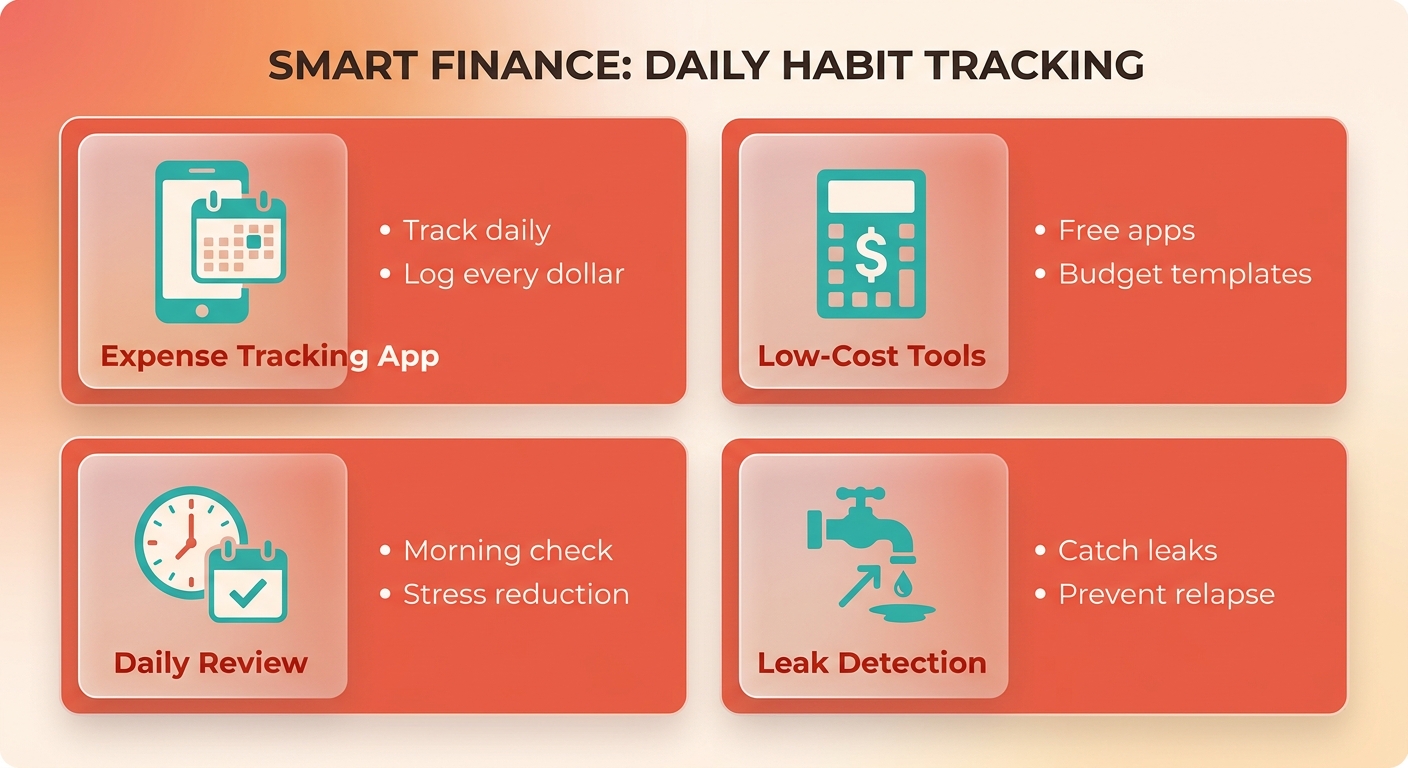
Daily spending tracking keeps your budget accurate. Log each dollar on the day you spend it. This helps you find small leaks before they create panic. In early recovery, the routine protects your money and creates a repeatable daily win.
Why daily? A budget checked once a month may reveal problems too late. Keeping money stable requires watching it move in near real time. The Cenikor Foundation notes that financial management is an important part of recovery. It can reduce stress and help prevent relapse. Tracking helps prevent that stress from accumulating.
How to turn tracking into a recovery habit
Attach tracking to something you already do. This is called habit stacking. Connect the new behavior to an activity you never skip. If you already have a daily routine, log yesterday's spending before it. Take two minutes at the same time each day.
Treat the log as a small daily win. A budget worksheet or plain spreadsheet works well. The tool matters less than consistency.
Color-code categories to match your recovery plan. Use green for needs, yellow for wants, and red for spending linked to old triggers. When the red column grows, name the pattern rather than hiding it.
What your weekly review should catch
Once a week, compare actual spending with your monthly budget. Find gaps and adjust the following week's plan. Daily logs make this review easier because the information is already recorded.
Small changes add up. A daily habit can reveal $5 coffee purchases and impulse buys. Someone tracking each purchase might find $30 per week in convenience-store trips. That money could go toward an emergency fund.
Give redirected money a clear purpose. A small savings cushion can keep an unexpected bill from creating new debt. One recovery story profiled by Cenikor saved $1,200 in six months by opening a dedicated savings account. The weekly review is where those savings can be found and moved.
When to skip the fancy tools
Skip an elaborate app if it creates more decisions. In early recovery, complexity can become a barrier. A free spreadsheet you open regularly is better than a tool you avoid.
Choose the simplest system you will use daily. If you fall behind, the Equifax catch-up guide recommends listing debts and prioritizing necessary expenses. Tracking helps prevent future delays. It also supports a steady, independent routine.
Build a Mini Emergency Fund and Lean on Community Help
A $200 to $300 emergency buffer by the end of your first month home can help manage early recovery costs. It provides a cushion for an unexpected car repair or medical copay. Without that buffer, these expenses could disrupt your budget and increase financial anxiety. Financial stress can also increase relapse risk.
You do not need a large amount to benefit. Research on financial well-being shows that even modest savings can reduce stress and increase control, regardless of income. The first-month target is small and fast. A few dollars saved provides more security than no savings and a later panic call.
How to save $200 fast on a barebones income
Two methods work well when income is limited. Both reduce the daily decision about saving.
Automatic payday transfer: set your bank to move a fixed amount to savings when your paycheck arrives. Even $25 to $50 per pay period can reach $200 in one month. You make no manual choice.
Cash-envelope method: withdraw cash for variable costs such as groceries and gas. Set aside a small buffer envelope. Visible, limited cash can encourage deliberate spending. Move whatever remains at week's end into the fund.
Do not fund this buffer by skipping rent or utilities. Those costs come first. Build the emergency fund from money left after housing and power are covered.
Which community resources to tap first
Start with 211, the United Way network connecting people with local assistance. Resources may help with rent, utilities, food, and healthcare. The network receives many calls about housing and utilities because these needs matter during major life transitions.
Apply to at least two of these within your first two weeks:
- 211.org for local rent, utility, and food assistance information.
- LIHEAP, the Low Income Home Energy Assistance Program, which covers heating, cooling, and bill payment. It can eliminate a looming energy bill.
- SNAP for food benefits. These benefits free up grocery money.
- Utility hardship programs offered by electric, gas, or water companies.
If you cannot cover an electric bill, call your utility. Ask about its hardship program. Many providers will defer or restructure the balance. This can reduce stress and protect your emergency fund. Reaching out early is free. Most providers will discuss temporary payment plans.
One 211 client described the emotional effect:
"I have had anxiety since all of this started, I was barely making it before, but I was ok. I feel so much better now knowing that I am receiving this help." - United Way 211 client
That relief is the goal. Reducing financial stress early can support sobriety. You do not have to manage the transition alone. Professional support networks focus on accountability, routine building, and daily life management. They can help you build the stability and confidence needed for tasks like these.
Your two-week checklist: open a savings account, set one automatic transfer, and submit at least two resource applications. These steps help put your money on steadier ground.
References
[1] I need help paying my bills | United Way 211 - https://www.211.org/get-help/i-need-help-paying-my-bills
[2] How to Pay Your Bills When You Can't Work | Securian Financial - https://www.securian.com/insights-tools/articles/how-to-pay-bills-cant-work.html
[3] How to Catch Up When You've Fallen Behind on Paying Your Bills - Equifax - https://www.equifax.com/personal/education/debt-management/articles/-/learn/pay-bills-to-catch-up-when-behind/
[4] Which bills should I pay first in a financial crisis? - MI Money Health - https://www.canr.msu.edu/news/which-bills-should-i-pay-first-in-a-financial-crisis
[5] How To Get Out of Debt - FTC Consumer Advice - https://consumer.ftc.gov/articles/how-get-out-debt
[6] Guide to Personal Finance in Recovery - https://americanaddictioncenters.org/personal-finance-in-recovery
[7] Rebuilding Your Finances After Addiction - https://www.ashleytreatment.org/rehab-blog/rebuilding-your-finances-after-addiction/
[8] Budgeting Tips to Keep in Mind Once You've Completed ... - https://www.gatewayrehab.org/blog/budgeting-tips-to-keep-in-mind-once-you-ve-completed-rehab
[9] How to Stay Sober After Rehab: Managing Your Finances - https://www.cenikor.org/resources/how-to-stay-sober-after-rehab-managing-your-finances/
Frequently Asked Questions
1. What if my income is too irregular to set a fixed autopay amount?
If your income fluctuates, limit automatic payments to fixed expenses. Rent is one example. For variable bills, use calendar reminders instead. You can also keep a small checking-account buffer to prevent overdraft fees.
2. Should I cancel subscriptions or streaming services in my first month home?
Pause discretionary subscriptions if money is tight. These services are variable costs. Pausing them frees cash for your initial savings buffer. It does not affect your ability to pay rent.
3. What if I already have debt collectors calling me?
Tell your creditors about your current transition. Request a temporary payment pause or reduced interest rate. Many institutions offer hardship programs after major life disruptions. Keep cash focused on shelter and utilities while you negotiate.
4. Can community assistance programs actually cover a bill I can't pay right now?
Yes. Local agencies can often provide direct grants. These grants may help prevent utility shutoffs or assist with rent. Community resource hotlines can connect you with state-funded energy assistance and local food programs. These resources can lower monthly out-of-pocket expenses.
5. How is zero-based budgeting different from just tracking my spending?
Zero-based budgeting is a forward-looking plan. It assigns every dollar of incoming revenue before the month begins. Daily tracking looks backward. It compares actual spending with the plan and shows where adjustments may be needed.
6. Is $200 really enough of an emergency fund to matter?
Yes. Even a small cushion can reduce acute anxiety. It can also prevent minor emergencies from becoming major crises. A larger fund remains the long-term goal. A modest target provides immediate support during the transition.
7. Where does structured coaching fit alongside handling bills myself?
Professional recovery support can connect financial management with your broader wellness plan. Structured routines and accountability help you address real-world stressors systematically. This collaborative approach supports the transition from crisis management to long-term independence.