Sober Coaching vs Sober Living After Rehab: Independence or a Full Reset?
September 27, 2026

Before we get into it, the short version:
- Between 65 and 70 percent of people relapse within the first 90 days after leaving structured treatment. That's the highest-risk window in recovery.
- Research on sober living has shown improved abstinence over time.
- A recent review found a small number of rigorous sober living studies.
- Sober coaching runs anywhere from a few hours a week up to 40-hour arrangements, and can expand to include travel accompaniment and companionship.
- A large systematic review found peer recovery support improves treatment engagement, though its direct effect on sobriety stays mixed.
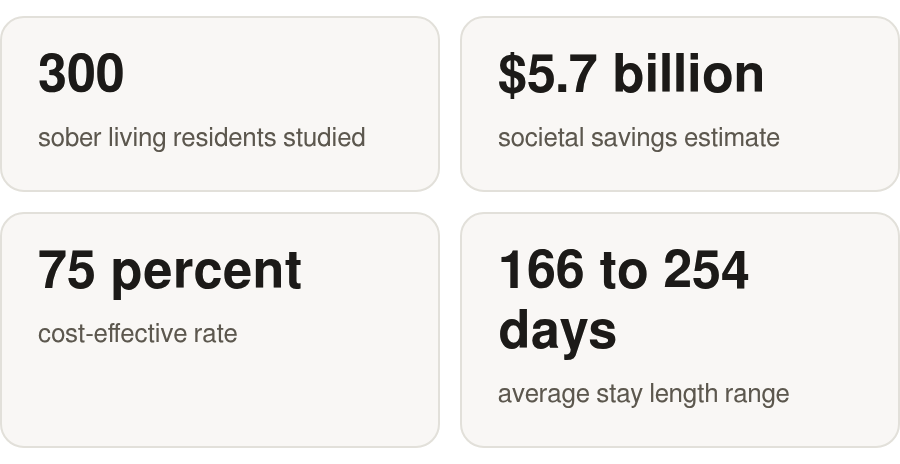
- A microsimulation estimated that one year of post-residential coaching yields substantial societal savings, and it can be cost-effective.
- California sober living homes report average stays of 166 to 254 days, with costs rent-based and coaching rarely covered by insurance.
Why the Choice Between Sober Coaching and Sober Living After Rehab Actually Matters
The weeks right after treatment are when recovery skills meet real life for the first time. So the choice between sober coaching after rehab and moving into a sober living home isn't a logistics detail. It shapes whether the structure you built in treatment survives work stress, family conflict, travel, boredom, and ordinary unsupervised evenings.
Both options exist because discharge can feel like a cliff. A sober living home gives you a fixed, substance-free environment. A coaching team follows you into the moments a house can't reach. Families often ask us to pick one. The more useful question is what each one protects, and where each one leaves a gap.
The Environment Only Protects You While You're Standing In It
Sober living works, and the data backs it. The strongest studies point to better abstinence, more recovery connection, and practical gains when people have a stable, substance-free residence alongside peers chasing the same goal. Recovery housing is also one of the most available post-treatment supports in the country.
The catch is baked into the model. The house protects you most while you're living inside its structure. It can't sit beside you at a work dinner, a family holiday, or a solo trip. That's the coverage hole families tend to find only after the first stressful weekend.
Coaching Goes Where the Risk Goes
A sober coach is nonclinical support that turns a treatment plan into daily action. It can be light-touch or highly intensive, and it can grow to include companionship and travel accompaniment as needs shift. As Ashley Addiction Treatment puts it, coaching is "a step up from the level of support provided by a sponsor."
The limit matters. Coaching isn't therapy, detox, or medication management. It works best when the coach is well-vetted, clear about scope, and coordinated with the rest of a person's care. Because the field isn't regulated like clinical treatment, families need to ask sharper questions before choosing a provider.
| Factor | Sober Living | Sober Coaching | Hybrid (our model) |
|---|---|---|---|
| Fixed sober environment | Yes | No | Yes |
| Follows you when traveling | No | Yes | Yes |
| Support during critical moments | House peers | Coach-led | Yes |
| Strongest evidence for | Housed abstinence | Engagement | Both, layered |
| Virtual and in-person options | No | Yes | Yes |
Why We Blend Both Instead of Picking a Side
The sober living study named a sober social network and 12-step involvement as the strongest predictors of staying sober. That relational element is exactly what a daily coaching team supplies. Adding coaching to housing doesn't just stack two services. It reinforces the human connection that made the housing model work in the first place.
The economics lean the same way. When recovery support helps people stay connected, avoid crisis care, and function more steadily, the value reaches past the individual household. That's why post-residential coaching is increasingly discussed not just as a private service, but as a possible bridge between treatment and long-term recovery.
We build support around your needs early, then intentionally taper it as you stabilize and gain independence. The right level of support is the minimum that keeps you progressing, matched to your risk, not the maximum you can afford. We'll help you build that plan.
Coaching vs. Living, Side by Side (Including MADE Recovery)
Every aftercare guide leans on the same handful of decision criteria: cost, structure, flexibility, community, and professional support. Line them up side by side and the choice stops feeling like a coin flip. Each option protects a different mechanism, and the gaps in one are exactly what the other covers.
This scorecard comes from the questions families raise with us most often, plus what the research actually shows about each model.
The Grid That Compares Apples to Apples
| Criteria | Sober Coaching (generic) | Sober Living (generic) | MADE Recovery Coaching | Hybrid (coaching + housing) |
|---|---|---|---|---|
| Core features | 1:1 accountability, real-time guidance | Fixed substance-free residence, peer community | Personalized team, daily companionship, travel support | Sober residence plus mobile coaching |
| Level of structure | Client-directed, flexible | High, house rules and curfews | Adjustable to risk | High early, tapers over time |
| Independence support | Strong | Moderate while in-house | Strong | Strong |
| Typical length | Months to years | Longer residential stays, per a California SLH study | Matched to the person | Phased |
| Cost | Out-of-pocket; rarely insured | Rent-based, cost-effective | À la carte or custom packages | Higher, blended |
| Best for | Self-directed follow-through | Community immersion | High-need accountability with independence | Anyone bridging both |
Housing Holds You Still. Coaching Moves With You.
Recovery housing is one of the most widely available supports out there, according to a recent systematic review. Its clearest value comes from changing the daily setting: fewer cues, more peer accountability, clearer expectations, an easier path into sober routines.
A coach works a different surface area. The support travels with you into evening hours, work trips, family dinners, and ordinary at-home decisions. Our services extend to sober travel companionship and everyday companionship at social events and at home, so the hybrid covers both the fixed environment and the mobile execution gap neither model closes alone.
Why the Hybrid Amplifies What Housing Already Got Right
Housing research keeps pointing at connection as a major driver of progress. People do better when their daily network supports recovery instead of undermining it. That's where a coaching team adds value: not by replacing the house community, but by extending that relational accountability into the parts of life the house can't supervise.
Layering coaching onto housing also makes for a cleaner handoff. Instead of leaving a structured residence and suddenly managing everything alone, the person already has support running inside their real-world routine.
One caveat we hold ourselves to: coaching is nonclinical support, not medical treatment, and quality varies because the field isn't tightly regulated. Three differences should drive your decision. Daily supervision versus self-directed living. Fixed cost versus scalable spend. And whether your highest-risk moments happen inside a house or out in the world. For a lot of people leaving treatment, the answer is both, which is what a good coach protects.
Independence vs. Full Reset: The Real Trade-off
The real tension here isn't cost or comfort. It's control. Coaching keeps you in your own life and asks you to run it better. A full reset pulls you into a fixed, substance-free house and rebuilds your days from scratch. Both work by protecting different psychological muscles, and knowing which one you need right now matters more than picking the "better" model.
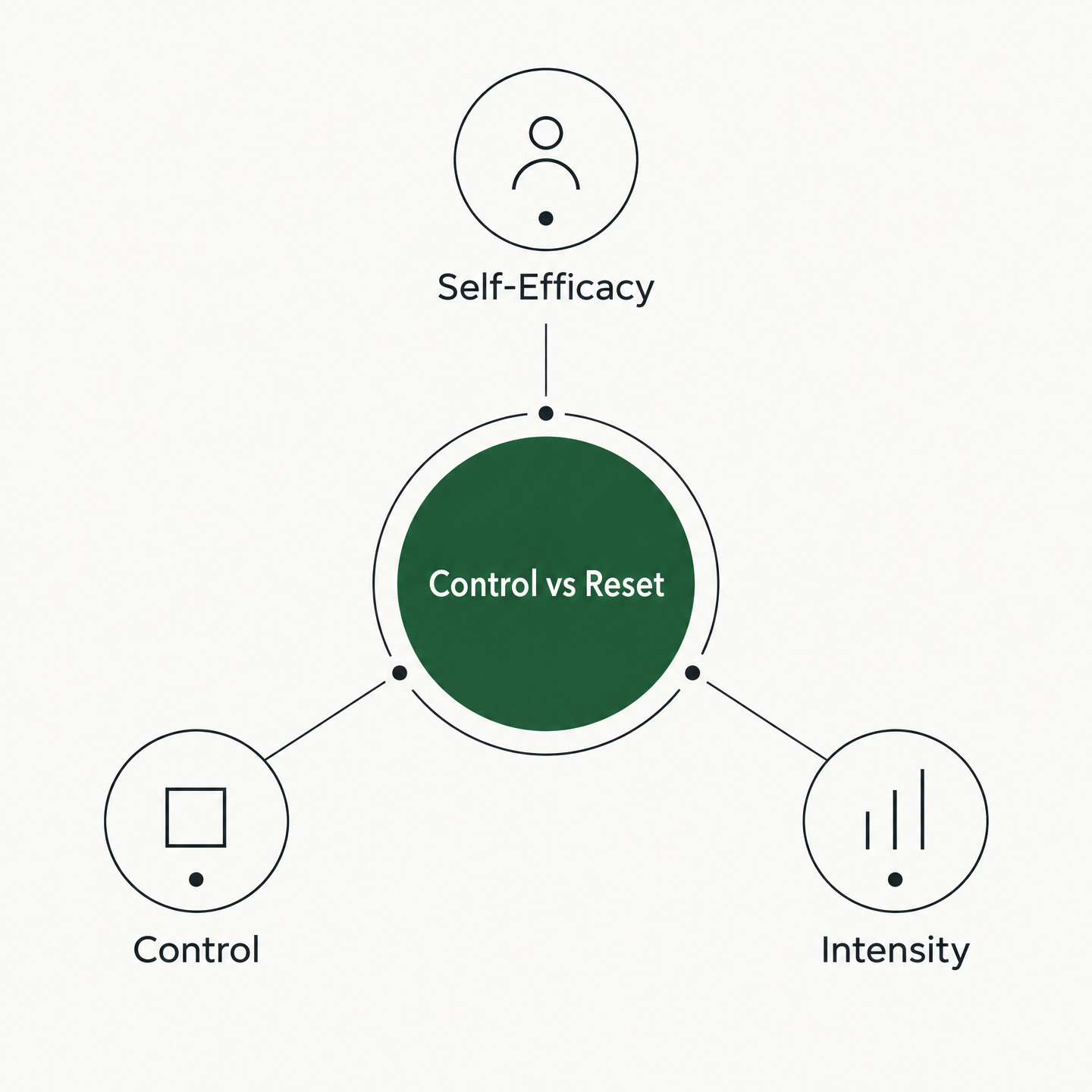
Coaching builds self-efficacy by making you the one who acts. The Futures Recovery guide says it plainly: "The right support should help you build your own recovery system, not depend on the coach forever." A full reset does the opposite early on. It removes decisions so your nervous system can settle. Neither is wrong. They're timed differently.
Does independence or a full reset build more lasting change?
Independence trains the skill you actually need long-term: doing the right thing when nobody's watching. That's why our coaching flexes with your needs, scaling up when risk is high and tapering as you stabilize. The house delivers its benefit through rules, routine, and proximity to sober peers. That can be powerful, but it also means leaving the house becomes a meaningful transition of its own.
So a reset buys you a protected runway. Coaching teaches you to fly the plane. The trade-off is real.
| Trade-off | Coaching (independence) | Sober living (full reset) |
|---|---|---|
| Builds self-efficacy | High, you act daily | Lower early, structure acts for you |
| Protects during high-risk hours | Follows you anywhere, plus travel | Only inside the house |
| Habit formation | In your real environment | In a controlled one |
| Fades cleanly when ready | Designed to taper | Requires a second transition out |
How much support is actually right?
The sources genuinely disagree here. Futures argues the goal is the minimum support that keeps you stable and progressing. Caron's team counters that after repeated relapse the answer is more layers, not more self-criticism. Both are right, just at different moments. The minimum effective dose is the target, but the correct minimum spikes in early recovery and after a slip. Match intensity to risk instead of defaulting to maximum or minimum.
There's a quieter caveat too. Research on peer recovery support points to real gains in engagement and staying connected to care, while its direct effect on sobriety is harder to pin down. Coaching quality decides whether the promise holds, which is why vetting matters. It's also why we build support around a dedicated coach or a coordinated team, matched to your level of care.
This is where the hybrid earns its keep. Housing gives recovery a safer base. Coaching extends that base into errands, relationships, travel, work, and unstructured time. We wrote more on what that support looks like between crises.
A Framework for Matching Your Needs to the Right Option
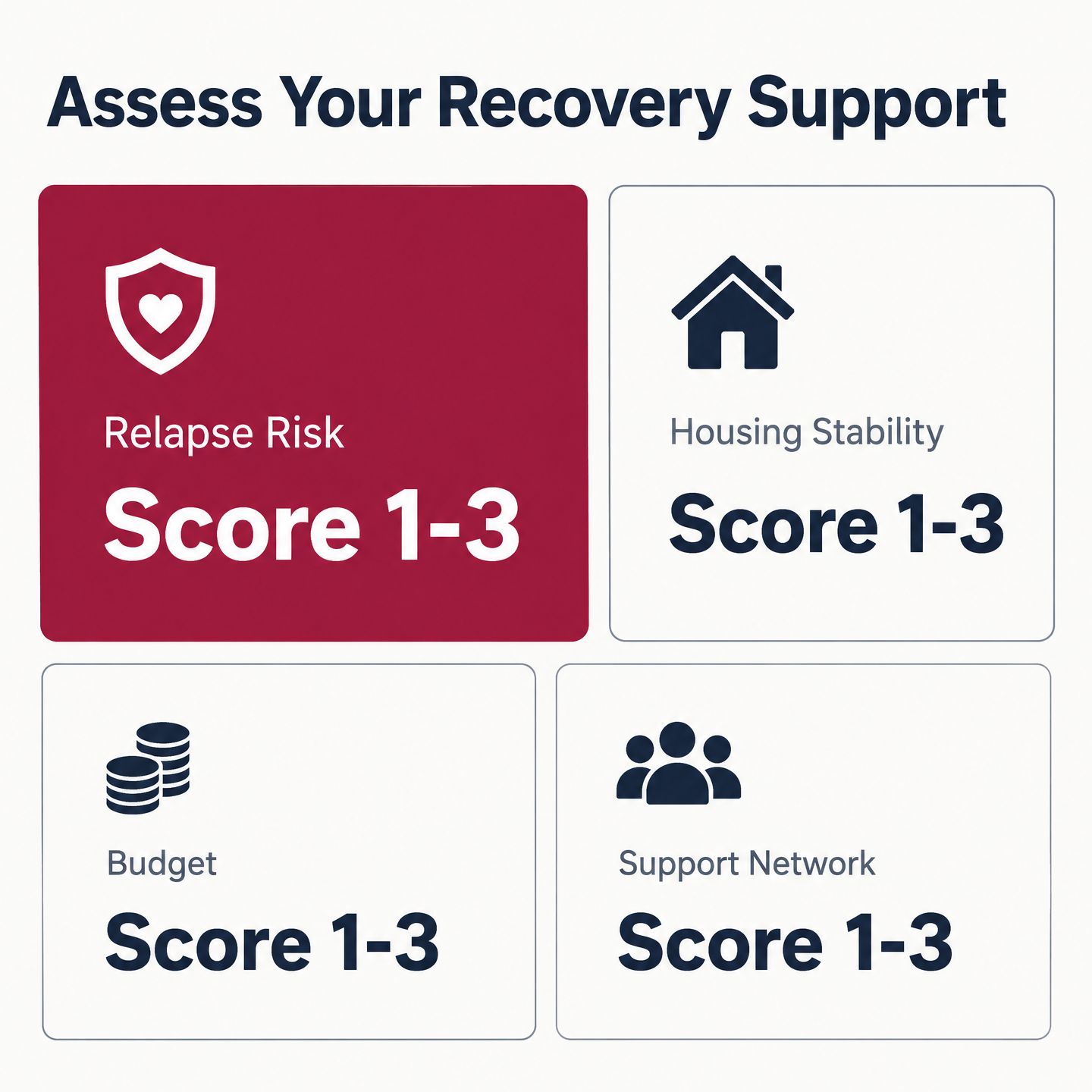
The choice gets easier when you stop asking which is "better" and start scoring your actual situation. The right answer depends on four things: your relapse risk, your housing stability, your budget, and how much of your recovery relies on the people around you. It starts with an honest look at where you are, the same assessment we begin with in an initial consultation.
Early recovery usually calls for more support than people expect, especially when someone is moving from a structured program back into a less predictable daily life. The goal is the level of support that keeps you stable and progressing. That level often runs high at first, then tapers intentionally as you build independence.
Score Your Situation Before You Choose
Rate yourself 1 to 3 on each row. Higher totals point toward a full reset or a hybrid. Lower totals mean coaching alone may hold.
| Factor | Low intensity (1) | Medium (2) | High intensity (3) |
|---|---|---|---|
| Relapse history | First attempt | One prior relapse | Multiple relapses |
| Housing stability | Safe, sober home | Mixed household | Active use at home |
| Support network | Sober friends, family | Few sober contacts | Isolated or triggering circle |
| Daily structure | Job, routine intact | Some structure | No anchor to the day |
| Budget for support | Out of pocket OK | Limited | Housing cost is the barrier |
Two cost and quality issues deserve attention before you commit. Most insurance plans don't cover sober coaching, so plan for it as an out-of-pocket expense. And because the field isn't strictly regulated, coach qualifications vary widely. Vet training, scope, supervision, availability, and crisis boundaries before you hire anyone.
The Network Score People Underrate
Look back at your support-network row. Your social network matters more than most people expect, because isolation and triggering relationships can quietly undo even a strong treatment plan. A sober house can change that daily social field fast by surrounding someone with peers, rules, and shared recovery expectations.
That's why we lean toward the hybrid when someone scores low on network but high on risk. A coaching team supplies the relational piece daily, and pairing it with a sober home reinforces the support structure the research points to rather than just stacking two invoices. Recovery housing works best as a stable base. Coaching follows you into the high-risk hours and travel days a house can't reach.
Red Flags That Mean Coaching Alone Isn't Enough
Some situations override the score. If any of these are true, push toward a fixed sober environment first:
- Active use in your home, or a partner or roommate who drinks or uses
- Multiple relapses in the past year. As Futures notes, the answer is more layers of support, not more self-blame
Families carry real weight here. You know the home environment and the history better than any intake form. Your job isn't to enforce sobriety. It's to be honest about which factors score high, and to help build a plan around them. Help starts with a conversation, and we'll work with you to match the level of support to where the risk actually sits.
What I'd Actually Recommend After Rehab
Four sections in, the pattern is clear. Sober coaching after rehab keeps you in your own life and builds the muscle of running it well. A full reset hands you a fixed, sober house and rebuilds your days from the ground up. Neither wins on merit alone. The right call depends on your relapse risk, your housing, your budget, and how much of your recovery leans on the people around you.
Here's the plain-language read on who each option serves best, and where blending them beats picking one.
| Scenario | Best fit |
|---|---|
| Stable sober home, moderate risk, need accountability without moving | Sober coaching |
| Want to stay employed and keep your routine while adding structure | Sober coaching |
| Travel, family events, or high-pressure situations that threaten sobriety | Sober coaching + companionship |
| High relapse risk with a chaotic or using household | Sober living |
| Weak sober network, need built-in peer community and house rules | Sober living |
| Reentering from a major disruption and need a full environmental reset | Sober living |
| High risk early, plus travel and daily-life demands as you stabilize | Hybrid (coaching + housing) |
Coaching Wins When Your Life Is Worth Protecting In Place
Coaching fits when your home is genuinely sober and your problem is accountability, not environment. It lets you keep work, school, parenting, relationships, and normal routines in view while adding support around the moments most likely to derail you.
How well it works depends heavily on the person delivering it. Vet your coach. Ask how they handle travel, evenings, communication, relapse warning signs, coordination with clinicians, and tapering support over time. That's a big part of what makes the model hold.
Sober Living Wins When The Room You'd Go Back To Is The Problem
If your household drinks or uses, structure beats willpower every time. The 18-month sober living study found that staying connected and staying long enough both matter.
That's exactly why the hybrid makes sense. A coaching team supplies daily companionship and relational structure, along with the community connection and mentorship that help early recovery hold. Add coaching to housing and you reinforce the human connection that carries people through the hard days, rather than just stacking two services.
Your Next-Step Checklist
Before you sign anything, work through four moves:
- Get an honest read on your relapse risk and home stability. Score it, don't guess.
- Set a real budget, including what's rent-based, what's private pay, and what your plan won't cover.
- Talk to your family about what support they can and can't provide.
- Book an intake consultation and match the support level to your risk, heavy early, tapering as you stabilize.
We're happy to walk through that assessment with you. Reach out to MADE Recovery for an initial consultation, and we'll help you build a plan that fits where you actually are.
One note on scope: we provide nonmedical recovery support, not detox, medication management, or clinical treatment. If you need medical care, we'll help you coordinate with the right providers.
References
[1] Sober Coaching: How It Works, Key Benefits,… - Caron Treatment Centers - https://www.caron.org/addiction-101/treatment-advice/sober-coaching
[2] What Is a Sober Coach? | Benefits, Costs, and How to Choose One - https://futuresrecoveryhealthcare.com/alcoholism/what-is-a-sober-coach/
[3] What Is Sober Coaching? - Ashley Addiction Treatment - https://www.ashleytreatment.org/rehab-blog/what-is-sober-coaching/
[4] The potential economic benefits of recovery coaching - https://www.recoveryanswers.org/research-post/potential-economic-benefits-recovery-coaching/
[5] Recovery housing for substance use disorder: a systematic review - https://www.frontiersin.org/journals/public-health/articles/10.3389/fpubh.2025.1506412/full
[6] Peer Recovery Support Services and Recovery Coaching for Substance ... - https://pmc.ncbi.nlm.nih.gov/articles/PMC12811009/
[7] What Did We Learn from Our Study on Sober Living Houses and Where ... - https://pmc.ncbi.nlm.nih.gov/articles/PMC3057870/
Quick Questions, Straight Answers
1. How do I vet a sober coach if the field isn't regulated?
Ask about training, credentials, supervision, availability, and scope. You want to know what services they actually provide, whether they work solo or as a coordinated team, and how they communicate with clinical providers when needed. A good coach can explain where their nonclinical role ends and when medical or therapeutic care should take over.
2. Can sober coaching or a sober living home replace medical treatment like detox?
Neither replaces medical care. Sober coaching turns your treatment plan into daily action, and sober living provides a substance-free environment, but neither offers detox, medication management, or clinical treatment. MADE Recovery provides nonmedical recovery support and coordinates with outside medical providers when you need that level of care.
3. Is leaving a sober living home its own relapse risk?
Yes. Moving out can be difficult because the rules, peers, routines, and physical separation from triggers all change at once. Coaching can make that transition less abrupt by continuing support in the person’s actual home, workplace, travel schedule, and social life.
4. Will insurance cover sober coaching or sober living?
Coverage varies, but families should not assume these supports will be treated like clinical care. Coaching is often private pay, while sober living is typically handled more like rent. Confirm details with your own plan and provider before choosing, then build a budget that reflects the real monthly cost.