Sober Coach or Sober Living House: Which Fits You?
July 30, 2026

Key Takeaways
- Regular coach check-ins build the kind of personalized accountability that lowers relapse risk in early recovery, and that first 90-day window is where it matters most.
- Team-based coaching folds relapse-prevention skills into your actual routine: work, school, family. Recovery stops being a separate project.
- Sober-living houses run on weekly meetings and fixed curfews. Solid peer support, but the guidance is one-size-fits-all.
- Going it alone gives you total schedule freedom at almost no cost. It also strips out professional accountability and any real relapse-prevention structure.
- A coach can keep families in the loop on progress, which helps bridge the gap between leaving treatment and living on your own.
- Coaching costs flex with the package you choose. Sober-living houses usually carry higher fixed housing fees.
Why the first weeks decide everything
Cravings don't wait for your next scheduled appointment. They show up on a Tuesday afternoon, at a wedding, during a stressful week at work. The value of a coach is a reliable rhythm of contact, so when something surfaces you have someone to think it through with before a bad moment turns into a bad week. That's the whole point of a feedback loop: catch the small stuff early, adjust the coping plan, keep moving.
We build recovery into the environment you already live in. Sobriety isn't a thing you do in a separate room and then set aside. You practice the coping mechanisms in real time, on a normal day, so they hold up long after the transition period ends.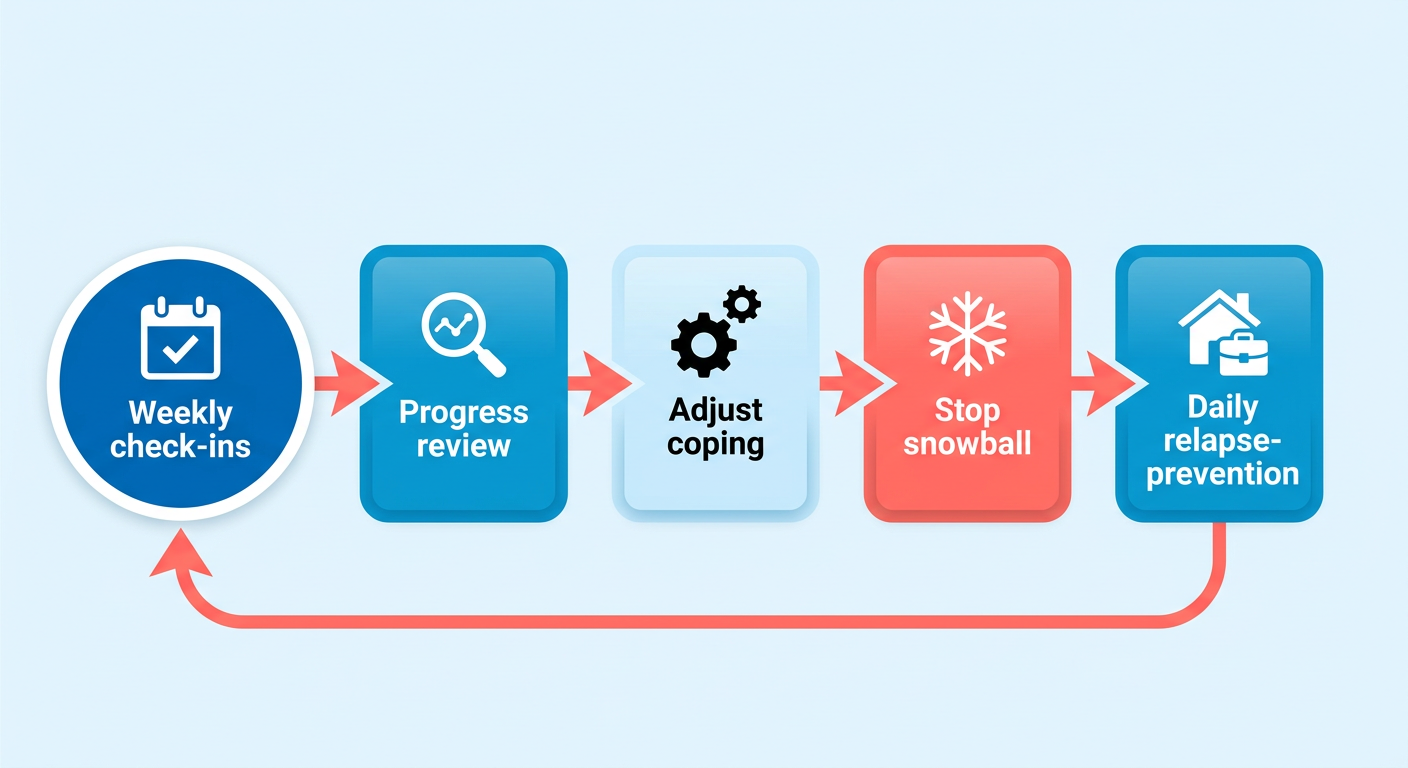
| Feature | Team‑based coaching (MADE) | Traditional sober‑living house | Self‑directed recovery |
|---|---|---|---|
| Personalized accountability | Dynamic check-ins tailored to client goals | Weekly house meetings | None |
| Human connection | One-on-one professional mentorship | Peer support only | Isolated |
| Flexibility | Adapts to personal commitments | Fixed curfew & rules | Fully flexible but unsupported |
| Cost | Scalable based on service level | Bundled rent and program fees | Low but riskier |
| Relapse‑prevention tools | Individualized coping strategies | Generic house policies | None |
When is a sober coach the right choice?
If you need individualized guidance right after clinical discharge but want to stay in your own home, a coach fits that gap well. This is the person who helps you handle real-world triggers once the structured setting is behind you. Coaches also open up honest communication with the people you love, which does a lot of quiet work rebuilding trust in the early months.
It's an especially good match if you've got a demanding job or thin local support. A coach adapts to your life in a way a fixed residential setting can't.
What actually separates a house from a coach
The core question in sober coach vs sober living comes down to environment and how the support gets delivered. A sober home is a communal, drug-free residence with shared expectations. Team-based coaching is mobile and individualized, built to wrap around the life you're already living.
Because coaching works inside your routine, sessions fit around a shift, a class, a school pickup. You keep your career and your family rhythm intact while still getting real recovery support.
How do flexibility and support differ?
Sober living is a housing model. The fees cover a bed and shared facilities. Coaching is purely about the support, priced in tiers based on how often and how intensely you need contact.
Staying home means you face real-world challenges head-on, with professional guidance in your corner. As you steady out and gain confidence, you step the sessions down. The structure fades as your independence grows.
What level of personal support can you expect?
Houses run on peer accountability and group dynamics. Good for building social skills, lighter on individual attention. A coach zeroes in on your specific patterns, helps you put customized coping tools in place, and (with your permission) coordinates with the people already in your corner, like an employer or a clinician. That collaboration lands the strategies right where the stress actually happens.
| Feature | Sober Living House | Sober Coach (MADE) | Traditional Residential Treatment | Self‑Directed Recovery |
|---|---|---|---|---|
| Cost considerations | Weekly fee covering housing and shared chores | Tiered pricing based on support frequency | Upfront program tuition including room and board | No direct financial cost |
| Flexibility | Curfews and shared residential rules | Flexible scheduling, client lives at home | Rigid program timeline | Unstructured daily routine |
| Personal Accountability | Peer accountability and house meetings | One-on-one coaching check-ins | Clinical staff oversight | Self-monitored |
| Community Structure | Shared living environment | Individual sessions and peer network access | Group therapy and restricted environment | Socially isolated |
| Access to Professional Resources | Oversight by house manager | Integration with external clinical providers | On-site clinical team | No professional resources |
If your goal is to keep your current living situation and still get structured, professional guidance, coaching gives you the individual attention communal housing usually can't.
How to pick the option that fits you
Weigh the cost against the specificity of what you get. Coaching fees scale to the level of contact you choose, so you pay for the support you actually use. Sober-living costs are tied to real estate and group overhead, which keeps your living expenses simple but may not match what your recovery actually needs.
Here's a quick side-by-side of the options we see most often: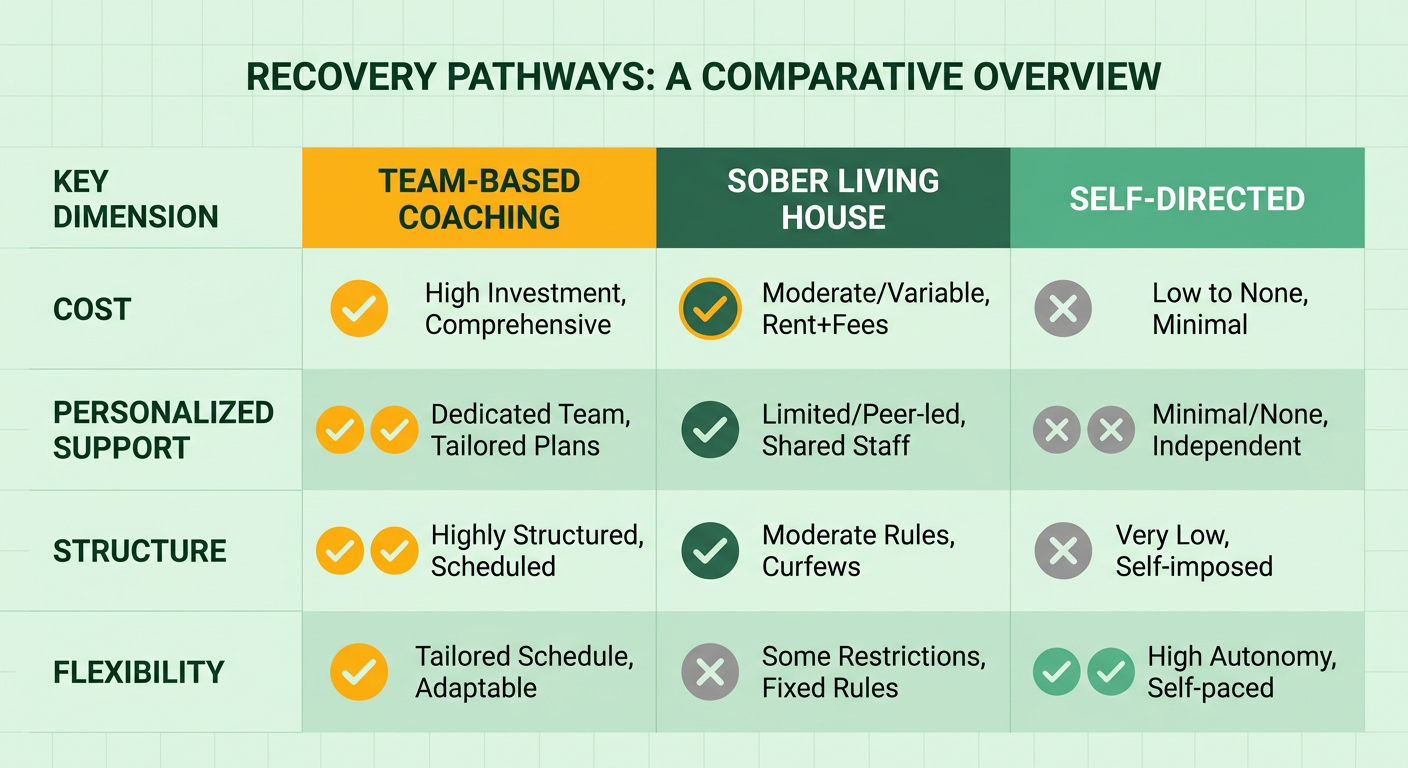
| Feature | Team‑based coaching (our service) | Sober‑living house | Self‑directed recovery |
|---|---|---|---|
| Cost | Scalable fees based on contact hours | Fixed rent and utility bundle | Minimal (often free) |
| Flexibility | Custom scheduling; virtual or in-person options | Mandatory curfews and house rules | No external schedule constraints |
| Personal accountability | Dedicated coach tracking individual milestones | Group-enforced rules and peer checks | Entirely self-monitored |
| Human connection | One-on-one relationship and optional peer groups | Daily interaction with housemates | Independent effort |
| Structure | Tailored recovery plan built around your life | Standardized house schedule and chores | No external framework |
Which level of accountability fits my lifestyle?
If your work runs on irregular shifts or you travel a lot, coaching gives you the scheduling room to keep support consistent anyway. If you do better with a shared daily routine and group expectations, a house gives you that communal structure. Self-directed recovery has none of the above, which means it leans entirely on your own discipline. For some people that works. For a lot of people in the first months out of treatment, it doesn't.
How does structure differ between options?
The real difference is where the structure comes from. Coaching co-creates a plan around your career and family, then loosens it as you gain independence. A house hands you a standard schedule, mandatory chores and curfews, which is steadying but can collide with non-traditional hours. Self-directed recovery gives you no framework at all, so every logistical decision is yours to carry.
To find your fit, list your main recovery goals, hold them up against the options above, and run the monthly cost for each. The balance between structure and independence is what carries long-term sobriety. For more on transitioning support, read our piece on stepping between levels of care.
What this looks like in real life
Outcomes come down to fit. A sober home gives you a stable environment, but its rules can run headlong into personal or professional demands. Coaching keeps the momentum going inside your natural environment instead.
The stretch right after clinical treatment is where immediate support earns its keep. A communal house gives you a drug-free space, but it can't follow you to the triggers that show up outside those walls. A coach is a direct line during those exposed moments, wherever you are.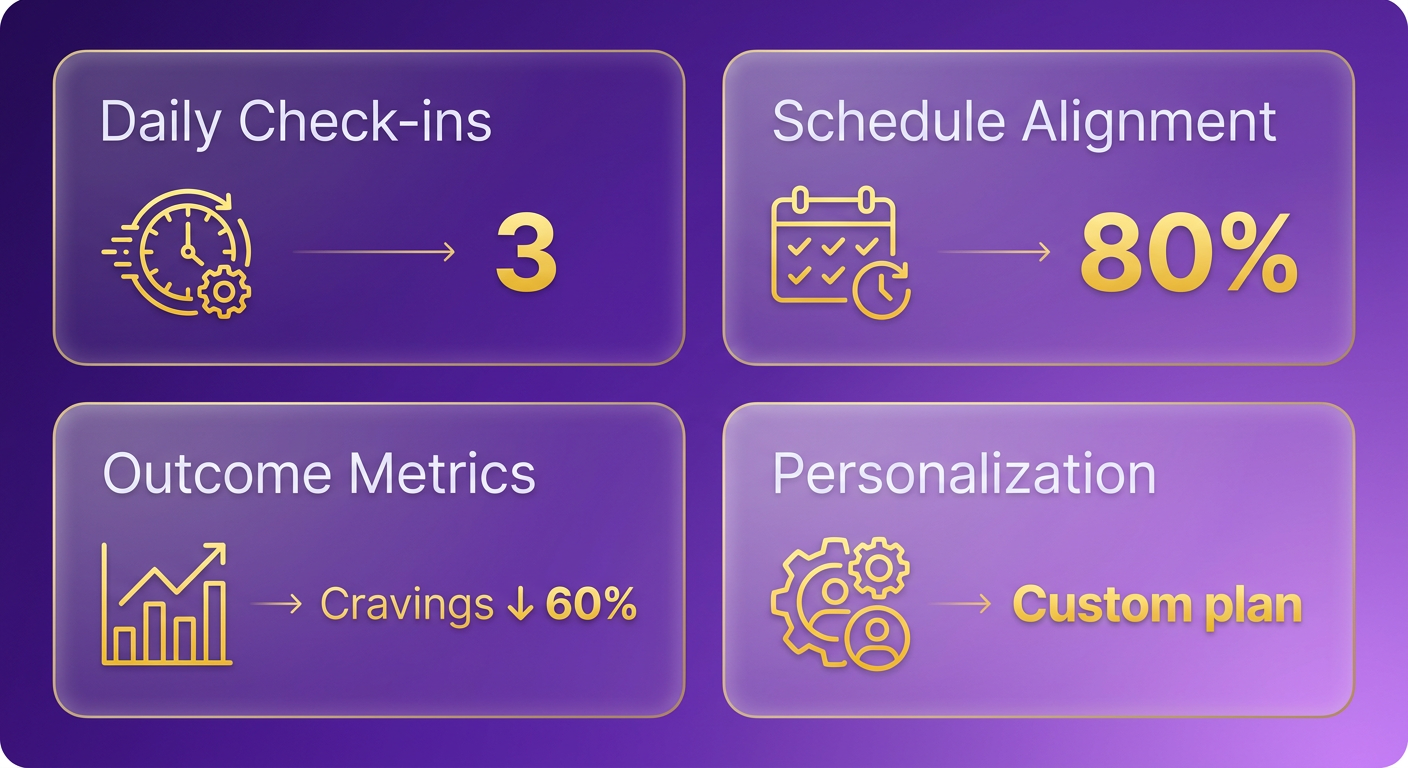
How do real‑world outcomes differ?
People working with a coach often say they feel more prepared for the high-stress social stuff: a networking event, a family gathering, the first sober holiday. Sessions can run virtually, so support holds up even at odd hours. House residents tend to feel strongest during structured group time and shakier in the unstructured gaps, when peers or staff aren't around.
What challenges tend to surface?
In residential settings, the accountability is generalized. Someone managing a specific anxiety trigger may find that a standard house meeting doesn't touch it. Travel is the other one. It can break residential compliance outright, while coaching just moves to a remote check-in and keeps the care continuous.
| Feature | MADE’s team‑based coaching | Sober‑living house | Self‑directed recovery |
|---|---|---|---|
| Personalized check‑ins | On-demand or scheduled individual sessions | Scheduled weekly house meetings | None |
| Schedule flexibility | Adapts to travel and variable work hours | Fixed curfew and attendance rules | Self-directed schedule |
| Human connection | Dedicated professional mentor and peer network | Communal living with fellow residents | No structured support network |
| Cost structure | Customized plans based on support level | Flat-rate weekly or monthly rent | No direct cost |
The pattern is fairly clear. Coaching works well for people with complex schedules who need targeted, individual strategies. A house works well for people who draw strength from constant peer presence and a shared space. And some people run both at once to widen their support net.
What I'd actually recommend
In the sober coach vs sober living decision, the right call depends on how you plan to keep your momentum going. Team-based coaching moves with you straight into independent life, filling the gap between clinical care and standing on your own.
A coach gives you active reinforcement exactly when you need it, helping you run coping strategies in real scenarios. A sober home builds you a safe physical space, but it can't support you when you're away from it, which is most of your work hours and most of your family events.
Which option best preserves daily progress?
A customized coaching program keeps care continuous by adapting to your life instead of forcing you into a rigid facility schedule. Sessions slot around what you're already doing, so support stays within reach without derailing your day.
| Feature | Team‑based coaching (our model) | Sober‑living house | Self‑directed recovery |
|---|---|---|---|
| Personalized check‑ins | Tailored frequency based on recovery stage | Fixed weekly group check-ins | None |
| Flexibility | Mobile support, virtual or in-person | Shared housing with curfew rules | Unstructured |
| Human connection | One-on-one coaching and peer community access | Communal peer environment | Isolated recovery |
| Crisis response | Direct access to coach and safety protocols | On-site house manager assistance | No external crisis support |
Mobile coaching bends to the unpredictable parts of daily life. Residential programs ask you to bend to a collective schedule instead.
How should you decide your next step?
Go with the pathway that gives you the most consistent support for your specific lifestyle. If you need professional guidance but have to keep your career or family obligations intact, coaching is the logical place to start. You can always add communal housing later if you find you want a shared living environment.
Start with an individualized coaching plan, set clear recovery milestones, and check your progress at thirty days. If peer-group living looks like it would help, layer in a sober home while keeping your coach as the primary anchor. Contact us to schedule a consultation and build a plan around your own path.
References
Frequently Asked Questions
1. Can a sober coach coordinate with my existing therapist or psychiatrist?
A sober coach can coordinate with your therapist or psychiatrist, sharing progress updates while respecting confidentiality agreements. The coach receives permission to discuss treatment goals, aligns coping strategies, and can schedule joint calls when needed, ensuring a unified approach without replacing clinical care. This collaboration enhances consistency across all support channels.
2. Is virtual sober coaching as effective as in‑person sessions for relapse prevention?
Virtual sober coaching delivers comparable relapse‑prevention results when sessions are scheduled consistently and include video interaction. Coaches use digital tools to track cravings, share coping worksheets, and provide real‑time messaging, which mirrors in‑person accountability. Studies of remote behavioral support show similar retention rates, especially for clients with stable internet access.
3. What qualifications should I look for when hiring a sober coach?
Look for a sober coach who holds certified addiction counseling credentials, such as a Certified Addiction Counselor (CAC) or Certified Recovery Coach (CRC), and has documented experience with post‑detox clients. Training in crisis intervention, motivational interviewing, and familiarity with local treatment networks ensures they can provide professional, evidence‑based guidance.
4. How are emergency or crisis situations handled by a sober coach?
In an emergency, a sober coach initiates a rapid response protocol that includes immediate phone contact, activation of a pre‑approved support network, and, if needed, direct referral to a crisis hotline or local emergency services. Coaches keep a 24‑hour on‑call schedule during high‑risk periods to ensure swift assistance.
5. Can I combine a sober‑living house stay with a personal coach, and what are the benefits?
Combining a sober‑living house with a personal coach provides dual layers of support: the house offers structured peer accountability, while the coach delivers individualized coping strategies and targeted family updates. This hybrid model often shortens the transition to independent living and reduces relapse risk by covering both communal and personal triggers.
6. What typical duration do coaching packages cover, and can they be extended as recovery progresses?
Coaching packages usually span 90‑day intervals, aligning with the critical early‑recovery window, but they are renewable month‑to‑month after the initial term. Clients can request extensions, adjust frequency of check‑ins, or transition to a maintenance plan that reduces session intensity while preserving ongoing accountability.