Redefine Yourself Beyond the Label 'Addict' After Treatment
August 4, 2026
Redefining Yourself Beyond the Label

Key Takeaways
- The "addict" label predicts isolation: 63% of adults in treatment are single, 69% unemployed.
- Three months after discharge, 59% identified as "in recovery." Zero chose "in remission."
- Public perception frames addiction as moral failure, not a medical condition. People internalize that.
- Some clients keep the label permanently, treating it like managing a chronic prescription.
- 42% of adults in therapeutic communities spend most time alone due to social fallout.
- The label shapes how others treat you and how you see yourself after residential treatment ends.
- Person-first language helps some people. Others reject it. Preferences vary by individual circumstances.
Why the Label Matters More Than You Think
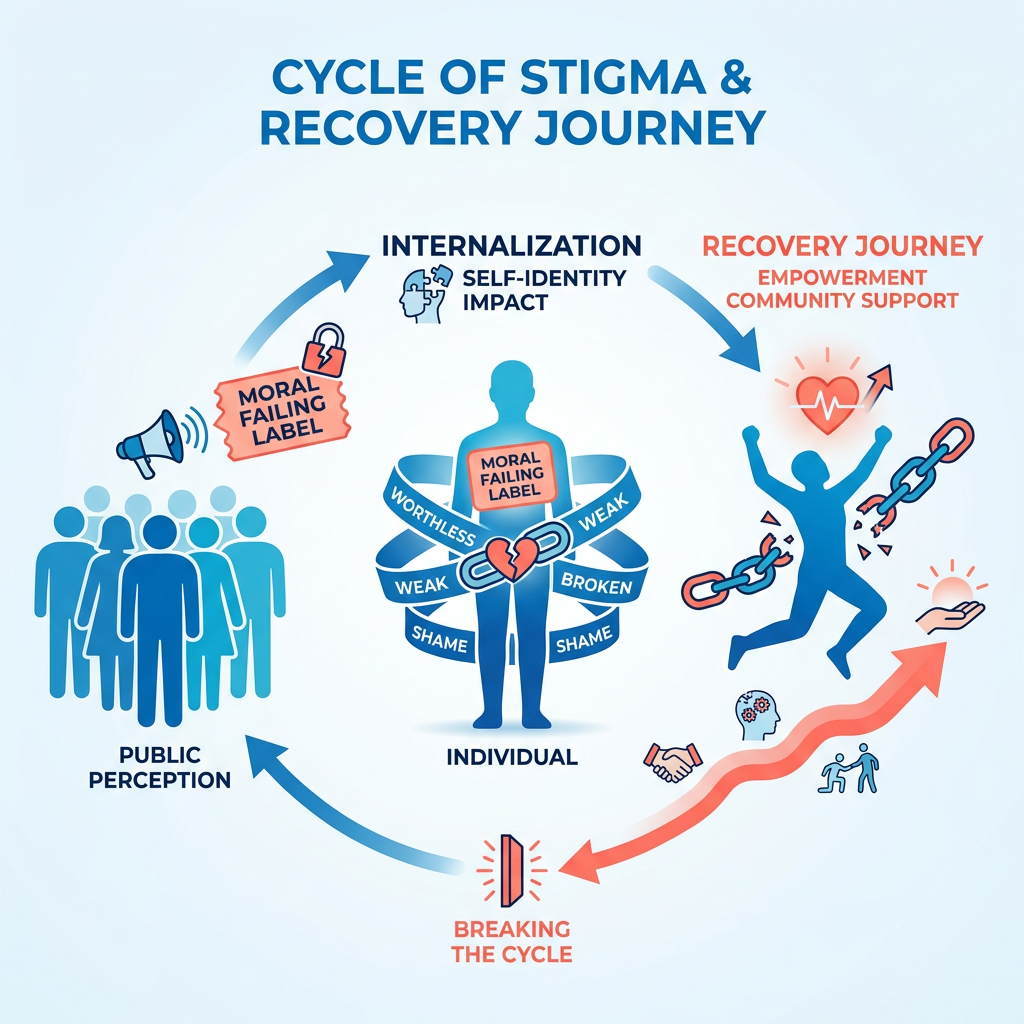
The word "addict" isn't neutral. When we work with clients leaving residential treatment, we see how it reshapes self-concept. Public perception treats addiction as a character flaw rather than a treatable condition, and stigma gets internalized fast. People start believing the label defines them completely, not just a challenge they manage.
The data backs this up. Interviews with adults in therapeutic communities show how deeply social isolation is woven into active addiction. When you carry a heavily stigmatized identity, traditional support systems fall away. This isn't just a side effect of substance use. It is reinforced by the label itself, which shapes how communities interact with you and how you view your own potential for reintegration.
Who Benefits from Dropping the Label (and Who Doesn't)
Not everyone wants to shed the "addict" label. A study of 49 alumni three months after discharge showed strong preference for self-selected terminology over clinical jargon. While some embraced being a "sober person," none adopted the medicalized language clinicians favor. One participant explained it this way: "I'm a drug addict, I'm always going to be. Admittedly need it for other reasons, no different than a prescription." For him, the label was vigilance, not a cage.
For others, it is the opposite. The label becomes self-fulfilling, reinforcing the belief that change isn't possible. During the first 90 days after treatment, we ask clients directly: does calling yourself an "addict" help you stay sober, or does it keep you stuck in the identity you're trying to leave? There's no universal answer, but asking the question shifts power back to the person.
Two Ways Out: Restoration vs. Reinvention
Research on social identity transitions identified two distinct pathways into addiction: loss of a positive identity (someone who had a stable life before substance use) and a negative identity that predated use (someone who felt like an outsider or failure long before their first drink). These pathways matter because they tell us what recovery looks like for each person.
If you lost a positive identity, the goal is restoration. You're reconnecting with the person you were before. Participants in one study described happy childhoods and achievements before addiction, contrasting sharply with the isolation they felt during active use. For these clients, success looks like re-engaging with old hobbies, rebuilding severed relationships, and returning to environments where they once thrived.
If your identity was shaky before substance use, restoration won't work. You need reinvention. Clinical psychologists emphasize that substance use is an external factor, not an intrinsic part of who you are. For these clients, we focus on building a self-concept from scratch: what values matter to you now? What roles do you want to inhabit? Reinvention means defining yourself forward, not backward.
The Critical First 90 Days
The first three months after treatment is when identity is most fluid and most vulnerable. Goal-setting research recommends focusing on realistic 90-day goals that align with personal values, not abstract long-term plans. We've found this window is when clients either solidify a new self-concept or default back to the "addict" identity by force of habit.
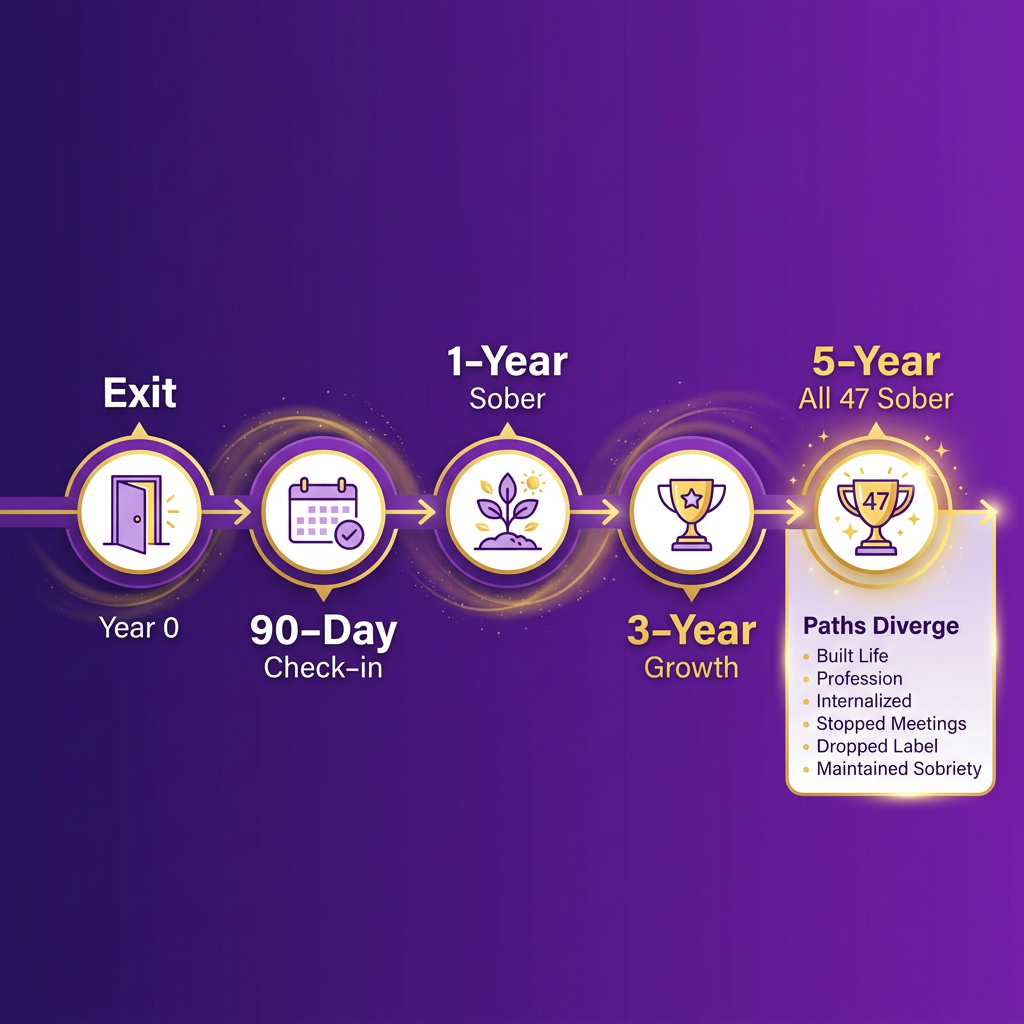
A five-year follow-up of people treated in 12-step programs showed dramatic variation: 29 maintained sobriety, 18 reported moderate drinking, yet all 47 participants described themselves as "in recovery" in some form. Some deepened their 12-step identity and built careers around it. Others internalized the principles but stopped attending meetings. A few dropped the label entirely while staying functional and sober.
The lesson: the label that works at three months may not work at five years. Identity shifts don't end when you leave treatment. They continue as long as you do. Our job is to help you test different framings, notice what supports your growth, and adjust when a label stops serving you.
Person-First Language Is a Tool, Not a Rule
The recovery field has pushed hard for person-first language: "person with a substance use disorder" instead of "addict." Studies on stigma show this shift reduces bias in healthcare settings and improves treatment outcomes. We use it by default with new clients because it opens space for a broader identity.
But it's not a rule. One alumnus rejected all standard labels, describing himself as "a man that gets a new start"—an identity no clinical taxonomy could capture. Another pair of alumni distinguished abstinence from active recovery, saying they were "not active in recovery… just not drinking." These distinctions matter because recovery isn't one thing.
Skip person-first language if it feels forced or clinical to you. The point isn't semantic perfection. It's clarity about who you're becoming. If "recovering addict" feels honest and keeps you accountable, use it. If it feels like a shackle, test something else.
How Daily Structure Supports Identity Change
Here's what most recovery programs skip: your identity shifts faster when your daily life has structure and stability. Analysis of online recovery narratives found that participants moved through three stages: staying safe, exploring, and self-determining. Progress stalled without economic stability.
Employment barriers, housing insecurity, and financial chaos aren't just obstacles to recovery. They're obstacles to identity change. When you're scrambling for rent, it's hard to explore who you want to become. Our coaching focuses on daily routines and healthy habits that create mental bandwidth for that exploration. Redefining yourself requires consistency, and that consistency starts with structure in everyday life.
The same study documented a linguistic shift from external validation ("my sponsor says I'm doing well") to assertive self-identification ("I finally love who I see in the mirror"). That shift doesn't happen through willpower alone. It happens when your external life begins to reflect the person you're claiming to be.
When "Addict" Becomes a Professional Identity
A small subset of people in recovery turn the label into a vocation. One participant in a longitudinal study became an alcohol-and-drug therapist, saying, "I've really deepened my involvement in AA and CA… The dependency is part of my personality." For him, identifying as an addict wasn't limiting. It was the foundation for meaningful work.
This path isn't for everyone, but it's worth naming. If you're considering a career in peer support, counseling, or recovery coaching, the "addict" identity can become a credential rather than a liability. You're not stuck with it forever, but you're also not required to discard it to prove you've changed.
The Contradiction No One Talks About
Clinical guides emphasize that the "addict" label sustains stigma and harms outcomes. Alumni surveys show some people embrace it as a permanent anchor. Both are true, depending on what the label does for you. For some, "addict" is an internalized cage that blocks a new identity. For others, it's vigilance made permanent.
Our take: aftercare coaching shouldn't impose or strip a label. It should help you test which framing supports your growth. If "addict" keeps you honest, keep it. If it keeps you small, try something else. The goal isn't to pick the "right" label but to notice when your self-concept starts limiting the life you're building.
Building an Identity Beyond the Label
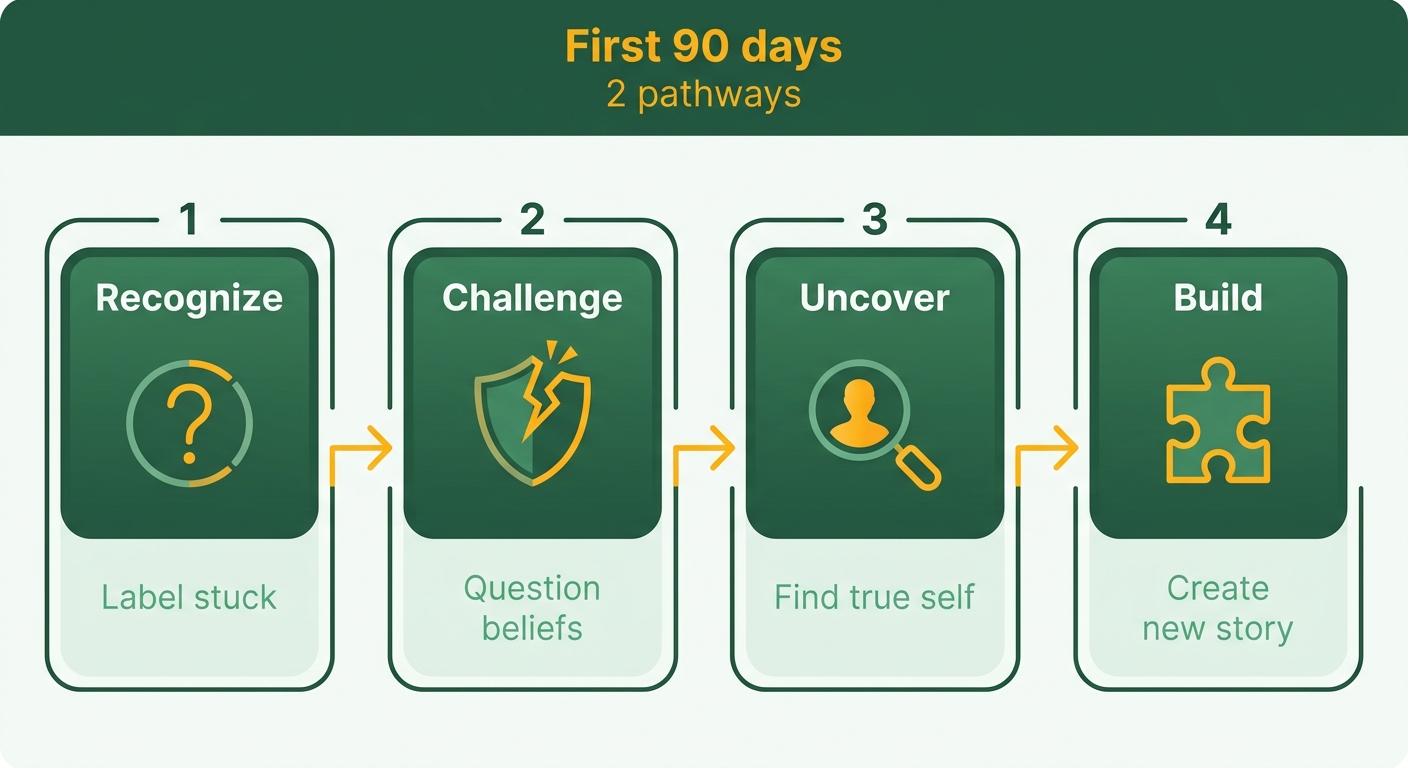
When we work with clients in their first 90 days out of treatment, we see the same question surface repeatedly: "Who am I if I'm not an addict?" The label has become so entangled with self-perception that removing it feels like erasing the whole person. But identity reconstruction research shows that's backward. You're not erasing yourself. You're uncovering the version that got buried.
The transition requires a structured framework. Rather than viewing recovery as a static state, it's more effective to see it as an active reconstruction of self-worth and agency. This process involves mapping out new roles and responsibilities that gradually replace old habits, allowing a healthier self-concept to emerge naturally over time.
What "Recovery Identity" Actually Means
The term "recovery identity" gets thrown around in treatment settings as if everyone knows what it means. In reality, it refers to how you see yourself in relation to your history with substances and your future without them. Longitudinal studies show that people who successfully maintain long-term sobriety tend to develop what researchers call a "narrative arc" - a coherent story about how they got to where they were and where they're going now. This isn't about romanticizing the past or creating fiction. It's about making sense of your experience in a way that allows forward movement.
Your label matters less than what it does for you. If calling yourself "an addict" keeps you vigilant and connected to support, that's useful. If it traps you in shame and blocks you from applying for jobs or rebuilding relationships, it's a cage. Our customized coaching programs adapt to your individual needs, helping you build the support structure that works for your specific goals.
Developing this narrative arc allows you to integrate your past without letting it dictate your future. Instead of viewing your history as a series of failures, you can reframe it as a challenging chapter that provided you with unique resilience. This shift in perspective is what transforms fragile sobriety into a durable, self-directed life.
Building Routines That Support Recovery
Identity doesn't shift through introspection alone. It shifts through consistent action. Establishing daily routines-sleep, nutrition, exercise, self-care-creates the scaffolding for a stable identity. You can't sustain "I'm a person who shows up" if you're sleeping four hours and skipping meals. Our coaches help clients establish healthy routines that reduce stress and promote balance, providing the structure needed for lasting change.
Social circles matter more than most people admit. Interviews with people in recovery show that cutting ties with people who fueled addiction while building friendships that encourage growth is one of the most powerful forms of reinvention. That's not about moral superiority. It's about surrounding yourself with people who reflect the identity you're building, not the one you're leaving.
Practical stability must accompany psychological growth. Recent analysis of public recovery forum posts highlights that systemic hurdles often dictate the pace of personal transformation. When individuals are actively working to secure stable housing or find employment, their mental energy is understandably consumed by survival. Addressing these practical needs is not separate from identity work. It is the very foundation that allows a person the safety to explore new roles.
The Shift from External Validation to Self-Definition
Early in recovery, most people need external validation to believe change is real. You look to family, to sponsors, to treatment alumni groups to confirm you're making progress. That's normal. Over time, however, this reliance on external feedback naturally transitions into an internal compass. The focus shifts from seeking approval for staying sober to quietly recognizing your own growth and living in alignment with your personal values.
Start by naming three things you want to be known for that have nothing to do with substances. Not "I want to be sober" - that's still defined by what you're avoiding. Try "I want to be the person my niece calls when she needs advice" or "I want to finish the carpentry project I started five years ago." Specificity matters. Vague aspirations like "be a better person" don't anchor identity. They float.
Clinical research on identity shifts backs this up: clients who engaged with recovery-oriented communities were more likely to maintain sobriety, not because of accountability alone but because the community reflected a new identity back to them. You become who you see yourself being in the eyes of people who matter. Choose those people carefully. Our team-based support provides consistent connection during critical moments, ensuring you don't feel alone as you rebuild.
The long-term outcome worth protecting is a stable self-concept, rather than rigid adherence to a single metric of behavior. While maintaining strict boundaries is necessary during the fragile early transition, your identity should be expansive enough to encompass your entire life's potential, rather than being defined solely by what you do not do.
Practical Steps for Transitioning From Treatment to Life
The period right after treatment ends is when your self-concept is most open to change, which is exactly why the kind of help people leaving treatment search for matters so much. A self-concept that hardens by default is far harder to reshape later. Our team builds the transition around this fact: routines, relationships, and a crisis plan aren't just survival tools. They're the scaffolding for the person you're becoming.
Here's the practical order we work in, and why it's built to advance identity, not just abstinence.
Build a Routine That Rebuilds Identity
Start with structure before you start with goals. Establishing a predictable daily rhythm creates the physiological stability that makes cognitive work possible. When your body is regulated through consistent daily habits, your brain has the bandwidth to process emotions and make deliberate choices rather than reacting to stressors.
Then layer on value-aligned goals. Not "stay sober," but targets tied to the person you're uncovering - a skill you want to learn, a relationship you want to repair, a role you want to grow into. Research on habit formation suggests it takes an average of 66 days for a new behavior to become automatic, so early goals should be small and repeatable enough to actually stick. Goals that reflect who you're becoming outlast goals framed around what you're avoiding.
What Kind of Support Network Actually Holds
A supportive social network is the single biggest predictor of identity change. The social identity model of recovery makes this plain: transitioning to a new self-concept is far more successful when your social environment actively mirrors and validates that change.
This involves surrounding yourself with individuals who respect your boundaries and share your current values. When your daily interactions are with people who see you for who you are today, rather than who you were in active use, it reinforces your new path. We provide consistent support during critical moments to ensure clients don't feel alone, whether that's through a single dedicated coach or a coordinated team, depending on the level of care needed.
Our programs are tailored to each individual's needs, recognizing that every recovery journey is different. The approach we take depends on where you're starting from and what kind of support will help you build the life you want to stay sober for.
Plan for a Crisis Before It Hits
A crisis plan is a written, rehearsed set of actions for high-risk moments, made before you need it. Name your triggers, list who you'll call, and remove access to substances from your environment. Do this while you're clear-headed, not mid-craving.
Purpose is what sustains the plan long-term. Recovery Centers of America puts it well: life after addiction isn't about returning to your old self. It's about building something better. A robust crisis plan acts as a safety net, ensuring that when unexpected challenges arise, you have clear, actionable steps to maintain your trajectory. This proactive preparation protects the progress you've made and keeps you aligned with your long-term vision.
Maintaining Long-Term Sobriety Through Purpose and Growth
We see people arrive at the 90-day mark and ask the same question: "What happens when the structure goes away?" The answer determines whether sobriety lasts another year or another decade. Research with long-term recovery participants shows that maintaining sobriety over several years requires a shift from external rules to internal motivation. While early recovery relies heavily on structured programs, long-term success is characterized by a natural integration of recovery principles into daily life, allowing individuals to pursue diverse personal and professional paths.
Purpose is what fills the space addiction used to occupy. When support stops at abstinence alone, maintaining change becomes much harder. Our team works with clients to identify what they care about beyond sobriety-work that feels meaningful, relationships that challenge them to grow, and hobbies that demand focus. Finding this deeper engagement provides a natural buffer against relapse, as individuals become more invested in protecting the life they have built than in returning to old patterns.
Building Purpose Without Burning Out
Start with small, concrete commitments before chasing big existential goals. People leaving treatment often feel pressure to define their life's purpose in the first month. That's backward. Purpose emerges from doing things that matter to you, not from declaring a mission statement. Passion discovery is one of the fundamentals we build into coaching-helping clients explore one area of growth, whether that's learning a skill, volunteering, or rebuilding a strained relationship, and stay accountable to it. This exploration phase is where purpose starts to show up, but only if you are actively trying new activities, testing new social roles, and seeing what resonates.
The trap is trying to do everything at once. Someone who spent years isolated during active use can't rebuild a career, repair family ties, launch a side business, and master a new hobby simultaneously. Pick one. Get competent at it. Let that competence build confidence. Then add the next piece. Shifting your identity gradually-balancing your personal growth with other roles like parenthood, work, and personal interests-helps maintain sobriety more sustainably than making recovery your entire identity and feeling overwhelmed by it.
What Role Stress Management Plays in Long-Term Sobriety
Stress doesn't cause relapse. How you handle stress causes relapse. Early recovery teaches you to white-knuckle through cravings, but that strategy fails the moment life gets complicated-a job loss, a breakup, a family crisis. The people we see stay sober long-term are the ones who build stress tolerance as deliberately as they build routines. That means learning to sit with discomfort without immediately reaching for relief, whether that relief is substances or compulsive behaviors that replace them.
Self-care is the foundation here, but not the superficial version. We're talking about maintaining physical baselines that keep your nervous system regulated. When your body is physically resilient, your capacity to handle emotional triggers increases dramatically. Recovery frameworks emphasize these patterns because they prevent the physical exhaustion that often precedes a relapse. Our coaches work with clients to fine-tune these daily habits, ensuring they serve as a proactive shield against stress.
The other half of stress management is knowing when to ask for help before a crisis hits. People who maintain long-term sobriety stay connected to support networks-coaches, therapists, peers, sponsors-even when things are going well. They don't wait until they're in free fall to reach out. That's the difference between someone who stays sober for five years and someone who cycles through treatment multiple times.
Staying Connected Without Making Recovery Your Whole Identity
This is where the coaching model matters. You don't need to attend meetings forever to stay sober, but you do need ongoing connection to people who understand what you're building. Long-term stability is often achieved by cultivating diverse social circles-such as professional networks, hobby groups, and community organizations-where substance use is simply not the focus. The key is ensuring that you are not isolating yourself as you transition into new life stages.
Our approach tapers support intentionally as clients gain independence, but we stay available for check-ins, recalibrations, and crisis support. The goal is not to make you dependent on coaching. It's to make coaching one tool in a broader toolkit you're building. Research on recovery identity shows that the transition to a self-directed life occurs when you stop measuring your progress by others' standards and start living in accordance with your own. That shift happens when you've built a life you want to protect, not just a life you're trying to escape.
References
[1] Can You Reinvent Yourself After Addiction? - Recovered.org - https://recovered.org/blog/reinventing-yourself-after-addiction
[2] Rebuilding Your Life and Finding Purpose After Addiction - https://recoverycentersofamerica.com/blogs/rebuilding-your-life-and-finding-purpose-after-addiction/
[3] How Identity Shifts During Recovery - https://addictionstraininginstitute.com/how-identity-shifts-during-recovery/
[4] Social Identities as Pathways into and out of Addiction - PMC - https://pmc.ncbi.nlm.nih.gov/articles/PMC4663247/
[5] Who am I? Identity in addiction and recovery - https://www.counsellingonline.org.au/blog/Who-am-I-Identity-in-addiction-and-recovery
[6] Defying Labels: Overcoming the “Addict” Identity - https://www.orlandorecovery.com/resources/overcoming-addict-identity/
[7] Social Identity: Transitioning from Addiction to Recovery - https://www.recoveryanswers.org/research-post/social-identity-transitioning-from-addiction-to-recovery/
[8] Self-Reported Sobriety Labels: Perspectives from Alumni of ... - https://www.researchgate.net/publication/382649698_Self-Reported_Sobriety_Labels_Perspectives_from_Alumni_of_Inpatient_Addiction_Treatment
[9] Disease and decision - PubMed - NIH - https://pubmed.ncbi.nlm.nih.gov/36108442/
[10] Identity Construction in Recovery from Substance Use ... - https://www.researchgate.net/publication/366452080_Identity_Construction_in_Recovery_from_Substance_Use_Disorders
[11] Transformation of identity in substance use as a pathway to ... - https://www.researchgate.net/publication/362839904_Transformation_of_identity_in_substance_use_as_a_pathway_to_recovery_and_the_potential_of_treatment_for_hepatitis_C_A_systematic_review
[12] (PDF) “I Finally Love Who I See in the Mirror” - https://www.researchgate.net/publication/389000101_I_Finally_Love_Who_I_See_in_the_Mirror_American_Substance_Users'_Reconstruction_of_Individualized_Identity_in_the_Recovery_Trajectory
[13] (PDF) Recovery Identity and Psychosocial-Spiritual Health - https://www.researchgate.net/publication/364266921_Recovery_Identity_and_Psychosocial-Spiritual_Health_A_Survey_of_Individuals_in_Remission_From_Substance_Use_Disorders
[14] a five-year follow-up of persons treated in 12-step-related ... - https://www.researchgate.net/publication/350746796_Recovery_and_identity_a_five-year-follow-up_of_persons_treated_in_12-step-related_programs
Frequently Asked Questions
1. What if none of the standard labels like "addict" or "in recovery" feel right for me?
You can define yourself in your own terms. Many people leaving treatment find that clinical or traditional labels do not capture their growth. You might focus on current roles, such as being a dedicated parent, a reliable colleague, or someone starting a fresh chapter. The point is clarity about who you are becoming, not fitting a pre-defined category.
2. Is moderate drinking ever compatible with long-term recovery?
While traditional models emphasize strict abstinence, some longitudinal research indicates that a small percentage of people manage to maintain stable lives with modified behaviors years later. However, this is highly individual and does not apply to early recovery. During the fragile transition period, prioritizing complete abstinence is crucial for establishing a stable foundation.
3. How long does it take for new recovery habits to stick?
Habit formation is a gradual process that requires consistent repetition over several months before a new behavior becomes automatic. To make habits stick, start with small, manageable daily routines that build physical and mental stability. Once these basic patterns are established, you can gradually layer on larger, value-aligned goals.
4. Why isn't willpower alone enough to redefine my identity?
Willpower cannot override a chaotic environment. True identity change requires a stable foundation where your daily life supports your new self-concept. When practical challenges like housing or employment are unresolved, the mental energy needed for self-exploration is consumed by basic survival. Real change happens when psychological growth is paired with practical stability.
5. Do I really need to cut off all my old friends to change?
Your social environment heavily influences your self-concept. Transitioning to a healthier life often requires distancing yourself from social circles that reinforce old habits. Surrounding yourself with people who support your current values provides the positive reinforcement needed to sustain change. It is about creating a community that aligns with the person you are choosing to be.
6. Can turning my recovery into a career actually help me stay sober?
For some people, lived experience can become a professional asset. Entering fields like peer support, counseling, or advocacy allows you to find deep meaning in your past challenges. This professional purpose can reinforce your commitment to sobriety, though it is important to ensure you have solid boundaries so your work does not overwhelm your personal well-being.
7. Why is the first 90 days after treatment so important for identity?
The initial months after treatment are a critical transition phase where your daily habits and self-perception are being rebuilt. Without intentional structure, it is easy to default to old patterns of isolation. Establishing clear, short-term objectives during this period helps anchor your new identity, ensuring your daily life is shaped by conscious choices rather than old habits.