Guard Your Sleep Schedule During the First Sober Weeks
August 9, 2026

Key Takeaways
- Sleep falls apart before cravings do. A collapsing sleep schedule often shows up weeks before the urge to use gets loud.
- Keeping bedtime within about 30 minutes each night stops chaotic sleep-wake swings that echo life before sobriety.
- Under six hours of sleep wrecks emotional regulation, making the 7-8 hour target one of the first things to protect.
- Taking over 60 minutes to fall asleep, night after night, points to untreated withdrawal, not just a bad night.
- Waking more than twice in the night lines up with rising anxiety and cravings in newly sober clients.
- A dark, quiet, comfortable room is one of the easiest wins available, and it genuinely helps.
- Family support matters most in that fragile early window, where a daily check-in reinforces the routine.
Quick Summary
In the first sober weeks, sleep consistency is a stability signal, not a wellness trend. When a client's schedule blows up at 2 a.m. three nights running, we move early, because sleep disturbances predict relapse with unnerving accuracy, often weeks before cravings escalate.
The table below lays out the sleep habits that hold early sobriety together, why each one matters, and how hard clients find it to build. Families ask us all the time how they can help without hovering. This shows where their support actually moves the needle.
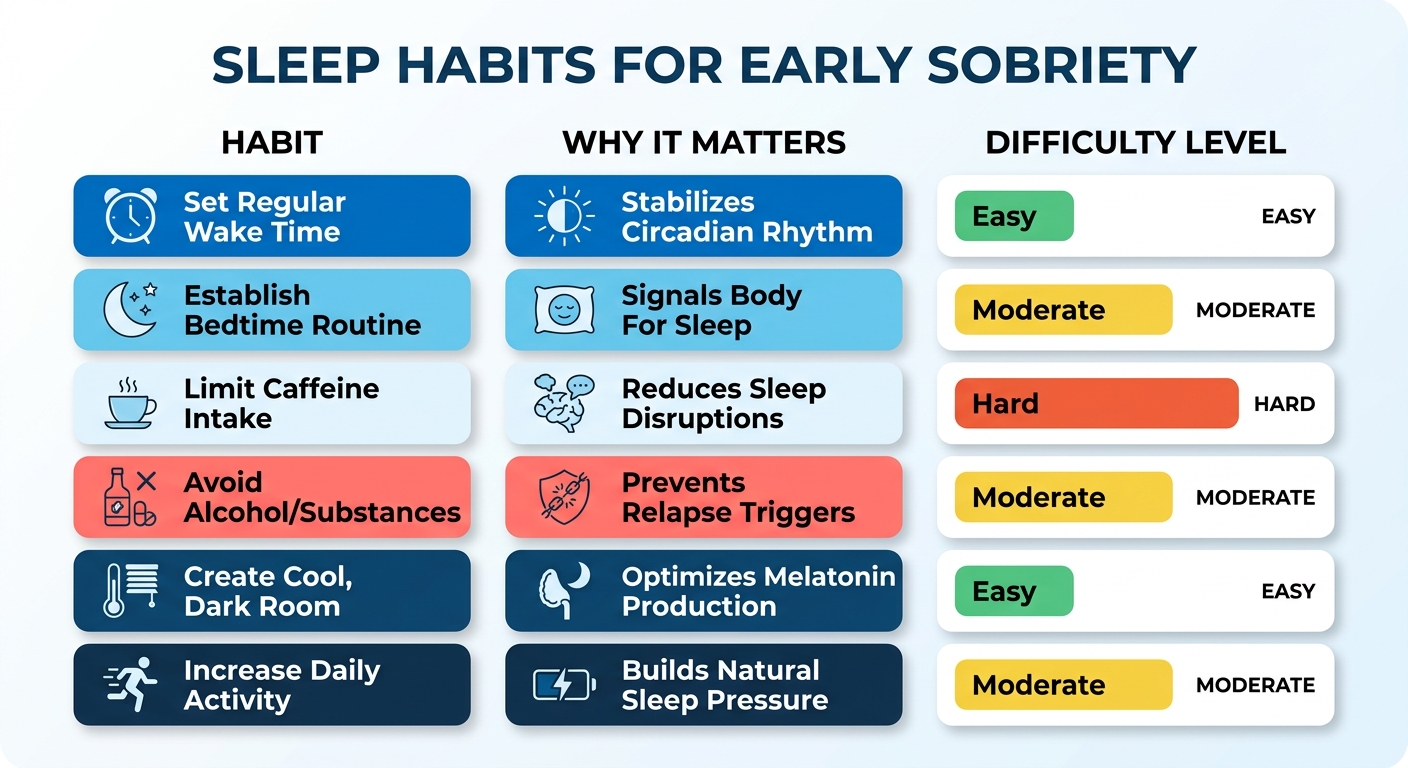
| Sleep Habit | Target Range | Why It Supports Recovery | Difficulty (1‑5) | Coaching Focus |
|---|---|---|---|---|
| Bedtime Consistency | Within ±30 min nightly | Chaotic sleep-wake cycles mirror pre-sobriety patterns | 3 | Daily check-ins to establish tomorrow's bedtime routine |
| Total Sleep Duration | 7‑8 hours | Under 6 hours impairs emotional regulation | 2 | Discuss wake-up energy level, adjust wind-down routine |
| Sleep Environment | Dark, quiet, comfortable | Poor sleep conditions disrupt rest and recovery | 2 | Review room setup, noise blockers, temperature |
| Sleep Latency | Under 30 min to fall asleep | Persistent insomnia (over 60 min) signals untreated withdrawal | 3 | Review caffeine cutoff, screen time before bed |
| Mid-Sleep Waking | Fewer than 2 brief awakenings | Frequent waking correlates with anxiety and cravings | 2 | Check room temperature, noise blockers |
Why accountability catches what mood check-ins miss
Around week three, a lot of clients hit what we call pink clouding. A wave of optimism can quietly cover real risk. Gateway Foundation's research puts that stretch right on top of the 2-4 week window where sleep problems tend to spike. So you get a client who says they feel great while their log shows 5.2 hours of broken sleep a night. That gap is the whole story.
Regular check-ins let a coach spot the drift before it snowballs. When sleep stays thin, we adjust the day around it. That might mean pulling back on demanding tasks like job applications or trying to resolve family conflict, and putting the focus back on routine and rest.
When families should step in, and when to back off
Most families want to help and worry about hovering. Our advice: ask about the logistics, not the quality. "Did you set your alarm for tomorrow?" beats "How did you sleep?" every time. The first question backs the habit. The second invites a shrug that hides the problem.
In the first 72 hours, withdrawal is at its sharpest, and insomnia and anxiety come with it. Families help most by keeping the room quiet and supporting whatever routine the care team recommends. After week one, the job becomes consistency. If the coach flags a pattern, say, bedtime creeping later each night, families can reinforce the agreed schedule without turning into the sleep police.
And if the client already has a dedicated coach, skip the direct monitoring. Two people tracking the same thing just creates friction. Ask the coach what would actually help, then follow that.
What happens when sleep stays broken past four weeks
Insomnia that hangs on after the first month is a sign to bring in outside help. Studies on alcohol recovery show sleep disturbances can drag on for months if nobody treats them, and relapse risk climbs the whole time. Part of a coach's job is knowing when routine tweaks have run their course and helping the client connect with the right resource, whether that's CBT for insomnia, a medical consult, or a look at co-occurring conditions.
We don't tell people to grind through chronic sleep loss and hope it sorts itself out. Untreated insomnia in early recovery predicts relapse more reliably than most psychological assessments do. If sleep hasn't stabilized with routine changes by week six, that's the cue to get more support, not to keep waiting.
Why Sleep Schedules Matter in Early Sobriety
Sleep isn't a soft comfort in the first sober weeks. It's a stability signal. Disrupted sleep drives cravings, mood swings, and relapse risk well before a client feels any of it coming. MADE coaches help clients lock in a consistent schedule and stay accountable to it, so one rough night doesn't turn into a rough week. Treating sleep as a biological foundation gives the circadian rhythm a chance to rebuild after chronic use has scrambled it.
How common is insomnia in early sobriety?
Common, and worse than most people expect. Insomnia runs five times more common in early recovery than in the general population, and somewhere between 25% and 72% of people in treatment for alcohol use disorder report sleep problems.
One observational study using the Pittsburgh Sleep Quality Index found 69.3% of patients reported sleep disturbances at admission, dropping to 49.1% by discharge. So progress is real, but half were still struggling on their way out. That gap is exactly where steady coaching earns its keep.
Here's a genuine tension in the research. One review says most patients see some insomnia improvement after 4 weeks of sobriety. Yet clinicians widely note that sleep is one of the last things to normalize, often taking months. Both are true. Improvement usually begins around week four, but full normalization lags well behind. That's why we build sustainable routines instead of promising a quick fix.
Why feeling fine can hide relapse risk
Because how a client feels during the day is a shaky read on where recovery actually stands. Those first weeks of abstinence come with heavy neurochemical churn. A client can report feeling energized and motivated while objective monitoring shows badly fragmented sleep. Lean only on the daytime mood and you get a false sense of security, which is why tracking the pattern and holding the routine matters.
Who benefits most from prioritizing sleep?
Younger clients, and anyone whose sleep stays unstable, benefit most. One finding sticks out: only older age predicted sleep improving on its own during recovery. For everyone else, abstinence alone doesn't reliably restore sleep.
Add in that sleep disturbance is a risk factor across every substance, and the approach writes itself. We don't tell younger clients to wait it out. We give them structure and accountability and treat the sleep issue early. One clinic reported sleep problems improving by as much as 81% among clients in recent outcomes data. That's what happens when sleep gets treated as core recovery work instead of a minor gripe.
Establishing a Consistent Sleep Schedule
We start building a sleep routine early, because the body's internal clock runs on predictability, and predictability is one of the first things active addiction destroys. Rather than waiting for sleep to correct itself, we design a daily framework that supports rest. That head start helps steady the nervous system through a volatile stretch.
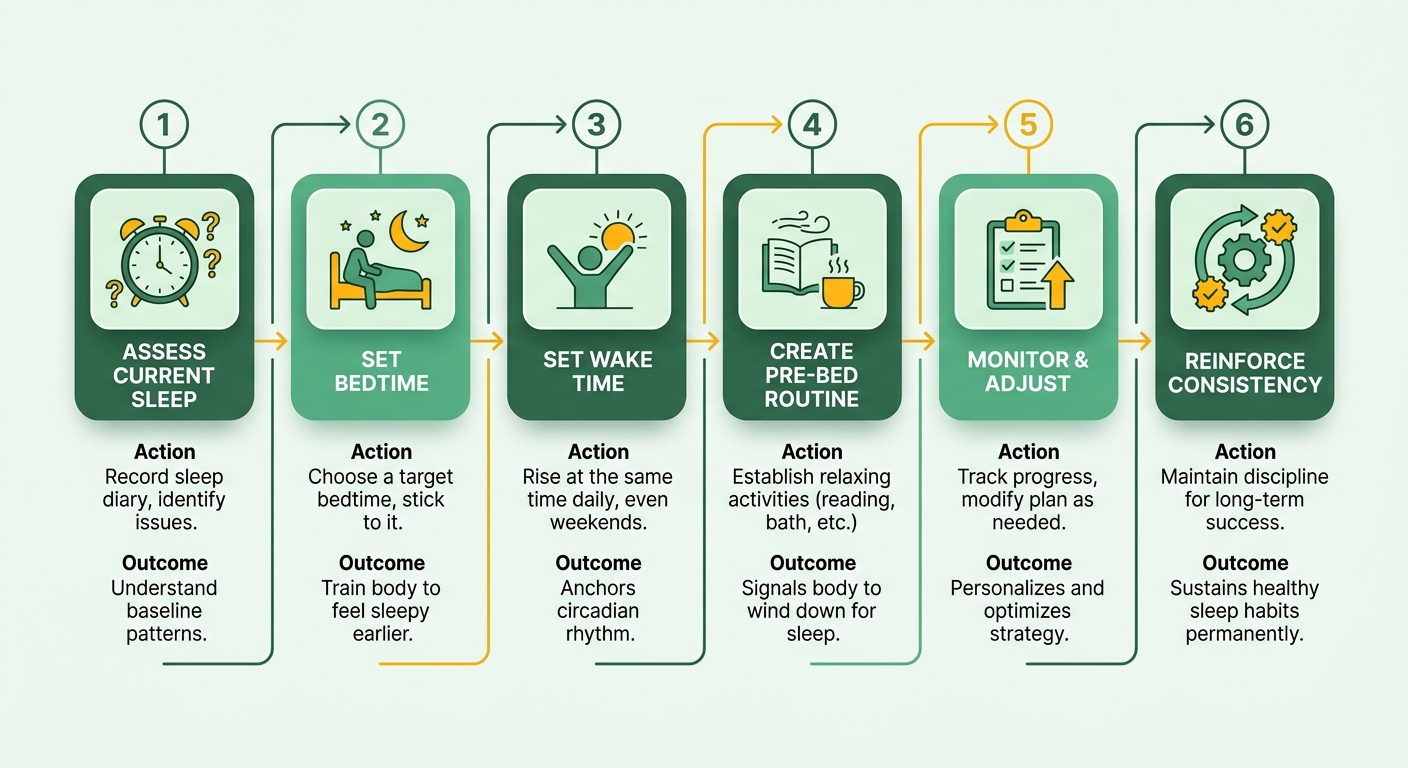
Anchor your wake time first, forget the perfect bedtime
You don't need a flawless lights-out target on day three. Start with a consistent wake time. That's what actually sets the circadian rhythm. And if you find yourself lying there awake, don't stare at the clock or try to force it. Use stimulus control instead: after a reasonable stretch with no sleep, get up, leave the bedroom, and do something quiet and low-light until you feel drowsy. That teaches the brain to associate the bed with sleep, not frustration.
Move during the day, but watch the clock
Aerobic exercise done 3-4 hours before bed can shorten how long it takes to fall asleep and stretch total sleep time. Timing is the catch. A hard run at 9 p.m. can wire you up instead of wearing you out.
Daily movement is one of the routines we help clients build, and even a modest amount earlier in the day helps. It doesn't have to be intense. A brisk walk, a bike ride, some yard work all count. The point is to give the body a reason to rest, not to punish it.
Skip heavy meals within two hours of bed. The body diverts energy to digestion, and that fights the wind-down. If you need a snack, keep it light. Something with tryptophan and magnesium, like a banana with almond butter or a small bowl of oatmeal, can help without revving your system.
Treat the room like part of the protocol
Dark, quiet, cool. That's the bedroom you want. Not wellness advice, just a practical fix. Blackout curtains or a sleep mask block the light that tells your brain it's daytime. A white noise machine or earplugs cover the disruptions. Keep the temperature between 60-67°F when you can.
Cutting screens before bed helps too. Blue light from phones and laptops suppresses melatonin and pushes sleep onset later. If you need something to do, read a paper book, journal, or put on a podcast at low volume. You're signaling to the brain that it's time to shut down.
Skip caffeine after 2 p.m., and keep nicotine away from bedtime. Both are stimulants that interfere with sleep architecture even when you don't feel wired. Alcohol used to knock you out. Now your system has to relearn how to drift off on its own, and stimulants make that harder.
Track the pattern, not just the hours
Watching the whole picture, not just whether you slept, is what surfaces the real issue. Bedtime, wake time, and how many times you woke up are the numbers that matter. A client who's in bed at 11 every night but wakes at 2 for an hour has a different problem than someone who can't fall asleep until 3. The pattern tells us what to change.
A simple sleep log beats memory every time. Most people underestimate how long they lay awake and overestimate how much they slept, so a written record keeps the conversation honest. We look for trends across a week instead of reacting to one bad night. One rough night is noise. Three in a row is a signal. That distinction drives what we do next, whether it's shifting the wake time, trimming afternoon caffeine, or flagging something for the clinical team. Because we coach on accountability and consistent contact, a slipping pattern becomes something we respond to rather than let slide.
Managing Cravings and Nighttime Restlessness
Nighttime cravings peak when the day goes quiet. The distractions fade, the body is still detoxing, and a brain that used alcohol as an off-switch has no idea how to power down on its own. Restlessness spikes, and this is when a client is most exposed. Coaching support through those hours acts as a buffer, with strategies for riding out the physical and mental discomfort.
What sets off nighttime cravings in early sobriety?
The big three: physical withdrawal, boredom, and the sudden loss of a nightly ritual. Anxiety and insomnia peak around 2-3 days after the last drink, but they don't just vanish after that. Post-acute withdrawal keeps mood swings and restlessness alive for weeks.
Structure is the counterweight. A personalized routine helps head off the triggers and boredom that lead straight to relapse. Steady evening practices, a set wind-down time, less screen use before bed, and a check-in with a coach build reliable anchors that stand in for the old habit.
How do you calm restlessness without a sedative?
Movement, light, and a repeatable wind-down, not a pill. There's a real clinical split behind that. Benzodiazepines have a place in medically supervised detox to prevent seizures, but they should be avoided as an ongoing sleep aid because of cross-dependence risk. Acute detox and chronic insomnia are two different problems.
For the restlessness itself, three things tend to work in practice:
- Evening aerobic exercise: moderate activity earlier in the evening can lower core body temperature later, which smooths the slide into sleep.
- Behavioral techniques over medication: structured strategies target the mental buzz that keeps clients awake, and they hold up over the long run.
- A quiet-mind routine: a few minutes of breathing or meditation at the wind-down anchor gives the brain the off-switch alcohol used to hand it.
Why check-ins matter more than mood on its own
Because emotional stability and physiological recovery don't always move together. A client can ride a burst of daytime energy while their sleep architecture stays fragmented underneath. Regular check-ins keep an eye on the objective pattern, so the plan is built on real stabilization rather than a good week emotionally.
When to Seek Professional Help for Sleep Issues
We deal with sleep problems head-on, because waiting too long costs sobriety. When sleep stays badly disrupted deep into early recovery, that's the sign that basic hygiene and routine tweaks aren't cutting it. A coach's role is to recognize when the issue has crossed into clinical territory and to keep the client accountable to getting specialized care.
When sleep problems justify a professional assessment
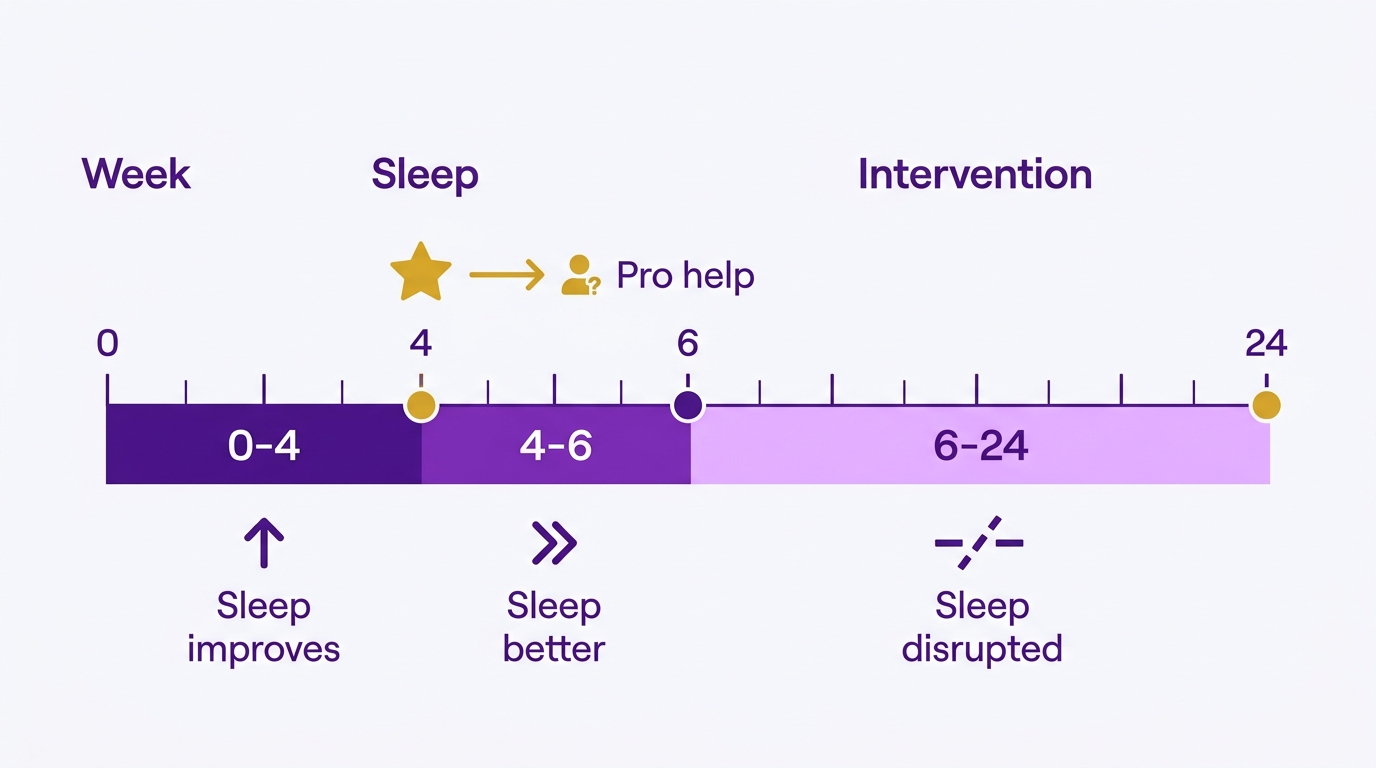
Sleep problems that persist past the first month deserve a formal evaluation. Nighttime panic, long stretches awake, or sleep quality that keeps sliding all call for a clinical sleep assessment. A specialist can sort out whether this is prolonged withdrawal or a standalone sleep disorder.
Polysomnography, an overnight sleep study, enters the picture when something beyond alcohol withdrawal is on the table, like sleep apnea, periodic limb movement disorder, or REM abnormalities. A sleep clinic measures total sleep time, tracks how often breathing interruptions yank a client out of deep sleep, and catches limb movements they never remember. That data can rewrite the treatment plan.
Who to bring in for sleep support
Sleep medicine specialists come first when medical intervention is on the table. These physicians rule out structural issues like apnea and restless leg syndrome and coordinate treatment without leaning on habit-forming medications.
Behavioral sleep specialists trained in Cognitive Behavioral Therapy for Insomnia (CBT-I) are the second key referral. That structured program helps clients reconnect the bed with sleep and manage the anxiety that clusters around insomnia. Our coaching runs alongside these professionals, supplying the daily accountability that makes clinical recommendations actually stick.
Long-Term Sleep Benefits of Maintaining Sobriety
Sobriety pays off in sleep, but the payoff is slow and uneven. The brain needs time to repair the pathways that regulate sleep cycles. That drawn-out phase is exactly what our coaching is built for, keeping clients on their routines even when progress feels invisible.
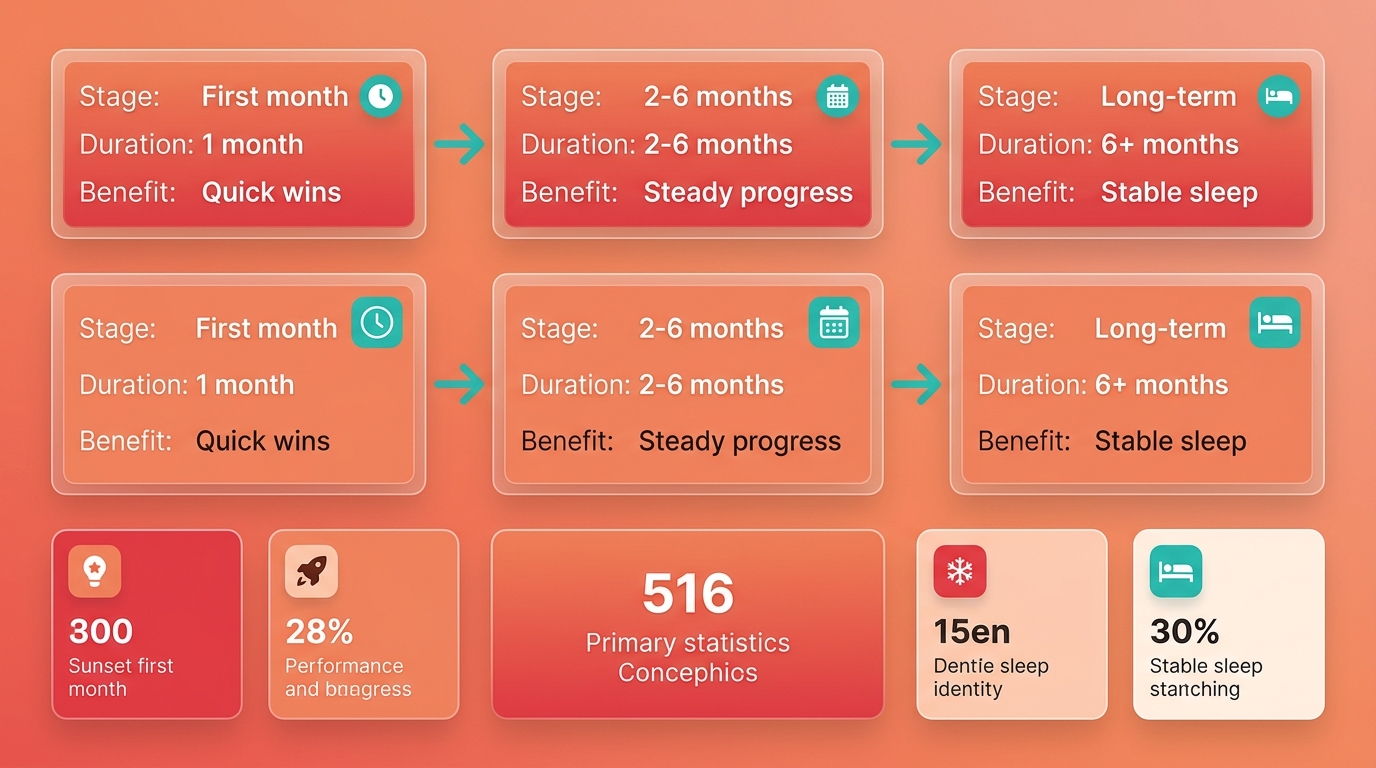
Why abstinence alone doesn't fix sleep
Abstinence is the prerequisite for sleep recovery, not the cure. Chronic use alters brain chemistry, especially the GABA and glutamate systems that govern relaxation and arousal. Those systems can stay out of balance long after detox, so staying sober is often not enough on its own to restore healthy sleep. That's why active, structured sleep coaching does real work, helping the brain relearn how to rest.
How to protect your sleep gains long-term
Hold the line with a structured daily routine and non-pharmacological tools for any lingering issues. Behavioral interventions sustain sleep quality over the long haul without the risks that come with sleep medications. Consistent wake times, daily movement, and solid sleep hygiene safeguard progress and support wider recovery.
What steady support catches that mood misses
The quiet physiological vulnerabilities that stick around even when a client feels emotionally strong. Deep sleep stages and normal REM cycles take time to come back, and through that window the nervous system stays sensitive to stress. Consistent coaching provides oversight to catch early fatigue or a routine starting to fray, which helps clients cross into long-term sobriety without a stumble.
References
[1] Survival Guide for Your First Days Sober - https://www.gatewayfoundation.org/blog/survival-guide-first-days-sober/
[2] How Long Does Insomnia Last After Quitting Alcohol? - https://midwestrecoverycenters.com/insomnia-after-quitting-alcohol/
[3] One Week Sober: What to Expect in Early Sobriety | Monument - https://joinmonument.com/resources/one-week-sober-what-to-expect/
[4] How long does Insomnia Last After Quitting Alcohol? ... - https://estadtpsychological.com/blog/how-long-does-insomnia-last-after-quitting-alcohol-pursuing-recovery/
[5] First 30 Days of Sobriety: What to Expect Week by Week - https://www.sandstonecare.com/blog/first-30-days-of-sobriety/
[6] Building a Healthy Routine in the Early Stages of Recovery - https://www.gatewayrehab.org/blog/building-a-healthy-routine-in-the-early-stages-of-recovery
[7] How to improve your sleep while in addiction recovery - https://smartrecovery.org/blog/how-to-improve-your-sleep-while-in-addiction-recovery
[8] How To Structure Your Routine in Early Recovery - https://serenityrecovery.org/blog/how-to-structure-your-routine-in-early-recovery/
[9] Increased REM sleep density at admission predicts relapse by three ... - https://pubmed.ncbi.nlm.nih.gov/9564445/
[10] Alcohol and sleep I: effects on normal sleep - PubMed - https://pubmed.ncbi.nlm.nih.gov/23347102/
[11] Assessment and treatment of insomnia in adult patients with alcohol ... - https://pubmed.ncbi.nlm.nih.gov/25957855/
[12] Sleep disturbance as a universal risk factor for relapse in addictions ... - https://pubmed.ncbi.nlm.nih.gov/19910125/
[13] Treatment options for sleep disturbances during alcohol recovery - https://pubmed.ncbi.nlm.nih.gov/18032231/
[14] The course of sleep disturbances in early alcohol recovery - PubMed - https://pubmed.ncbi.nlm.nih.gov/24313237/
Frequently Asked Questions
1. How long does it typically take for sleep to fully normalize after quitting alcohol?
While initial improvements in sleep patterns can begin within the first month of sobriety, fully normalized sleep architecture often takes several months. The timeline varies based on the duration and severity of substance use, making consistent routine-building and patience essential during this transitional phase.
2. Can I use sleep medication to get through the first month of sobriety?
Medications used during acute medical detox must be carefully managed under clinical supervision. For ongoing sleep issues during early recovery, non-pharmacological approaches and behavioral strategies are preferred to avoid the risk of developing a new dependence. Always consult a healthcare professional specializing in addiction medicine to discuss safe options.
3. What's the difference between a rough night and insomnia that needs treatment?
An occasional night of poor sleep is a normal part of recovery. However, if you experience a persistent pattern of taking hours to fall asleep or waking up frequently throughout the night for multiple consecutive days, it may indicate a deeper issue that requires professional attention rather than just waiting it out.
4. Why do I feel great during the day but still can't sleep at night in week three?
Early recovery often brings a temporary boost in daytime energy and mood, which can mask ongoing disruptions in your sleep cycle. Even when you feel subjectively well during the day, your brain is still working to restore normal sleep stages at night, which is why maintaining a structured bedtime routine remains critical.
5. How can family members help without micromanaging my sleep schedule?
Family members can support recovery by helping to maintain a calm, quiet home environment during evening hours. Supporting a structured daily routine and respecting the client's designated sleep schedule provides meaningful assistance without the need for direct monitoring or questioning.
6. Does exercise really help with sleep if I'm exhausted all day anyway?
Yes, regular physical activity helps regulate the body's sleep-wake cycle. Engaging in moderate exercise during the day promotes natural physical tiredness, making it easier to fall asleep and stay asleep at night, provided it is not done too close to bedtime.
7. When should I ask for a formal sleep study instead of waiting it out?
A formal sleep study is recommended if you suspect an underlying sleep disorder, such as sleep apnea or restless leg syndrome, or if your sleep quality continues to decline despite maintaining a consistent routine. A specialist can use diagnostic tools to identify specific physiological disruptions and tailor a treatment plan accordingly.