From Detox to Daily Life: Staying Sober Without Constant Supervision
August 1, 2026

Key Takeaways
- Relapse risk often rises during the early weeks after discharge, making steady support especially valuable during that period.
- MADE provides individualized coaching that can include virtual or in‑person check‑ins, routine planning, and nutrition guidance to help manage cravings and stress.
- Accountability helps turn a broad goal like “stay sober” into concrete daily actions, making milestones easier to track and crises easier to handle.
- Generic aftercare plans may struggle because recovery is intertwined with everyday life, emotions, and external pressures; flexible plans can adapt as circumstances change.
- MADE’s approach blends peer support, mindfulness, budgeting, healthy eating, and community activities, and it can shift as work or stressors shift.
- Early‑stage coaching can offer feedback, encouragement, and practical tools while a daily rhythm is being established.
The first weeks alone are where things get real
Leaving a structured treatment setting for independent living can feel like a jolt. In residential care, staff are present around the clock; at home, triggers appear without a clinician nearby. MADE aims to provide a consistent presence that helps you handle everyday stress, ride out cravings, and stay connected to your recovery community.
What accountability actually does for long‑term sobriety
A dedicated partner can help translate recovery hopes into daily habits. Working with a coach to set routines, monitor progress, and address problems as they arise provides a reliable sounding board, especially when motivation dips. Many people find that having someone to check in with helps maintain focus on personal growth.
Why a generic aftercare plan tends to break
Recovery is shaped by a unique mix of history, environment, and personal strengths. Standardized programs may miss those nuances, offering rigid guidelines that don’t always match daily life. A personalized approach can bend with circumstances—such as a new work schedule or a family issue—so the level and type of support stay relevant.
Swapping full independence for a flexible coaching relationship isn’t a crutch; it’s a way to build the life skills that support lasting independence. Early intensive support can gradually give way to more self‑directed management, with resilience developing over time.
Developing a Personalized Recovery Plan
We begin with a structured interview that explores internal motivations (e.g., emotional control) and external resources (family, peer networks). Factors are discussed in terms of urgency and impact, helping keep the plan balanced.
- Internal factors – reflective questions explore emotional regulation and personal beliefs about addiction.
- External factors – an inventory of “recovery capital” (stable housing, employment, support groups) highlights strengths and gaps.
- Goal articulation – we help you draft a short “sober identity” statement that aligns with your values.
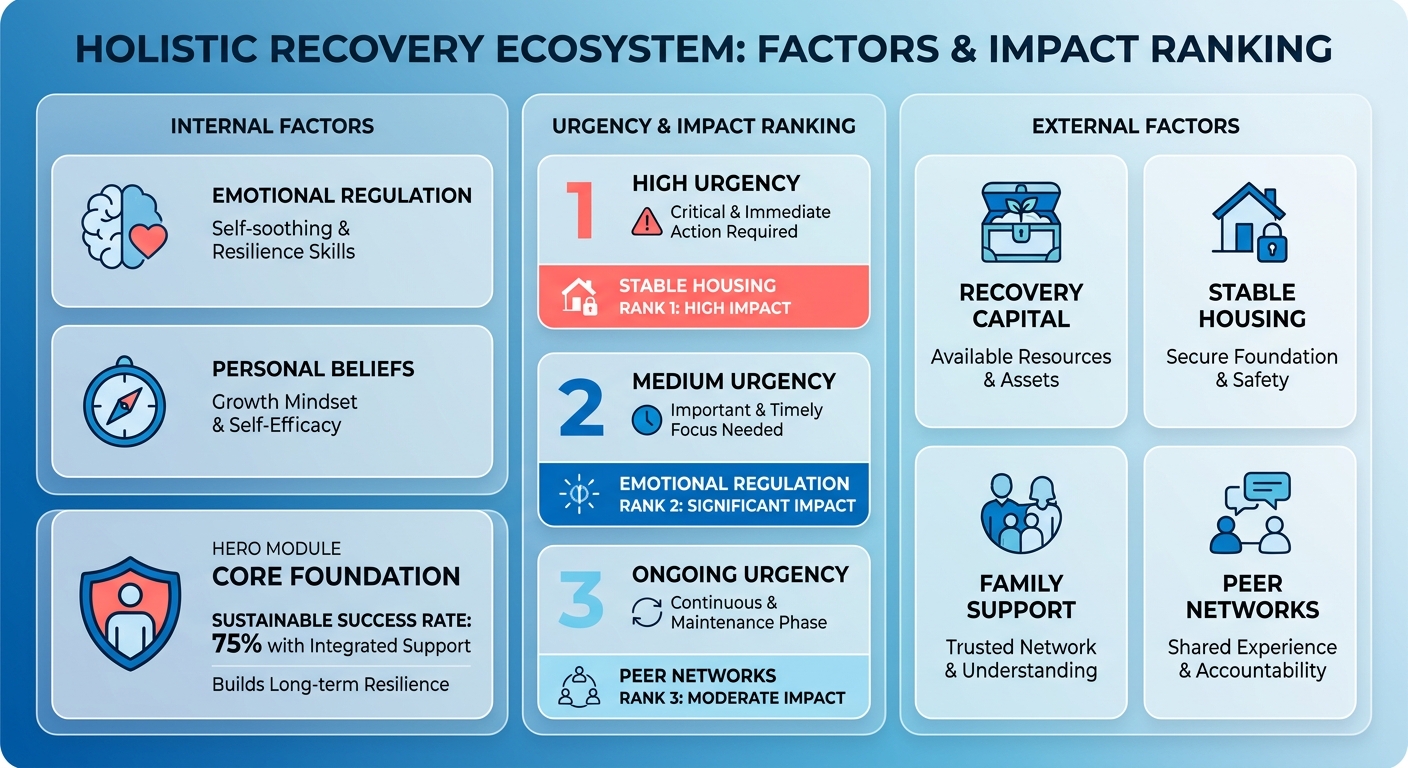
By the end of this step, you have a personalized profile that informs subsequent decisions.
What milestones keep the plan honest
The long‑term view is broken into three‑to‑six‑month milestones, each tied to a measurable behavior and a supporting check‑in. This keeps progress visible and adjustable.
- Early‑stage milestones (approximately the first month) focus on joining a peer‑run support group, establishing a daily habit, and scheduling regular coaching calls.
- Mid‑stage milestones (roughly the next two months) add an additional healthy habit and develop a trigger‑management plan that identifies high‑risk situations and concrete response steps.
- Later‑stage milestones (beyond three months) broaden the social circle beyond the initial recovery community, encouraging activities such as volunteering or creative classes.
Each milestone includes a SMART target (Specific, Measurable, Achievable, Relevant, Time‑bound) and a review point where the coach helps recalibrate.
How we blend healthy habits, triggers, and coaching
Nutrition, movement, and stress‑reduction are woven into the daily schedule, with coaching that monitors cravings and adjusts as needed.
- Nutrition and exercise – balanced meals and regular movement are commonly recommended to support overall well‑being; we keep it simple with a protein‑focused breakfast and an enjoyable activity a few times a week.
- Trigger identification – using insights from the internal‑factor interview, we create a “trigger map” that flags people, places, and emotions tied to use, and we role‑play responses during sessions.
- Coaching loops – the model typically shifts from weekly calls in the first month to less frequent or as‑needed check‑ins later, matching the transition from peer‑run settings to broader daily life.
“Clients often report feeling more confident as they work through the plan,” one participant noted.
Treat the recovery plan as a living roadmap, rooted in identity work yet flexible enough to grow beyond initial support resources.
Building a Support Network and Accountability Partners
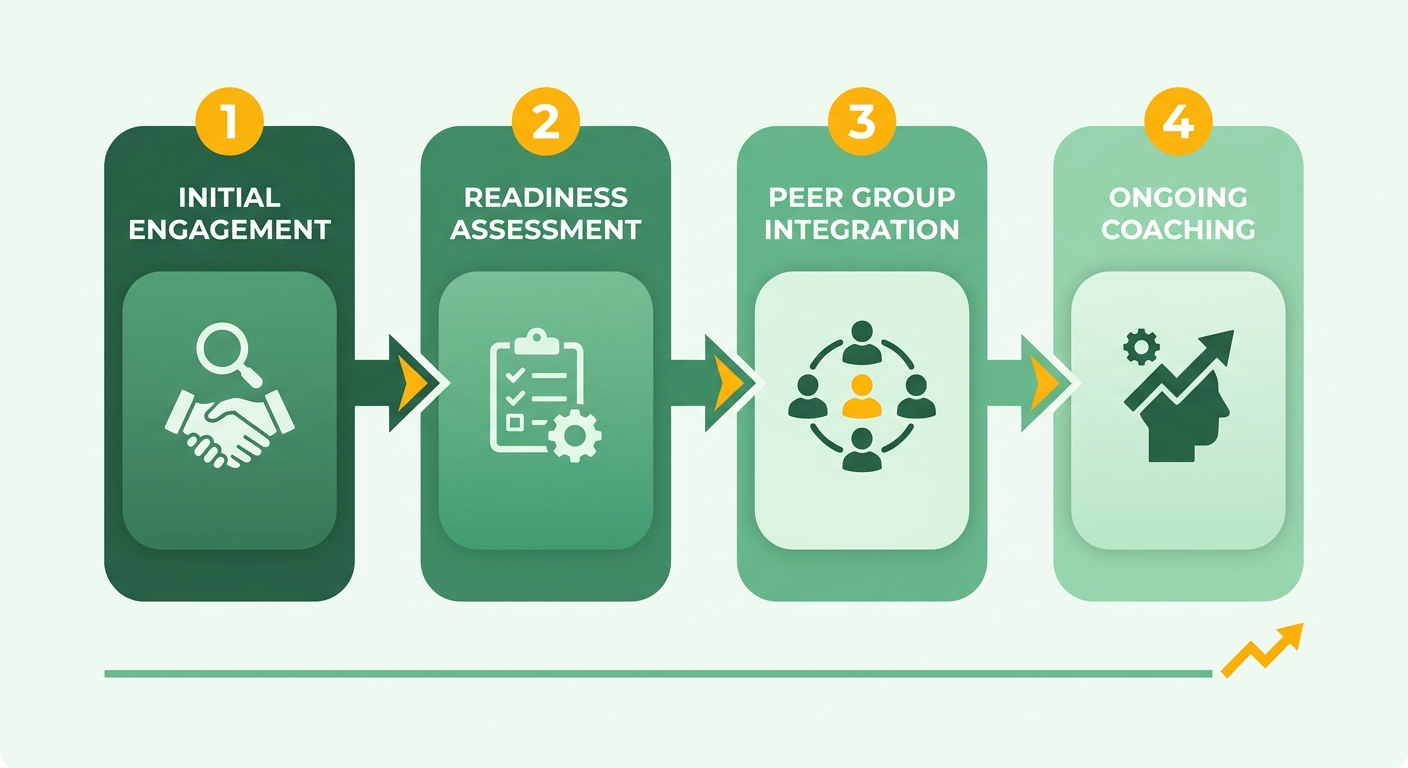
Peer groups are integrated into a phased plan, beginning with an initial consultation and moving toward individualized coaching as a sober social base forms.
- Initial engagement: after intake, we help locate local or virtual peer‑run groups that align with personal goals and encourage early attendance.
- Readiness assessment: coaches check in regularly, using goal tracking and self‑reported confidence to decide when to shift toward more independent work.
- Ongoing peer contact: maintaining ties to the same group can help sustain a “sober network,” which many programs view as beneficial.
“Residents of SLHs made improvements in a variety of areas.” – study authors
This approach aims to avoid the “limited‑community” trap where a participant’s world shrinks to a single meeting. The coaching team continues to introduce new social roles—volunteering, mentoring, hobby groups—as the peer circle stabilizes.
Where family, friends, and technology fit
Family and friends can complement the peer network, while technology can provide real‑time accountability when in‑person contact is less frequent.
- Family alignment: a brief intake with key relatives can set boundaries, celebrate milestones, and discuss supportive responses to cravings.
- Relationship review: you and your coach examine current contacts, discuss the influence of each relationship, and plan to strengthen supportive ties while reducing exposure to high‑risk situations.
- Digital tools: secure messaging can deliver daily prompts, mood logs, and progress summaries; moderated online forums can offer additional community support.
When a client already has stable family support and limited comfort with technology, we may prioritize face‑to‑face peer meetings and introduce digital tools later, rather than forcing an app that isn’t used.
How adaptive coaching keeps the network working over time
Coaching regularly reassesses progress and reshapes the support network to fit evolving goals.
- Regular reviews: quarterly evaluations can track community integration and indicate whether the support setup needs adjustment.
- Dynamic partner matching: life changes such as a career shift or relocation may prompt a match with specialized coaching or new peer groups.
- Exit strategy: as stability and confidence grow, contact frequency can be reduced while encouraging reliance on an organic social network, with a safety net still available.
Viewing the support network as a living system helps keep assistance proportional to actual independence.
Managing Cravings, Stress, and Triggers
Cravings often intensify when stress accumulates or old cues reappear. We address this by embedding real‑time coping tools into a flexible plan rather than a static checklist. Coaches help each client build a personal skill set for the moment and work on anticipating triggers so the urge loses potency.
How we spot and defuse triggers
We start by mapping high‑risk moments and practicing a quick “pause‑plan” that can be executed in under a minute:
- Name the cue (e.g., a bar invitation, a stressful email).
- Apply a grounding technique (deep breathing, sensory focus, brief stretch).
- Reach out to a pre‑selected support contact (coach, sponsor, trusted peer) for a brief check‑in.
We rehearse this on low‑stress days so it becomes automatic when pressure rises.
- Environmental scan: list places, people, and times that have previously sparked use.
- Skill rehearsal: role‑play the pause‑plan in a safe setting.
- Contact list: keep phone numbers or chat links readily accessible.
When a trigger feels unavoidable, we may suggest temporary adjustments such as staying with a sober roommate or modifying a work schedule to create space for practicing new coping strategies.
Real‑time craving management between sessions
Coaches can help you use everyday resources as an on‑demand safety net, bridging scheduled sessions and cravings that arise at other times. A brief reflection after any supportive interaction—meeting, conversation, or personal check‑in—captures the trigger, emotion, and coping step taken, creating useful data for future situations.
“Having someone check in when I’m struggling makes a big difference,” a client shared.
These peer‑reinforced checkpoints aim to feel supportive rather than supervisory. If a planned check‑in is missed, the coach may follow up with a brief “how did it feel?” message, maintaining momentum without rigid attendance rules.
How a structured day keeps stress from breeding cravings
We co‑create a daily schedule that balances responsibilities, self‑care, and downtime, because idle time can allow rumination to turn into cravings. An example day might look like:
- Morning anchor: 10 minutes of meditation or light cardio, followed by a short gratitude note.
- Work/skill block: focused tasks with timed breaks (e.g., a brief stretch each hour).
- Midday connection: a scheduled check‑in with a coach or a quick supportive call.
- Evening wind‑down: journal triggers, review pause‑plans, and engage in a calming activity such as reading, music, or a hobby.
Clients who adopt this rhythm often describe feeling calmer and more in control. When overwhelm arises, a “micro‑reset” (a brief pause with three minutes of breathing) can help regain focus. Consistency helps cravings become signals you can read rather than crises that overwhelm.
Using Aftercare and Continuing Care Programs
Continuing care bridges intensive treatment and long‑term independence. Rather than applying a uniform standard, we aim to fit services around existing commitments and support systems, matching coaching intensity to need and allowing room for self‑reliance.
- Evaluate current stability – assess daily environment and existing support to determine appropriate engagement level.
- Determine coaching intensity – clients with strong support may focus on specific goal‑setting, while those facing tougher transitions may receive more frequent touchpoints.
- Adapt to progress – ongoing observation of daily stress handling informs adjustments to session frequency.
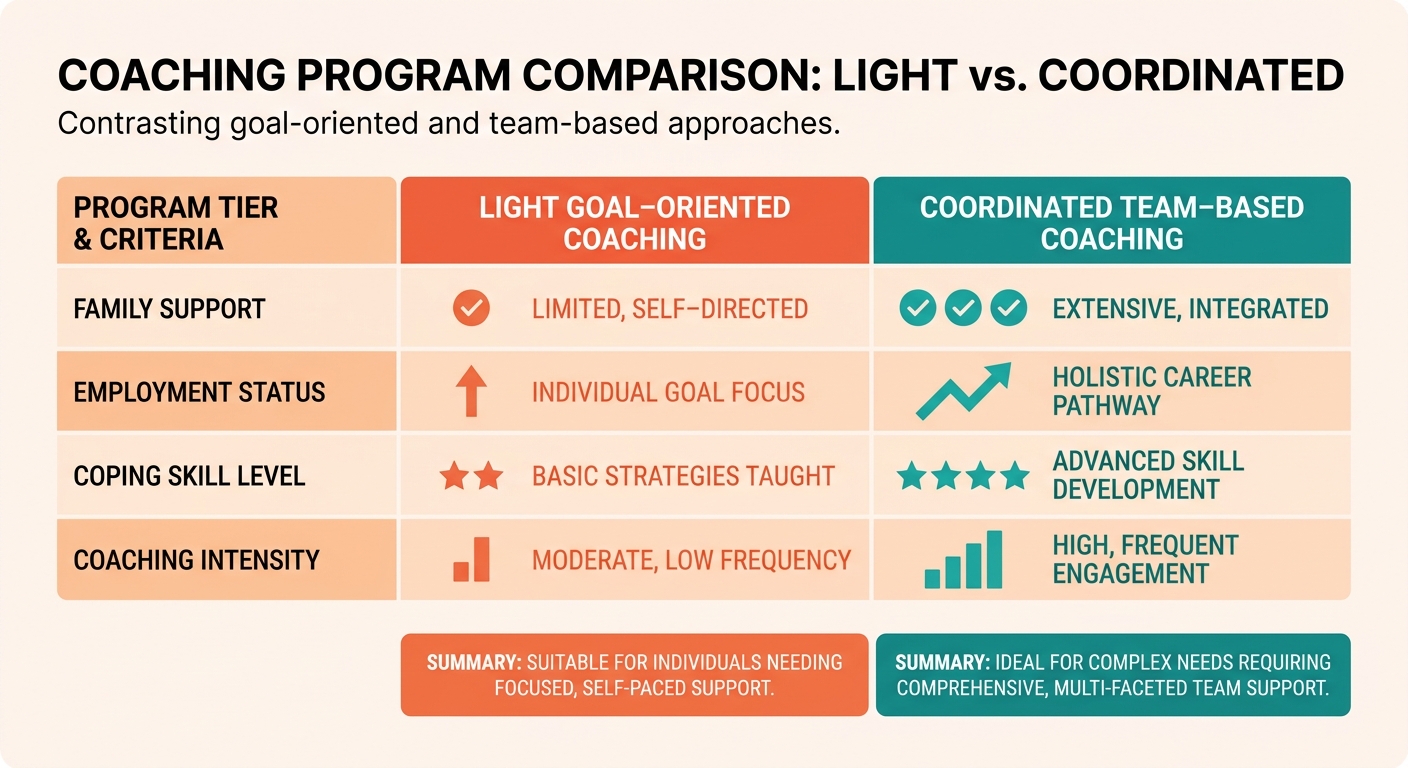
What tapering supervision actually looks like
Intensive check‑ins are gradually reduced in line with measurable milestones, allowing independence to grow without feeling abandoned.
- Early phase: frequent check‑ins (daily or several times a week) to establish routines and address immediate triggers.
- Mid phase: contact tapers to a few times a week as confidence builds.
- Later phase: weekly or bi‑weekly check‑ins maintain presence without hovering.
If confidence remains low or new stressors appear, the taper can pause and support can be reinforced until stability returns. Tapering is intended to be flexible rather than a race.
How adaptive coaching fits into continuing care
The continuing‑care model is designed to respond to real‑life changes, keeping support relevant as you move forward.
- Immediate strategy adjustment: new challenges prompt in‑session modifications to daily strategies.
- Community engagement: assistance finding local ways to build relationships and interests helps create a full life beyond recovery circles.
- Collaborative recalibration: ongoing feedback fine‑tunes the support structure, aiming to avoid both over‑oversight and insufficient guidance.
Flexibility helps the handoff from structured supervision to self‑reliance proceed smoothly, providing tools for independent recovery management.
Building a Sober Identity and Purpose
Support groups often become the first social anchor after treatment, but they are only one piece of a broader identity puzzle. At MADE, early group contact is paired with coaching that encourages self‑exploration. Clients who articulate a personal “sober‑life narrative” frequently report stronger motivation and clearer direction. Coaches assist in drafting that narrative as a foundation for future steps.
Hobbies and interests serve as practical building blocks. Trying new activities—painting, cycling, coding, or any approachable pursuit—helps collect evidence that life can be fulfilling without substances. We encourage experimentation with low‑cost activities and attention to those that spark genuine curiosity.
A future‑oriented vision turns these experiments into purpose. Coaches help set meaningful goals that connect emerging interests to concrete steps (e.g., training for a 5 k, completing a freelance portfolio). These targets are revisited during coaching check‑ins and adjusted as confidence grows.
How we define a sober identity
A sober identity shifts focus from what is being avoided to who you are becoming. We help define this identity through core values, strengths, and the positive roles you wish to play in your community. Building a self‑image centered on growth and contribution aligns daily decisions with a long‑term vision.
What purpose guides long‑term growth
Purpose provides the “why” behind daily discipline. We anchor purpose in three areas: work, relationships, and personal growth. Each area can include a measurable goal (e.g., applying to jobs, scheduling regular supportive conversations, completing an online course). Linking goals to the identity statement helps purpose act as a daily driver rather than an abstract ideal.
How ongoing coaching supports the identity
Coaching offers a structured space to reinforce the new self‑image. Sessions typically involve:
- Identifying core values and strengths.
- Defining positive roles you want to fill.
- Setting actionable goals in key life areas.
- Exploring new activities that bring fulfillment.
- Regularly reviewing and adjusting the plan with your coach.
Consistent practice keeps growth active and aligned with what you are truly working toward.
References
[1] Exploring the meaning of recovery and a sober life after a long ... - https://pmc.ncbi.nlm.nih.gov/articles/PMC10688400/
[2] How to Get Sober: A Guide to Sobriety - https://americanaddictioncenters.org/sobriety-guide
[3] Sober Living Houses for Alcohol and Drug Dependence - https://www.researchgate.net/publication/42344760_Sober_Living_Houses_for_Alcohol_and_Drug_Dependence_18-Month_Outcomes
[4] Recovery post treatment: plans, barriers and motivators - PMC - https://pmc.ncbi.nlm.nih.gov/articles/PMC3573929/
Frequently Asked Questions
1. How can someone with limited family support still benefit from aftercare?
Answer: Individuals without a strong family network can build a robust support system by leveraging professional coaching and community resources. A coach helps identify alternative sources of support, such as local peer groups, professional mentors, and community organizations. Establishing these external connections can provide the encouragement and accountability needed for long‑term sobriety.
2. What if a client prefers in‑person coaching but lives in a remote area?
Answer: When a client lives far from a treatment center, MADE can substitute in‑person sessions with secure video meetings that follow the same coaching agenda, while still encouraging occasional local peer‑group attendance. This hybrid approach preserves personal connection and helps maintain routine despite travel constraints.
3. How does the coaching plan adjust when a new job adds stress?
Answer: When professional demands change, the coaching focus can shift toward stress‑management and time‑blocking strategies. The coach works with the client to identify specific workplace triggers, establish clear boundaries between work and personal life, and ensure self‑care routines remain a priority amid a busier schedule.
4. Can technology replace face‑to‑face peer groups for accountability?
Answer: Digital tools offer convenient, real‑time connection and tracking, but they tend to be most effective when used alongside in‑person interactions. Live meetings and face‑to‑face conversations build deep empathy and shared understanding, which are critical for emotional healing. Technology serves as a valuable bridge between these meetings, keeping you connected during daily transitions.
5. How are cravings managed when an unexpected trigger appears outside scheduled check‑ins?
Answer: Clients are equipped with immediate coping strategies to use when sudden urges arise. This typically involves recognizing the trigger, employing a brief physical grounding exercise to reduce anxiety, and reaching out to a designated contact for support. Having a pre‑planned response helps de‑escalate the craving before it leads to action.
6. What distinguishes MADE’s personalized plan from generic aftercare programs?
Answer: Unlike standardized aftercare programs that rely on fixed checklists, MADE’s approach is highly collaborative and responsive to daily life. The focus is on building a sustainable lifestyle by continuously adjusting support to match progress, helping transition from structured supervision to independent, self‑directed recovery.