6 Relapse Traps After Rehab, and the Countermove for Each
August 28, 2026
Key Takeaways
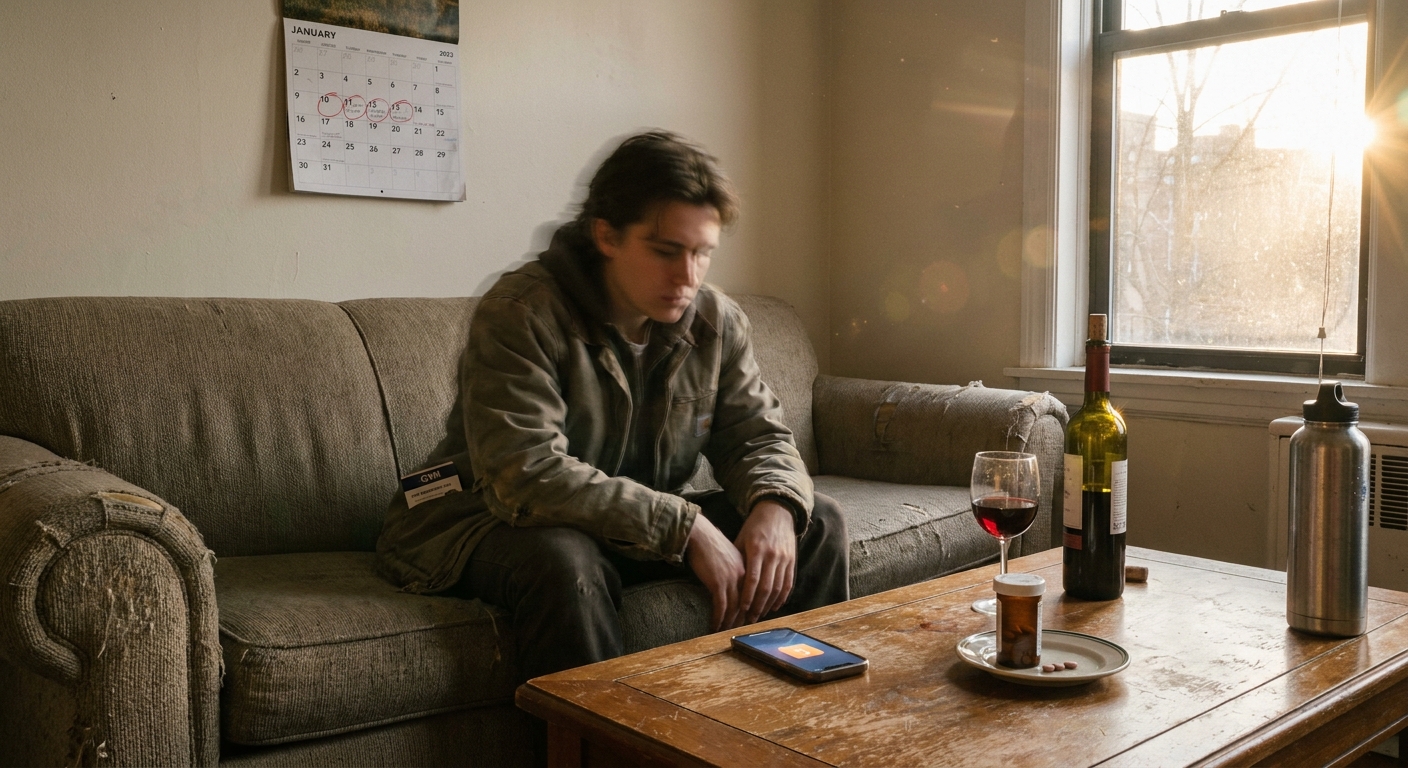
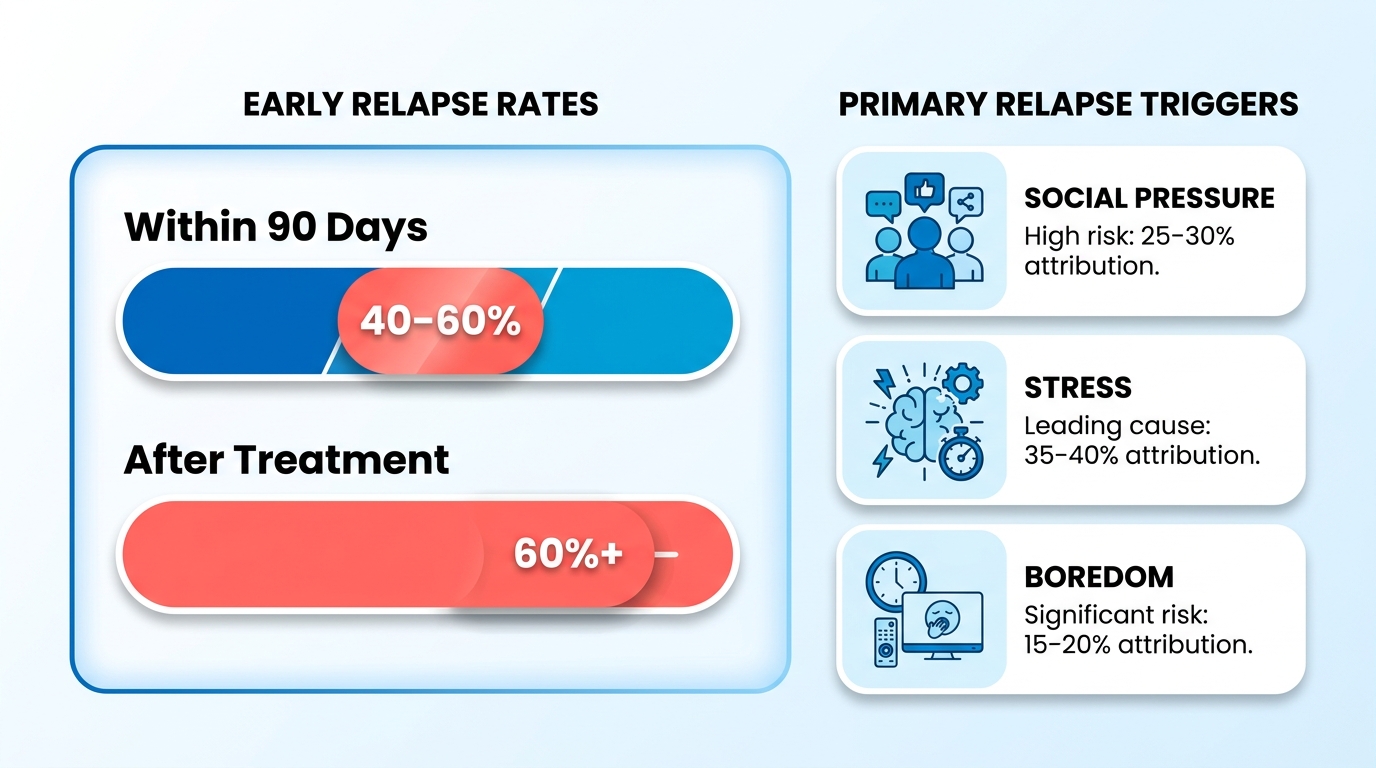
- Between 40% and 60% of people relapse within 90 days, per National Institute on Drug Abuse figures.
- A study of 242 clients across 23 residential programs found 60% used again after treatment, many within weeks.
- The first 30 days after discharge are the highest-risk stretch.
- Only about 40% of people stay abstinent at three months.
- Post-acute withdrawal can last up to two years.
- Hold 90 days of abstinence, and future relapse risk drops sharply.
- Risk spikes when formal treatment ends, so people face two battles.
Why the First Month Home Is the One That Breaks People
The first 30 days after discharge are the most dangerous stretch. Between 40% and 60% of people relapse within 90 days of leaving treatment, according to the National Institute on Drug Abuse. One study of 242 clients across 23 residential programs found 60% used again after treatment, many within weeks of leaving.
Most guides miss why this happens. This window is not risky because of weak willpower. It is risky because two forces peak together. Our coaching is built around that gap.
Why the first 30 days carry so much weight
The 30-day window sits where behavioral risk meets neurobiological vulnerability. Only about 40% of people stay abstinent at three months, per this history of relapse prevention research. Post-acute withdrawal syndrome (PAWS) also keeps mood swings and anxiety going.
The sources disagree on when the danger fades. One says 90 days of abstinence sharply cuts future relapse risk. Another shows PAWS can last up to two years, keeping cravings alive long after 90 days.
Both can be true. Behavioral risk drops as coping skills improve. Brain chemistry stays vulnerable much longer. That is why the 30-day window is so hard. Formal support also ends right then.
What a relapse actually costs
A relapse costs more than a bad week. It brings an economic hit of roughly $2,400 per episode in lost productivity and health costs. It also raises the risk of depression and anxiety.
Many people see relapse as one bad choice. It is not. It begins weeks or months earlier, through emotional and mental stages first. The visible slip is the end, not the start.
That matters. A relapse is not a sign of weakness; it means better coping tools were needed. Many people need five or six attempts before recovery sticks. Catching the emotional stage early is where a team helps most.
Why "trap and countermove" beats a list of warnings
A trap-and-countermove framework turns warnings into daily action. It comes from cognitive-behavioral relapse prevention, an empirically supported approach that pairs each high-risk situation with a rehearsed response before craving starts.
75% of relapses trace back to negative emotional states, conflict, and social pressure. Naming those traps ahead of time lets you plan the countermove before crisis hits.
- Anticipate high-risk situations before they arrive. Spotting triggers early makes them easier to manage later.
- Build both inward and outward defenses. Situational triggers need one plan; daily self-care against HALT (hungry, angry, lonely, tired) needs another.
- Use coping skills daily, not just in crisis. Mindfulness helps you sit with cravings, but only if you practice first.
Who benefits most? Recent residential graduates, veterans, and families acting as co-supporters. Our team-based coaching supports both the individual and the family. It adds accountability and human connection when it matters. A daily routine that holds up is where change starts. Our coaches help clients build habits that reduce stress and restore balance.
The Three Traps That Cause Most Early Relapses
Three traps cause most early relapses, and each starts before the craving. Social pressure, stress, and boredom pull many people under in the first month home. NIH research on relapse stages shows the shift happens slowly. It erodes defenses before you notice trouble.
That timing changes the whole game. Most guides treat coping skills as emergency tools. In our experience, that is backward. The countermove below is a daily practice you run when things feel fine, not a button you press in crisis.
How to beat social pressure after rehab
Social pressure is the single most common relapse driver. Research on social networks shows the share of substance-using contacts is one of the strongest predictors of early recovery. People surrounded mostly by active users face steeper odds in the first year. Old settings where use was normal raise risk fast, as Addiction Center's work on triggers shows.
You beat it by preparing before the situation arrives.
- Name three sober peers you can text at 9 p.m. Isolation is where emotional relapse starts.
- Schedule a weekly check-in with your coach or a peer. A set time removes weekly decisions.
- Use a "sober buddy" contract for high-risk events. Swap a party for a coffee-shop meetup instead.
What actually reduces stress-driven cravings
Stress fuels cravings, and the fix is daily practice. A structured mental pause helps you notice tension without reacting, as the Recovery Research Institute describes. Research in an NCBI study cited by Addiction Center shows consistent mental conditioning helps calm the nervous system and lowers the perceived intensity of daily stressors.
There is real tension here. One camp focuses on situations to avoid. Clinical guidance focuses on basics like nutrition, fatigue, and isolation. You need both layers.
- Run a 5-minute grounding drill every morning. Daily practice works better than reactive use.
- Do a physical and emotional self-scan twice a day. Catch exhaustion or hunger before they become anxiety.
- Add short-term CBT tools for negative thinking. Cognitive therapy shifts the thoughts that come before use.
Why boredom raises relapse risk
Idle time is a trap because recovery is about building a life. That is the point Steven Melemis makes in the five rules of recovery. Empty days leave room for mental relapse.
Purpose fills the gap. Our transitional support helps clients build structured weekly schedules around real interests. Free time becomes meaningful instead of empty.
- Block your calendar with purposeful activity, not just "stay busy." Meaning, not motion, protects you.
- Commit to one recurring anchor each week. A class, a volunteer shift, or a standing walk gives the week shape.
A slip is data, not a verdict. It points to a specific weakness in your current environment. That shows exactly where your plan needs reinforcement.
Your Personalized After-Rehab Checklist
This checklist turns the trap-and-countermove idea into something you can print and use for 30 days. The goal is not to do everything at once. Add one countermove each week. Attach it to a habit you already have. Track whether it works.
Why phase it in? Behavioral vulnerabilities build quietly over time, according to NIH research on recovery stages. Your daily practices need to run before the hard moment arrives. In our experience, clients who thrive treat these as maintenance, not emergencies.
How to build your weekly countermove blocks
Block out a 2-hour countermove session each week, one per trap. Pair each new habit with a routine you already do. Habit-stacking works because you borrow momentum from something automatic.
- Week 1. Self-care baseline. Stack a 5-minute breathing practice onto your morning coffee. Neglecting basic physical needs is a primary driver of early vulnerability, per Melemis's five rules. Use this time to check comfort, fatigue, and emotional state.
- Week 2. Craving skills. Add a 10-minute mindfulness session after lunch. This helps the brain tolerate discomfort and treat urges as passing sensations.
- Week 3. Trigger mapping. Journal trigger exposures nightly after brushing your teeth. People who identify triggers early manage them better, especially social situations where using is normal.
- Week 4. Connection. Schedule one recurring human touchpoint. Conflicts with family and friends contribute heavily to relapse, so build support before conflict hits.
What to track every day
Track three numbers daily: a craving rating (0–10), a trigger exposure count, and one mood journal line. These give you and your coach early warning in the emotional stage, not after a slip. A rising craving average over two days is a signal to act.
- Craving rating. Score 0–10 each evening. Watch trends, not single spikes.
- Trigger count. Tally how many high-risk situations you hit. Consistent self-monitoring is one of the strongest predictors of sustained recovery, per relapse prevention research.
- Mood note. One honest sentence. Honesty is non-negotiable in recovery.
- Tool support. A habit-tracker app keeps the streak visible when motivation dips.
Who holds you accountable between sessions
Accountability lives between the check-ins, not just inside them. Keep a short weekly script your coach asks and a text reminder you send yourself. This matters because brain chemistry recalibrates slowly, and post-acute withdrawal can last up to two years, long after formal clinical programs end.
- Weekly coach questions: What was your highest craving this week, and what preceded it? Which countermove did you skip?
- Text reminder script: "3pm. Check-in. How is my energy, mood, and stress level right now?"
- Adjust for life events. A job change or move resets your triggers. Drop back to Week 1 self-care and rebuild. A setback means your safeguards need to catch up.
Pair this checklist with the daily routines our coaches help you build: healthy eating, structured habits, and consistent human connection. Then it stops being paper. It becomes the structure that carries you through the riskiest 30 days.
How MADE Recovery Supports Each Countermove
Every countermove works better when someone runs it with you. That is the point of our coaching. The high-stakes stretch of life after rehab is not a willpower problem you solve alone. It is a support gap. Our team builds a personalized system to close it as you move from treatment back into everyday life.
Long-term outcomes depend more on using coping strategies than on treatment setting. Research tracking residential program graduates supports that. The clients who slipped were not weaker; they lacked a coping system. A checklist tells you what to do. A coach helps you do it when motivation drops.
How team-based coaching maps to each trap
We pair each trap with a concrete piece of our program, then adjust as you go. Support is not one-size-fits-all, because the PaRC guidance on triggers confirms triggers are personal, splitting into internal thoughts and external people or places.
- Build a sober network (Trap 1) through community connection and mentorship in every coaching program, so you do not rebuild alone.
- Run stress-management and routine-building practice with your coach, establishing predictable daily habits that support physical and mental stability.
- Co-create a daily schedule to fill unstructured hours where boredom pulls people back, with activity ideas like cooking or getting active.
- Rebuild healthy eating habits with nutrition guidance that supports physical healing, emotional balance, and daily energy.
- Work through your triggers with your coach and plan safe routes around the people and places tied to old use.
- Lean on consistent companionship, real-world support during the moments that matter most, so you do not face recovery alone.
What sets this apart from a self-managed plan
The difference is accountability that adapts. We start with an initial consultation to assess your needs, then evolve the program as you find your footing. Support tapers to build real independence, not dependence on us.
The goal is durable stability. Structured, personalized support during that fragile early window is what the research says changes who makes it to month three. That is the gap our coaching closes: consistent care and accountability when you need it most.
Coaching runs virtual or in-person, single coach or coordinated team, depending on your care level. If your relapse risk is low and your home is stable, a full team may be more than you need. Start light and scale up. If you are heading back into old routines and old relationships, this is the stretch where structure matters. Coaching can include coordination with nursing support, grocery shopping, meal prep, and day-to-day life management. Everything is shaped around routines that hold up after rehab.
References
[1] Relapse Prevention and the Five Rules of Recovery - PMC - NIH - https://pmc.ncbi.nlm.nih.gov/articles/PMC4553654/
[2] The Top 10 Relapse Prevention Skills - Addiction Center - https://www.addictioncenter.com/community/top-10-relapse-prevention-skills/
[3] Relapse Prevention (RP) (MBRP) - Recovery Research Institute - https://www.recoveryanswers.org/resource/relapse-prevention-rp/
[4] Addiction Relapse: Risk Factors, Coping & Treatment Options - https://americanaddictioncenters.org/treat-drug-relapse
[5] What Are Triggers? And How To Handle Them - https://www.addictioncenter.com/addiction/triggers/
[6] Managing Triggers & Cravings in Addiction Recovery - PaRC - https://parcbh.com/addiction-blog/how-to-manage-triggers-and-cravings-in-addiction-recovery/
[7] Relapse - Alcohol and Drug Foundation - https://adf.org.au/reducing-risk/relapse/
[8] Relapse prevention: From radical idea to common practice - https://www.researchgate.net/publication/232061470_Relapse_prevention_From_radical_idea_to_common_practice
[9] Factors associated with abstinence, lapse or relapse to ... - https://pubmed.ncbi.nlm.nih.gov/12359030/
[10] (PDF) Relapse Prevention Therapy - https://www.researchgate.net/publication/236171060_Relapse_Prevention_Therapy
Frequently Asked Questions
1. Can you fully prevent post-acute withdrawal syndrome (PAWS) symptoms after rehab?
PAWS cannot be fully prevented. The central nervous system needs time to recalibrate after active substance use. Recovery plans focus on managing symptoms through structured routines, stress reduction, and peer support.
2. How many recovery attempts do most people need before it sticks?
Multiple treatment episodes are common before long-term sobriety starts. Each attempt provides insight into triggers and environmental challenges. That helps you refine coping strategies and strengthen your support network.
3. What is the difference between emotional relapse and physical relapse?
Return to substance use begins long before the physical act. It starts with subtle shifts, such as withdrawing from support, neglecting hygiene or sleep, and having unresolved mood swings. Physical relapse is the final stage.
4. I feel fine right now. Do I still need to run coping skills daily?
Yes. Preventive practices build resilience during stable periods. They become automatic during high-stress moments. Waiting for a crisis rarely works because stress weakens decision-making.
5. What should I do if a job change or move disrupts my recovery plan?
Life transitions bring new cues and stressors. When that happens, simplify your checklist. Focus on core physical wellness, basic scheduling, and immediate accountability partners until your routine stabilizes.
6. Do I need a full coaching team, or is lighter support enough?
The right level of support should match your environment and history. People returning to high-stress jobs or social circles often benefit from comprehensive coaching. Those in highly supportive, substance-free homes may only need periodic check-ins.
7. How is craving tracking useful if scores fluctuate day to day?
Tracking gives objective data that cuts through emotional distortion. Daily logs reveal upward trends in distress or urge intensity over a week. That lets you adjust support before you reach a critical threshold.