Turn Detox Discipline Into Everyday Habits That Stick
July 28, 2026

Key Takeaways
- Pairing a client with a coach or peer buddy lowers relapse risk more reliably than going it alone. Continuous accountability and shared progress tracking do the work solo willpower can't.
- Small adjustments keep momentum alive during a stall. Swap a 5-minute walk for a 2-minute stretch and adherence survives the rough week.
- A few minutes of mindful pausing each day quiets the reward loop that drives compulsive scrolling.
- Screen-free zones give people a physical boundary. Clients report better sleep and steadier daytime energy once the phone leaves the room.
- The SMART-plus method turns a vague urge into a script you can actually run in the moment.
- Regular habit-log reviews, read by more than one coach, catch triggers tied to meal times or the commute. That's where the targeted fix lives.
Quick Summary
We pair each habit with a coach or peer who watches the progress, adjusts the difficulty, and marks the small wins. An isolated action becomes a shared story of getting better. That collaborative accountability lines up with what the evidence keeps showing: steady support sustains long-term adherence and builds confidence faster than solo effort.
Our coaching team meets regularly with the client to review habit logs and add short reflection prompts that tie a daily success back to a bigger recovery goal. When someone stalls, the coach offers a minor tweak, swapping a complicated routine for a simpler one, so momentum holds without piling on pressure. Reading those logs as a team also surfaces the small environmental cues a single set of eyes tends to miss.
Which habit-building techniques give the biggest bang for the buck?
Answer: The efficient ones share three traits: low time cost, moderate difficulty, and a direct pull on the brain's reward pathways. Especially the ones that swap a high-stimulus activity for a healthier one.
- Brief moments of reflection interrupt an automatic behavior and restore focus when stress is running high.
- Device-free environments set a physical boundary that cuts constant digital stimulation and lets natural daily rhythms come back.
- A structured craving-management protocol gives clients a way to take an urge apart, name the trigger, and pick a better response on the spot.
Run all three together and many clients notice steadier mood and sharper focus within a short stretch. That's the runway for bigger routines like regular exercise or meal planning.
When should you skip a particular habit-building method?
Answer: If someone is already buried under daily responsibilities or showing signs of acute anxiety, a high-intensity challenge like a full dopamine fast can backfire. You get burnout, not discipline.
We hold off on intensive dopamine-fasting when a person reports rising stress, emotional volatility, or a sudden surge of strong urges after a single setback. In those cases we drop back to simpler grounding work or basic coping tools. Still aimed at the compulsive pattern, just with a lower stress ceiling. Once stability returns, we reintroduce the longer challenges on a tapered support schedule so the habit-building stays sustainable instead of punishing.
Why the Detox Structure Is Worth Keeping
We work with people leaving detox or residential treatment and help them turn the structure they lived inside into everyday routines that actually hold. Our coaches work one-on-one or as a coordinated team, translating the discipline of detox into a personal habit-building plan and offering accountability, guidance, and real-world backup as clients re-enter daily life.
How does habit formation support recovery?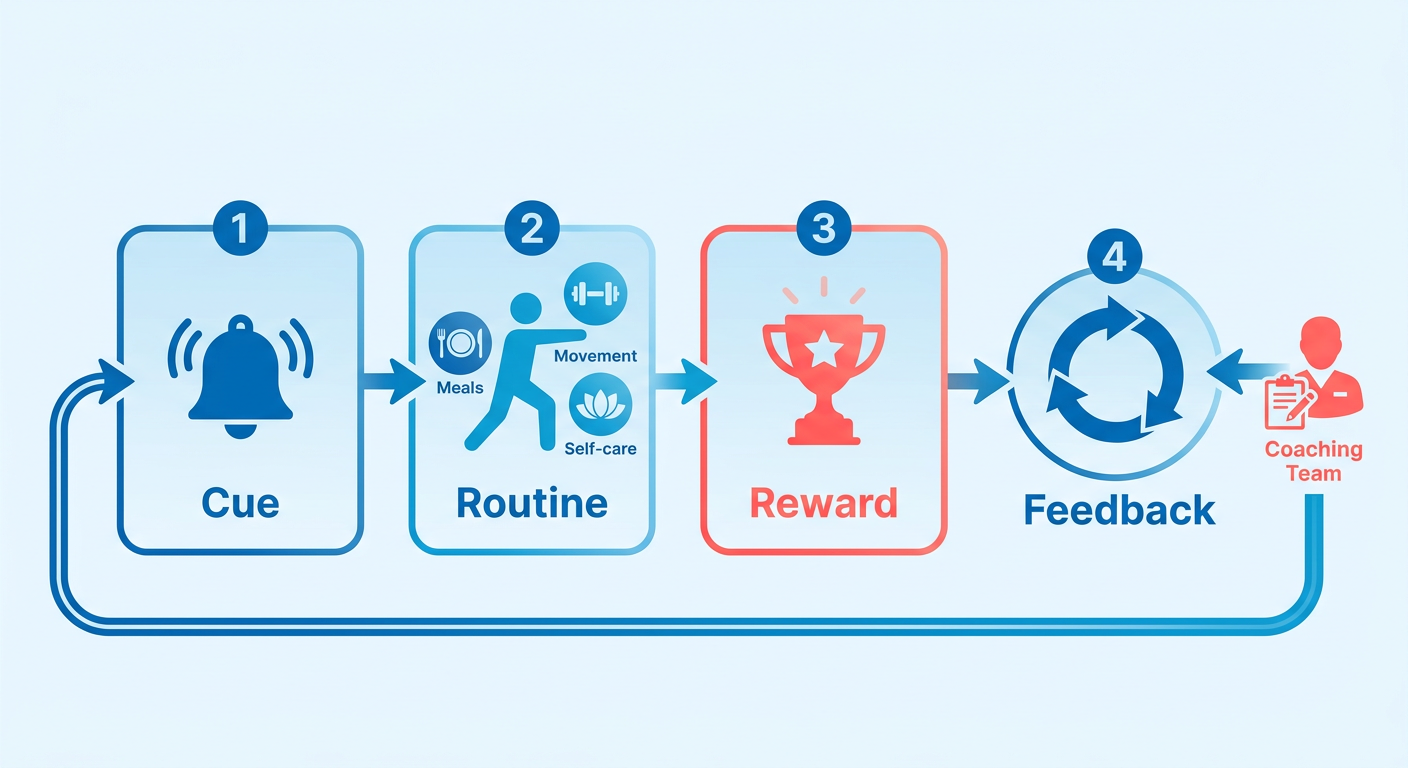
Consistent daily habits sit at the center of our coaching. Focusing on nutrition, routine, and regular check-ins gives clients a clear framework that cuts uncertainty and steadies the ground under them. When meals, movement, and self-care follow a predictable schedule, people manage life after treatment with more confidence. We see it repeatedly.
What practical micro-habits do our coaches encourage?
Three simple habits that fit into almost any day:
- Device-free environments – Turning off notifications during meals and before bed makes room for conversation, rest, and eating without distraction.
- Brief movement bursts – A short walk, a few minutes of stretching, or a quick set of bodyweight moves lifts energy and steadies mood.
- Mindful breathing – A few focused minutes a day lowers stress and sharpens attention.
Each habit gets paired with a peer or coach check-in, so there's always someone to share progress with and someone to adjust the plan when fatigue or overwhelm shows up. Flexible enough to keep momentum without tipping into burnout.
Who benefits most from a structured after-care routine?
Clients who finish detox while still carrying early-recovery symptoms, mood swings, disrupted sleep, fatigue, tend to get the most from a predictable schedule built on balanced nutrition, regular exercise, and steady support meetings. Families notice it too. The added companionship and the routine tend to calm the home and nudge everyone toward healthier days.
Tying Detox Goals to What Already Matters
We open with a values-mapping conversation that surfaces what a person actually cares about, family, career, health, creativity, then frame each detox target as a step toward one of those.
- Ask: "What would you be able to do tomorrow that you can't do now?"
- Listen for recurring themes ("play with my kids," "finish school").
The coaching leans on that link between the habit and the valued activity. The payoff feels real, so the progress reinforces itself.
What goal-setting framework keeps us on track?
Answer: SMART-plus. Specific, Measurable, Achievable, Relevant, Time-bound, and a personal "Motivation" tag that locks each micro-goal to a core value.
- Specific: "Write one paragraph of my novel after dinner."
- Measurable: Log completion where the coaching team can see it.
- Relevant: Serves the value "creative expression."
- Time-bound: Finish inside 30 days, then reassess.
- Motivation: Write the personal "why" right next to the goal.
That "why" on the goal sheet is what keeps people in the game. It's also what cuts down the "I'm too tired" drop-outs.
How do we anticipate obstacles and stay motivated?
Answer: We build contingency scripts that pair a likely trigger with a response decided ahead of time, then back them with positive self-talk.
- Identify the high-risk moments (social gatherings, stress spikes).
- Create a fallback habit ("call a coach," "step outside for a breath").
- Practice affirmations like "I choose health because my family needs me."
Naming a trigger lowers the odds of sliding back into an old pattern. Rehearse the response ahead of time and the brain starts treating it like a practiced skill, which softens the pull to revert.
In practice these steps roll into a weekly "alignment sprint": the team reviews values, updates the SMART-plus goals, and runs the trigger rehearsals. What comes out is a living recovery plan that reads less like a checklist and more like a route the client drew themselves. That's how a fragile detox window turns into something sustainable.
Small Habits, Big Change
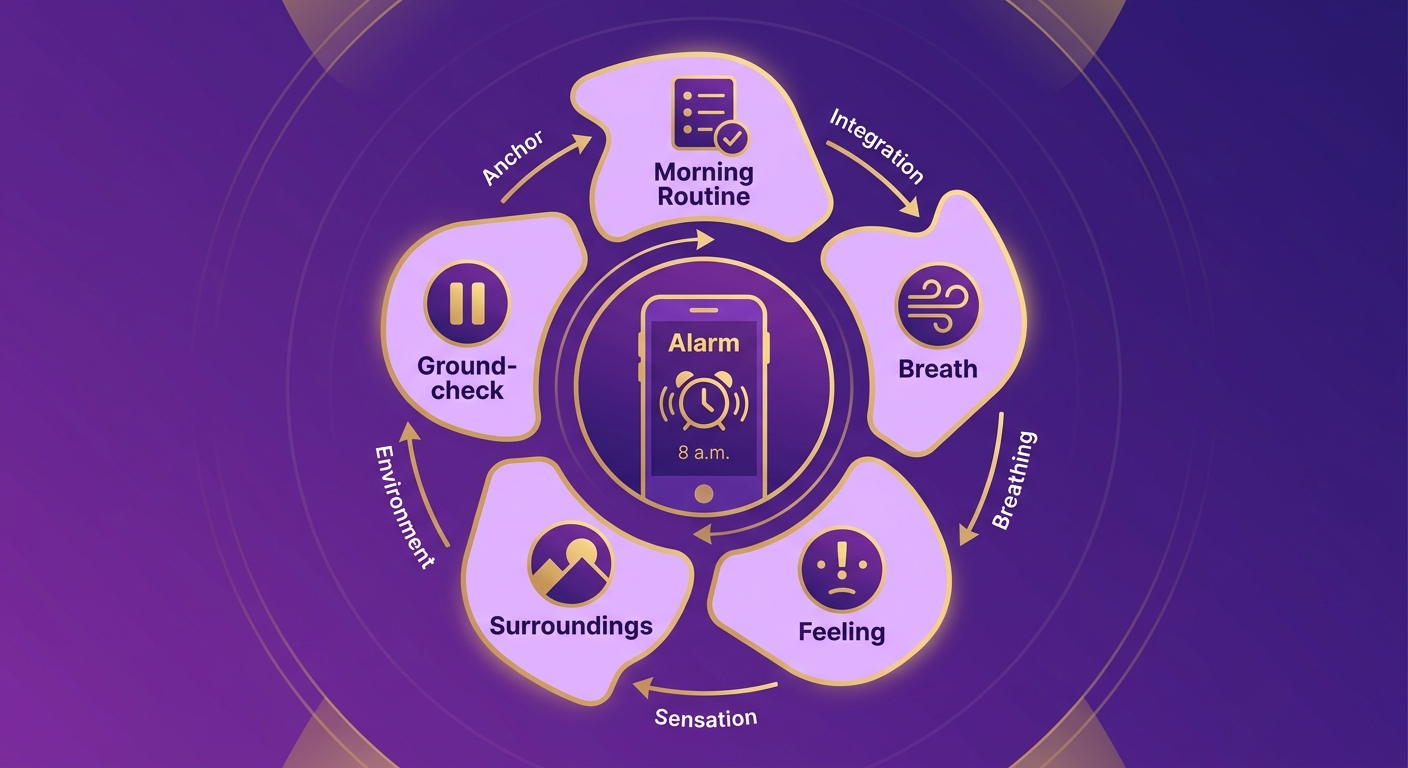
Start with a habit that takes under three minutes and travels anywhere. A "ground-check" pause works well: notice your breath, name one feeling, look around the room. Brief successes reinforce the reward pathways fast, so the micro-habit builds momentum without swamping anyone. In practice, clients often set a phone alarm at a fixed time, say 8 a.m., to launch the pause. The cue becomes a reliable trigger.
How do we use implementation intentions to lock in new behavior?
Answer: Write a concrete "if-then" that ties a predictable cue to the micro-habit. "If I finish my morning coffee, then I write down one daily goal." Coaches push clients to phrase these plainly and rehearse them in session, which strips out the decision-making load. Pairing a cue with a specific action beats a vague goal for adherence, and the research backs that.
How can habit stacking keep momentum?
Answer: Bolt a new habit onto an existing routine so the two ride together. After brushing your teeth, write one line of gratitude. A behavior usually takes several weeks to go automatic, and stacking a recovery action onto an established habit can speed that along by borrowing neural pathways that already fire. If someone already walks daily, a quick journal prompt at the end turns the walk into movement plus reflection.
How do we track progress and celebrate wins?
Answer: A simple visual log, a tracker grid or a colored calendar, and a mark for every completed micro-habit. Coaches review the logs at check-ins, call out streaks, and offer short praise. Noticing small wins pushes back on "sobriety fatigue," the mental exhaustion that builds up under constant vigilance. Keeping the celebration low-tech and shared keeps the whole phase measurable and encouraging.
Building a Support Network That Actually Holds
The move from structured care back into everyday life can feel overwhelming. That jump from a scheduled day to open-ended independence is where a lot of people wobble. MADE's team-based coaching provides real-world companionship and guidance through it, helping clients build stability and confidence during a stretch that decides a lot. Our coaches work closely with each person to bridge the gap between treatment and daily life.
How do we build a support system?
We start by mapping the relationships already in place, then invite the people who can offer consistent, positive reinforcement.
- Identify allies – friends, family, or trusted contacts who understand the sobriety goals.
- Define roles – a "check-in buddy" for daily encouragement, a "crisis contact" for urgent moments.
- Coordinate schedules – coaches and allies log meetings, support-group dates, and milestones so accountability stays visible to everyone.
Line those roles up with the client's values and abstract "support" turns into concrete actions that reinforce the habit loops coaching already set.
What role do accountability partners play?
In our model the coach or team member is the real-time mirror for progress. Each habit gets a specific person who receives a brief daily update and answers with immediate feedback.
- Flexible modifications: Miss a journaling session and the coach suggests a single sentence instead. Momentum survives.
- Relapse buffering: A trusted partner who spots the early warning signs keeps a setback from snowballing.
- Celebration loops: Partners flag the small wins, and each one becomes a social reward that strengthens the habit circuitry.
The team approach means clients don't do this alone, and steady companionship keeps recovery moving.
How do we stay connected?
We run both virtual and in-person sessions, so clients keep regular contact with their coach wherever they are. Flexible scheduling and real-time check-ins hold the connection, and the coach's presence supplies the human contact that lasting change tends to need.
The result is a multi-layered system, family, friends, coaches, and flexible meeting options, that turns detox discipline into everyday, team-driven habits. When each piece props up the others, the path stays clear even when the days get hard.
Folding Nutrition and Self-Care into the Habit Loop
Pair each meal with a recovery cue and the habit loop tightens, keeping the reward system pointed at sobriety. We treat nutrition and self-care as the "routine" in cue-routine-reward, so every bite or breath reinforces the discipline built in detox.
Steady, balanced nutrition supports the same stability and confidence clients are building elsewhere. Trading high-stimulus snacking for real meals blunts cravings while it feeds the body.
How can we turn meals into habit cues?
Start the day with one visible trigger, a kitchen timer that signals "breakfast prep." The cue kicks off a short meal-planning micro-habit: pull a pre-portioned container, add a protein, note the meal. A few minutes, so it slides into the day without friction. Coaches help set the cues, mark the consistency, and adjust as energy levels shift.
What self-care practices fit the habit loop?
We drop an intentional pause right after lunch. A five-minute breathing exercise lowers stress and becomes the "reward" that tells the brain it finished a nourishing break. Coaches often pair the pause with a short movement burst, a stretch or a brisk walk, so the cue-routine-reward cycle earns a physical payoff too. When the mental weariness of constant alertness sets in, we remind clients that regular self-care restores cognitive resources and holds burnout off.
When should we skip a nutrition focus?
If someone is in acute post-acute withdrawal (PAWS) with nausea or severe appetite loss, strict meal-planning only adds stress. There we switch to hydration-first habits, water-intake cues, electrolyte drinks, gentle soups, and shelve the macro tracking until the body settles. The team watches the transition and brings the full-meal loops back once appetite steadies and anxiety eases.
Weaving nutrition and self-care into the same loop that guides the sobriety habits builds a daily structure that holds. Clients tell us meals start to feel purposeful, the mindfulness feels earned, and the routine itself keeps the old high-stimulus triggers at arm's length.
Tapering Coaching Without Pulling the Rug Out
Leaving the intensive structure of detox shouldn't feel like a cliff edge. It should feel like a ramp. We see tapering work when we phase out coaching intensity while keeping the habit-building scaffolding that made it through treatment.
Why taper at all? Early-recovery data show that up to 80% of people experience at least one relapse before reaching long-term sobriety, and early-stage symptoms can linger for months. At the same time, the pressure of constant vigilance wears people down and drains the motivation that got them here. So we balance ongoing accountability against room to stand on their own.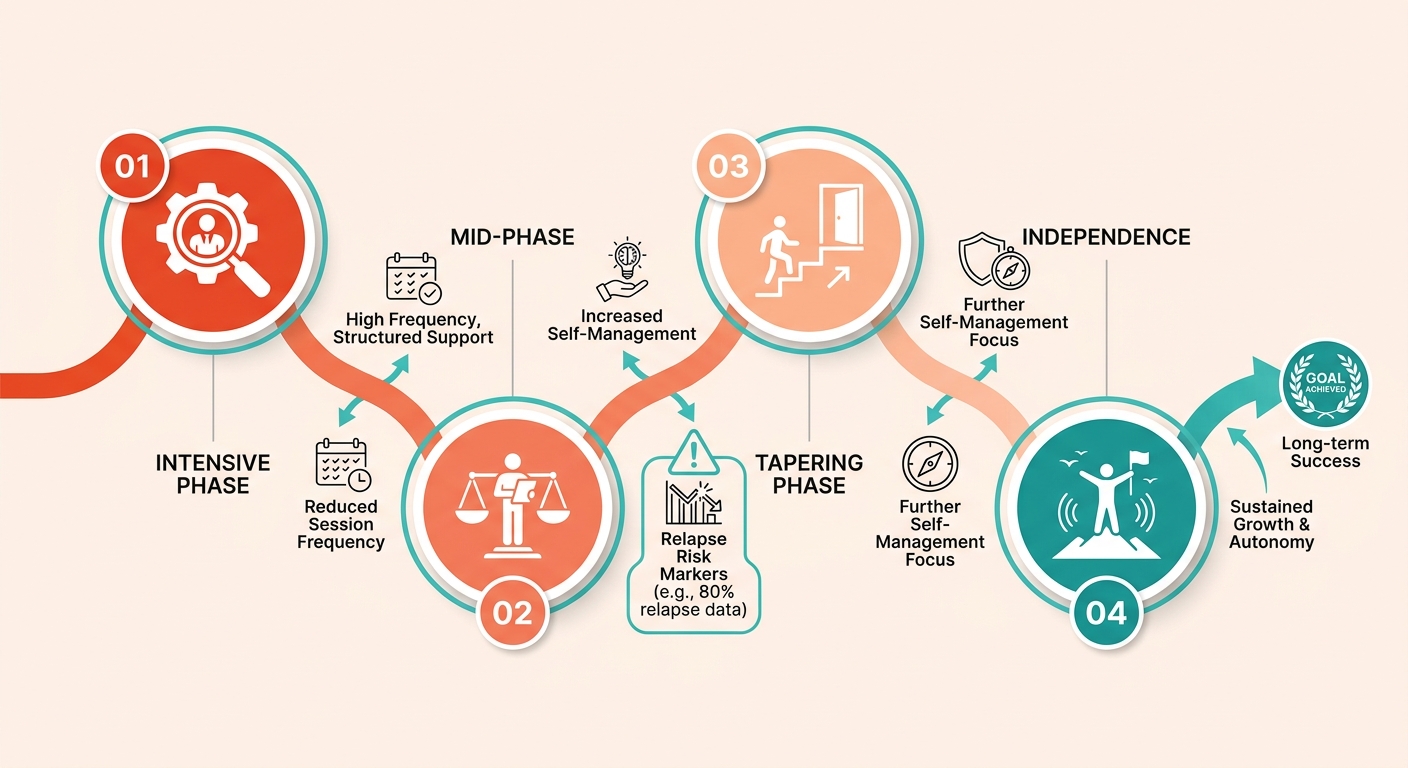
How do we structure the taper?
We fit the taper to each client's progress, easing from frequent coach contact toward lighter check-ins. Early on, clients often meet with a coach daily or several times a week to set the new routines. As confidence grows, sessions move to weekly and the client starts leading the conversation while the coach offers guidance. Later, brief monthly reviews center on self-assessment and goal-setting, handing over more autonomy while keeping a safety net underneath.
How can clients support their own transition?
Tools carry more of the load as contact drops. Coaches share simple cue-based reminders, a mid-afternoon moment of reflection, and habit-tracking worksheets a client can run alone. When someone signals they need more, the coach connects them to peer-coach contacts or reputable community resources, so the connection holds without leaning on constant sessions.
When should we pause the taper?
If cravings persist, symptoms flare, or early relapse signs appear, we bump coaching frequency back up to where the taper started. The pause gives the client extra structure until stability returns, then we resume the gradual reduction.
"A well-timed aftercare plan helps smooth the transition into independent recovery." – MADE Recovery perspective
What works best, in our experience, blends a structured daily routine that serves the bigger life goals with a flexible taper that answers to each client's risk factors. Keep the habit cues visible, adjust the human contact as needed, and clients keep momentum while building self-reliance.
Marking progress is part of the work. Coaches note the milestones, a month of sobriety, a new healthy habit, a personal win, and share them with the client and, when it fits, with the support circle. Those recognitions feed self-efficacy and keep the growth going.
So the recommendation is a personalized taper: daily accountability, weekly self-leadership, monthly self-review, backed by practical tools and a solid after-care frame. When the signals stay steady, the taper moves forward. When they wobble, we pause, re-engage, and protect what was hard to win.
References
[1] Dopamine Detox and discipline: Micro-habits for mental health - https://www.michigandaily.com/michigan-in-color/dopamine-detox/
[2] A "dopamine detox" won't cleanse or reset your brain, but taking a break ... - https://www.facebook.com/BannerHealth/posts/a-dopamine-detox-wont-cleanse-or-reset-your-brain-but-taking-a-break-from-consta/1532404571851629/
[3] 7 Essential Addiction Recovery Steps for Lasting Wellness - https://glendorarecoverycenter.com/essential-addiction-recovery-steps-lasting-wellness/
[4] Strategies for Maintaining Long-Term Sobriety from Alcohol - https://crestviewrecoverycenter.com/strategies-for-maintaining-long-term-sobriety-from-alcohol/
[5] Sobriety Strategies: 13 Tips for Staying Sober - https://www.verywellmind.com/tips-for-staying-clean-and-sober-67900
[6] SMART Recovery - Addiction Recovery Support - https://smartrecovery.org/
[7] Long-Term Recovery: Strategies for Staying Sober after Rehab - https://blog.theretreat.org/strategies-for-long-term-recovery
[8] Why Structure and Routine Are Important in Recovery - https://www.gatewayfoundation.org/blog/benefits-structure-addiction-recovery/
[9] Alcohol Recovery: Build a Plan for Long-Term Sobriety - https://integrativelifecenter.com/alcohol-addiction/alcohol-recovery-build-a-plan-for-long-term-sobriety/
Frequently Asked Questions
1. What if I have limited mobility and can’t do walking-based routines?
If you cannot walk, replace movement modifications with seated stretches, ankle circles, or 30‑second chair‑stand sets that require minimal balance. Coaches can suggest a brief upper‑body roll‑out or guided breathing sequence, preserving the habit loop without stressing joints. MADE’s team tailors each cue to physical ability.
2. How can I maintain device-free intervals when my job requires constant phone and computer use?
Create designated tech‑free windows by scheduling brief breaks throughout the day, using a separate device for work‑only tasks, and silencing non‑essential notifications. Place a physical reminder, such as a sign or a timer, on your desk. MADE coaches can help you map these intervals into your daily workflow.
3. Is the structured craving-management script suitable for people with severe anxiety?
This script can aid anxiety sufferers by breaking cravings into concrete steps, but it should be paired with therapist‑approved anxiety techniques. If panic spikes during the “B” (belief) phase, a brief grounding exercise is recommended before proceeding. MADE’s coaches can monitor comfort levels and adjust the script.
4. Can I use a peer-support model if I don’t have a trusted friend or family member?
When personal contacts are unavailable, enroll in a peer‑coach program or join a moderated recovery group where members rotate accountability duties. Virtual check‑ins, shared habit trackers, and scheduled video calls replicate the benefits of shared accountability. MADE offers a matching service that pairs you with a trained partner.
5. What are common misconceptions about dopamine detox that could hinder habit formation?
A frequent myth claims a dopamine detox erases cravings permanently; in reality it only reduces stimulus exposure temporarily. Another false belief is that longer fasts automatically improve willpower, but excessive restriction often triggers rebound cravings. Successful habit building blends moderate breaks with consistent micro‑habits, as coached by MADE.
6. How do I decide between remote and face-to-face support options for after‑care?
Choose remote support if travel time, flexible scheduling, or geographic distance are concerns; it offers digital tools and instant messaging for rapid feedback. Opt for face-to-face sessions when you prefer physical presence, body‑language reading, or a dedicated space for practice. MADE provides both formats, allowing a seamless switch as needs evolve.